Whernside: North Yorkshire County Top
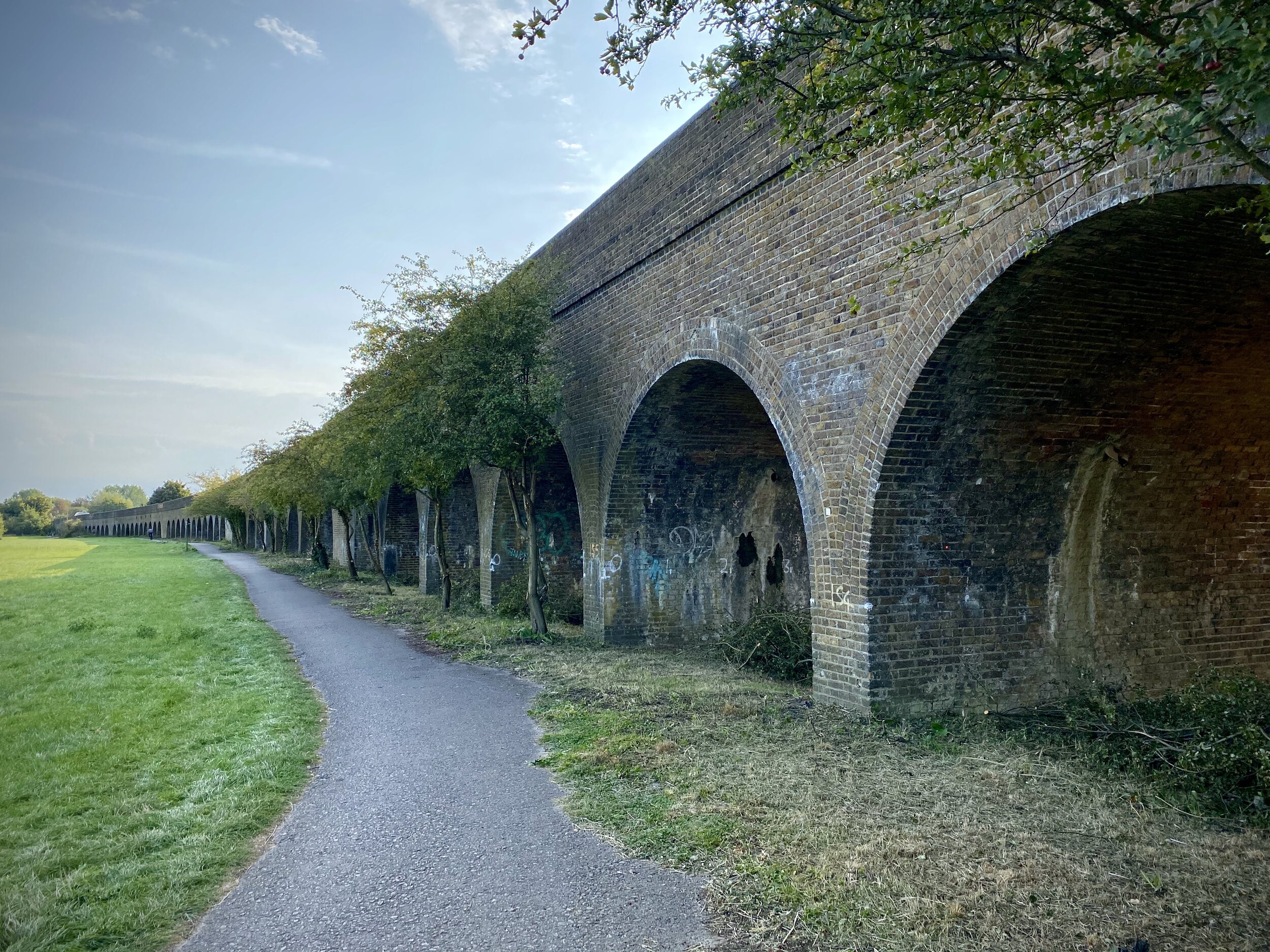
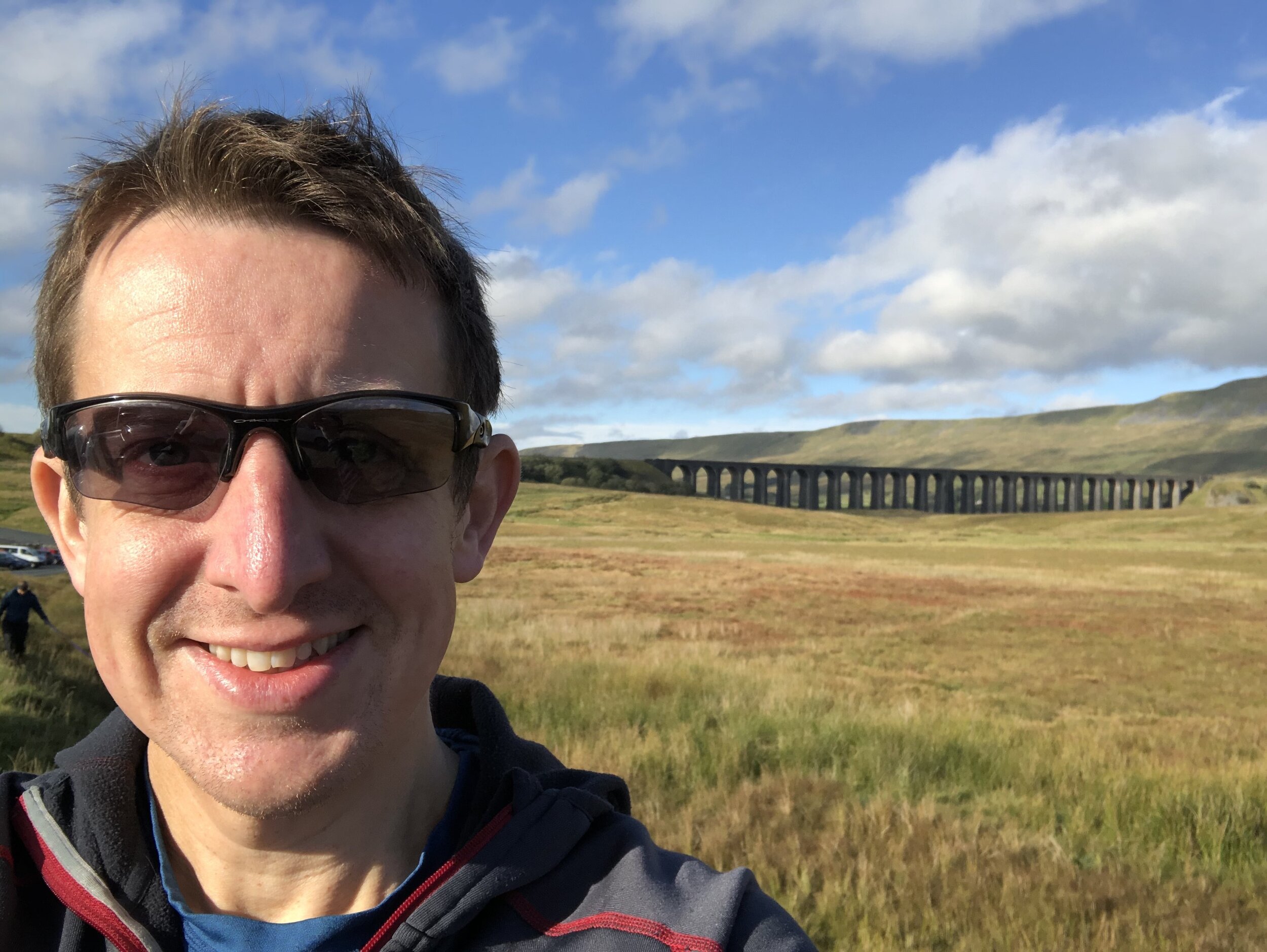
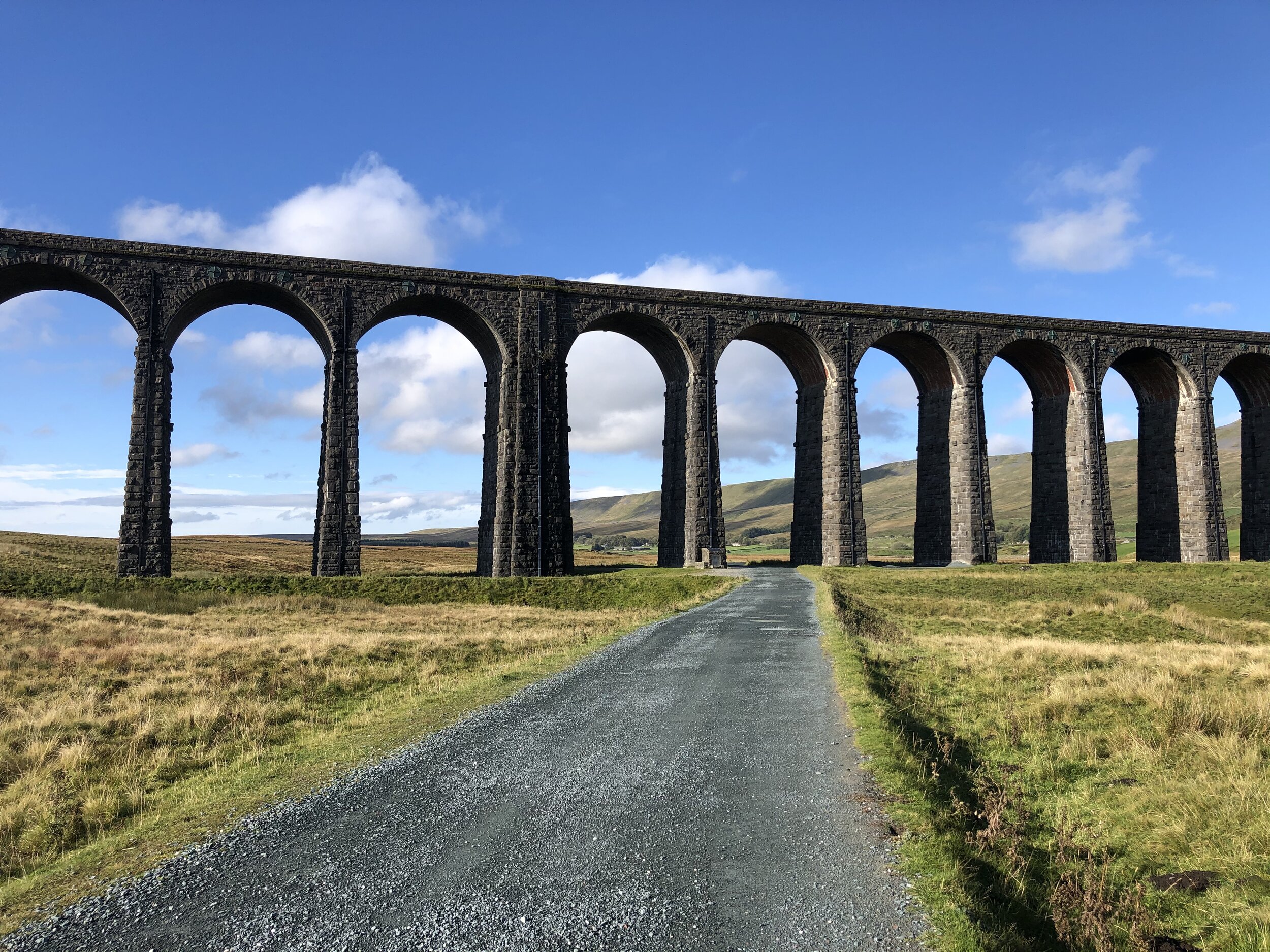
Ribblehead Viaduct with Whernside on the right

Ribblehead Viaduct with Whernside on the right


Significance: Highest peak in North Yorkshire (Present-Day CT), the historic West Riding of Yorkshire, Yorkshire Dales National Park
Member of: Marilyn, Hewitt, Hardy, Nuttall
Parent Peak: Cross Fell. NHN = Harter Fell
Historic County: Yorkshire (of which Mickle Fell is the County Top)
Elevation: 736m
Date climbed: October 4th 2020
Coordinates: 54°13′40″N 2°24′12″W 
Route Start / End: Ribblehead Viaduct Car Park, Blea Moor Road, Carnforth, LA6 3AS
Route Distance: 12.7 km (7.9 miles)
Route Elevation Change: +/- 433m
Subsidiary tops on route: none
GPX File: get via Buy Me a Coffee
Other routes touched (walk): Dales High Way, Three Peaks Walk
Other routes touched (cycle): none
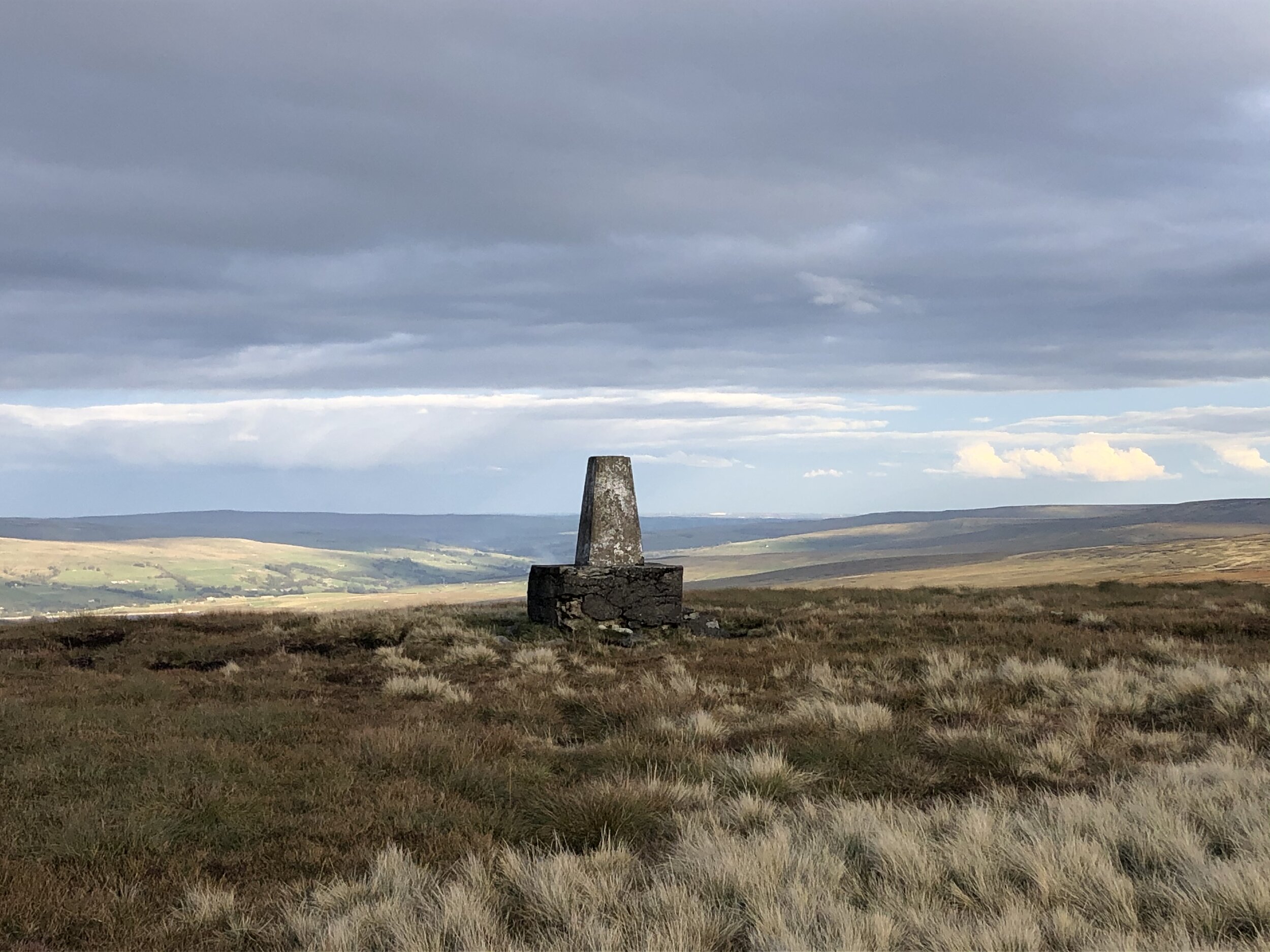
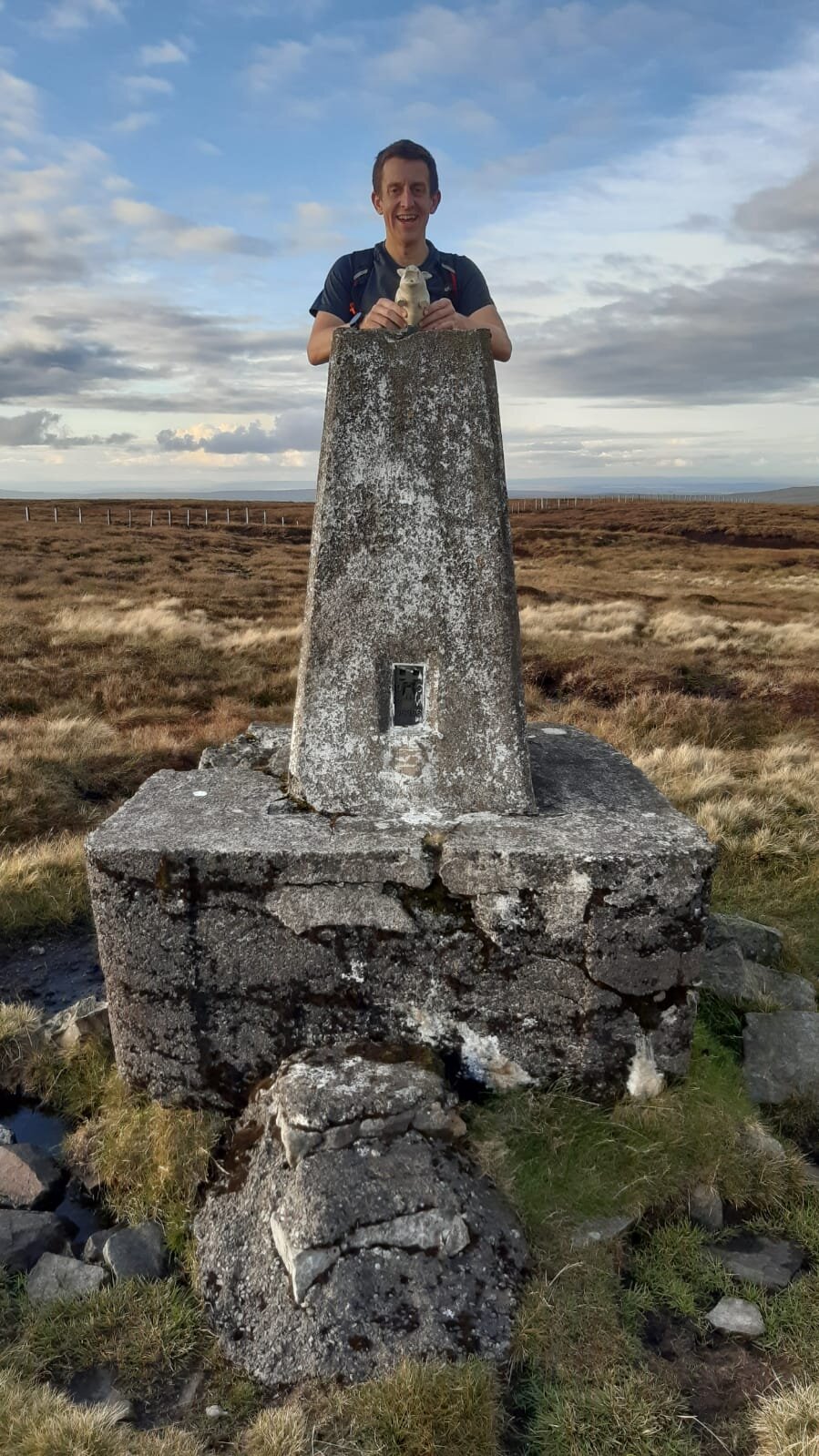
OS Trig Pillar: TP0702 - Little Whernside
Map: OS Explorer Map OL2 Yorkshire Dales South & Western
Guidebook: The UK's County Tops (Jonny Muir), Walking the County High Points of England (David Bathurst)
Links: Wikipedia (North Yorkshire), Wikipedia (Whernside), Peakbagger, Hillbagging


Given that Whernside is both a Present-Day County Top and features in the Yorkshire Three Peaks Challenge it was surprising that I hadn’t already ticked it off. Sometime over the last couple of years I’d lost interest in the Three Peaks and decided that I’d rather tick them off individually. Whernside’s time came this year as it was an obvious peak to bag to break up the long drive home from Mickle Fell.

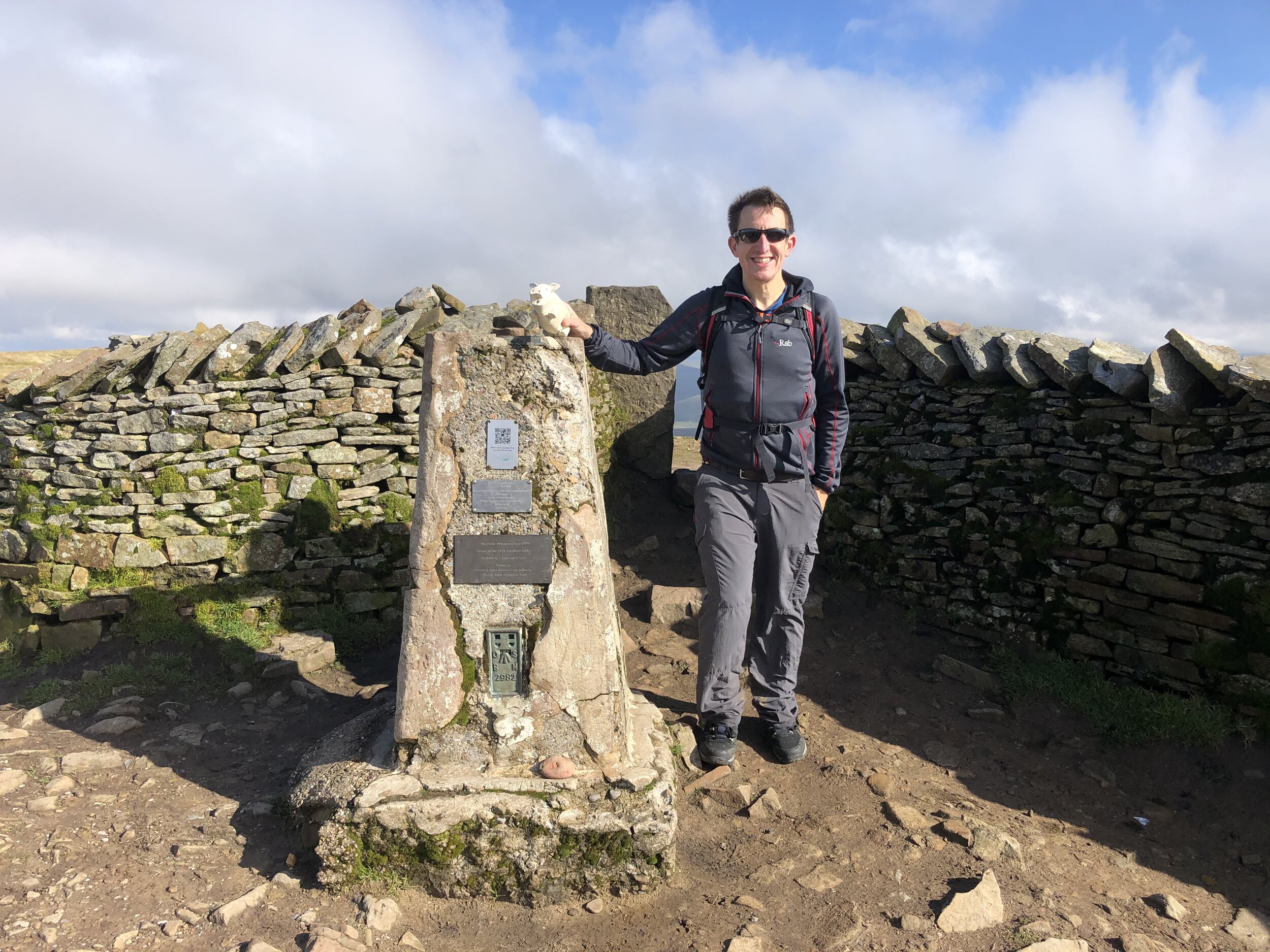
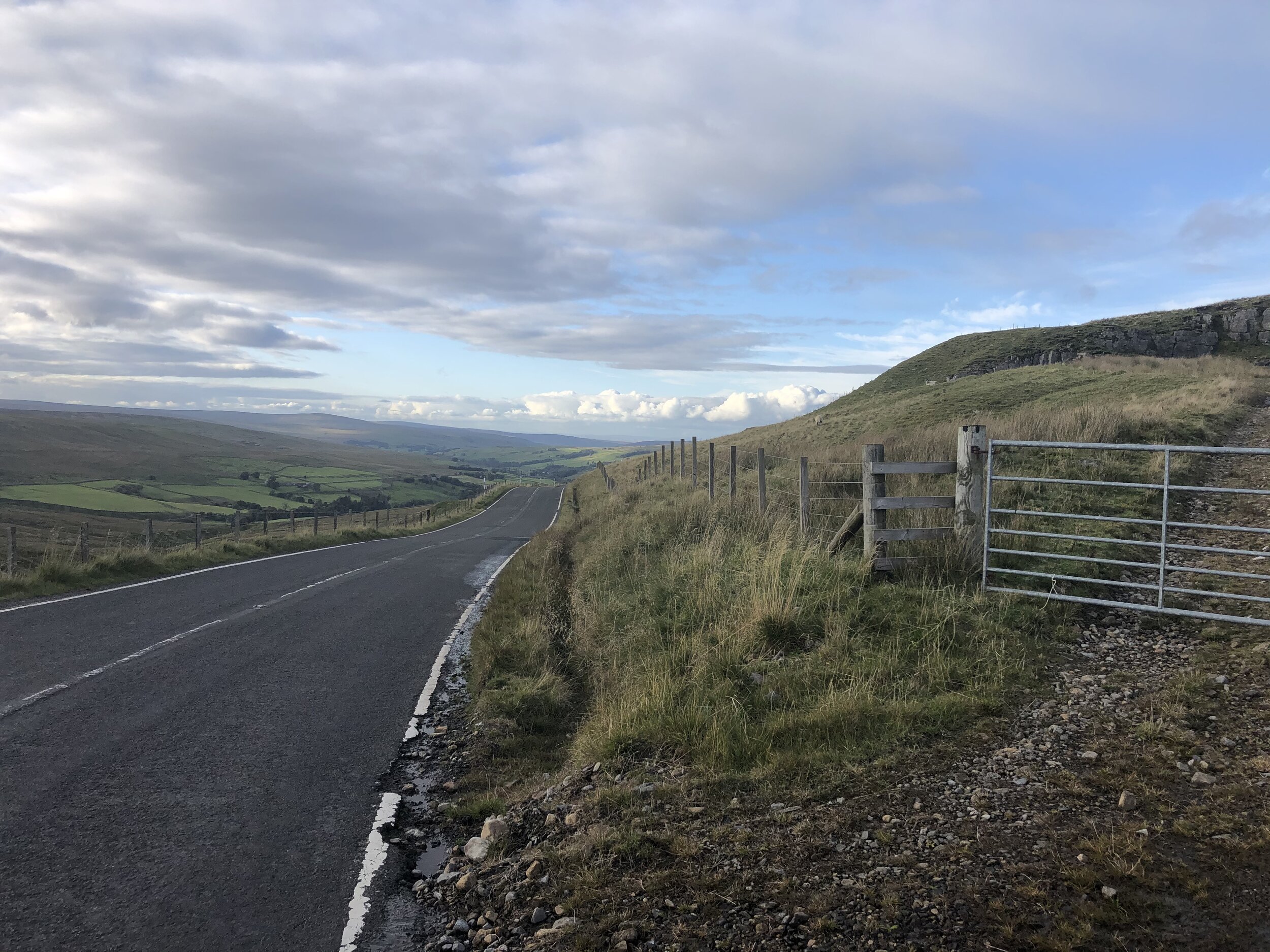
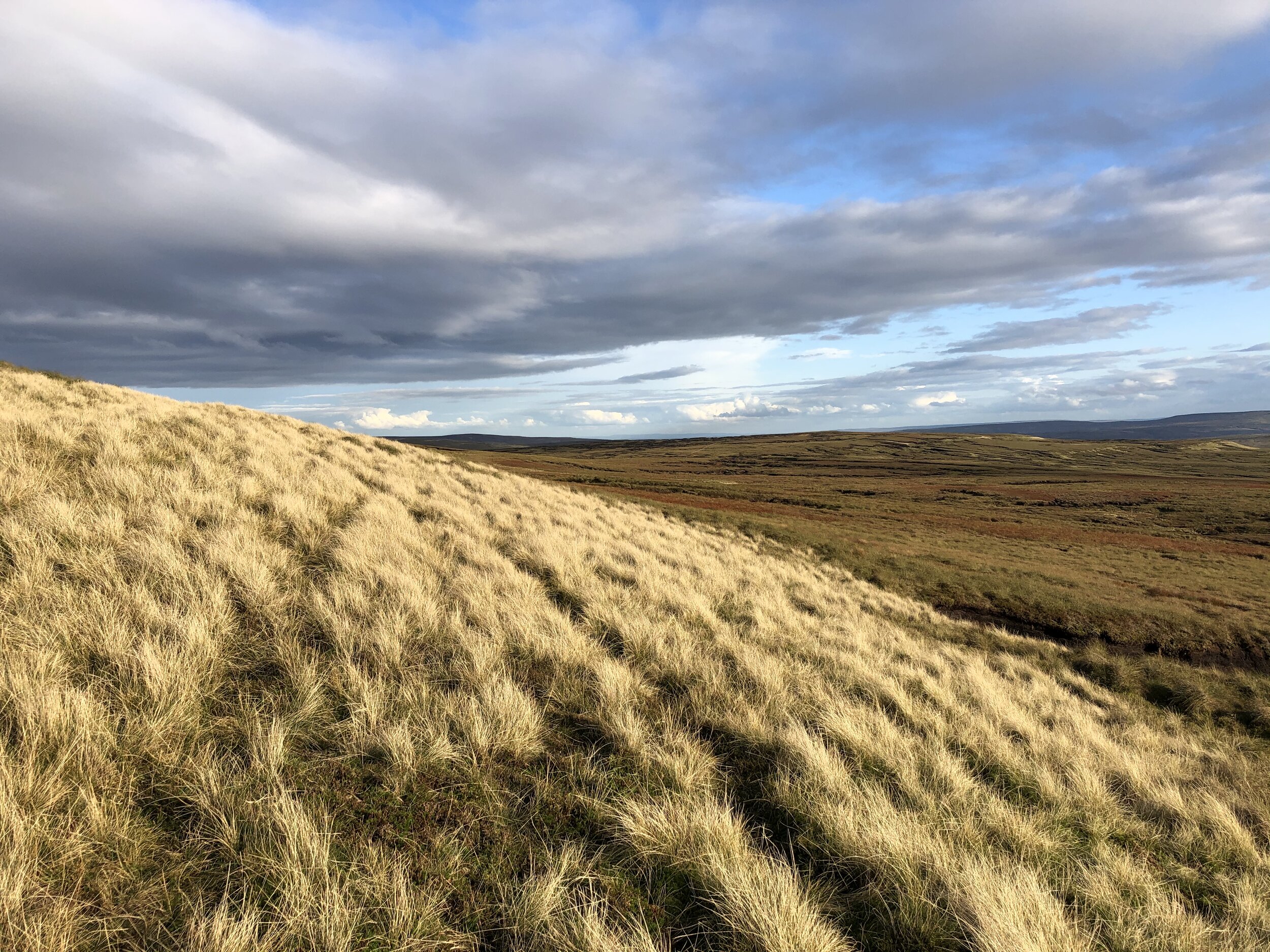
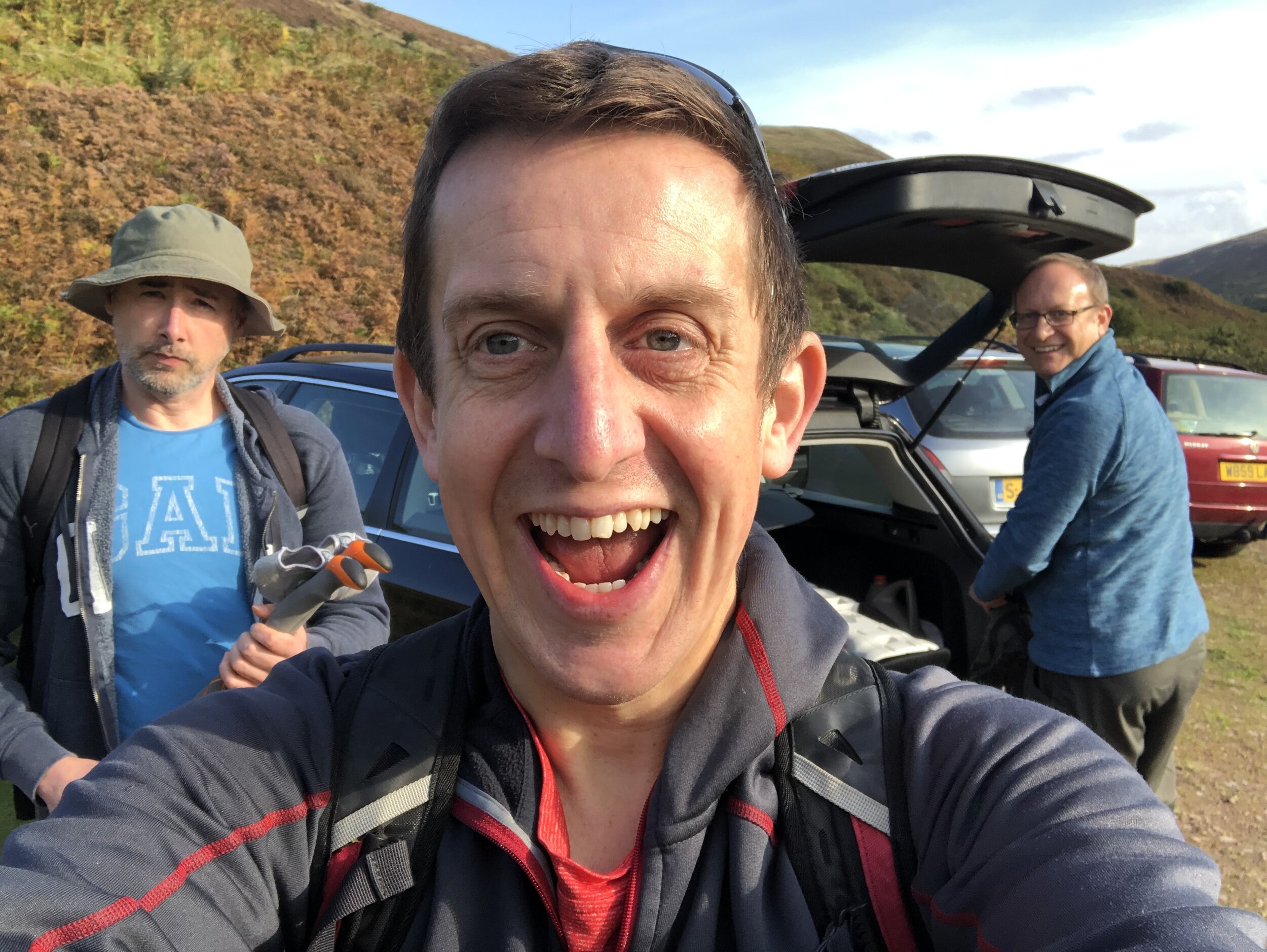
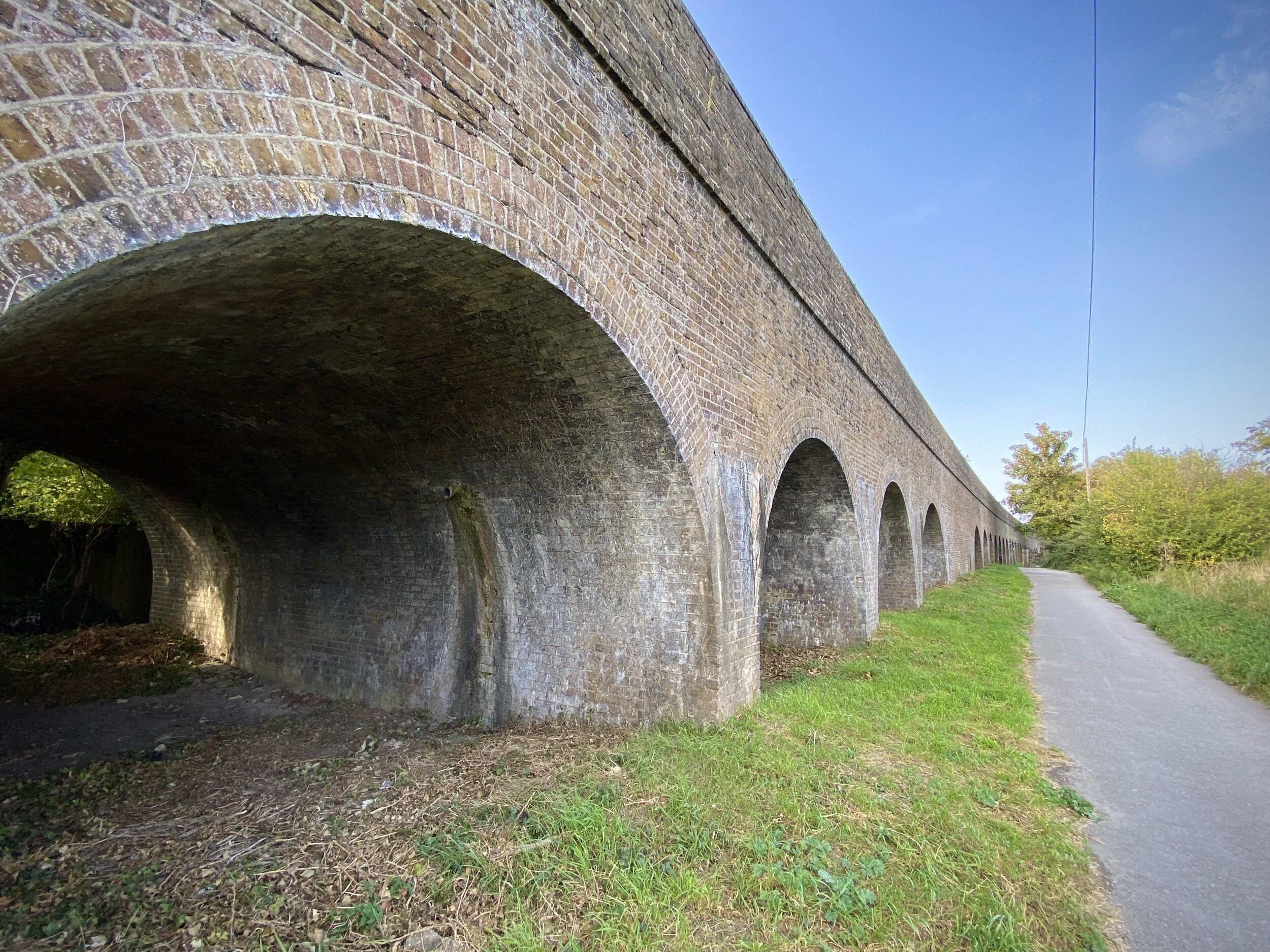
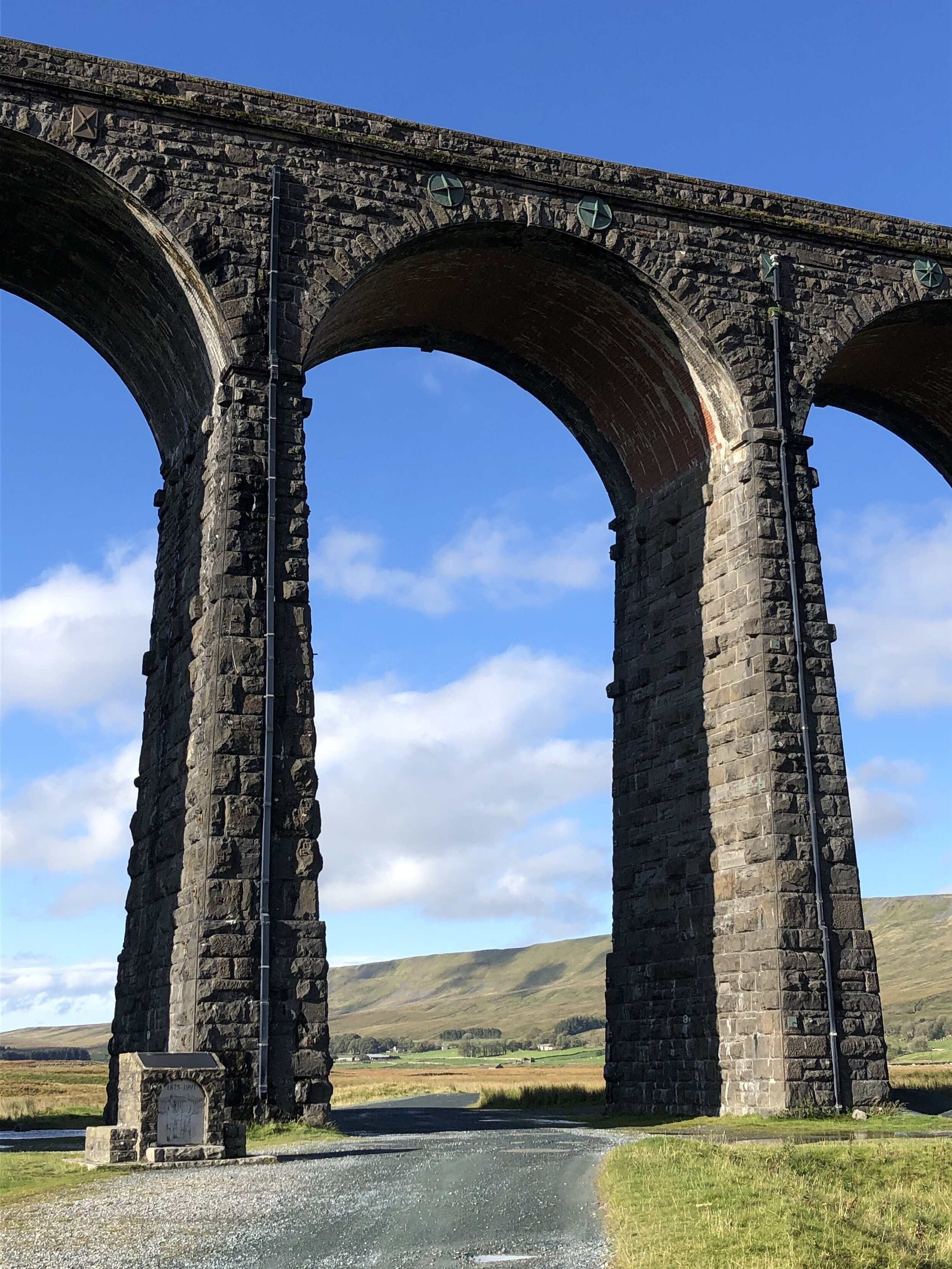
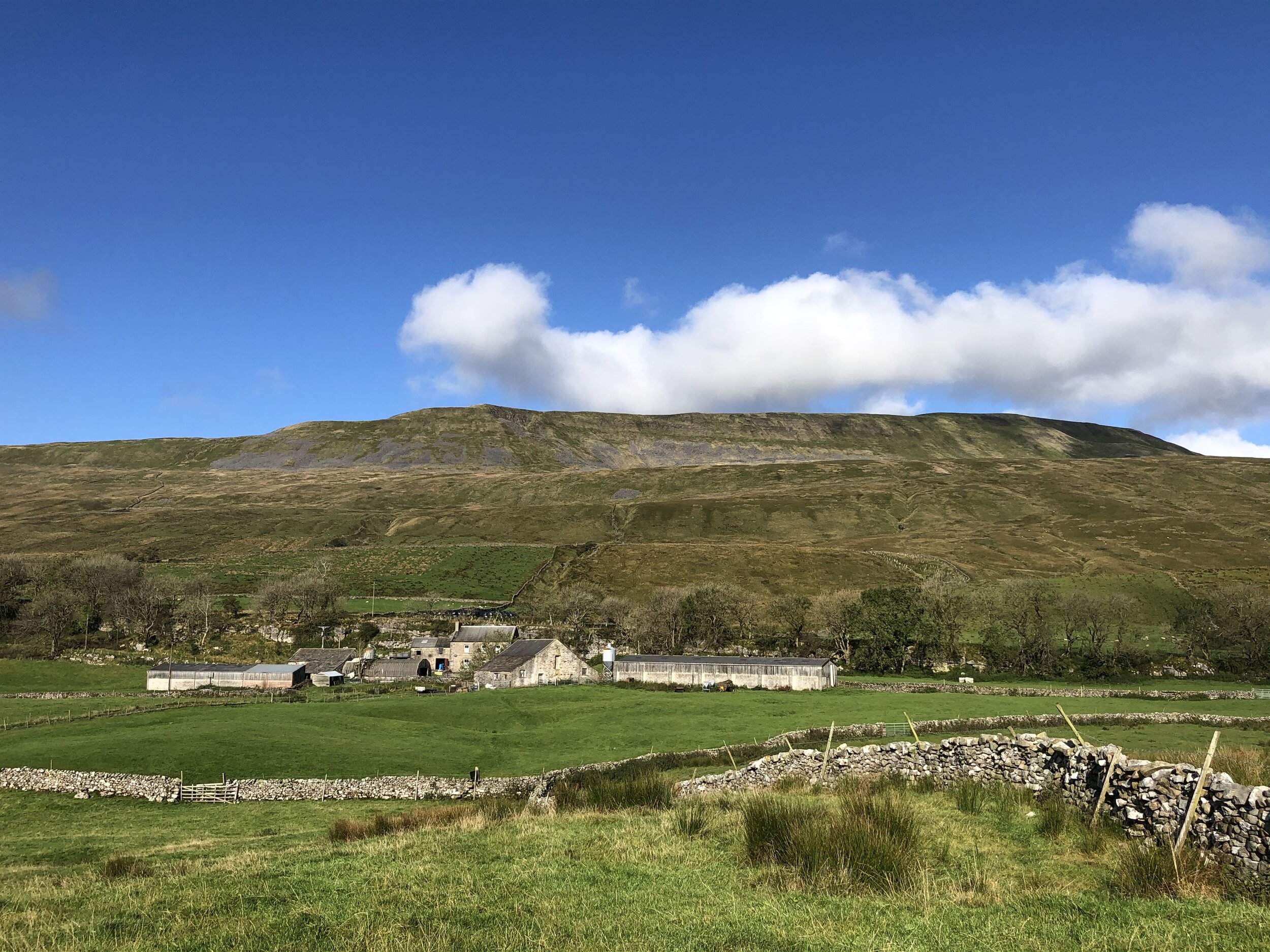
Unlike the drenching that we got on Mickle Fell the previous day, we had perfect Autumn conditions for Whernside. It was dry, sunny, chilly (but not too much) and visibility was great. The walk even starts with one of its main highlights: an approach to the magnificent Ribblehead Viaduct. We had originally planned to keep to the path on the eastern side of the viaduct then cut through the underpass to join the Dales High Way heading west. When we found ourselves standing right under one of the arches to get a closer look, we decided to continue heading west through the viaduct and take the footpath through the farm to connect to the High Way.

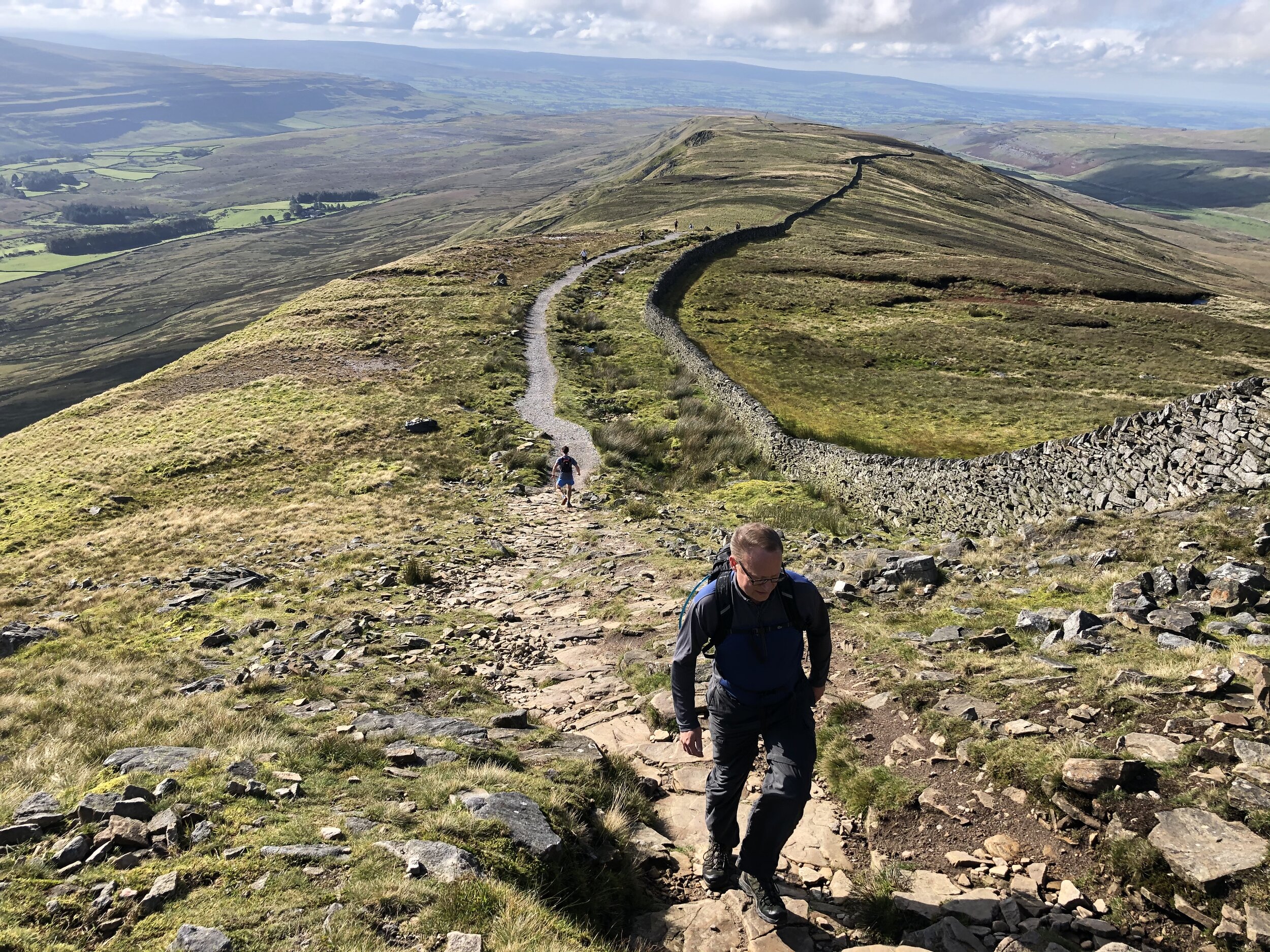
After the farm the route gets steep. The waitress in the pub the night before had warned us that this approach would be tough and slippery. We imagined something like a damp Striding Edge but it turned out not to be so bad at all. The slabs had also dried out completely so there was nothing slippery at all.

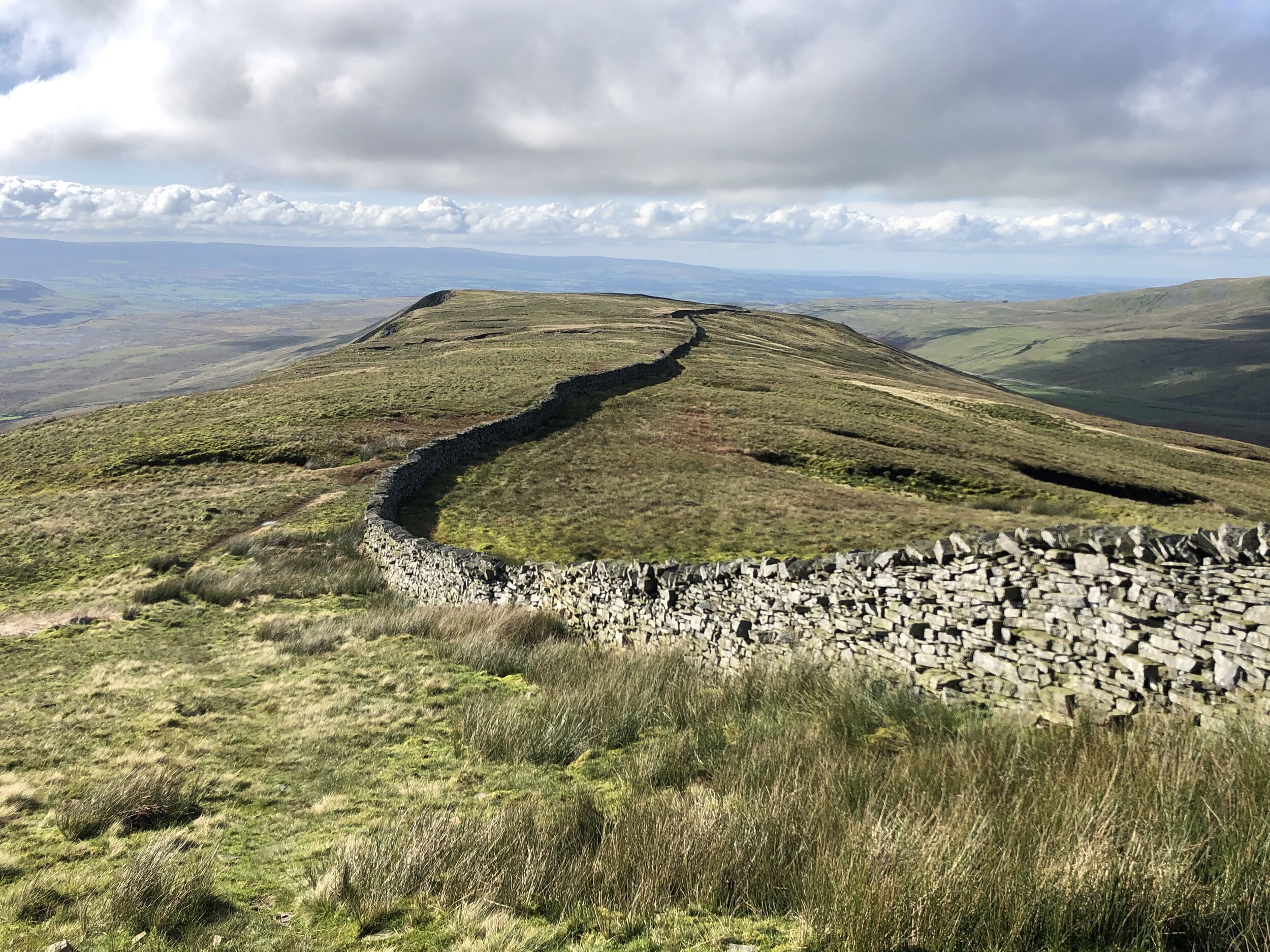
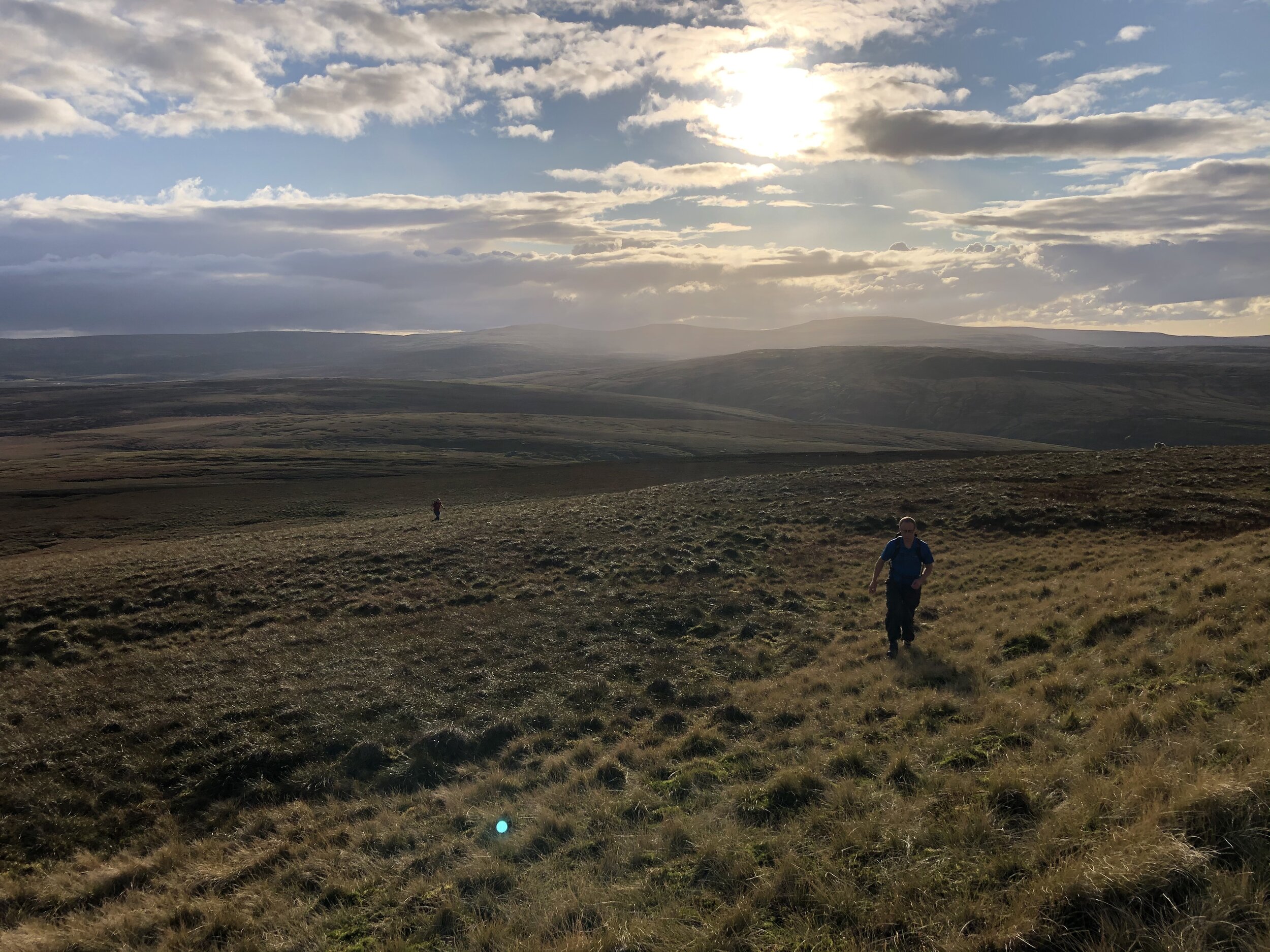
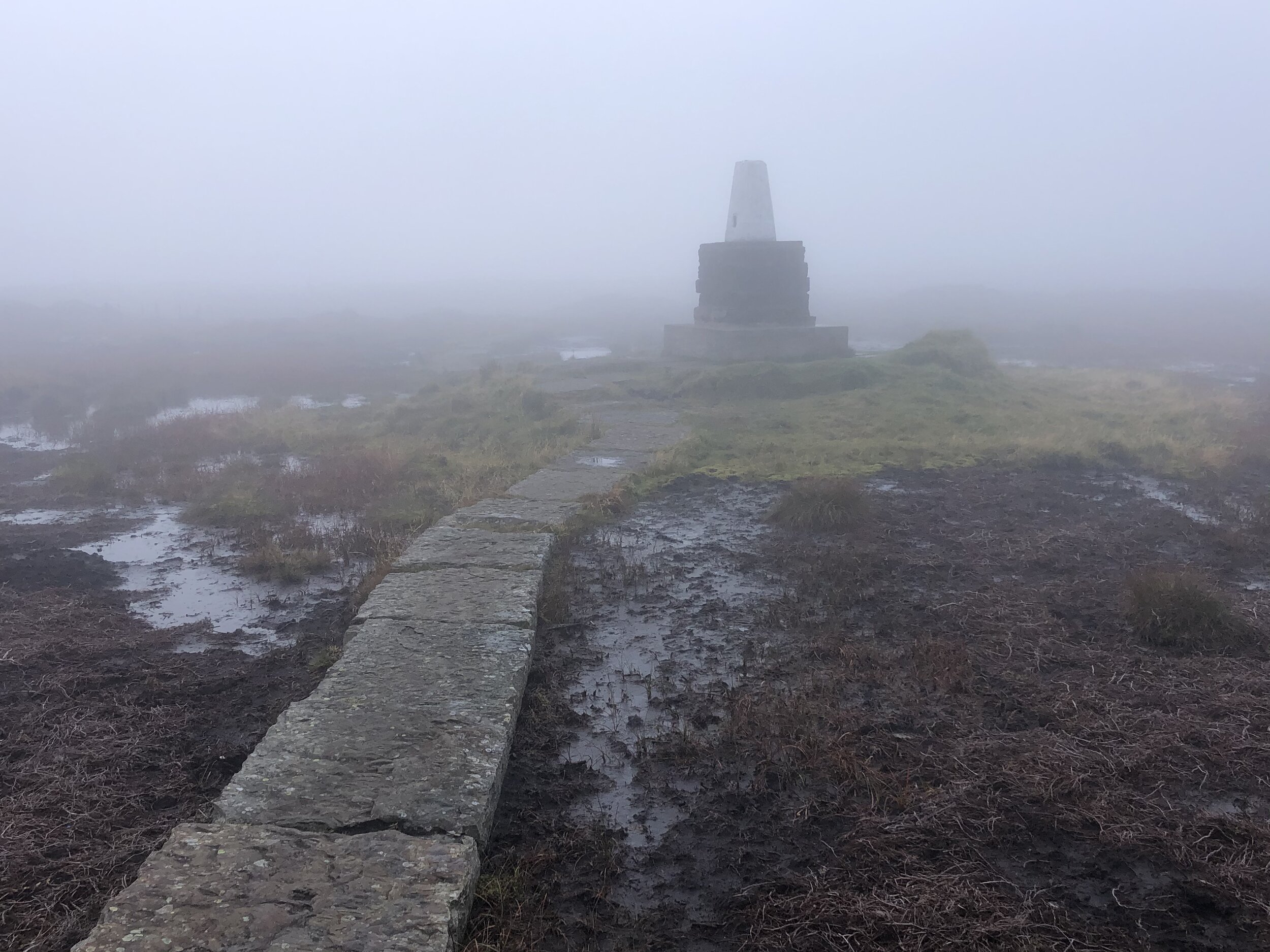
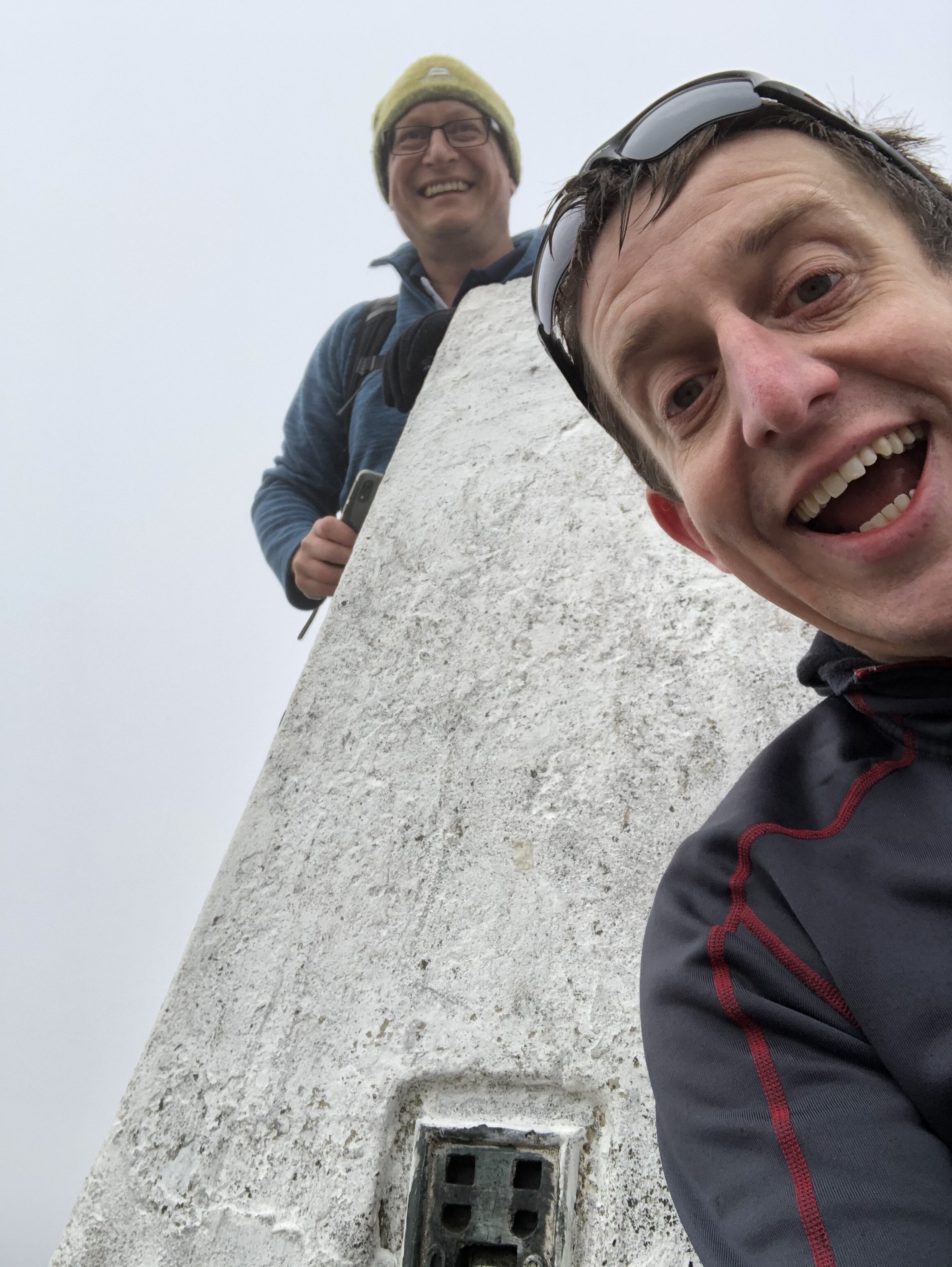
Once on the ridge-line the route is pretty simple and, with the views we had that day, quite breath-taking. The summit was pretty crowded when we got there. Partly it was the normal weekend day-walkers and we hit it at the same time as a lot of runners on their own Three Peaks Challenge. This was also the day of the Virtual London Marathon and there was a fair few marathoners that decided to do the 3 Peaks as their own London Marathon Route.

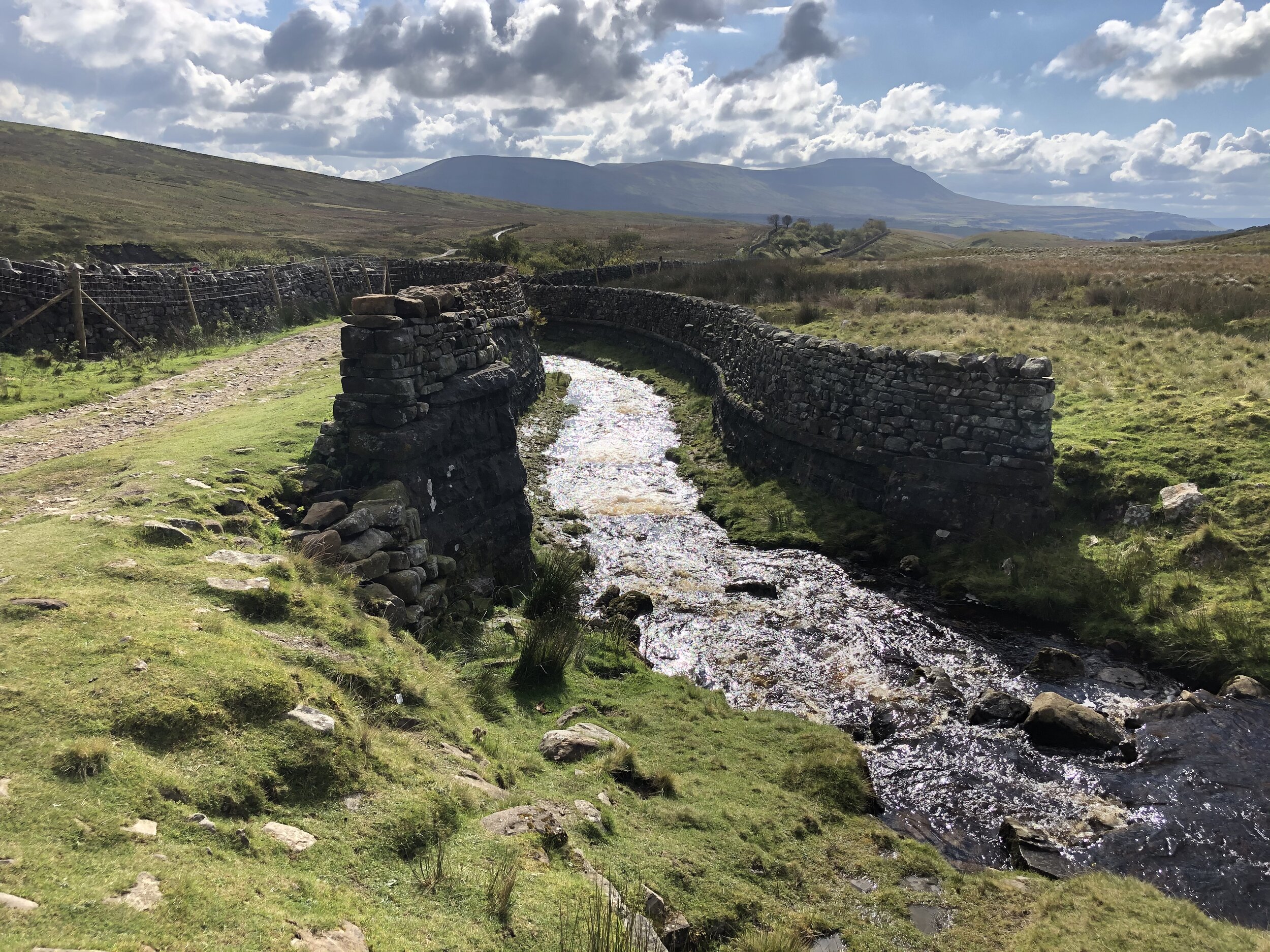
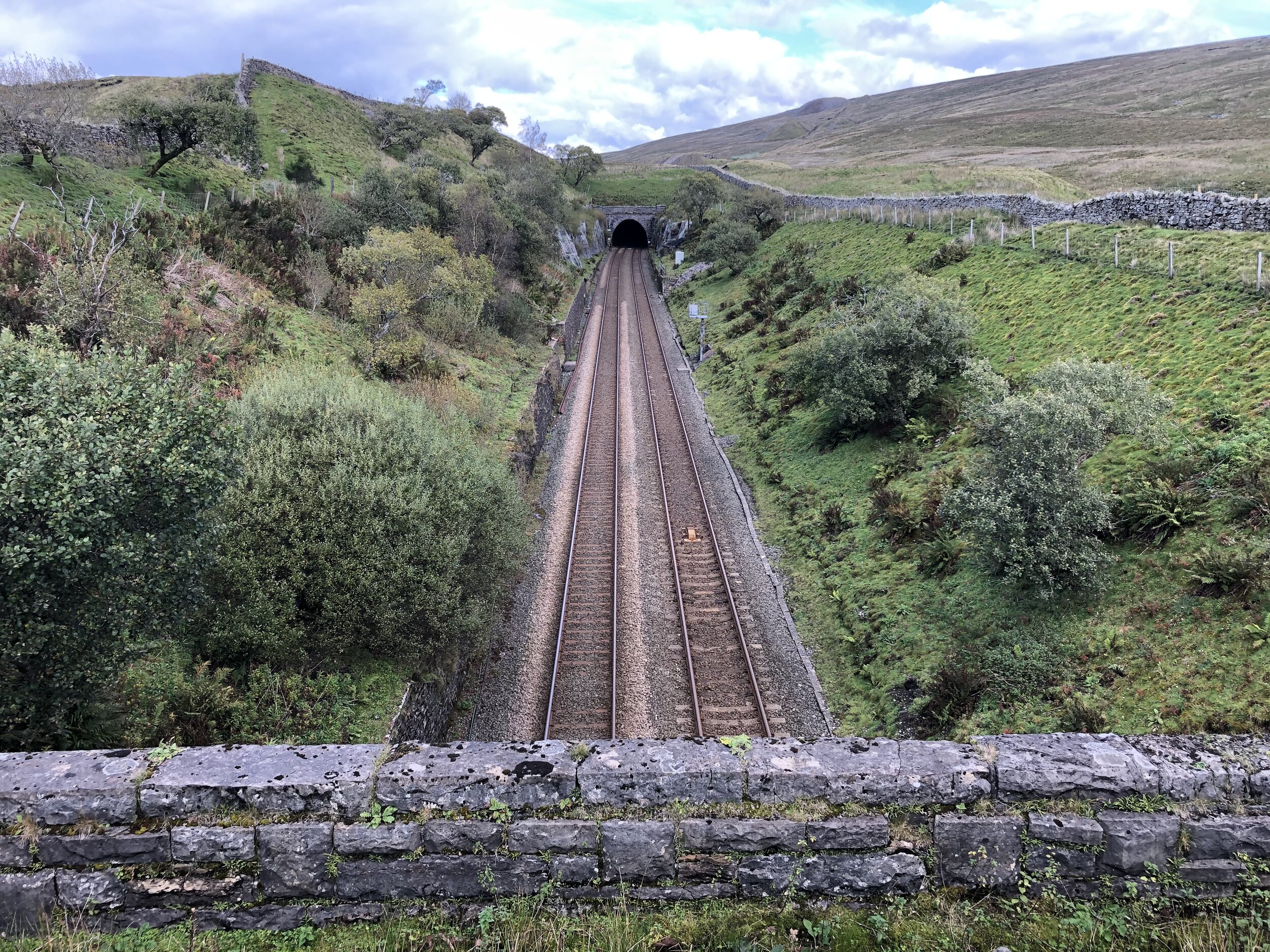
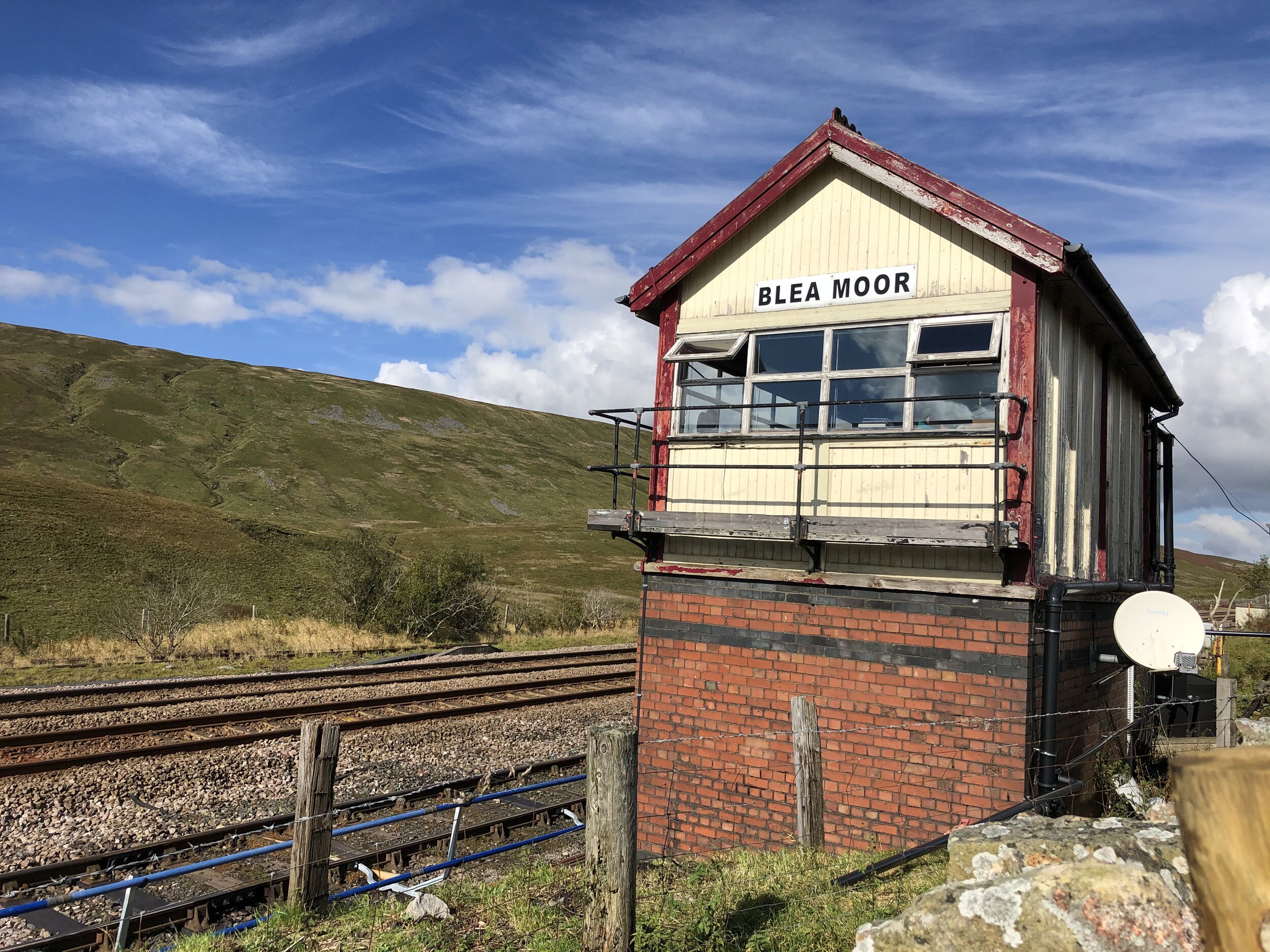
The descent was steady and interesting. Once down from the steeper sections the path curves back towards the viaduct and crosses over both Little Dale Beck and the rail line as it emerges from the Blea Moor Tunnel. The final section gives you another change to admire the Viaduct before returning to the car park.
North-East England County Tops
View from Burnhope Seat summit to the Trig Pillar

View from Burnhope Seat summit to the Trig Pillar


We had the dates for this in the diary for most of the year, even before Covid-19 became the thing that defined 2020. When the Lockdown came in March we we glad we had booked it in for later in the year and had assumed that the virus would have blown over by then. By mid-Summer things were relaxing and it was looking like there wouldn’t be a problem for the trip at all. September came, cases started rising again and the North-East was right in the centre of a local Lockdown. The rules were especially ambiguous and it was only the day before the trip that we decided that we would still be able to go. So, without breaking any rules and keeping as safe as possible, 3 of us headed North to complete the North-East County Tops.

As it turned out Covid had a very minimal impact on the plan. Our YHA for the first 2 nights was in Northumberland and had strict procedures. Rather than sharing one big room as per our usual trips, we had to have a room each under separate bookings. Breakfast was strictly one person per table, but given my lack of interest in talking to anyone 1st thing in the morning, it wasn’t a major inconvenience. Other than that we were out in the hills all day and the rare instances of coming in contact with others were few and far between and at quite a distance.

Being able to complete these 3, and by extension my completion of all of England’s County Tops, was a major win for me for 2020. Most other plans had been cancelled or postponed until 2021, so keeping this felt like a big achievement.


Burnhope Seat

Significance: Highest peak in County Durham (Historic CT)
Member of: Hewitt, Marilyn, Nuttall
Parent Peak: Cross Fell. NHN = Meldon Fell
Elevation: 747m
Date climbed: October 1st 2020
Coordinates: 54.7331° N, 2.3369° W
Route Start / End: 2-car layby on B6277 north of kink in road over stream bridge, south of Yad Moss ski area
Route Distance: 3.1 km (1.9 miles)
Route Elevation Change: +/- 160m
Subsidiary tops on route: none
GPX File: get via Buy Me a Coffee
Other routes touched: none
OS Trig Pillar: TP1783 - Burnhope Seat
Map: OS Explorer Map (307) Consett and Derwent Reservoir
Guidebook: The UK's County Tops (Jonny Muir), Walking the County High Points of England (David Bathurst)
Links: Wikipedia (County Durham), Wikipedia (Burnhope Seat), Peakbagger, Hillbagging

Burnhope Seat and Mickle Fell are a short car journey apart and can be easily done in a single day with fair weather. We had a long drive from the south which took up much of our first day so we used this short walk as a break in the journey.

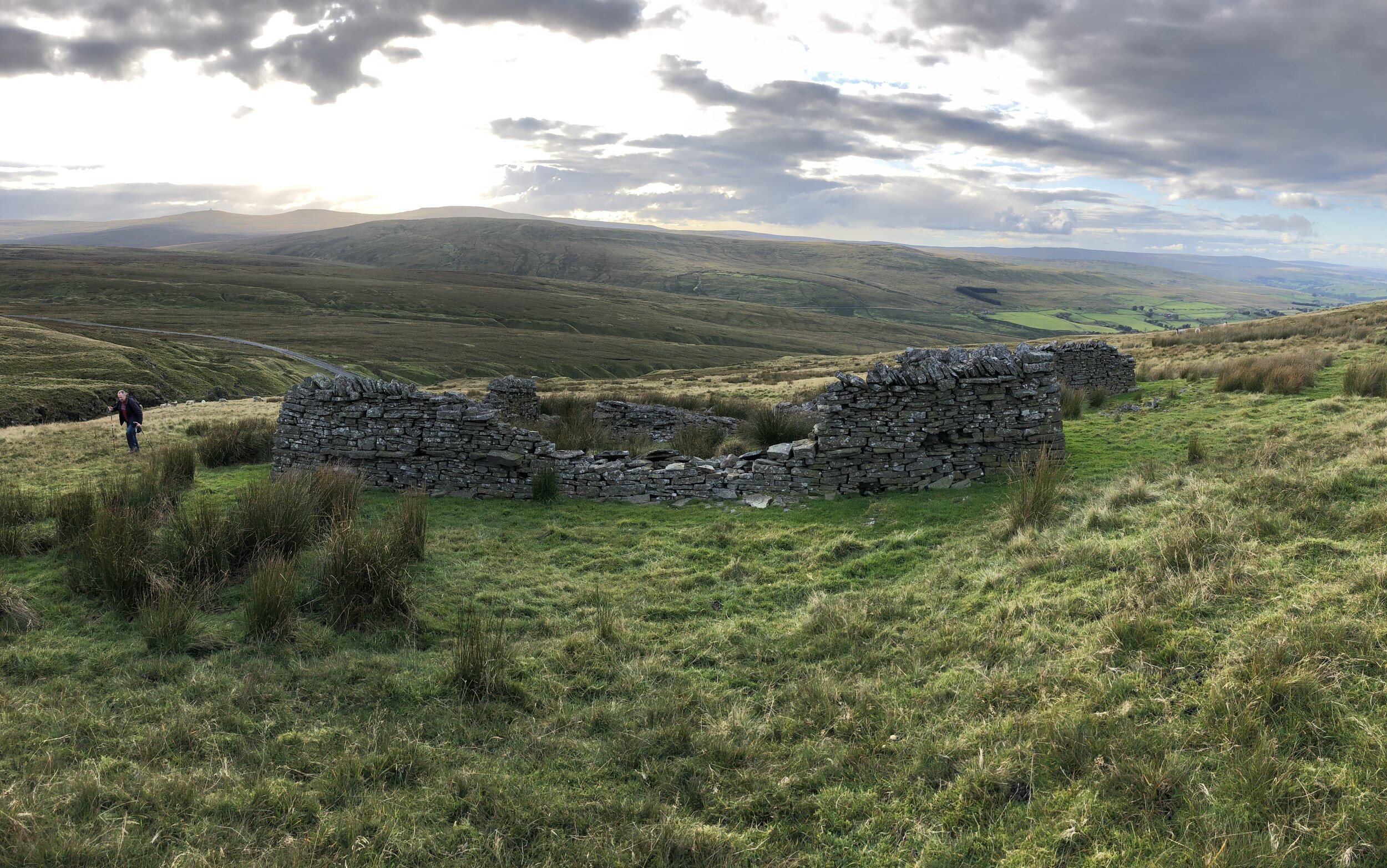
Jonny Muir’s County Top guide suggests a parking space on the B6277 at NY 7754 3640 but we found a more convenient one a bit further north on the same road. The layby in the book is quite small and at a steep angle from the road so we gave it a miss. From the larger layby near the stream bridge you can cross over a wooden gate on the opposite side. From here follow the left hand side of the stream, passing the ruins of an old building and use the GPS to keep you on-track for the high point. From the un-marked summit you can see the Trig Pillar to the east along the fence.


The Cheviot

Significance: Highest peak in Northumberland (Historic CT) and Northumberland National Park High Point
Member of: Marilyn, Hewitt, Nuttall
Parent Peak: Broad Law. NHN = Dollar Law
Elevation: 815m
Date climbed: October 2nd 2020
Coordinates: 55°28′42″N 2°08′44″W 
OS Trig Pillar: TP2152 - Cheviot
Links Wikipedia (Northumberland), Wikipedia (The Cheviot), Wikipedia (Northumberland National Park), Peakbagger, Hillbagging

Hangingstone Hill

Also Known As: Cairn Hill West Top
Significance: 
Highest peak in Roxburghshire, Scotland (Historic CT)
Member of: n/a
Parent Peak: Cairn Hill. NHN = The Cheviot
Elevation:
 743m
Date climbed: October 2nd 2020
Coordinates: 55° 28' 3'' N, 2° 9' 59'' W
Links: Wikipedia (Roxburghshire), Peakbagger, Hillbagging

Route Start / End: parking area off small road to Langleeford, accessed from A697 via Middleton Hall
Route Distance: 15.3 km (9.5 miles)
Route Elevation Change: +/- 620m
Subsidiary tops on route: Scald Hill (548m), Cairn Hill (777m)
GPX File: get via Buy Me a Coffee
Other routes touched (walk): The Pennine Way
Other routes touched (cycle): none
Map: OS Explorer OL16 The Cheviot Hills, Jedburgh & Wooler
Guidebook: The UK's County Tops (Jonny Muir), Walking the County High Points of England (David Bathurst)

This walk was the longest and most rewarding of the 3 especially as it's a circuit rather than an out-and-back like the others. If you’re using Jonny Muir’s guide this is a combination of the separate routes for The Cheviot and for Hangingstone Hill. It’s pretty obvious to do them both in the same walk so I’ve got no idea why they’re separated in the book. Both use the same start and end point and each trip is a return for the other.

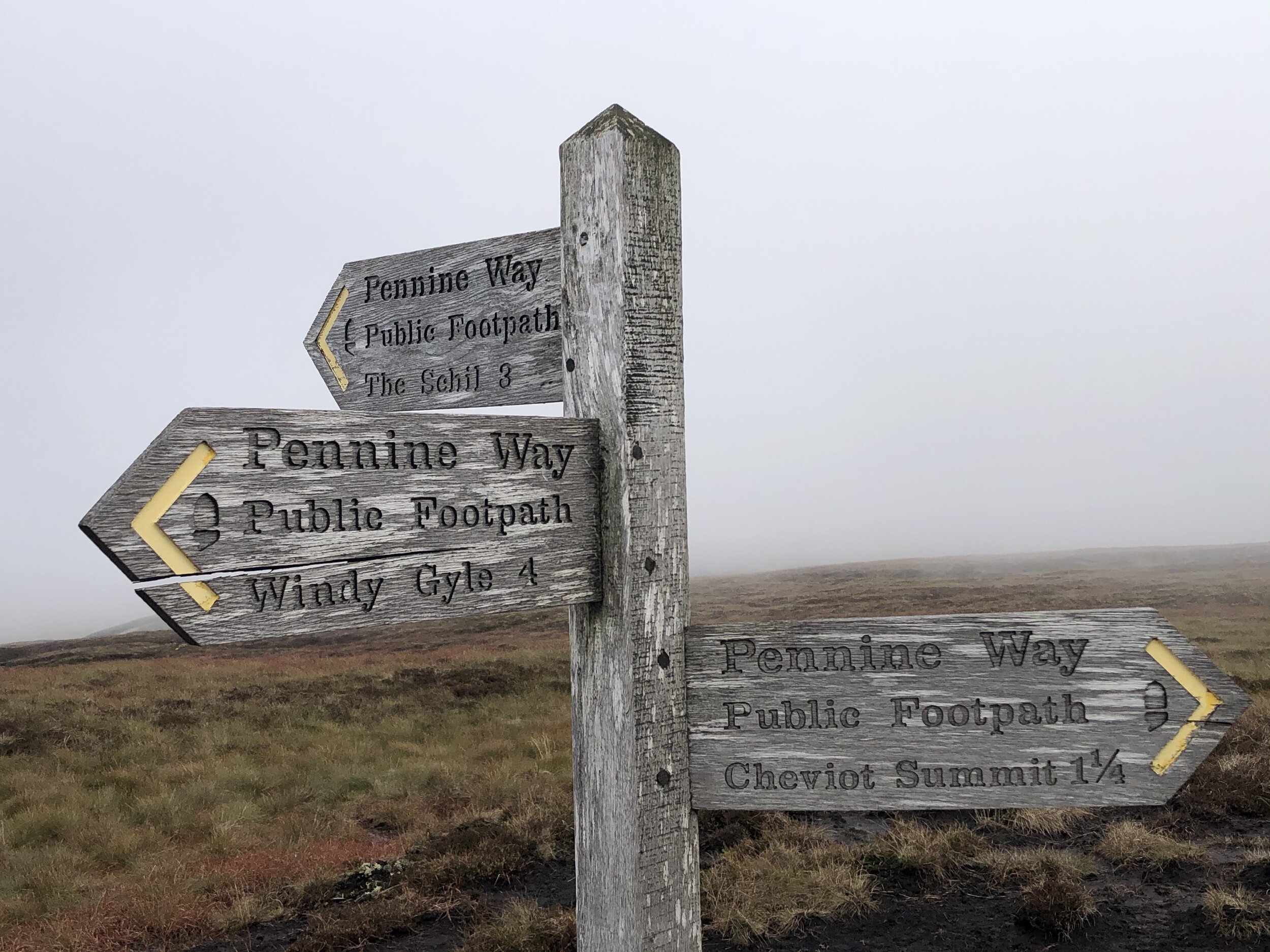
We took an anti-clockwise approach taking in The Cheviot first via Scald Hill. Continuing south-west along the Pennine Way from The Cheviot you’ll soon get to the summit of Cairn Hill. From here there’s a short out-and-back section to the Scottish border to reach Hangingstone Hill (aka Cairn HIll West Top). There’s little to see here and bagging the top just involves a quick crossing of the gate to a slightly higher piece of moss.

From Hangingstone Hill retrace your steps back up to Cairn Hill summit and follow the path sign-posted to Windy Gale. After a short steep section keeping a fence to your right you’ll reach a footpath junction. Take the east (left) path signed to Langleeford Hope (2¼) and Langleeford (3½). This path will take you all the way back to the start following Harthope Burn (stream).


Mickle Fell

Significance: Highest peak in Yorkshire (Historic CT) and the historic North Riding of Yorkshire
Member of: Marilyn, Hewitt, Nuttall
Parent Peak: Cross Fell. NHN = Knock Fell
Elevation: 788m
Date climbed: October 3rd 2020
Coordinates: 54°36′48″N 2°18′18″W
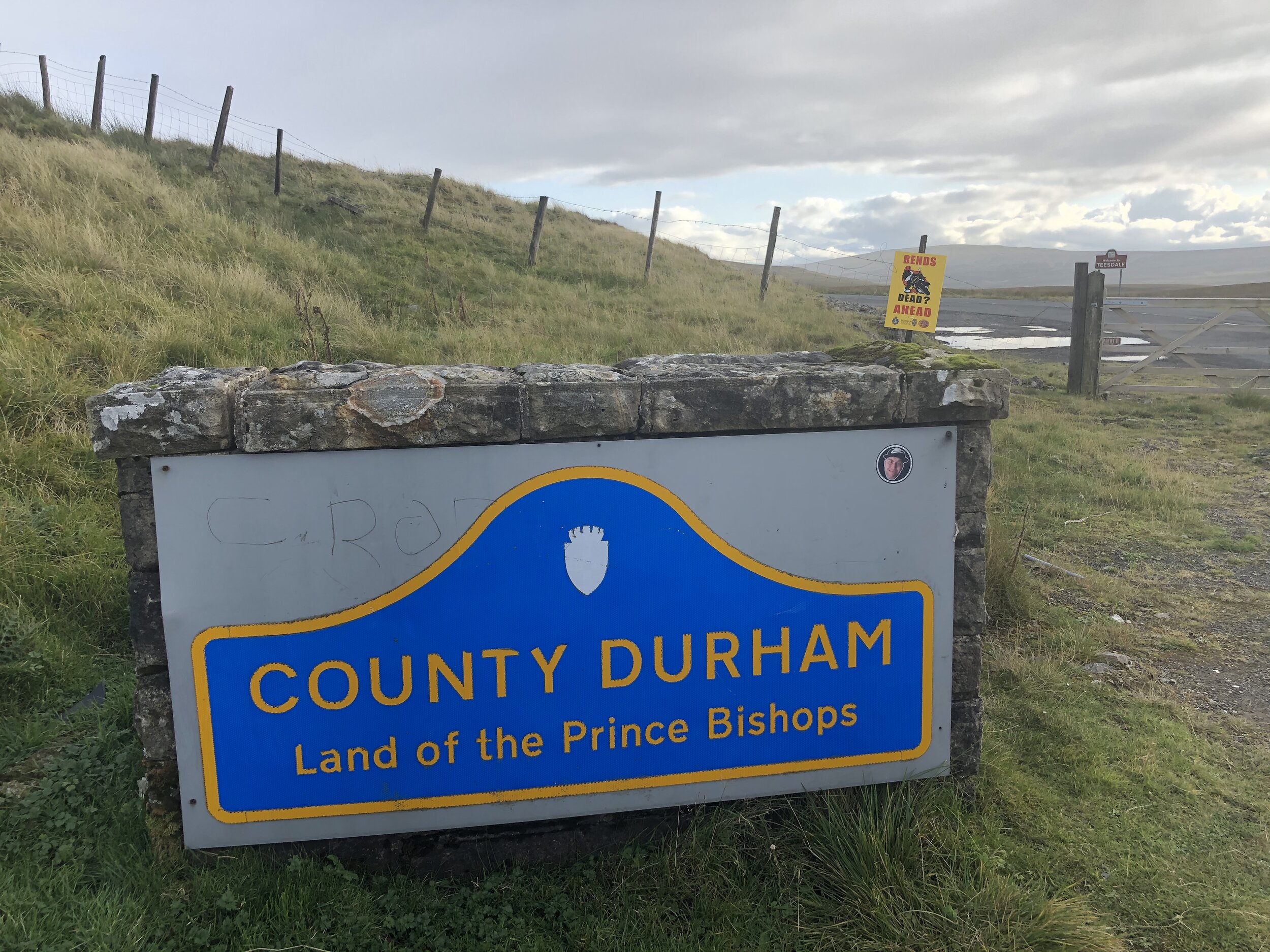
Route Start / End: Parking spot on B6276 to west of cattle grid between the Cumbria and County Durham county signs.
Route Distance: 17.2 km (10.7 miles)
Route Elevation Change: +/- 505m
Subsidiary tops on route: none
GPX File: get via Buy Me a Coffee
Other routes touched: none
OS Trig Pillar: TP4789 - Mickle Fell
Map: OS Explorer OL19 Howgill Fells Upper Eden Valley Map
Guidebook: The UK's County Tops (Jonny Muir), Walking the County High Points of England (David Bathurst)
Links: Wikipedia (Yorkshire), Wikipedia (North Riding of Yorkshire), Wikipedia (Mickle Fell) / Peakbagger, Hillbagging

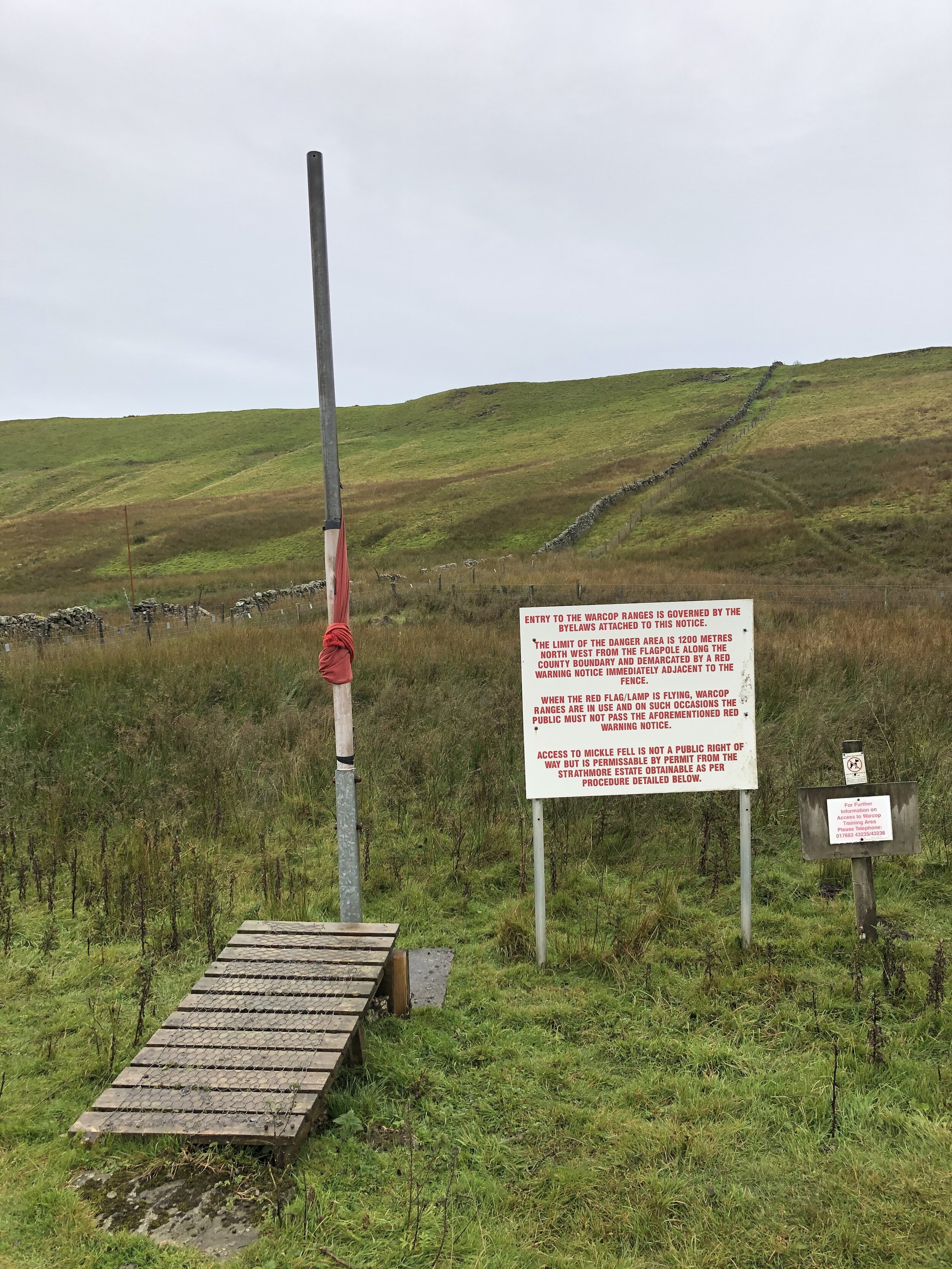
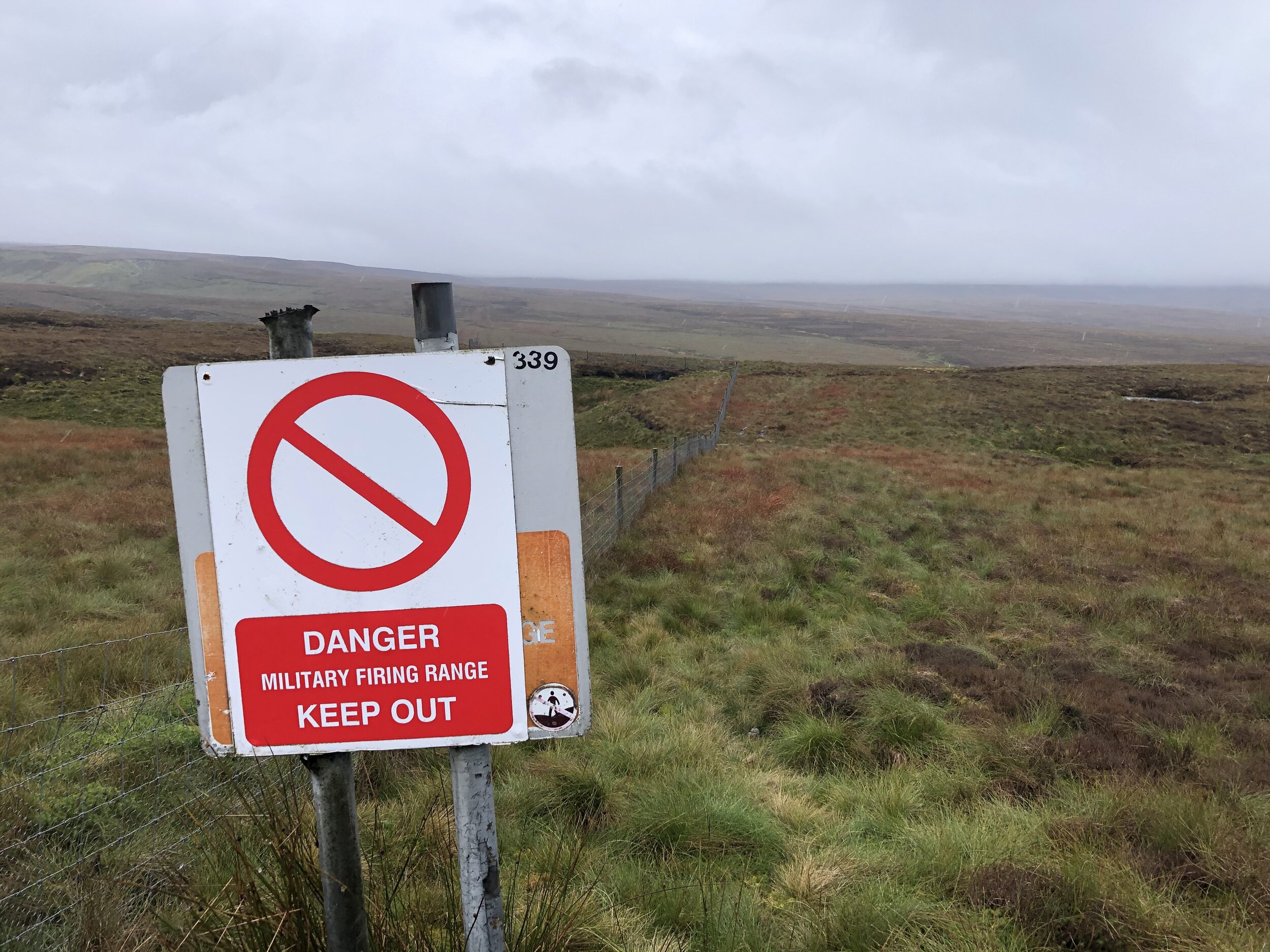
Mickle Fell is on a military firing range which is only open to the public on a few select days per year. You can apply for a permit to access the land from MOD Warcop. Based on our experience I recommend starting the application process early. It took over 3 months for me to get the permit from sending the application letter. There’s nothing complicated about the process, it’s just slow. With the permit secured the other thing that you need to do is call the control room number on the permit as you start the walk and again when you finish. We didn’t have phone signal at all on the walk so we were glad to have made the call in the car 10 minutes before arriving at the parking space.

The parking space is easy to find as it’s right next to the Welcome to Cumbria sign. From here cross the road and over a wire fence to access the hill. Strangely there’s no gate or stile even though this is the recommended approach. You can see where others have climbed through or over the fence though.

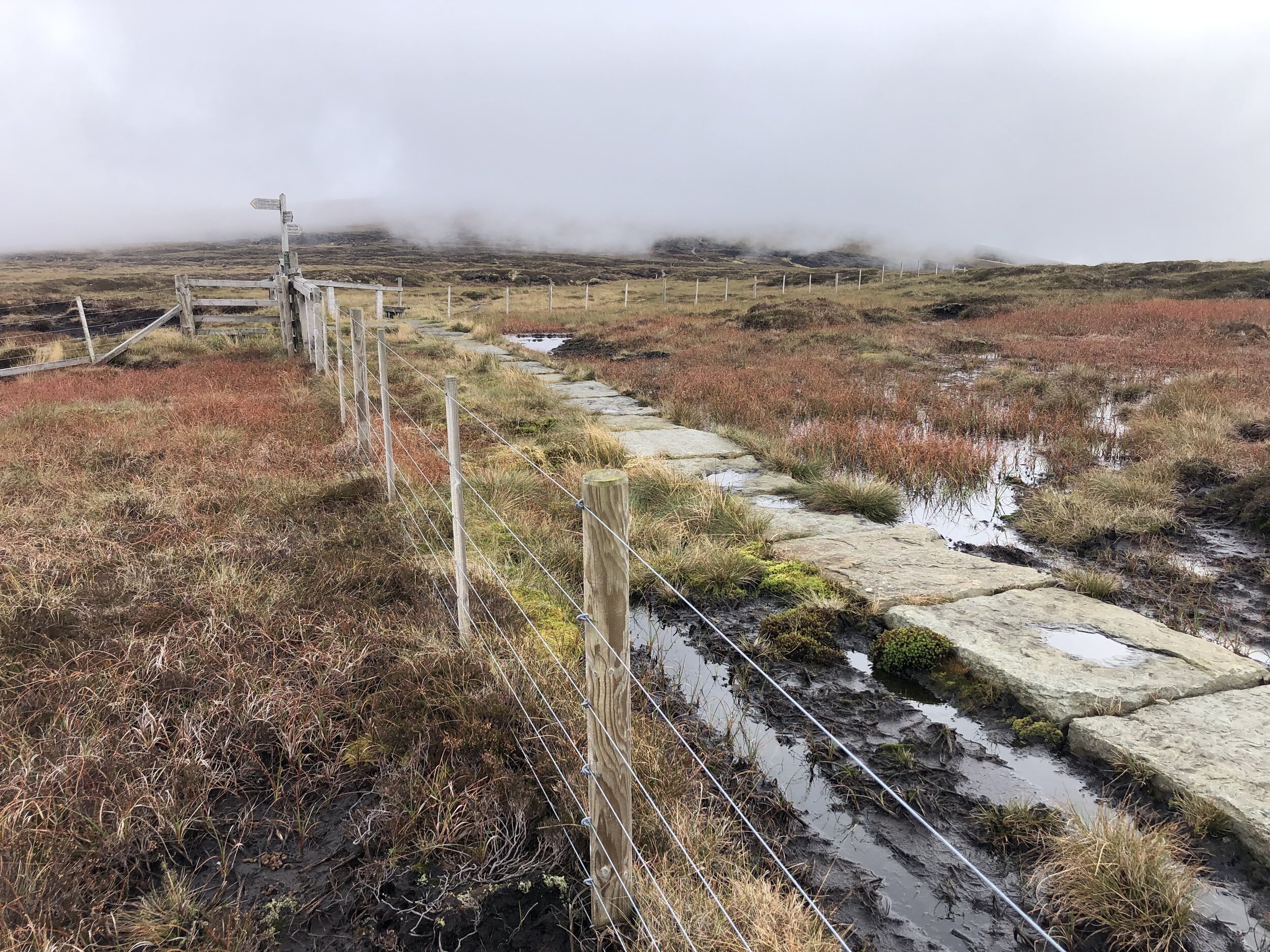
Much of the walk is very easy to navigate, even on a low-visibility day like we had. Follow the boundary fence, keeping it to your left all the way up to the summit plateau. A lot of the route is boggy underfoot and you’ll need to navigate around streams, loose peat and marsh-land. We were there on an especially wet day and it was all we could do to keep our feet dry.

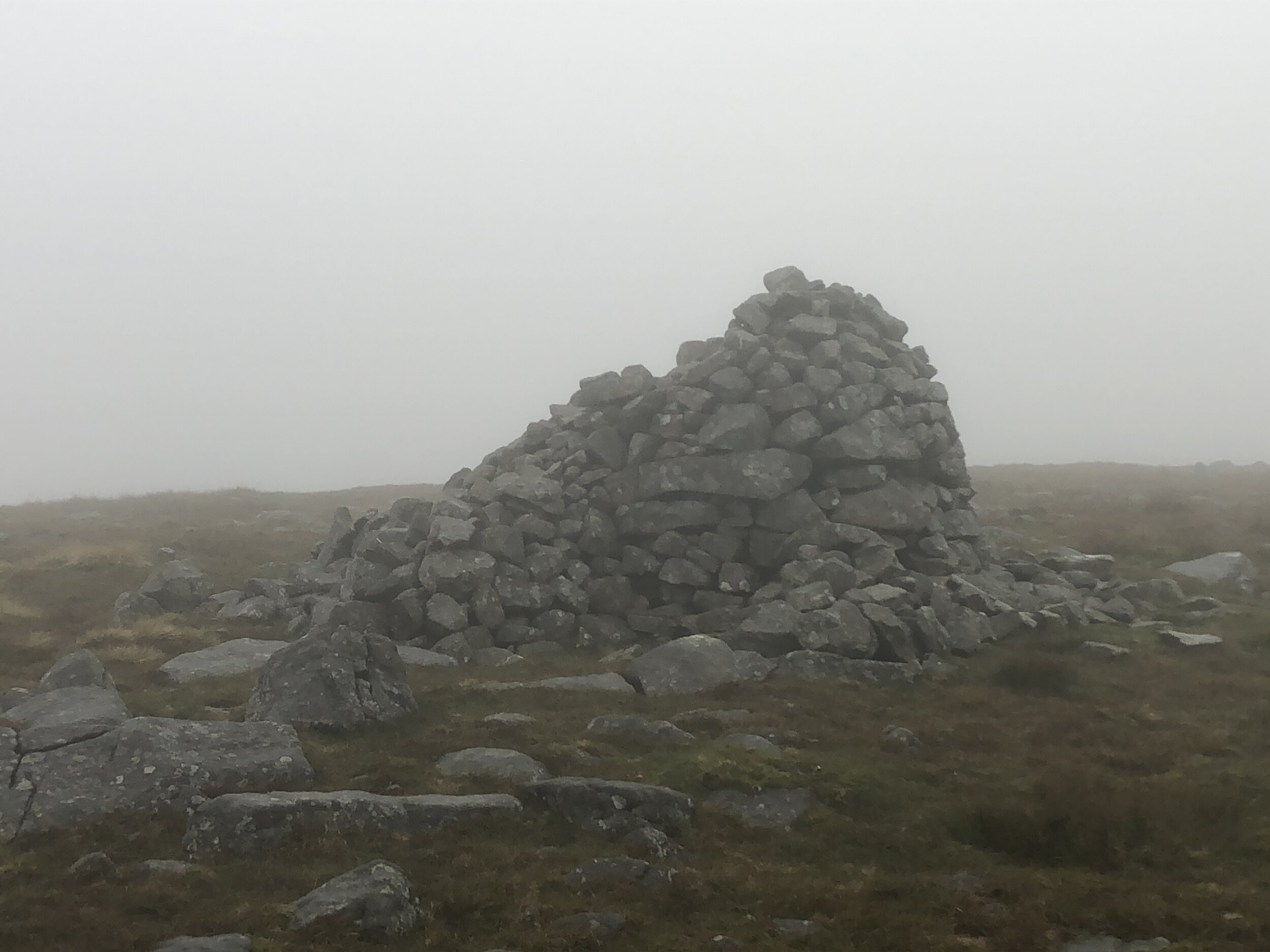
There’s a steep climb up to the summit plateau where you’ll cross a fence via a stile and can pick up some Land Rover tracks. Keep to these heading on an easterly curve and they’ll lead you to the summit cairn and the Trig Pillar.

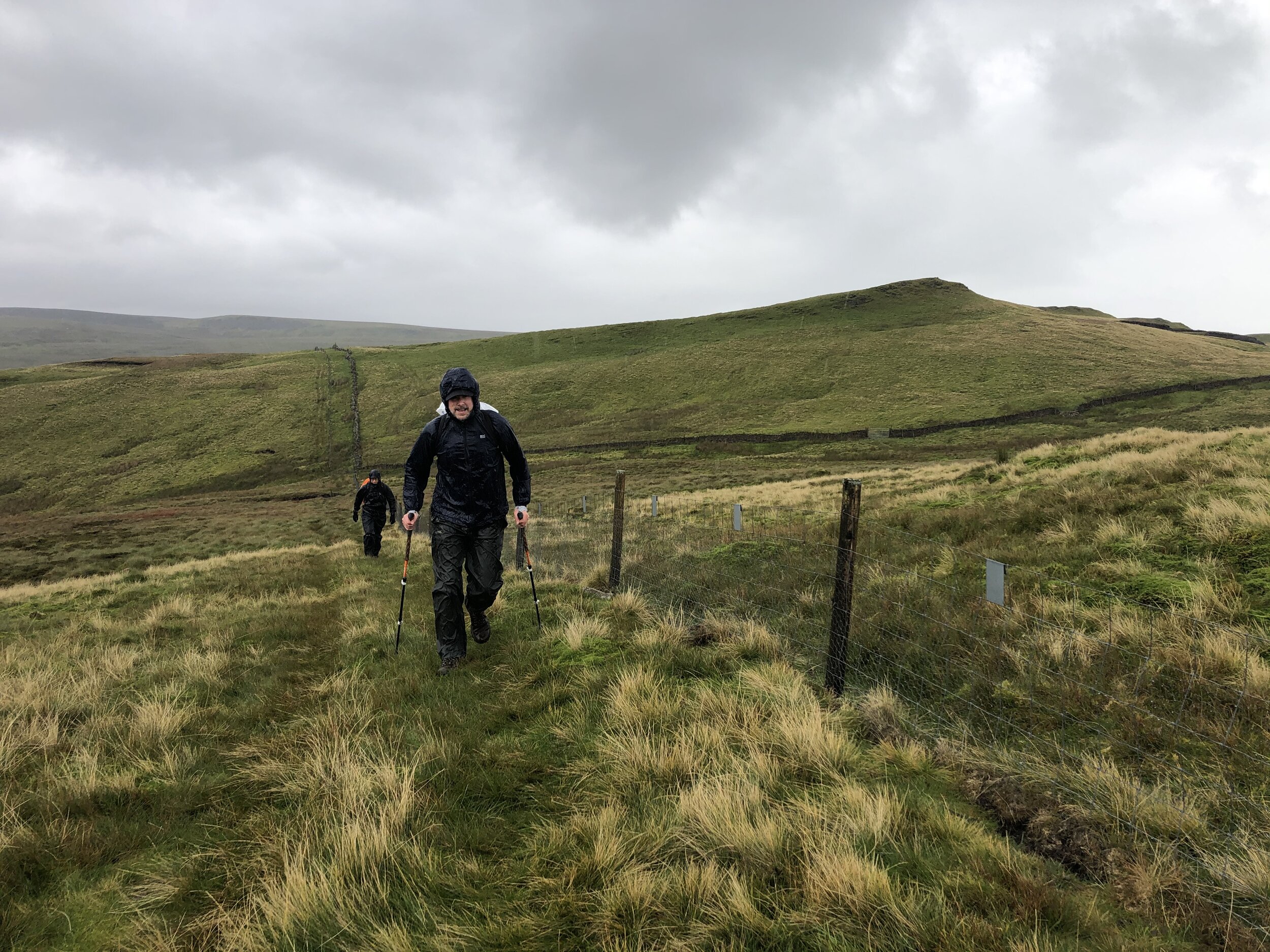
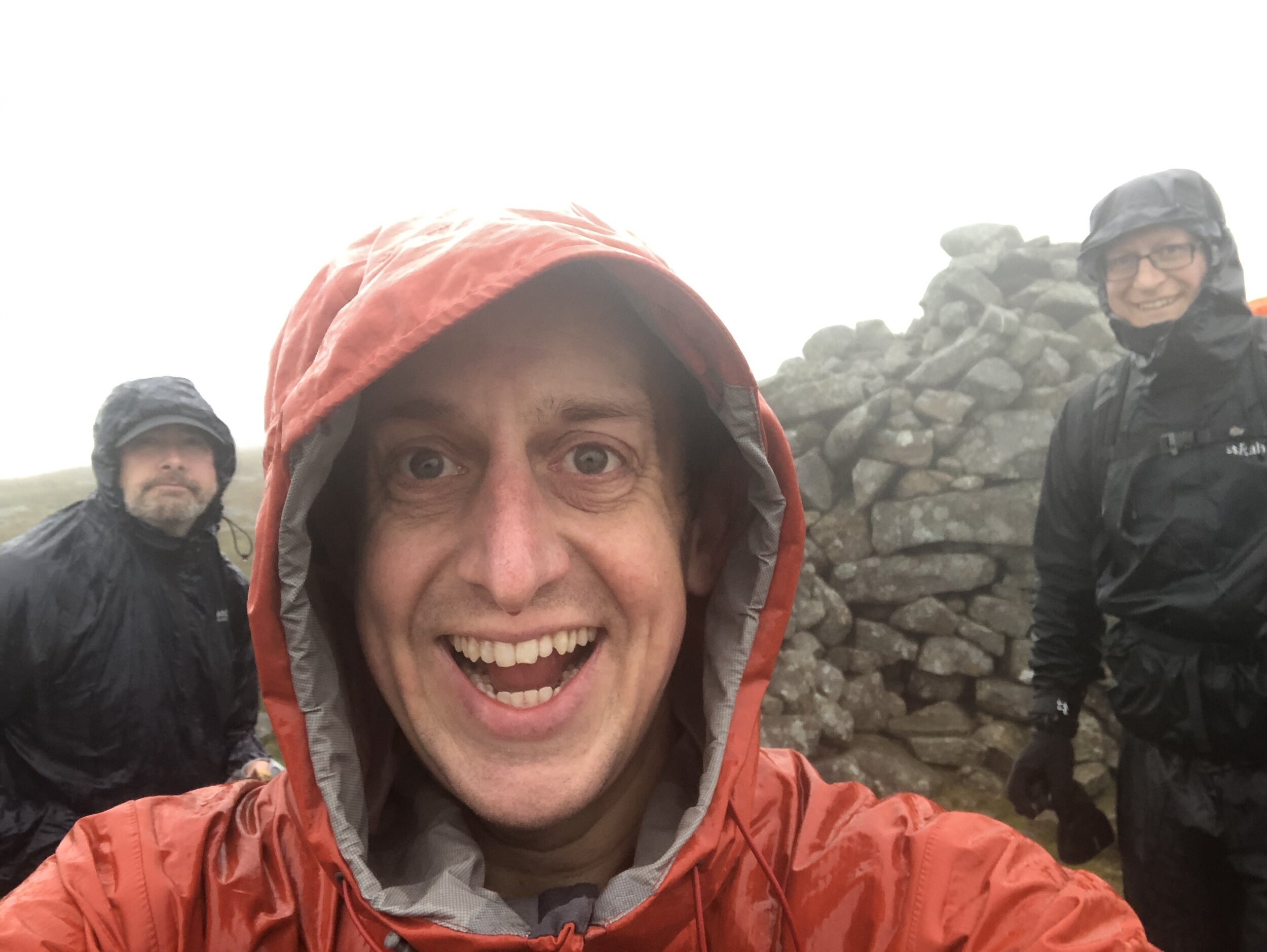
We were there on one of the wettest days possible. If the route was closer to home and we didn’t need a permit we might have delayed it for another day, but we had little option but to press on. The only other person we met on the approach had reached the summit but hadn’t bothered with the extra ~2km to the Trig Pillar. I could see how tempting it would have been on a day like that to have missed it. Given our Trig-obsession we weren’t going to miss it though and took the extra hour to bag the pillar.

The descent was much quicker as we had abandoned any attempt to avoid the wet marsh and mostly walked straight through it. At 5.5 hours of driving rain we arrived at the car as wet as if we had swum to the summit. It was challenging but it also meant that I had now completed all County Tops in England, Wales and Northern Ireland.

Now for the rest of Scotland…


OTHER HIGH POINTS IN County Durham

OTHER HIGH POINTS IN Northumberland

  • Westerhope (131m) North Tyneside Unitary Authority High Point: Peakbagger / Hillbagging

  • Camperdown (86m) North Tyneside Unitary Authority High Point: Peakbagger / Hillbagging

OTHER HIGH POINT IN Yorkshire


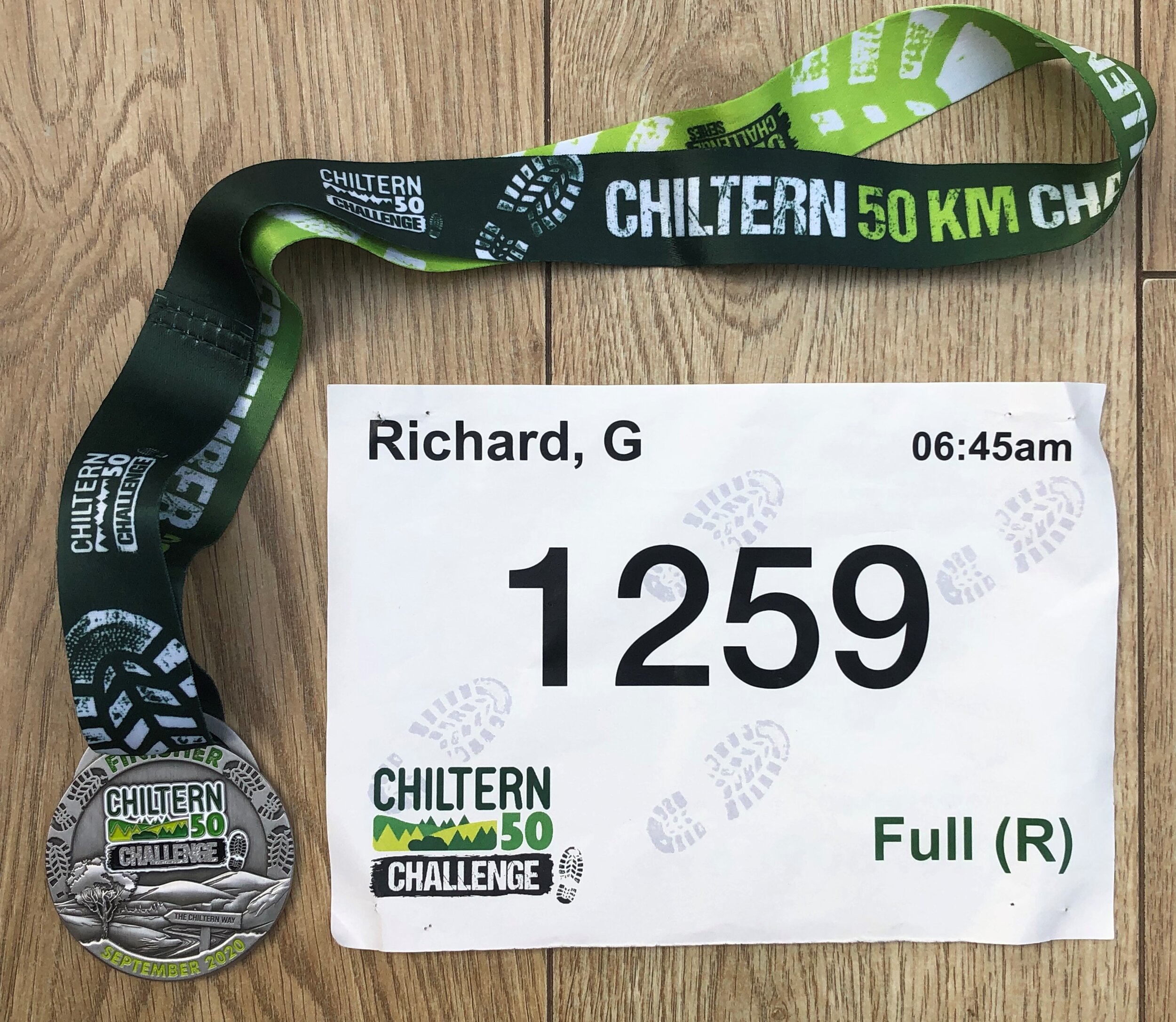
Chiltern Challenge Ultra Marathon
IMG_2205.jpg

When: September 26th 2020
Start & Finish: The Henley Showground, Marlow Road, Henley-on-Thames, RG9 3AP
Distance
: 50 km (31 miles)
Elevation Change: +/- 560m
Course: Figure of 8 with a western loop and an eastern loop intersecting at the Henley Showground Basecamp. Mix of Chiltern Way, Oxfordshire Way and Thames Path
GPX File: get via Buy Me a Coffee
Other routes touched (walk): Shakespeare’s Way, Chiltern Way, Oxfordshire Way, The Wokingham Way, Thames Path
Other routes touched (cycle): Chilterns Cycleway
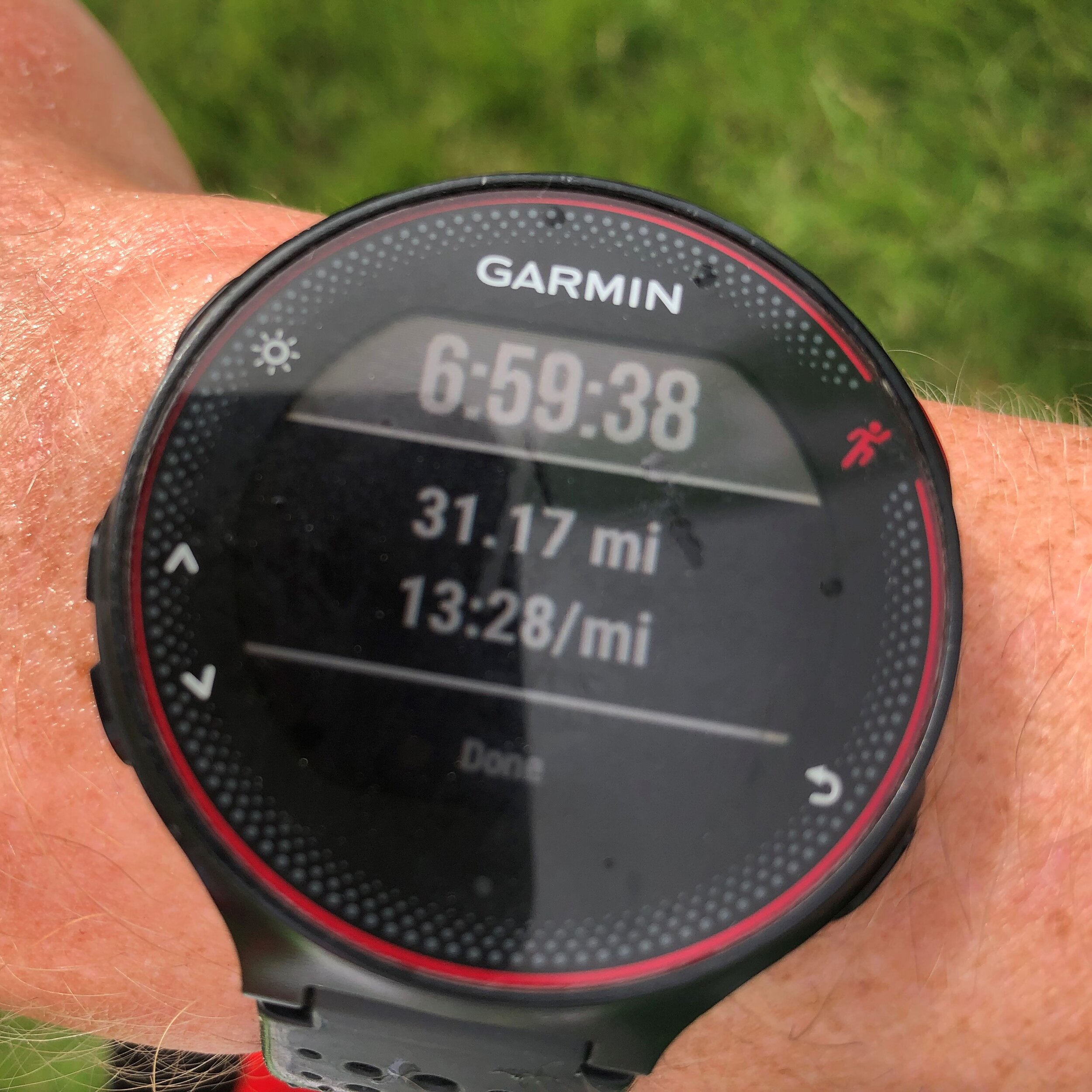
Finish time: 6 hours 59 minutes
Links: Hambleden, Stonor, Bix Bottom,Middle Assendon, Henley-on-Thames, Bovingdon Green, Marlow, Hurley, Remenham


With most running events having been cancelled due to Covid this yet I’d pretty much written off doing my annual ultra. So, as soon as I saw that this one was on, and it was a local one, I signed up. Also, having not been well (not do to Covid) a few weeks’ before I still wasn’t sure if I was up to ultra fitness. I decided to take it slow and take advantage of the 2-loop course to give me the option of retiring after the first loop.

This was also my first Covid-secure event and the organisation on the day was really impressive. Ultras may be expensive, but this was great value considering the new protocols that had in place. The only down-side for me was that the hand-sanitizer they has was so slippery that my wedding ring slipped off somewhere between the start and the first rest stop. So far it’s not been found which is less than ideal. It sounds like I wasn’t the only participant to lose a ring so I strongly recommend runners on Covid-secure events to leave their rings at home.

Lost rings aside, the event was amazing. I am big fan of the Chilterns and this was a perfect day to do a big run there. It was sunny but not too warm and dry underfoot too. I also liked the combination of woods and hills in the north and the flat sections of the Thames Path to the south.

In the end it was a good test of my fitness as I completed the course in a good time (for me) and without any signs of my sickness a few weeks ago. Fingers crossed the postponed Race to the Castle, my original 2020 ultra pick will be back on in 2021.

elevation_profile.jpg

Maidenhead and Cookham Circular Walk via the Thames Path and Greenway
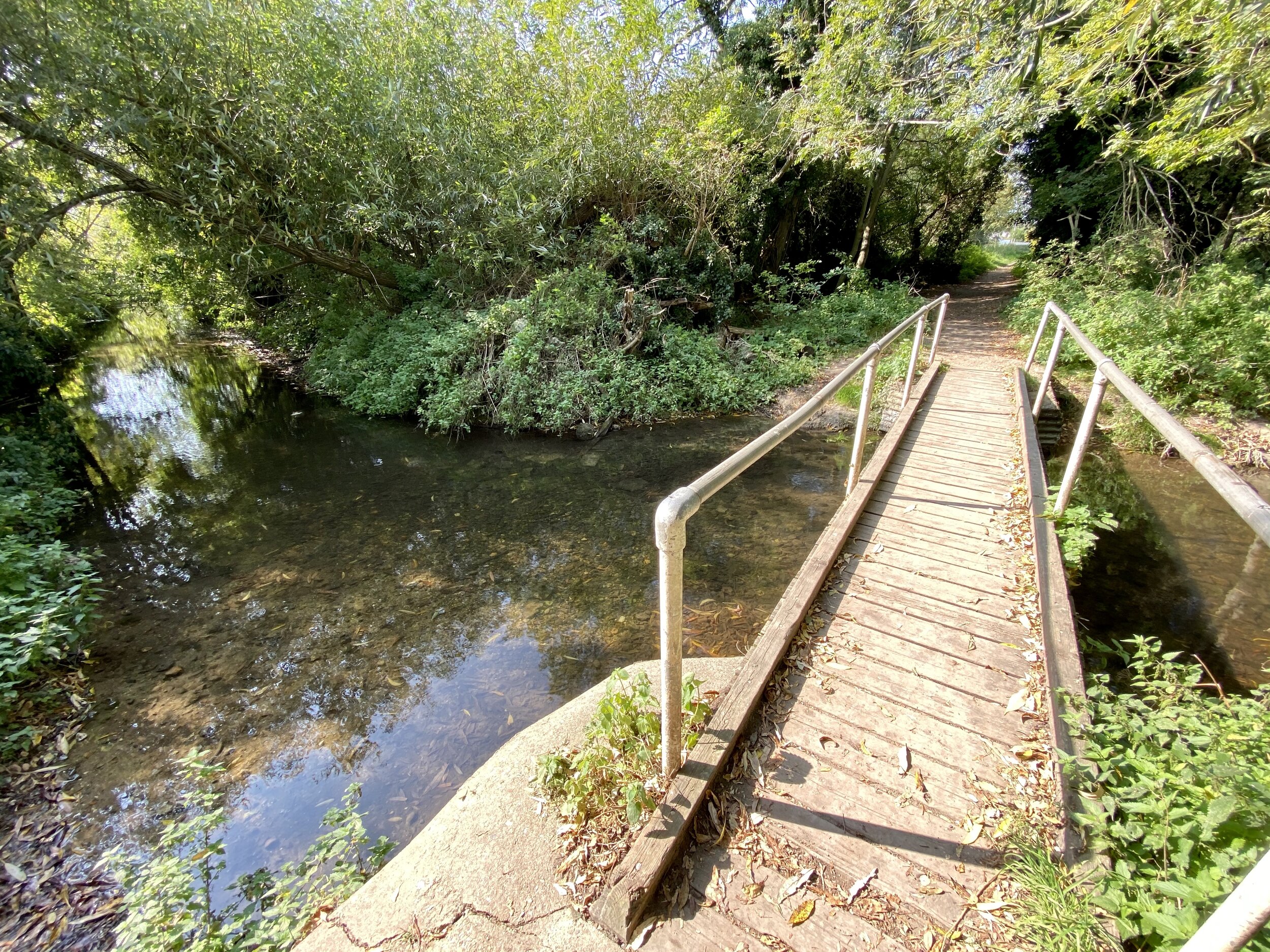
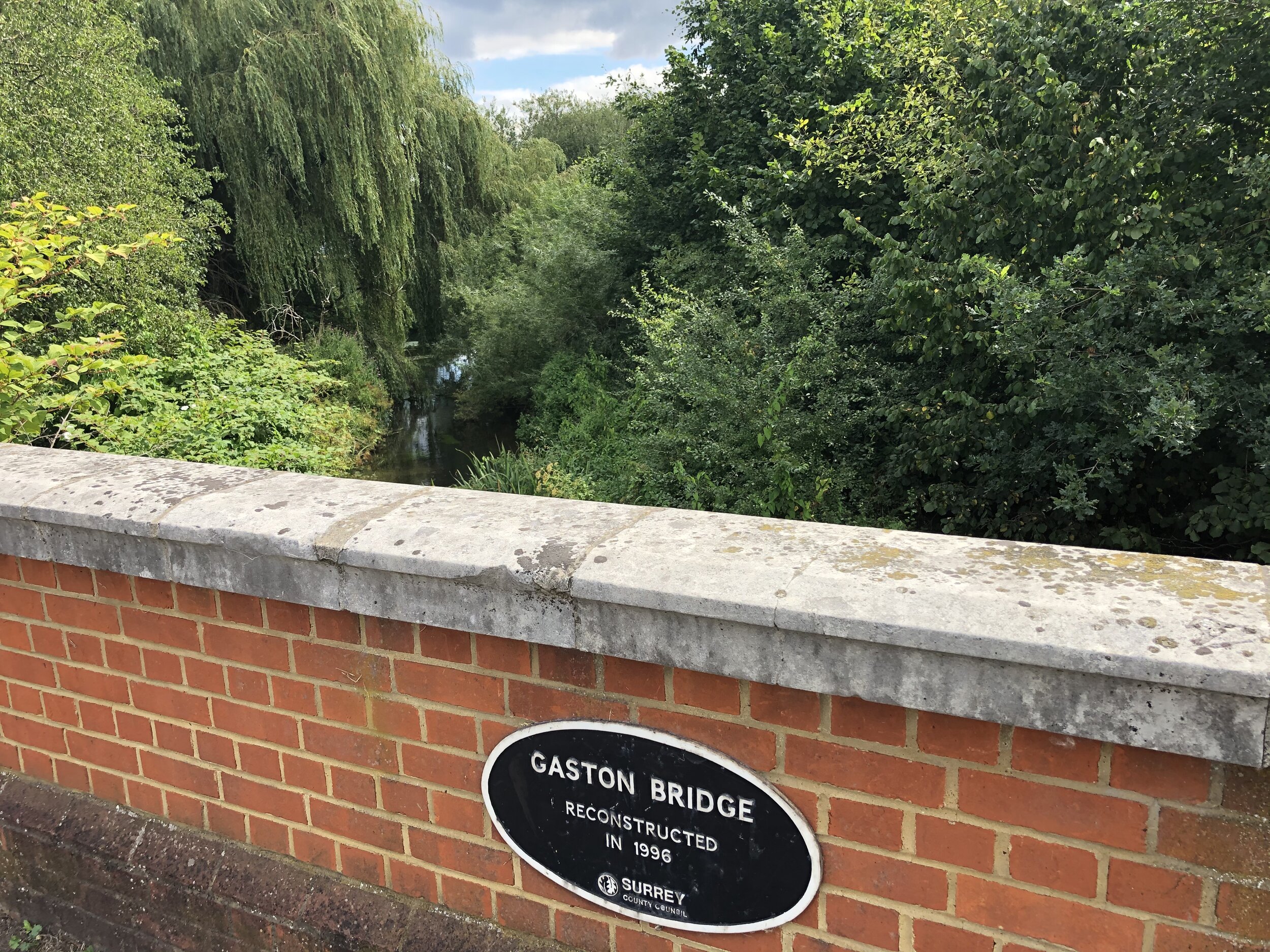
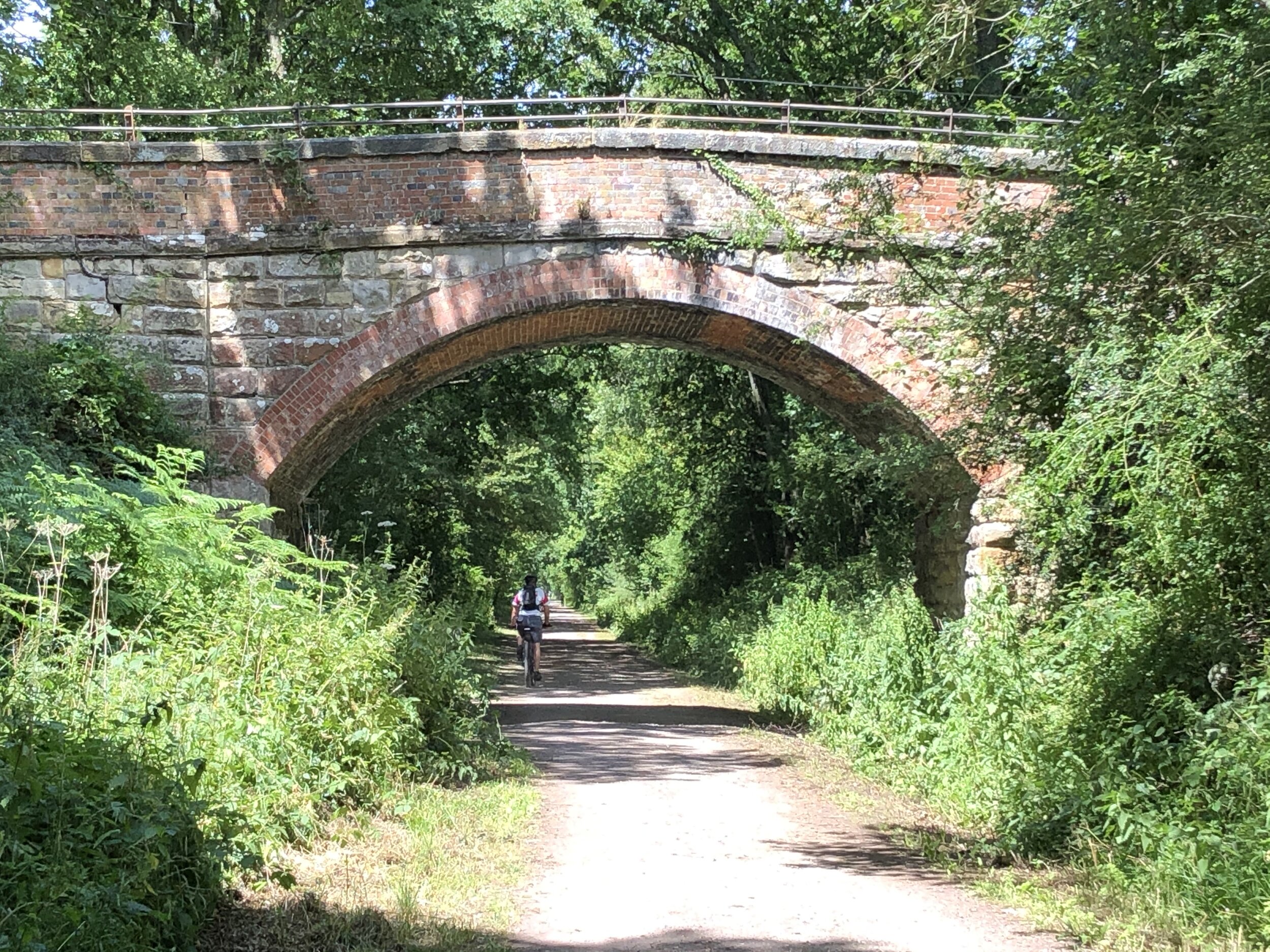
Bridge over Maidenhead Ditch on the Green Way West

Bridge over Maidenhead Ditch on the Green Way West


Start & Finish: Boulters Car Park, 7-15 Lower Cookham Rd, Maidenhead, SL6 8JN
Distance: 10 km (6.2 miles)
Elevation change: +/- 28 m
GPX File: get via Buy Me a Coffee
Other routes touched (walk): Green Way, Thames Path, Maidenhead Boundary Walk, Shakespeare’s Way
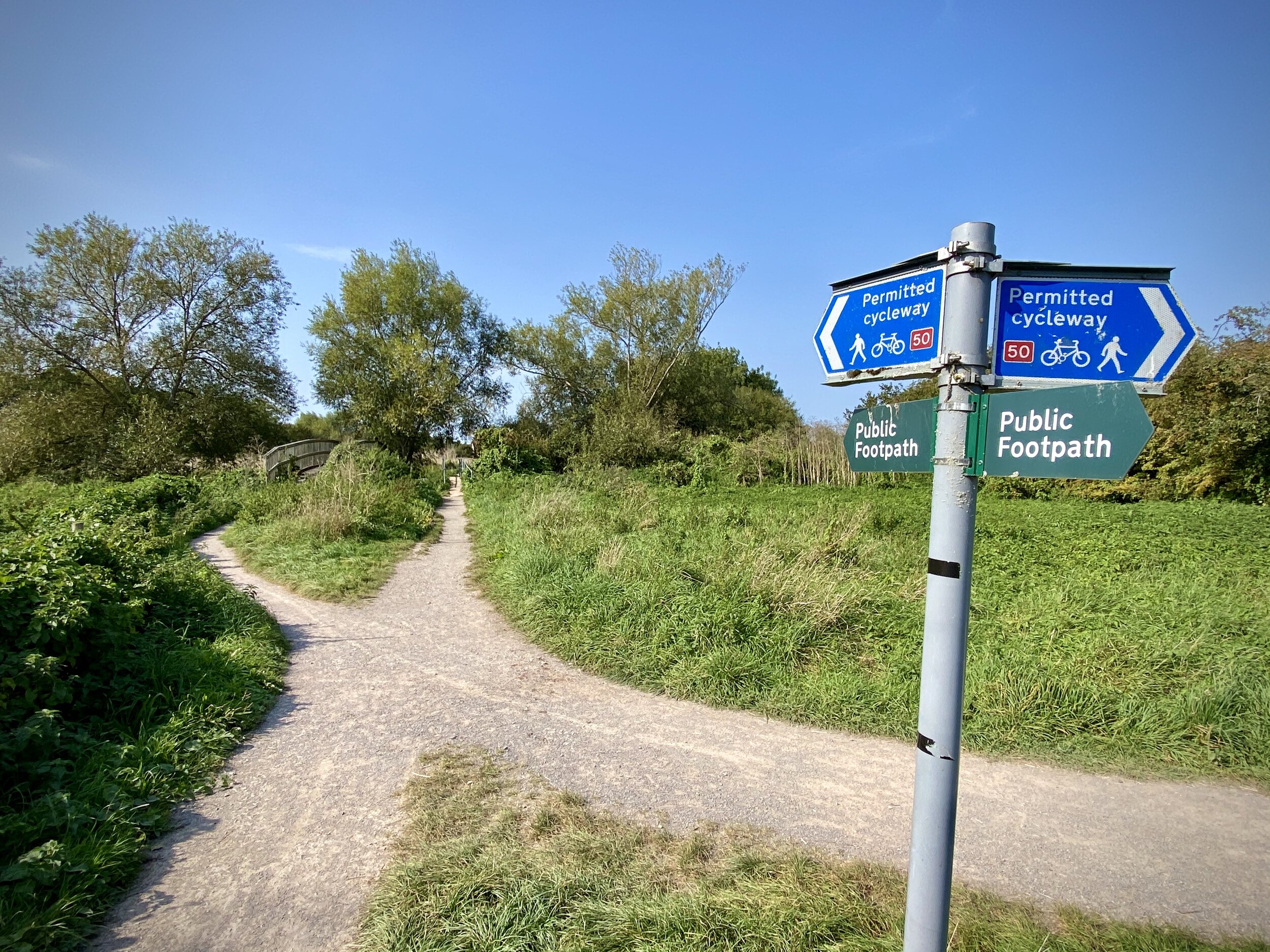
Other routes touched (cycle): NCN 50, Round Berkshire Cycle Route 52
Pubs / Cafes on route: The Ferry (SL6 9SN), and several others on Cookham High Street
Map: OS Explorer Map (172) Chiltern Hills East
Links: Boulters Lock, Cookham, National Trust Maidenhead and Cookham Commons


This is part of a series of ~10k circular walks that include the Thames Path National Trail at the edge of the Chilterns. This one fits between our recent Marlow Donkey walk and part 1 of the Thames Path and Jubilee River loops.

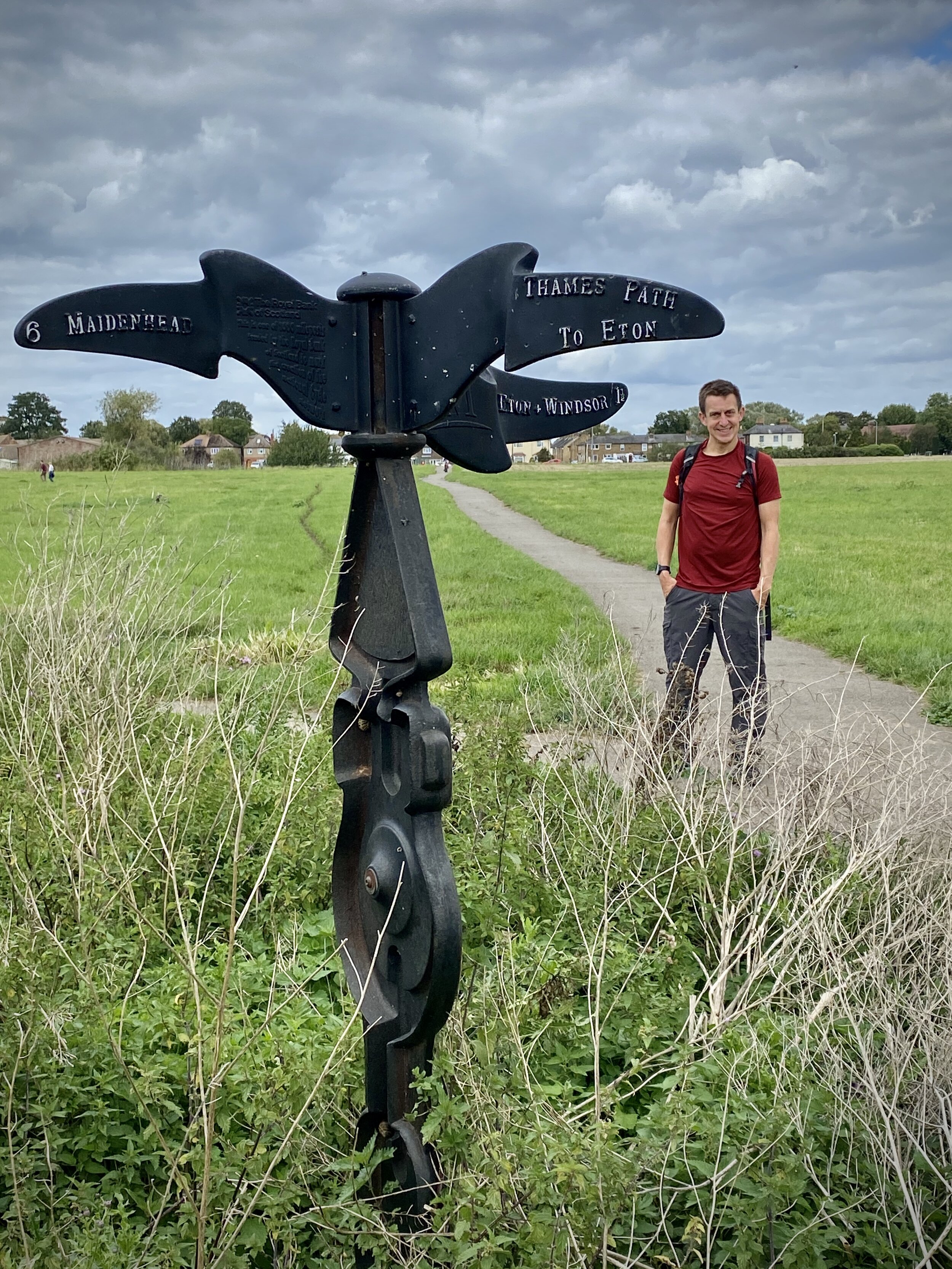
We started this trip at the Boulter’s Lock car park and headed west through the riverside houses to North Town. Here you can pick up the Green Way West, a north/south path connecting Maidenhead and Cookham. Follow the path for ~3.5km until you meet the Thames Path at Cookham Moor. Take a right here and you can follow the Thames Path all the way back to the start at Boulter’s Lock.

When you get to the Ferry pub the Thames path diverts from the river as the river flows through private land. It’s well sign-posted and you’ll follow Ferry Lane / Sutton Road south for ~300m before taking a left onto Mill Lane which takes you back to the river. This is a lovely, quiet stretch of the Thames Path that gives you views over to the Cliveden estate on the opposite bank.


Thames Path & Jubilee River Walk - Eton Wick and Eton
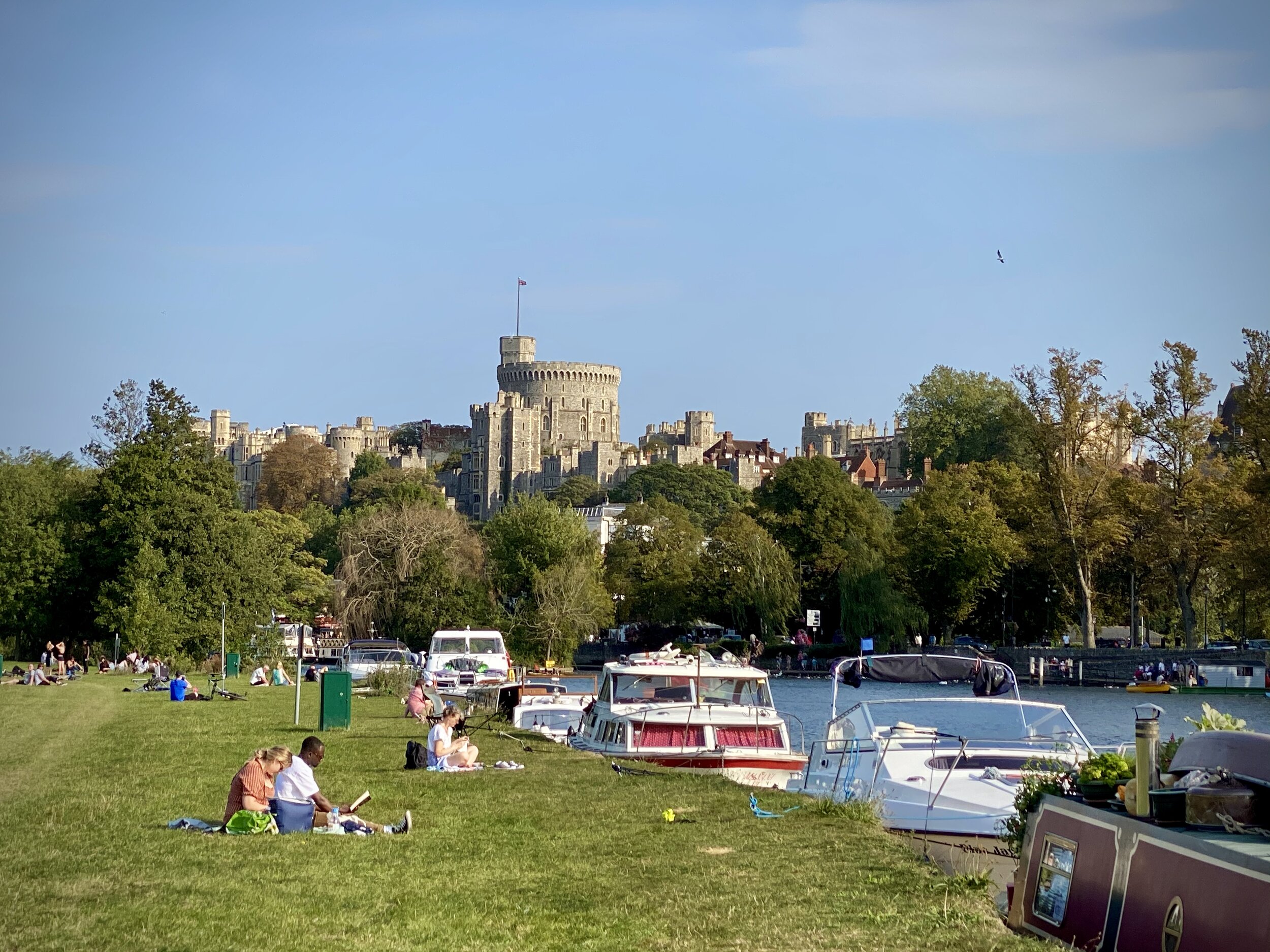
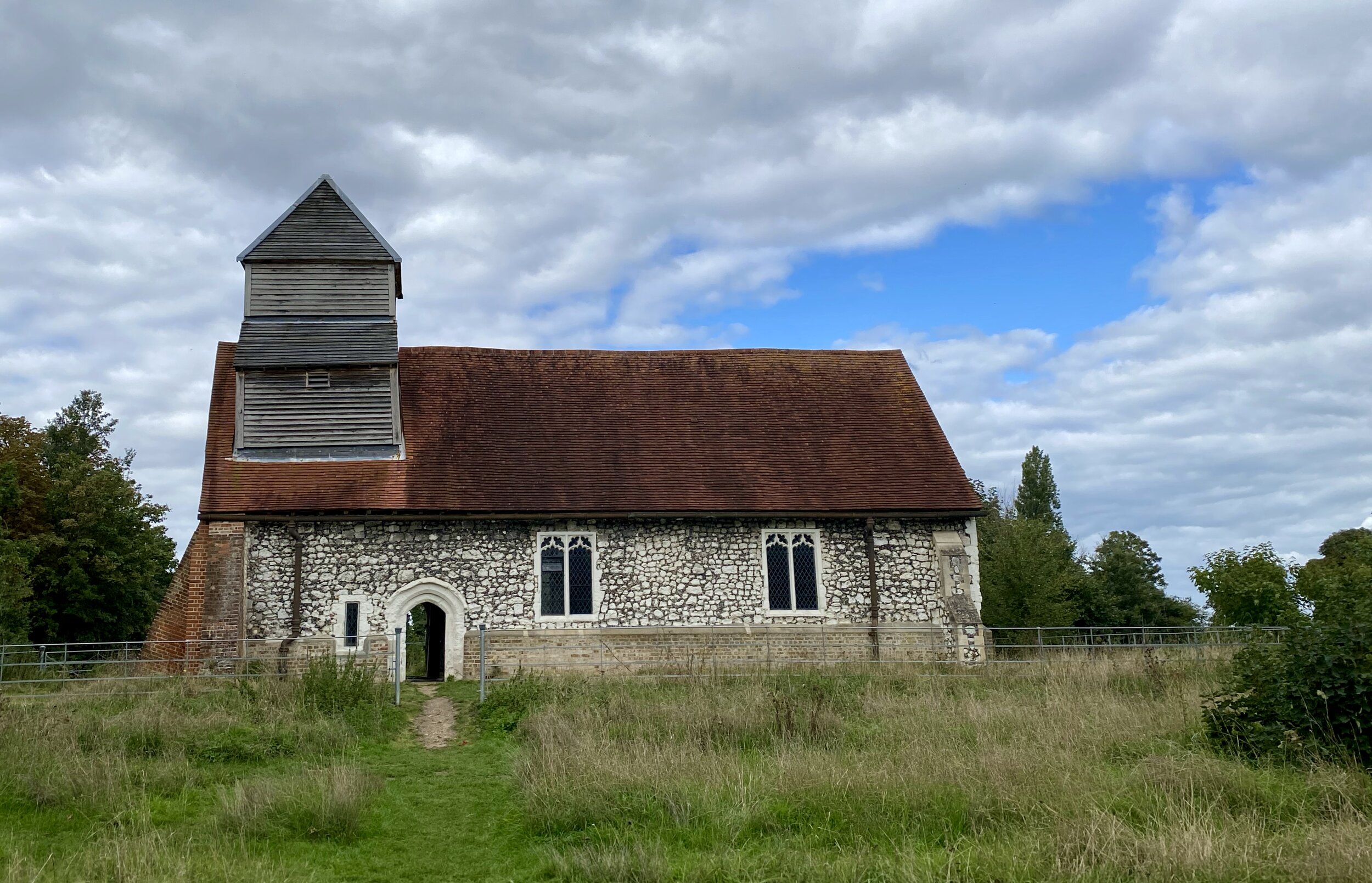
Windsor Castle from The Brocas

Windsor Castle from The Brocas


Start & Finish: Eton Wick Village Hall, Eton Wick Rd, Eton Wick, Windsor SL4 6LT
Distance: 7.9 km (4.9 miles)
Elevation change: + / - 22 m
GPX File: get via Buy Me a Coffee
Other routes touched (walk): Thames Path, Jubilee River Path
Other routes touched (cycle): NCN 4, 461, 61
Pubs / Cafes on route:
Several on Eton Wick High Street
Map: OS Explorer Map (160) Windsor, Weybridge & Bracknell
Links: Jubilee River, Eton Wick, Eton, Eton College


The Jubilee River is a man-made channel built in the late 1990s and early 2000s to take overflow from the River Thames to prevent flooding around Maidenhead, Windsor, and Eton. The path along side it passes through wildlife and woodland making a easy, pleasant walk or cycle. It also runs parallel and close to the Thames, allowing for several combinations of short trips that take in both.

This is the third of a series of 4 circular walks of roughly 10 km that take in sections of both the Jubilee River and Thames Path. This one starts at Eton Wick Village Hall and takes in Eton High Street, meeting the 4th and final section.


route-33445871-map-full.png
elevation_profile.jpg

The Complete Route: Thames Path & Jubilee River Walks

Left to right: Maidenhead to Datchet in 4 sections. Map base: ESRI Topo via Ride With GPS

Yellow = Maidenhead & Bray, Red = Dorney & Eton Wick, Blue = Eton Wick and Eton, Greet = Eton and Datchet


Thames Path & Jubilee River Walk - Dorney and Eton Wick
Jubilee River near Dorney

Jubilee River near Dorney


Start & Finish: Eton Wick Village Hall, Eton Wick Rd, Eton Wick, Windsor SL4 6LT
Distance: 9.9 km (6.1 miles)
Elevation change: + / - 25 m
GPX File: get via Buy Me a Coffee
Other routes touched (walk): Thames Path, Jubilee River Path
Other routes touched (cycle): NCN 61
Pubs / Cafes on route:
N/A but some shops on Eton Wick Road
Map: OS Explorer Map (160) Windsor, Weybridge & Bracknell
Links: Jubilee River, Eton Wick, Dorney Lake, Boveney Lock, St Mary Magdalene's Church, Boveney


The Jubilee River is a man-made channel built in the late 1990s and early 2000s to take overflow from the River Thames to prevent flooding around Maidenhead, Windsor, and Eton. The path along side it passes through wildlife and woodland making a easy, pleasant walk or cycle. It also runs parallel and close to the Thames, allowing for several combinations of short trips that take in both.

This is the second of a series of 4 circular walks of roughly 10 km that take in sections of both the Jubilee River and Thames Path. This one starts at Eton Wick village hall and meets up with section on on Harcourt Road in Dorney Reach.


The Complete Route: Thames Path & Jubilee River Walks

Left to right: Maidenhead to Datchet in 4 sections. Map base: ESRI Topo via Ride With GPS

Yellow = Maidenhead & Bray, Red = Dorney & Eton Wick, Blue = Eton Wick and Eton, Greet = Eton and Datchet


Chiltern Walks: Chalfont St Peter, Seer Green and Chalfont St Giles
Descent to the Misbourne near Chalfont St Giles

Descent to the Misbourne near Chalfont St Giles


Start & Finish: Chalfont St Peter Car Park, Church Lane, Chalfont St Peter, SL9 9TW
Distance: 13.1 km (8.1 miles)
Elevation change: + / - 124 m
South Bucks Way section covered: Rushcroft Wood to Chalfont St Peter: 4.3 km
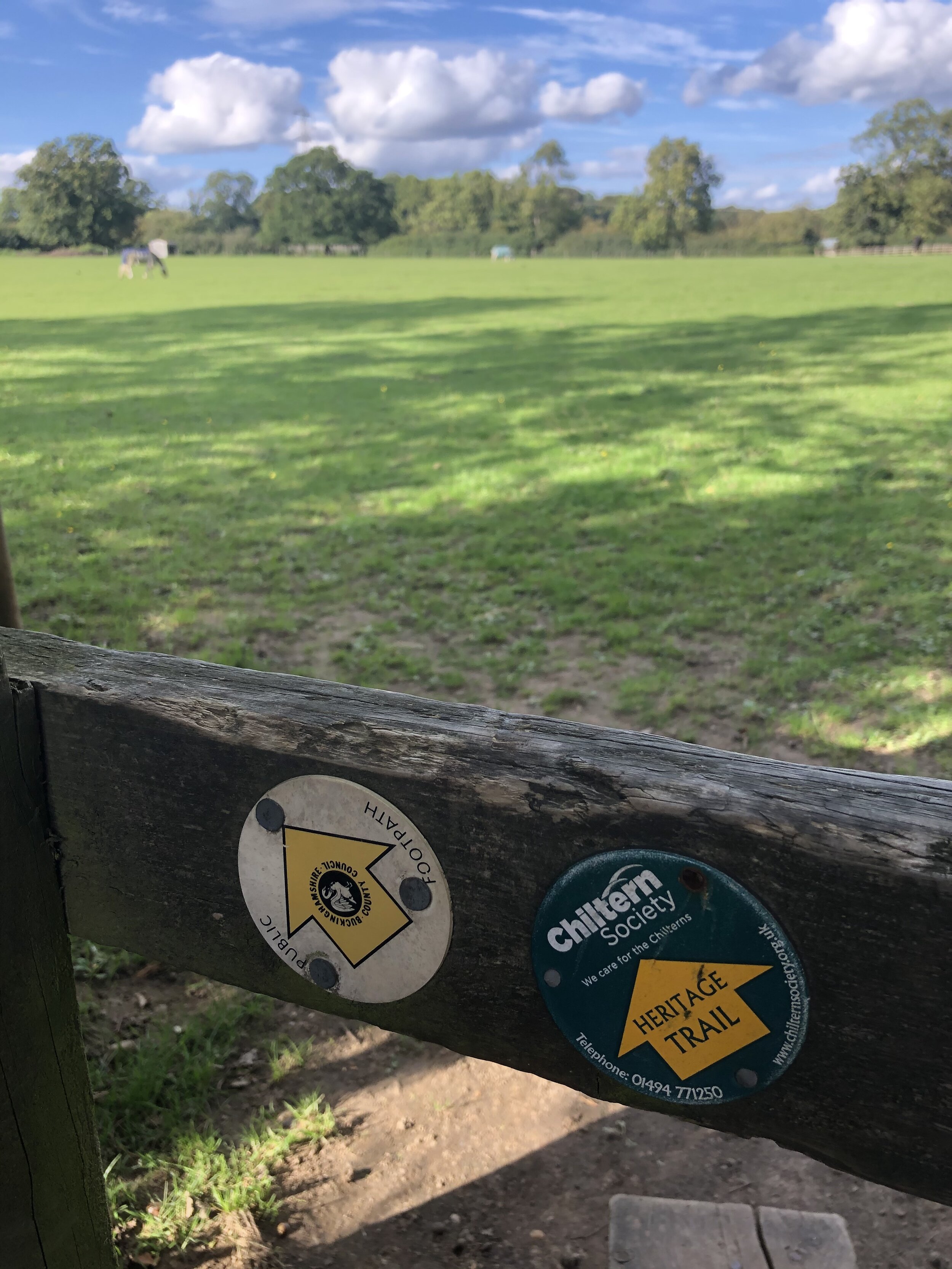
Chiltern Heritage Trail Section Covered: Chalfont St Giles to Hodgemoor Wood: 10.3 km
GPX File: get via Buy Me a Coffee
Other routes touched (walk): Chiltern Way, Chiltern Heritage Trail, South Bucks Way
Other routes touched (cycle): Chilterns Heritage Trail: Milton Route
Pubs / Cafes on route: Several in Chalfont St Peter and Chalfont St Giles, The Jolly Cricketers, Seer Green (4.6km in)
Map: OS Explorer Map (172) Chiltern Hills East
Links: Chalfont St Peter, Jordans Quaker Meeting Centre, Jordans, Seer Green, Chalfont St Giles, River Misbourne


The South Bucks Way is a 37 km (23-mile) trail that promises a delightful escape for walkers and hikers. This scenic route, often overshadowed by its more famous counterparts, offers a tranquil journey through charming villages, lush countryside, and the gentle murmur of the River Misbourne. This post is part of a series of circular walks featuring the South Bucks Way. The full trail stretches from Coombe Hill near Wendover to the Grand Union Canal at Denham. Our walks take in short sections of the South Bucks Way and loop back to the start on other paths. The South Bucks Way is well sign-posted however you’ll need a map or GPX route to keep on track for the return sections of the loops. The guidance below will help but don’t use it as a fully accurate turn-by-turn guide.

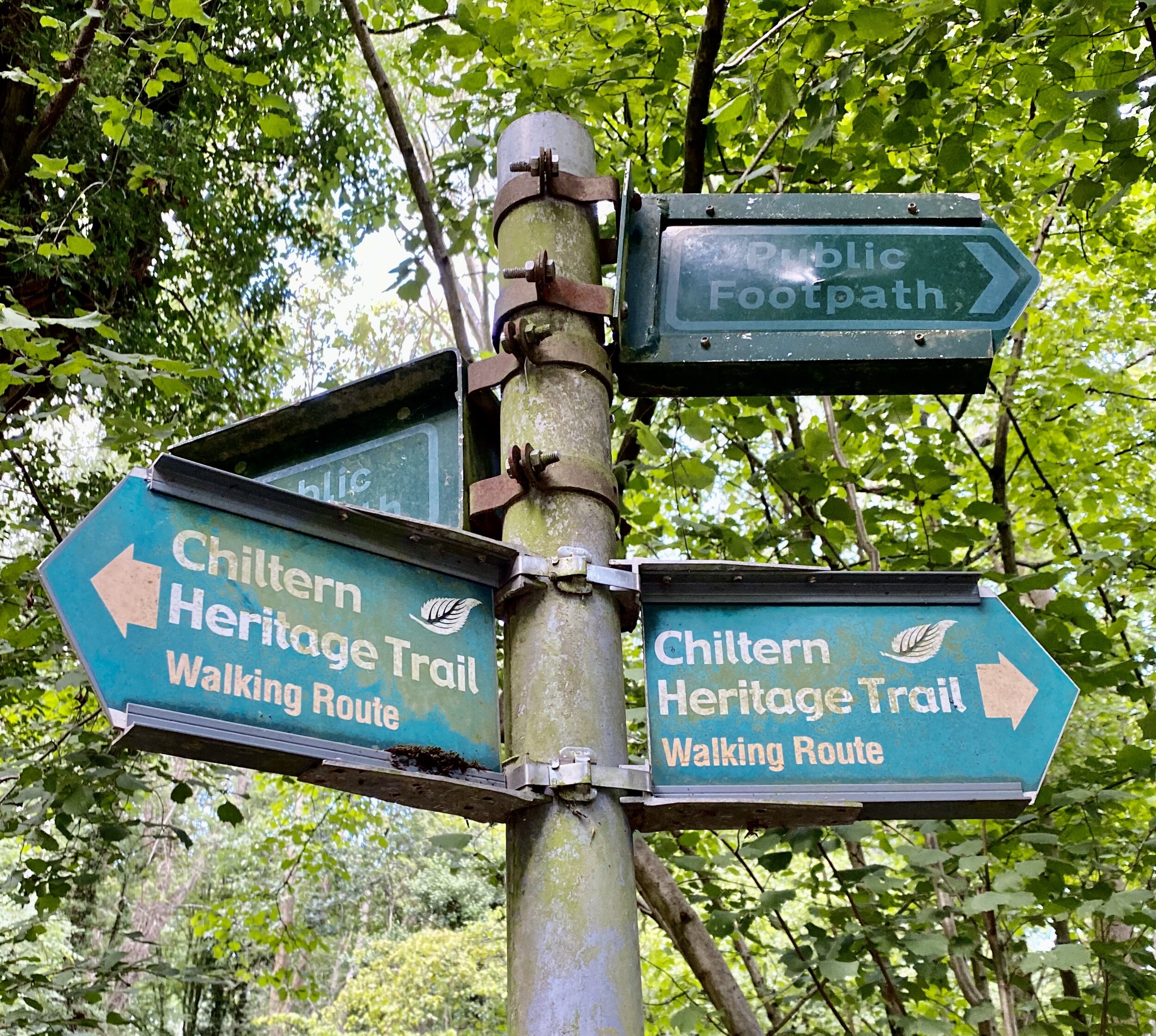
The route is also part of a series of 17 walks that, between them, cover the 83 km of the Chiltern Heritage Trail. Created as a Millennium project, this trail links the towns and parishes within the district, offering stunning scenery, charming villages, and points of historical interest.

Walking Directions

This delightful 13.1 km circular walk begins in the bustling centre of Chalfont St Peter, guiding you westwards towards the tranquil village of Seer Green. Along the first half of the route, you'll wander through beautiful rolling countryside, peaceful woodland patches, and historic landmarks in the village of Jordans, making it a perfect excursion for a weekend morning.

After exploring the scenic paths around Seer Green, the route loops north-east, following the famous Chiltern Heritage Trail before bringing you into the charming parish of Chalfont St Giles. From here, you'll pick up the South Bucks Way, enjoying a gentle and picturesque return leg that follows the meandering, clear waters of the River Misbourne all the way back to your starting point.

The guidance below will help you navigate but don’t use it as a fully accurate turn-by-turn guide. Always take a map and/or a GPX route and prepare well for the weather and terrain.

  • From Chalfont St Peter village centre, walk up Market Place in a westerly direction, then onto Nicol Road and Grove Lane.

  • Take a left off Grove Lane onto a footpath opposite the entrance to Tunmers Lane, continuing in a westerly direction to Welders Lane.

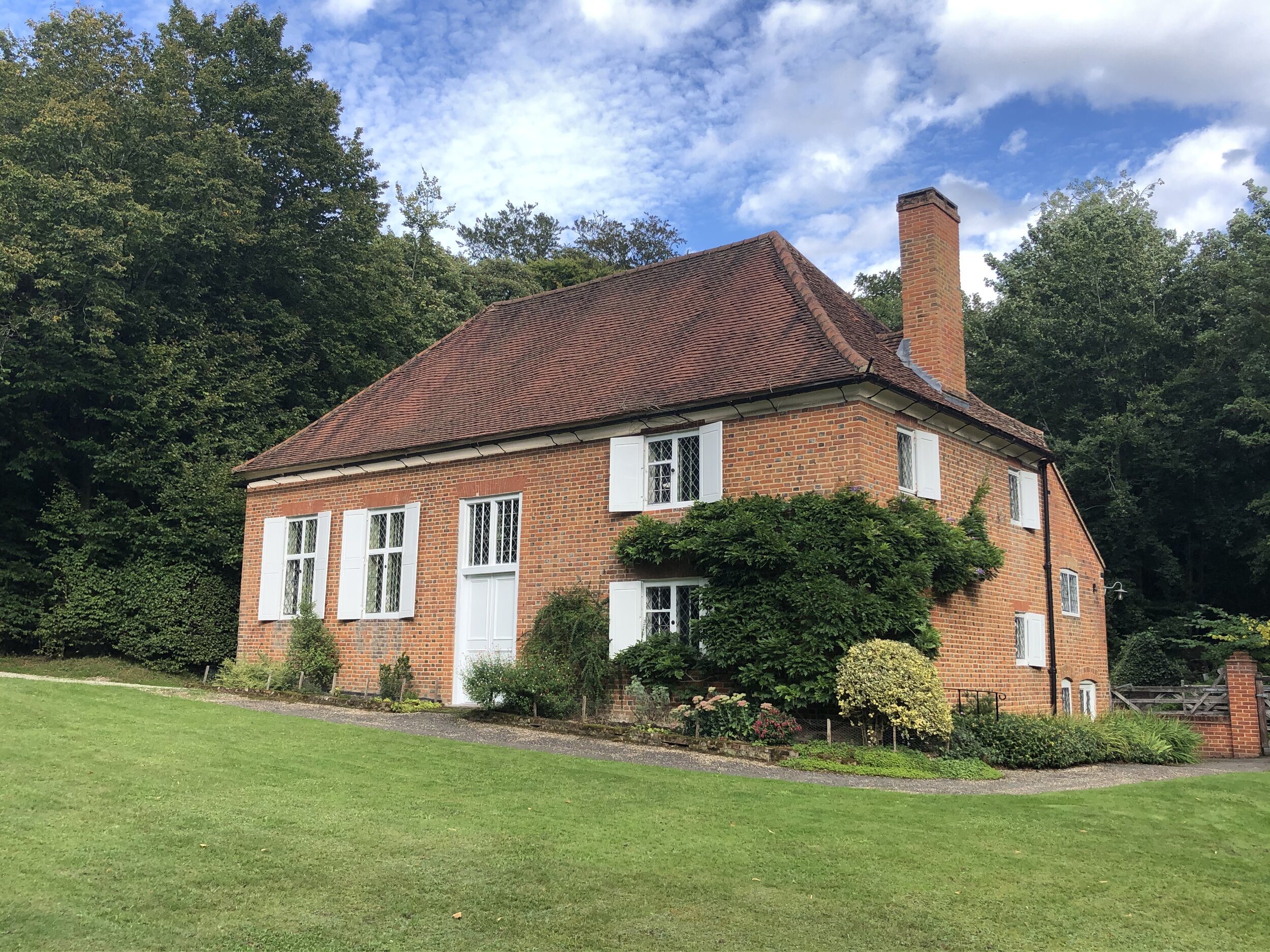
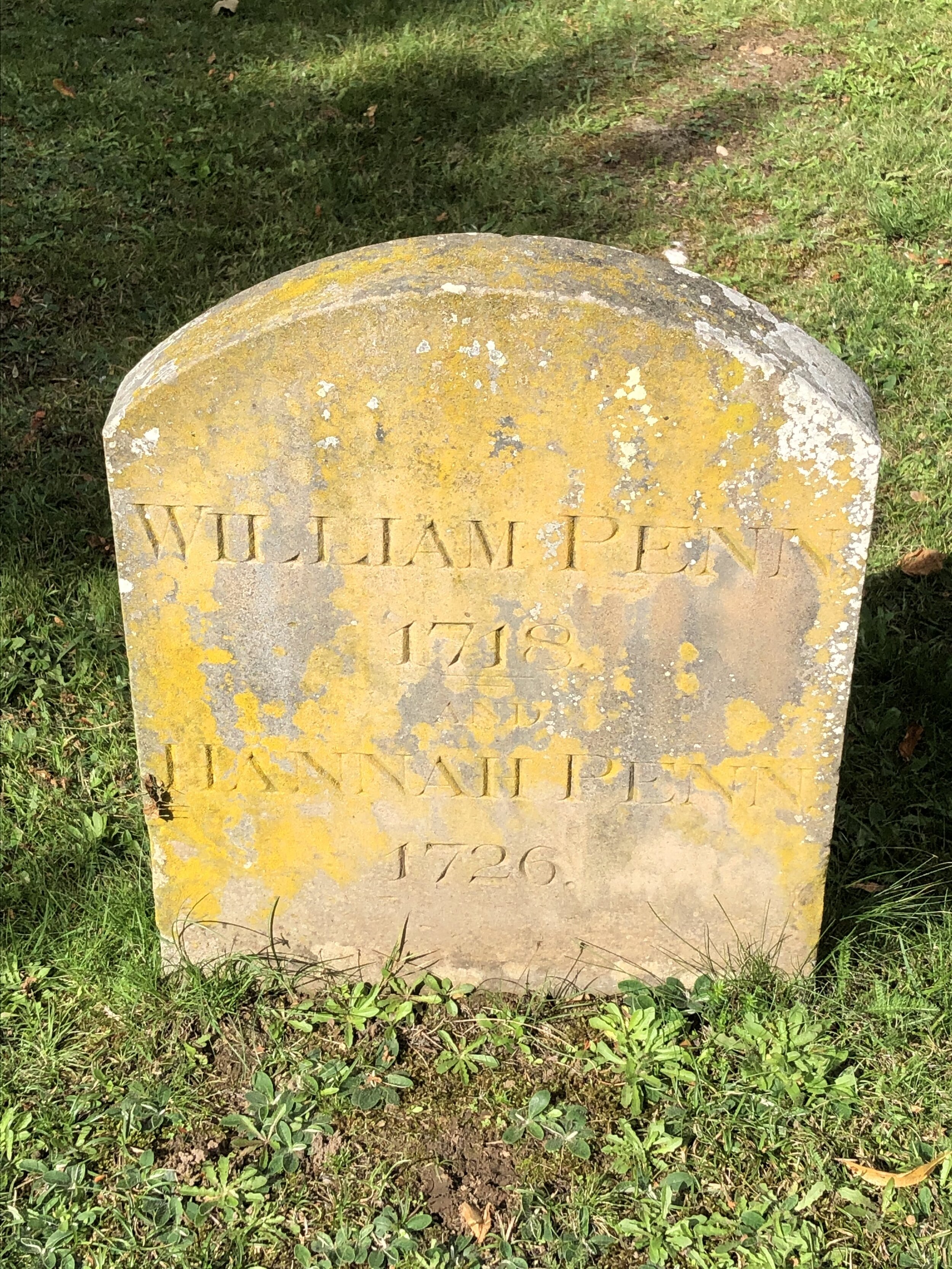
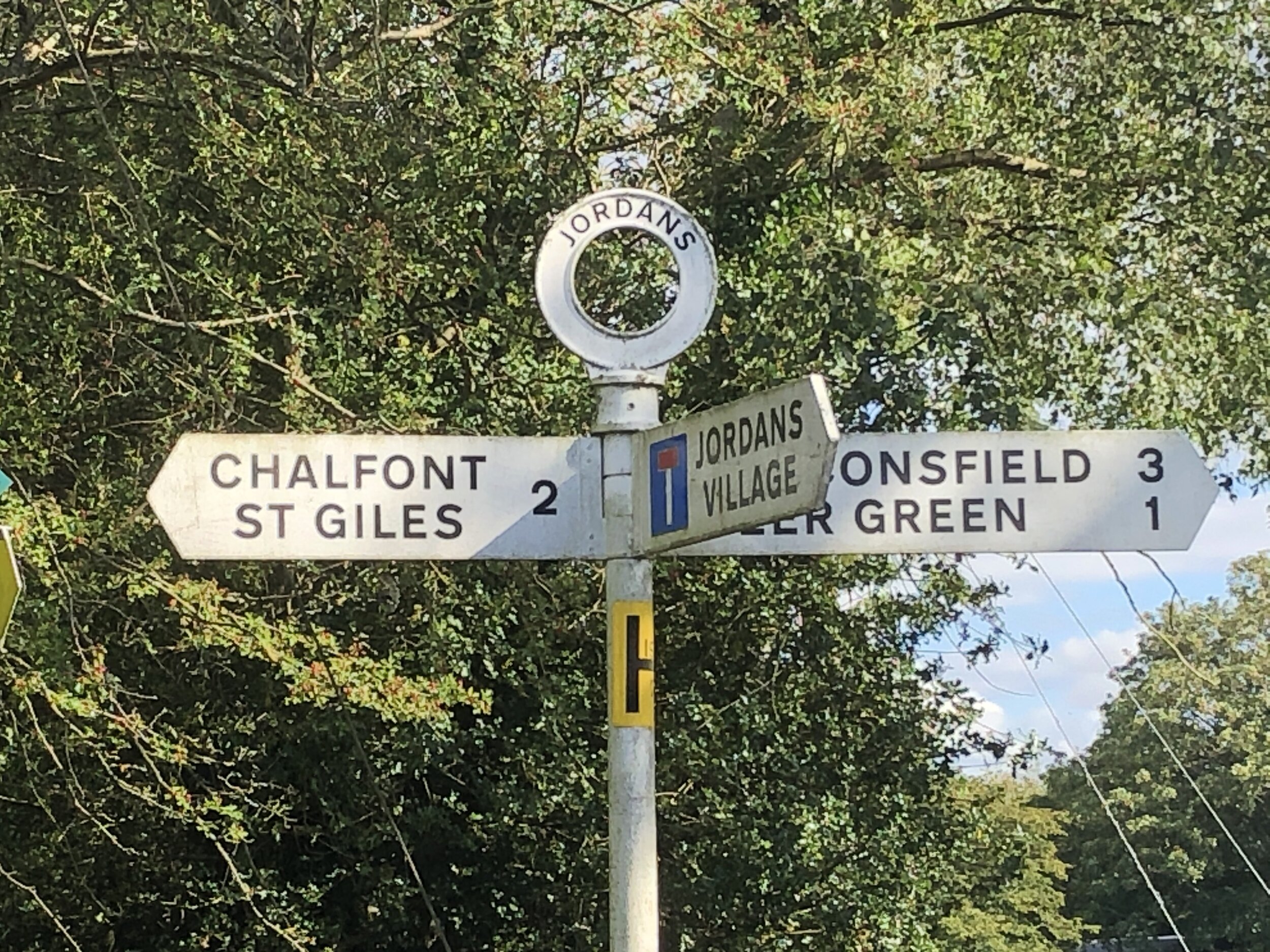
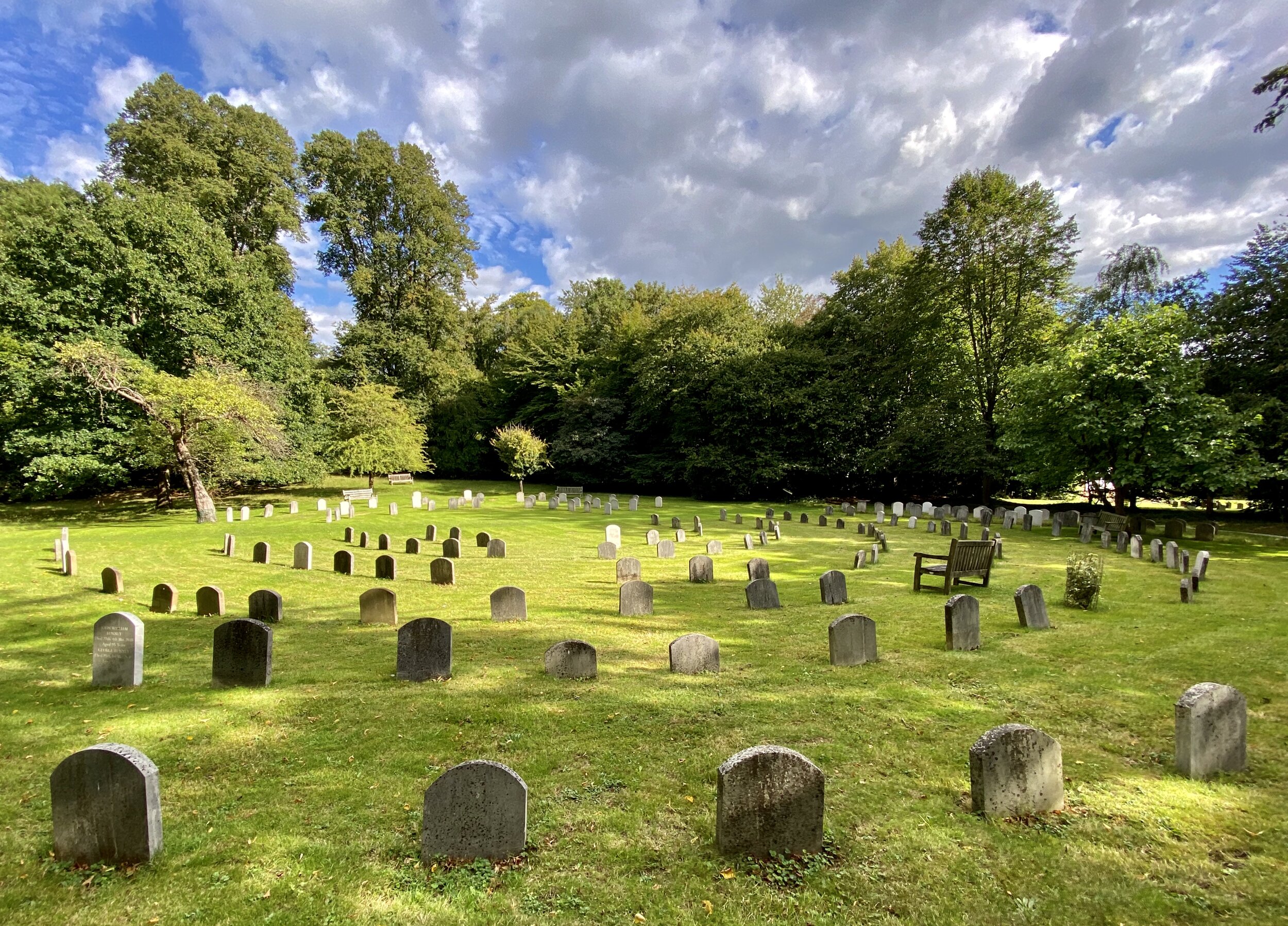
  • Just after you pass Jordans YHA at the western end of Welders Lane, cut through the grounds of the Quaker Meeting House to look out for the grave of William Penn, founder of the US state of Pennsylvania.

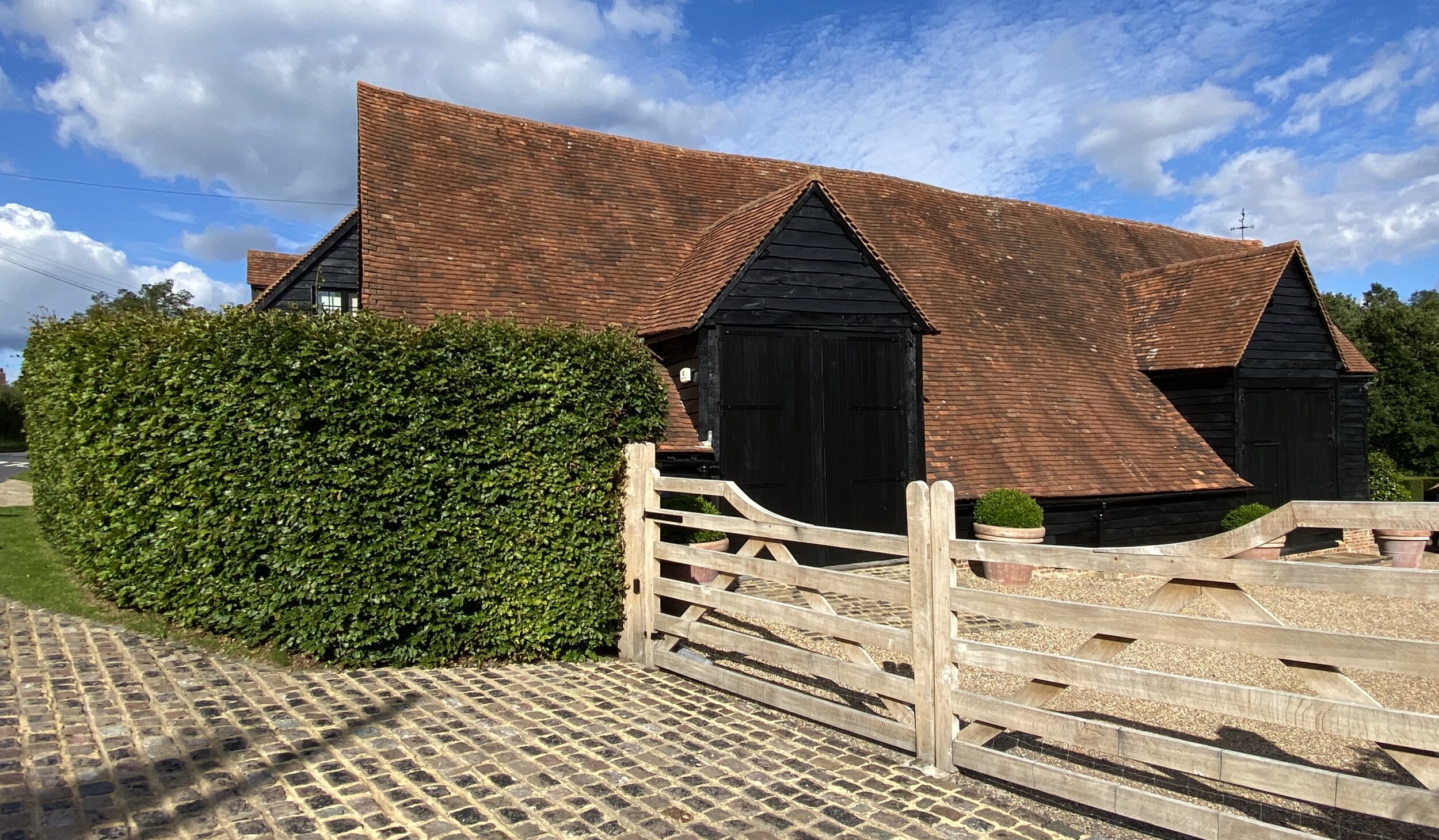
  • Round the corner on Jordans Lane, you'll find the Mayflower Barn; it is privately owned and not accessible but visible from the road.

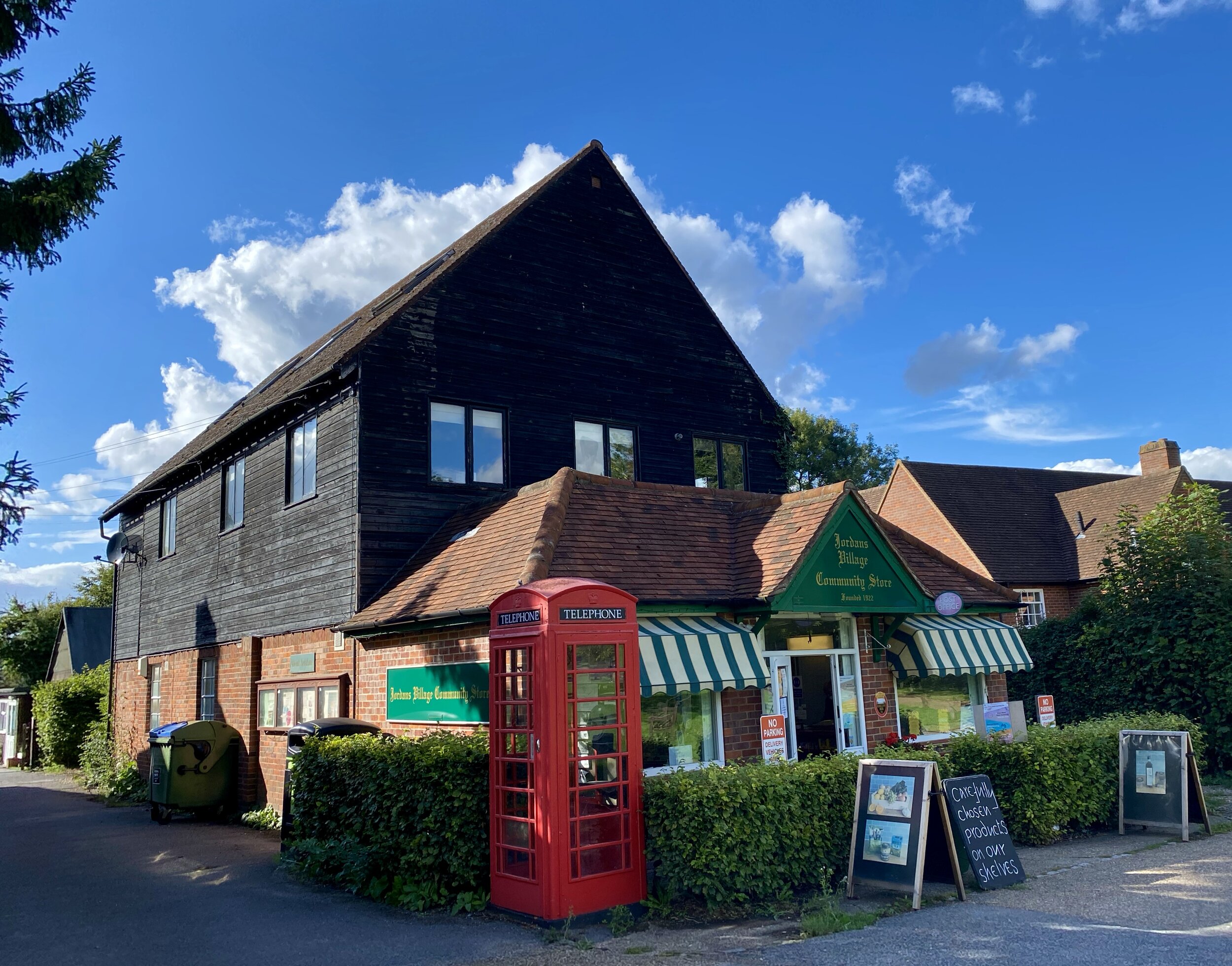
  • Take Seer Green Lane west off Jordans Lane to pass through the pretty village of Jordans.

  • Continue through Jordans and Seer Green, now following the Chiltern Heritage Trail in a north/north-easterly direction to join the South Bucks Way on the western side of the River Misbourne and the A413 Amersham Road. The Jolly Cricketers in Seer Green (4.6 km in) is a good place to stop for a rest and and a drink.

  • Take a right onto the South Bucks Way and follow it through Chalfont St Giles back to the start at Chalfont St Peter.

Points of Interest along or near to the Route

  • Jordans and the Quaker Centre While the area served as a significant early centre for the Quaker movement in the 17th century, the village of Jordans itself is much younger: it came into existence as a model Quaker community established on a green-field site from 1919. The village takes its name from Old Jordans Farm, which was identified as Jurdens on the 1770 Thomas Jefferys Buckinghamshire county map and John Cary's 1801 map, before becoming Jordans on Andrew Bryant's 1825 county map. The Jordans Meeting House, built in 1688, is one of the oldest in the country and is the final resting place of William Penn, the founder of the Province of Pennsylvania. Its simple, historic architecture reflects the Quaker values of peace and equality, making it a culturally significant and peaceful stop along your walk.

  • Just a stone's throw away on Jordans Lane is the fascinating Mayflower Barn. Local folklore and some historical claims suggest that this agricultural building was constructed using salvaged timber from the Mayflower, the famous ship that transported the Pilgrim Fathers to America in 1620. While the barn is privately owned and cannot be entered, viewing it from the road offers a wonderful connection to 17th-century history.

  • Seer Green Village Seer Green gets its name from the Old English sere (meaning dry) and grene (meaning a grassy spot). It was referred to as La Sere or La Cere in its earliest recorded mention in a legal writ from 1232, and historically sometimes spelt Sear Green or Shere Grene. The name Seer Green first appears in a 1407 document: an Inquisition Post Mortem recording the heir to the Lord of the manor of Farnham Royal. For much of its history, Seer Green was a detached part of Farnham Royal. Farnham (from farn meaning ferns and ham meaning village) held the 'Royal' designation because the Lord of the manor and Tenant-in-Chief provided a special service to the monarch: a privilege likely granted by Henry II after 1174 and later removed by Henry VIII in 1541. Renowned for cherry-growing, the village was once a key provider of the fruit to London markets throughout the 19th and early 20th centuries.

  • The Jolly Cricketers, Seer Green. The pub’s wisteria is well over 100 years old. The landlord serves Cask Marque accredited local real ales. The kitchen has an AA Rosette offering modern British food specialising in Cornish seafood. The owners have had the pub since 2008.

  • The River Misbourne, which you'll track alongside on the return leg to Chalfont St Peter, is a classic Chilterns chalk stream. These rare and ecologically vital rivers are globally scarce, fed by groundwater aquifers that give them their characteristic crystal-clear waters. The river environment provides a thriving habitat for local wildlife, including brown trout, kingfishers, and various aquatic plants.

  • Finally, the picturesque village of Chalfont St Giles is renowned as the historic refuge of the great poet John Milton. Fleeing the Great Plague of London in 1665, Milton resided in a charming cottage here where he completed his epic masterpiece, Paradise Lost. The village retains much of its traditional charm, making it a delightful, culturally rich milestone on your walk.


South Bucks Way previous section (north): Amersham and Coleshill
South Bucks Way next section (south):
Gerrards Cross to Denham

Chiltern Heritage Trail next section clockwise: Amersham and Coleshill
Chiltern Heritage Trail next section anti-clockwise: Chalfont St Giles and Newlands Park

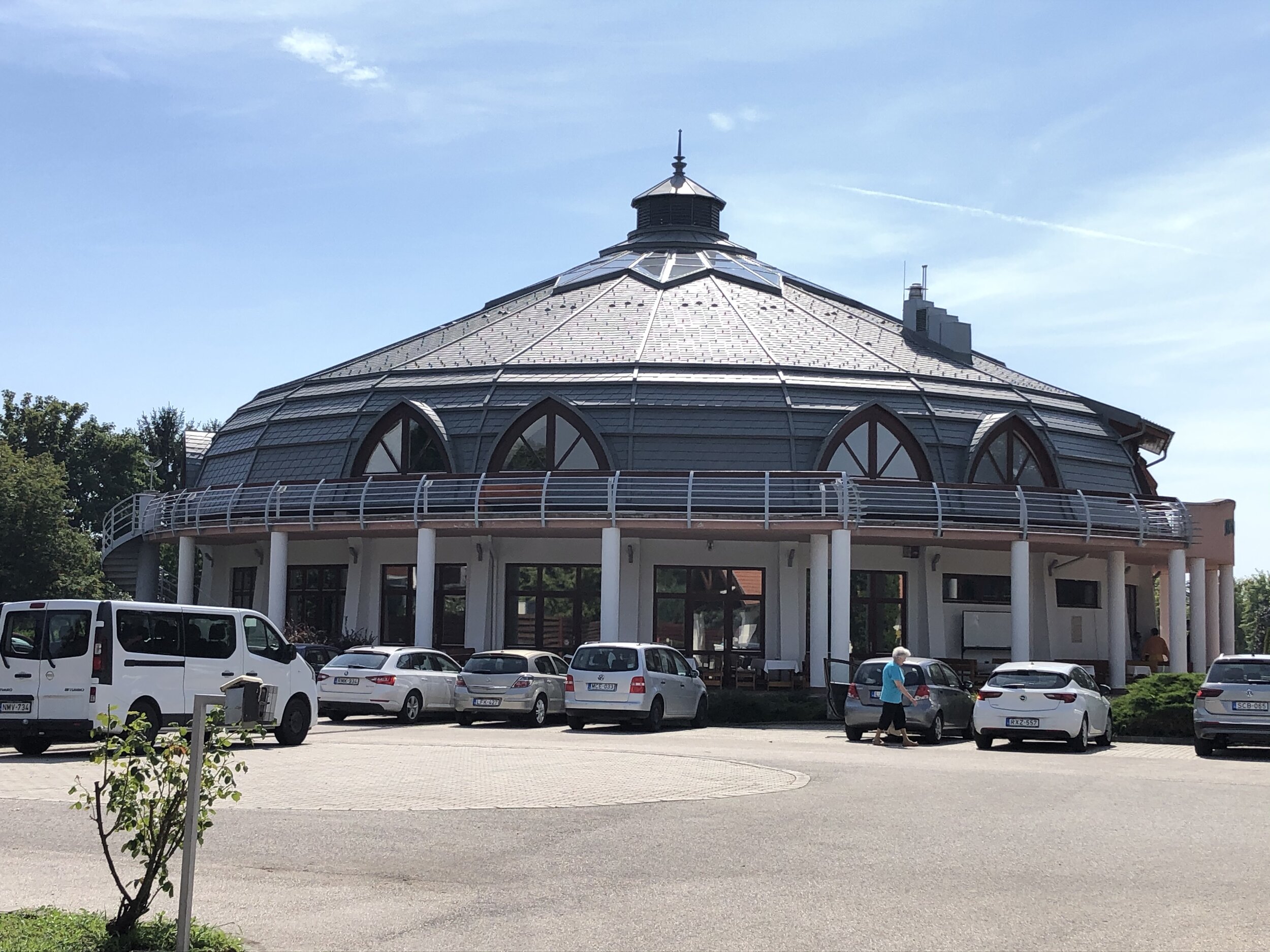
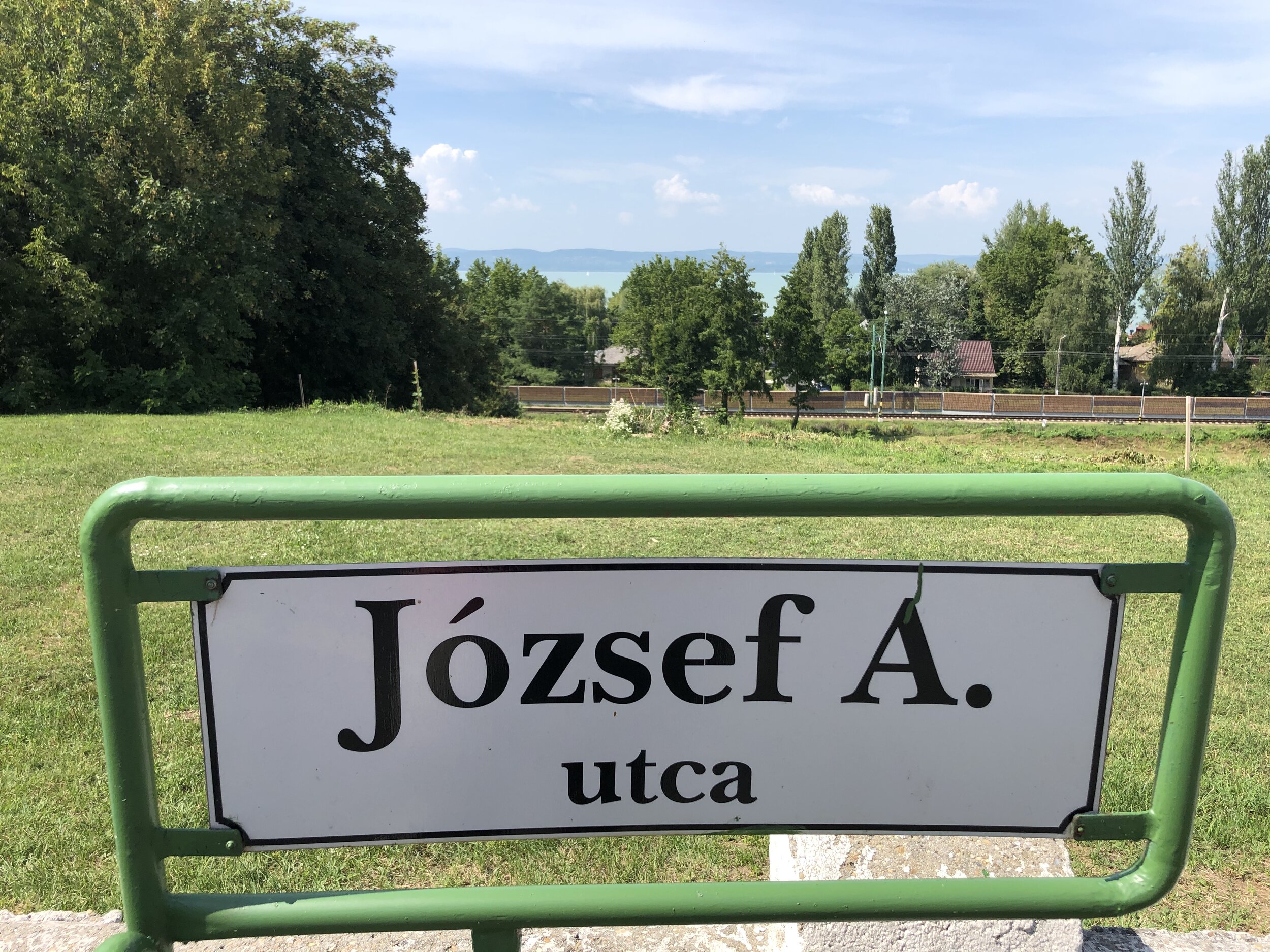
Walking The Balatonszárszó Poetry Trail, Hungary

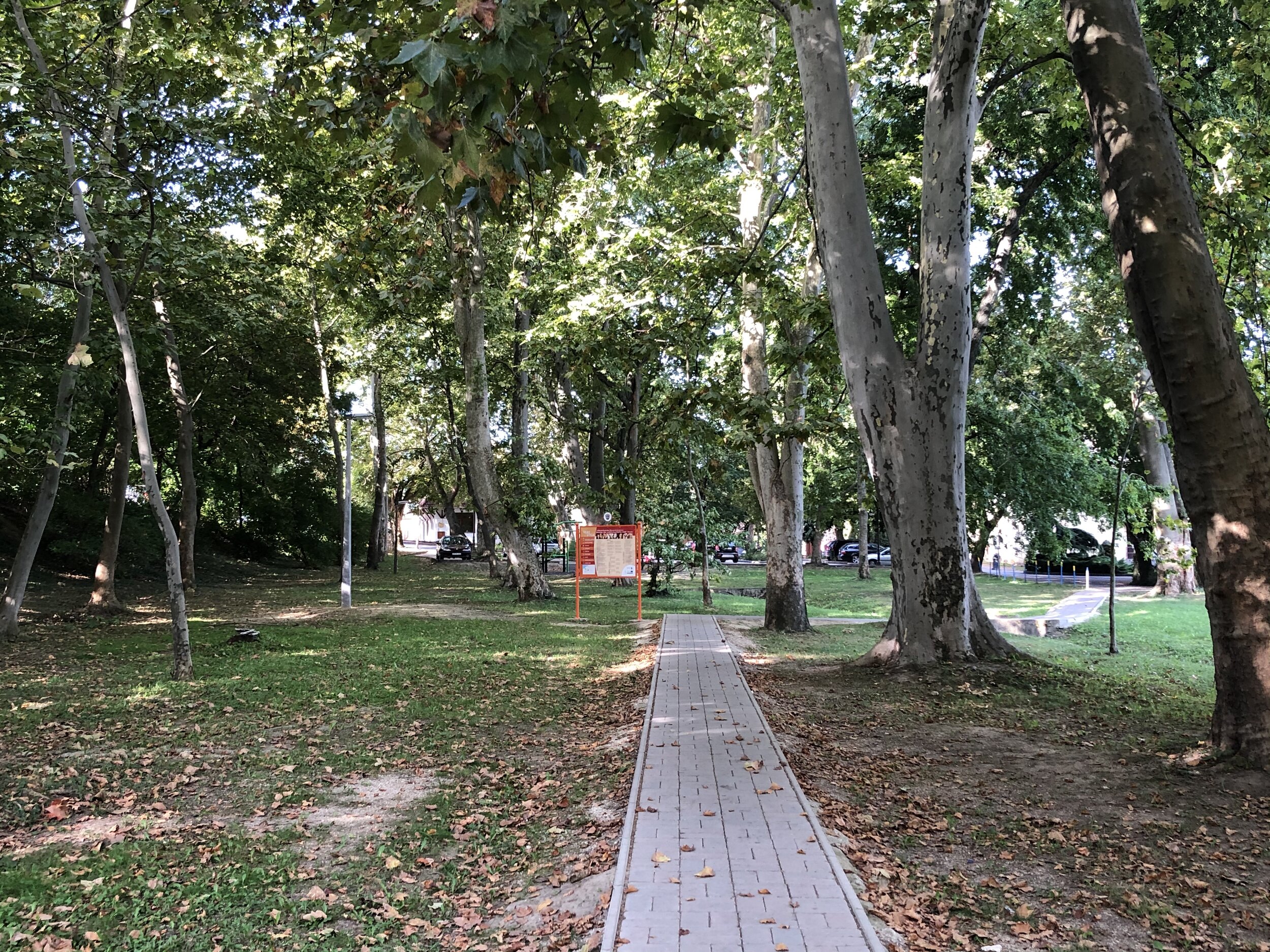
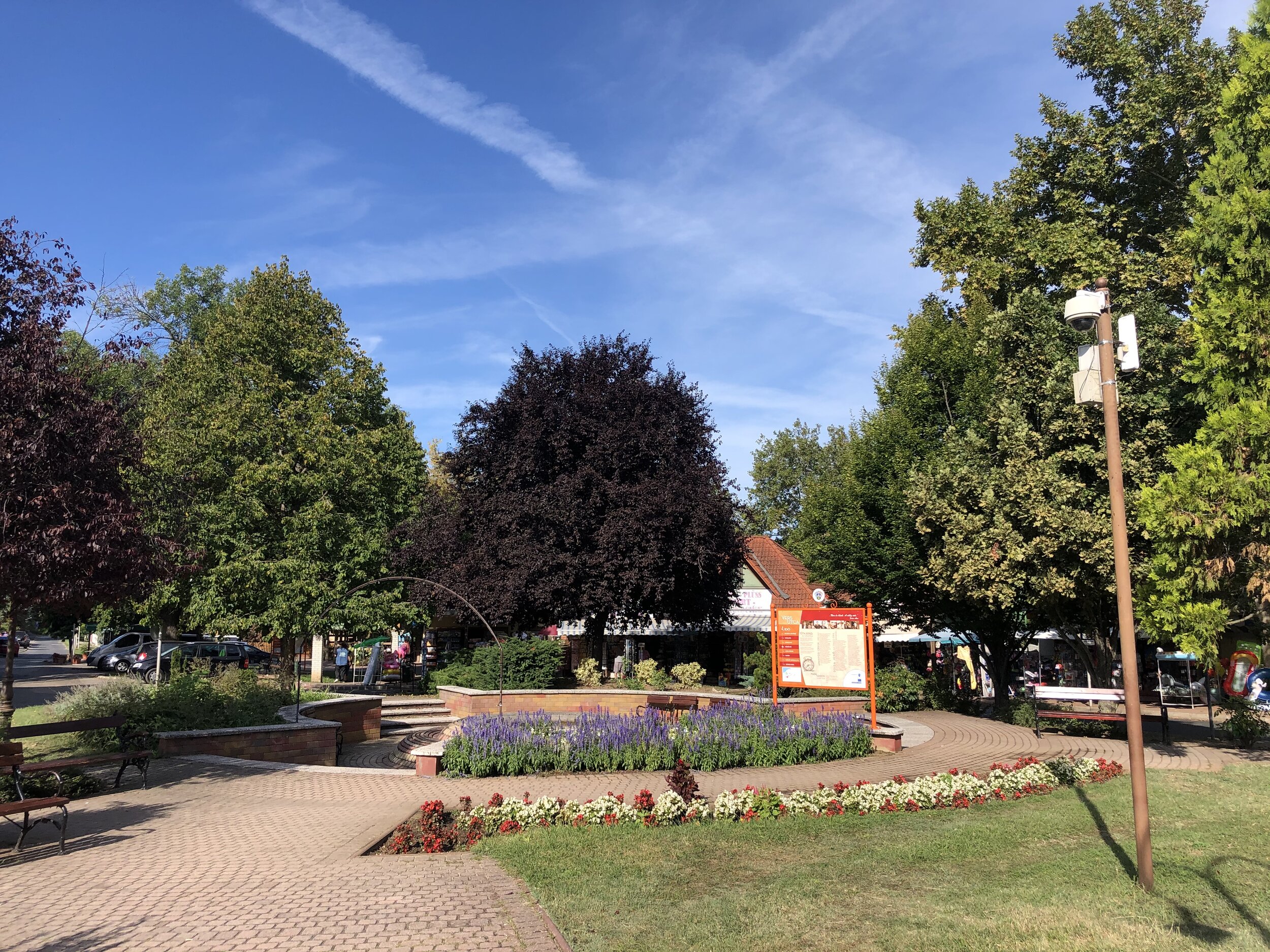
SÉTA A BALATONSZÁRSZÓI Vers UtcÁn

Downtown Balatonszárszó

Downtown Balatonszárszó


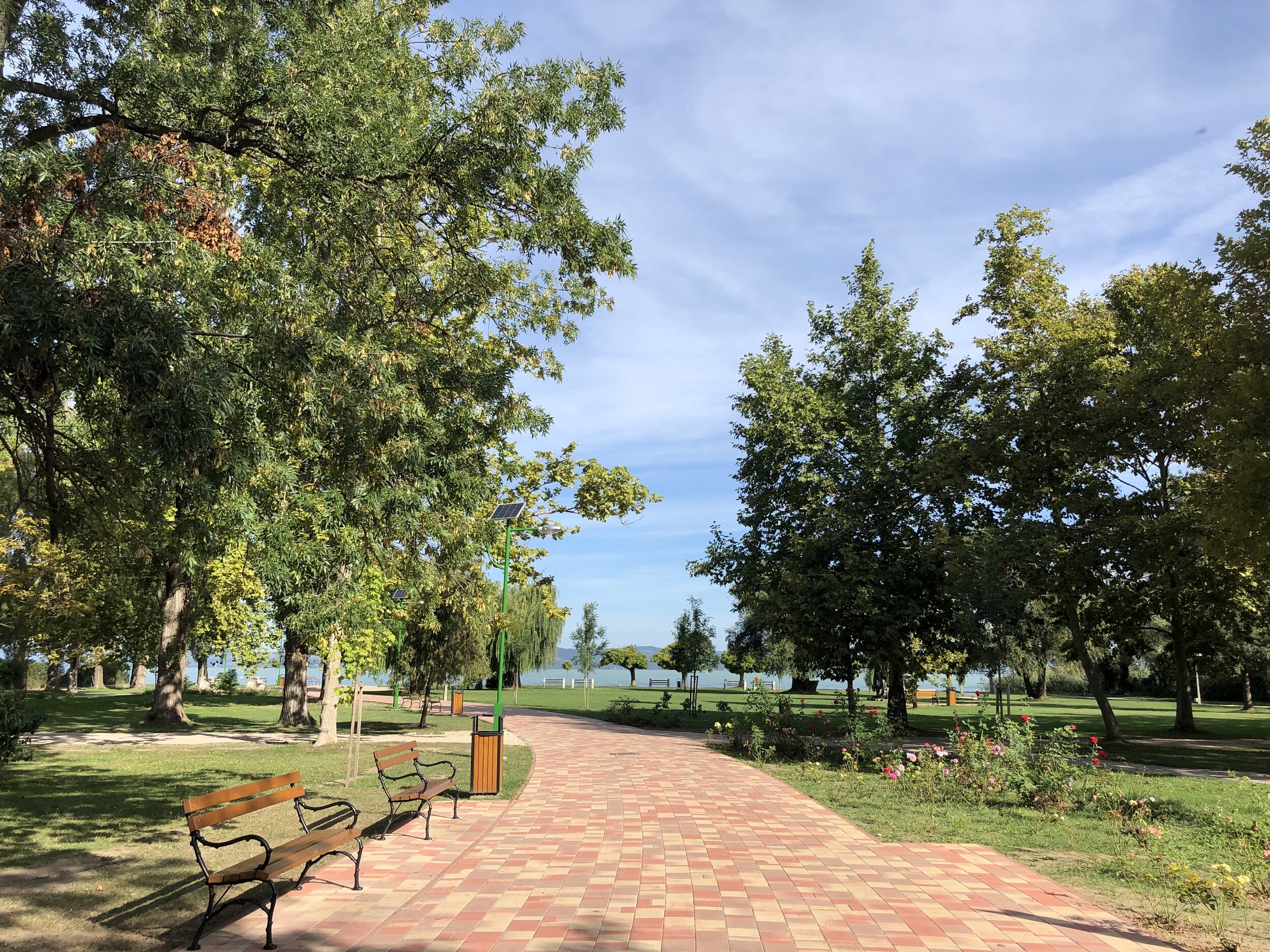
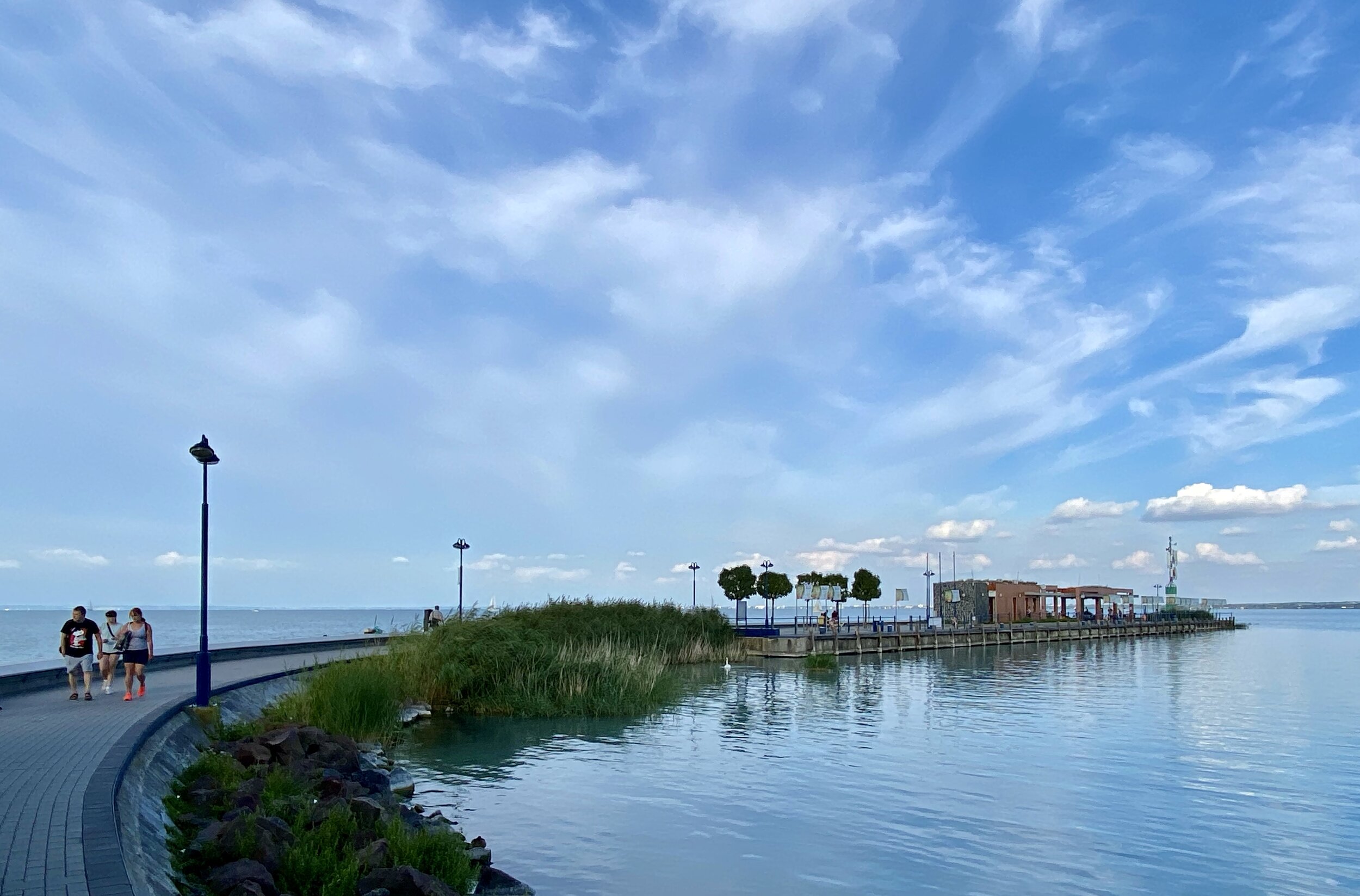
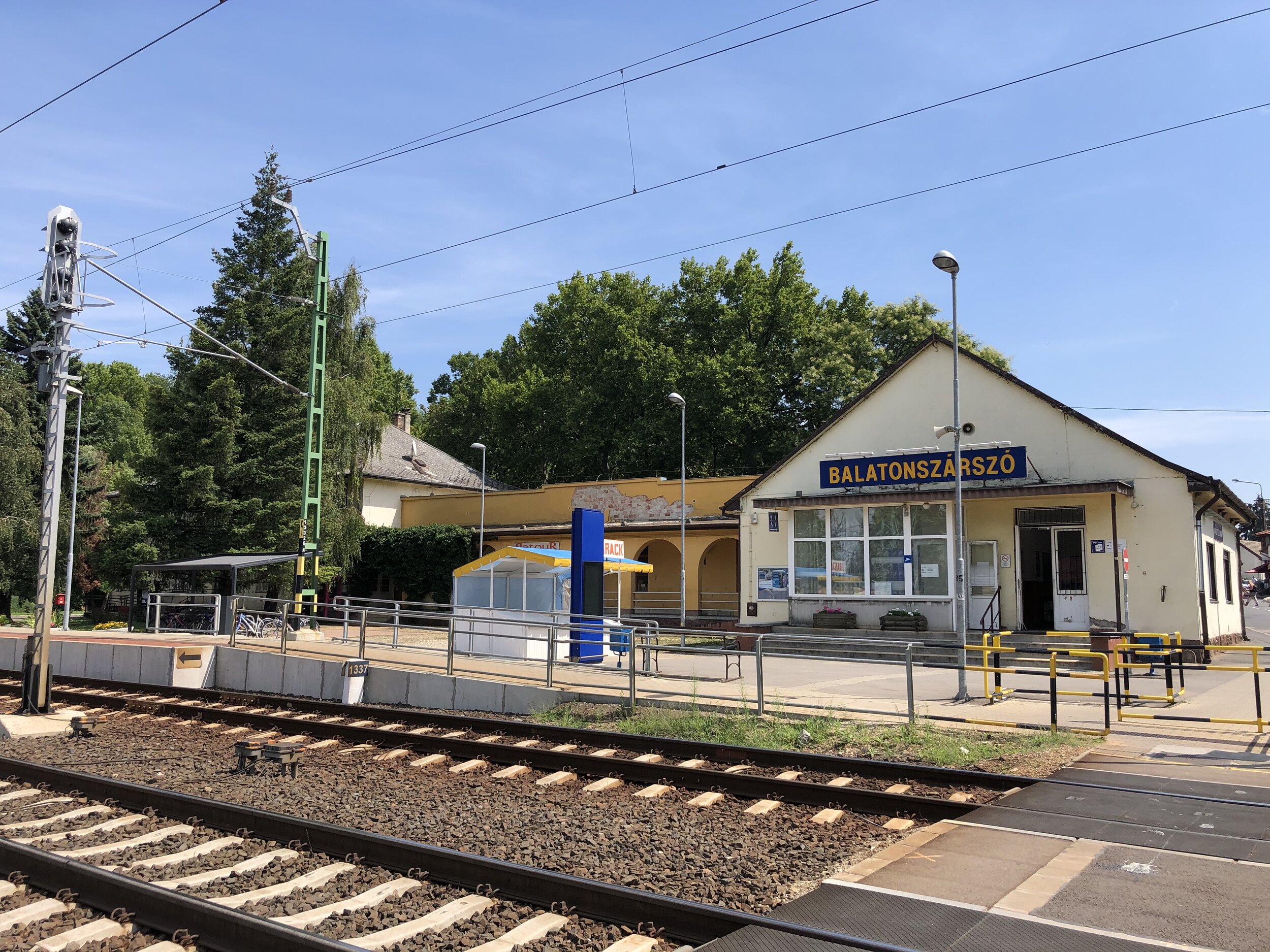
Balatonszárszó is a small town on the south side of Lake Balaton in Hungary. It’s my wife’s original home town and her parents still live there so we visit every summer. As well as enjoying the lake there’s a lot of walks in the area. This is one of 2 very short sign-posted walks in the town.

The Poetry Trail opened in 2020 and is a a shorter complement to the Way of Renewal. Like the longer route, this one takes the form of a short walk around the town passing several information signs. There’s also 3 sound boxes on the route where you can hear short recordings of the featured poets.

Unlike the Way of Renewal there’s no English translation available, so unless you have a Hungarian friend you may not get the most of the text. While Google Translate can work out the text it’s still not great with the nuances of Hungarian poetry.


Start: Sign #1 outside József Attila Memorial House, Balatonszárszó, József Attila u. 7 8624
Finish: Sign #8, József Attila Memorial, Balatonszárszó, Csokonai u. 1 8624
Distance
: 1 km (0.6 miles)
Elevation change: +/- 7 m
GPX File: get via Buy Me a Coffee
Other routes touched (walk): Balatonszárszó megújulás útján (Trail of Renewal)
Other routes touched (cycle): Balaton Cycle Route
Links: Lake Balaton, Balatonszárszó


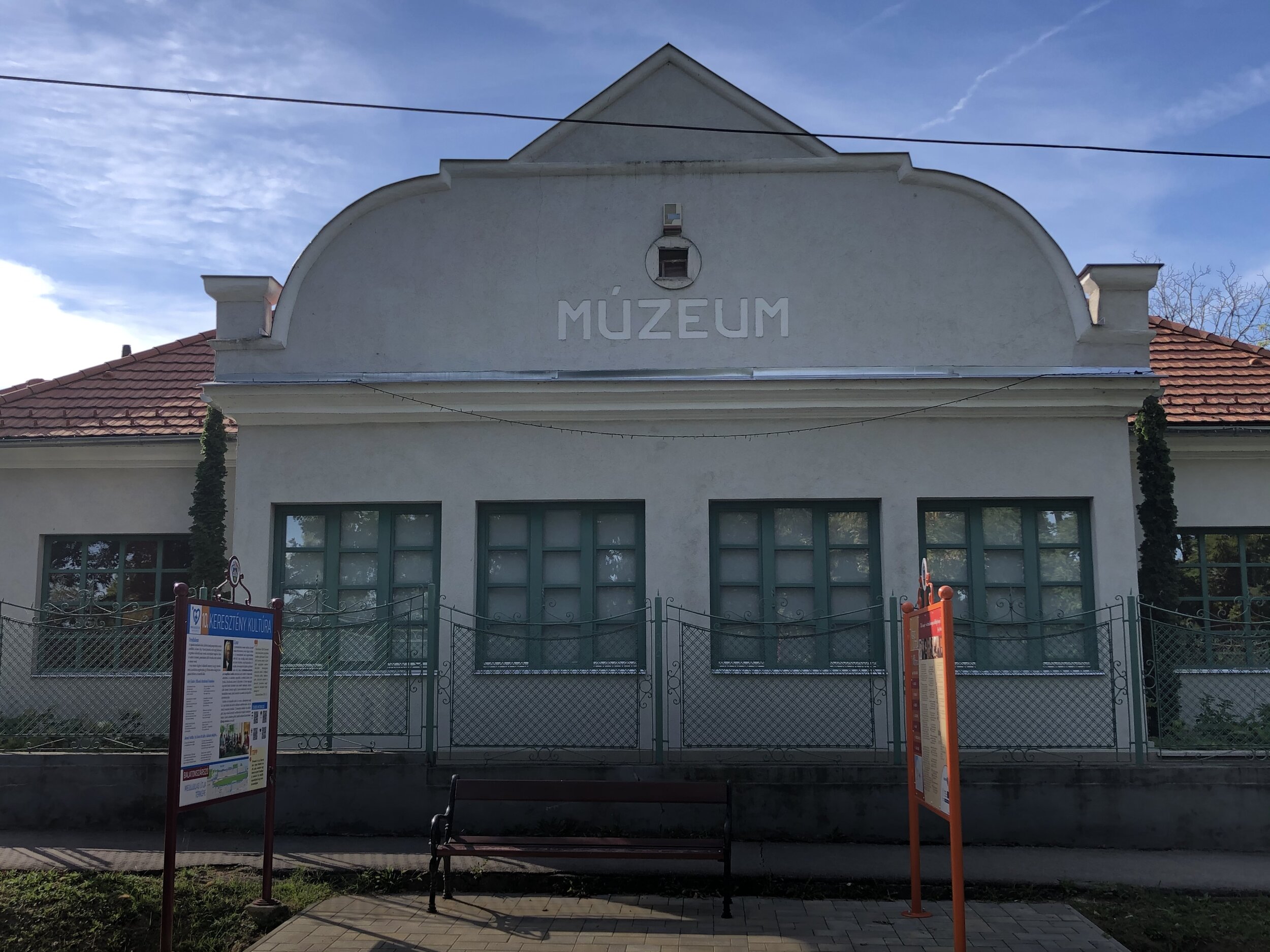
Stop 1: Ars Poetica / Képversek

Location: outside József Attila Memorial House, Balatonszárszó, József Attila u. 7 8624
Poets mentioned: Arany Janos, Josef Attila, Ady Endre, György Rónay, László Gyarmati, László Nagy, Fodor Ákos

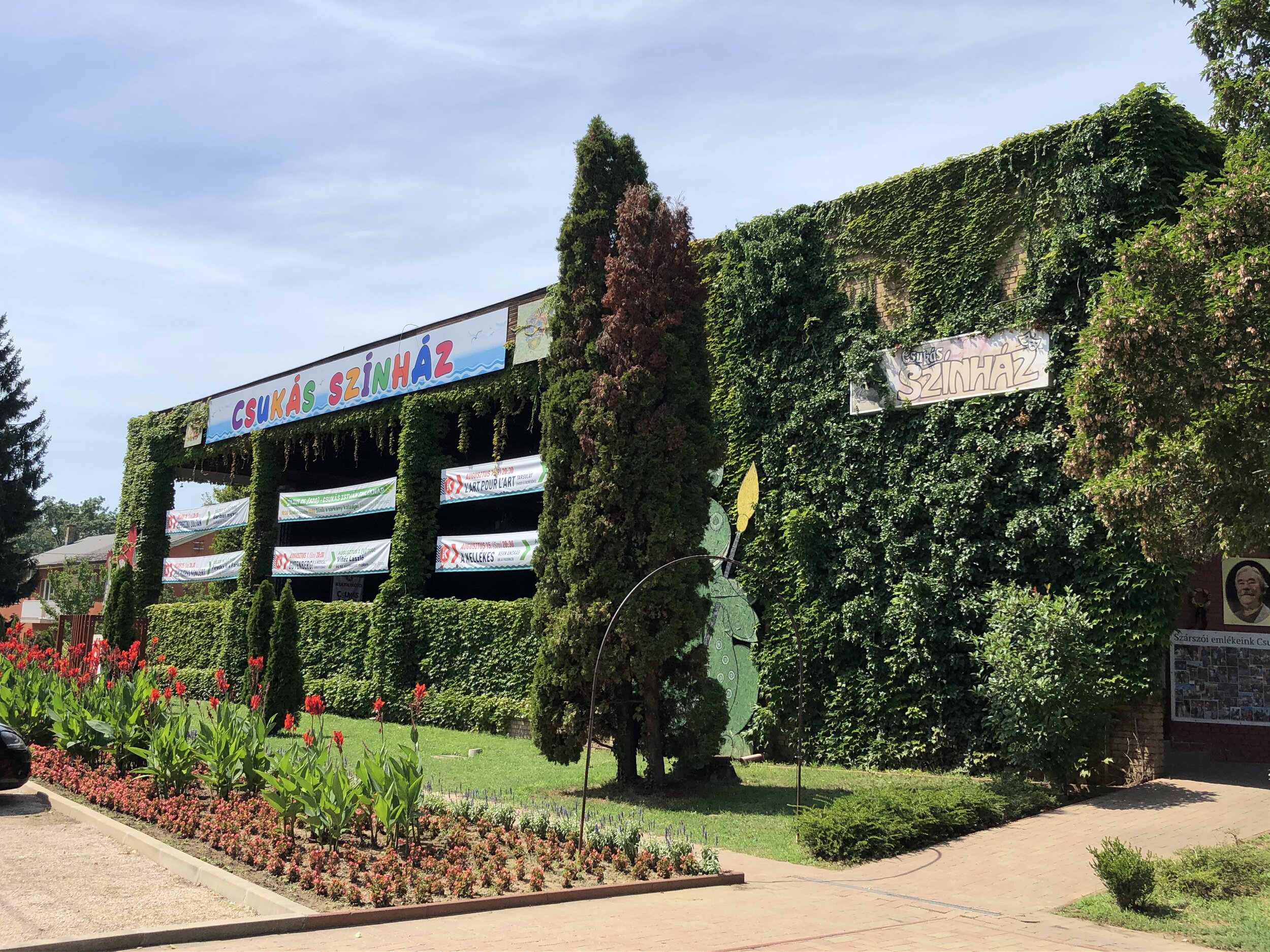
IMG_1972.JPG
IMG_2098.JPG

Stop 2: Hangulatok

Location: In Erzsébet Park between Josef Attila u and Kölcsey Ferenc u
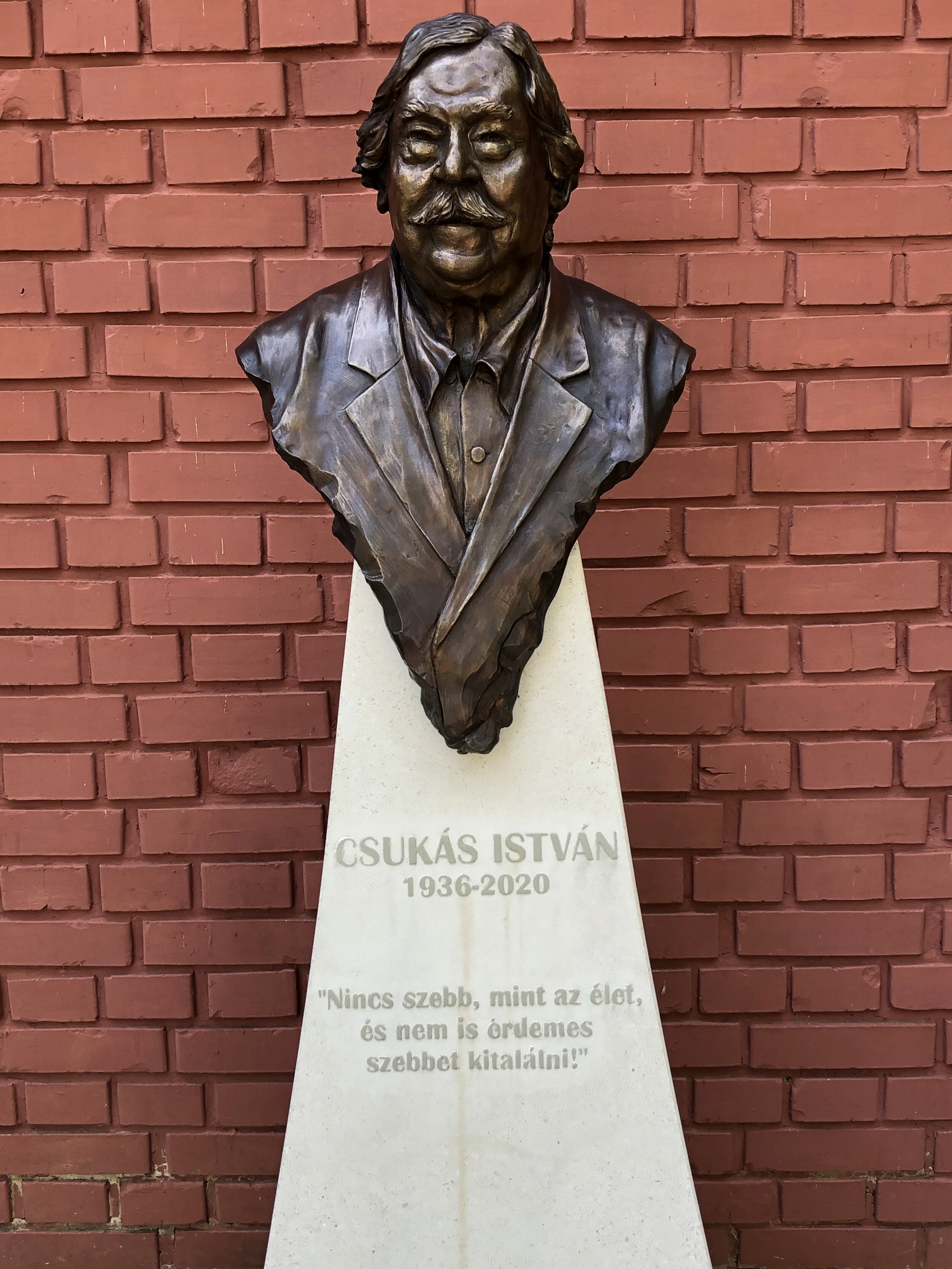
Poets mentioned: Dezső Kosztolányi, Jenő Heltai, Ferenc Móra, György Faludy, Sándor Kányádi, Miklós Radnóti, István Csukás, Árpád Tóth

IMG_2103.JPG
IMG_2104.JPG

Stop 3: Extravaganza

IMG_2120.jpg

Title in English:
Location
: At entrance to Erzsébet Park on Kölcsey Ferenc u.
Poets mentioned:


Stop 4: Szárszó / Idő

Title in English: Szárszó (town name) / Time
Location: Near the Fountain (Szökőkút) at the intersection of Ady Endre u. and Fő u.
Poets mentioned: Árpád Tóth, Aranyosi Ervin, Jenő Dsida, Sándor Márai, István Csukás, Rónay György, József Attila

IMG_2106.JPG
IMG_2107.JPG

Stop 5: Asztali örömök

Title in English: Table pleasures
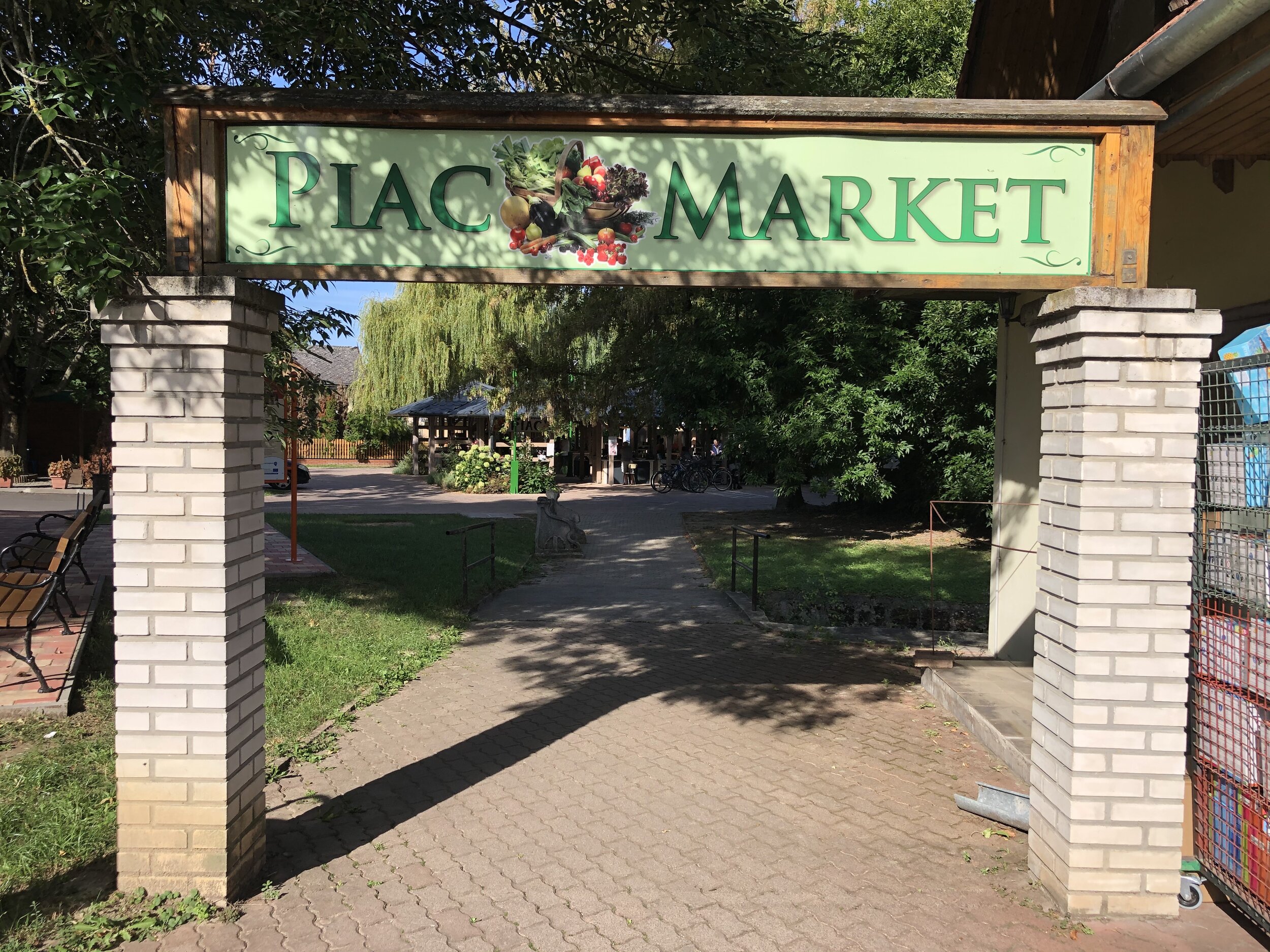
Location: At entrance to the market on Ady Endre u.
Poets mentioned: Aranyosi Ervin, Sándor Petőfi, Dezső Kosztolányi, József Attila, István Csukás, Ady Endre

IMG_2109.JPG
IMG_2110.JPG

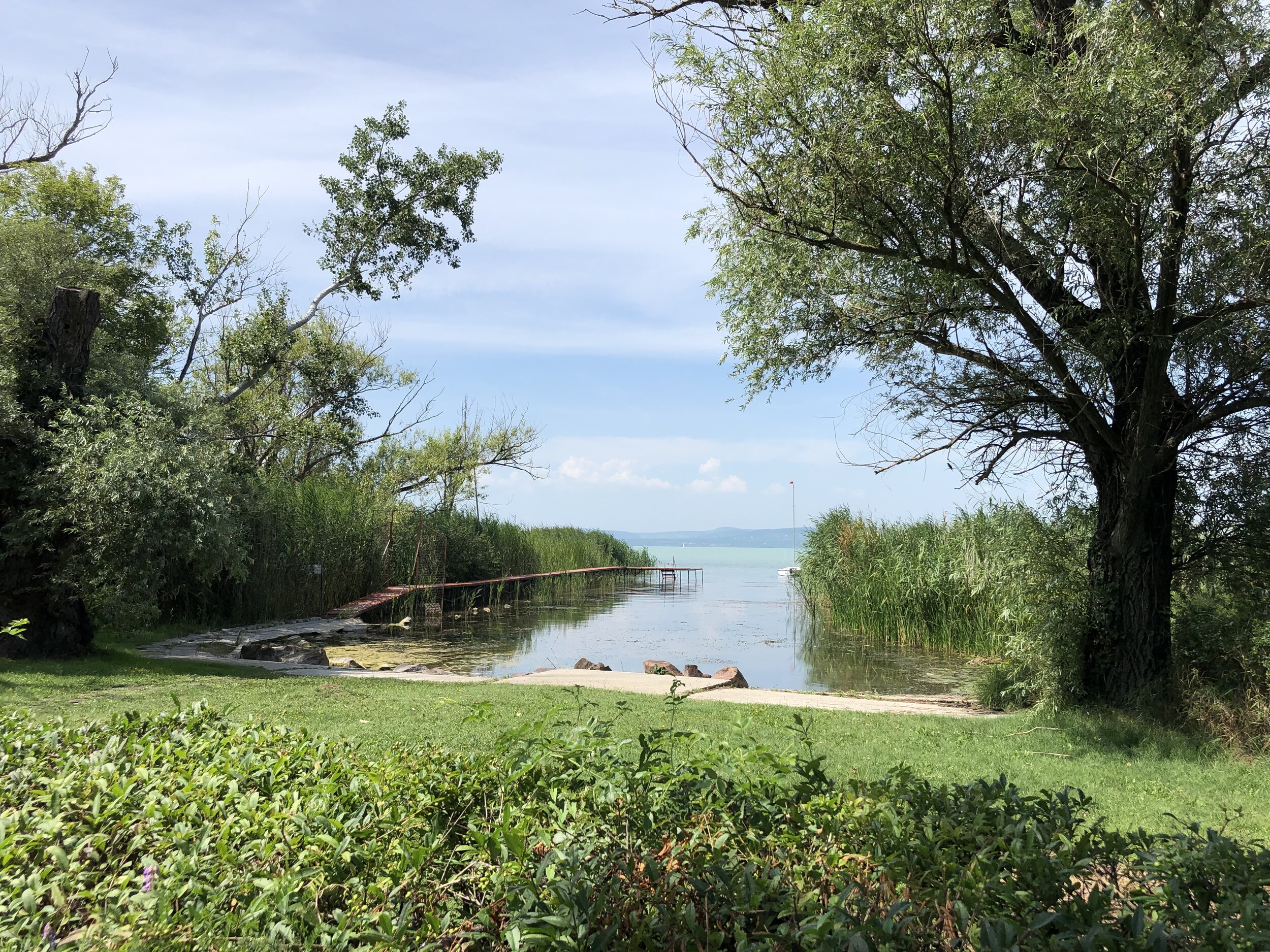
Stop 6: Balaton

Title in English: Balaton
Location: At entrance to Tóparti Park on Mikszáth Kálmán u.
Poets mentioned: Dániel Berzsenyi, András Fodor, János Vajda

IMG_2113.JPG
IMG_2112.JPG

IMG_2116.jpg

Stop 7: Hetedhét országon is túl

Title in English: Beyond the seventh country
Location: In front of Csukas Theater, Jókai Mór u. 2
Poets mentioned:


Stop 8: Legendás versek

Title in English: Legendary Poems
Location: At eastern entrance to Tóparti Park on Csokonai u.
Poets mentioned:

IMG_2118.JPG
IMG_2117.jpg

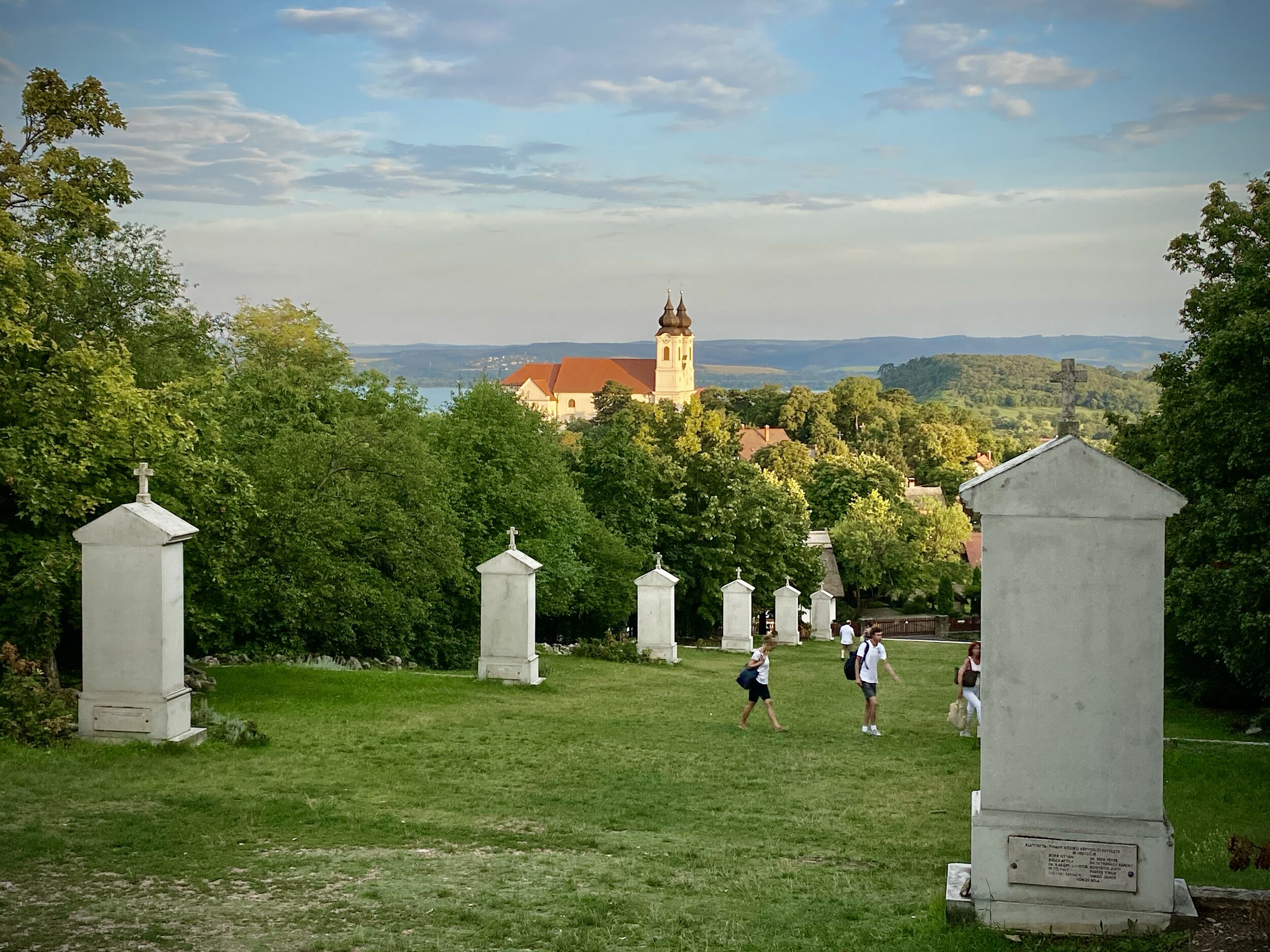
Walking The Tihany Legends Trail, Hungary

Séta a tihanyi legendák ösvényén, Magyarország

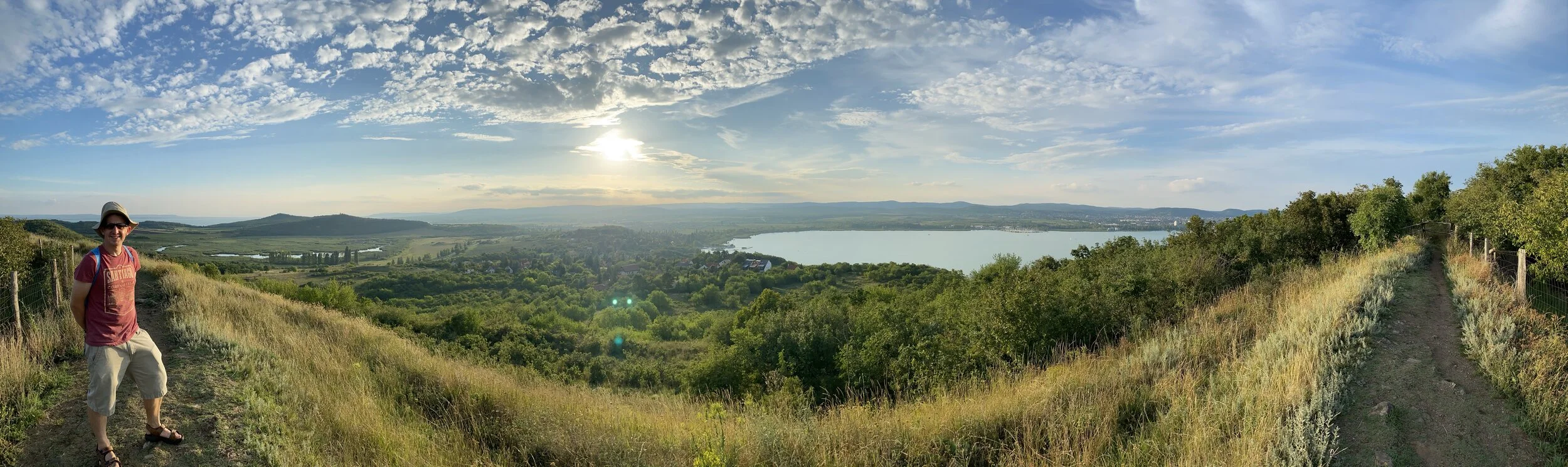
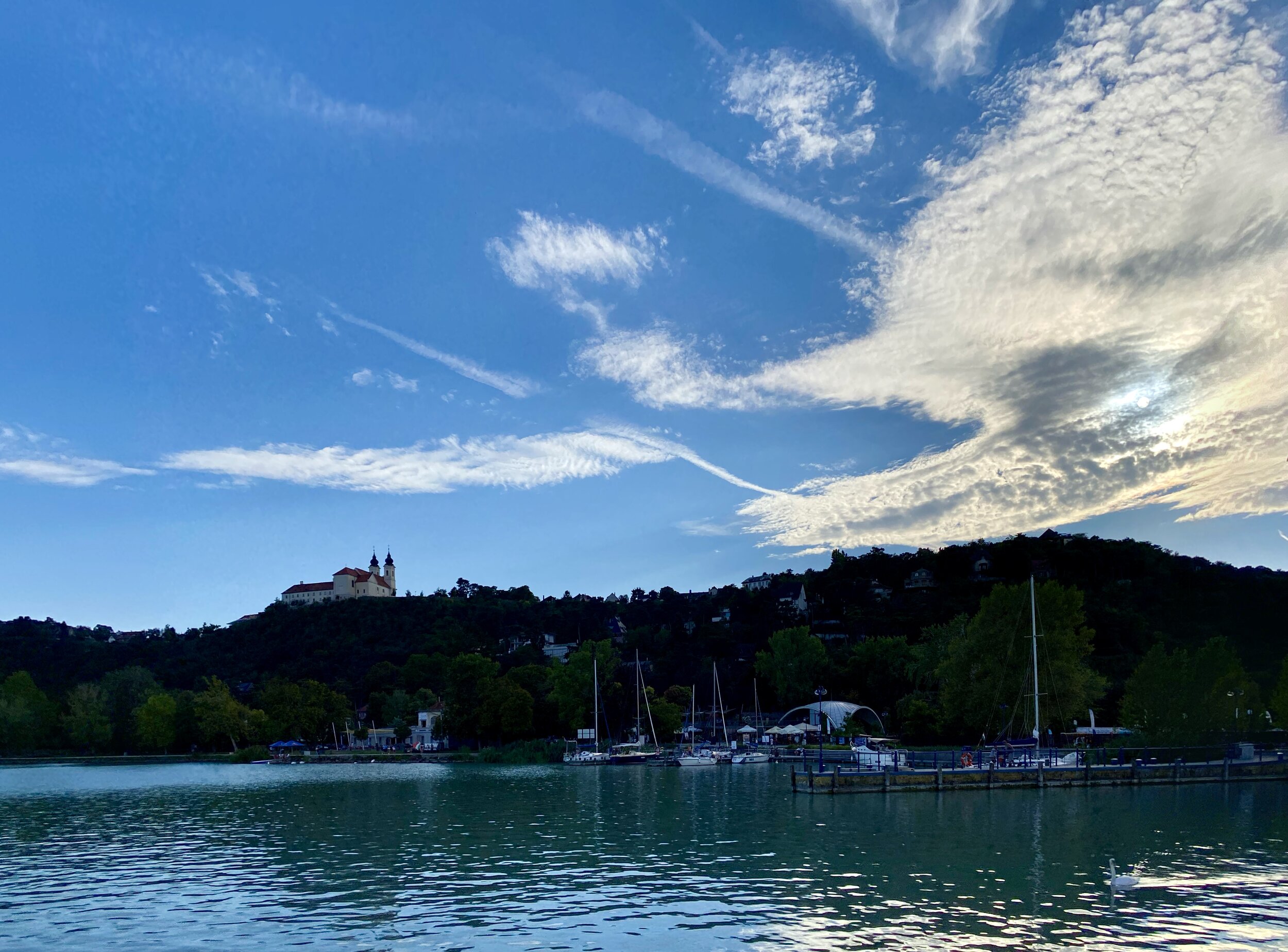
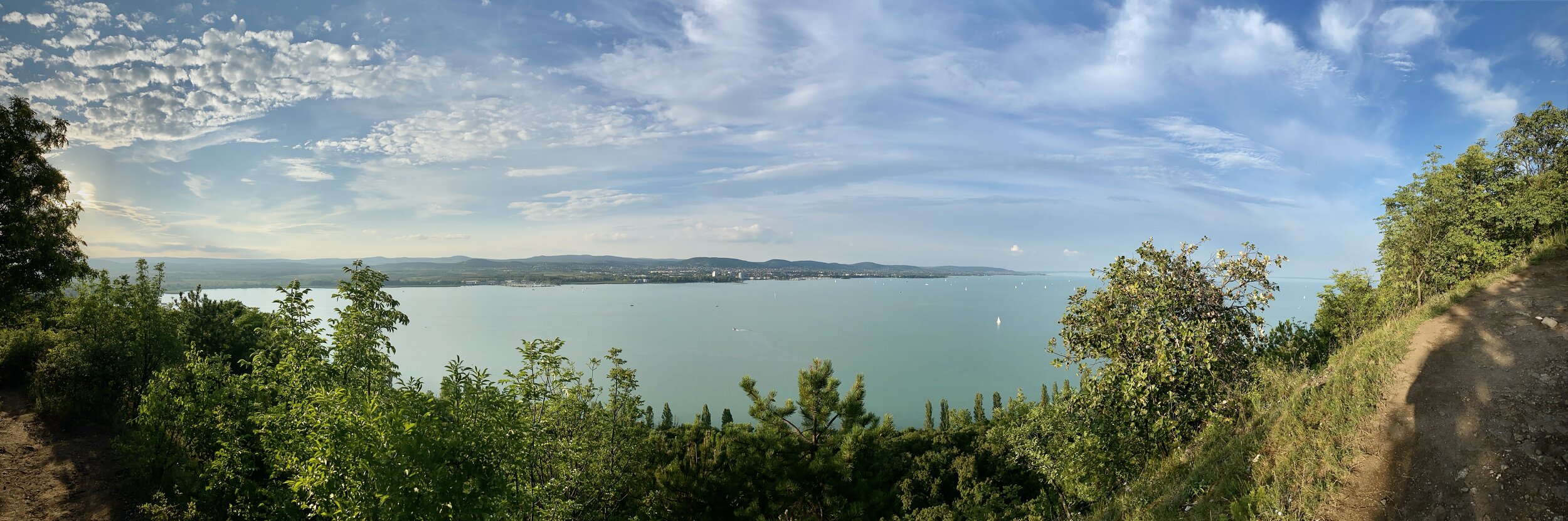
View from the northern point of the trail

View from the northern point of the trail


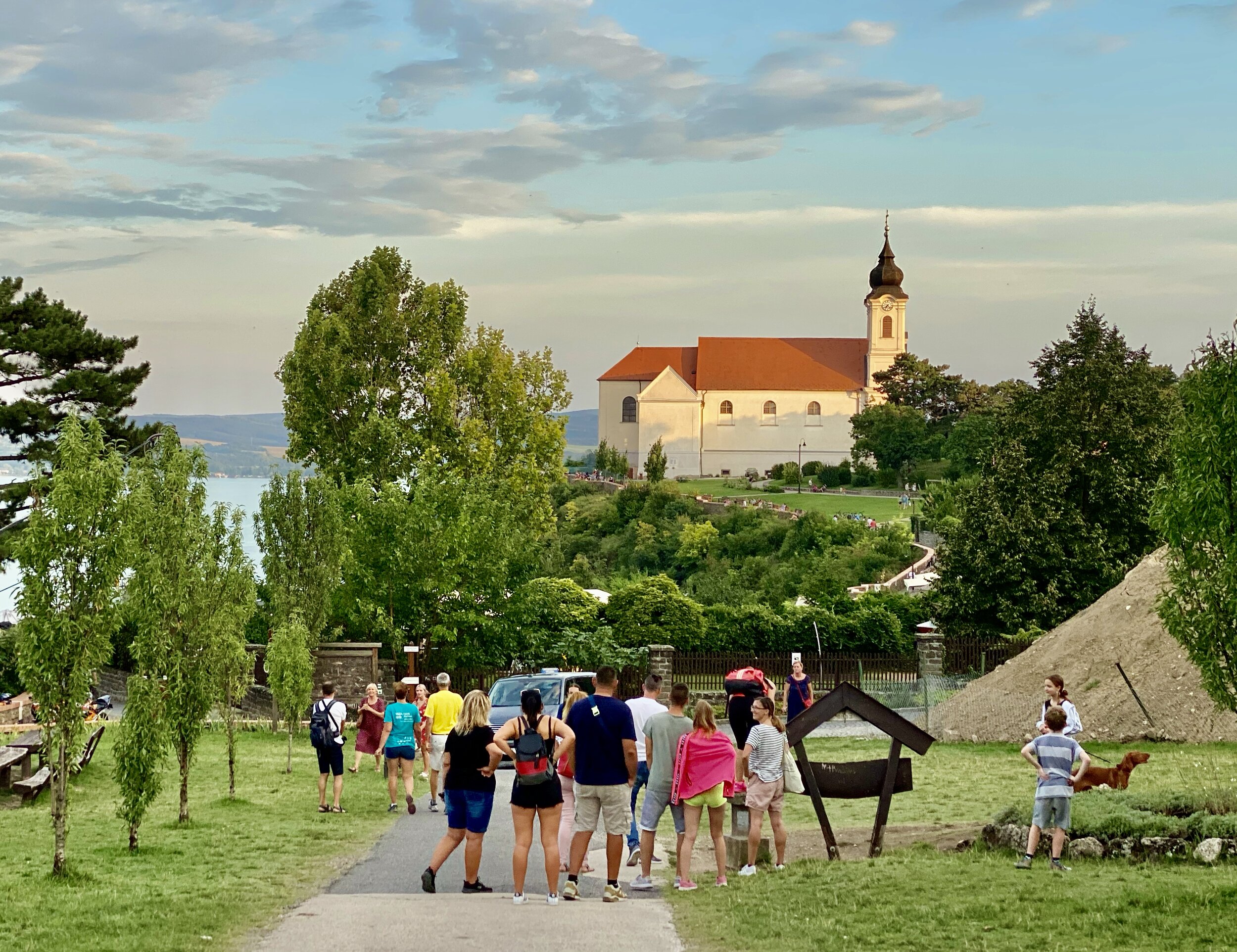
Start & Finish: Benedictine Abbey of Tihany, I. András tér 1, Tihany, 8237
Distance: 5 km (3.1 miles)
Elevation change: + / -112 m
GPX File: get via Buy Me a Coffee
Other routes touched (walk): Visszhang ut (Echo Trail), Levendula ut (Lavender Trail)
Other routes touched (cycle): Balaton Cycle Route
Links: Lake Balaton, TIhany, Tihany Abbey


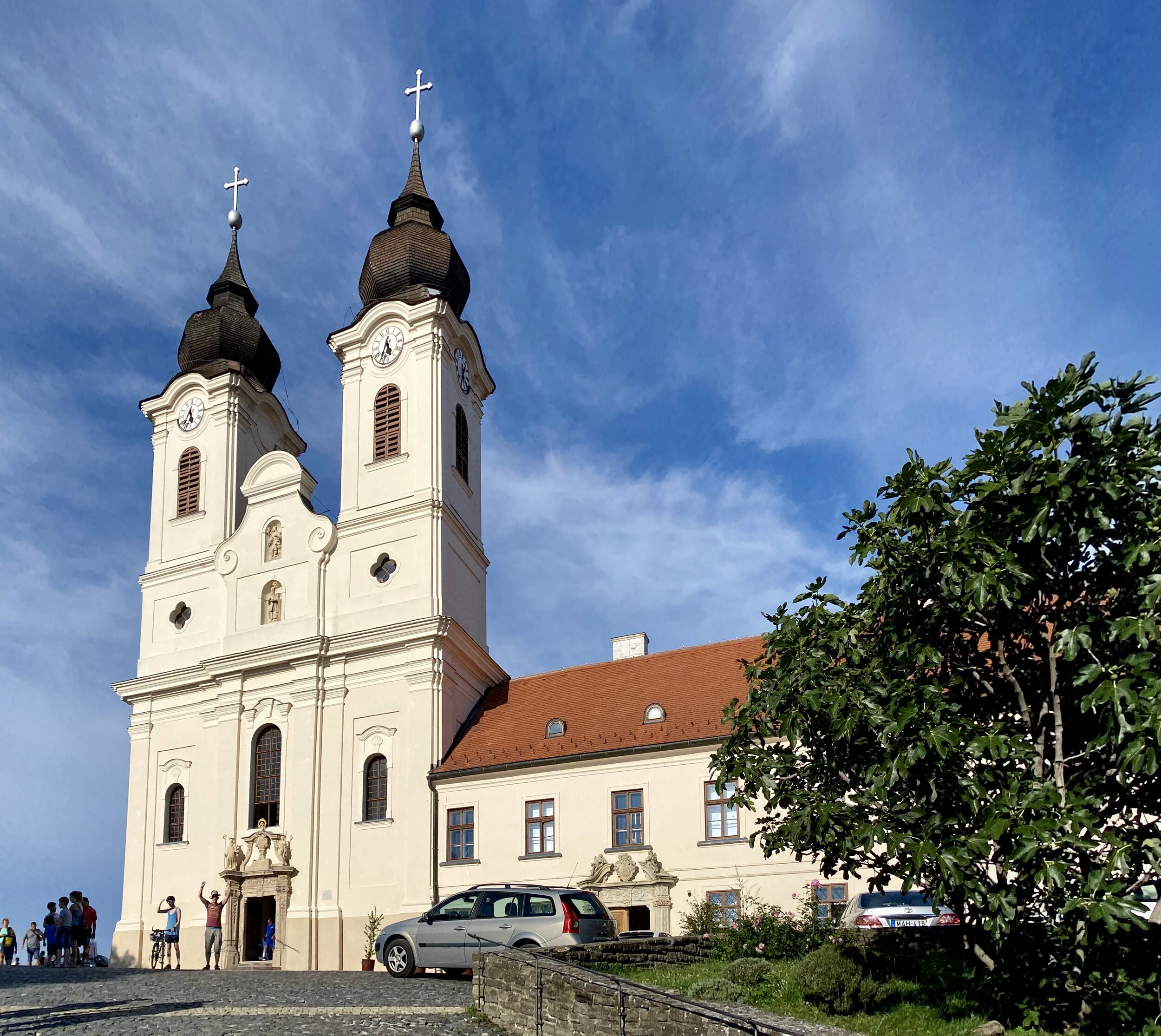
Tihany is as small village on the Tihany Peninsula that juts out into Lake Balaton in Hungary. We visit there every summer when visiting the lake to see Timea’s parents. From the Benedictine Church in the centre of town you can pick up one of 3 walking trails of varying length. Trail 1, the Echo Trail, is really short and you’ll pretty much have done it by accident if you wander around the main streets in town. This 5k route is a good choice and takes you on a scenic hilly trail to the north of the church. You can pick up a paper map for all 3 trails from the Tourist Information Centre.

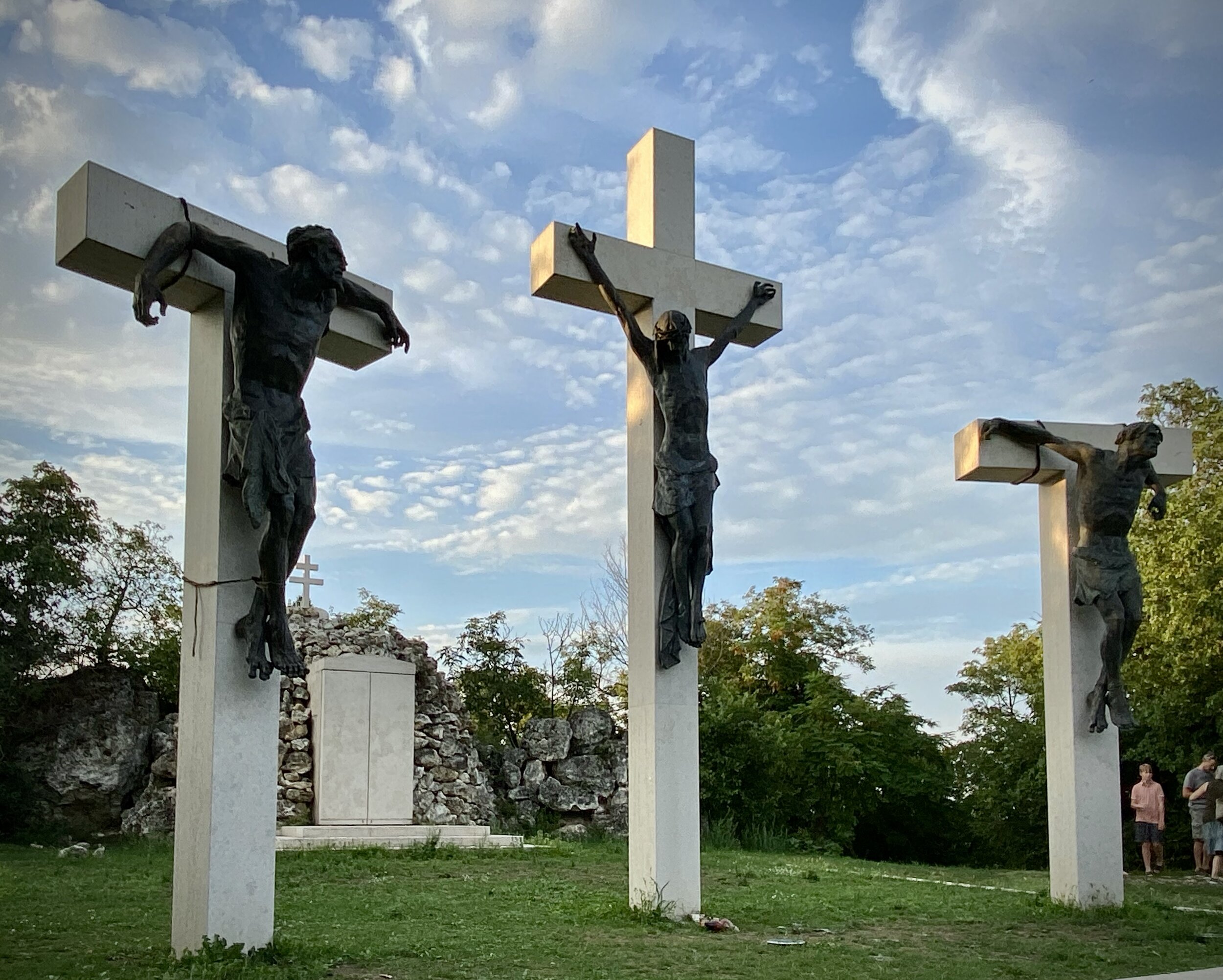
Starting from the church, the first part of the route takes you on a small loop of some monuments before heading north to the Echo. Here you’ll find a spot where if you shout loudly you’ll hear an echo bounced seven times off the church and surrounding buildings. Unfortunately there was building work happening when we were there which was absorbing the echos. From here take the winding Garay János Utca down to Tihany Harbour.

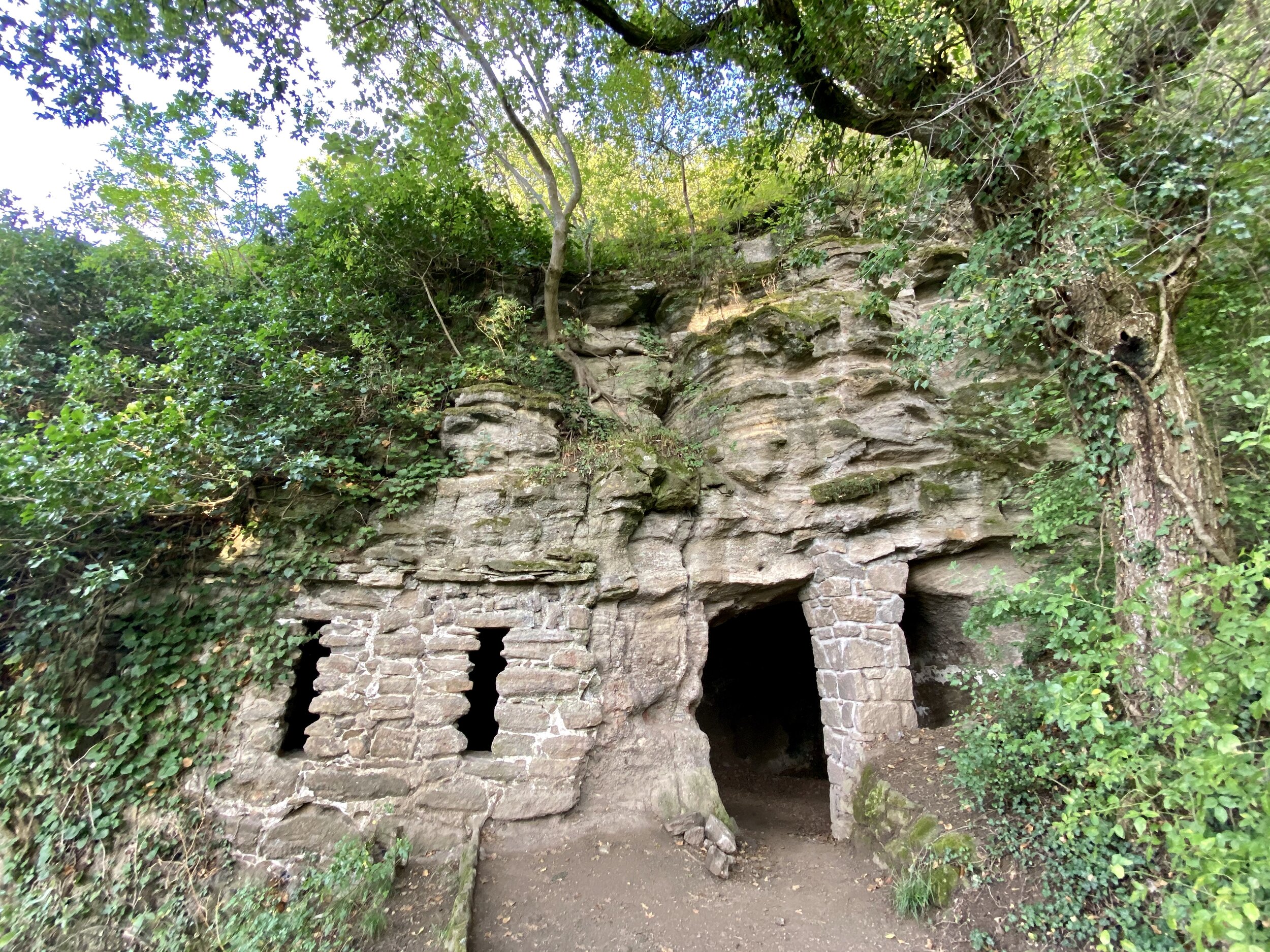
From the harbour walk north-west for ~1km, then carefully cross the main road to a small parking area. Here you can take a footpath that rises steeply through the woods back up the hill. Through this wooded part you’ll find Balaton Geopark signs giving information on the area. The most interesting find here are the Monk Cave Dwellings. These are man-made caves (allegedly) built for Russian monks brought from Kiev by the wife of Hungarian King Andras in ~1050. A few are easily and safely accessible from the path.

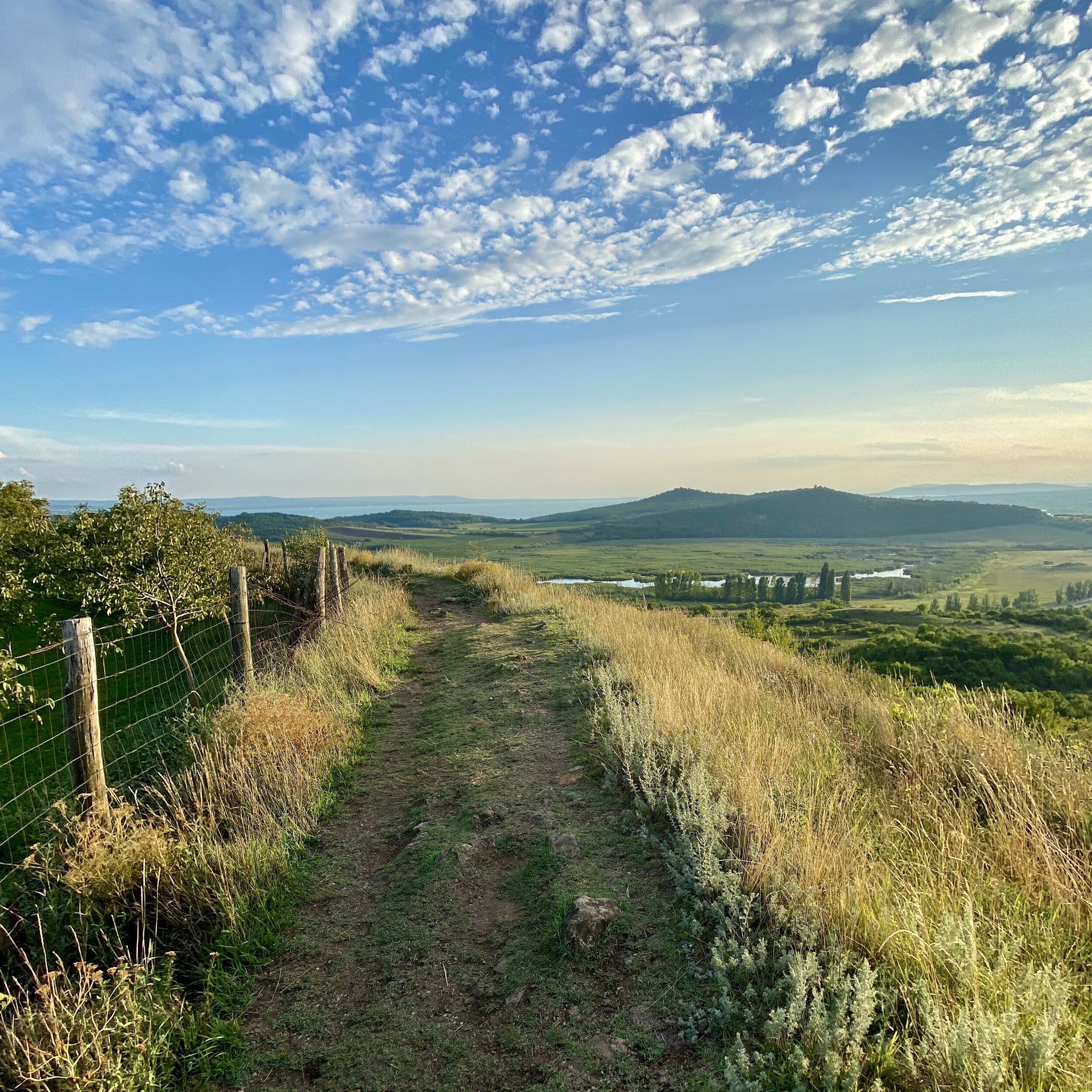
After the caves, the path continues upwards towards the north west. At the highest point there are outstanding views of the north end of the peninsula. From here the path turns southwards and descends back towards the town and the end-point at the church.


Walking The Balatonszárszó Trail of Renewal, Hungary

Séta a BalatonszárszóI megújulás útján

IMG_2002.jpg

Balatonszárszó is a small town on the south side of Lake Balaton in Hungary. It’s my wife’s original home town and her parents still live there so we visit every summer. As well as enjoying the lake there’s a lot of walks in the area. This is one of 2 very short sign-posted walks in the town.

The Way Of Renewal was established to mark the 500th anniversary of the Lutheran Reformation. Along the 3.5 km walk you pass by 10 large signs giving descriptions in Hungarian on reformation themes. Each sign has a QR code that takes you to a web-page with an English Translation. These links are also shown below, along with an extract of the first part of the English translation.


Start & Finish: Sign #1 on north-west side of Fő u. near railway crossing, Balatonszárszó
Distance: 3.5 km (2.2 miles)
Elevation change: +/- 19 m
GPX File: get via Buy Me a Coffee
Other routes touched (walk): Balatonszárszó Vers Utja (Poetry Trail)
Other routes touched (cycle): Balaton Cycle Route
Links: Way of Renewal, Lake Balaton, Balatonszárszó


Stop 1: The Way of Renewal

Location: North-west side of Fő u. near railway crossing.
Extract: The consequence of human life is being on the move. We always go somewhere. Many times we physically take action, sometimes we are only figuratively on the go in the walk of life. The road is sometimes smooth, but there are also bumpy sections. We may ride miles lonely, but again and again, travel companions join us for shorter and longer times. The goal of this journey is the road itself – this is the year-to-year opinion of the growing number of people who start the pilgrimage. And indeed, the experience of being on the road makes us mature, forms our bodies, souls, and spirits. We can get rid of unnecessary pounds when go out for a walk or a hike; get rid of heavy loads and packs that are painful to carry. We can abandon the unneeded, which hinders our fulfillment, which makes harmony impossible. Instead we may find ourselves refreshed, cleansed and relieved.

Full text at: https://www.megujulasutja.hu/1-en?language=en


Stop 2: Ecclesia semper reformanda

Location: Opposite main entrance to Csukás Színház on Szabolcs u.
From previous sign: Walk North-East on Jókai Mór u. turn left onto Szabolcs u.
Extract: Since members of the Church are imperfect, therefore the Church, unfortunately, is also imperfect. From time to time, the church leaves the path proper living, teaching, and everyday practice. The reformers raised their voices against this in the beginning of the 16th century when they realized that the Bible's guidance and church life were not in harmony with each other. The severe overtones of the church of that time prompted them to focus on the essence – on the One, which only matters in the Church: to God. This has been half a millennium ago, but we still feel its impact and actuality today.

Full text at: https://www.megujulasutja.hu/2-en?language=en


Stop 3: Scripture is available

Location: North side of Móricz Zsigmond u. before Harka u.
From previous sign: Continue north on Szabolcs u then right onto Móricz Zsigmond u
Extract: The first Christians took the mission of Jesus seriously: "Go then, and make disciples of all the nations, baptising them in the name of the Father and of the Son and of the Holy Spirit." The disciples spread the gospel of the resurrection of Jesus Christ to many people. The centuries have passed and the official ecclesiastical language became Latin. Until the middle of the XX. century, Latin was so widespread as English is today, and knowledge of Latin was part of basic education. Before the Reformation, the Bible was only available in Latin - for a few people, as ordinary people did not know Latin. The reformers realized 500 years ago that the ordinary people, the members of the Church did not understand the Latin mass, and they did not have access to the texts of the Scriptures and its explanation for their lives. Luther and his followers wanted to make the Bible accessible to everyone and they wanted to help people think for themselves, using their free will, and make decisions on their own. This was the greatest achievement of Reformation.

Full text at: https://www.megujulasutja.hu/3-en?language=en


Stop 4: Marriage, family

IMG_2003.JPG

Location: Inside gate of Balatonszárszó szabadstrand, Móricz Zsigmond u
From previous sign: Continue east along Móricz Zsigmond u
Extract: When a man and a woman find each other and engage to each other, they get married. Starting from here, the married couple lives together. As the name 'married couple' indicates, it consists of two people who complement each other and form a couple. It is a divine vocation of man and woman to become a husband and wife, father and mother. They can realize this if they may count on each other and one can fulfill his/her own role with the kind support of the other one. Someone may only become a good wife by her husband's powerful support and vice versa: a good husband is formed by his wife's co-operation. Well-functioning marriage is a place of spiritual growth, and there is a perspective of spiritual enrichment and fulfillment, provided both parties do his/her own stuff for this purpose – and if they both renew from time to time.

Full text at: https://www.megujulasutja.hu/4-en?language=en


Stop 5: Community – responsibility

IMG_1963.JPG

Location: North side of Jókai Mór u
From previous sign: Turn right onto Bulcsu u. at eastern end of Móricz Zsigmond u. Turn left onto Jókai Mór u. Continue north-east until Evangelikus Konferencia és Missziói Közpon.
Extract: Since the time of Jesus Christ, Christians are seeking the community with each other. Christianity is a community religion - God does not only need solitary heroes, but rather people willing to accept each other and to share their pleasures and concerns. Our relationship with each other Jesus taught Christians to love each other. This means that we seek the good in other people, since we were all made in the image of God. We accept the difficulties of life as God's trials, as he wants to educate and strengthen us with these. In the conflicts we are forgiving and peace-building, we abandon violence and retaliation. The Beatitudes „Happy are the poor in spirit: for the kingdom of heaven is theirs. Happy are those who are sad: for they will be comforted. Happy are the gentle: for the earth will be their heritage. Happy are those whose heart's desire is for righteousness: for they will have their desire. Happy are those who have mercy: for they will be given mercy. Happy are the clean in heart: for they will see God. Happy are the peacemakers: for they will be named sons of God. Happy are those who are attacked on account of righteousness: for the kingdom of heaven will be theirs. Happy are you when men give you a bad name, and are cruel to you, and say all evil things against you falsely, because of me.” (Gospel of Matthew 5:3-11)

Full text at: https://www.megujulasutja.hu/5-en?language=en


Stop 6: Creative knowledge

IMG_1964.JPG

Location: North side of József Attila u.
From previous sign: Cross railway line on pedestrian crossing, follow path up hill through trees to József Attila u. Turn right.
Extract: It was one of the earliest achievements of Reformation to provide new intellectual possibilities for the everyday people of the Middle Ages.

Knowledge is power. It can be any kind of knowledge we have not already learned. To read and write, master crafts, learning languages or just reading the Scriptures.

It is necessary to learn to acquire knowledge, especially at an impressionable age, that is, in childhood and at a young age.

In the first years of the Reformation, pupils studying in in Germany and Switzerland from all over Europe, took the new doctrines into their home country. Universities of this time were the strongholds of renewal. They were soon followed by reforms in the lower schools. Elementary schools and grammar schools were mostly owned by the church. The ever-expanding network of Protestant schools provided the opportunity for more young people to have a high level of knowledge.

Full text at: https://www.megujulasutja.hu/6-en?language=en


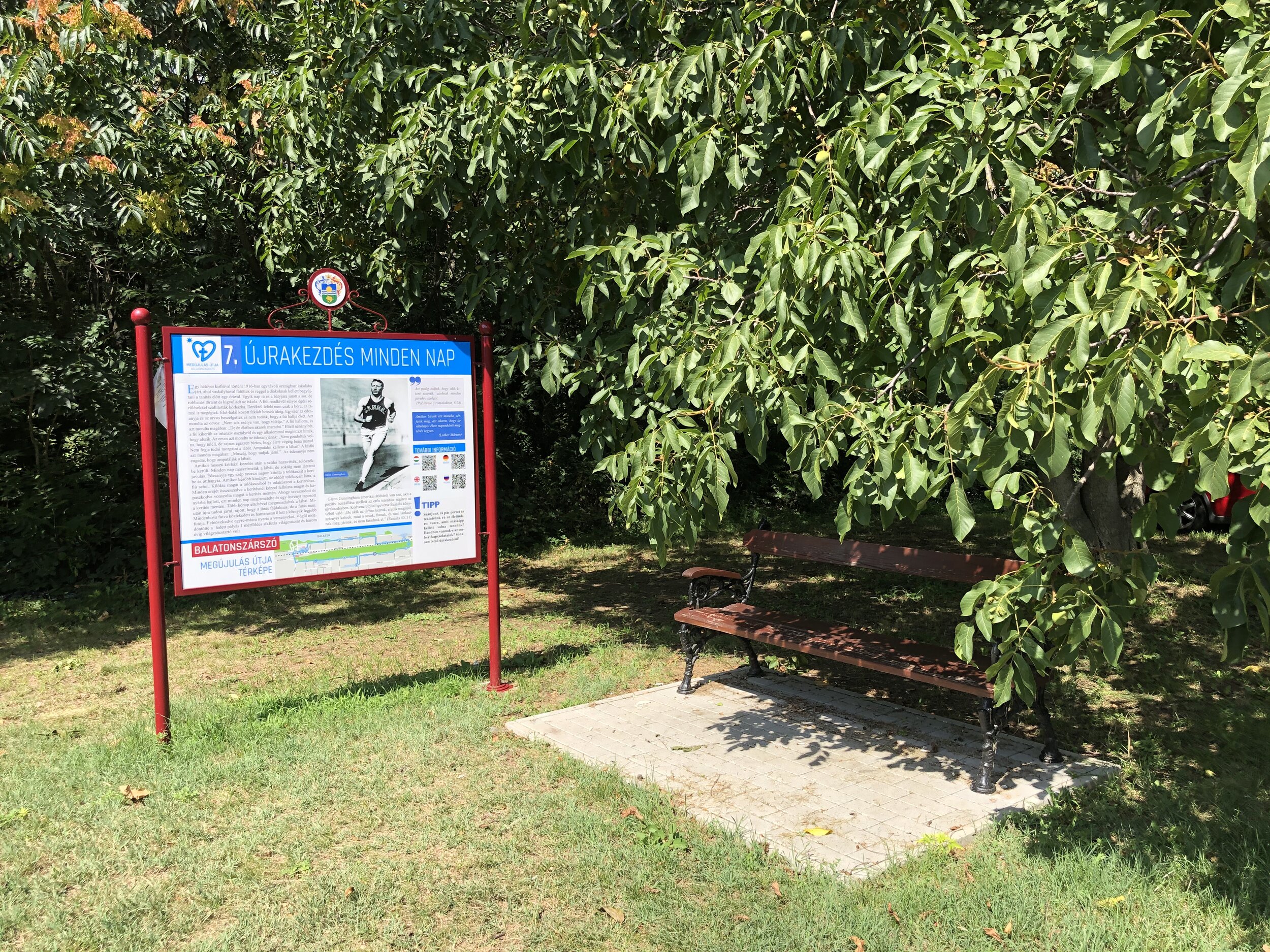
Stop 7: Restart every day

Location: North side of József Attila u.
From previous sign: Continue south-west along József Attila u.
Extract: It happened with a seven-years-old boy in 1916 in a remote country: he went to school where they heated with a stove during winter. In the morning the students had to light the fire in the stove one hour before the lesson. One day he came with his brother to start the stove, but there was an explosion and the school started on fire. The boy was transported to the hospital with extremely severe burns. From the waist down, not only his skin but also his muscles were burned. He was between life and death for a long time. Once his mother and the doctor talked and they did not know that the boy was hearing them. The doctor said, "He doesn't have much chance to survive." The boy heard and said to himself, "But I want to stay alive." A few weeks later the boy left the intensive care unit and once again they believed that he was asleep. The doctor said to his mother: "We didn't believe he was going to survive, but unfortunately it is certain that he will remain lame till the end of his life. He won't be able to move his legs. They need to be amputated." The little boy said to himself, "I must walk!" Fortunately his mother did not let the doctor amputate his legs.

Full text at: https://www.megujulasutja.hu/7-en?language=en


Stop 8: Church Buildings

Location: Outside main gate of SDG Family Hotel and Conference Center, Csárda u. 41
From previous sign: Take a left footpath heading south-east and turn right onto Nárcisz u. Continue to SDG Family hotel on the junction of Nárcisz u. and Csárda u.
Extract: The church building is the place to meet God. It is important for the community and for the individual because there is a soul in it. It was built humbly, with active engagement and sweat. Regardless of whether it is a centuries-old building or a new modern temple. "The greatest beauty of a church building is that it belongs to God. It is His house. The House of Glory. The Holy Spirit's workshop. The interior beauty of the temple lies in the fact that it becomes the property of man. There is happiness, but also a commitment to say "my church". We feel that it is not a legal but a spiritual possession. The temple becomes mine only by constant use. The beauty of the temple shines to me when I can happily say "all my life ..." In youth and in old age, in dreams, in bitter awakening, in effective work, in humiliation and under the cross, I must always live in the Lord's temple. Only in this case can I say: my church. " (Béla Kapi, Lutheran bishop)

Full text at: https://www.megujulasutja.hu/8-en?language=en


Stop 9: Human and nature

Location: North side of József Attila u.
From previous sign: Continue north along Csárda u. and take a left onto József Attila u.
Extract: We believe the whole world is God's creation: humans and animals, land and plants, Milky Way and the stars. When God created the world, God entrusted man: „And the Lord God took the man, and put him into the garden of Eden to till it and to keep it"- we read this in the beginning of the Bible, in the book of Genesis, in the second chapter. According to this command, man is to care the world while utilizing natural resources for his benefit. Divine guidance for cultivation and guardianship means that we must treat nature as a careful host. We should not view nature as something to be exploited, but rather we should view it like a wise and forward-looking gardener who preserves natural treasures for future generations as well. Every day we experience that we cannot keep God's command. We all see the adverse effects of global warming, the negative weather changes and urban smog. There is a steady lack of water in the growing part of our planet, many species are extinct. The amount of exploitable minerals and fuels decreases, as well as carbon dioxide, emitted into the atmosphere, increases. This makes our planet less and less usable. There is an urgent need for global action to reduce environmental damage and stop destruction.

Full text at: https://www.megujulasutja.hu/9-en?language=en


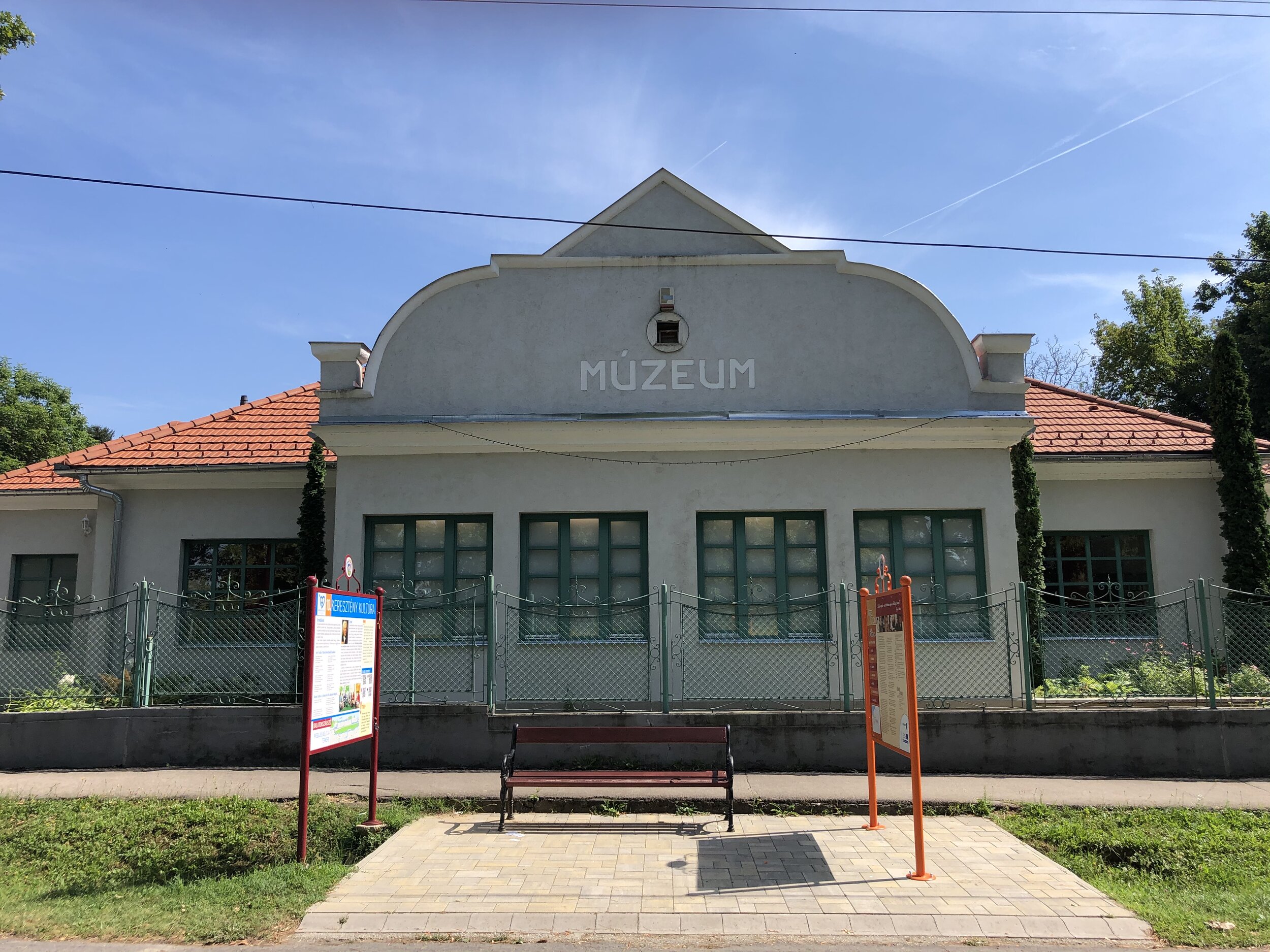
Stop 10: Christian culture

Location: On József Attila u. outside József Attila Museum
From previous sign: Continue south-west along József Attila u.
Extract: The truly outstanding writers and poets have always been touched by the supernatural, the divine world. They sought answers to the tough questions of life and frequently called God as recipient with their poems. In the poetic form of human feelings and thoughts, divine poems were born.

In today's fast-pace world, it is a soul-stirring event, if we have a book of poems in our hands for even half an hour and let ourselves be filled up by their message.

Full text at: https://www.megujulasutja.hu/10-en?language=en

To complete the circuit and return to Sign #1 continue south-west along József Attila u, take a right onto Fő u. and cross the railway line.


Chiltern Walks: Beaconsfield, Knotty Green and Seer Green
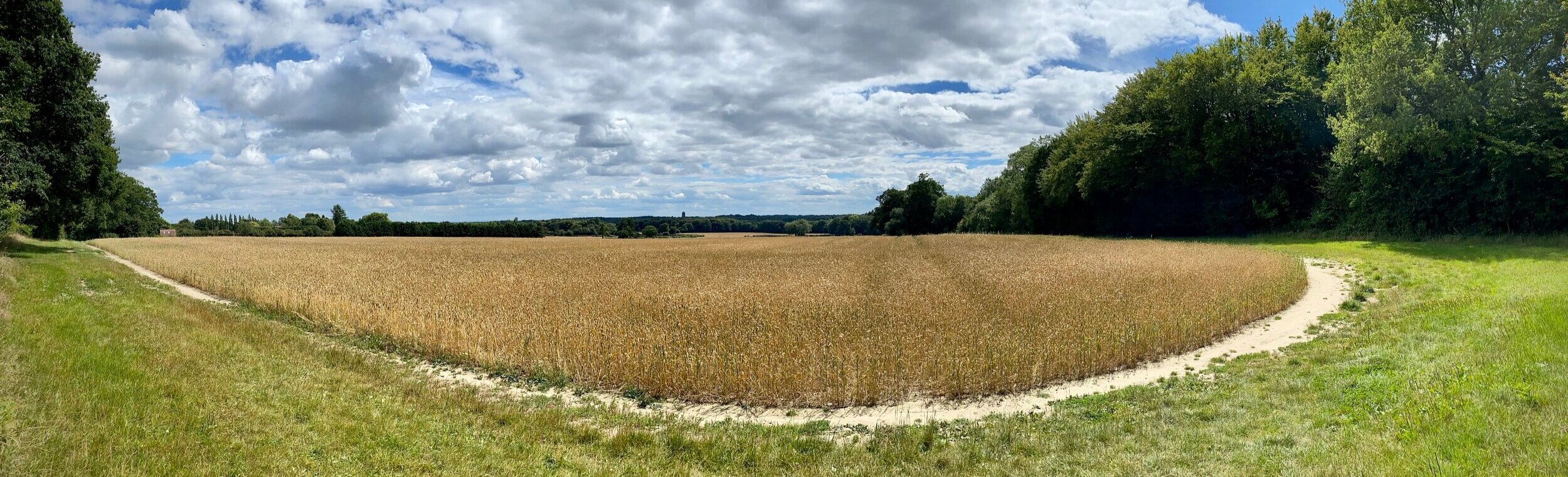
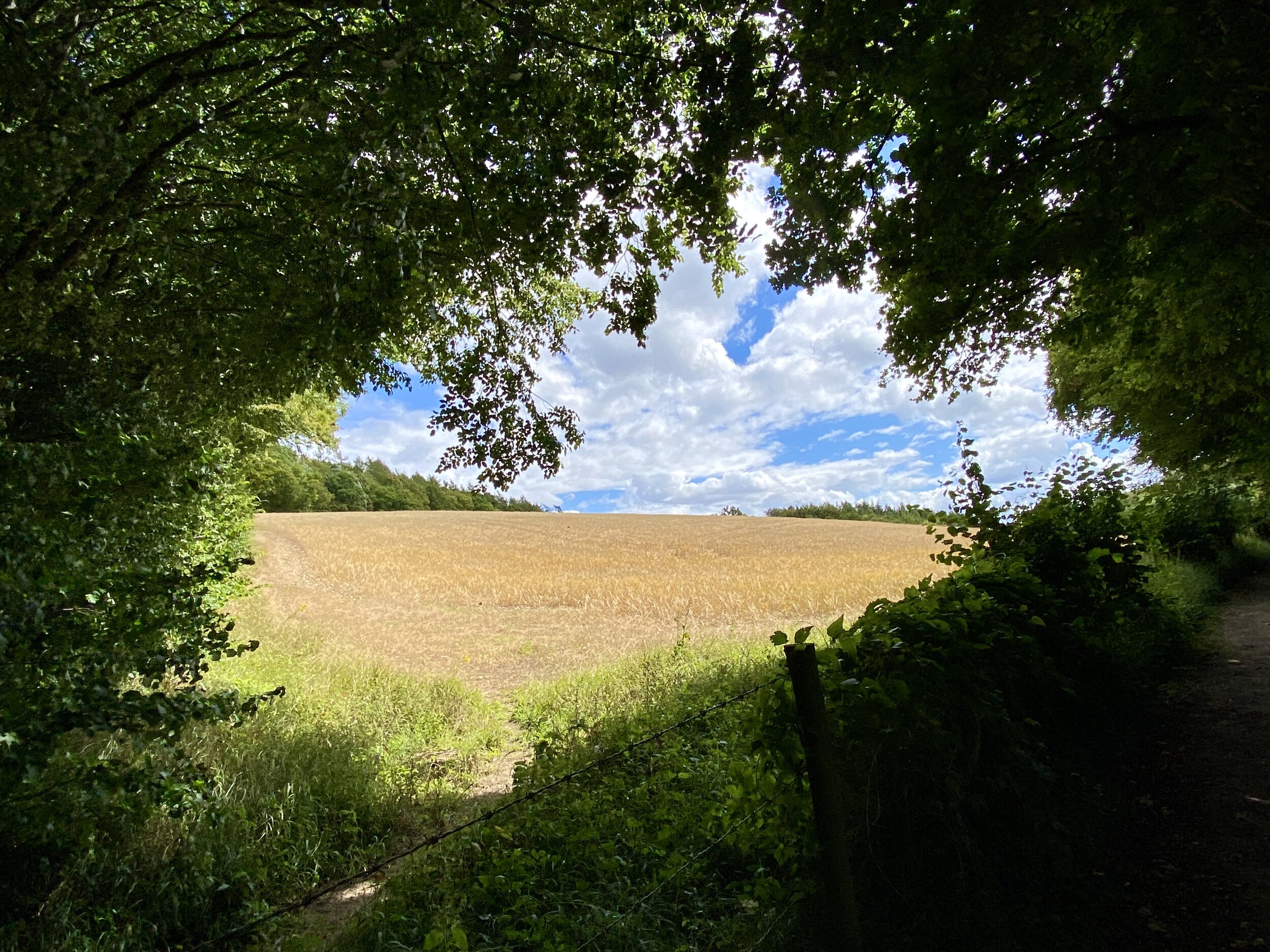
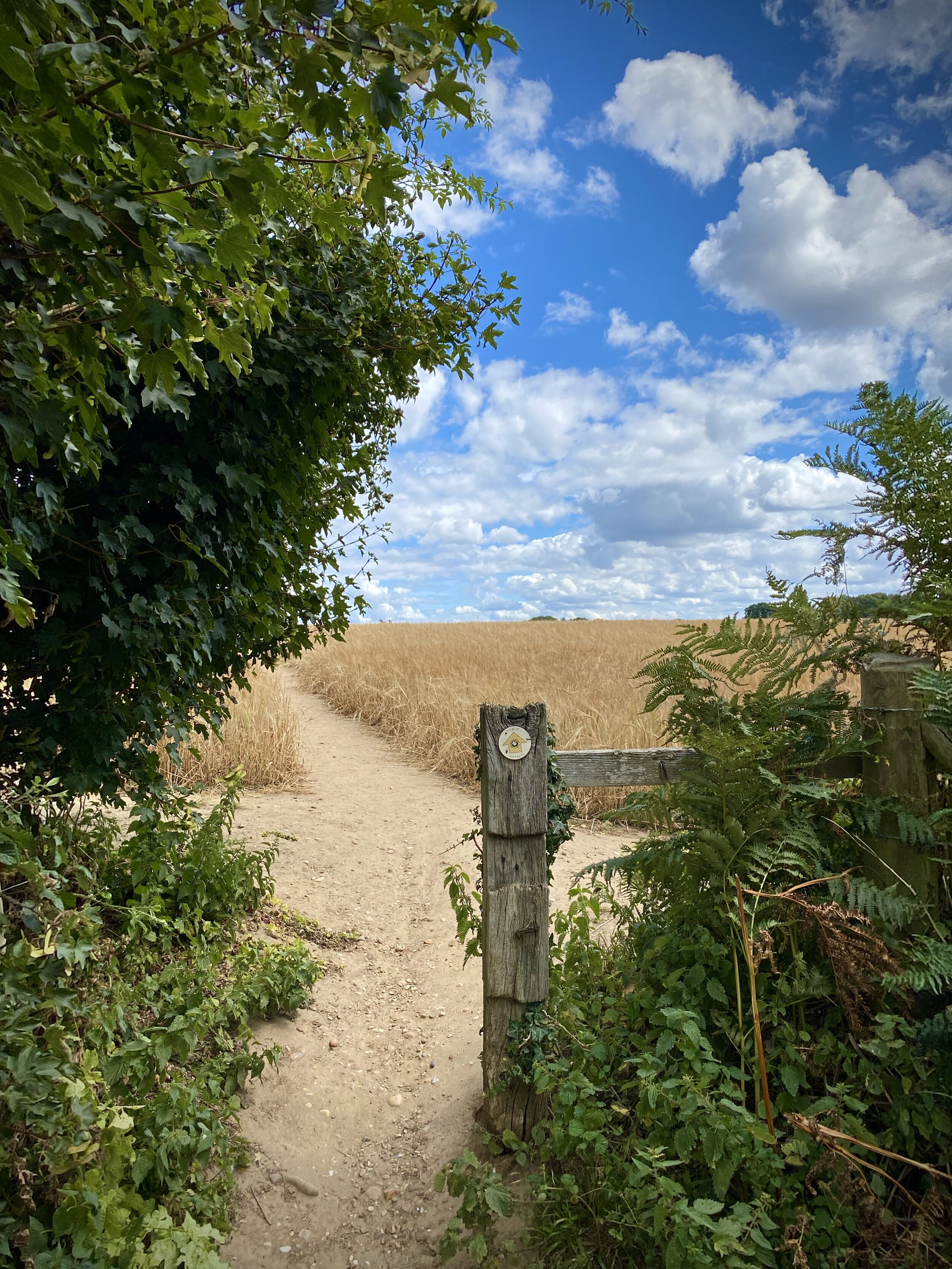
Fields near Seer Green, Buckinghamshire

Fields near Seer Green


Start & Finish: Beaconsfield Railway Station, HP9 2PJ
Distance: 10.6 km (6.6 miles)
Elevation change: + / - 84 m
GPX File: get via Buy Me a Coffee
Other routes touched (walk): N/A
Other routes touched (cycle): Chilterns Heritage Trail: Milton Route
Pubs / Cafes on route: Several in Beaconsfield, The Lion of Beaconsfield (2.3km in), The Jolly Cricketers (6.8km in), The Three Horseshoes (6.8km in)
Map: OS Explorer Map (172) Chiltern Hills East
Links: Beaconsfield, Beaconsfield Station, Forty Green, Knotty Green, Seer Green


The Chiltern Hills National Landscape (formerly AONB) is a picturesque landscape located in the southeast of England. It covers an area of approximately 324 square miles and spans across four counties: Oxfordshire, Buckinghamshire, Bedfordshire, and Hertfordshire. The hills are characterized by rolling chalk hills, ancient woodlands, and charming villages with thatched roofs. It is a popular destination for hikers, cyclists, and nature lovers who come to enjoy the stunning vistas and the rich biodiversity of the area. The area is also rich in history and has many sites of archaeological and historical interest, such as Iron Age forts and medieval churches.

Walking Directions

The guidance below will help you navigate but don’t use it as a fully accurate turn-by-turn guide. Always take a map and/or a GPX route and prepare well for the weather and terrain.

  • From a start point at Beaconsfield Railway station, this route soon gets you into the quiet paths and country lanes of the Chilterns. It won’t take you long into the walk to realise that you’re in a very rich part of the country. We’re actually in Beaconsfield New Town, a mile north of the market town that dates back to 1185. The New Town came with the railways and, with fast regular trains to London, it’s still an attractive place to live in the countryside while working in London.

  • Heading west from the station, you’ll cross Penn Road and take a north-westerly direction along Reynolds Road. Follow onto a series of footpaths crossing quiet residential streets with some very large houses.

  • After crossing Hogback Wood Road you’ll enter Hogback Wood and take a sharp right on a path through Knotty Green. Cross Penn Road again by the Lion of Beaconsfiel Pub and onto a tight footpath to the right of a care home.

  • After ~500m you’ll leave the residential area and follow the footpaths through woodland to the A355 Amersham Road.

  • Take care when crossing the A355 as it’s very busy with a tight corner for cars coming up the hill from Amersham. After crossing the road you’ll be into woodland again, taking a right after ~400m and a left after another ~700m up a steep, short hill.

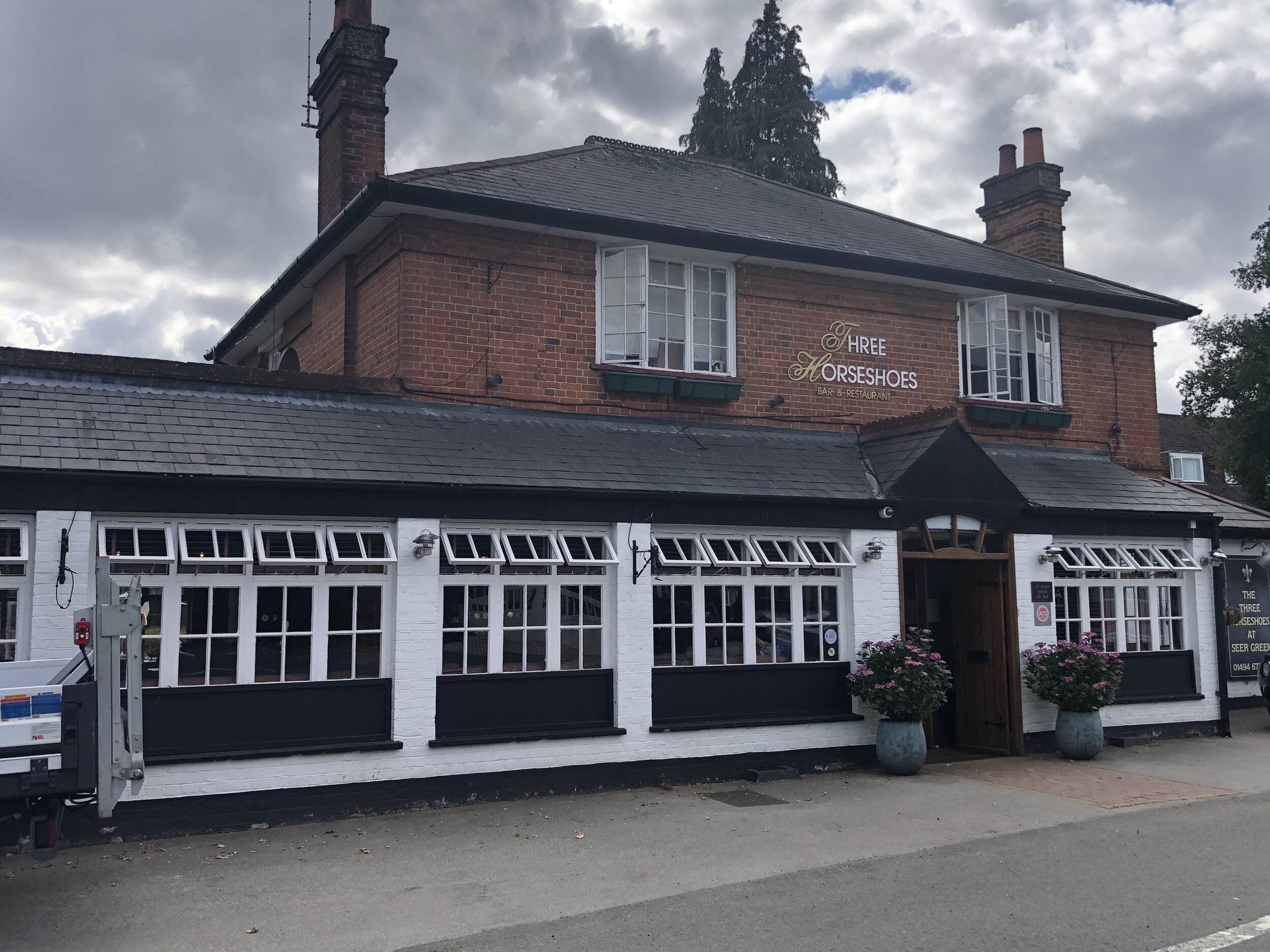
  • At the top you’ll descend again crossing in a field into Seer Green. Here you’ll meet the Milton Route of the Chiltern Heritage Trails and a chance for a rest at either the Three Horseshoes pub or the Jolly Cricketers.

  • After the pubs, take a right at the end of Orchard Road onto School Lane. Follow this south until you can take a right onto a footpath just past Vicarage Close.

  • Continue south-west along the path, crossing Long Grove and Longbottom Lane onto Beaconsfield Golf Course. Be careful here as the footpath crosses the course so you’ll need to wait for golfers to play through.

  • Continue south-west for ~1.5km, crossing the rail-line and eventually meeting the A355 on the eastern edge of Beaconsfield.

  • To complete the journey, take a zig-zagging route through Beaconsfield following Waller Road, Hyde Green and Maxwell Road, a path over the railway line and finally Caledon Road back to the station.

Points of Interest along or near to the Route

  • Beaconsfield New Town and the Railway The walk begins in Beaconsfield New Town, an area shaped entirely by the arrival of the Great Western and Great Central Joint Railway in 1906. This development sprang up a mile north of the original Old Town, which dates back to 1185. The quick transport links to London instantly transformed the area into a highly desirable countryside retreat for city workers—a reputation it proudly holds today.

  • Hogback Wood and Knotty Green As you leave the residential streets, the route ducks into Hogback Wood on the way to Knotty Green. This ancient woodland is a classic example of the Chiltern Hills' landscape and is highly prized by locals. If you are walking the route in the spring, the dense tree canopy gives way to spectacular carpets of bluebells. Knotty Green itself is a historic Buckinghamshire hamlet; its name can be traced back to the 13th century, deriving from the Old English term for the rough, tussocky grass that once grew on the village green.

  • Seer Green Village Seer Green gets its name from the Old English sere (meaning dry) and grene (meaning a grassy spot). It was referred to as La Sere or La Cere in its earliest recorded mention in a legal writ from 1232, and historically sometimes spelt Sear Green or Shere Grene. The name Seer Green first appears in a 1407 document: an Inquisition Post Mortem recording the heir to the Lord of the manor of Farnham Royal. For much of its history, Seer Green was a detached part of Farnham Royal. Farnham (from farn meaning ferns and ham meaning village) held the 'Royal' designation because the Lord of the manor and Tenant-in-Chief provided a special service to the monarch: a privilege likely granted by Henry II after 1174 and later removed by Henry VIII in 1541. Renowned for cherry-growing, the village was once a key provider of the fruit to London markets throughout the 19th and early 20th centuries.

  • The Jolly Cricketers, Seer Green. The pub’s wisteria is well over 100 years old. The landlord serves Cask Marque accredited local real ales. The kitchen has an AA Rosette offering modern British food specialising in Cornish seafood. The owners have had the pub since 2008.

  • Beaconsfield Golf Course. Designed by the renowned golf course architect Harry Colt in 1914, it remains one of the most prestigious courses in Buckinghamshire.


Cycling The River Ash and Thames Path Circular
The underwhelming source of the River Ash as it splits from the Colne on Staines Moor

The underwhelming source of the River Ash as it splits from the Colne on Staines Moor


Part of the Chiltern Rivers Series
River start:
Splits from the Colne on Staines Moor
River end: Confluence with the Thames at Walton-on-Thames, Surrey
River length: 10 km (6.2 miles)


Cycle Route Start & Finish: Parking places at intersection of Moor Lane and Colne Valley Trail, Staines, TW18 4YY
Cycle Route Distance: 32.8 km (20.3 miles)
Cycle Route Elevation change: + / - 87 m
GPX File: get via Buy Me a Coffee
Other routes touched (walk): Thames Path, Colne Valley Trail
Other routes touched (cycle): NCN 4
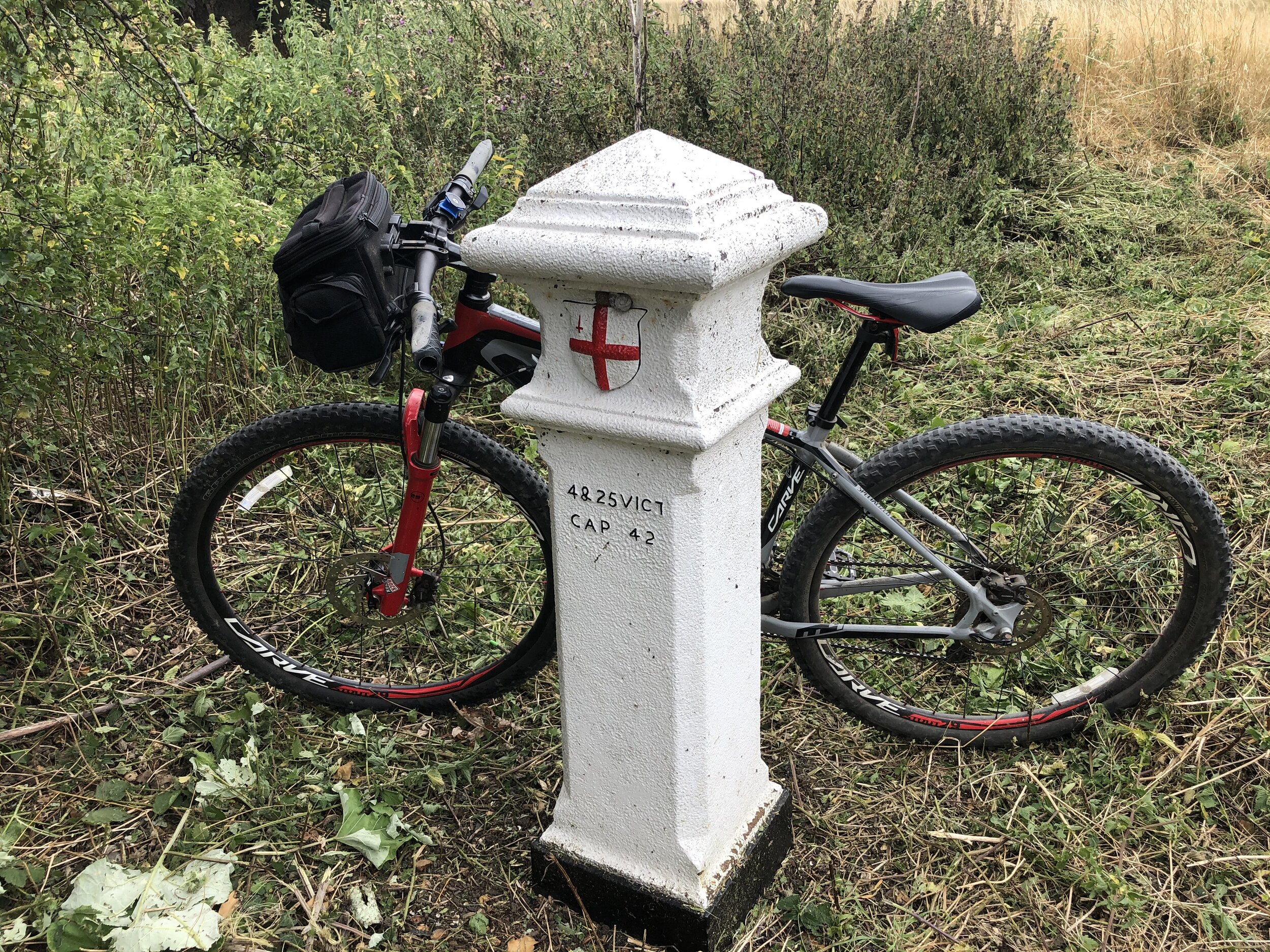
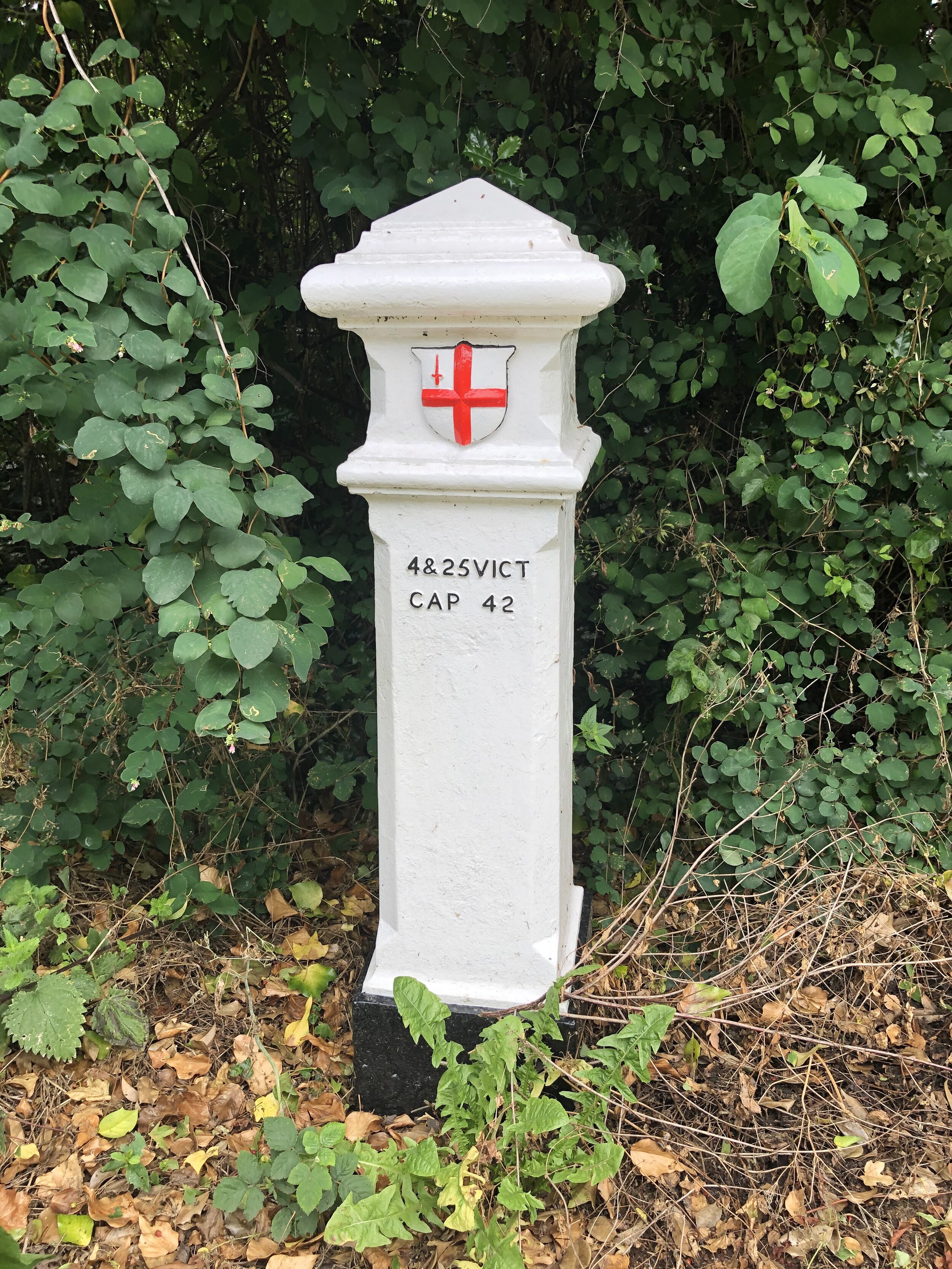
London Coal Duty Posts: 84, 85, 86, 87, 88, 89, 90, 91, 92, 93
Pubs / Cafes on route:
Several including The Ferry Coffee Shop, Shepperton TW17 9LQ
Map: OS Explorer Map (160) Windsor, Weybridge & Bracknell
Links: River Ash, Staines, Staines Moor, Shepperton, Walton-on-Thames, Desborough Island, Hammertons Ferry


In the latest of my Chiltern Rivers cycle rides, I explored the River Ash at the southern end of the Colne Valley Regional Park. The Ash is quite geologically unusual because it is a distributary—meaning it actually splits away from the River Colne, rather than flowing into it. It branches off next to the A30 Staines bypass, north of the town, and follows a south-easterly direction to meet the Thames at Walton-on-Thames.

Much of its route is hidden away from public access, so a cycling or walking trip along the Ash is really one for the completists. That definitely describes me, so I had to do it! The ultimate reward for tackling it is the beautiful return route to Staines via the Thames Path.

If you are driving, the best place to start is the free parking space on Moor Lane, right opposite the path to Staines Moor. Following this path, you will pass over the Wraysbury River, the Staines Rivers Aqueduct, and the rail line. You will need to use the A30 bridge to cross over the River Colne, where you will find the exact point where the Ash splits away on the eastern bank. From here, you can follow the Ash on a footpath for roughly 300m into a housing estate. For the next 4km, you actually won't see the river at all as it keeps close to the A308, while the cycling options zig-zag through the residential areas of north Staines. You could cycle directly on the A308 to stay closer to the river and shave off some distance, but it is a very busy road and you won't see the water from there anyway.

The Ash, the A308, and the cycle route all finally converge at the Fordbridge Roundabout. Here, the Ash takes a sharp right turn to the south and curves around the massive Queen Mary Reservoir (one of the largest in London) through Laleham. The best cycling option here is to follow the B377 Ashford Road, then the B376 Shepperton Road. At Shepperton, you have the choice of continuing along the B376 or taking a meandering route through Littleton, Shepperton, and Upper Halliford to stay closer to the river.

The confluence with the Thames is tucked away quietly behind a small island. You can reach it by taking a private residential road called The Creek, just off Fordbridge Road. A rickety wooden footbridge stands over the confluence, officially marking the end of the River Ash part of the trip.

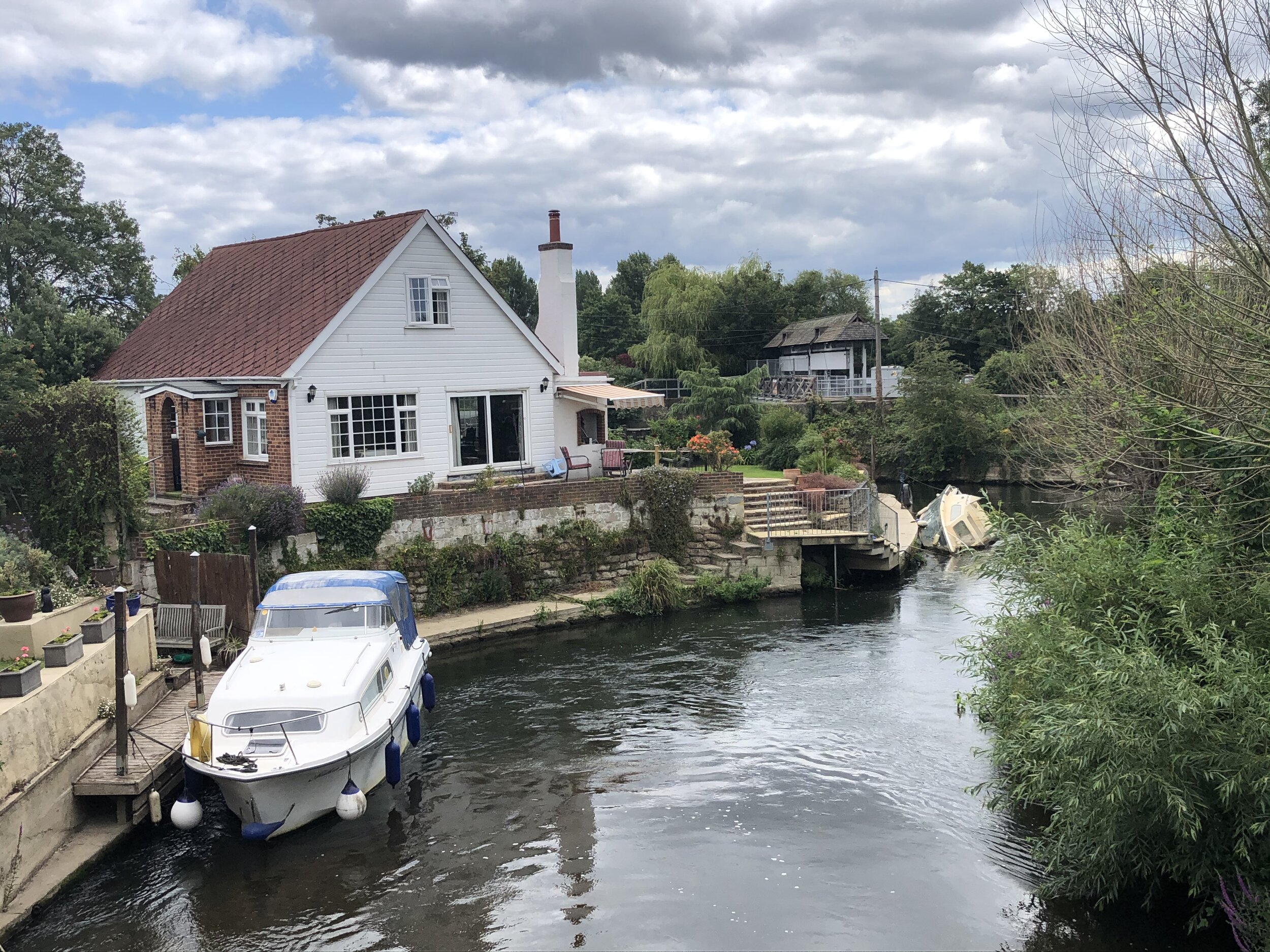
To return to Staines, head back to Fordbridge Road and follow it west to the A244, then ride that straight onto Walton Bridge. Cross over the bridge and pick up the Thames Path back towards Staines. I added an extra 1km to the trip by taking a brilliant diversion along the perimeter paths of Desborough Island. This isn't a natural landmass; it is actually a completely man-made island, dug out by hand in the 1930s to create a straight channel that bypasses the river's meandering loop and reduces flooding.

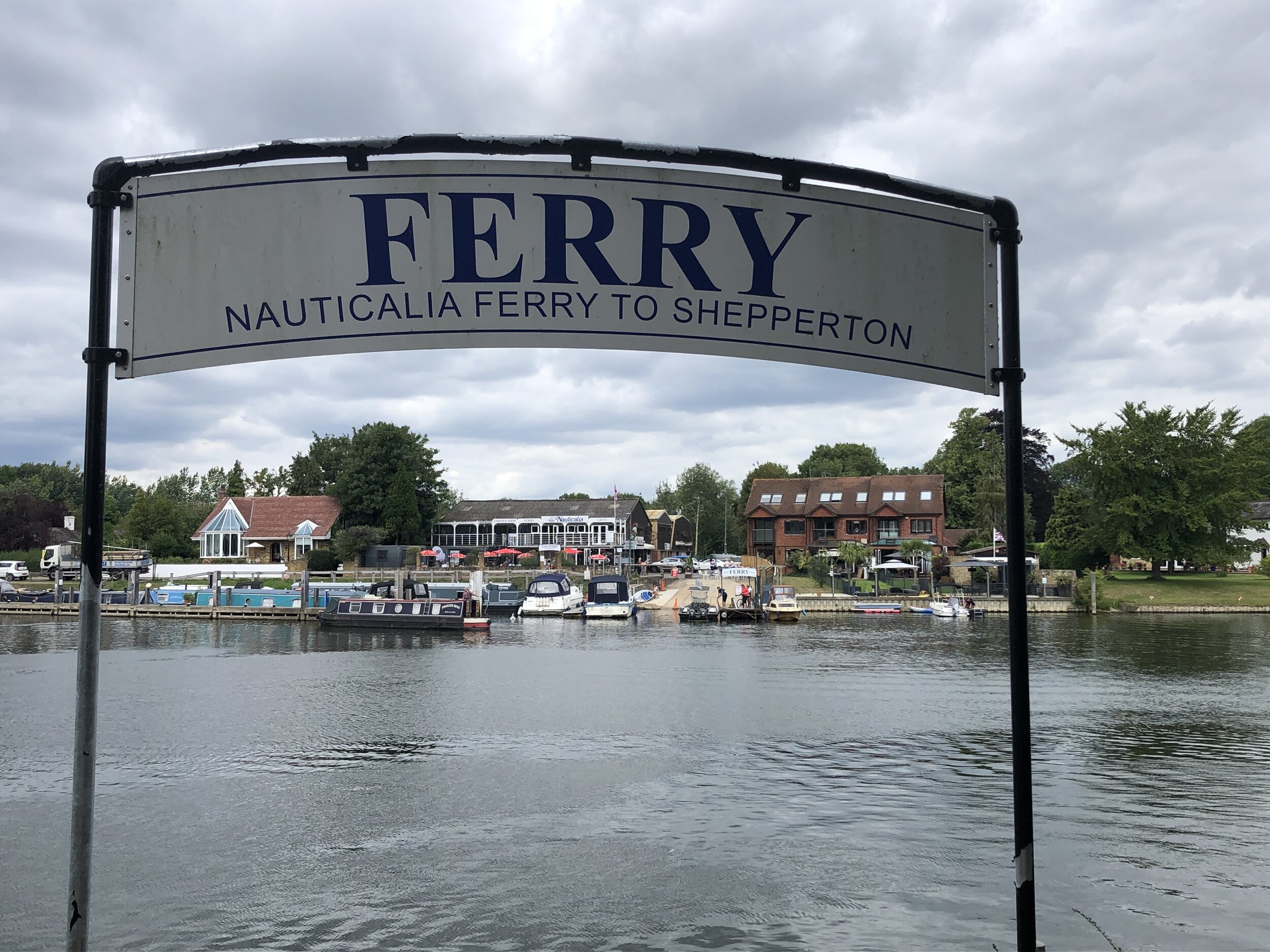
One of the absolute highlights of the return trip is taking the small Shepperton to Weybridge Ferry across to the north side of the Thames to stay on the towpath. It has been operating there for centuries! Do check that it is running before you go, though, as you will have to add a few extra miles to your trip to find the nearest alternative crossing by bridge if it happens to be closed.

When you arrive back at Staines, take the B376 heading north away from Staines Bridge. Take a right onto Moor Lane and continue for around 500m back to the parking spot.

Blue = course of the River Ash, Red = circular cycle route


More London Posts

If you enjoyed reading this post, there is plenty more to explore across the capital. I have put together a dedicated London Outdoors page where I keep track of all my other adventures around the city. It is a handy index where I group my posts by the different types of places I have visited: including historic boundary lines, canal towpaths, and some surprising urban high points.

The collection covers a bit of everything: from long-distance cycling routes to tracing the underground network on foot, and ticking off another Saturday morning parkrun. If you are looking for some inspiration for your own weekend outings, head back over to the London Outdoors page to see what else I have been up to.

Thames Path & Jubilee River Walk - Maidenhead & Bray
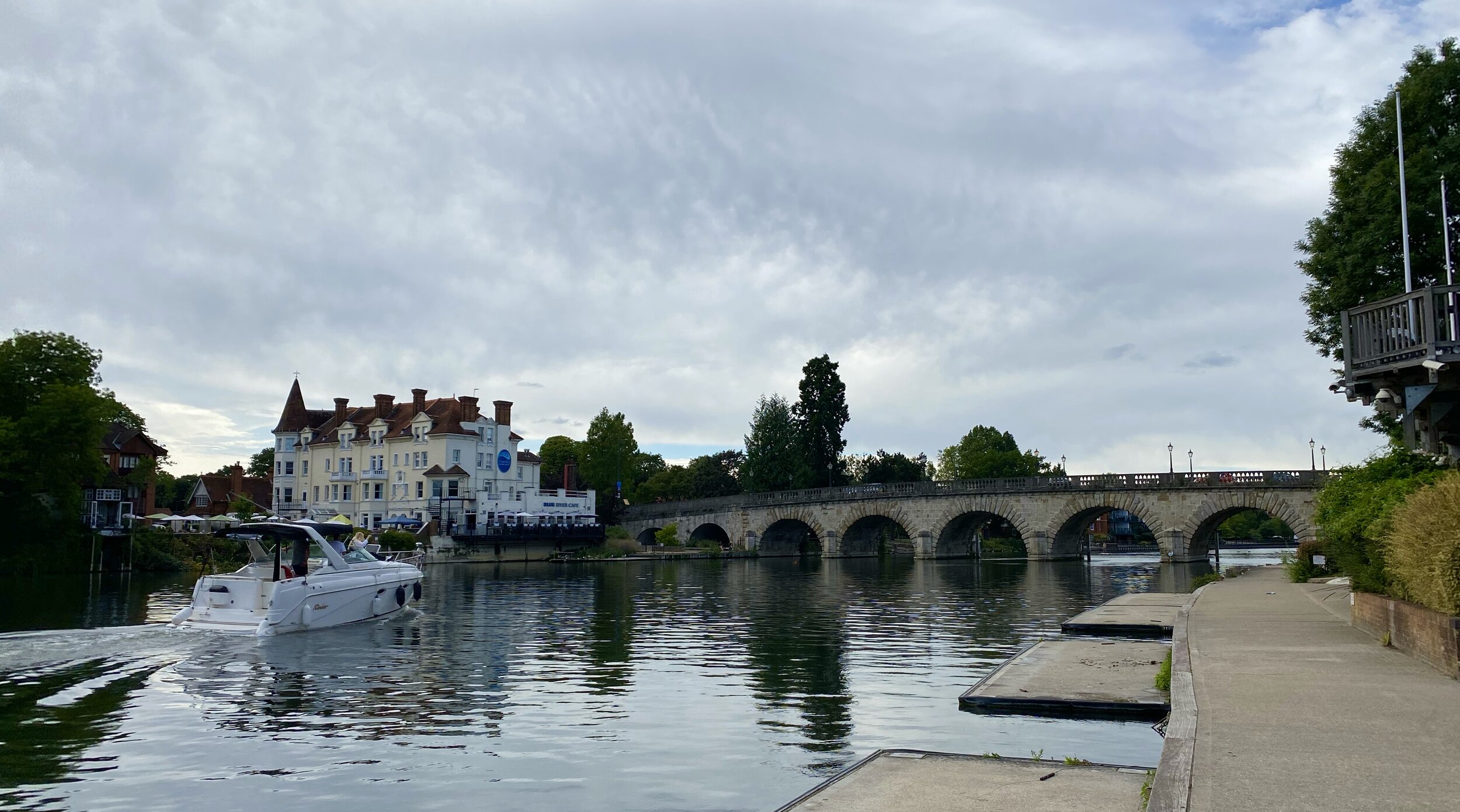
Maidenhead Bridge

Maidenhead Bridge


Start & Finish: Riverside Gardens, Maidenhead, SL6 8NS
Distance: 10.7 km (6.6 miles)
Elevation change: + / - 35 m
GPX File: get via Buy Me a Coffee
Other routes touched (walk): Thames Path, Maidenhead Boundary Walk, Jubilee River Path
Other routes touched (cycle): NCN 52, 61, Beeches Cycleway
Pubs / Cafes on route:
Jenners Riverside Cafe (SL6 8NP), The Boathouse at Boulters Lock (SL6 8PE)
Map: OS Explorer Map (172) Chiltern Hills East and OS Explorer Map (160) Windsor, Weybridge & Bracknell
Links: Jubilee River, Maidenhead, Ray Mill Island, Bray, Dorney Reach, Bray Lock


The Jubilee River is a man-made channel built in the late 1990s and early 2000s to take overflow from the River Thames to prevent flooding around Maidenhead, Windsor, and Eton. The path along side it passes through wildlife and woodland making a easy, pleasant walk or cycle. It also runs parallel and close to the Thames, allowing for several combinations of short trips that take in both.

This is the first of a series of 4 circular walks of roughly 10 km that take in sections of both the Jubilee River and Thames Path. This one starts at the Car Park at Riverside Gardens in Maidenhead taking a clockwise direction to Dorney Reach at the walk’s southern edge.


The Complete Route: Thames Path & Jubilee River Walks

Screenshot 2020-09-20 073743.png

Yellow = Maidenhead & Bray, Red = Dorney & Eton Wick, Blue = Eton Wick and Eton, Greet = Eton and Datchet


Pole Hill: Waltham Forest Borough High Point

Significance: Highest peak on the Greater London Borough of Waltham Forest
Member of: N/A
Parent Peak: Haddington Hill. NHN = Highgate Hill
Historic County: Essex (of which Chrishall Common is the County Top)
Elevation: 91m
Date climbed: 21st October 2018 (on Tough 10 run) and July 14th 2020 (on Prime Meridian cycle)
Coordinates: 51° 38' 11'' N, 0° 0' 5'' W
Nearest Station: Chingford (Overground): 1 km
On route of: Greenwich Meridian Trail
OS Trig Pillar: TP5486 - Pole Hill
Map: OS Explorer Map (174) Epping Forest & Lee Valley Map
Links: Wikipedia (Waltham Forest), Wikipedia (Pole Hill), Peakbagger, Hillbagging, Epping Forest, Greenwich Meridian Monuments

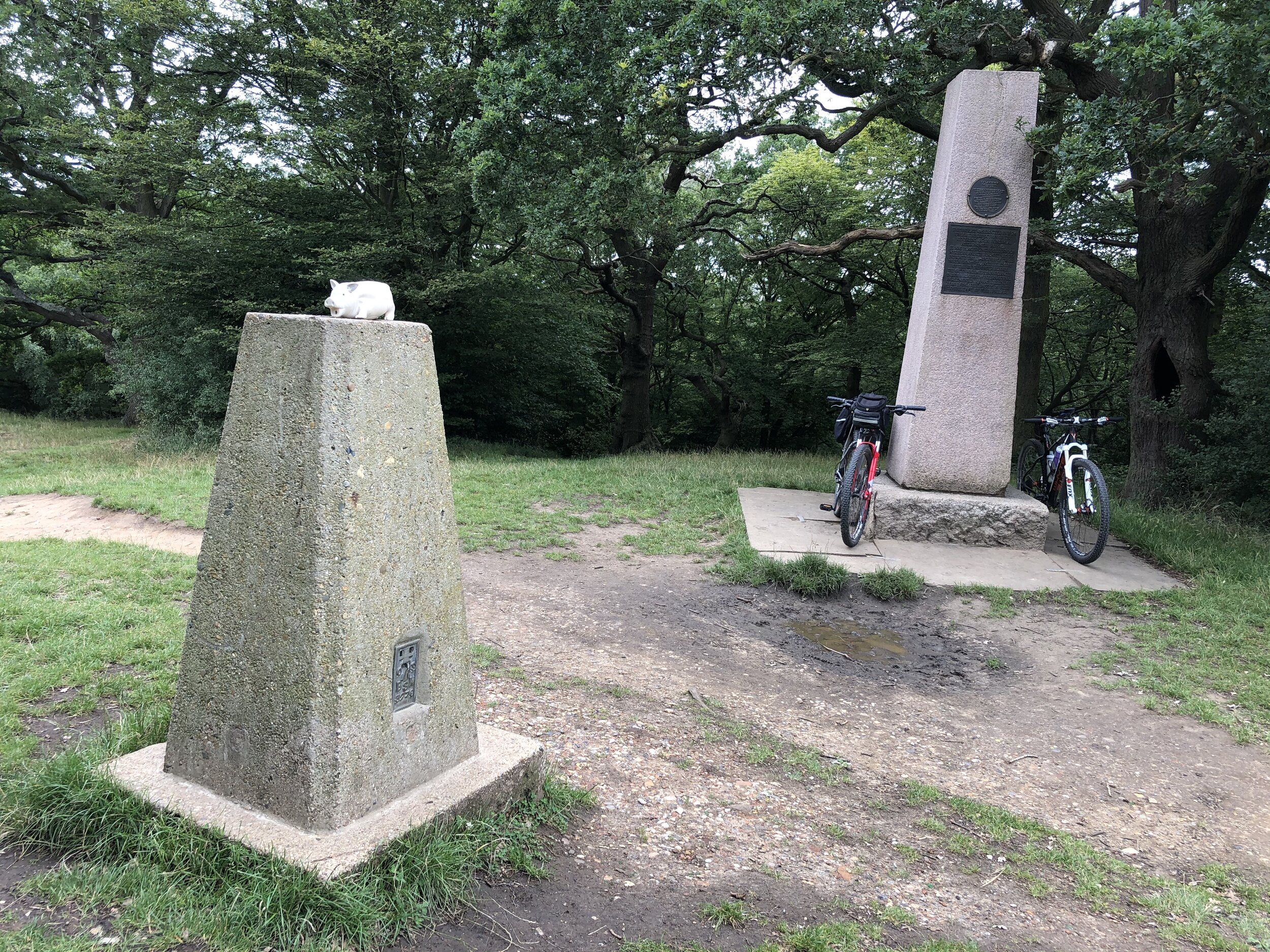
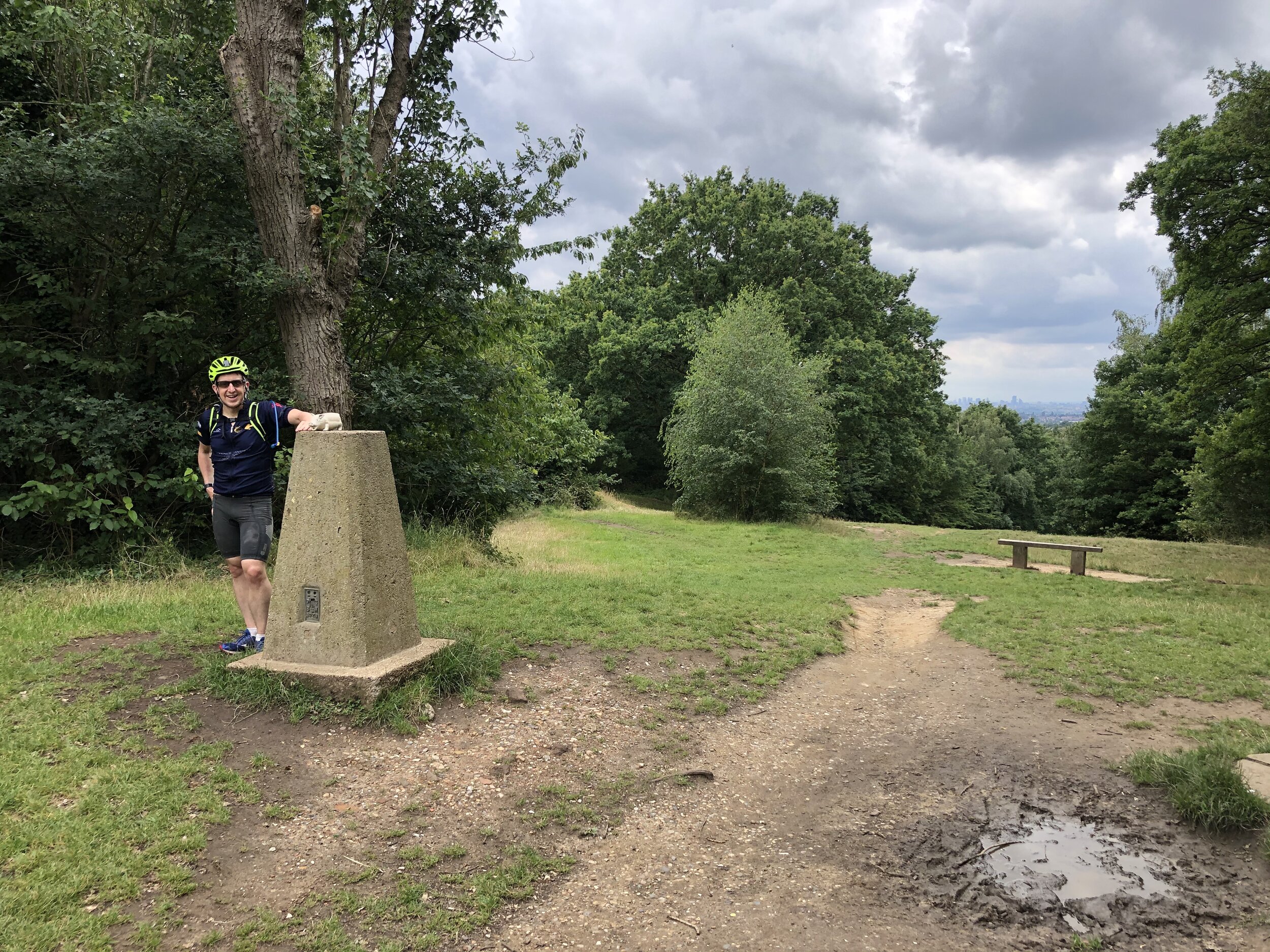
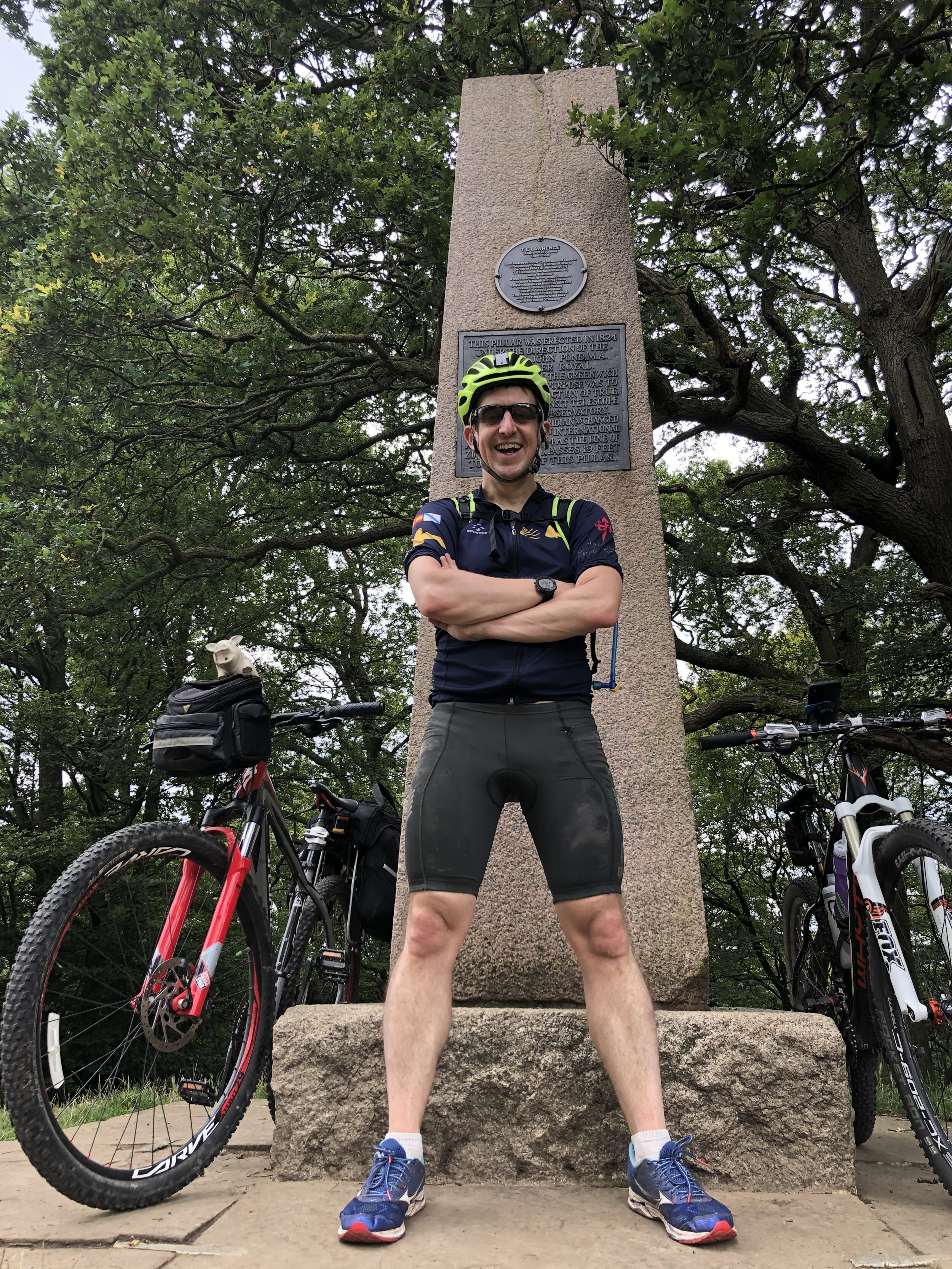
The first time I found the summit of Pole Hill it was by accident. I was running the Tough 10 Epping Forest Race and spotted the Trig Pillar at the top of a steep climb. As I wasn't up for a PB I took a 30 second diversion to get a photo of my at the Trig. I was intrigued by the other monument next to it and made a mental note to check it out another time.

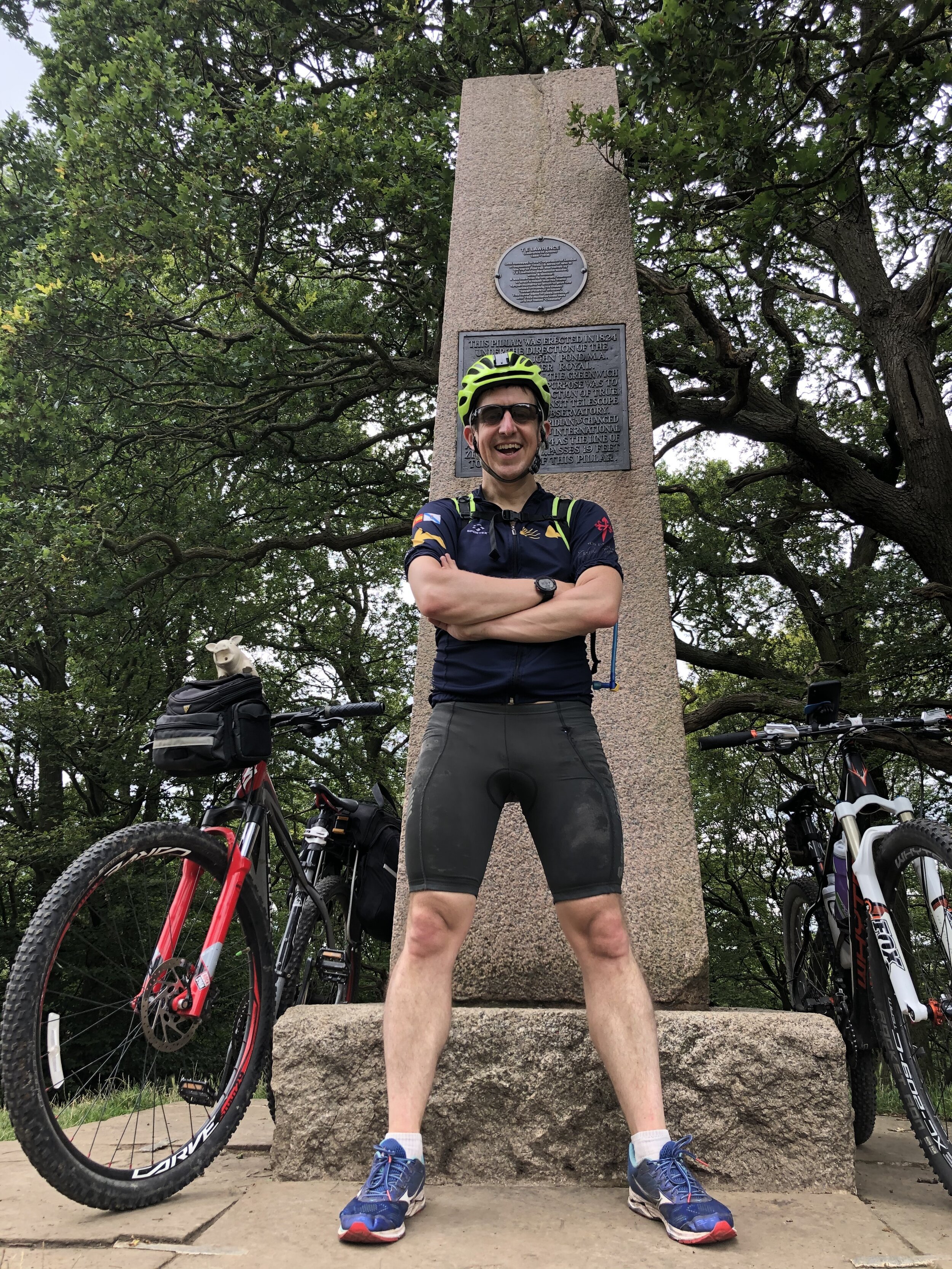
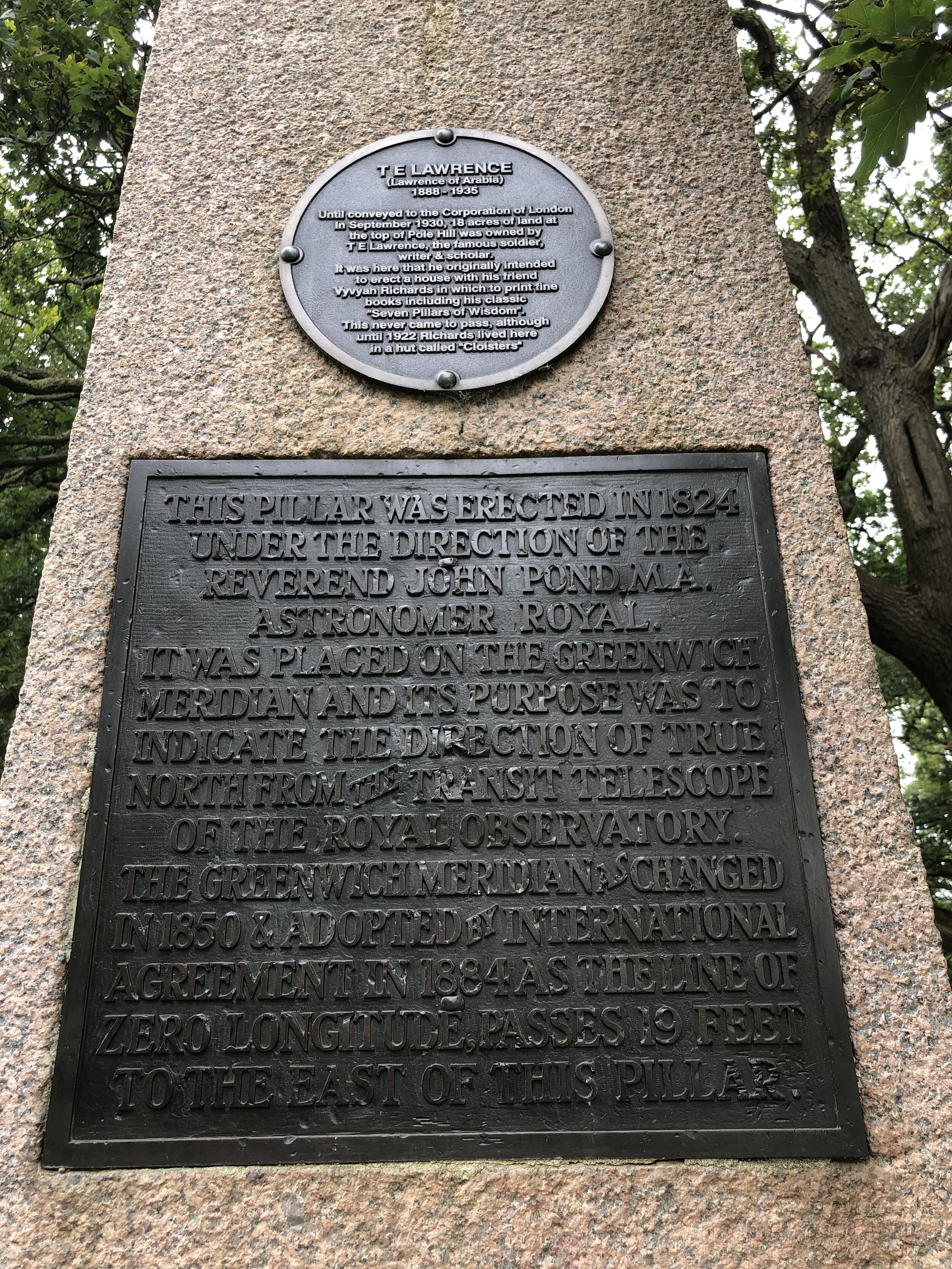
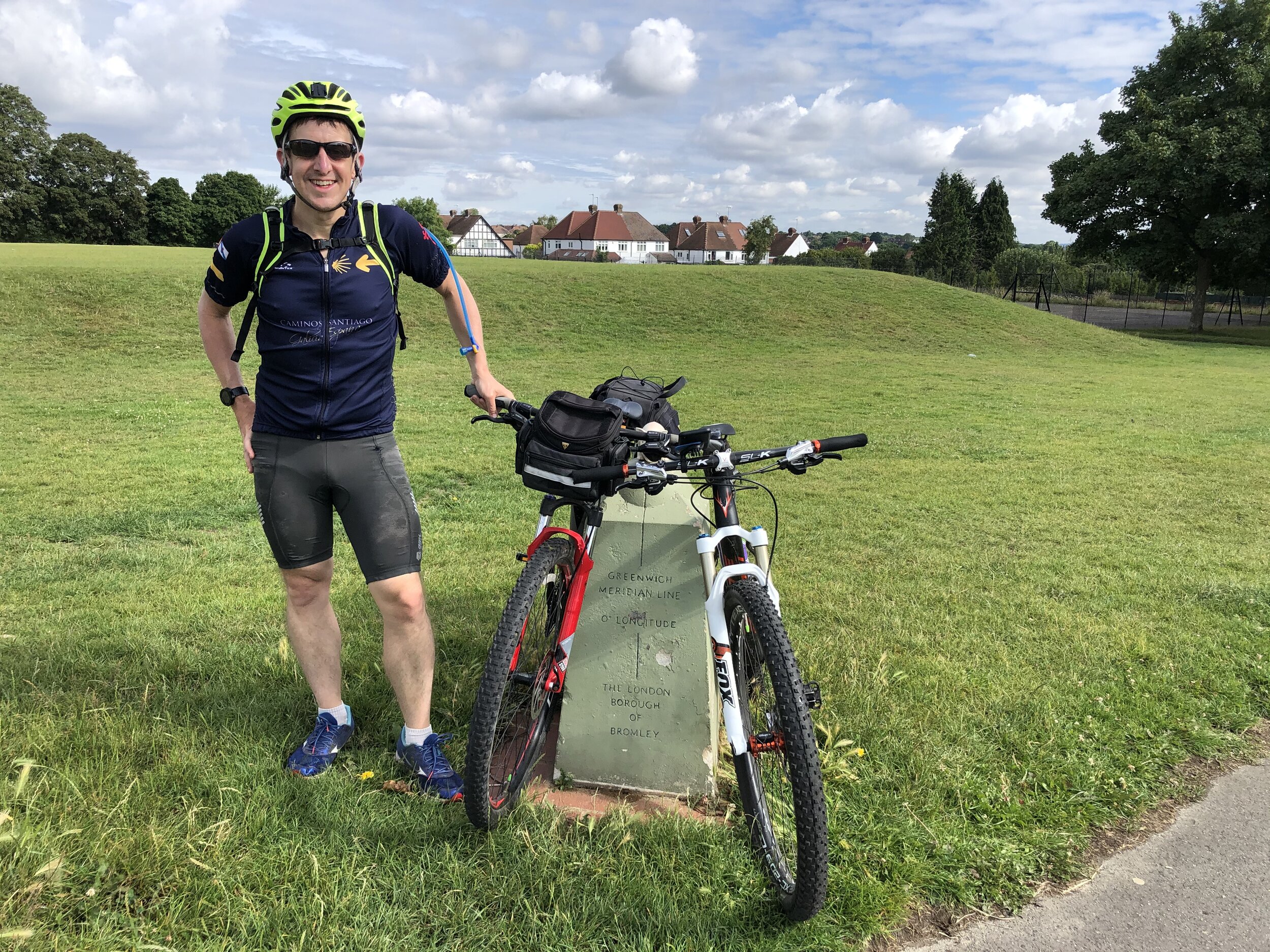
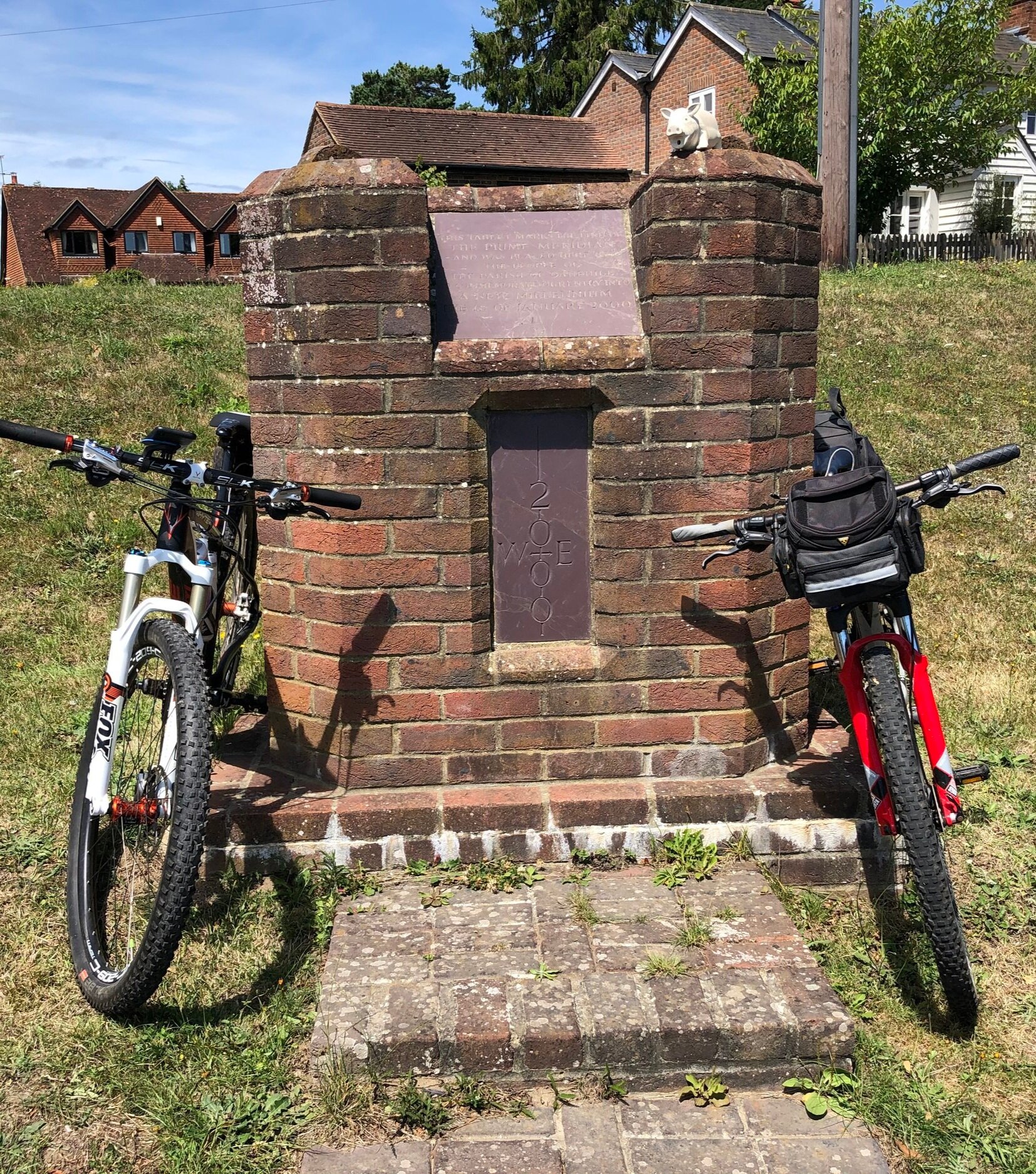
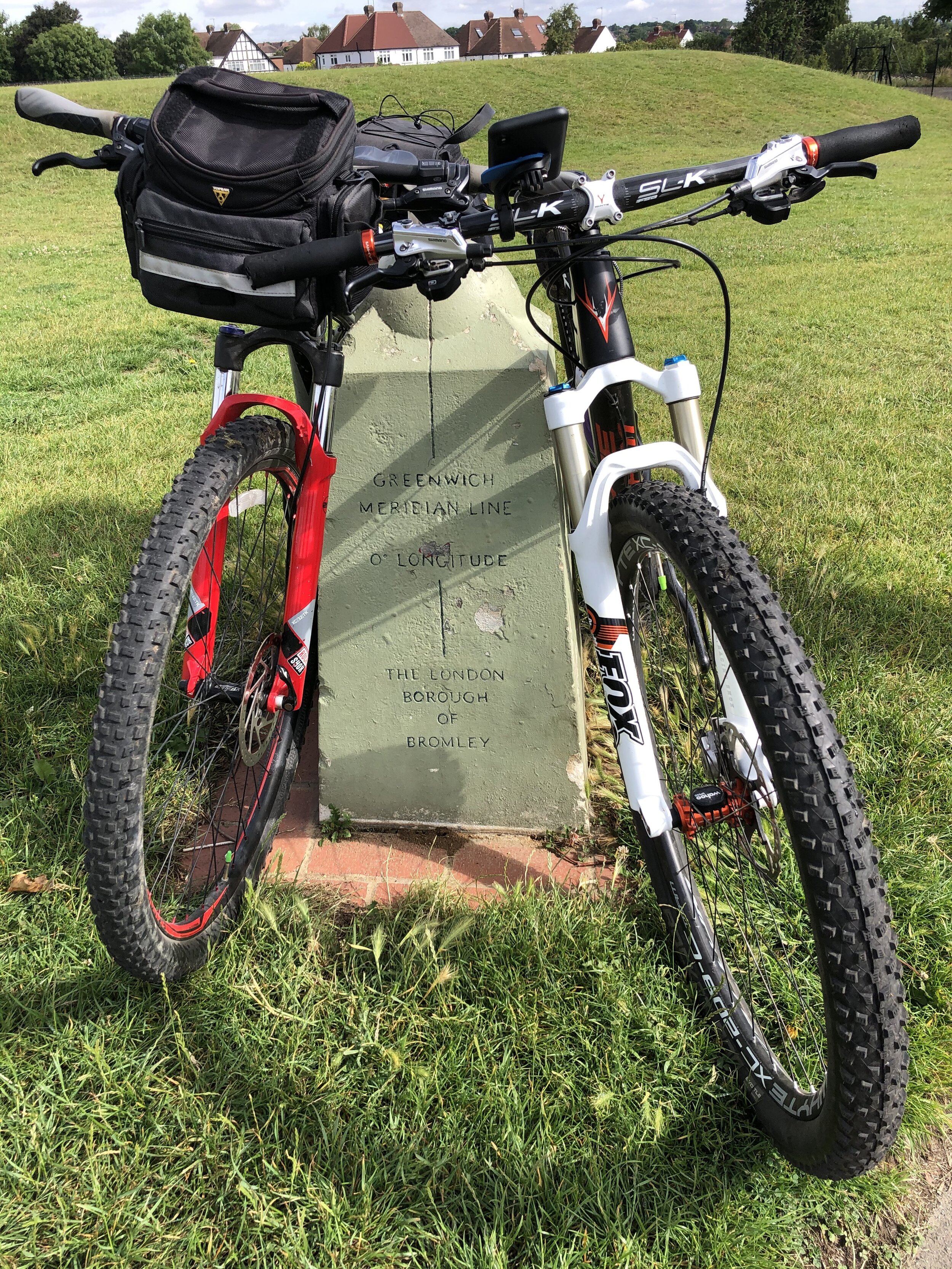
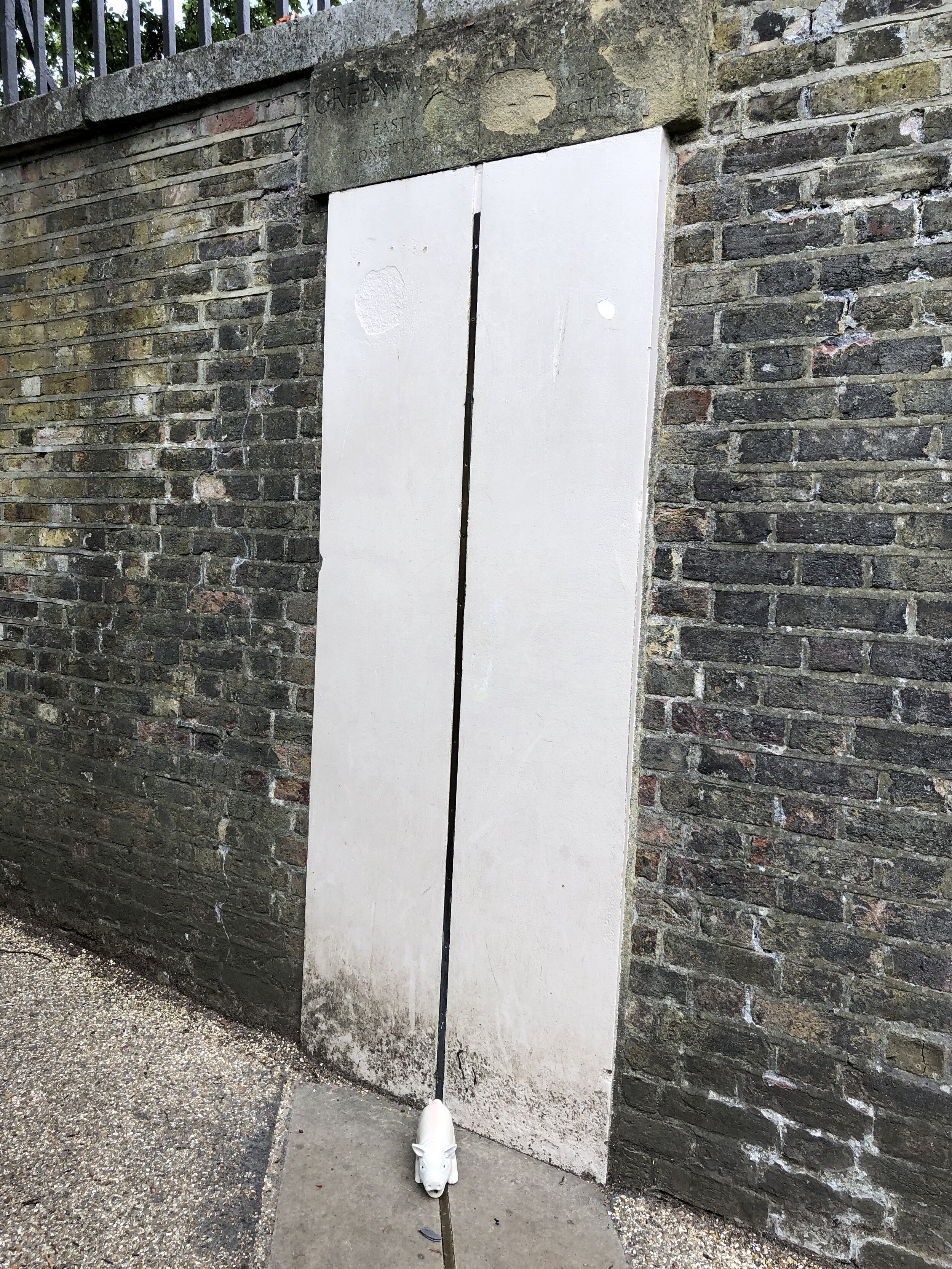
My return to the Pole Hill monument was on my Prime Meridian cycle trip. The monument is one of several obelisks and other markers that signify the line of 0 degrees longitude. As far as I know Pole Hill is the only place where there's a Meridian marker, a Trig Pillar and a County/Borough High Point.


Cycling The Prime Meridian Part 1 - Peacehaven to Waltham Abbey
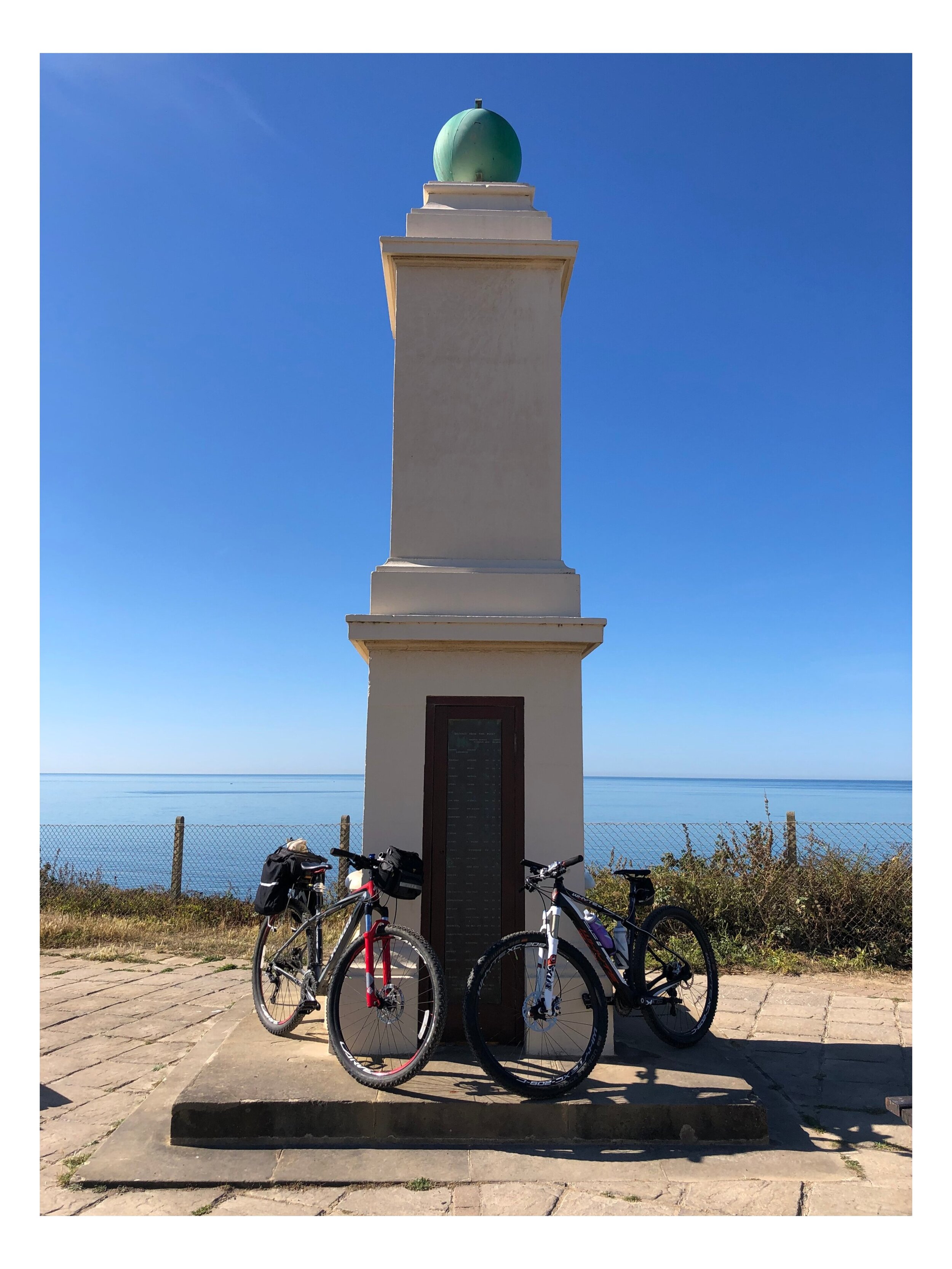
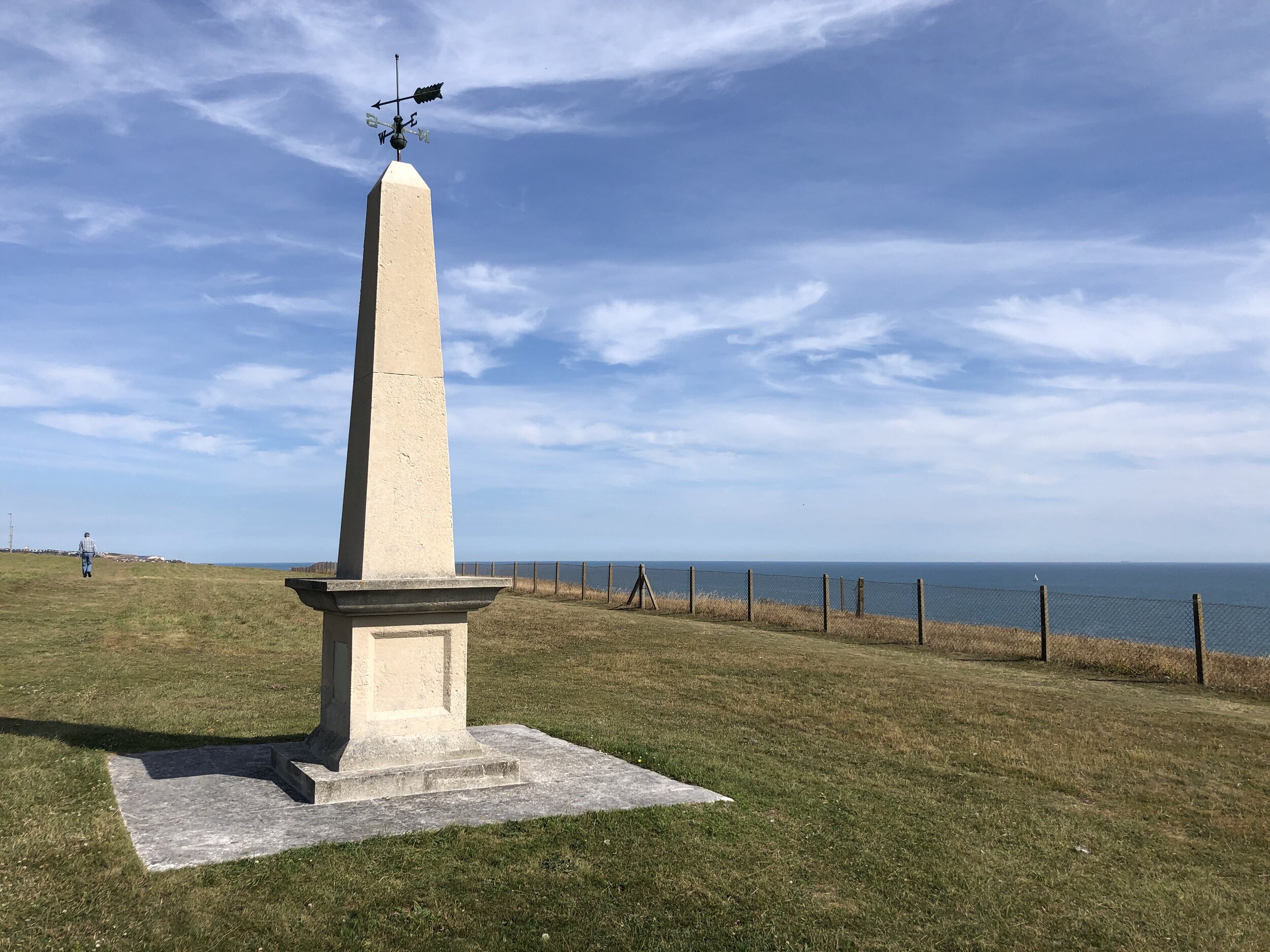
Obelisk at Peacehaven

Obelisk at Peacehaven


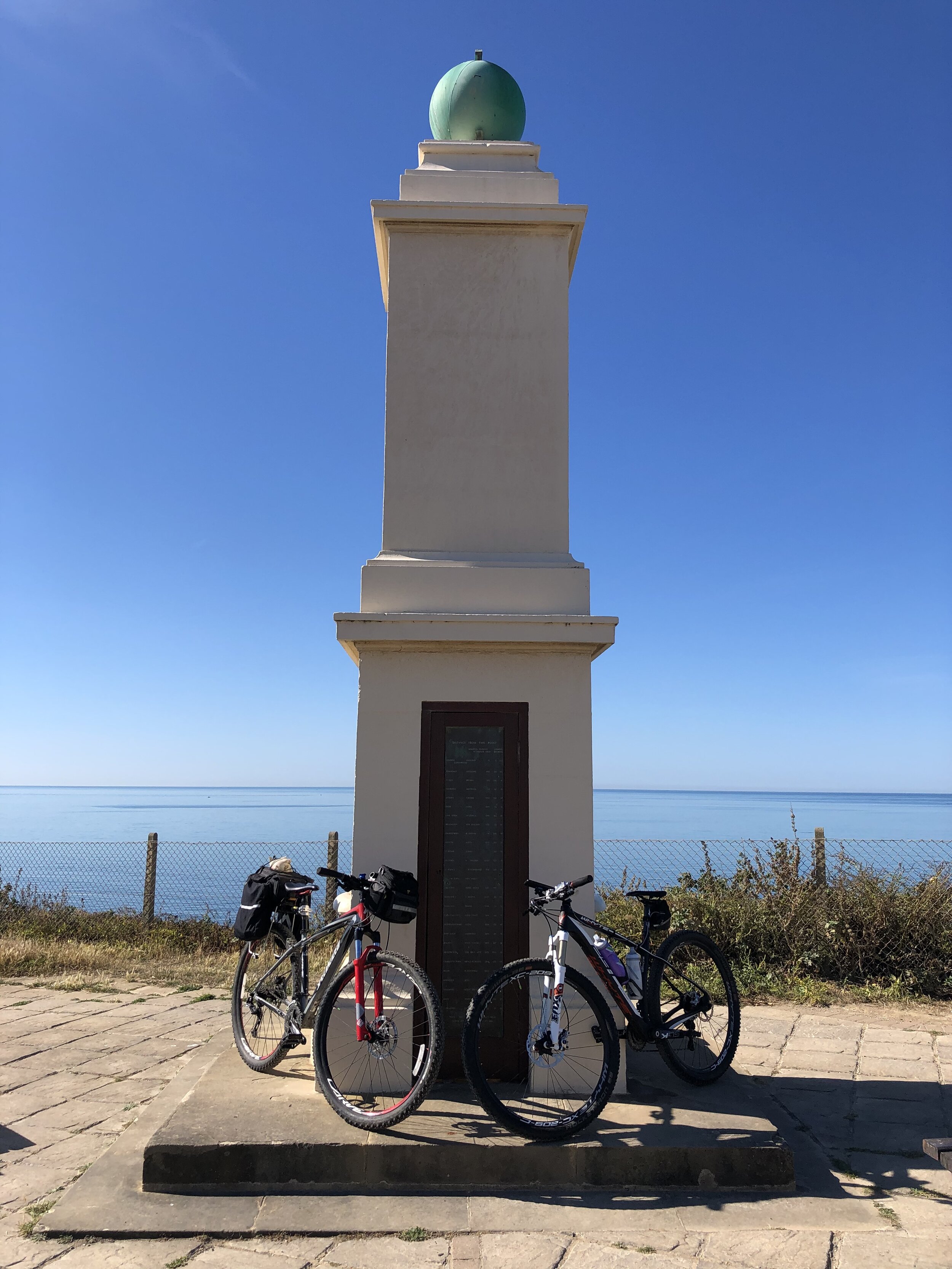
The Prime Meridian, also known as the Greenwich Meridian, is the famous line of longitude historically defined as 0°. It is the invisible line that divides East and West. It is also a line that I asked myself last Christmas: "Can that actually be cycled?" The short answer is "no," because it is a dead-straight line with an awful lot of buildings, forests, and fields inconveniently placed across its path! You can cycle remarkably close to it, however, so that is exactly what we did.

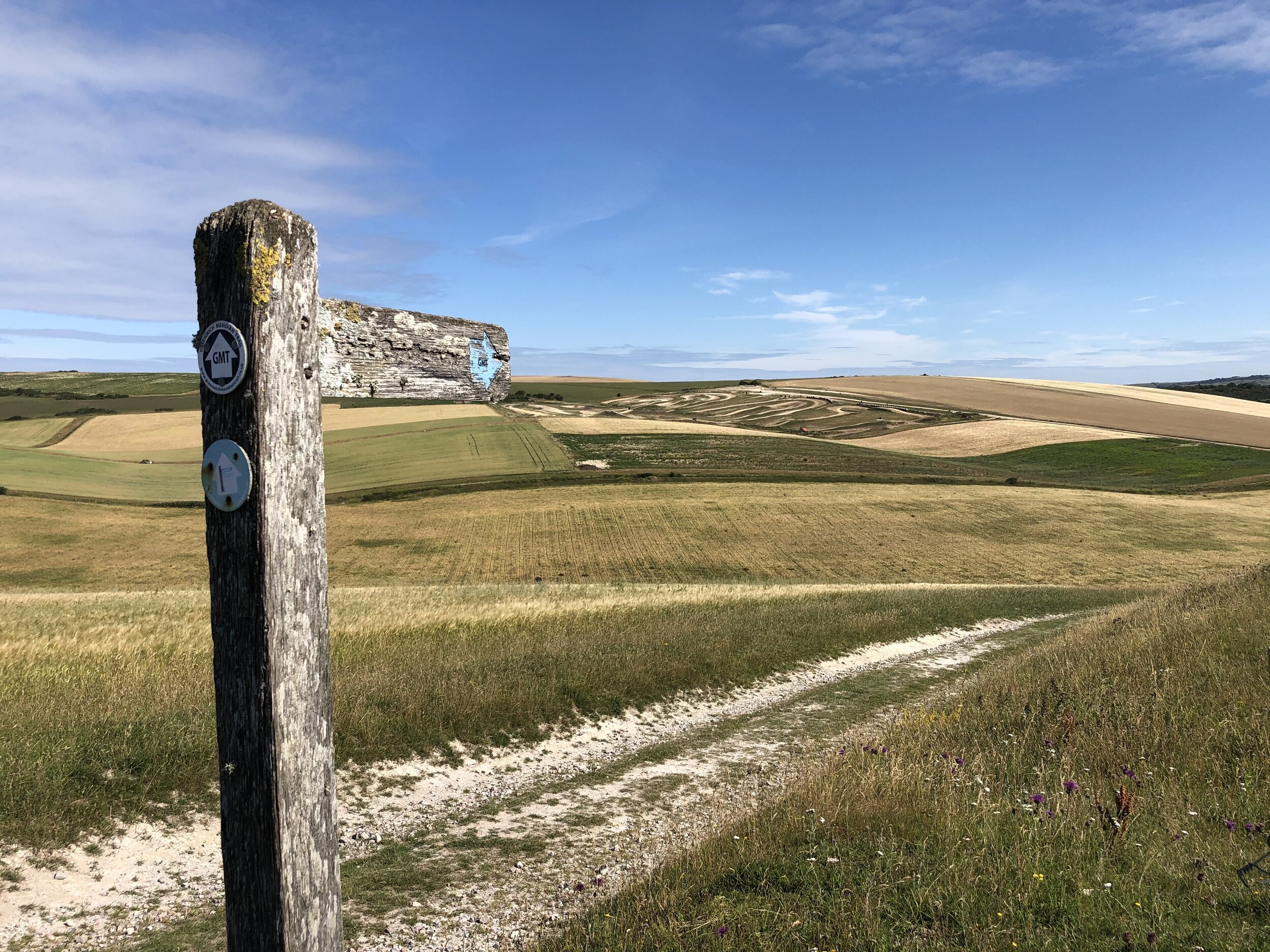
If you want to walk the route, there is a wonderfully well-signed path called the Greenwich Meridian Trail. The trail is also brilliantly described in a series of four books by Graham and Hilda Heap. The cycle route that I designed stays as close to the Prime Meridian as possible, while avoiding muddy footpaths and opting for quieter country roads over busy main carriageways. Even if you are cycling rather than walking, I highly recommend picking up the Greenwich Meridian Trail books, as they are a fantastic guide to all the quirky, historical things to see along the way.

(A fun navigational fact to bear in mind: the historic monuments you pass along the way mark the 1884 Airy Transit Circle line. However, if you check your modern GPS, you will find that "0°0'0" actually lies about 102 metres to the east, thanks to slight differences in how satellite mapping measures the Earth's centre!)

For the first stage of our cycling trip, we started right down at the coast at Peacehaven, where the Meridian meets the sea at its most southerly point in the UK. From there, we headed north over two days up to Waltham Abbey, just north of the M25. The rest of the route up the country came in later trips, eventually covering six days in total. See the main Prime Meridian post for the full route


Day 1: Coast, Downs and Weald

Start: Prime Meridian Obelisk, 96 The Promenade, Peacehaven, BN10 8LN
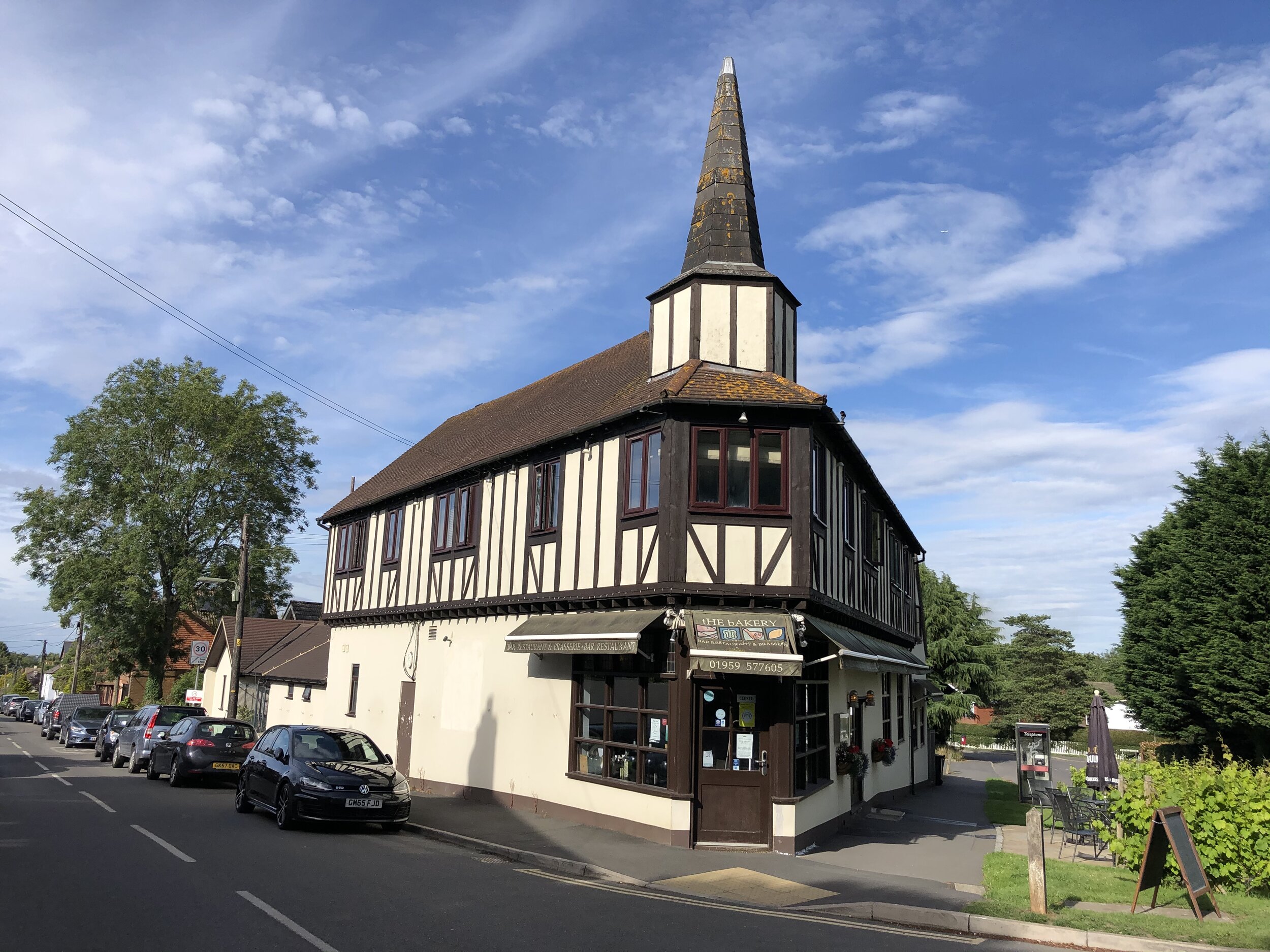
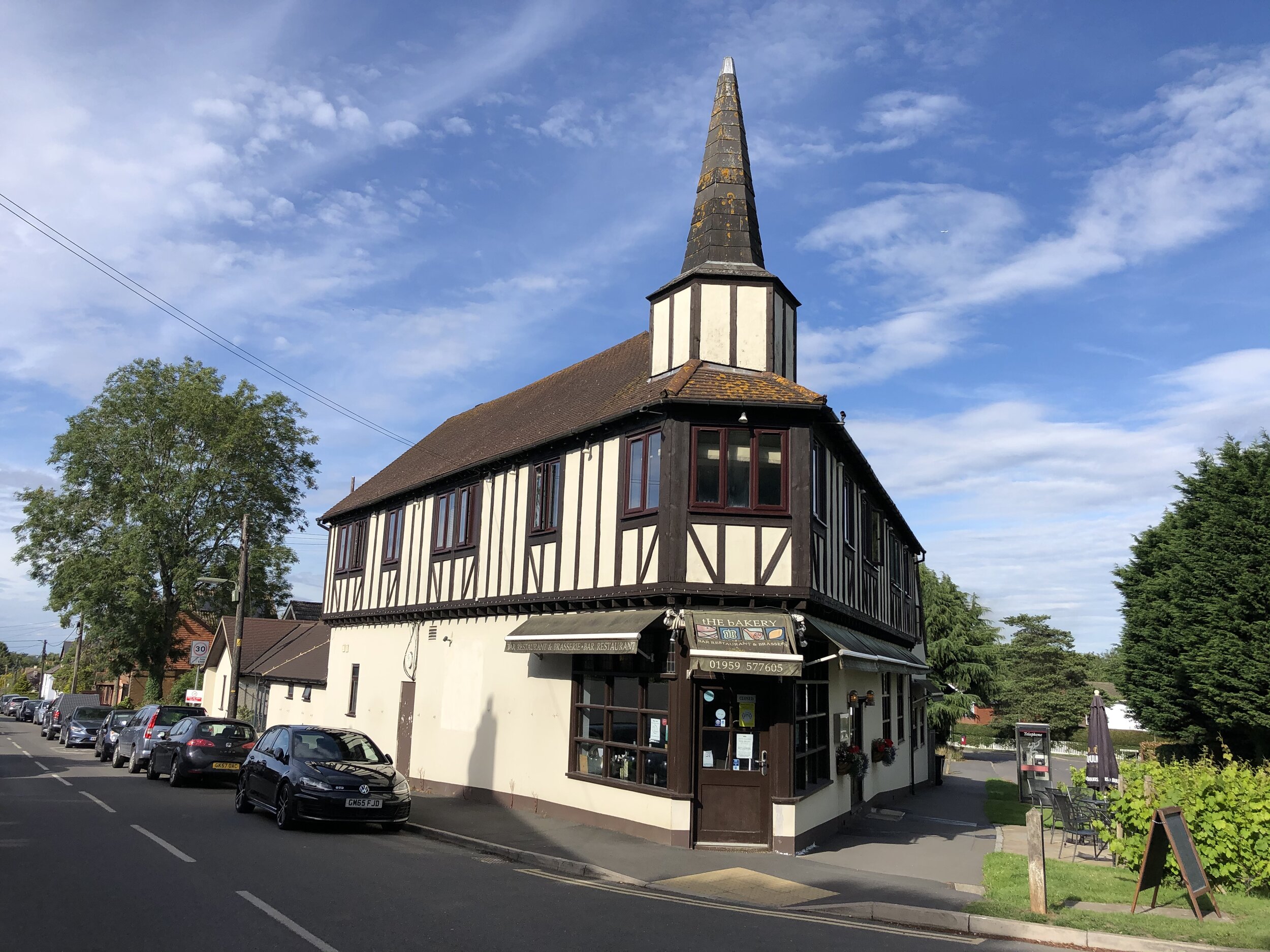
Finish: The Bakery Restaurant and Rooms, Westmore Road, Tatsfield, Westerham, TN16 2AG
Distance: 75 km (47 miles)
Elevation change: + 1,013m / - 812m (Net +201m)
GPX File: get via Buy Me a Coffee
Other routes touched (walk): Greenwich Meridian Trail, Newhaven-Brighton Clifftop Path, South Downs Way, Sussex Ouse Valley Way, Forest Way, High Weald Landscape Trail, Mid Sussex Link, Sussex Border Path, Tandridge Border Path, Greensand Way, Vanguard Way, North Downs Way
Other routes touched (cycle): NCN 2, 21
Pubs / Cafes on route:
Lots, but I recommend The Stable Tea Rooms, Heaven Farm, Furner's Green, Uckfield TN22 3RG (at km 34)
Maps:
- OS Explorer OL11 Brighton & Hove Map
- OS Explorer Map (135) Ashdown Forest Map
- OS Explorer Map (146) Dorking, Box Hill and Reigate Map
- OS Explorer Map (161) London South, Westminster, Greenwich, Croydon, Esher & Twickenham Map
Guidebook: Greenwich Meridian Trail Book 1: Peacehaven to Greenwich
Links: Wikipedia: Prime Meridian, The Greenwich Meridian, Greenwich Meridian Trail, Peacehaven, Prime Meridian Obelisk, Tatsfield

We began our journey at the gleaming white Prime Meridian Obelisk on the promenade at Peacehaven, pointing our bikes inland. This 47-mile first day takes you away from the coast, pushing up through the beautiful, rolling hills of the South Downs and the High Weald. It is a surprisingly hilly start to the adventure, crossing over several ancient drovers' routes and boundary paths, before finally finishing the day's climbing at the high ground in Tatsfield, Surrey.


Day 2: London

Start: The Bakery Restaurant and Rooms, Westmore Road, Tatsfield, Westerham, TN16 2AG
Finish: Waltham Abbey Church, 4 Church St, Waltham Abbey EN9 1DJ
Distance: 62.5 km (39 miles)
Elevation change: + 377m / - 585m (Net -208m)
GPX File: get via Buy Me a Coffee
Other routes touched (walk): Greenwich Meridian Trail, Tandridge Border Path, London Loop, Capital Ring, Waterlink Way, Lewisham Promenade, Thames Path, Lea Valley Walk, Jubilee Greenway, The Greenway.
Other routes touched (cycle): NCN 1, 13, 21, 4, CS2, CS3, CS16, CS23,
Pubs / Cafes on route:
Lots, but I recommend The Breakfast Club, Queen Elizabeth Olympic Park, 29 East Bay Lane Canalside Here East, London E15 2GW
Maps:
- OS Explorer Map (161) London South, Westminster, Greenwich, Croydon, Esher & Twickenham Map
- OS Explorer Map (162) Greenwich and Gravesend Map
- OS Explorer Map (174) Epping Forest & Lee Valley Map
Guidebook: Greenwich Meridian Trail Book 1: Peacehaven to Greenwich and Greenwich Meridian Trail Book 2: Greenwich to Hardwick
Links: Wikipedia: Prime Meridian, The Greenwich Meridian, Greenwich Meridian Trail, Tatsfield, Royal Observatory Greenwich, Waltham Abbey

The second day offers a 39-mile ride through the heart of the capital. Dropping down from Tatsfield, the route weaves into the sprawling London footprint. You eventually cross the River Thames and pass right through the grounds of the Royal Observatory at Greenwich: the official home of the Prime Meridian itself, where you can literally stand with a bike wheel in both hemispheres!

After navigating the brilliant, regenerated paths around the Queen Elizabeth Olympic Park, the route follows the River Lea north to our finish line at Waltham Abbey. The town has an incredible piece of meridian history: the line runs directly through the historic 12th-century Waltham Abbey Church, marked beautifully by a pavement mosaic just outside the walls.


Prime Meridian markers on the route


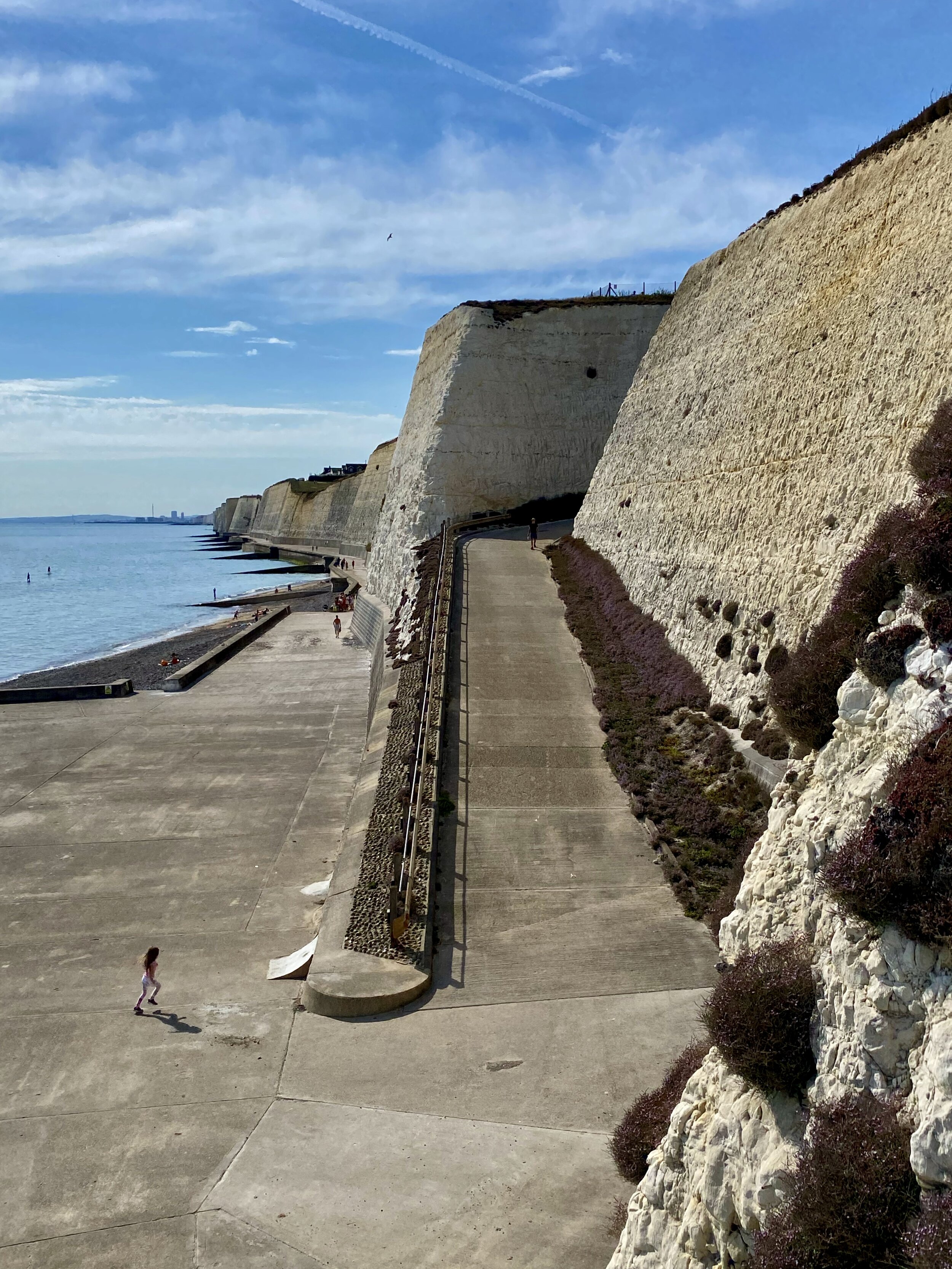
Rottingdean and Peacehaven Under and Over Cliff Walk
Looking west to Saltdean

Looking west to Saltdean


Start & Finish: White Horse Hotel, High St, Rottingdean, Brighton BN2 7HR, United Kingdom
Distance: 9.7 km (6 miles)
Elevation change: + / - 80 m
GPX File: get via Buy Me a Coffee
Other routes touched (walk): England Coastal Path, Newhaven-Brighton Clifftop Path, Undercliff Walk, Greenwich Meridian Trail
Other routes touched (cycle): NCN 2, Prime Meridian Cycle Route
Pubs / Cafes on route:
The Smugglers Rest, South Coast Road, Telscombe Cliffs, Peacehaven BN10 7BE
Map: OS Explorer OL11 Brighton & Hove Map
Links: Rottingdean, Peacehaven, Prime Meridian Obelisk


This was a pleasant late afternoon walk for us ahead of the next day’s Prime Meridian Cycle Trip with my friend Brian. We had spent the day on Rottingdean Beach, mostly drinking Champagne and eating ice-cream. Timea had joined Brian and I for the day and I wanted her to see the Prime Meridian Obelisk before she headed home.

The return walk from Rottingdean to the Obelisk at Peasehaven is just under 10 km with both undercliff and cliff-top options to choose from. You can follow the cliff-top all the way but the undercliff option stops for a few kms between Saltdean and the Western edge of Peacehaven. We took the undercliff walk, as much as we could, to Peacehaven and came back on the cliff top.

See the next post for more on the Prime Meridian Obelisk at Peaceheaven.

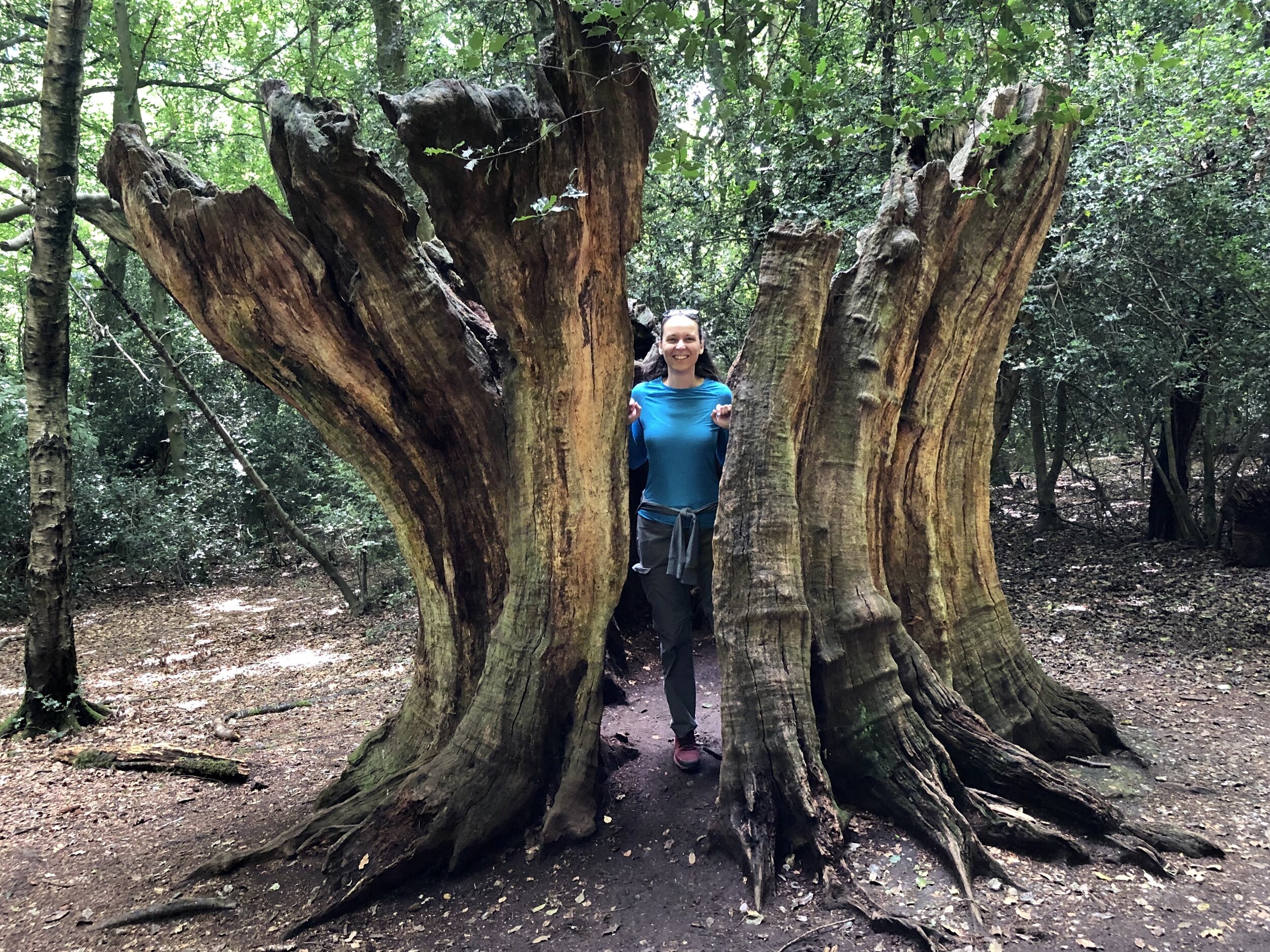
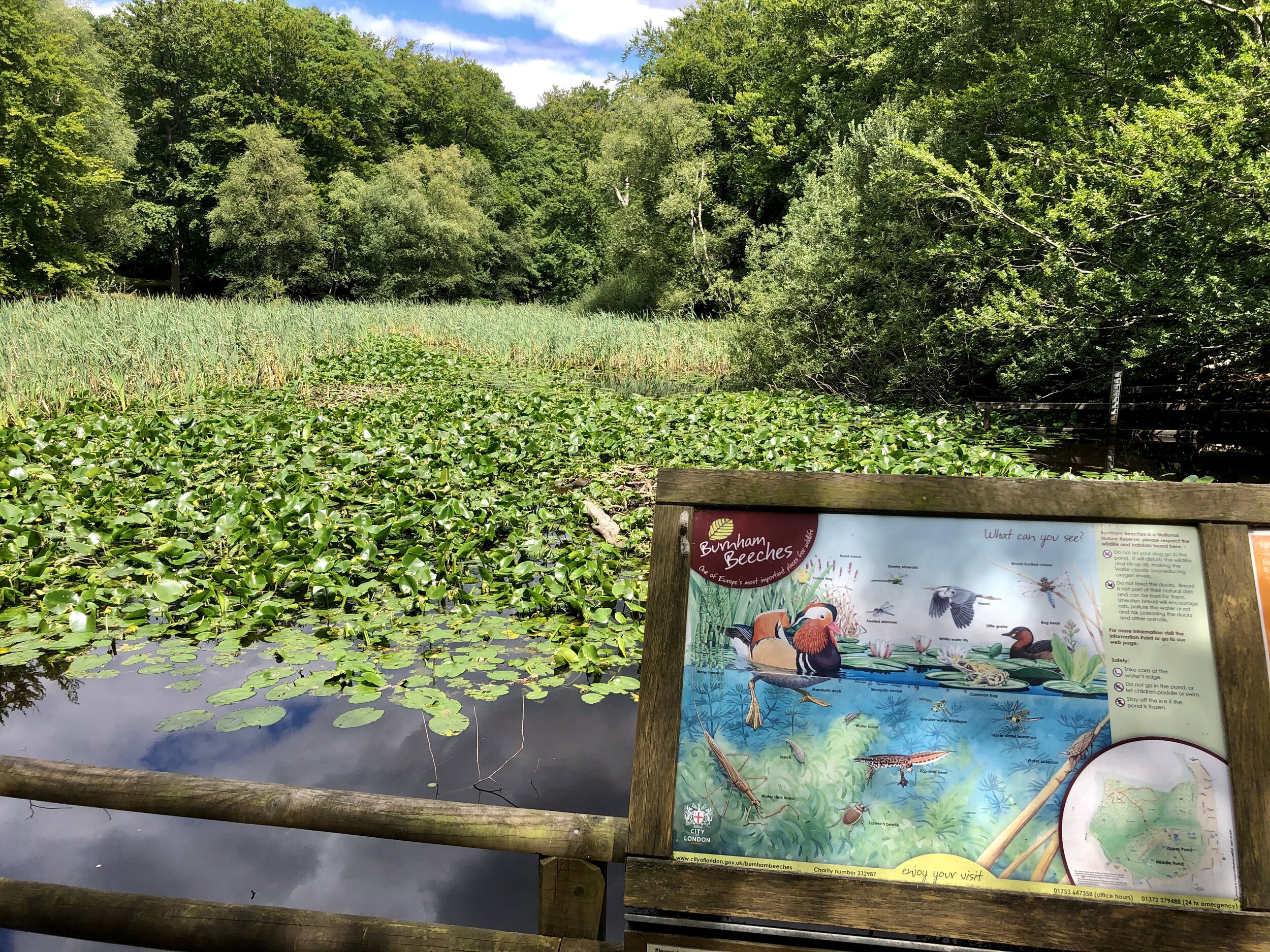
Burnham Beeches Perimeter Walk
IMG_4741.jpg

Start & Finish: Car Park at Burnham Beeches, Slough, SL2 3LB
Distance: 5.8 km (3.6 miles)
Elevation change: + / - 52 m
GPX File: get via Buy Me a Coffee
Other routes touched (walk): The Beeches Way, Shakespeare’s Way
Other routes touched (cycle): NCN 461, Beeches Cycleway
Pubs / Cafes on route:
The Beeches Eco Cafe
Map: OS Explorer Map (172) Chiltern Hills East
Links: City of London: Burnham Beeches and Stoke Common, Woodland Trust: Burnham Beeches


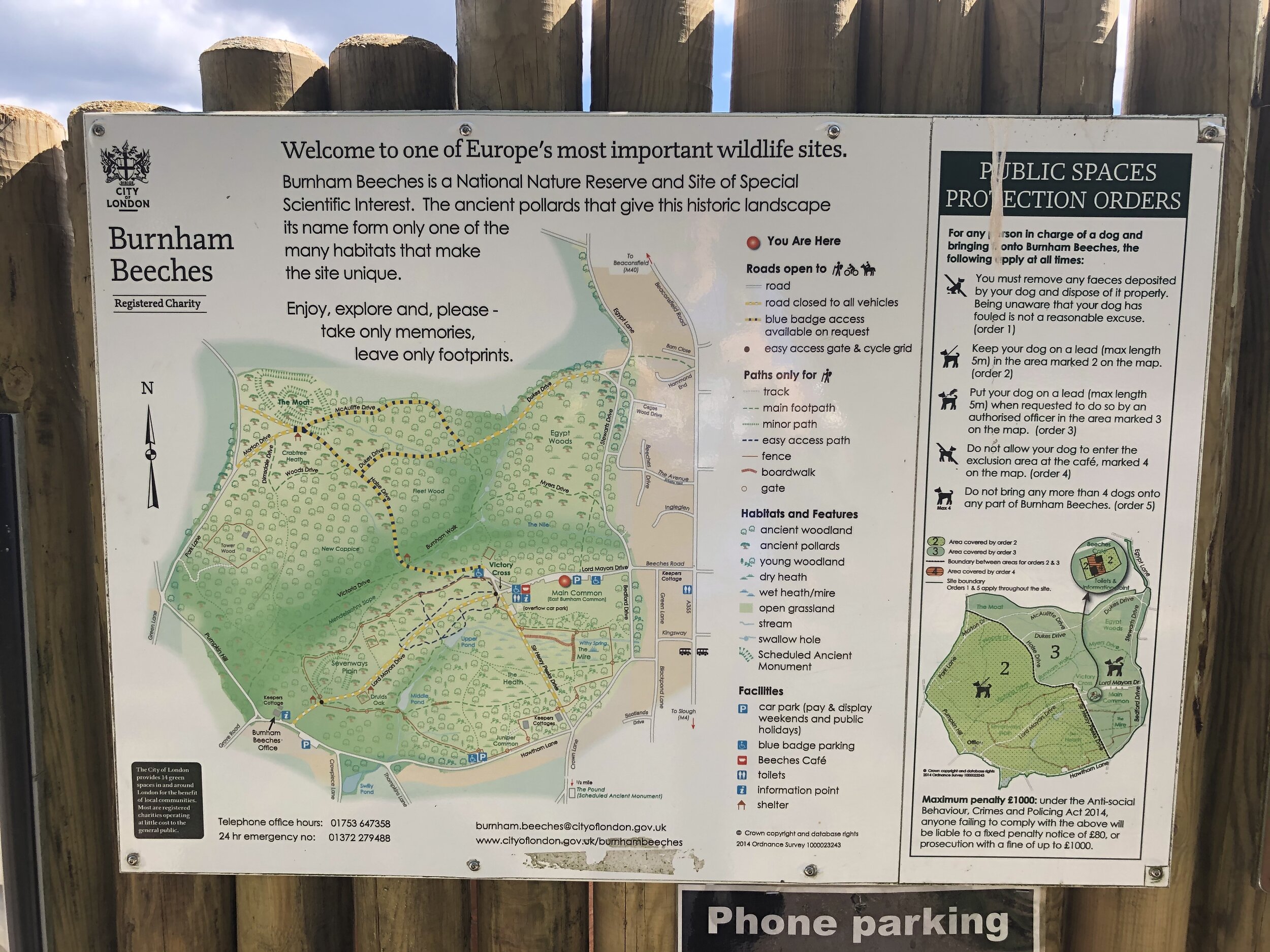
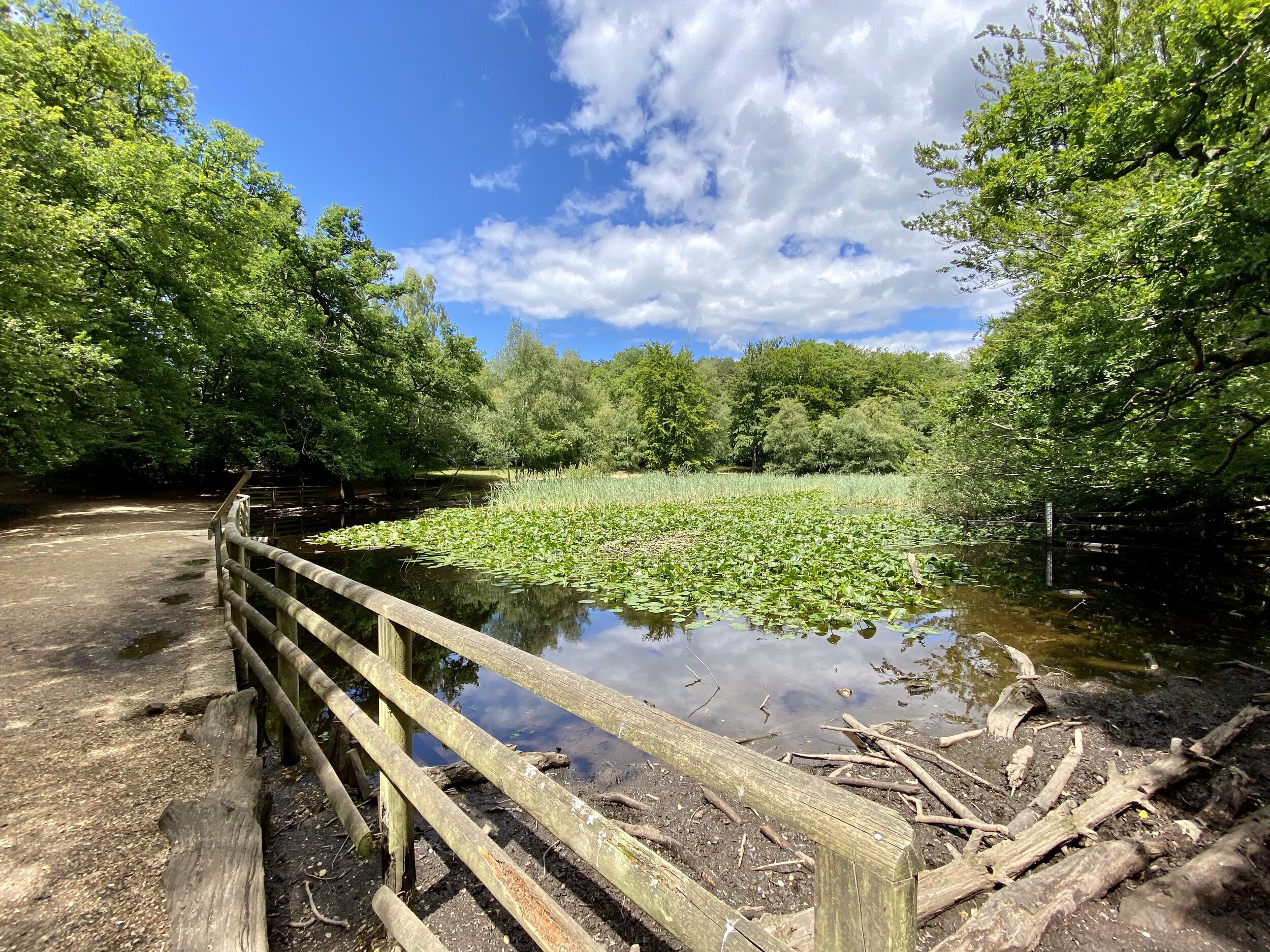
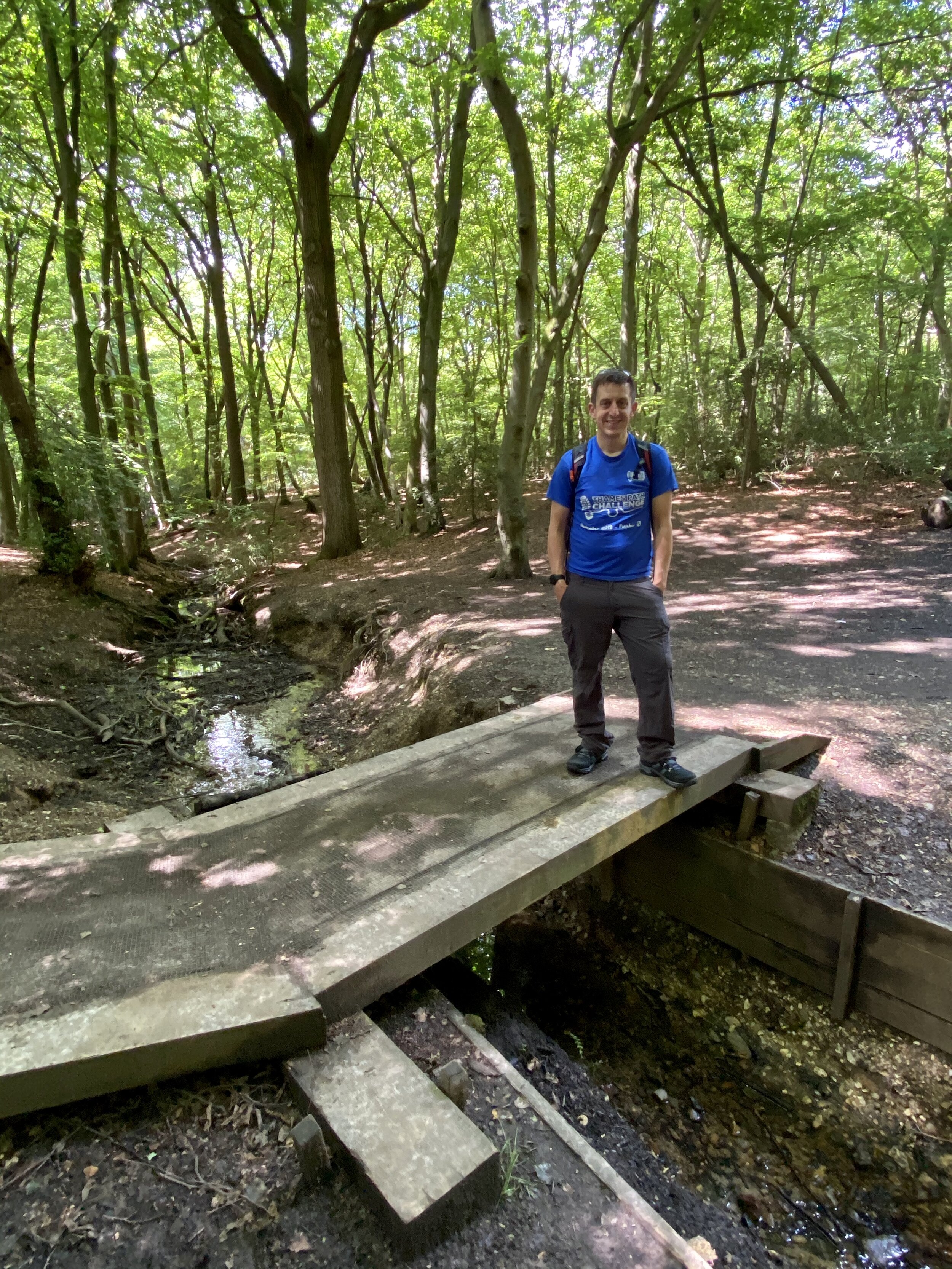
Burnham Beeches is a  Site of Special Scientific Interest in South Buckinghamshire. The public area is owned by the Corporation of London which also manages nearby Stoke Common and Epping Forest in North London. With many paths criss-crossing it you could spend a whole day exploring it. It’s also crossed by the Beeches Way, Shakespeare’s way and the Beeches Cycleway, all of which I’ve followed on previous trips.

This walk follows a ~6 km trail of the perimeter paths starting from the main car park and passing the Beeches Eco Cafe. We had planned for this to be a long route, also taking in Egypt Wood to the North. Unfortunately, the map that I had planned it on was out of date and the path was blocked by a fence erected by the Portman Estate who own the land to the North.


Chiltern Walks: Rickmansworth Three Rivers Circular
Salter’s Cut, Rickmansworth

Salter’s Cut, Rickmansworth


Start & Finish: Rickmansworth Aquadrome, Frogmoor Lane, Rickmansworth WD3 1NB
Distance: 11.4 km (7 miles)
Elevation change: + / - 59 m
GPX File: get via Buy Me a Coffee
Other routes touched (walk): Rickmansworth Aquadrome Woodland Trail, Grand Union Canal Towpath, Colne Valley Trail, Hillingdon Trail, Ebury Way
Other routes touched (cycle): NCN 6, 61
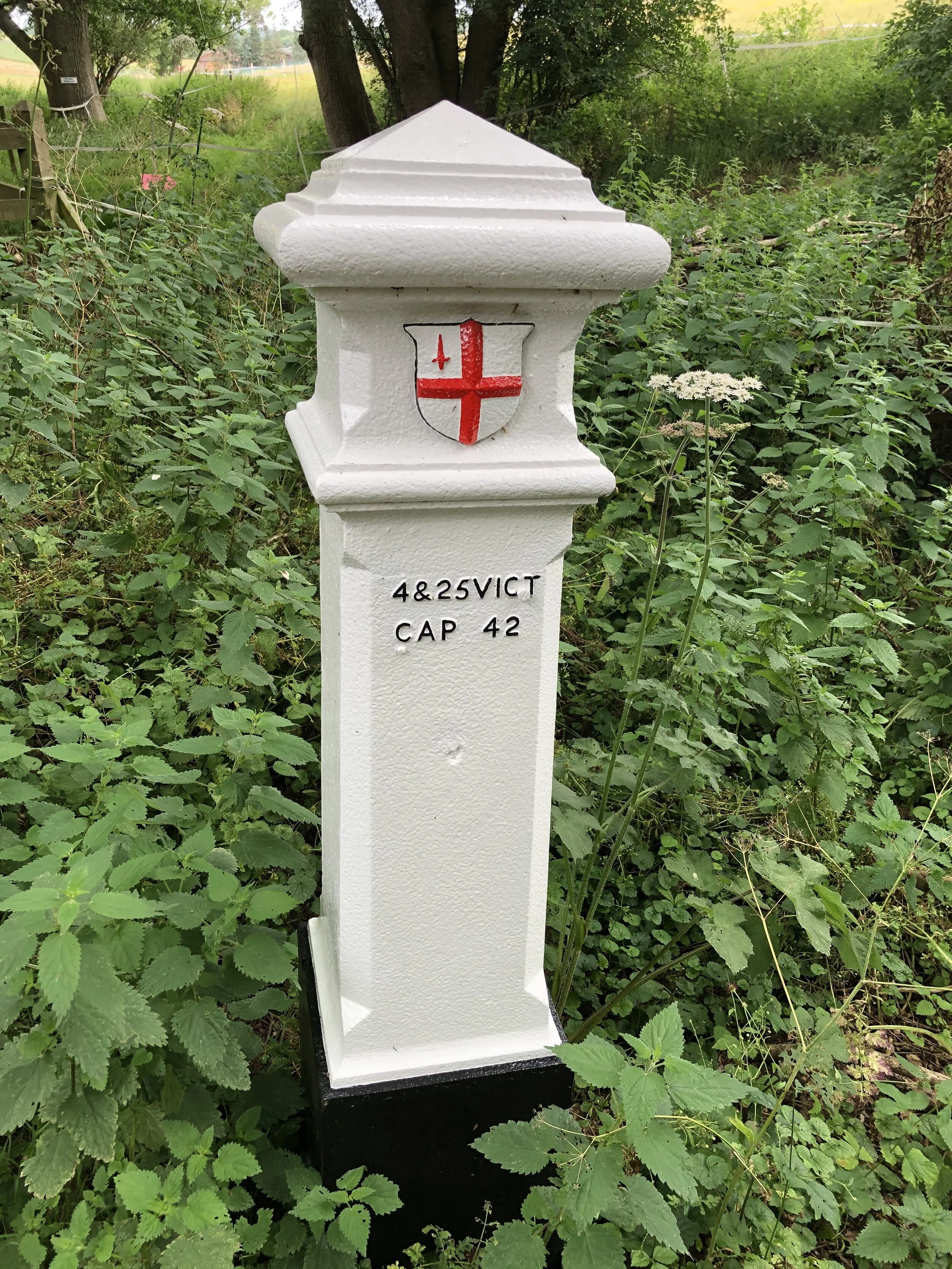
London Coal Duty Posts: 59, 62
Pubs / Cafes on route:
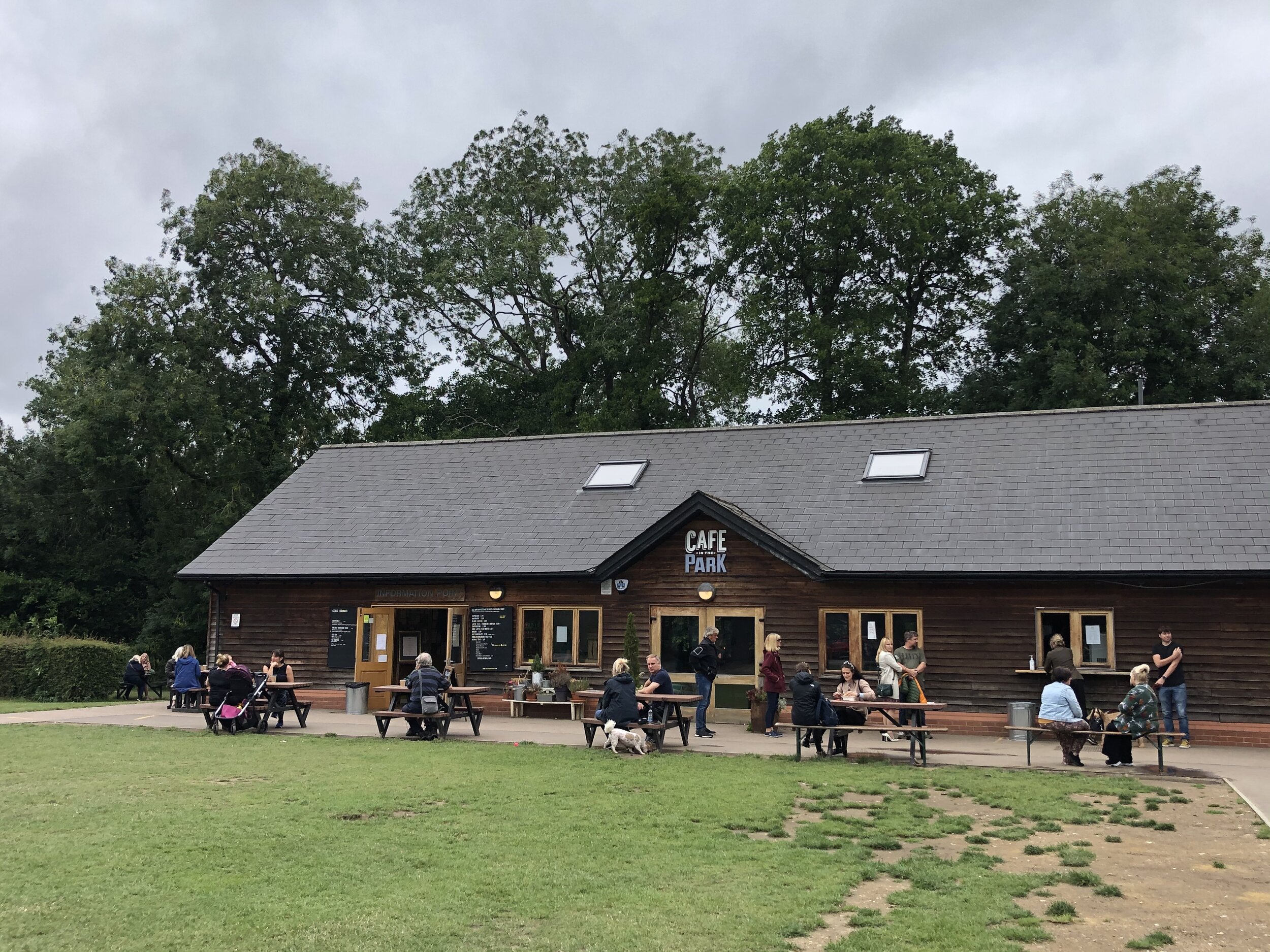
The Cafe in the Park at Rickmansworth Aquadrome, Cafe @ Lock 81 (WD3 1JJ)
Map: OS Explorer Map (172) Chiltern Hills East
Links: Rickmansworth Aquadrome, Rickmansworth, Ebury Way


This week’s walk was a return to the source of some of our recent Colne Valley trips. In this short circular you’ll pass by the start of the Colne Valley and Hillingdon Trails and the confluence of both the rivers Chess and Gade with the Colne. Throw in a few Coal Duty Posts and a disused railway too and it’s a pretty geeky Chiltern trail. The guidance below will help you navigate but don’t use it as a fully accurate turn-by-turn guide. Always take a map and/or a GPX route and prepare well for the weather and terrain.

If you’re driving the best place to start is Rickmansworth Aquadrome which has a large free car park. If you’re coming in by train, it’s a 1 km walk from Rickmansworth station to the Aquadrome.

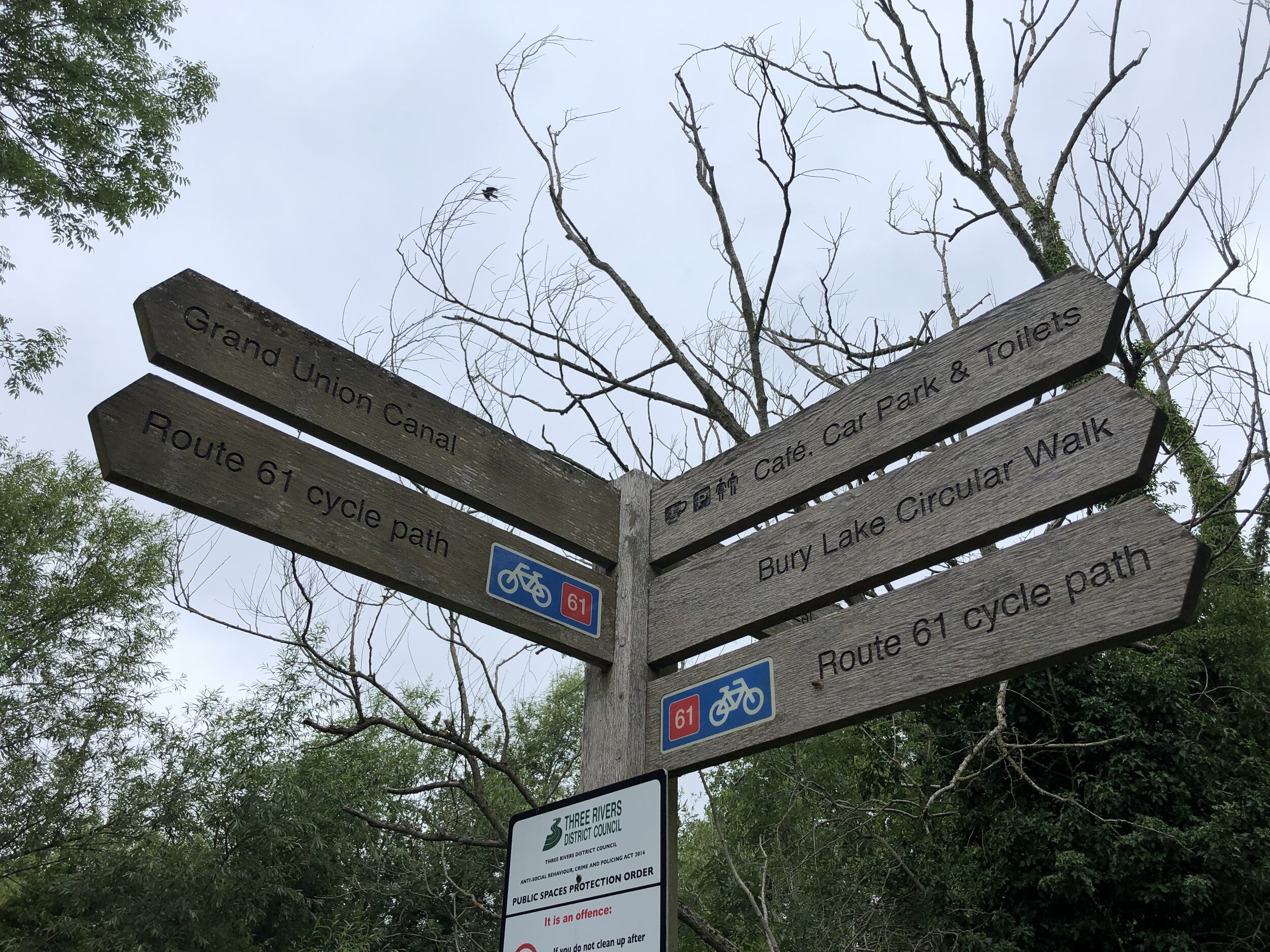
From the Aquadrome Car Park follow the Bury Lake Circular Walk round the southern and western edges of the lake. At the north-western corner take a left and follow the path along the northern edge of Stocker’s Lake. After ~2m from the start you’ll reach Springwell Lane. We took a right here to find the Coal Duty Post at Drayton Ford bridge before returning back. If you can live without the Coal Post excitement, just turn left onto Springwell Lane, reducing the total trip length by ~500m.

Continue South along Springwell Lane to meet the Grand Union Canal at Springwell Lock. Here’s you’ll meet the Colne Valley Trail and the start of the Hillingdon Trail. Follow signs for the Hillingdon Trail over the canal and through farmland uphill to Hill End Road. Turn left here, leaving the Hillingdon Trail and walk north along Springwell Lane, taking a footpath on the right as Springwell Lane curves to the left. Follow this footpath north for ~2 km to Stocker’s Farm. You’ll pass a well-preserved Coal Post about half way along this path. Continue north through Stocker’s Farm to reach the Grand Union Canal at Stocker Lock. Cross over the bridge to the north bank of the canal, to the site of another Coal Duty post on the towpath on the north west Corner of the bridge.

From Stocker Lock follow the Grand Union Canal towpath north east. Soon you’ll pass the gate to the Aquadrome Car Park. This gives you the option of making this a shorter route or pausing for a rest at the Cafe in the Park. An alternative place for a rest is the Cafe at Lock 81 further along the canal. Continuing on the Grand Union, you’ll reach an old railway bridge ~2 km from Stocker Lock. Leave the canal at the bridge by taking the steps up to the Ebury Way. This is a walking and cycling trail that follows the old rail line between Rickmansworth and Watford. I’d previously cycled the whole length en route to find the Middlesex County Top at Bushy Heath.

After leaving the Grand Union take a left onto the Ebury Way, following it back to Rickmansworth. On this stretch of the Ebury Way you’ll pass the confluence of both the River Gade and the Chess as they join the Colne.

Cross over the roundabout and follow a path to the left of the A404 Riverside Drive for ~500m. Before you reach another large roundabout take a left into the playground and follow the footpath over the River Colne and back into the Aquadrome. Follow the path in either direction around Batchworth Lake to return the the car park.

Walking The London Loop: South Oxhey to Hill End
Fields near Hill End

Fields near Hill End


Start: Oxhey Woods Car Park, Oxhey Drive South, Watford, HA6 3EX
Finish: On street parking near Harefield Care Home Hill End Road, Harefield, Uxbridge, UB9 6UX
Distance: 10km (6.4 miles)
Elevation change: + 93m / - 136 m. Net -43m
GPX File: get via Buy Me a Coffee
Other routes touched (walk): Hillingdon Trail
Other routes touched (cycle): N/A
London Coal Duty Posts: 52, 53, 54, 55
Pubs / Cafes on route:
Ye Olde Greene Manne, Batchworth Heath, Rickmansworth, WD3 1QB
Map: OS Explorer Map (172) Chiltern Hills East and OS Explorer Map (173) London North, The City, West End, Enfield, Ealing, Harrow & Watford
Guidebook: The London Loop: Recreational Path Guide
Links: Cycling The London Loop, London Loop - Transport for London, London Loop - Wikipedia, London Loop - Long Distance Walkers Association
- South Oxhey, Oxhey Woods, Moor Park


In our quest to complete the point-to-point trails of the Colne Valley there was one final part of the London Loop to do. Although I had (kind of) completed the London Loop few years ago, it was on bike and took many road diversions to avoid footpaths. This is one example of a section that is not suitable for bikes, so coming back for a walk gave me a new perspective on it.

I chose the car park at South Oxhey Woods as the starting point. This was mainly designed to give us a 10 km walk that finished at Hill End, where the London Loop joins the Hillingdon Trail. This worked well for us as we were able to take 2 cars and leave one at either end. If you’re relying on public transport, then this section wouldn’t make sense.

As with any trip on the London Loop, Colin Saunders’ book is the definitive guide so I’ll leave it to that book to provide the route description.

elevation_profile (1).jpg

Next sections of the London Loop:

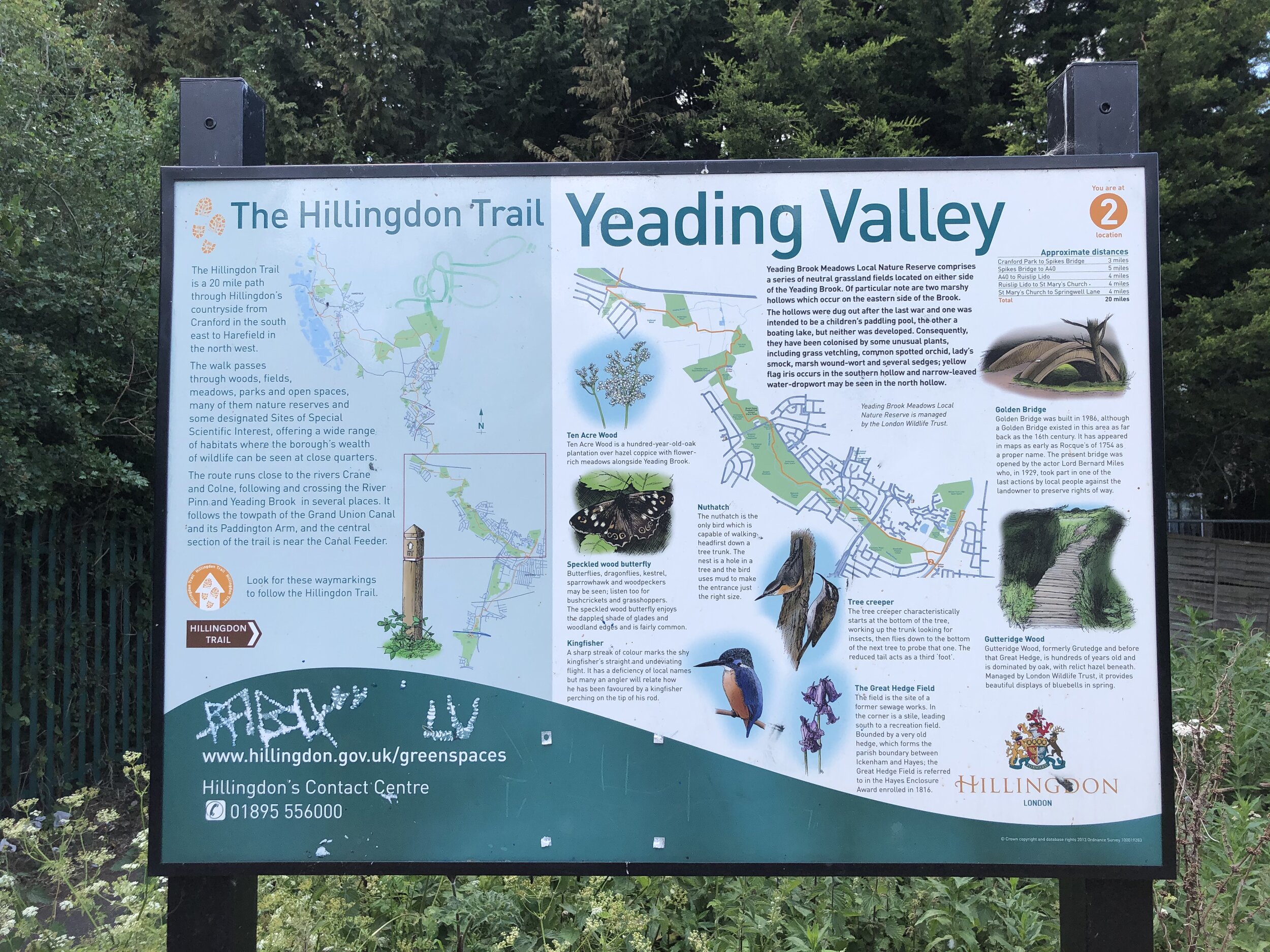
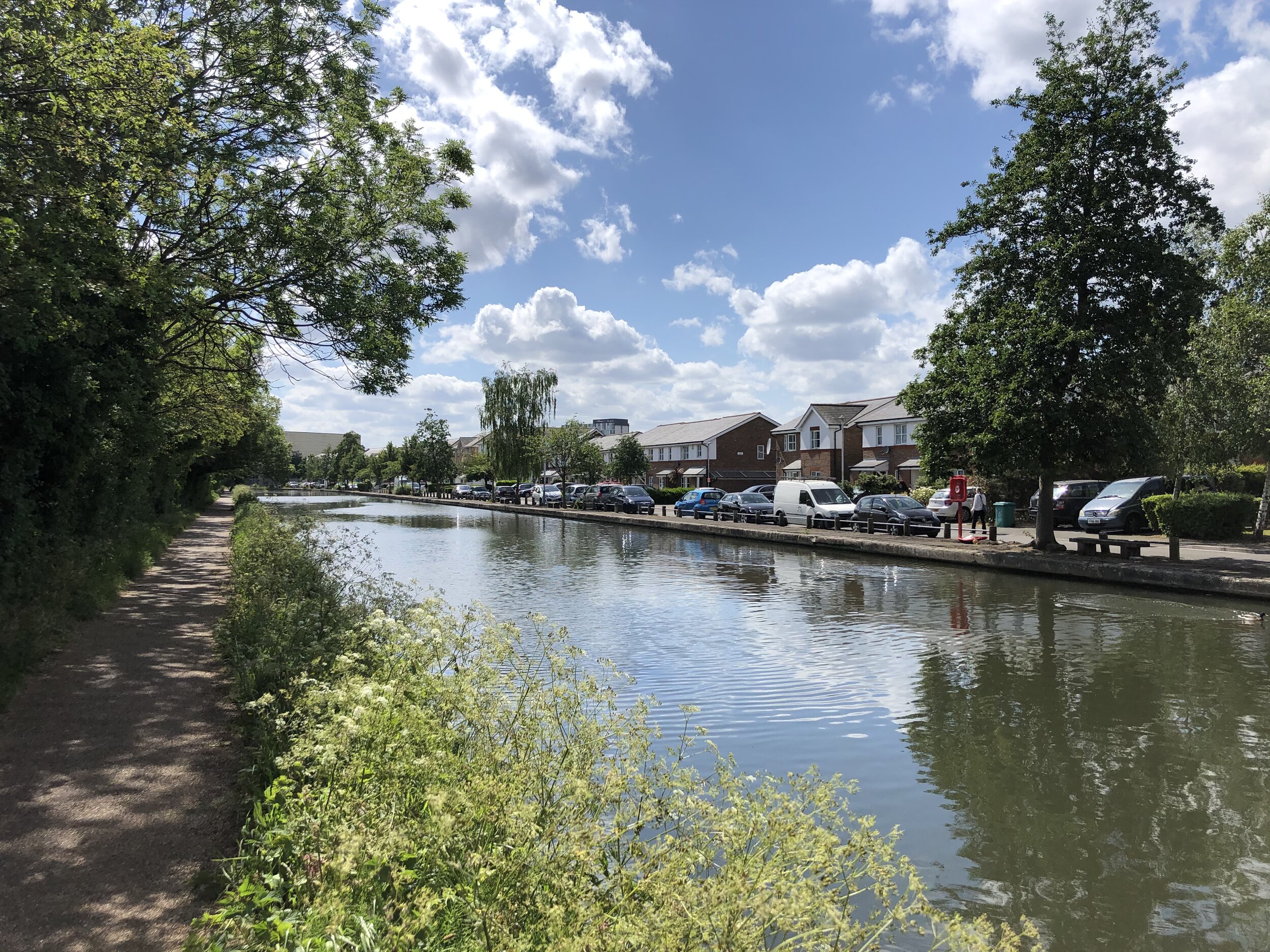
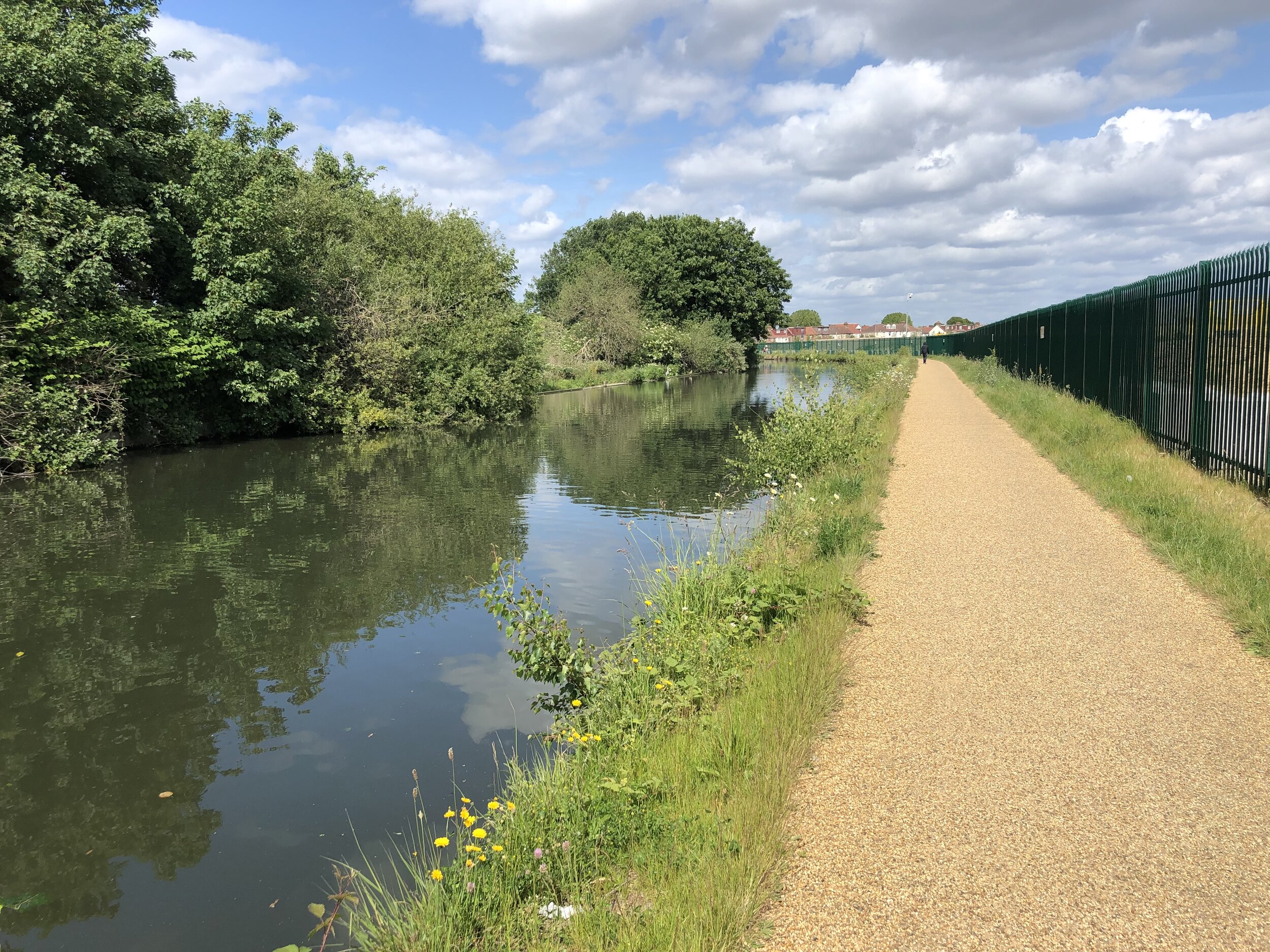
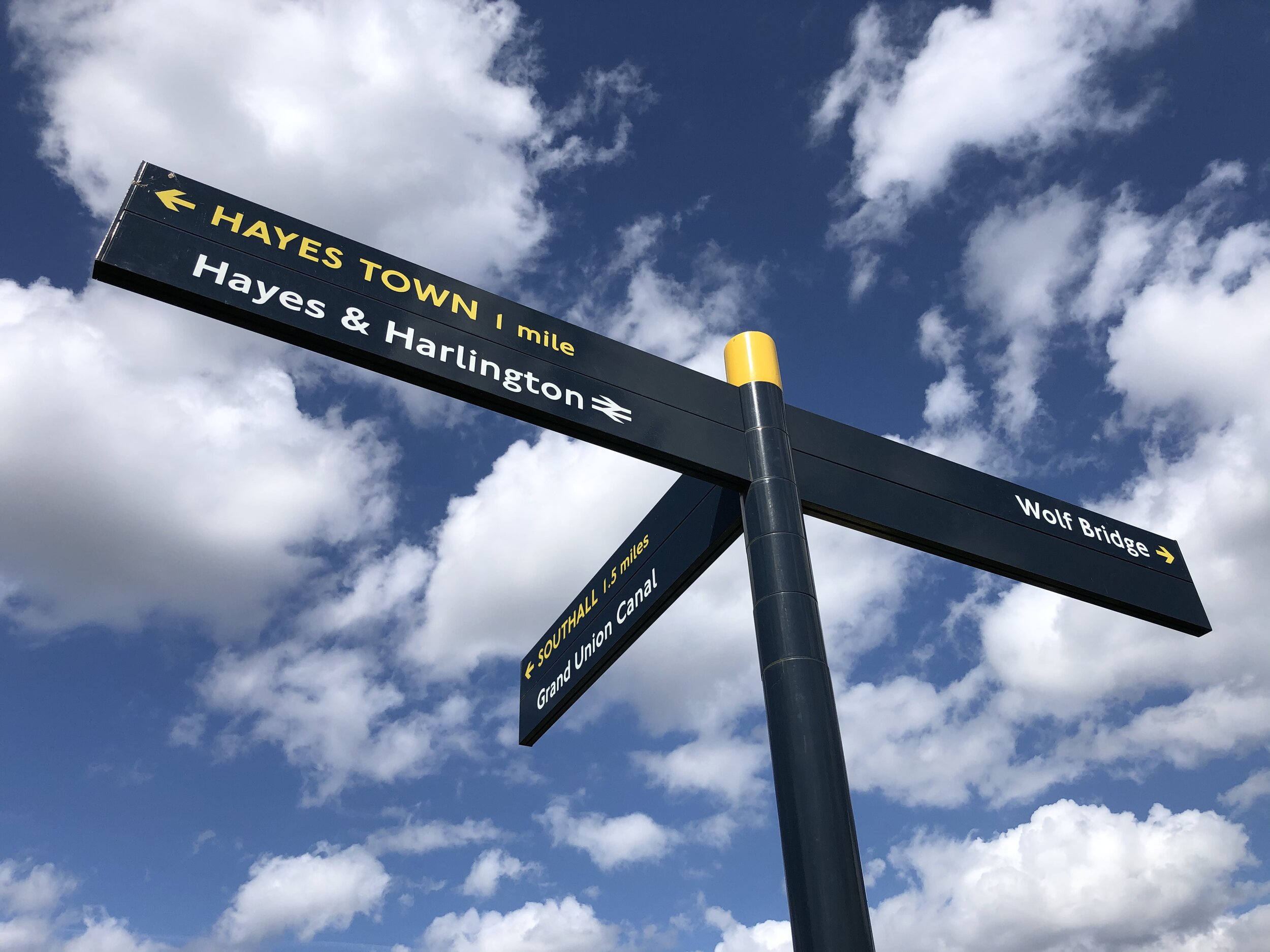
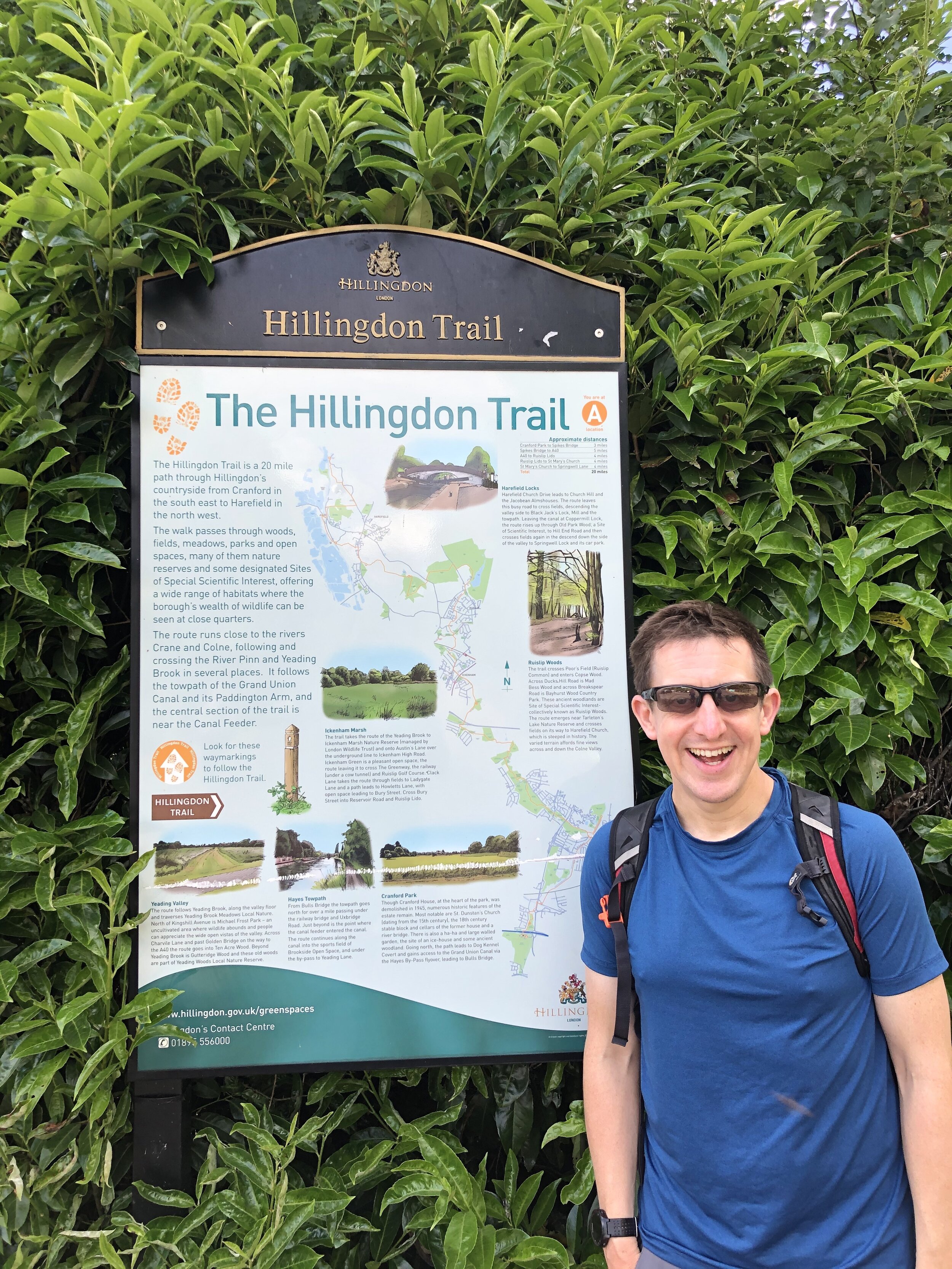
Walking The Hillingdon Trail
Yeading Brook near Northolt

Yeading Brook near Northolt

The Hillingdon Trail is a ~17 mile walking route from Springwell Lock near Maple Cross to Cranford Park near Heathrow Airport. It was another local route that I’d had on the back burner for later and decided to try out as the country was emerging from the Covid lockdown. Hillingdon is the closest London borough to us and I’d only ever visited busy parts of it so had never associated it with nice country walking. As it turned out it took us through some beautiful parts of the area that we’ll be returning to for other walks soon.


SECTION 1 - Springwell Lock To Ruislip Lido

Start: Parking spaces at Springwell Lane, Harefield, Uxbridge UB9 6PG
Finish: Car park at Ruislip Lido, Reservoir Road, Ruislip HA4 7TY
Distance: 10.2 km (6.4 miles)
Elevation change: +143m / -135m
GPX File: get via Buy Me a Coffee
Other routes touched (walk): Grand Union Canal Towpath, The London Loop, Colne Valley Trail
Other routes touched (cycle): NCN 6, 61
Other Pubs / Cafes on route: The Water's Edge, Reservoir Road, Ruislip HA4 7TY (end of route).
Map: OS Explorer Map (172) Chiltern Hills East
Links: Hillingdon, Harefield, ANZAC Memorial, Ruislip Lido

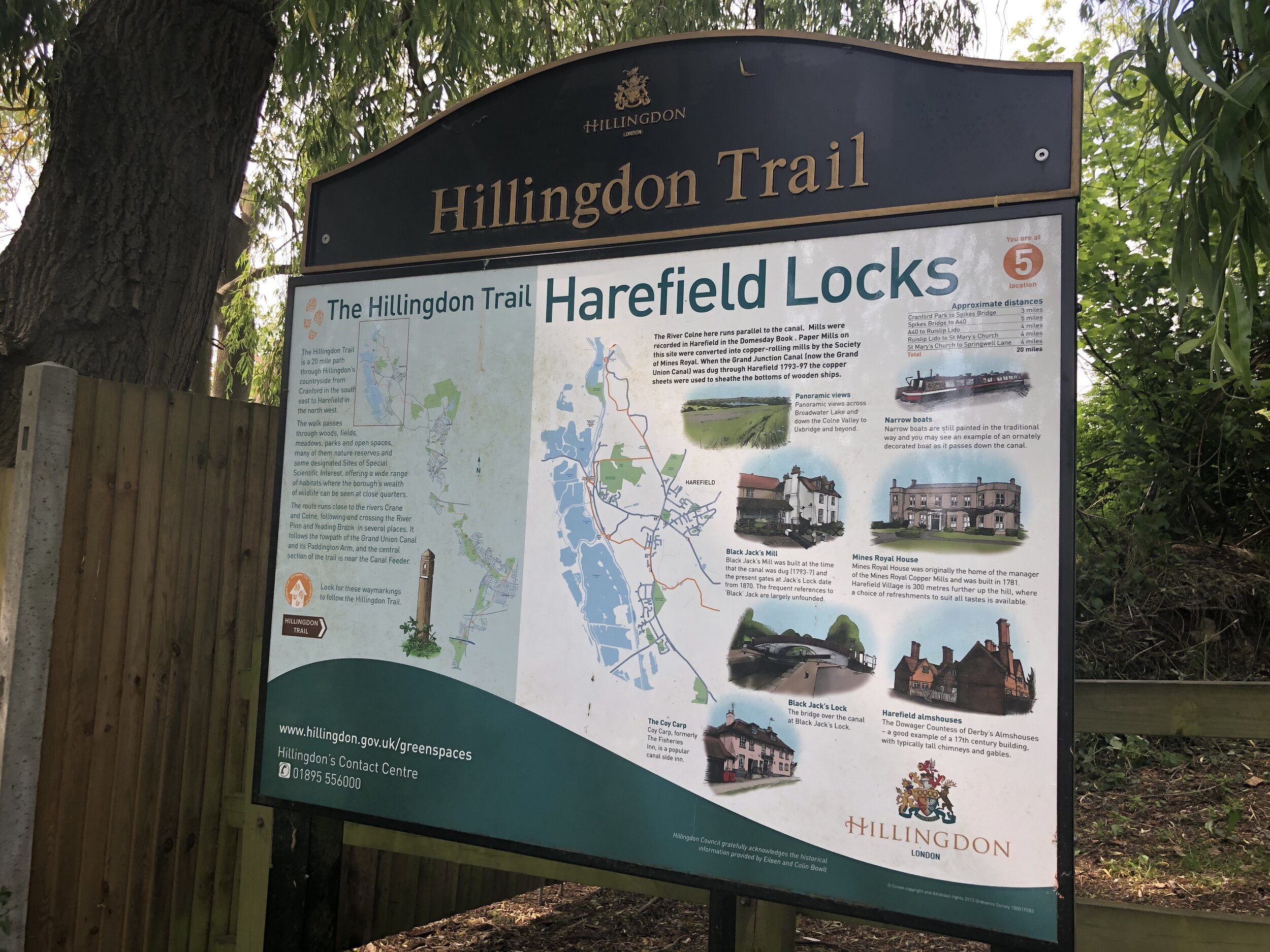
We had already passed the official start of the trail at Springwell Lock a few weeks ago on the Colne Valley Trail. This stretch of the Grand Union Canal has a lot of trails passing through it and is especially well sign-posted. As we had covered the first 2 km many times before, we decided to start this section a bit further south at Harefield Locks. This is the point where the trail diverts off from the Grand Union and Colne Valley Trail, heading south-east.

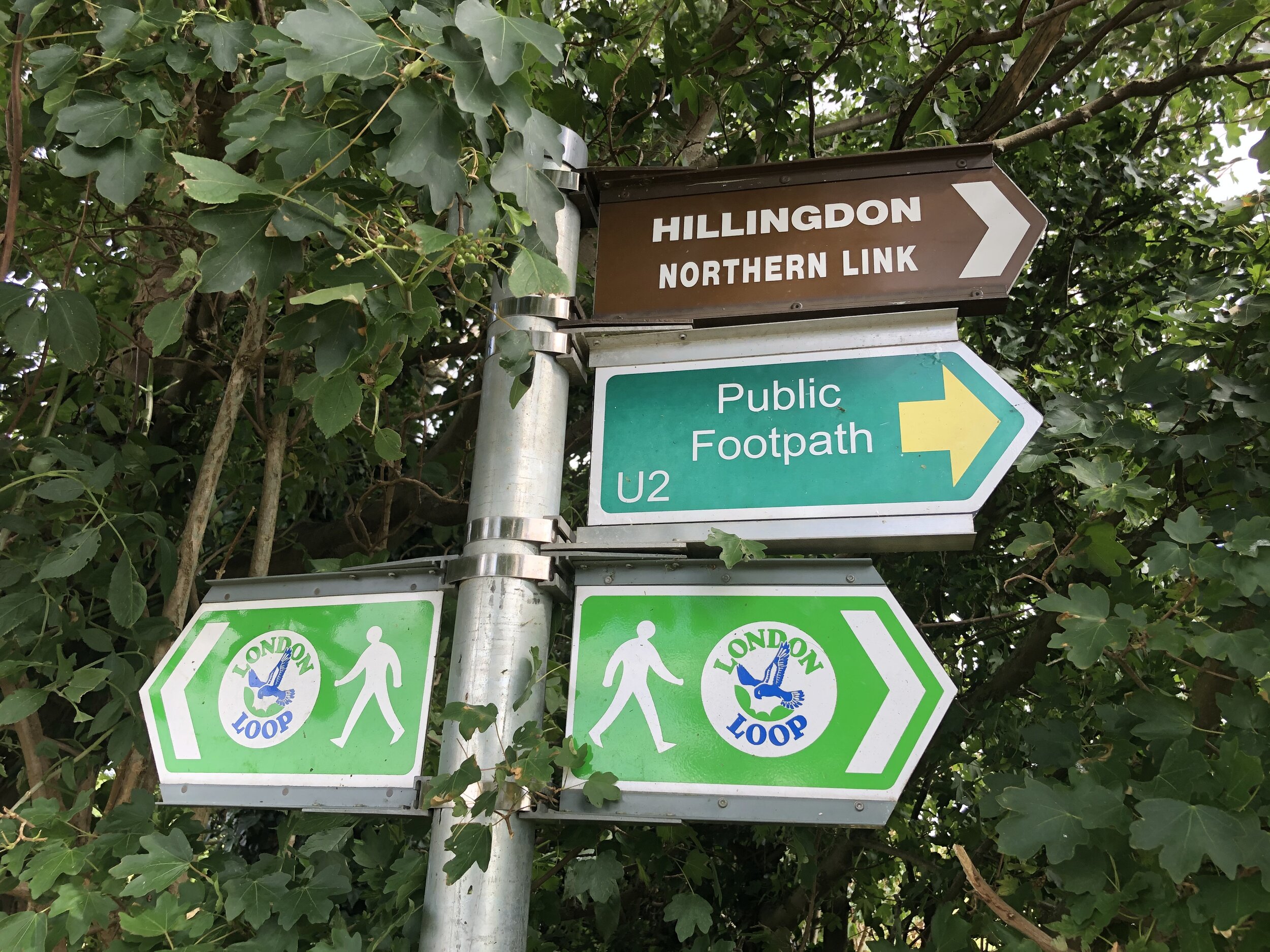
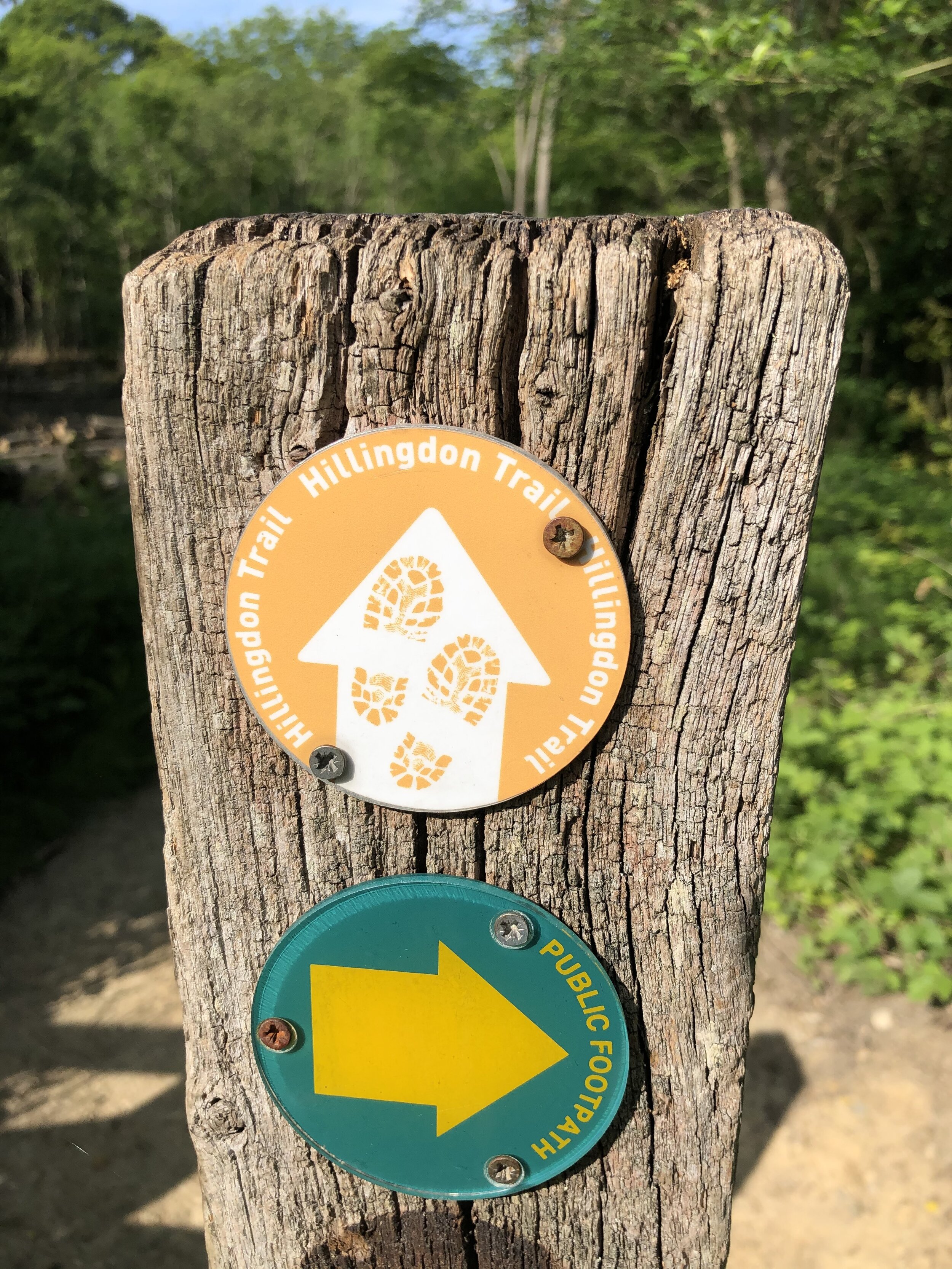
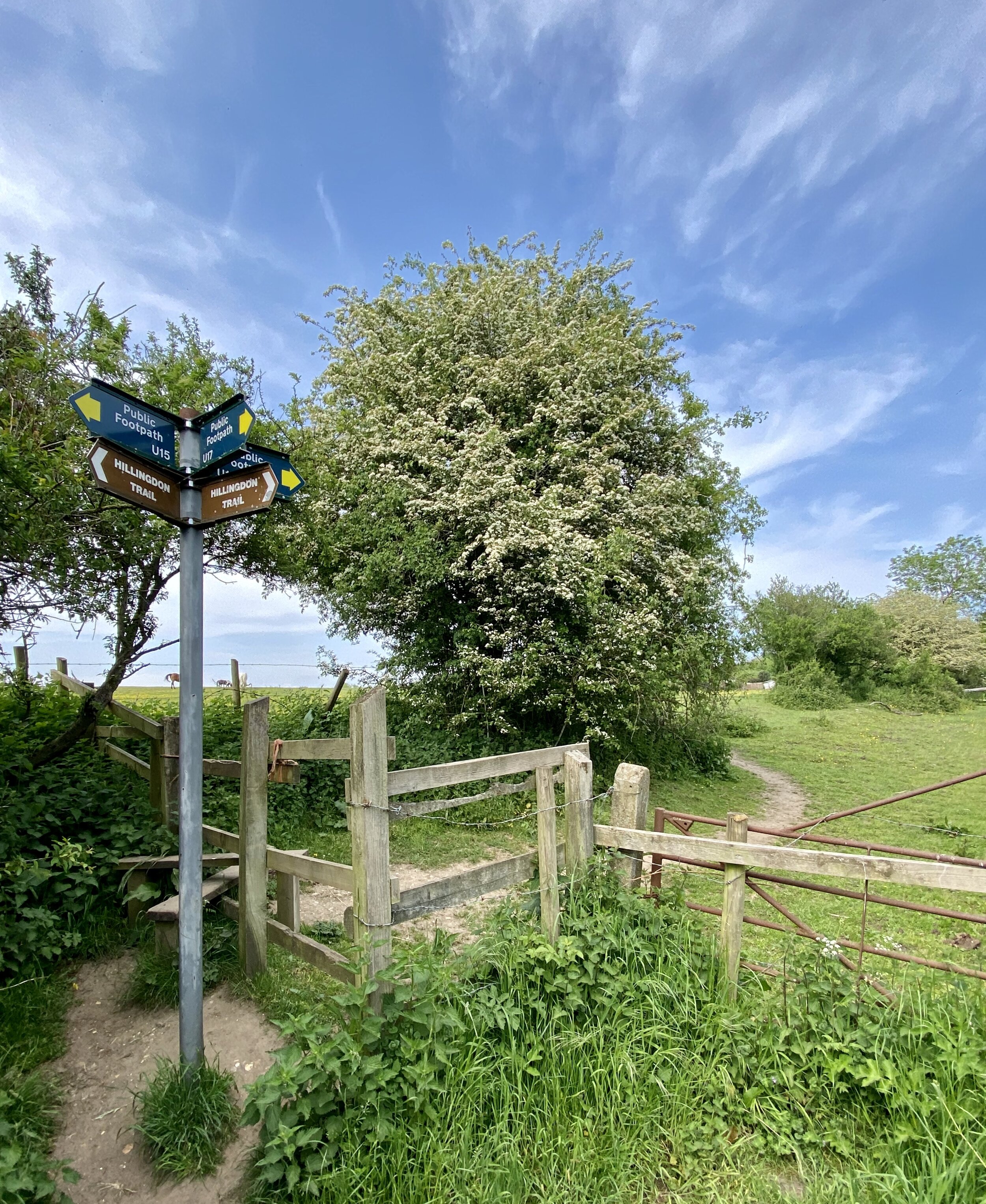
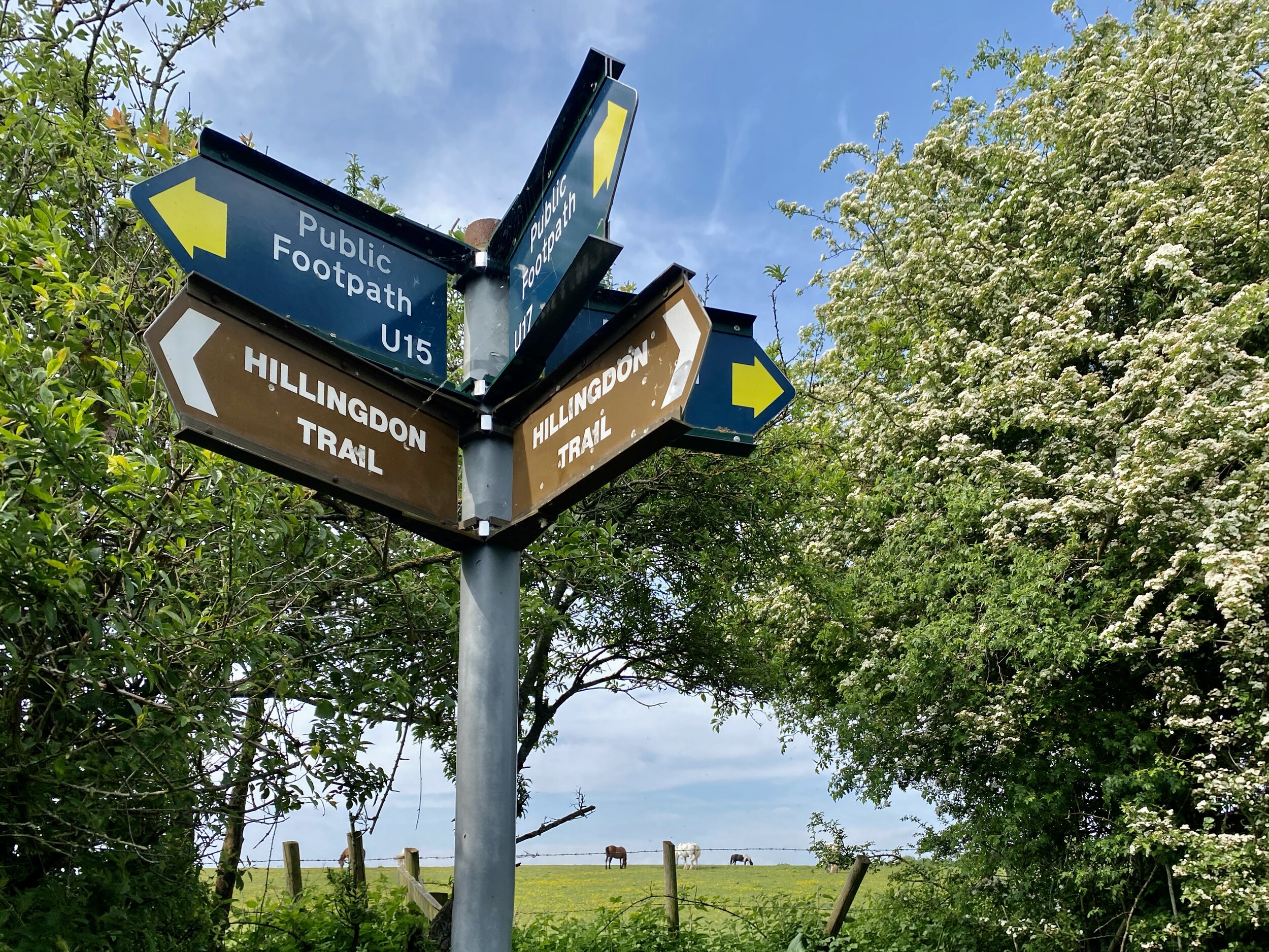
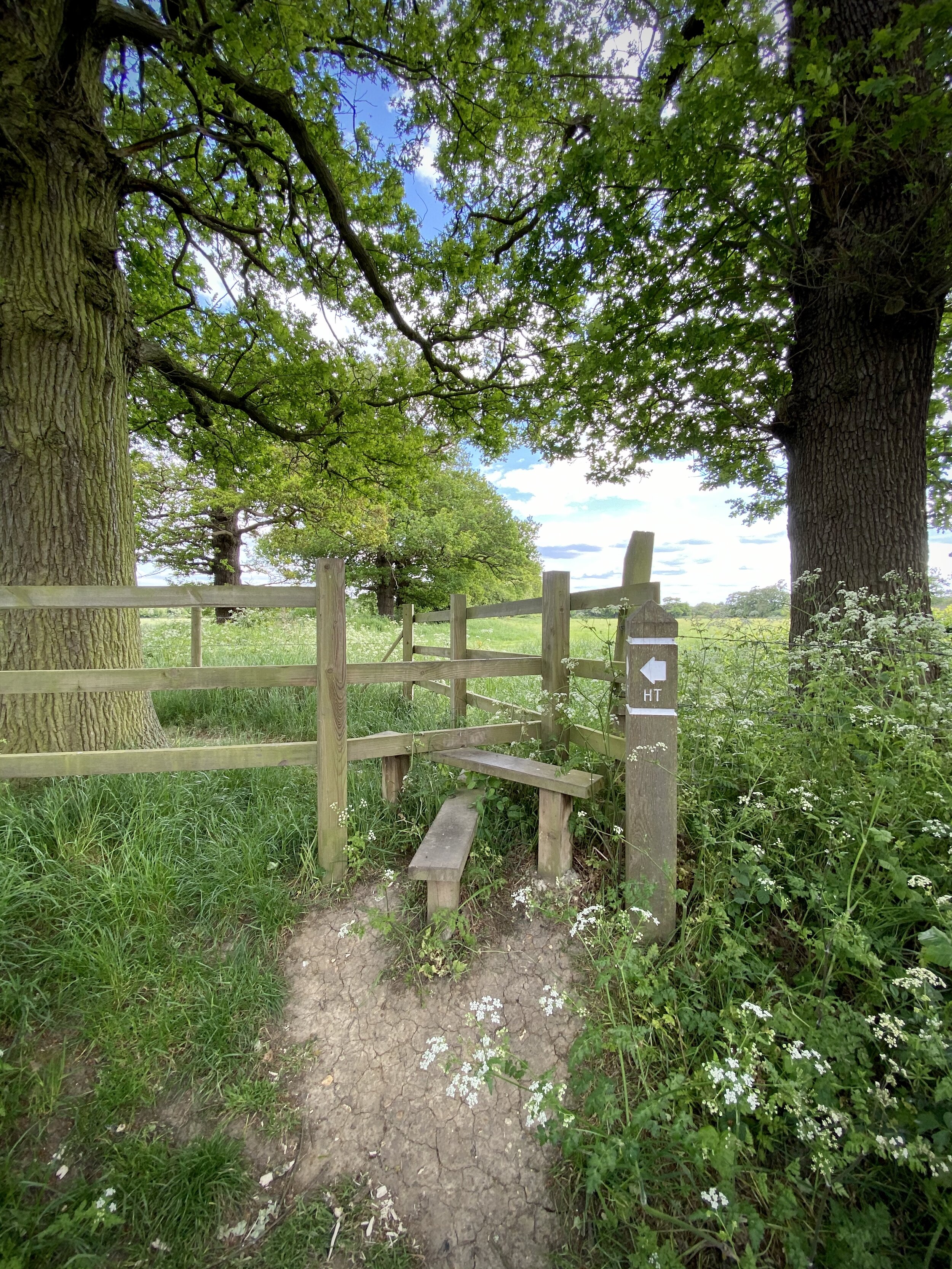
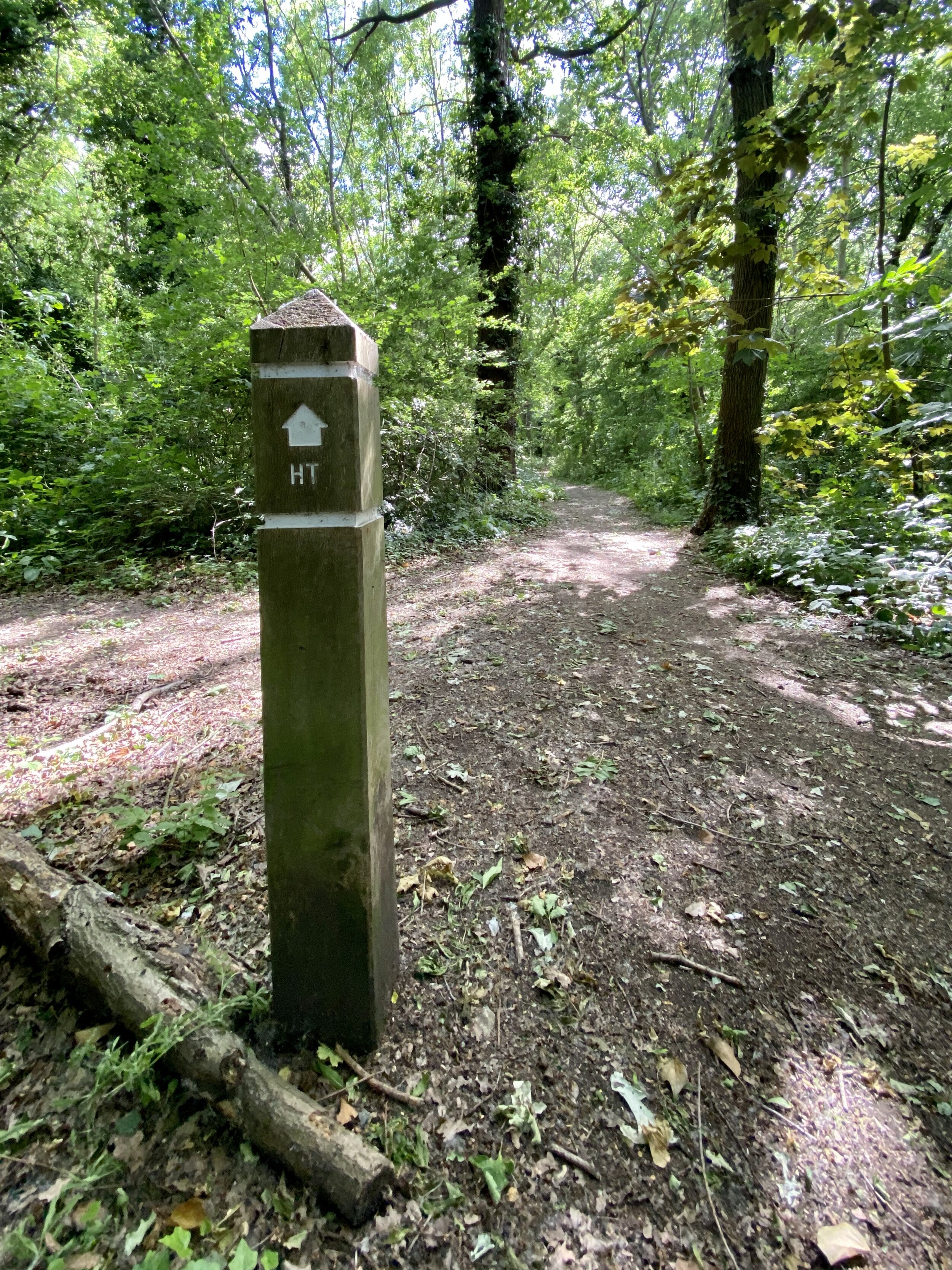
The whole trail is well sign-posted either with traditional metal arrow footpath signs or short wooden posts with HT marked on them. We were also following a GPS route but found that there were some inconsistencies. All of these were pretty minor and any diversions would come back together pretty quickly. I recommend not completely trusting the signs but take a GPS route or marked-up map too.

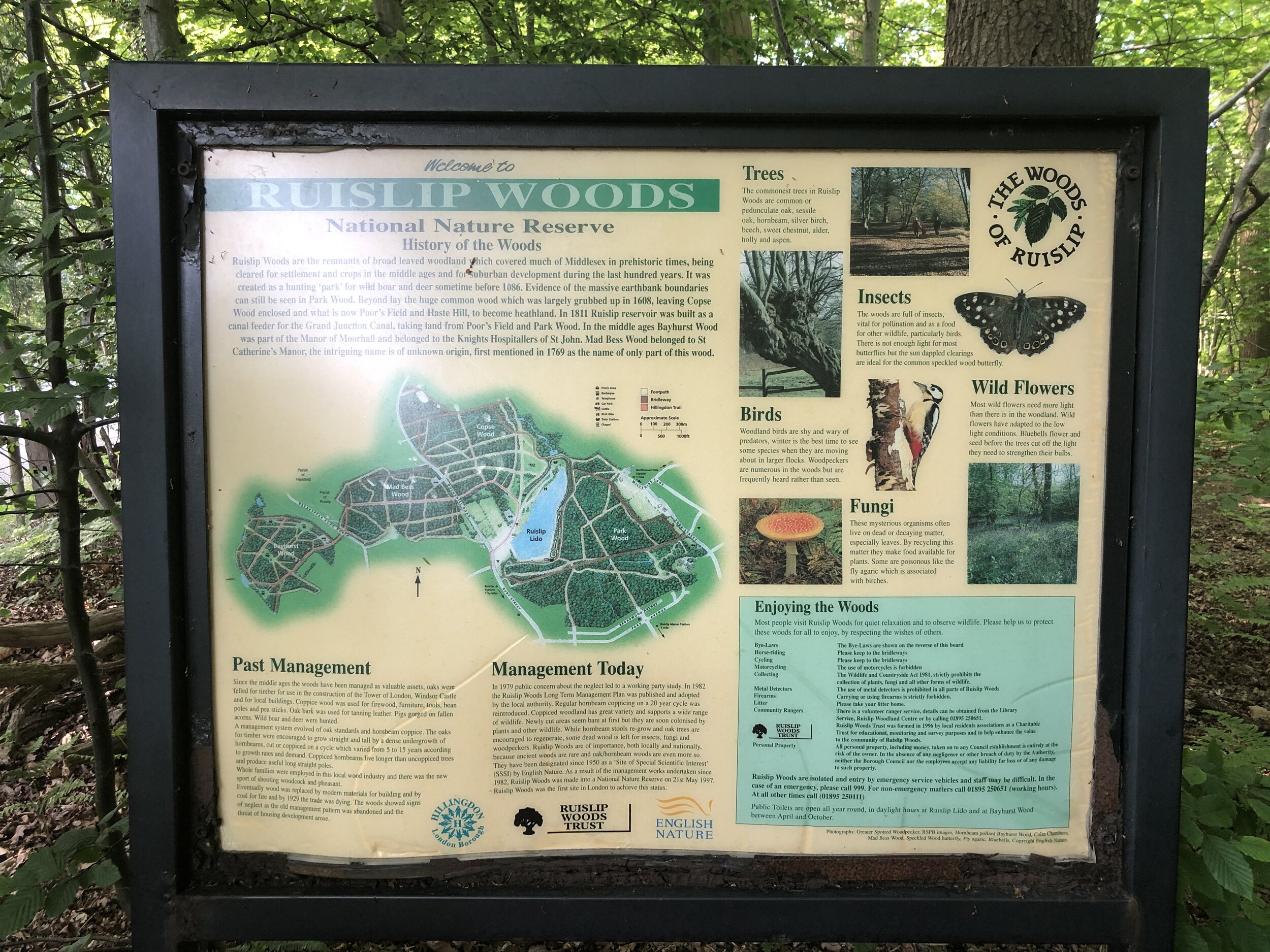
From the Grand Union the trail ascends through fields up to Harefield Village before heading back into undulating countryside. As you leave Church Hill Road in Harefield, take a moment to visit the ANZAC Memorial by St Mary’s Church. From here the rest of this section takes you through Bayslip Woods and Ruislip Woods, ending at Ruislip Lido.

elevation_profile.jpg

SECTION 2 - Ruislip Lido To Yeading Brook Meadows

Start: Car park at Ruislip Lido, Reservoir Road, Ruislip HA4 7TY
Finish: On street parking near Yeading Brook Meadows, Hayes, Northolt, UB4 9JA
Distance: 9.8 km (6 miles)
Elevation change: +29m / -53m
GPX File: get via Buy Me a Coffee
Other routes touched (walk): Celandine Route, Willow Tree Wander, Dog Rose Ramble,
Other routes touched (cycle): N/A
Other Pubs / Cafes on route: Home Bar & Kitchen, 16 High Road, Ickenham, Uxbridge UB10 8LJ
Map: OS Explorer Map (172) Chiltern Hills East and OS Explorer Map (173) London North, The City, West End, Enfield, Ealing, Harrow & Watford
Links: Hillingdon, Ruislip Lido, River Pinn, Yeading Brook, RAF Northolt, Yeading, Yeading Brook Meadows

Following the mostly wooded Section 1, the trail now enters residential areas of Ruislip and Yeading. From Ruislip Lido, the trail heads roughly south through housing, re-joining the countryside near the River Pinn. Watch out for signs here as we took a wrong turn immediately after crossing the Pinn and started following the Celandine Route.

Once back on track we crossed what were once quiet meadows and have now become a building site for HS2. At the time of writing there is still a fenced off path through the site. Check before you attempt this section as the building will go on for years and may be diverted in future. Once through the building site you’ll cross under the existing GWR mainline and into West Ruislip. After some more housing you’ll cross over the Metropolitan underground line and back into the countryside.

With West Ruislip behind you, the trail curves round to the western perimeter of RAF Northolt, continuing to follow the Yeading Brook. Unless any planes are taking off overhead you wouldn’t know that the airport is there. The growing rumble that you’ll hear is the A40 Western Avenue. A small tunnel takes you safely under the dual carriageway where the path follows a south-easterly direction. Continuing on you’ll pass through Gutterage Wood, then Ten Acre Wood. The path will change direction again and head due south continuing to follow the Yeading Brook.

This section finishes at the start of Yeading Brook Meadows as you cross Kingshill Avenue. There’s no car park here, but lots of free on-street parking on The Greenway that runs along the eastern border of the Meadow.


Points of Interest along or near to the Route

  • Ruislip Lido Set on the edge of Ruislip Woods, Ruislip Lido is a 60-acre reservoir surrounded by sandy beaches and a narrow-gauge railway. Originally constructed in 1811 as a feeder reservoir for the Grand Junction Canal, it never fully served its intended industrial purpose and was eventually developed into a popular lido in the 1930s. Today, it serves as a stunning nature reserve and a major highlight of the trail.

  • RAF Northolt As you walk the western perimeter of RAF Northolt, you are passing by an airfield steeped in history. Established in 1915, it is the Royal Air Force's oldest continuously operating station. It played a vital role during the Battle of Britain in World War II, housing fighter squadrons that defended London's skies. Today, it handles both military flights and private civil aviation.

  • Yeading Brook Meadows Providing a vital green corridor through the suburban landscape of West London, Yeading Brook Meadows is a designated Local Nature Reserve. The floodplains here are a haven for wildlife, featuring a mix of marshland, tall herbs, and traditional wildflower meadows. It provides a peaceful sanctuary for walkers and supports a diverse range of local flora, butterflies, and bird species.

  • Cranford Park & St Dunstan's Church Approaching the end of the trail, Cranford Park offers 144 acres of historic parkland. It was once the grounds of Cranford House, which was demolished in 1945, though the surviving 18th-century stable block remains. Nestled within the park is the Grade II* listed St Dunstan's Church, which has medieval origins and houses the remarkable monuments of the Berkeley family, who owned the estate for over 300 years.


elevation_profile.jpg

SECTION 3 - Yeading Brook Meadows To Cranford Park

Start: On street parking near Yeading Brook Meadows, Hayes, Northolt, UB4 9JA
Finish: Car Park at Cranford Park, London TW5 9RZ
Distance: 7.4 km (4.6 miles)
Elevation change: +29m / -31m
GPX File: get via Buy Me a Coffee
Other routes touched (walk): Grand Union Canal Paddington Branch Towpath, Grand Union Canal Towpath, The London Loop
Other routes touched (cycle): N/A
Other Pubs / Cafes on route: N/A
Map: OS Explorer Map (160) Windsor, Weybridge & Bracknell and
- OS Explorer Map (173) London North, The City, West End, Enfield, Ealing, Harrow & Watford
Links: Hillingdon, Yeading, Yeading Brook Meadows, Southall, River Crane, Cranford Park

Picking up from where you left off at the end of Section 2, continue south-east through Yeading Brook Meadows. Cross over Yeading Lane and under the A312 into Brookside where you’ll join the Paddington Arm of the Grand Union Canal. Cross over the bridge and follow the towpath in a south-westerly direction. After ~3 km the canal meets the main channel of the Grand Union at Bulls Bridge. Take a right and follow the canal for approximately 300m until you get to the A312 Parkway overpass. Use the zig-zagging footway to climb up to road level and follow the footpath to the side of the road south over the bridge. By now you’ll be missing the quiet countryside of section 1 as you walk through the busiest, ugliest part of the trail.

At the roundabout to the south of the overpass take a left onto North Hyde Road and a left onto Watersplash Lane. Here you’ll enter Cranford Park and the home stretch of the trail. You’ll now be following the River Crane which splits off from the Yeading Brook a bit further north at Minet Country Park. After ~500m cross under the M4 via St Dunstan’s Subway and into the main part of Cranford Park. You’ll pass by St Dunstan’s Church and the remains of Cranford Manor.
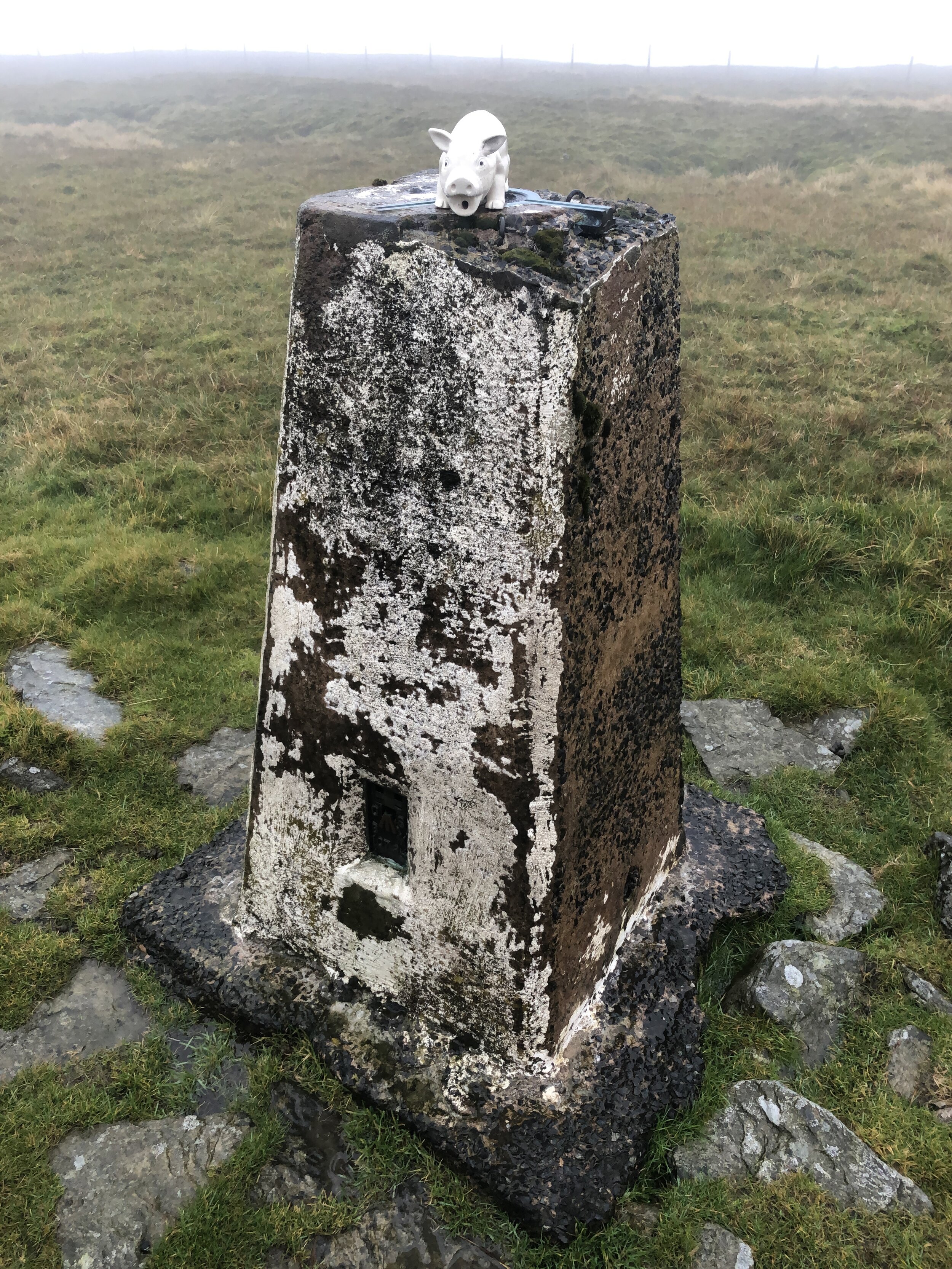
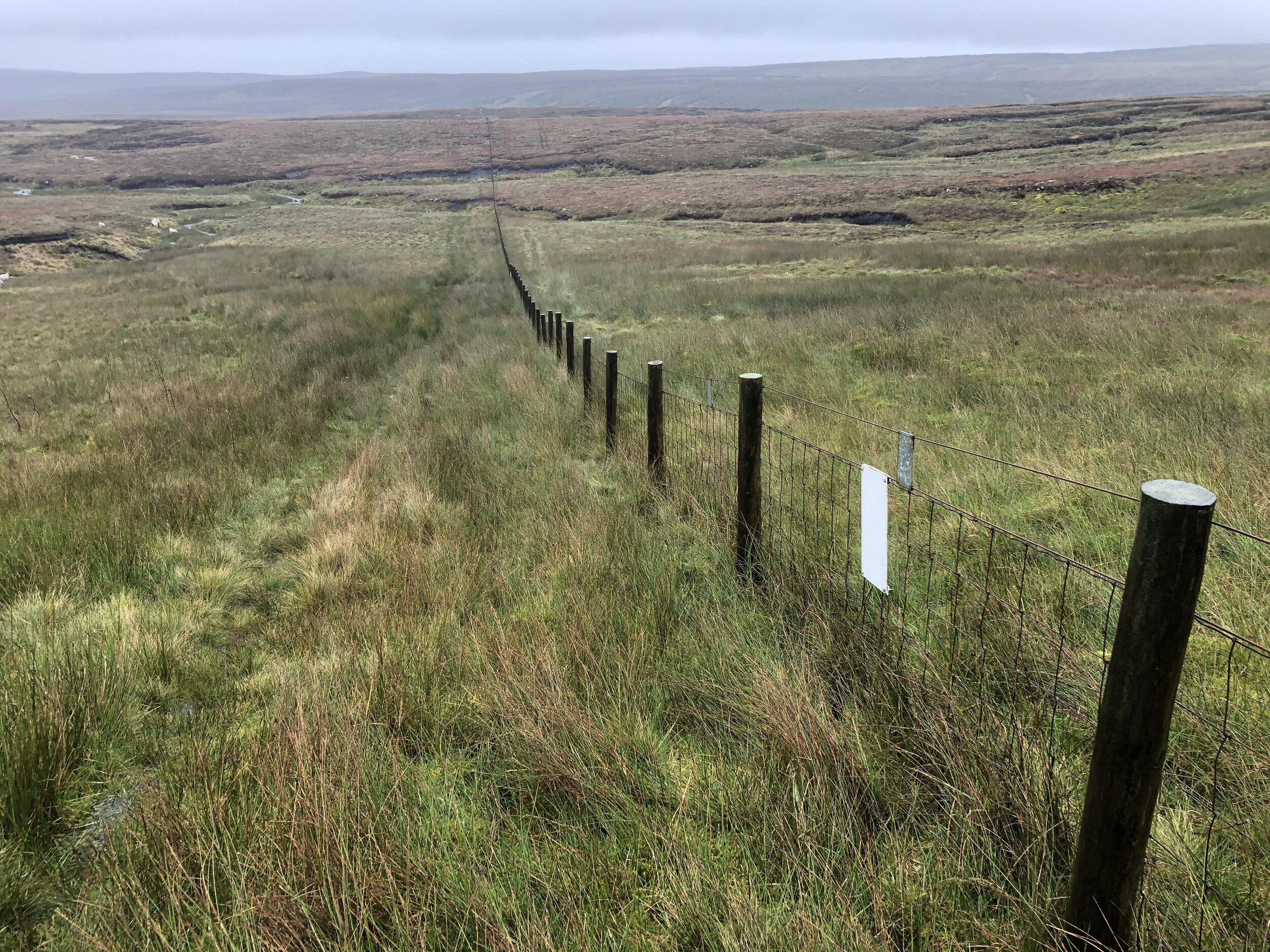
As we were using 2 cars to get to the start and end points of the trail, the car park next to St Dunstan’s Church was the obvious place to end our walk. If you’re using public transport, continue south through Cranford park to the A4 Bath Road where there are several options servicing the Heathrow area. This final section of the trail from the Grand Union canal also follows the London Loop which continues south towards Kingston.
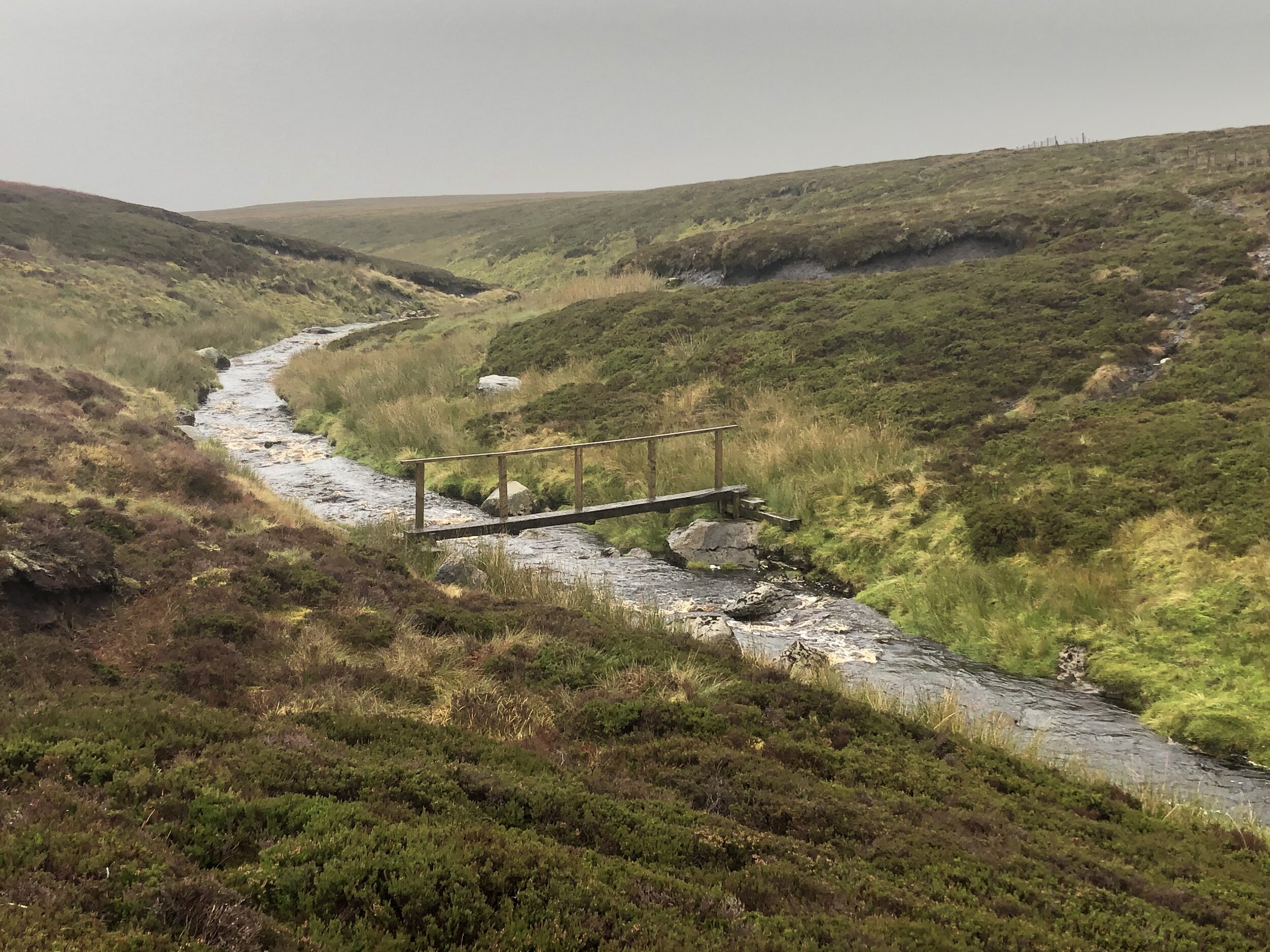
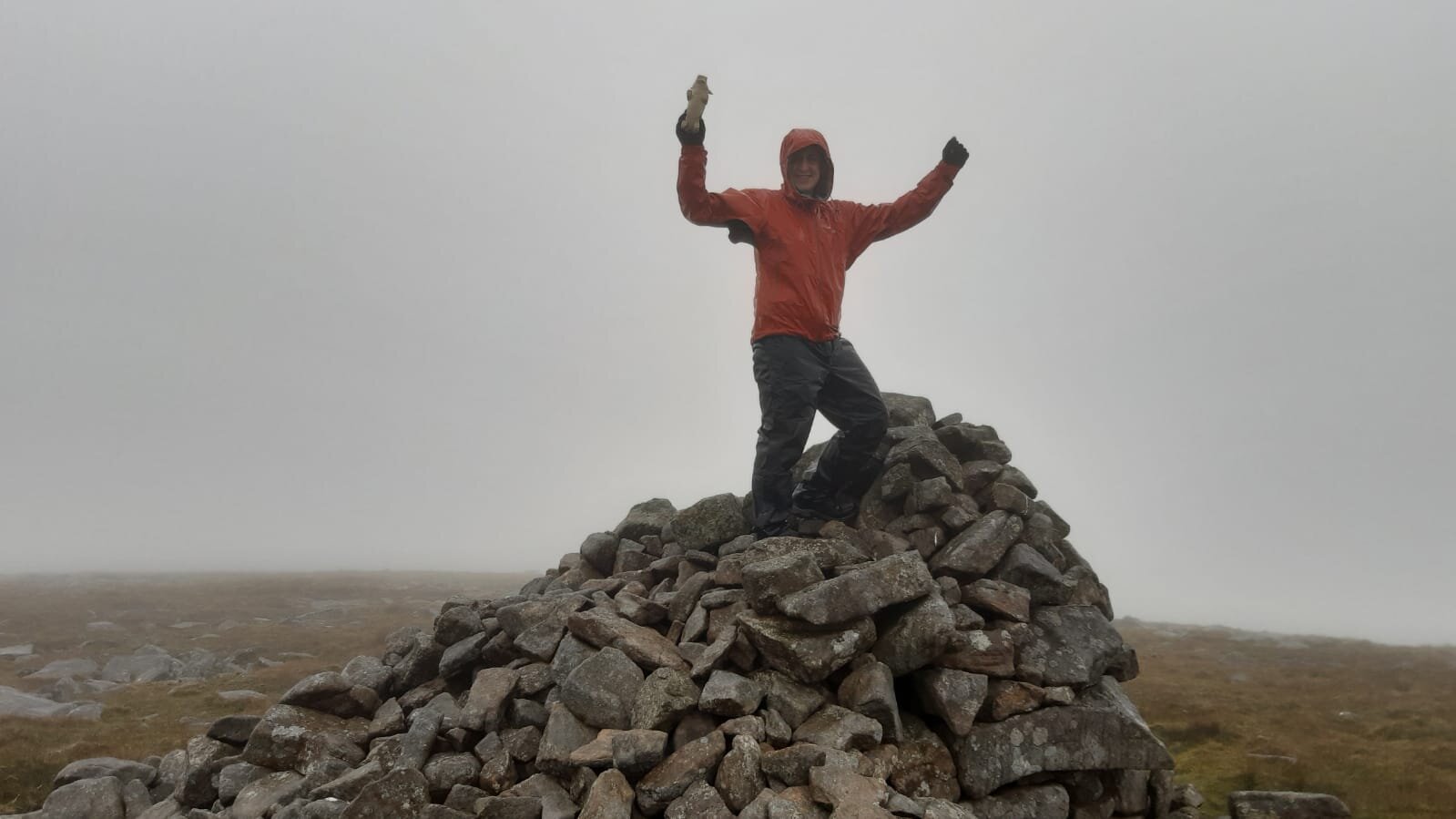
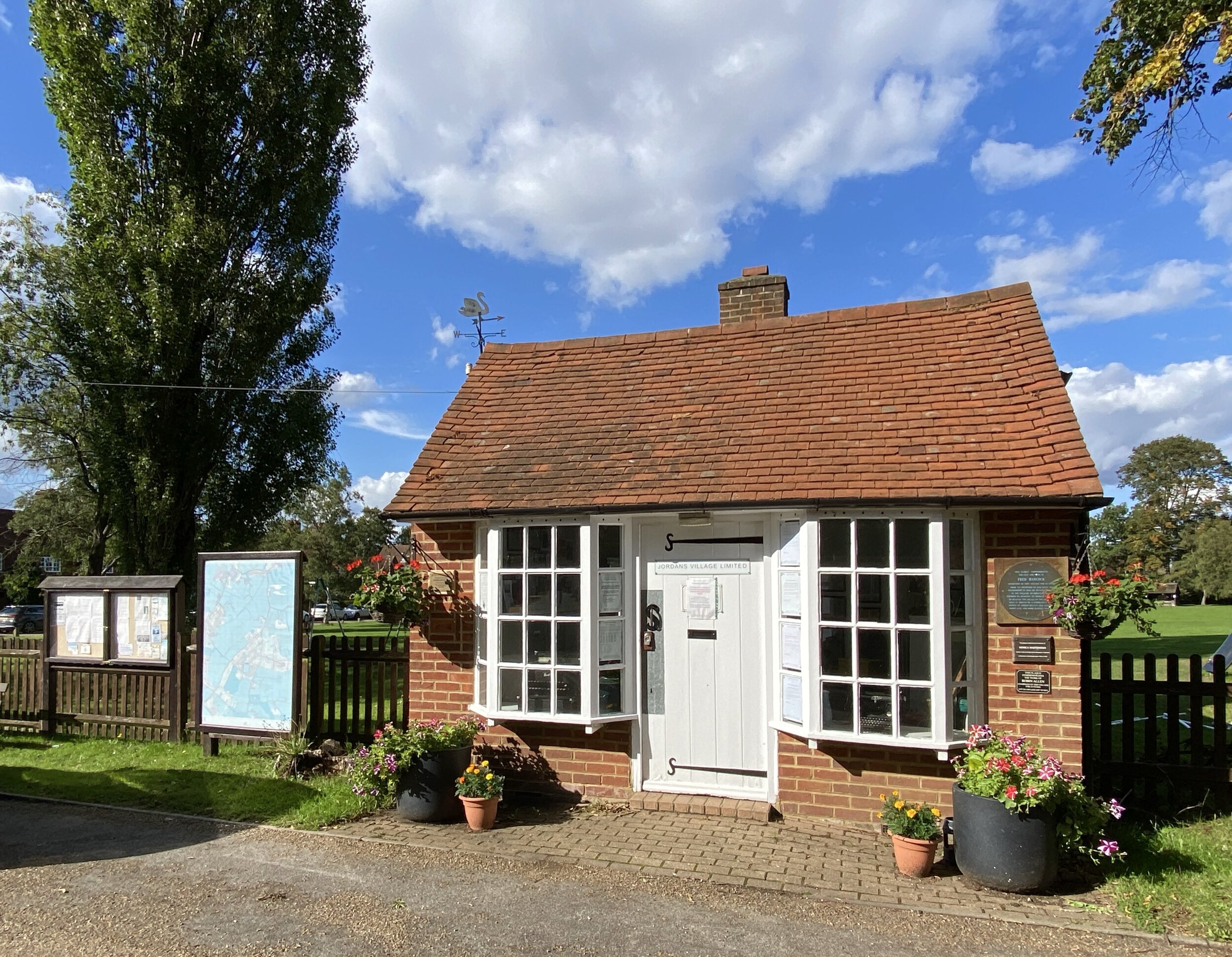

Next sections of the London Loop: