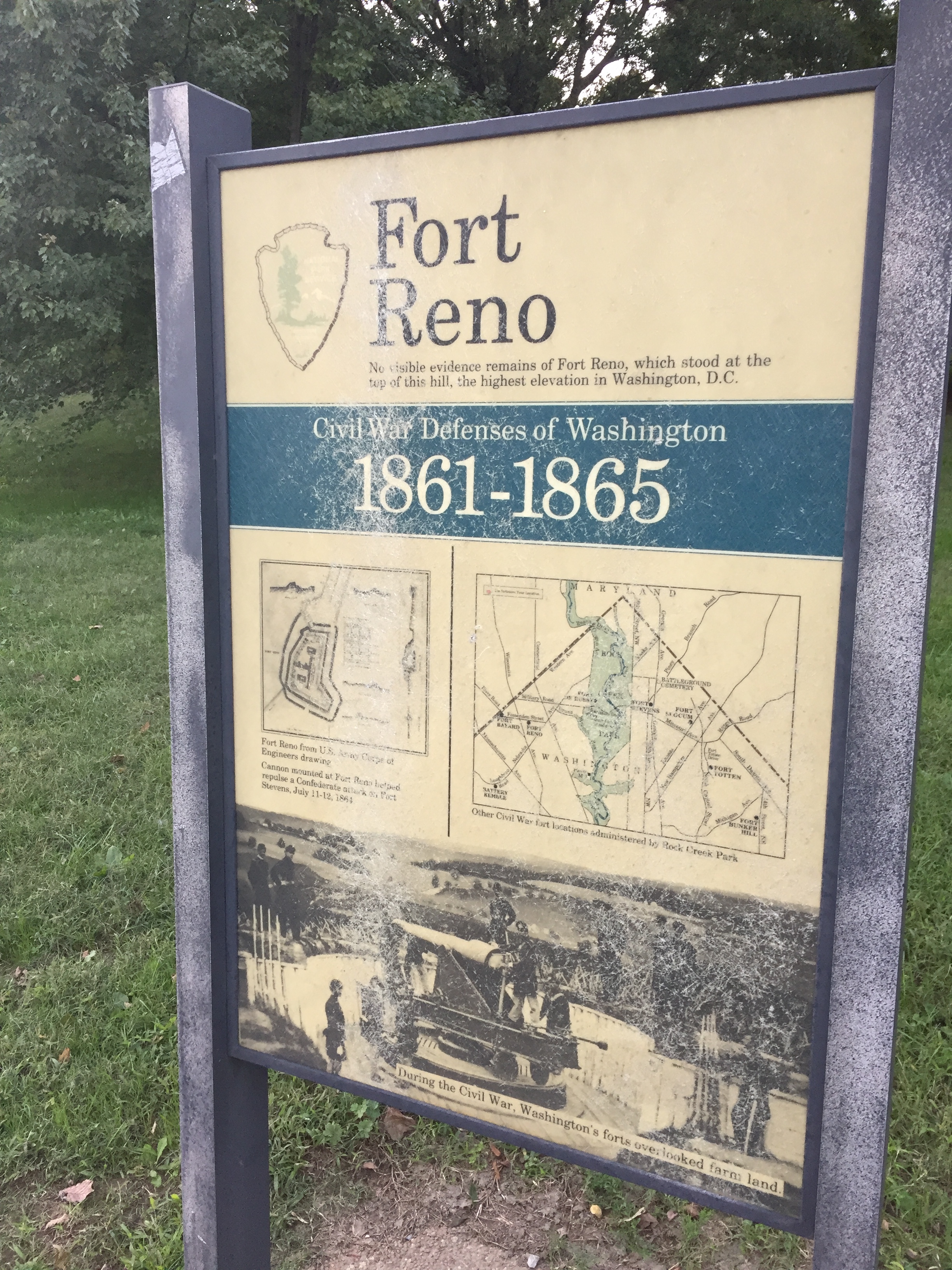
Fort Reno, Washington DC High Point

Significance: Highest Point in Washington DC
Parent Peak: Montgomery County High Point
Elevation: 414m
Date “climbed”: 17th December 2018
Coordinates: 38° 57' 6'' N, 77° 4' 33'' W
Links: Wikipedia / Peakbagger


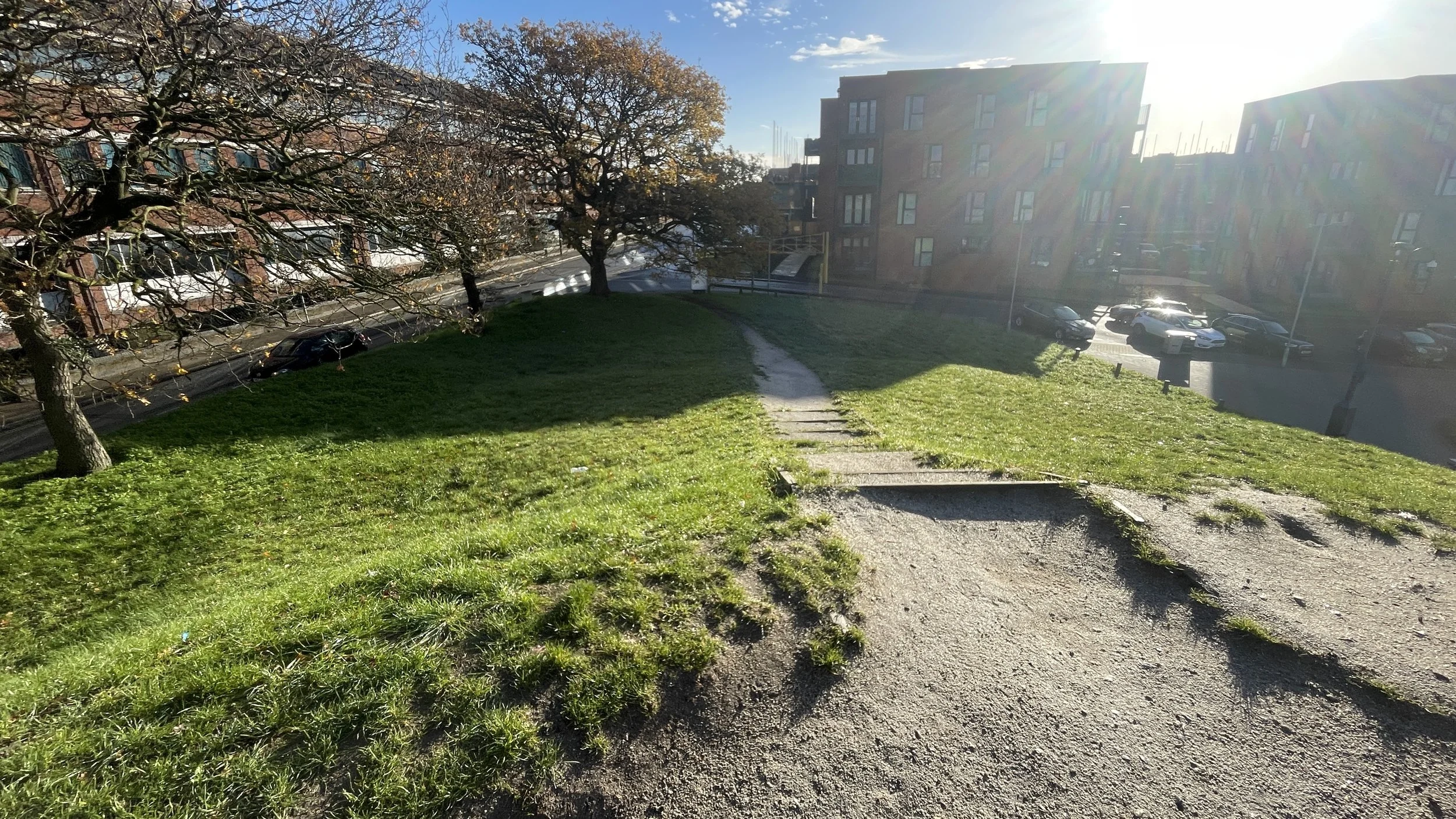
This was my second US State(ish) High Point of the year. Similar to High Point, New Jersey earlier in the year it was a convenient evening excursion whilst working in the area. This one is a pretty underwhelming “peak” in a fairly flat city. At 125m the highest point isn’t even higher than the Washington Monument. Even so, its easy to get to and there’s decent nearby parking so it’s a worthwhile trip for any High Point geek already in the DC area.

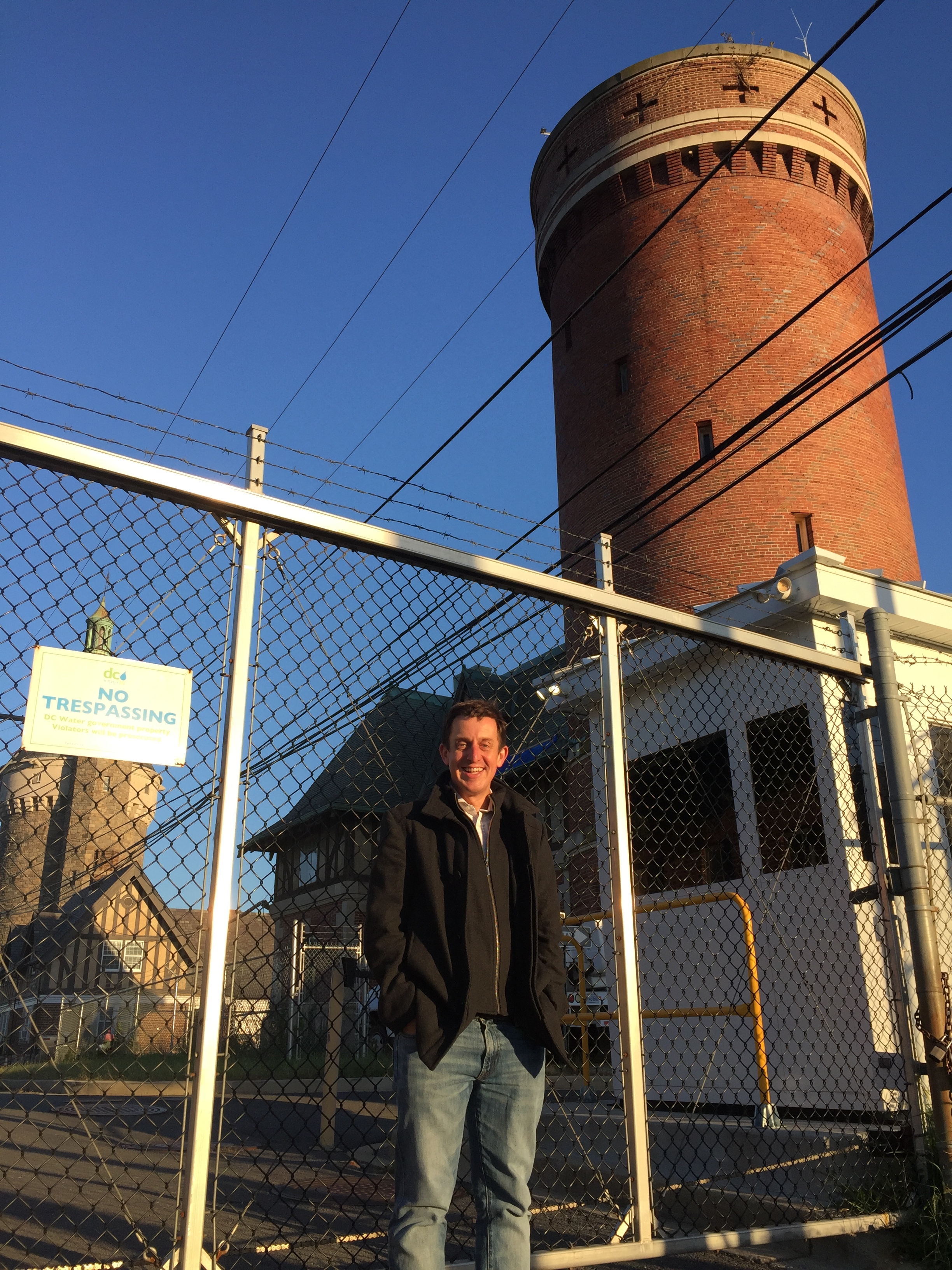
You can get to the high point by walking up to the gates of the Department Of Transportation salt depot. There’s a large brick tower behind the gates so you can’t miss it. There’s also a USGS-style survey marker at the highest natural point in the park. I spent half an hour searching for it but then gave up as my jetlag was kicking in and finding a solution for that became more interesting than finding the plaque.


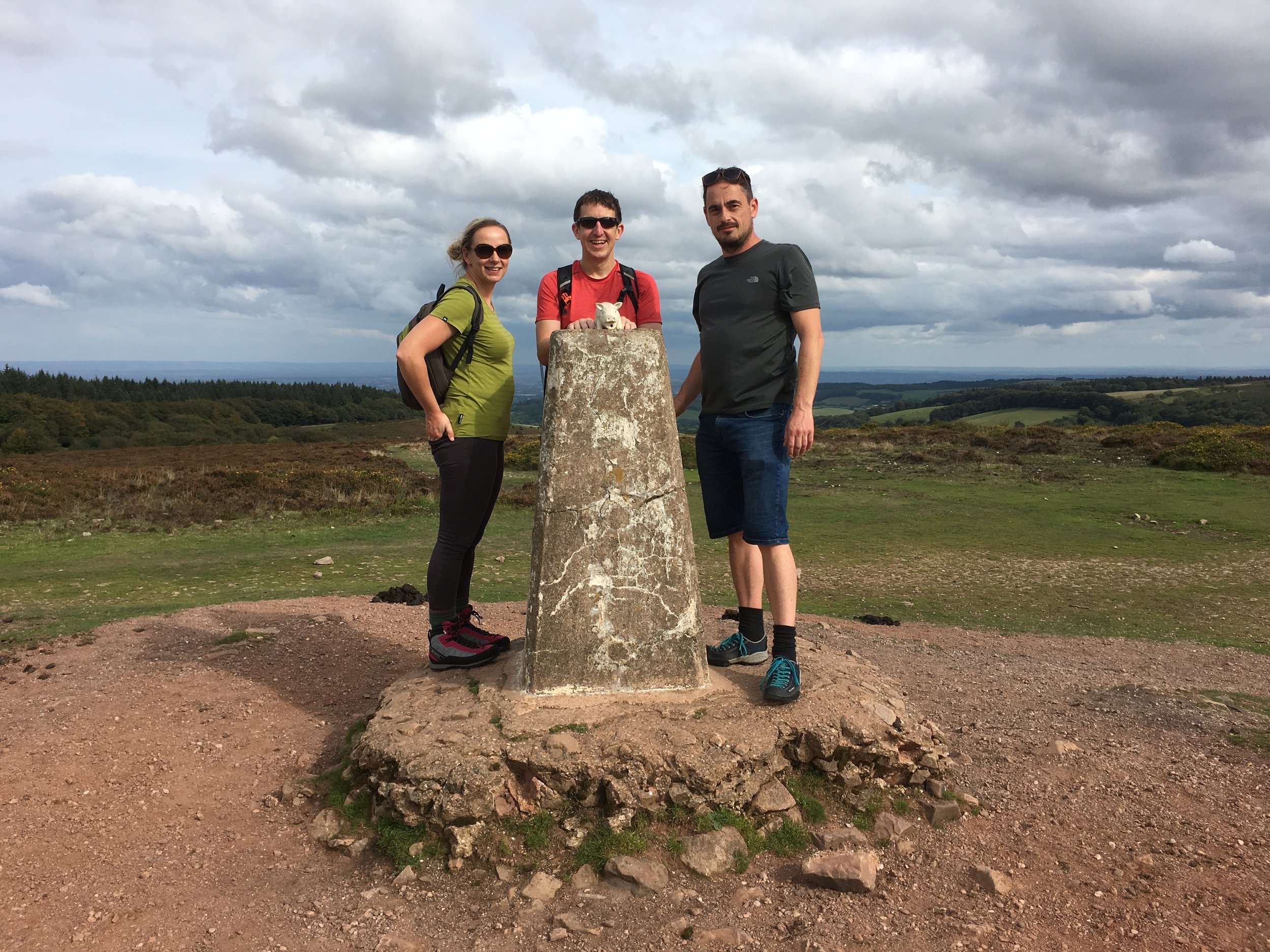
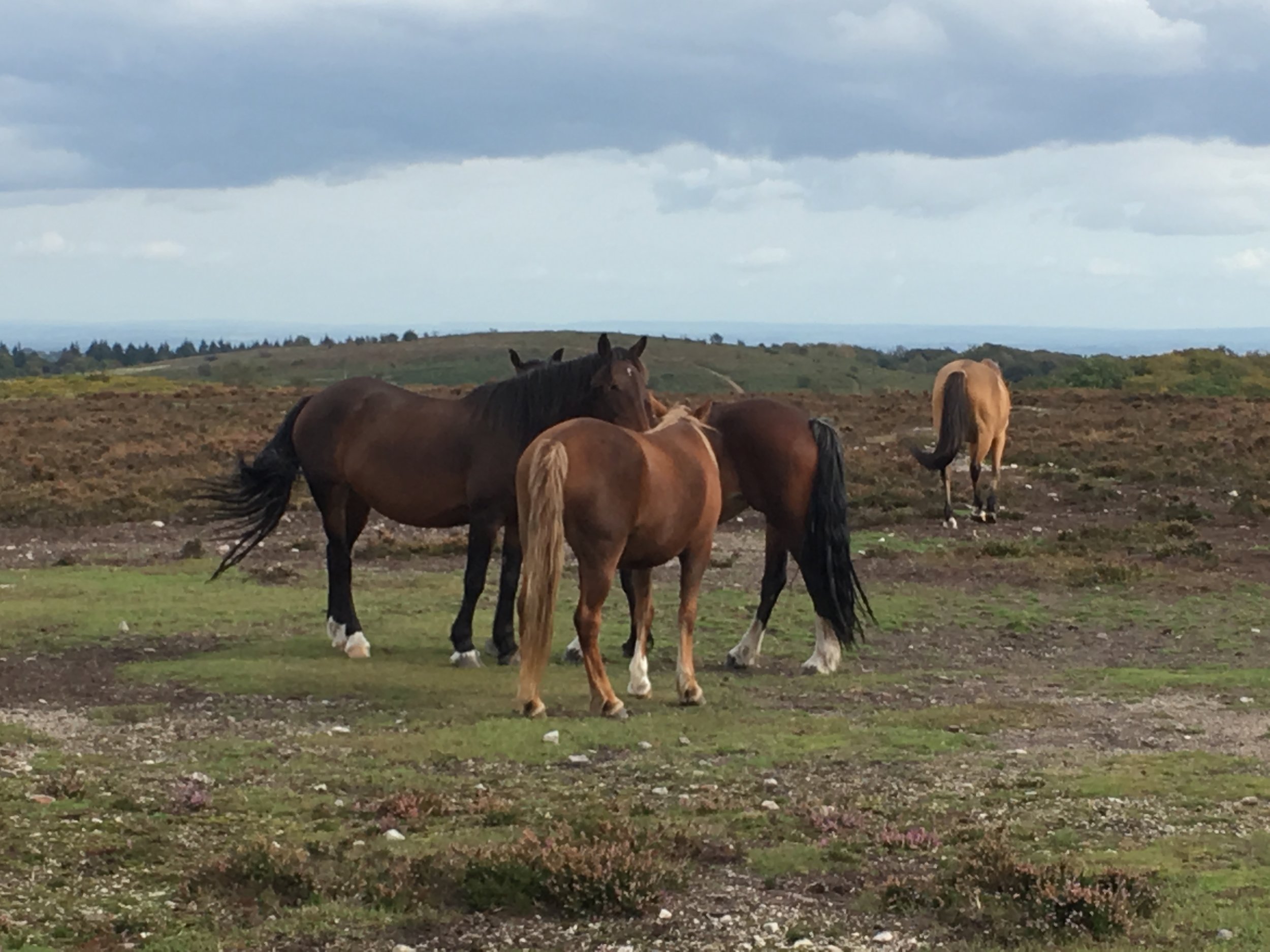
Wills Neck: Quantock Hills High Point
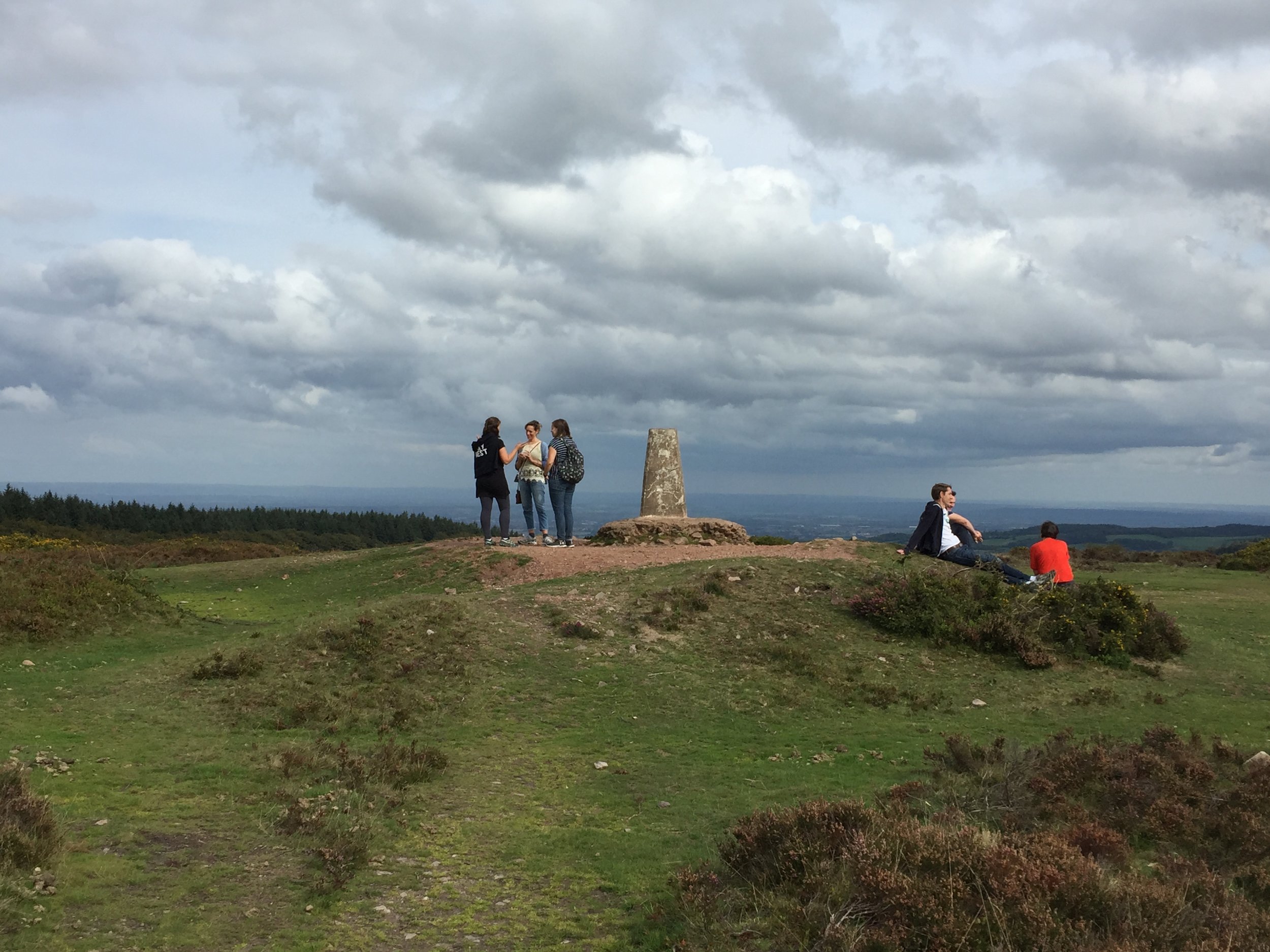
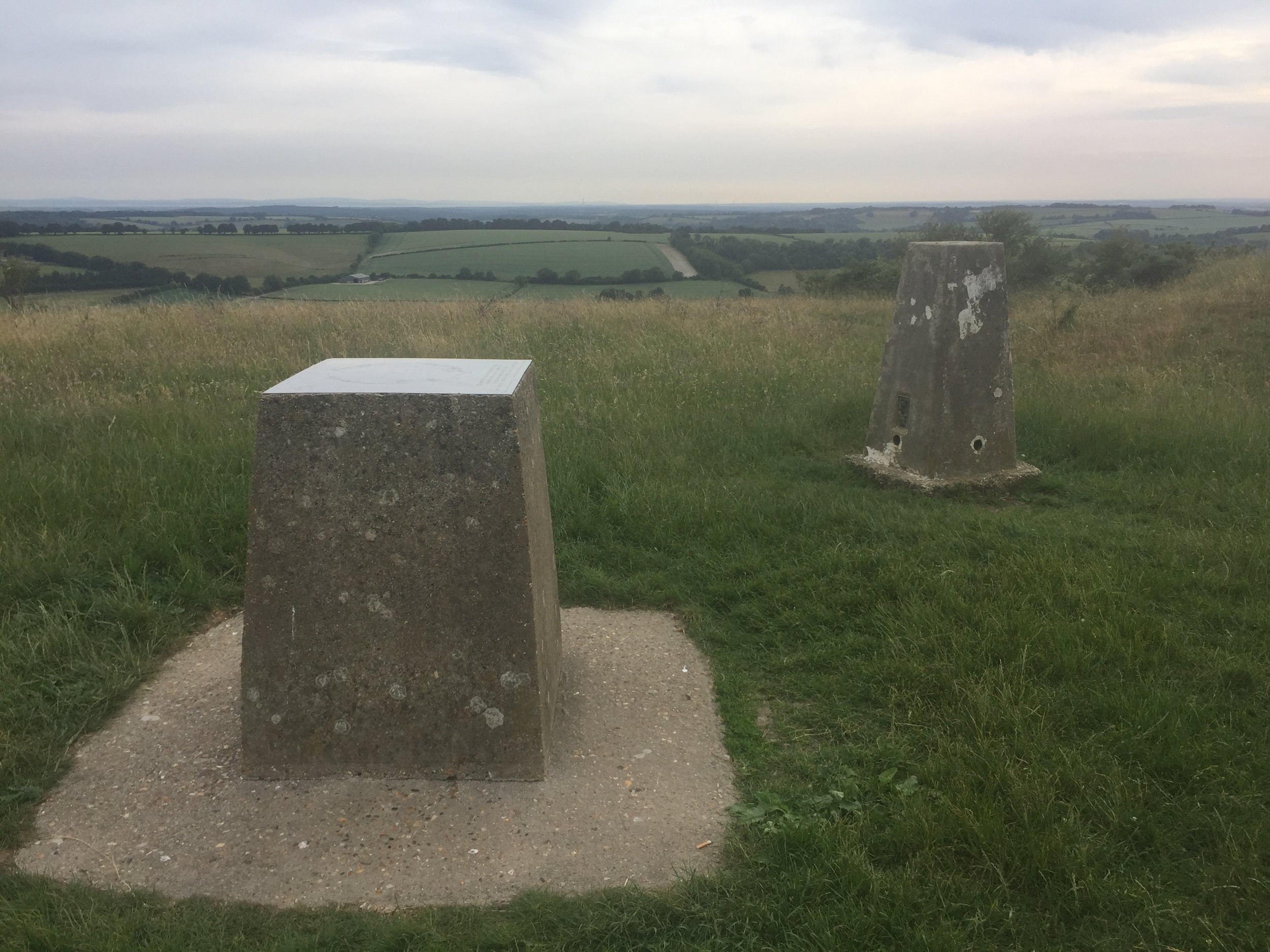
Wills Neck Trig Pillar

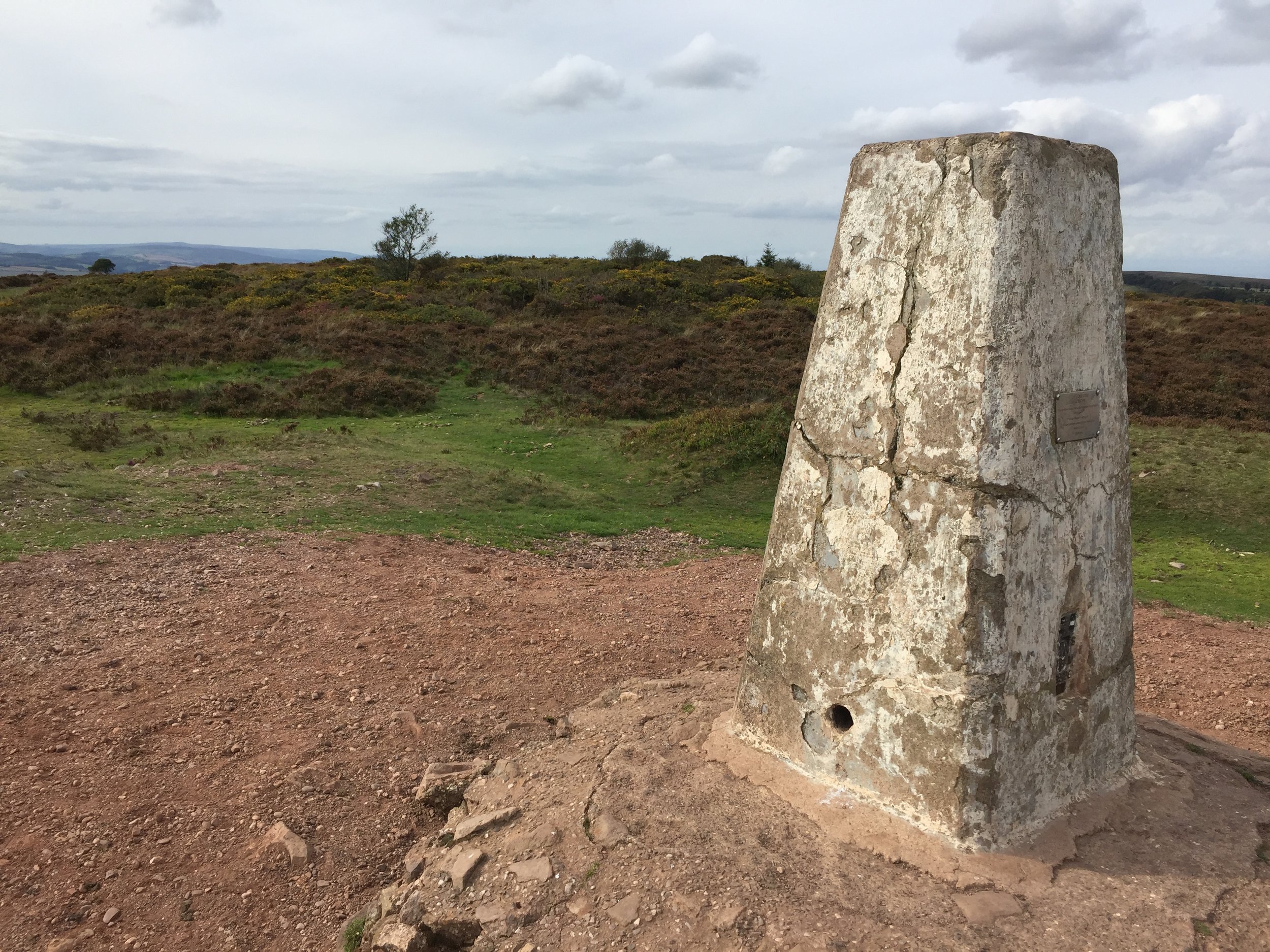
Wills Neck Trig Pillar


Significance: Quantock Hills National Landscape High Point
Member of: Marilyn, Hardy
Parent Peak: Dunkery Beacon
Nearest Higher Neighbour: Lype Hill
Elevation: 386m
Date climbed: September 15th 2018
Coordinates: 51.1096° N, 3.1937° W

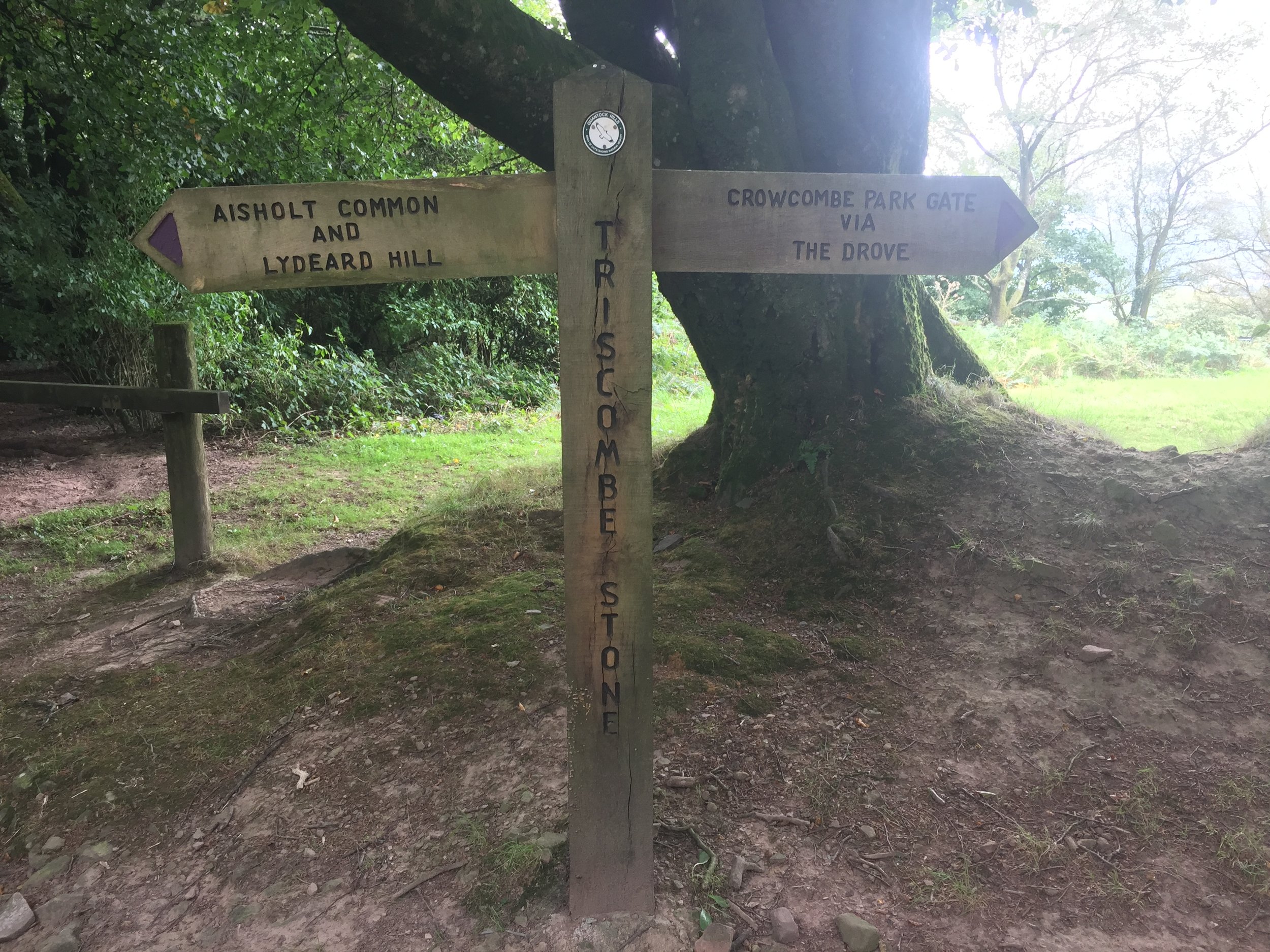
Route Start / End: Out and back from the car-park next to the Forest Office on Cockercombe Road. Follow the track up to the T-junction, then its a ~4k circular walk taking in the high-point.
Route Distance: 8.5 km (5.3 miles)
Route Elevation Change: +/- 217m
Subsidiary tops on route: none
GPX File: get via Buy Me a Coffee
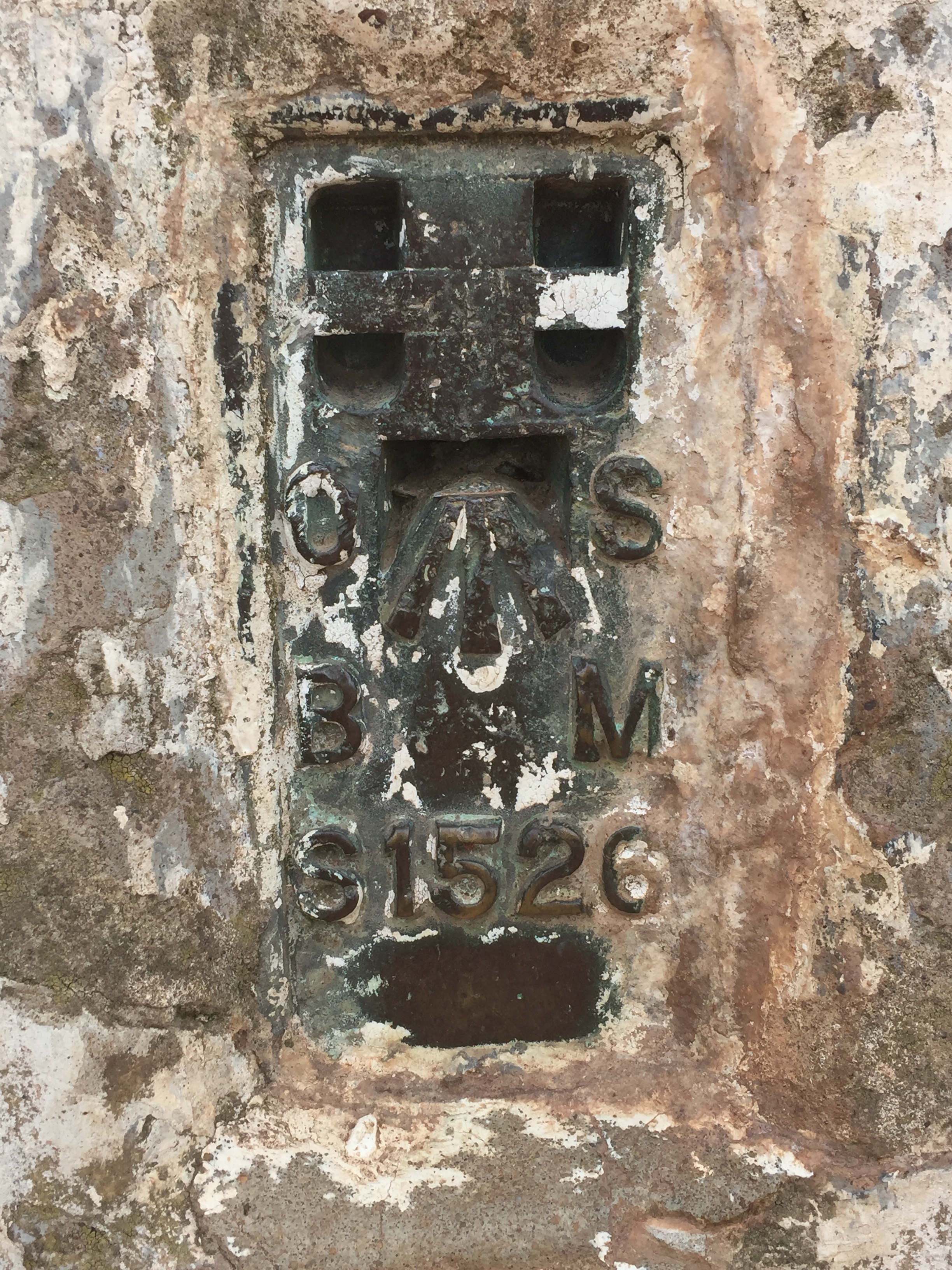
OS Trig Pillar: TP0733 - Bagborough
Other routes touched: Quantock Greenway
Map: OS Explorer Map (140) Quantock Hills and Bridgwater
Links: Wikipedia: (Will’s Neck / Quantocks), National Trust Quantock Hills, Peakbagger


Will's Neck stands as the highest point of the Quantock Hills, National Landscape (formerly AONB) in Somerset, England. The summit reaches an elevation of 384 meters above sea level, making it one of the most prominent landmarks in the region. Due to its significant topographical prominence, it qualifies as one of England's 'Marilyns', a term for hills with a relative height of at least 150 meters. The highest point is marked by a modern concrete trig pillar, which replaced a cairn originally constructed by schoolboys from Clifton College between 1922 and 1945.

The hill’s name, "Wills Neck," is believed to be derived from the Old English word Wealas, meaning 'strangers,' 'foreigners,' or 'Welshmen,' suggesting the area was a historical border. It is formed from Devonian-period Hangman Grits, a type of sedimentary rock (sandstone and slate) laid down approximately 420 million years ago when the area was covered by a shallow sea. The geology and high, exposed position contribute to the open heathland environment of the summit, contrasting with the wooded combes and lower pastures of the surrounding Quantock Hills.

Timea and I bagged Wills Neck while visiting some friends that I had made on the High Peaks of The Balkans trip. It’s an area rich in hiking paths such as the Quantock Greenway plus other similar sized peaks. We’ll likely be back to explore more of the area, but this made a great first experience of the Quantocks.

The guidance below will help you navigate but don’t use it as a fully accurate turn-by-turn guide. Always take a map and/or a GPX route and prepare well for the weather and terrain.

The walk starts at the Triscombe Lower Car park and Cockercombe Bottom lane in a south westerly direction following the course of the Cockercombe stream. At around 2.4 km you’ll reach a junction in the path. Take a right heading north to meet the Quantock Greenway and Cockercomeb Road. Take a left onto the road then a left onto The Drove. At ~100m down The Drove take a right onto a path that heads in a southerly direction to the Trig Pillar at the summit of Wills Neck.

After the Trig Pillar, continue along the track for ~190m then take a left to head north to the edge of the woodland. Take a right to follow the woodland edge for 500m then take a left to walk through the woods in a northerly direction. When you reach the clearing in the middle of the woods, head west to meet the junction of the path that you followed up Cockercombe Bottom. Take a right to retrace your steps back to the start


Surrey Bacchus Wine Half Marathon

When: September 9th 2018
Where: Denbies Wine Estate, Surrey, UK
Course: Single lap hilly trail race that looks like a waving alien on its side. Starts and ends in Denbies Wine Estate, Dorking and passes through National Trust land, Dorking Wood and Ashcombe Wood.
Other routes touched (walk): North Downs Way, Ranmore SCC, Prospects of Polesden SCC, Mole Gap Trail
Other routes touched (cycle): None
Finish time
: 2 hours 11 minutes


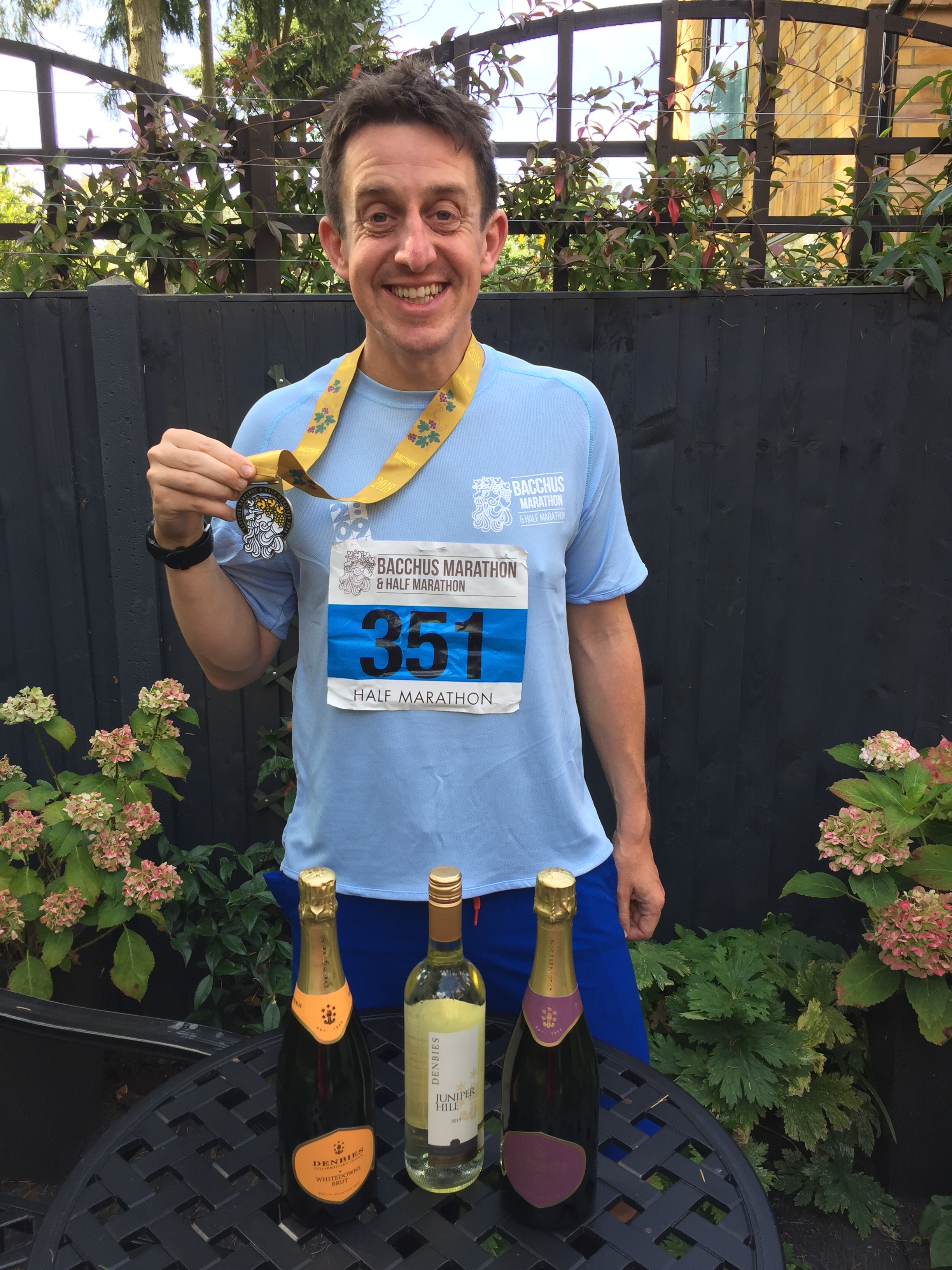
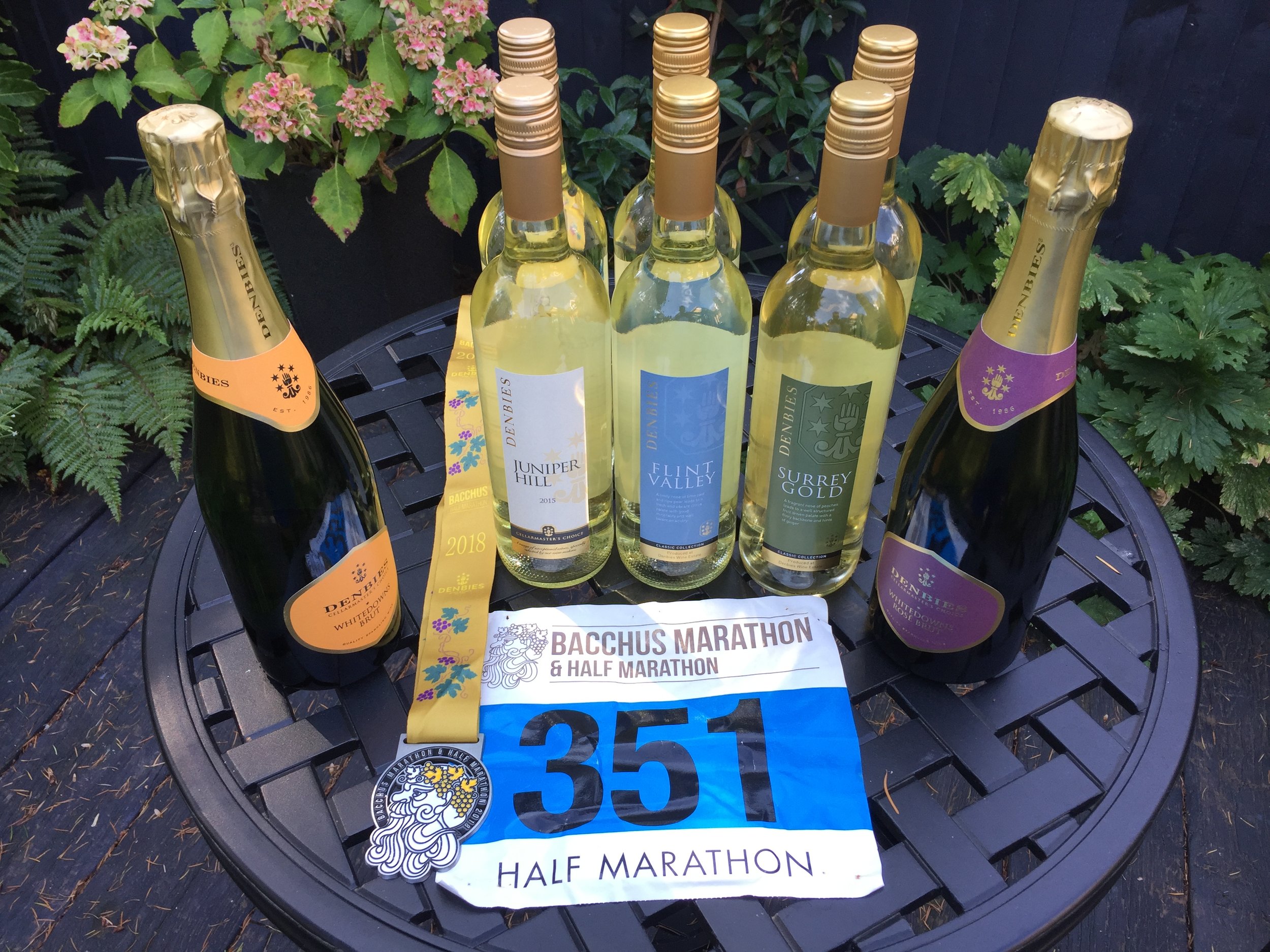
Half Marathon #46 of 50 and my favourite so far. There were 5 wine stops along the route with wines from the Denbies Wine estate, plus pizza, cake and music. Basically, a big party with a bit of running in between.

 
Thames Path Challenge 28k

When: September 8th 2018
Where: Bishop's Park, Fulham, London, UK
Course: Thames Path from Bishop's Park to Hurst Park, West Molesey, Surrey
Other Trails touched (walk): Thames Path, Beverley Brook Walk, Capital Ring
Other Trails touched (cycle): NCN 4,
Finish time
: 7 hours 16 mins (Walk)

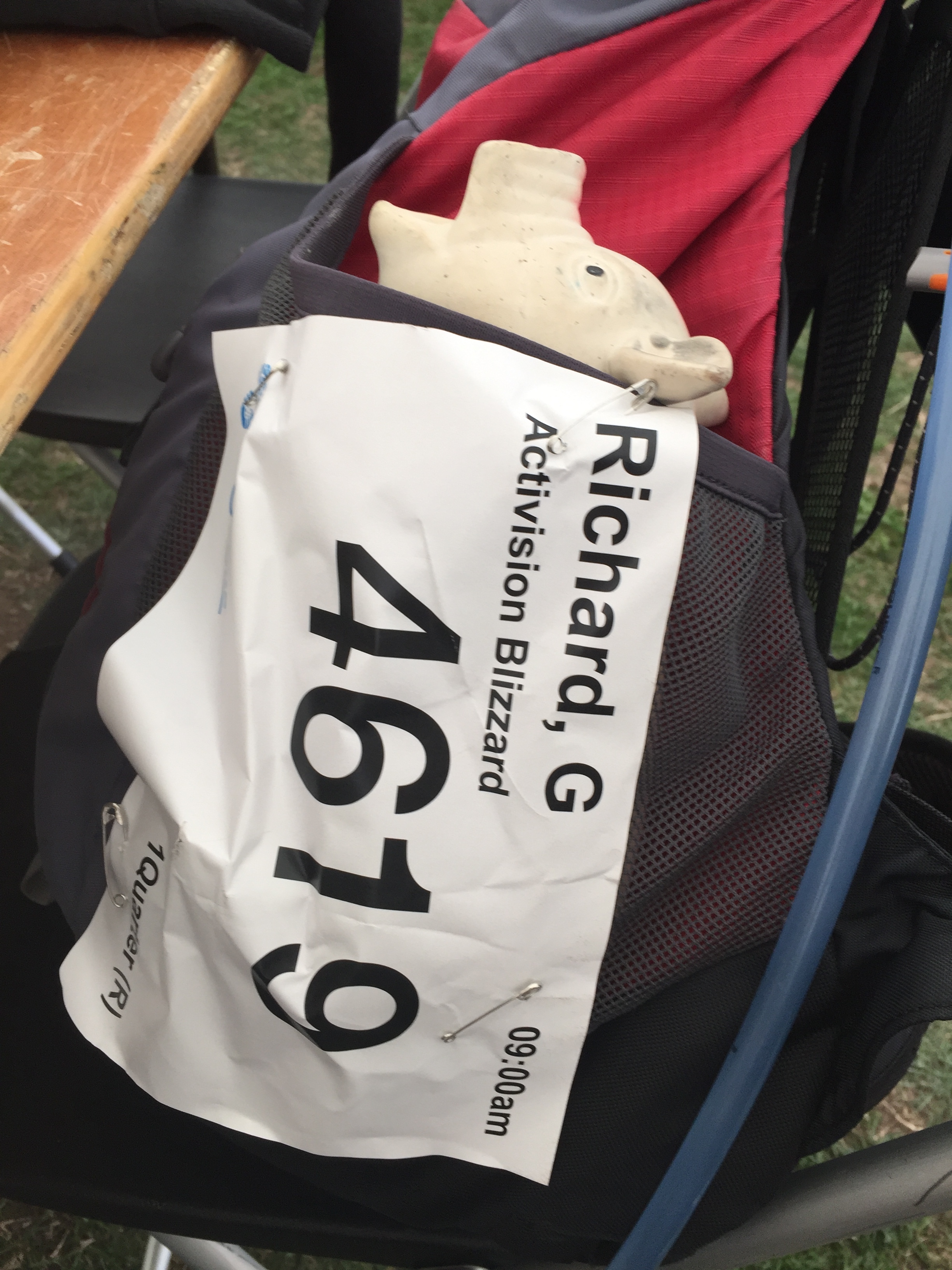
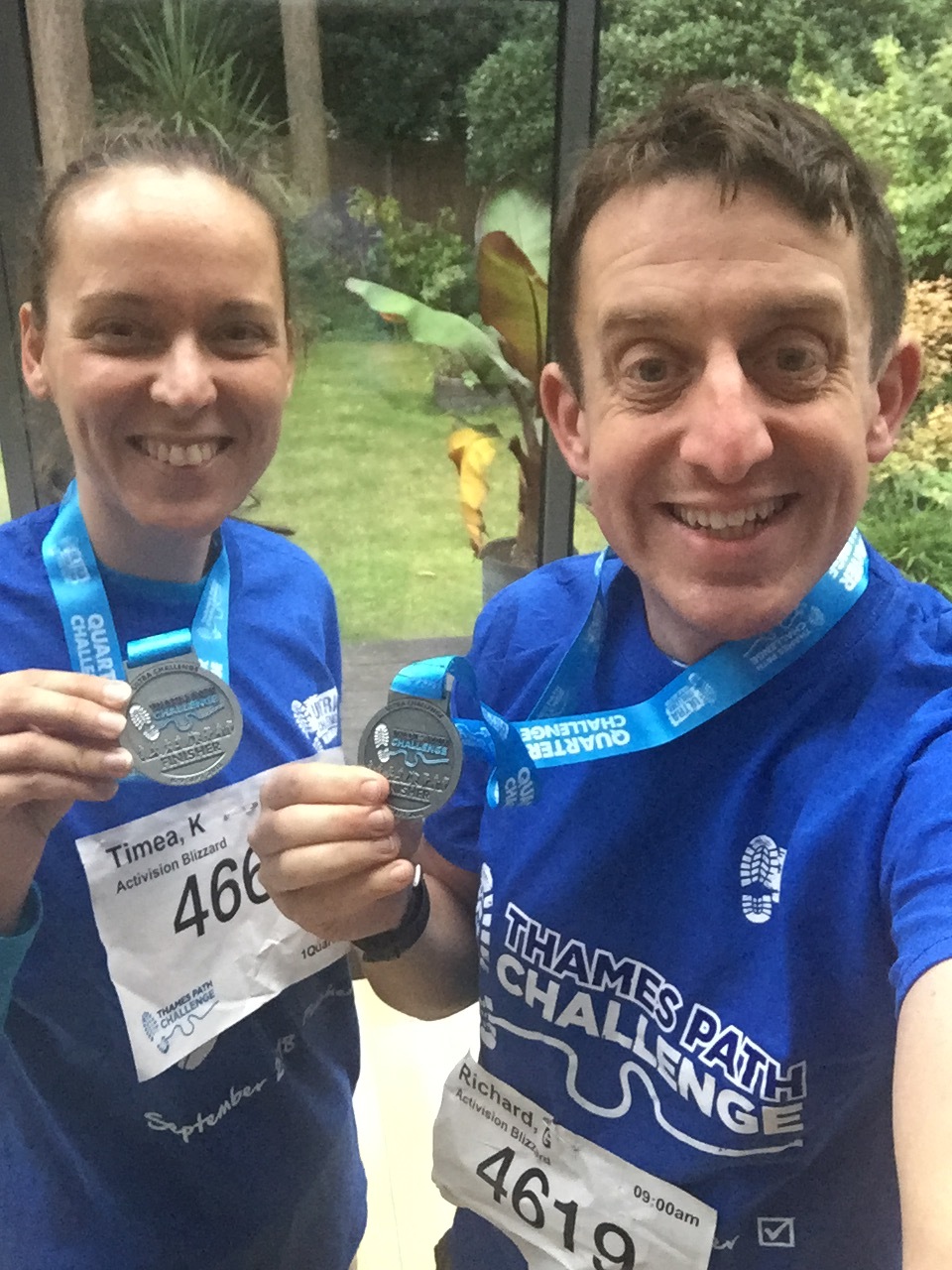
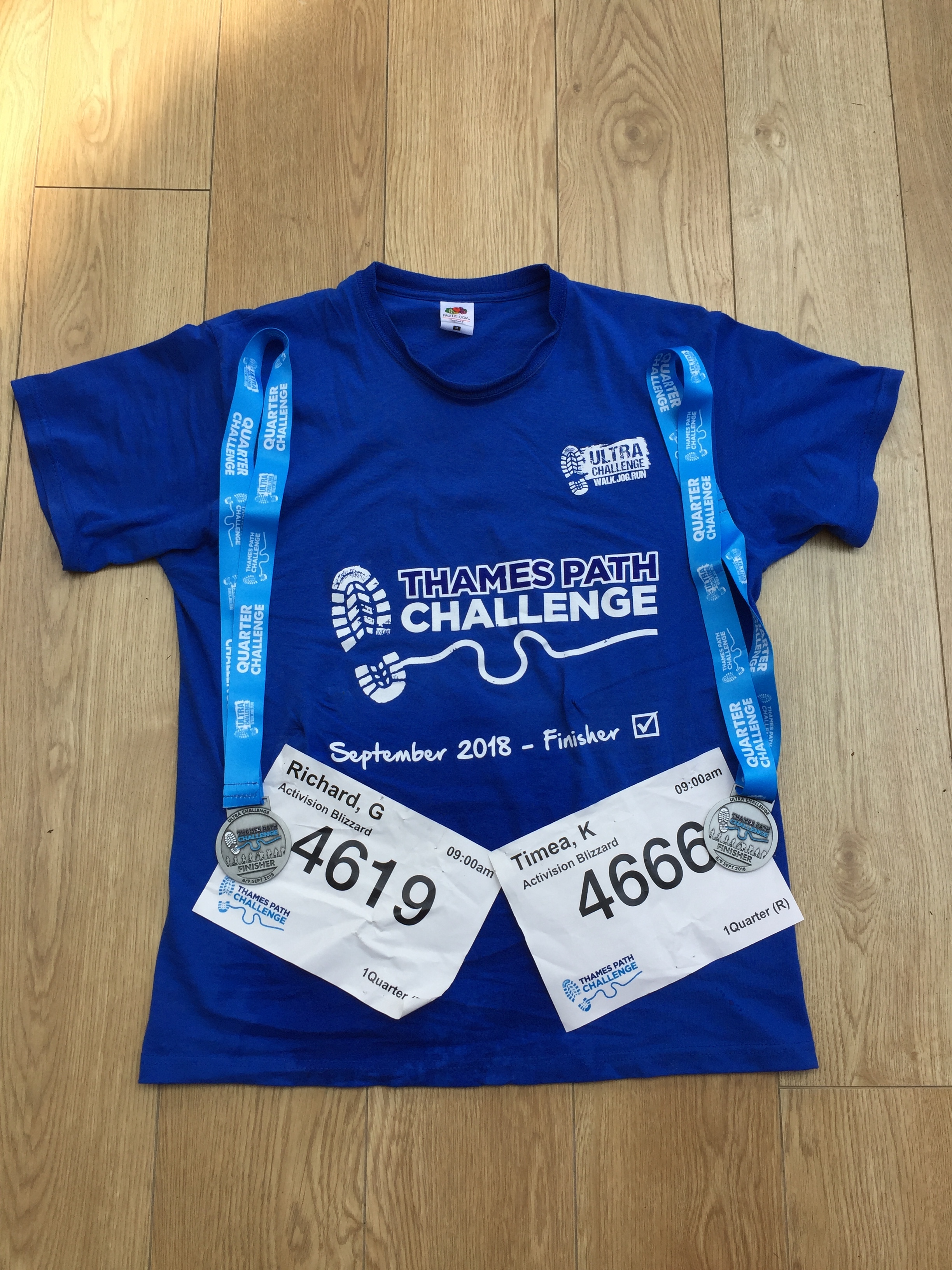
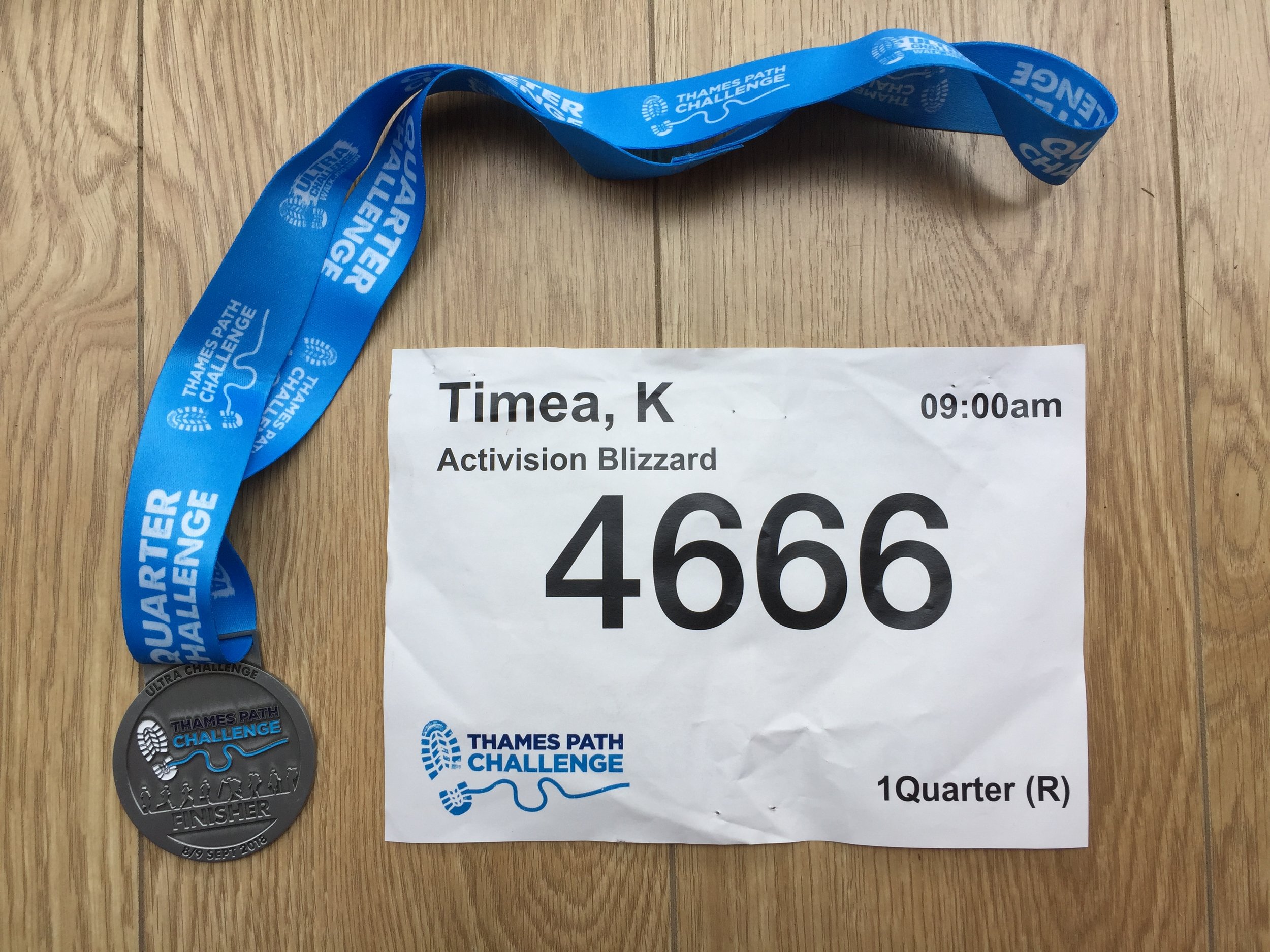
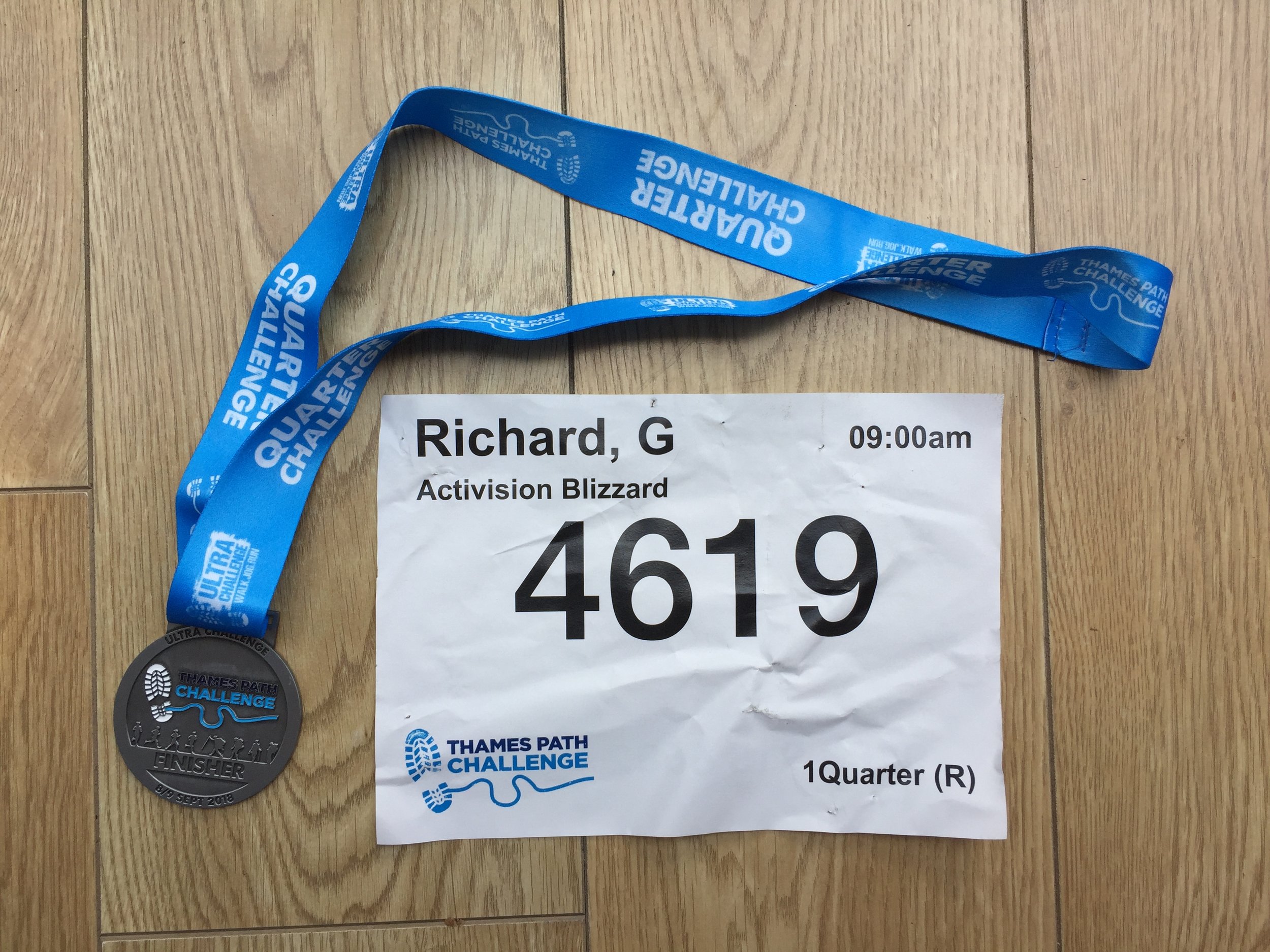
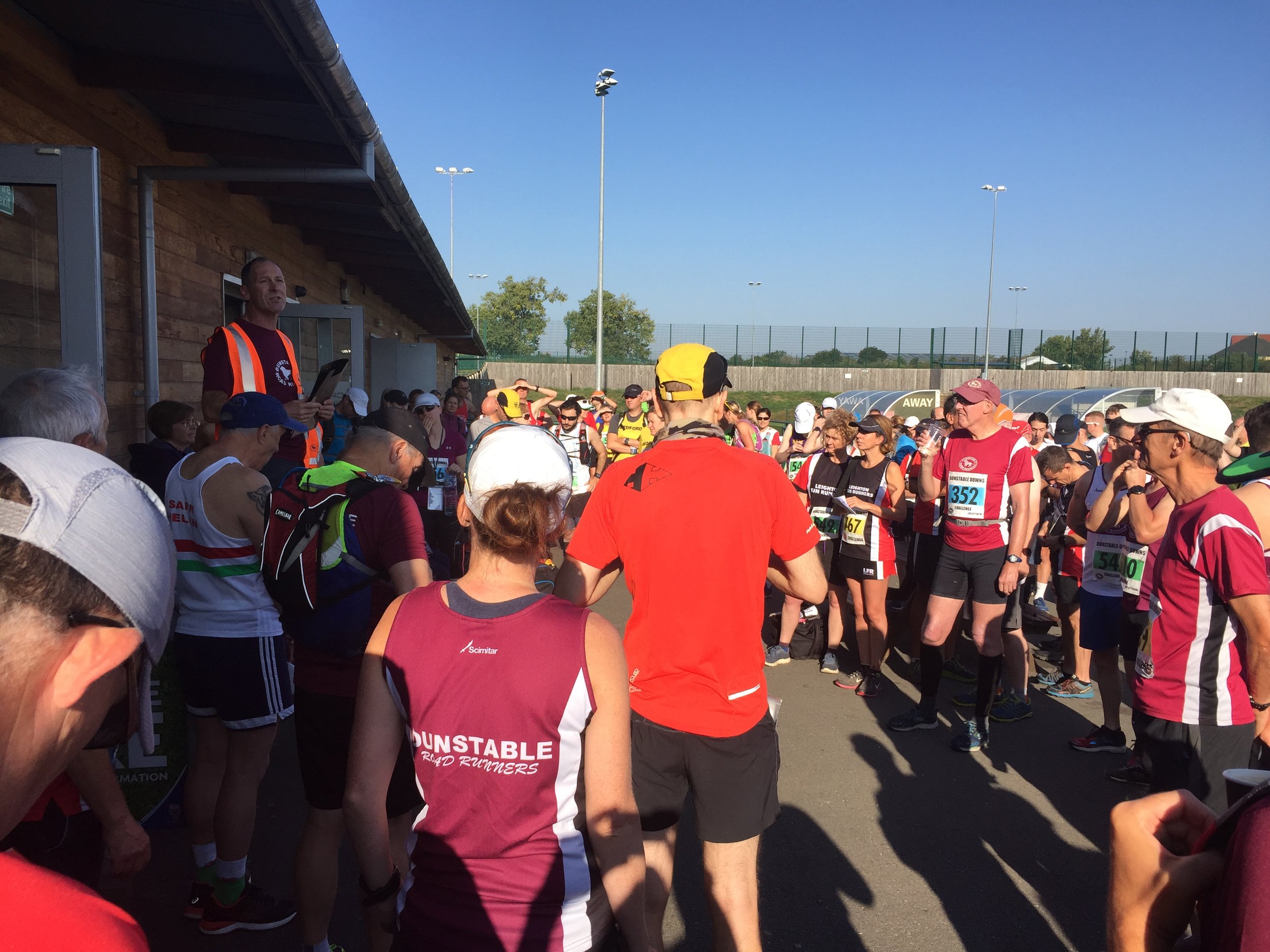
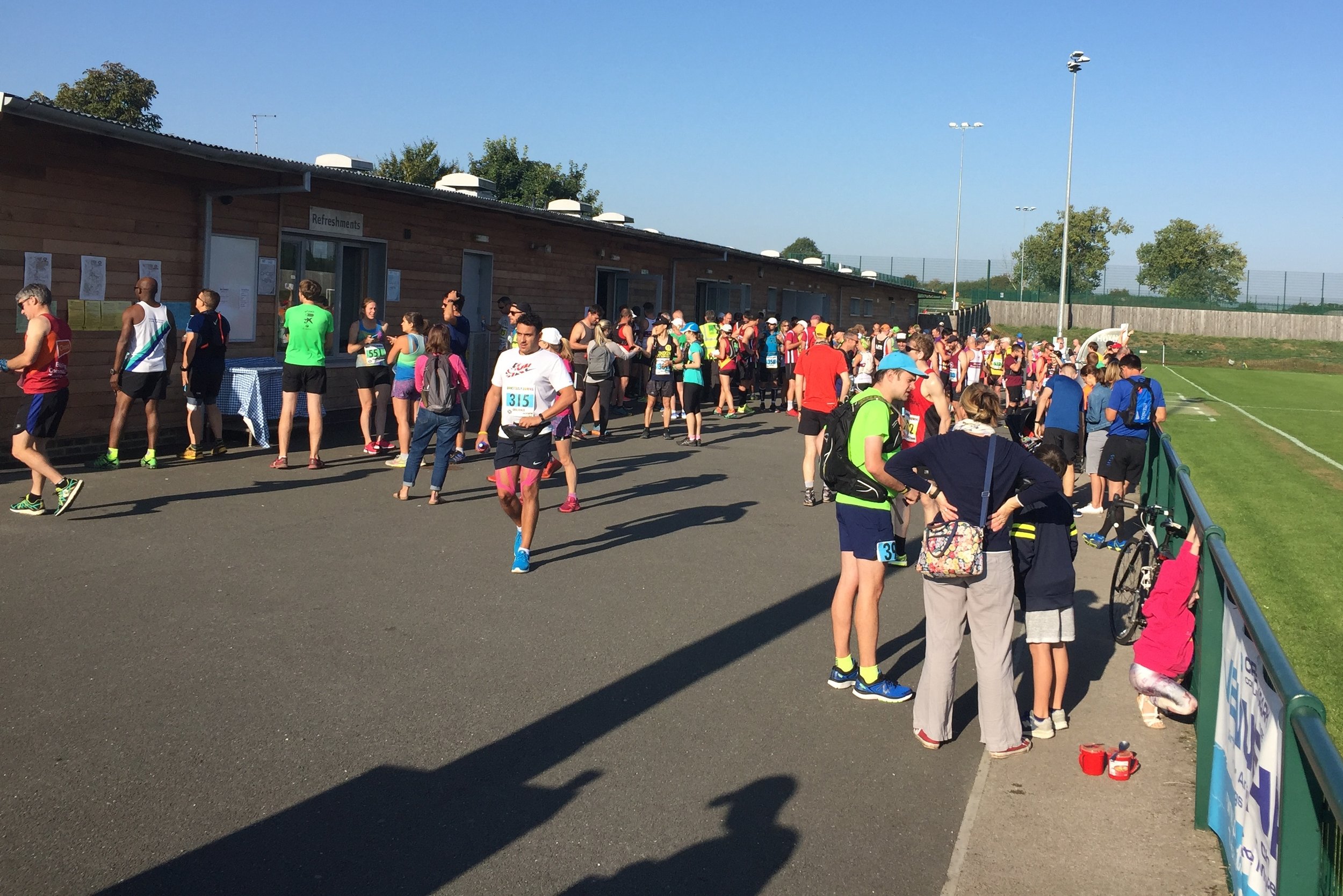
This was a return to the Thames Path for my first long-distance walk with Timea and the start of our training for next year's Camino. We were part of a group from Timi's company, Activision, some of whom did the 50k or 100k options. Just like the Threshold series that I'm more familiar with, this was a really well organised event from Action Challenges


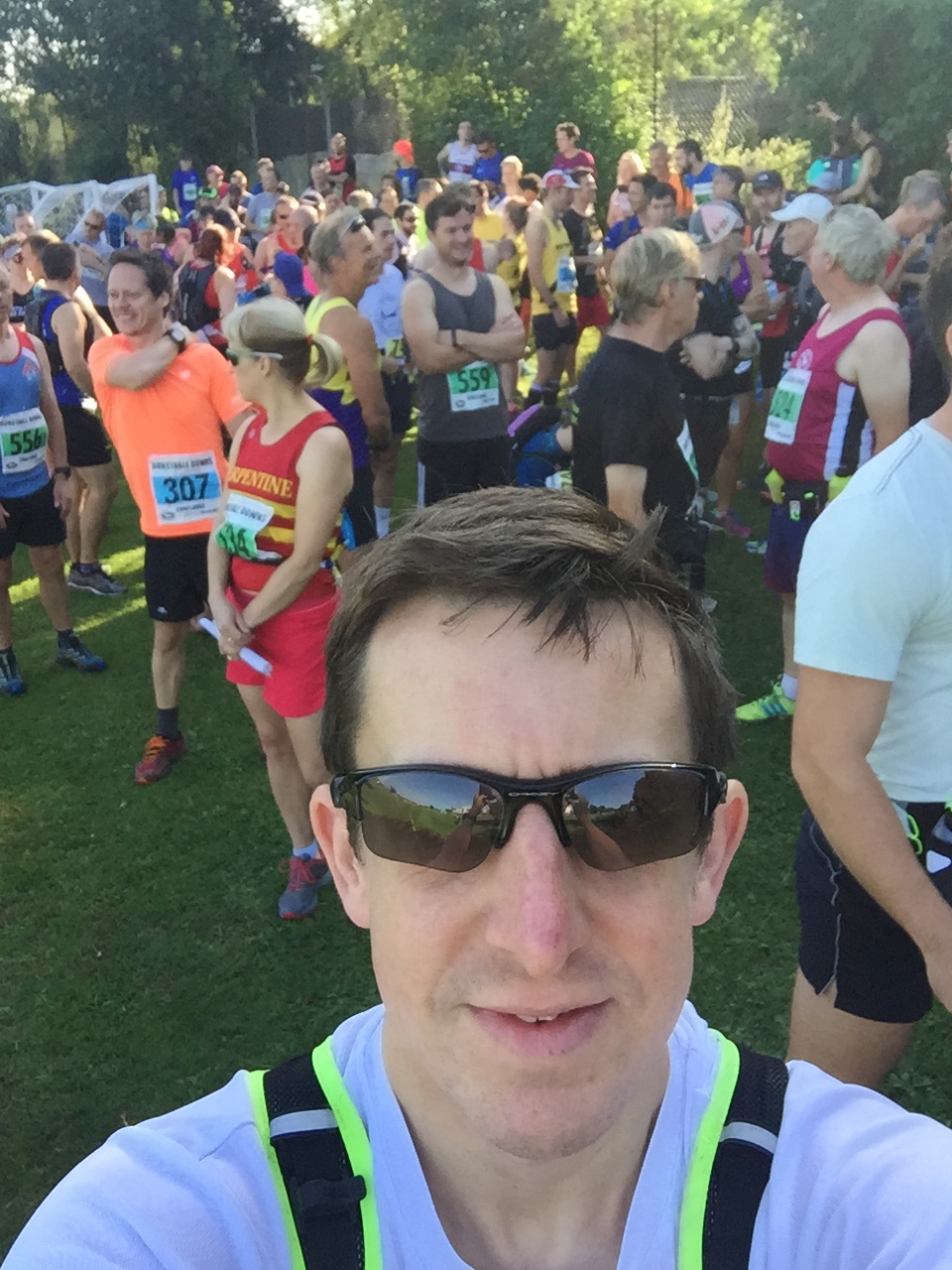
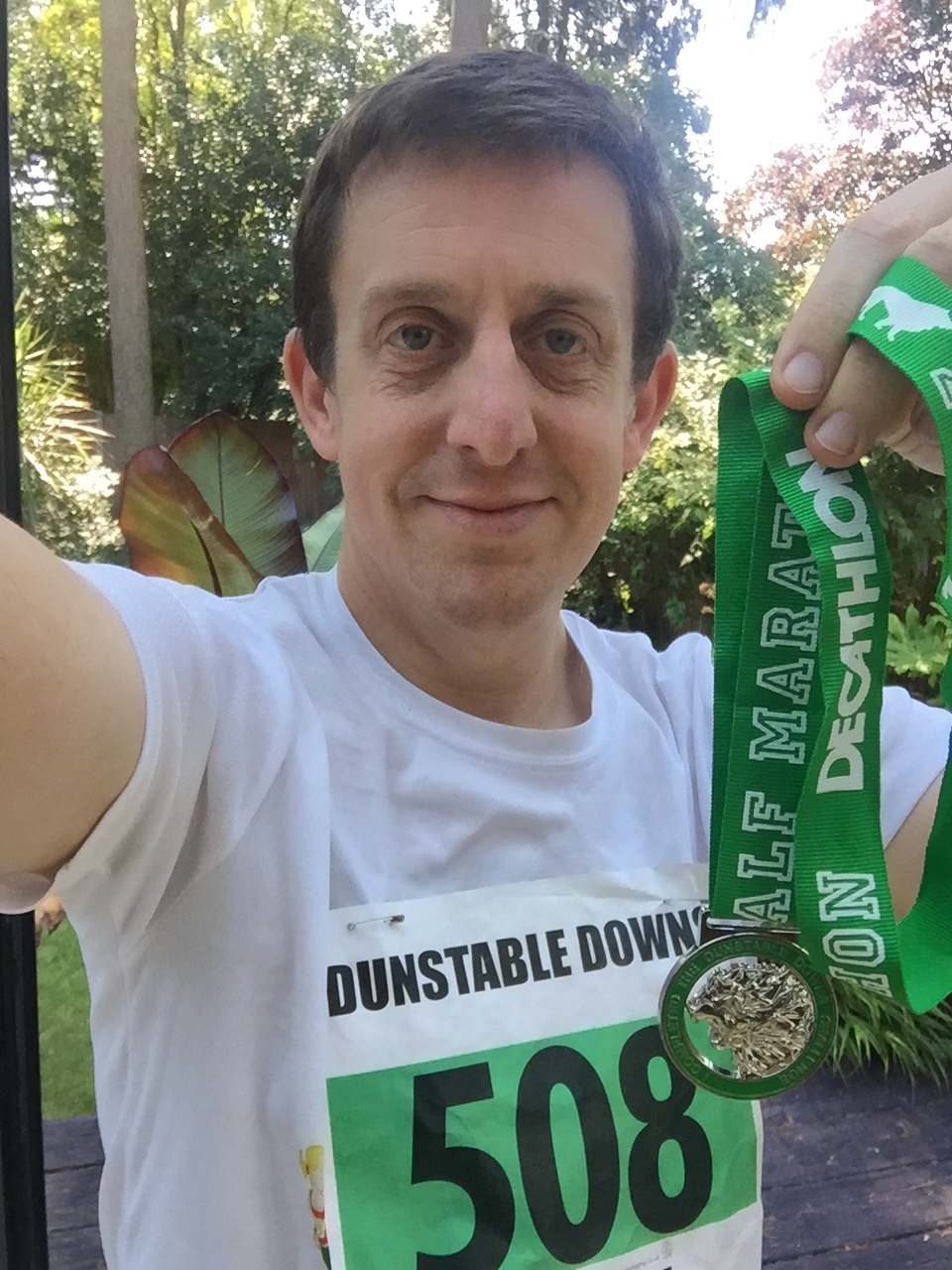
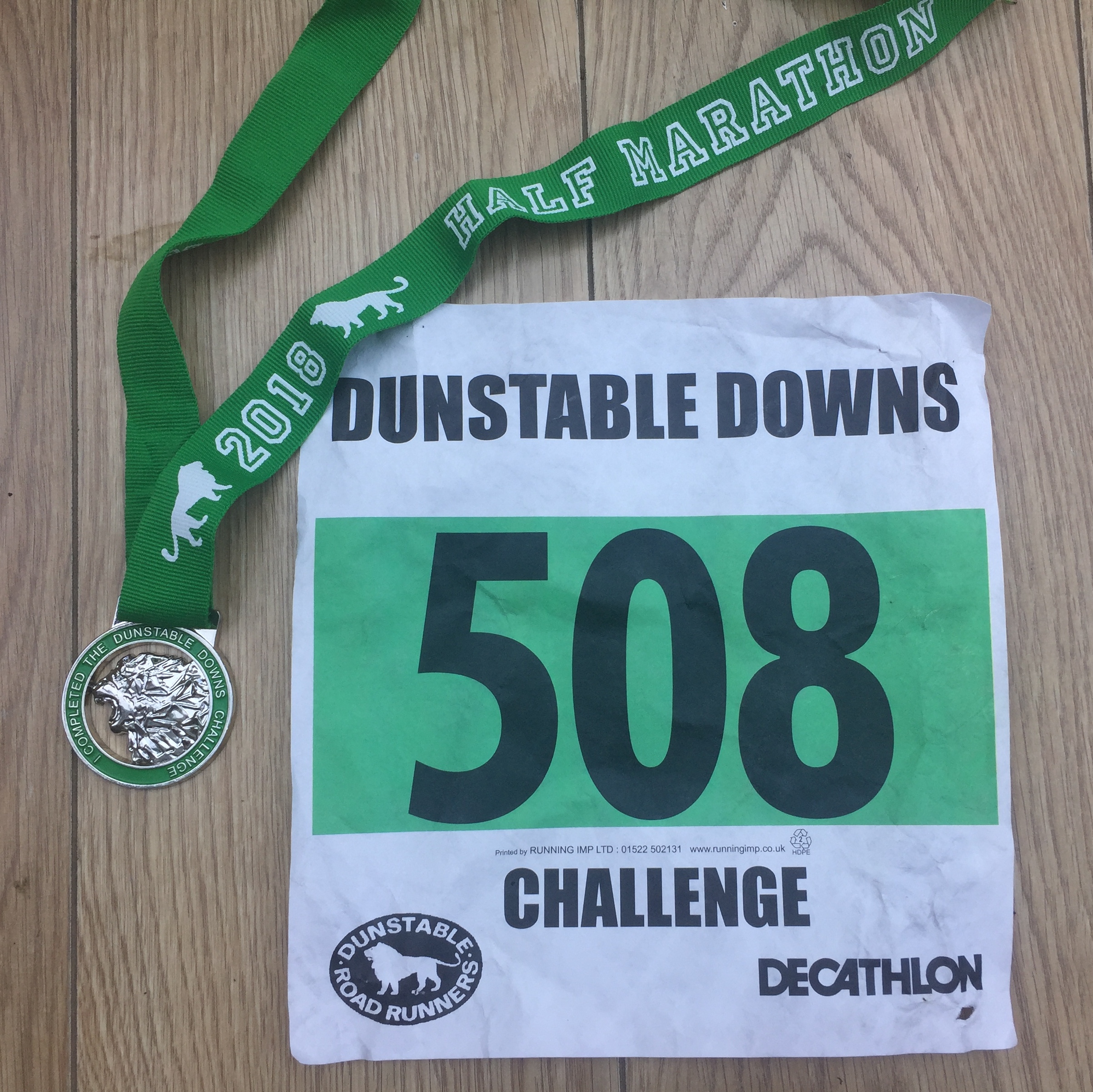
Dunstable Downs Trail Half Marathon

When: September 2nd 2018
Where: Dunstable Downs, Bedfordshire,  UK
Course: Single loop starting at Creasey's Park Community Football Centre, Dunstable, heading up over Dunstable Downs on the Icknield Way across the National Trust grounds. Loops back through Studham Common, returning to base back along the Downs. Lovely views.
Other routes touched (walk): Icknield Way, Chiltern Way
Other routes touched (cycle): Chilterns Cycleway
Finish time: 2 hours 11 mins (Hot + Hilly)

Cycling The River Crane & The Hounslow Baseline
IMG_8131.jpg


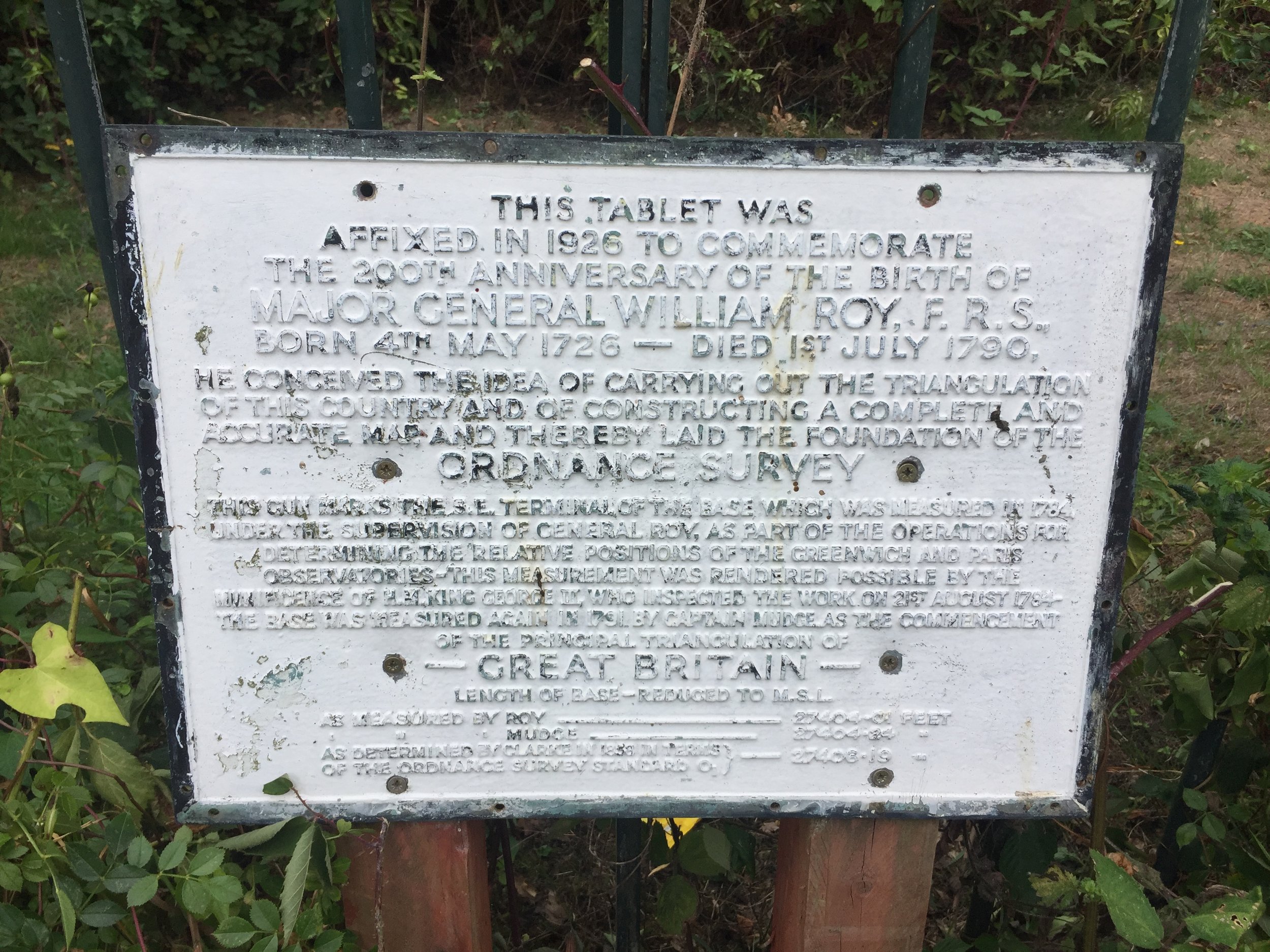
The idea for this trip came while reading Mike Parker's book, Map Addict. In his fascinating and funny account of all things map-related, Chapter 2 covers the very beginnings of the Ordnance Survey. Long before the Ordnance Survey officially existed, General William Roy pioneered the meticulous techniques that would later be used to map the entirety of the UK. His 1784 Hounslow Baseline was the very first highly accurate point-to-point measurement of its kind, chosen because of its proximity to the Royal Observatory at Greenwich and the extraordinary flatness of Hounslow Heath.

I won't go into the entire history of the triangulation of Great Britain, as Mike Parker's book is the perfect place to start. Instead, this post outlines a brilliant 50km circular cycle adventure that explores the historic Hounslow Baseline and the nearby River Crane.


The River Crane

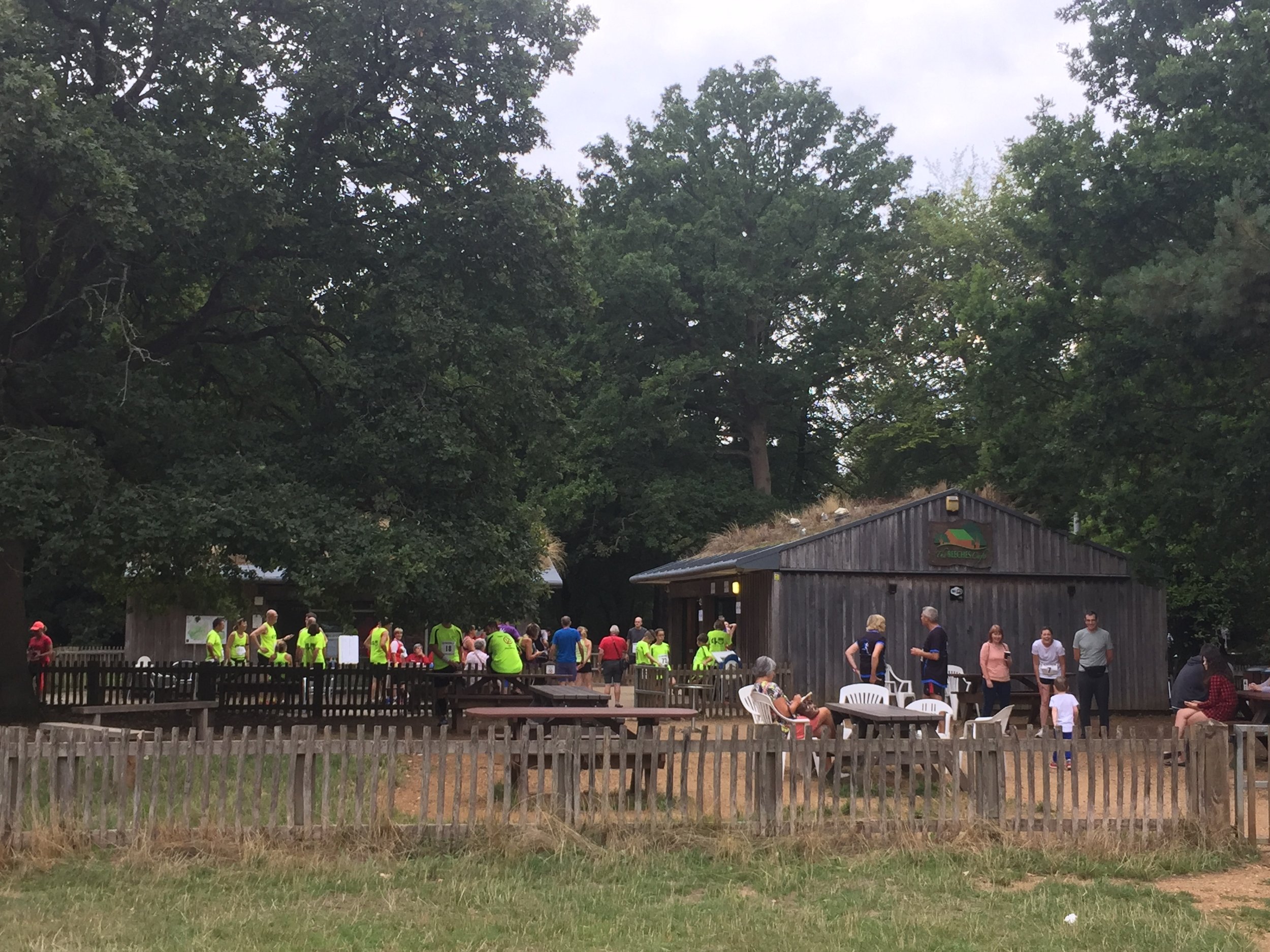
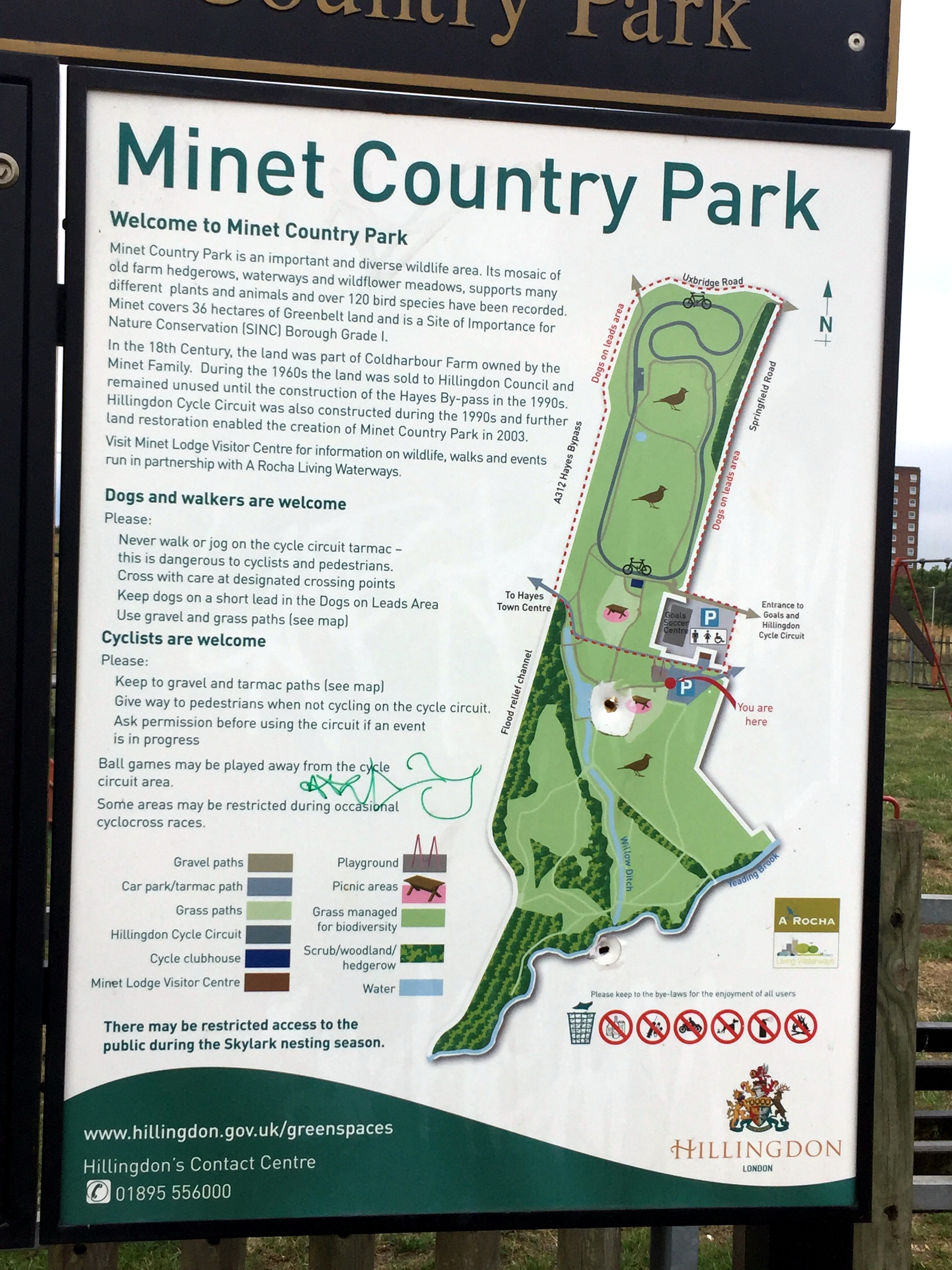
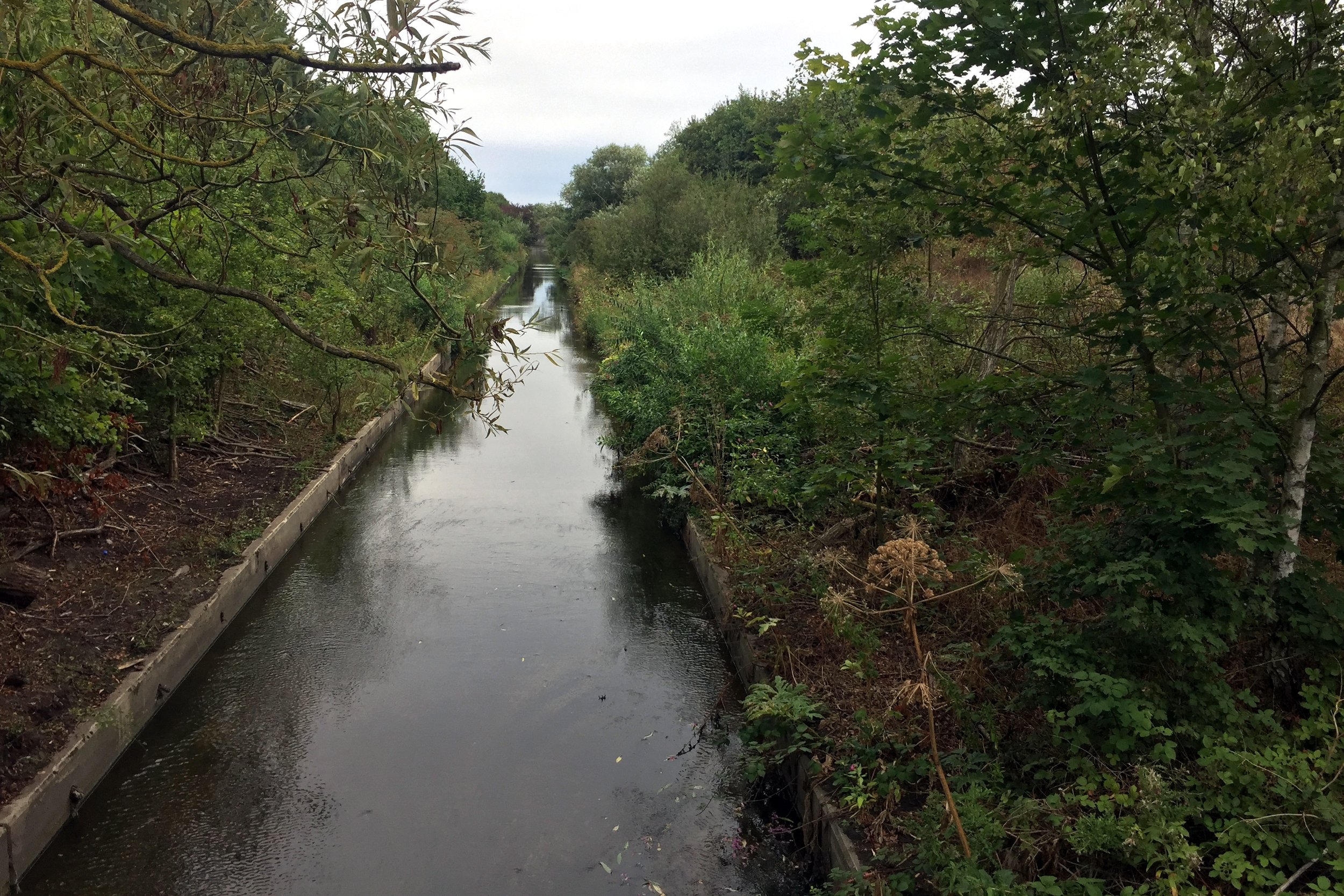
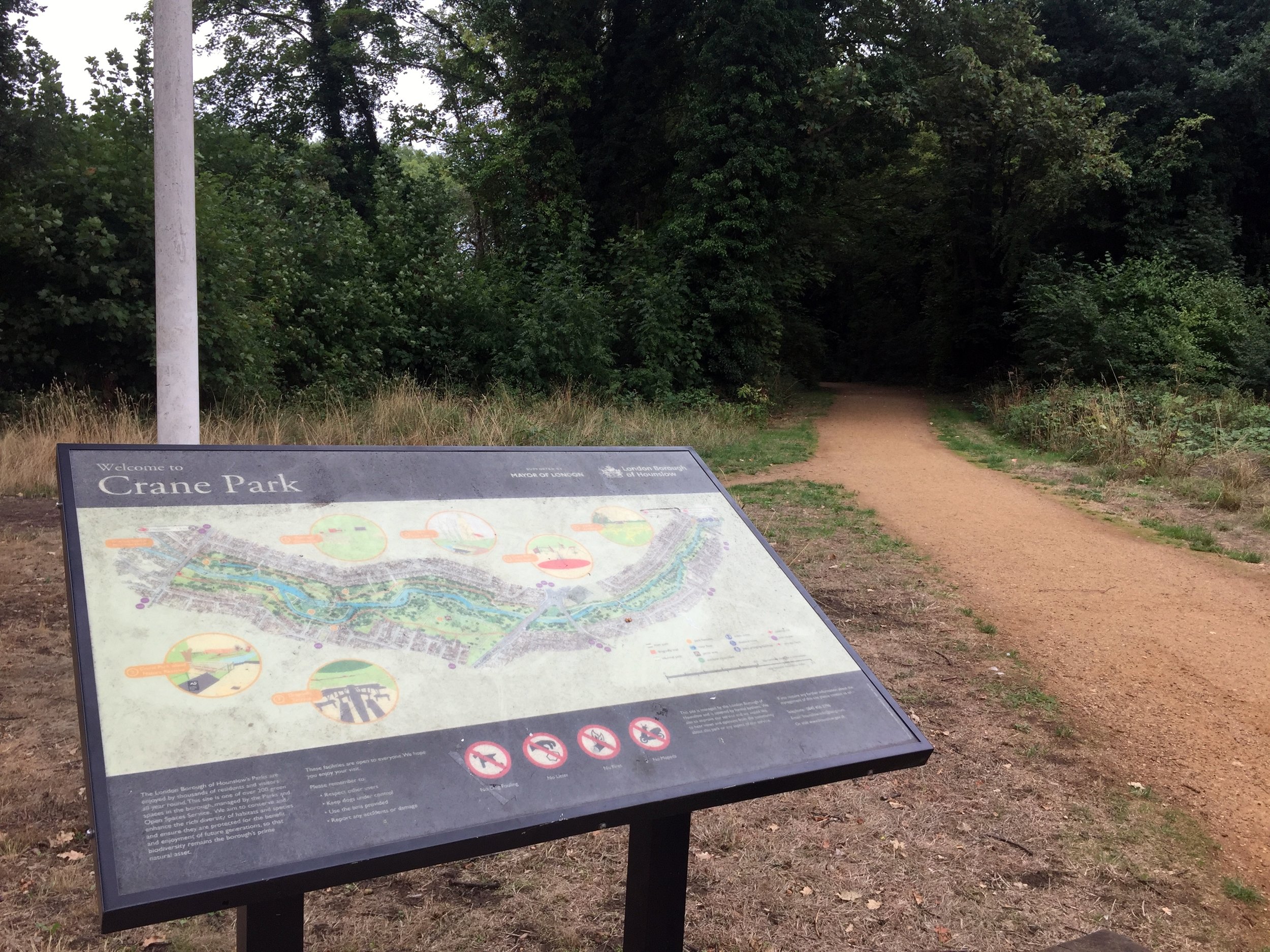
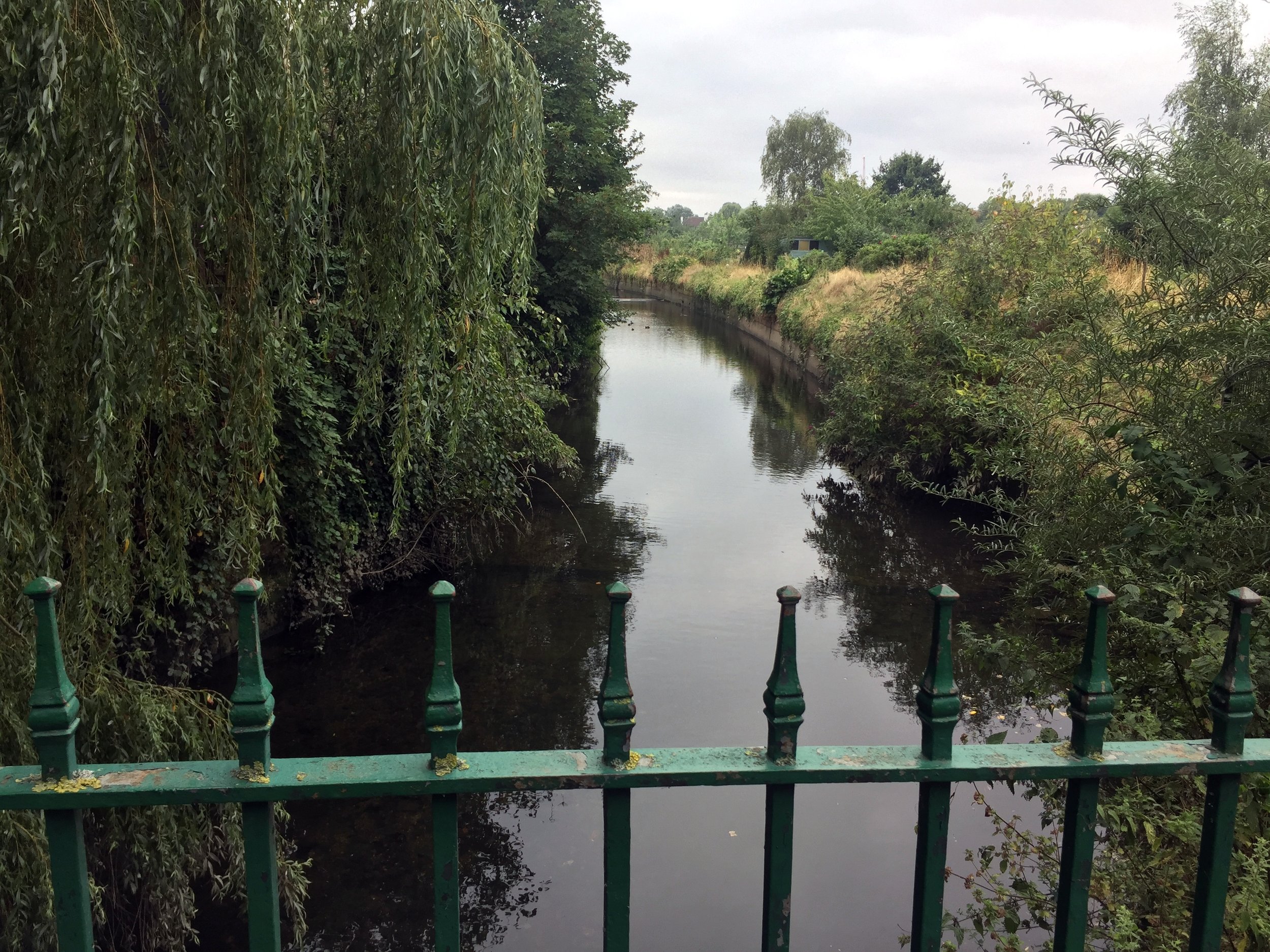
The best place to start is the car park at Minet Country Park in Hayes. A few hundred metres west, you will cross a bridge giving you your first sight of the River Crane (which is actually known as the Yeading Brook further upstream before it officially becomes the Crane).

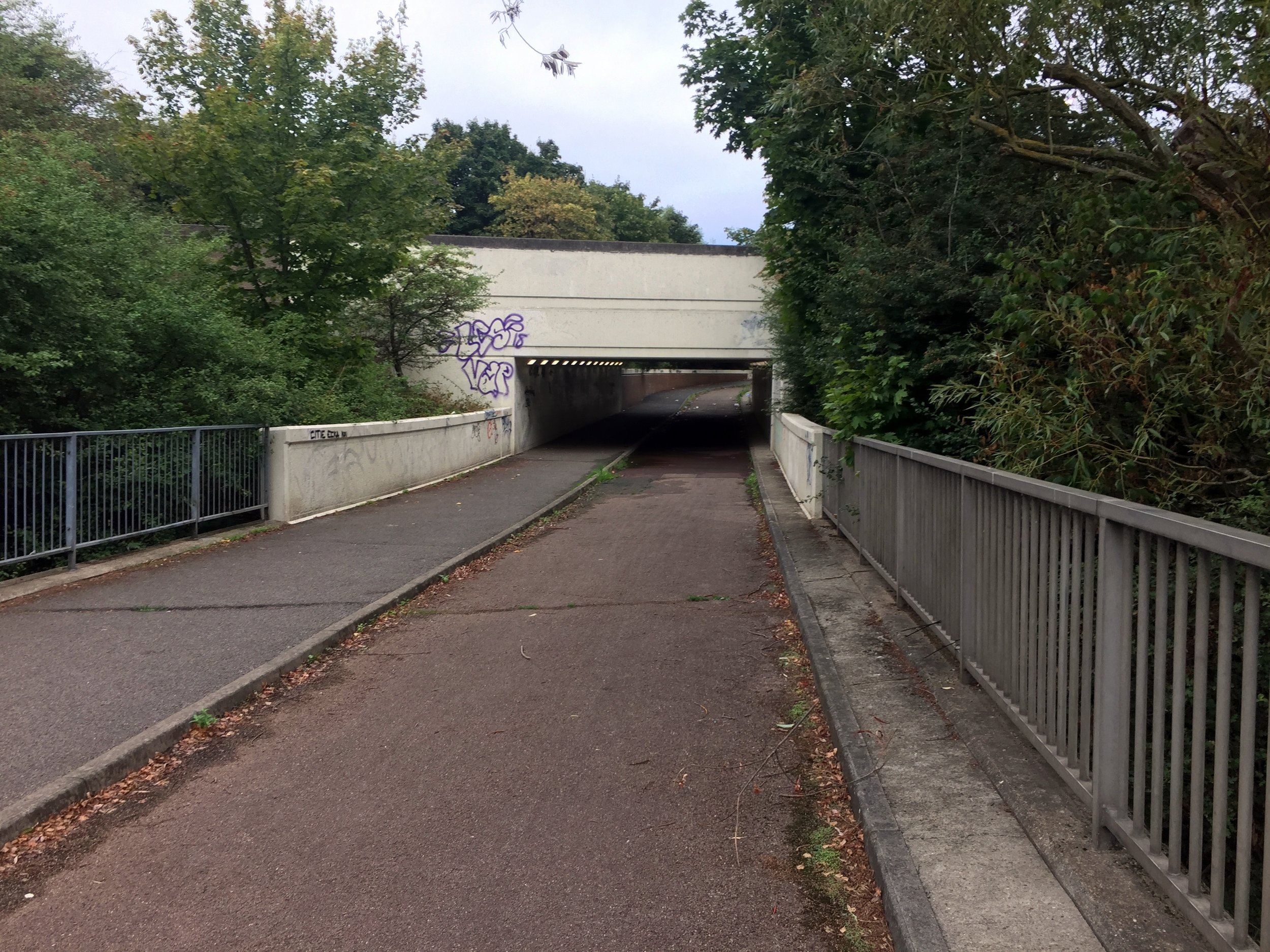
From the bridge, continue north-west through the Parkway underpass, then take a left and follow the cycle path running parallel to the Parkway. This crosses over the Grand Union Canal and the mainline railway. Don't forget to marvel at the sprawling industrial wasteland along the way! Once over the canal, you will join the well-signed London Loop, which you can easily follow for much of the river's route.

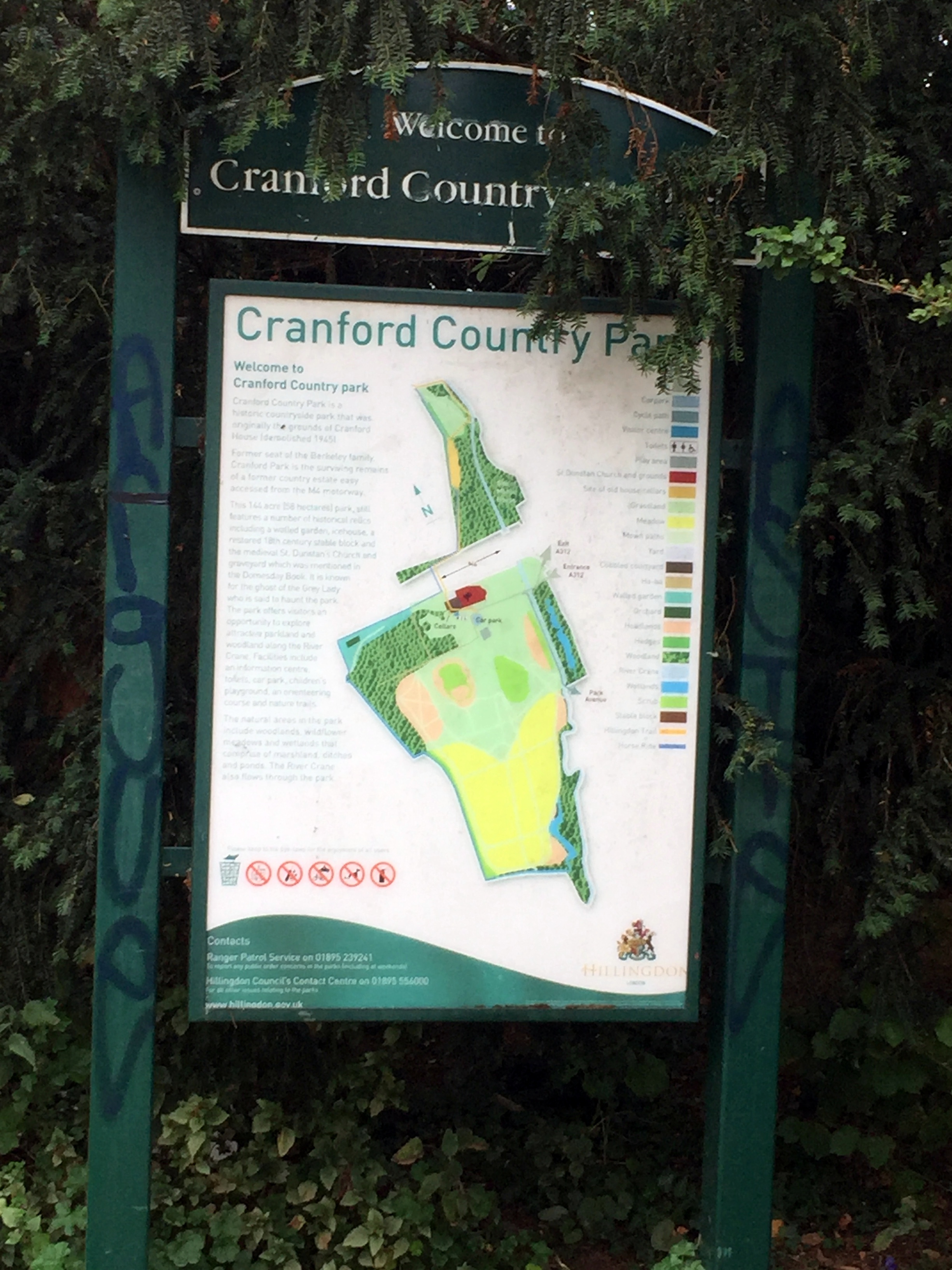
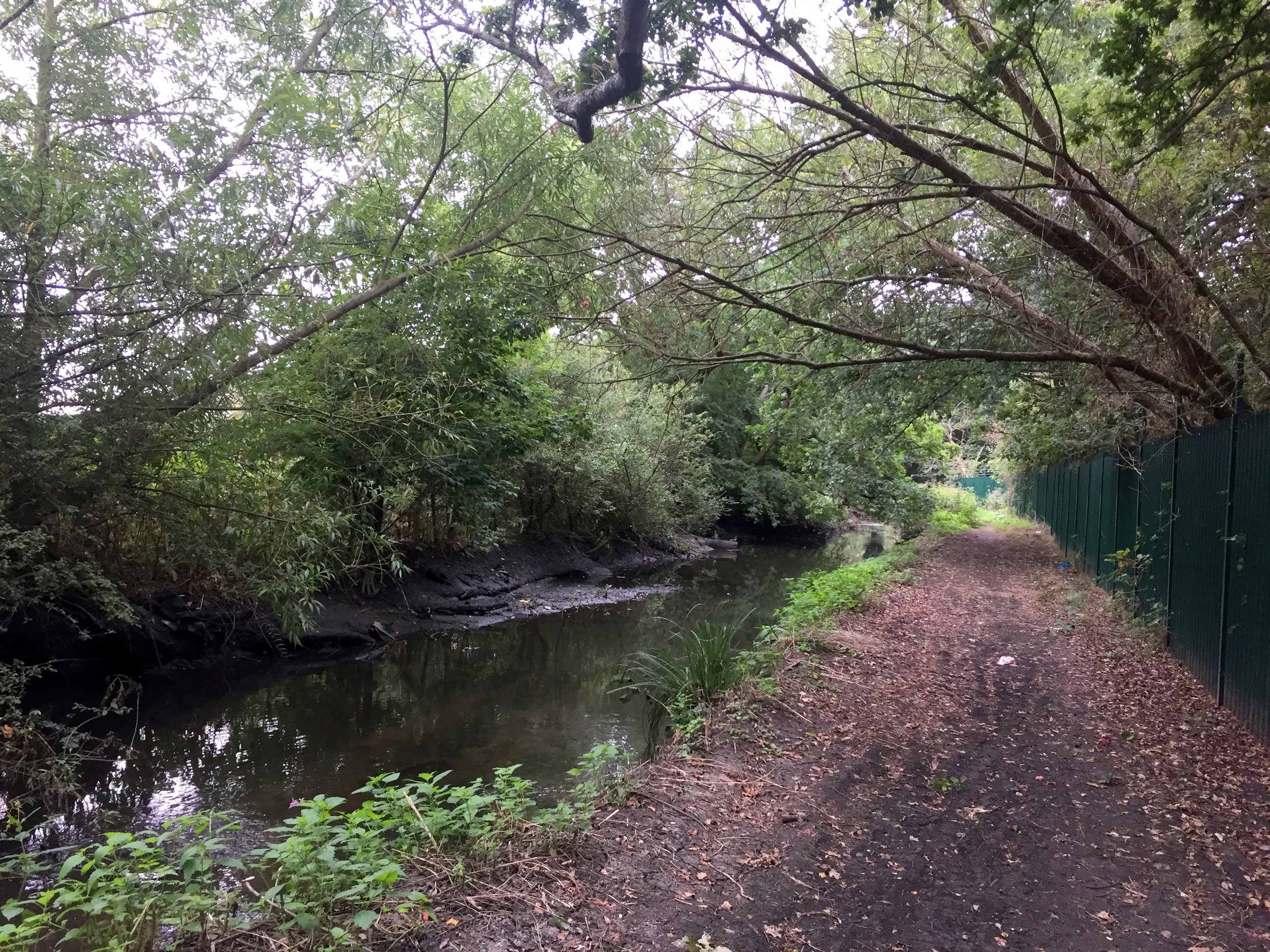
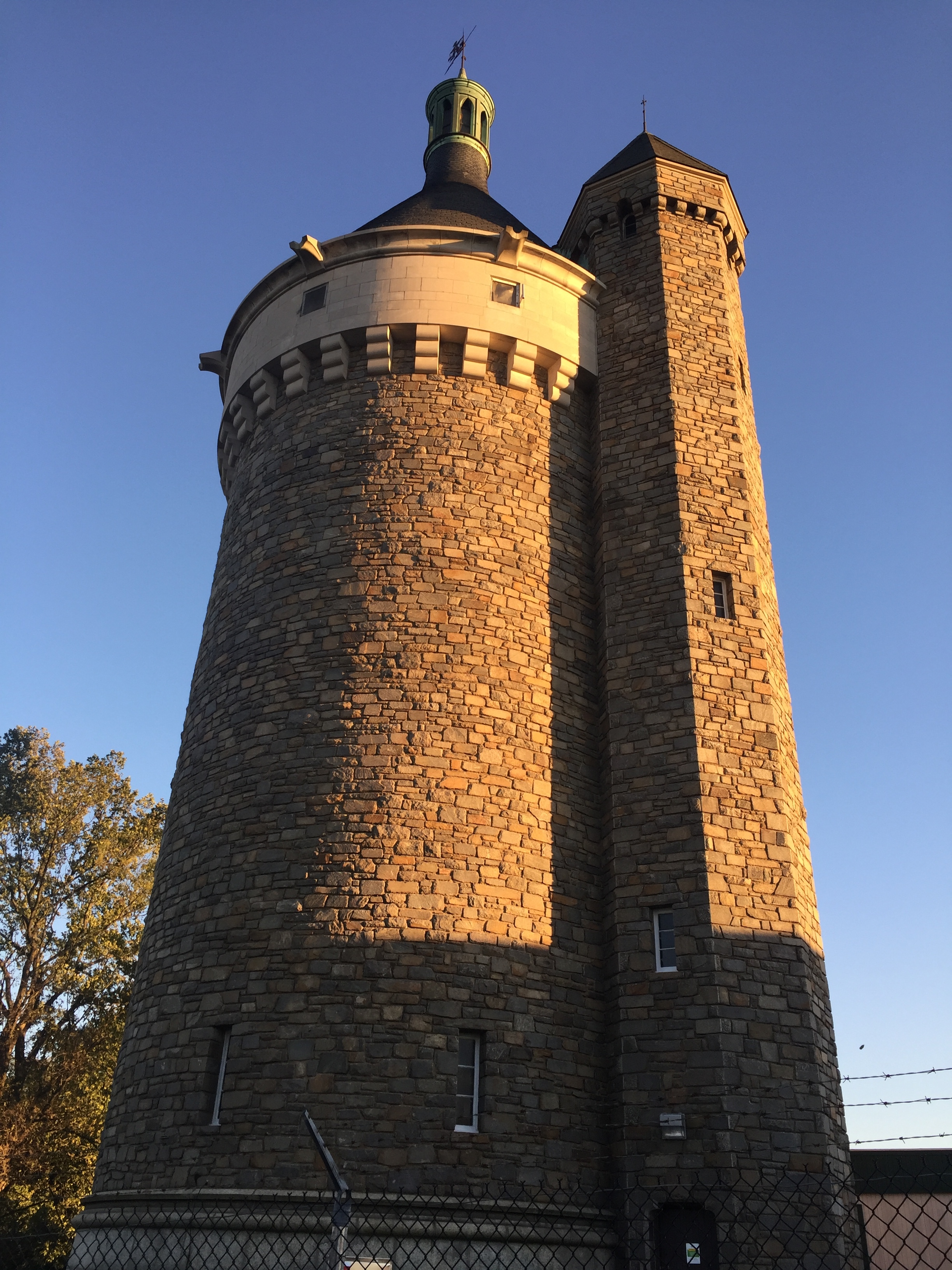
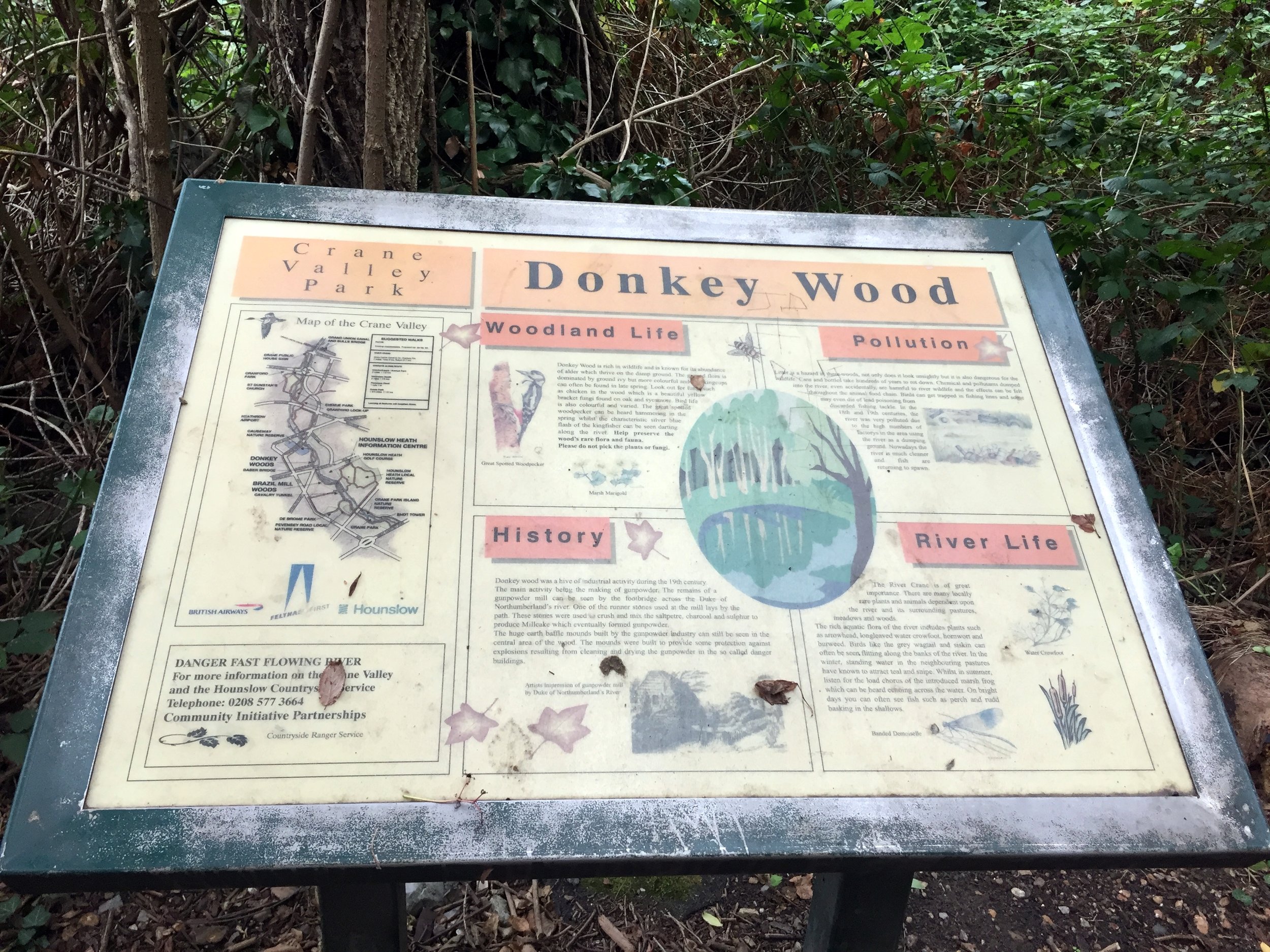
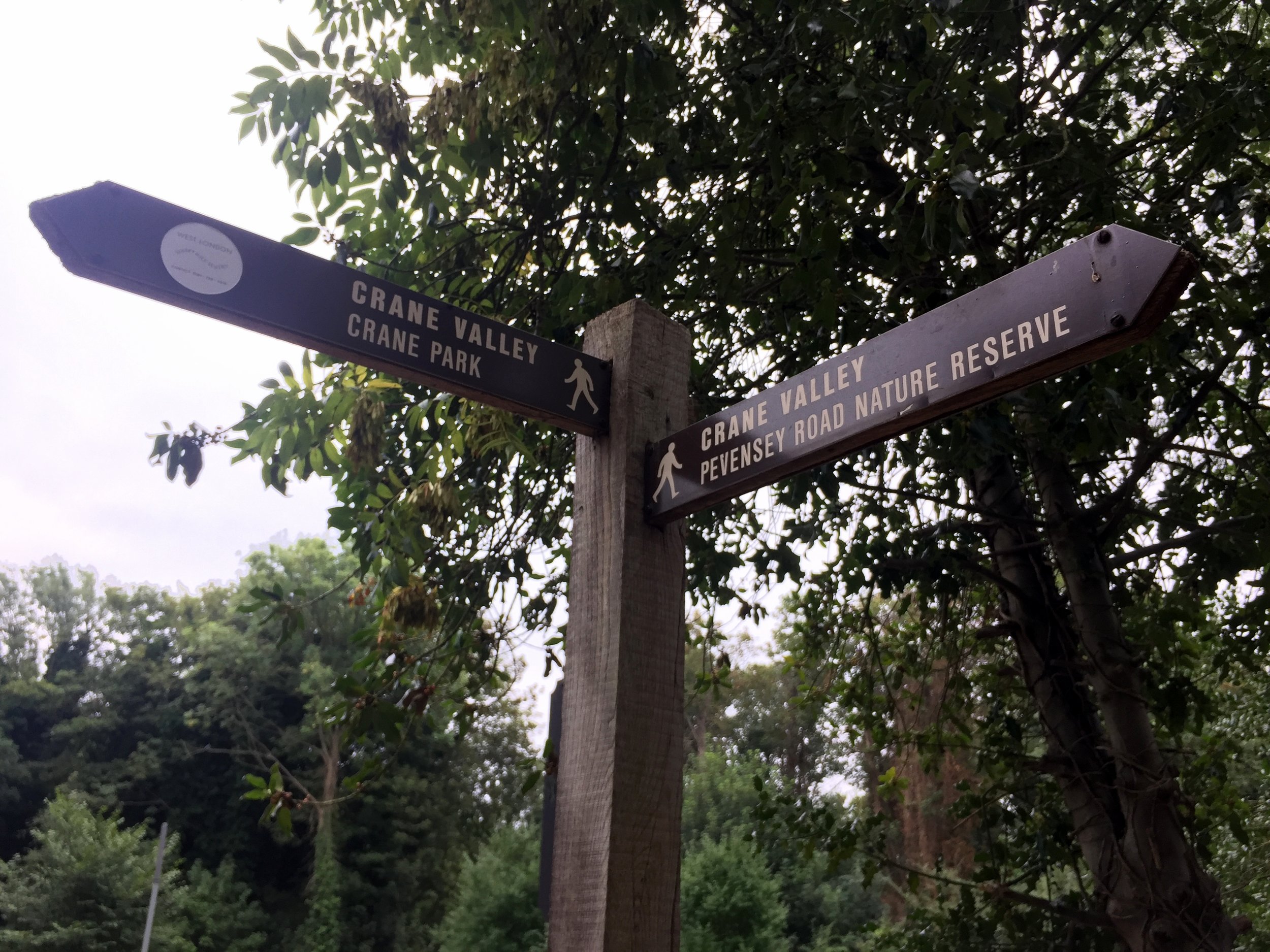
The route dives into Cranford Park, the first in a brilliant chain of green spaces that hug the Crane. Once you cross the busy A30 (you will likely have to cycle west for a short distance to safely use the crossing), the path strings together The Causeway, Donkey Wood, and Brazil Mill Meadows before delivering you into Crane Park, home of the local Crane parkrun! Crane Park is steeped in history; it was once the site of the notorious Hounslow Gunpowder Works. Look out for the imposing 18th-century brick Shot Tower built beside the water, a stark reminder of the area's explosive past.

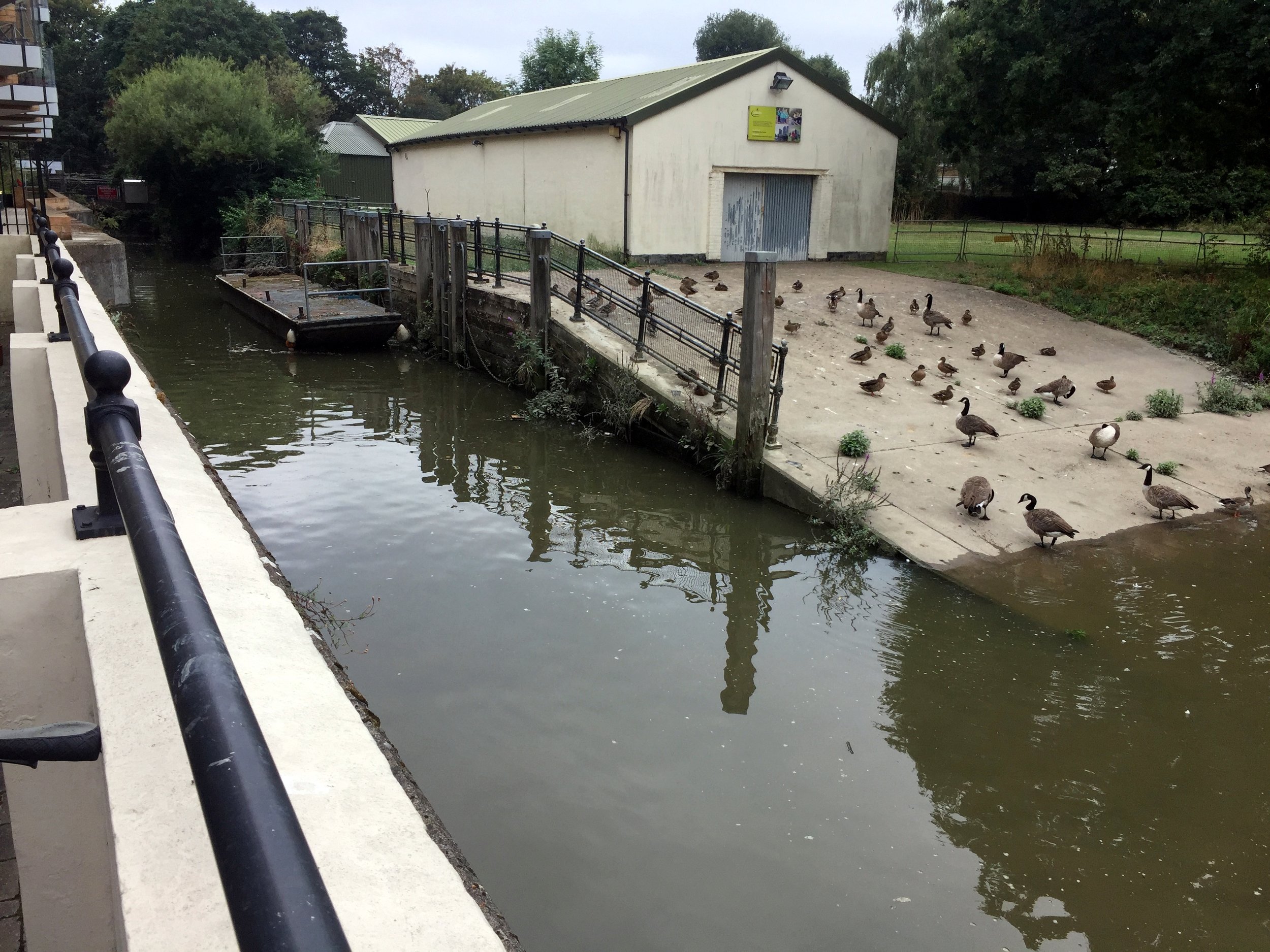
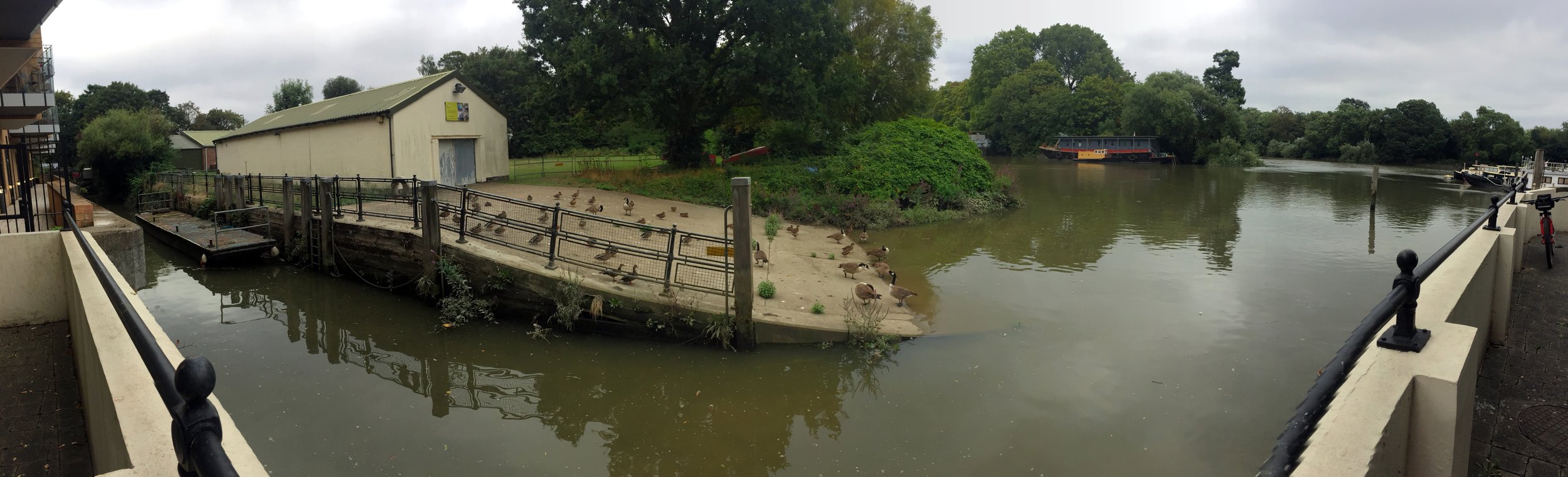
After Crane Park, the London Loop officially diverts away from the river, so you will need to rely on your GPX file to navigate through several residential Twickenham streets to stay close to the water. Eventually, the Crane meets the River Thames next to an apartment block off Railshead Road.


The Thames Path & Capital Ring at St Margarets

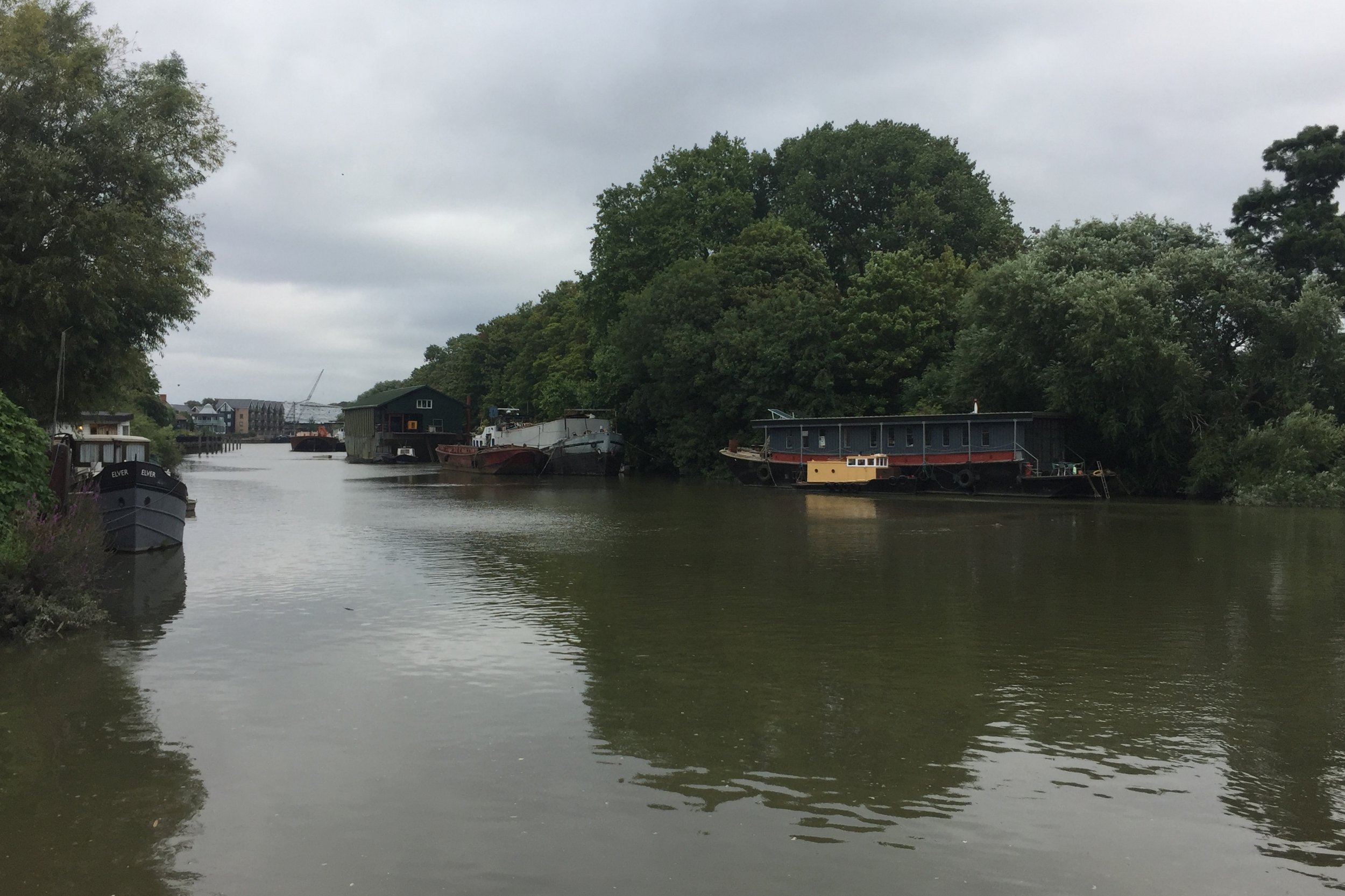
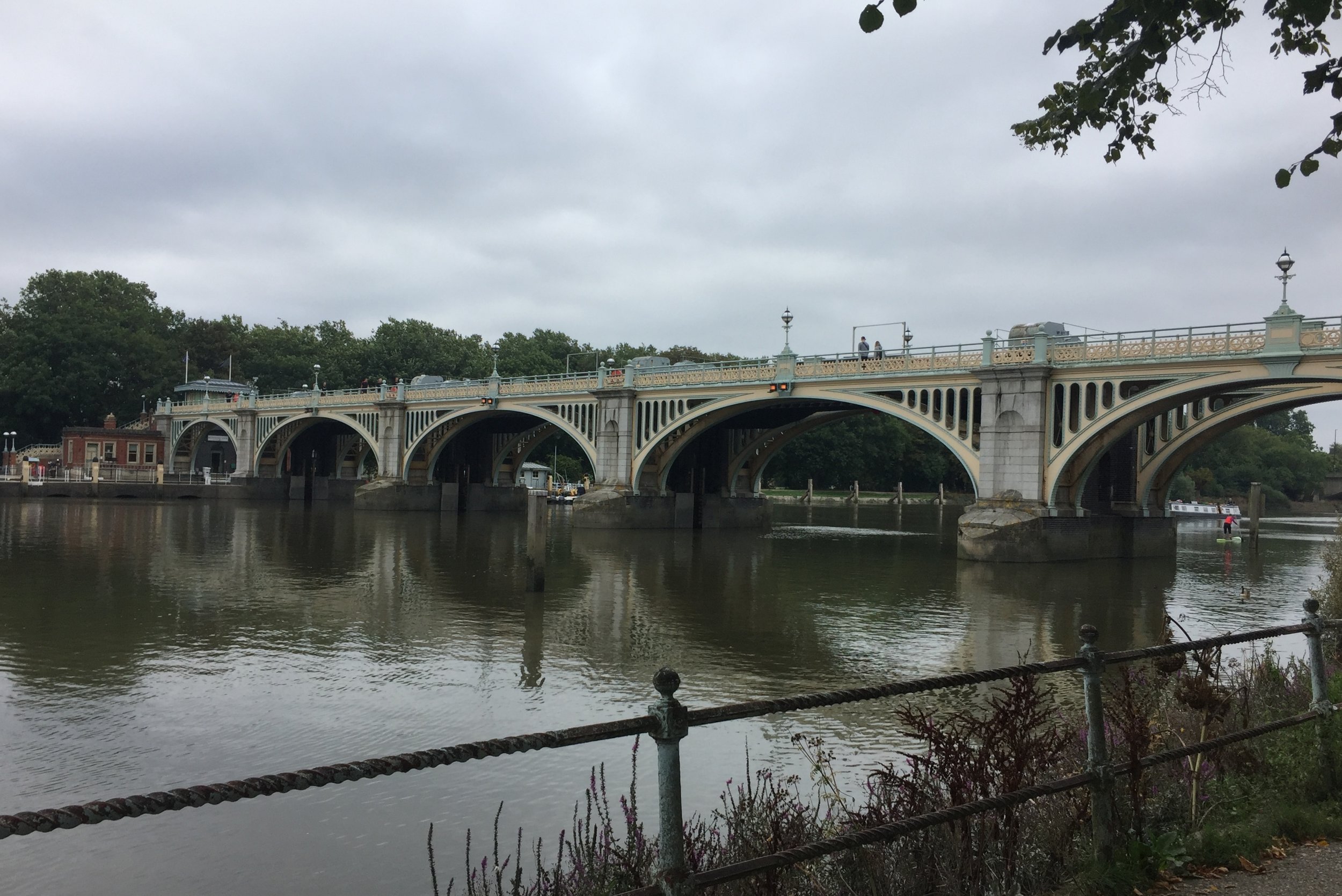
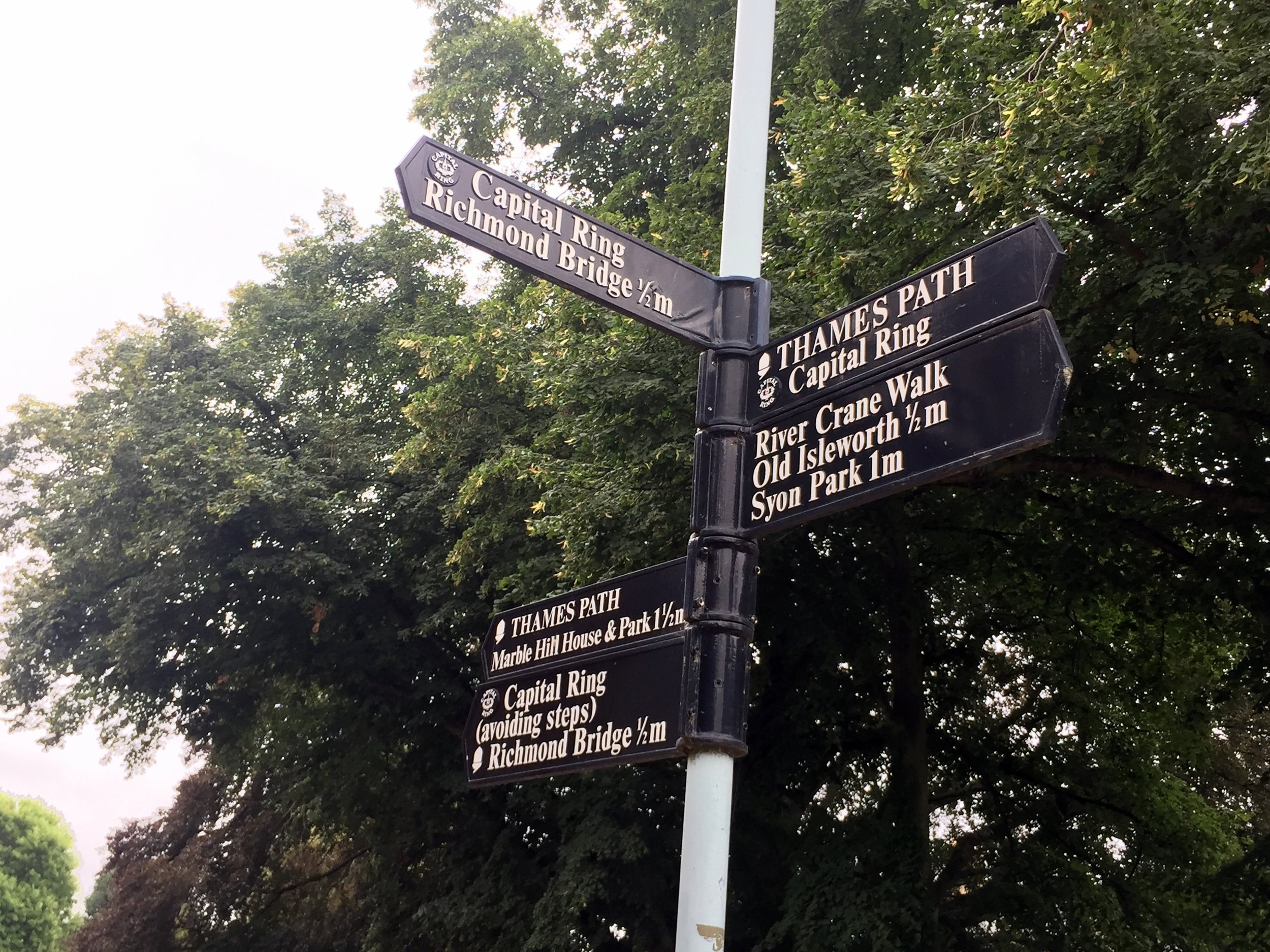
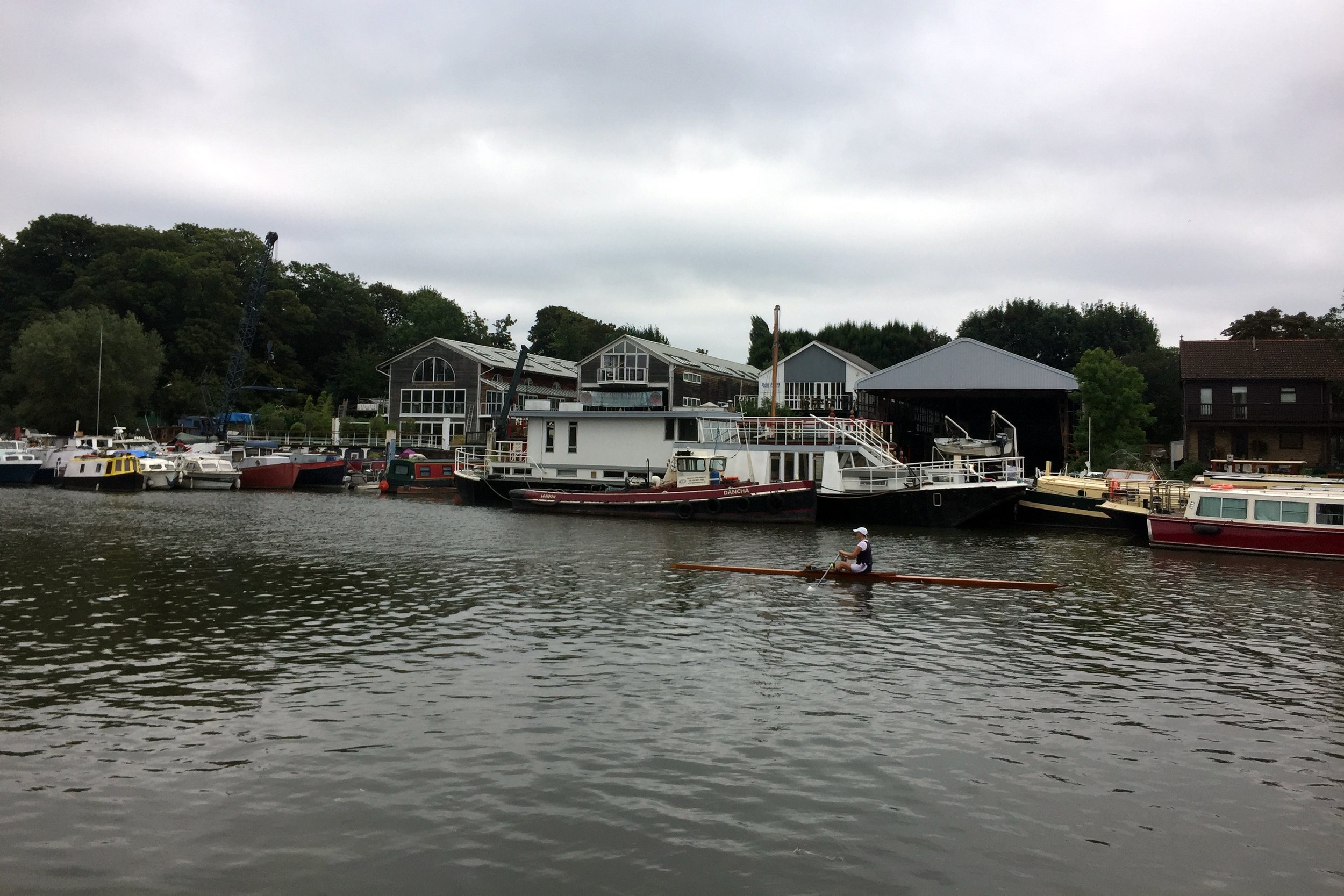
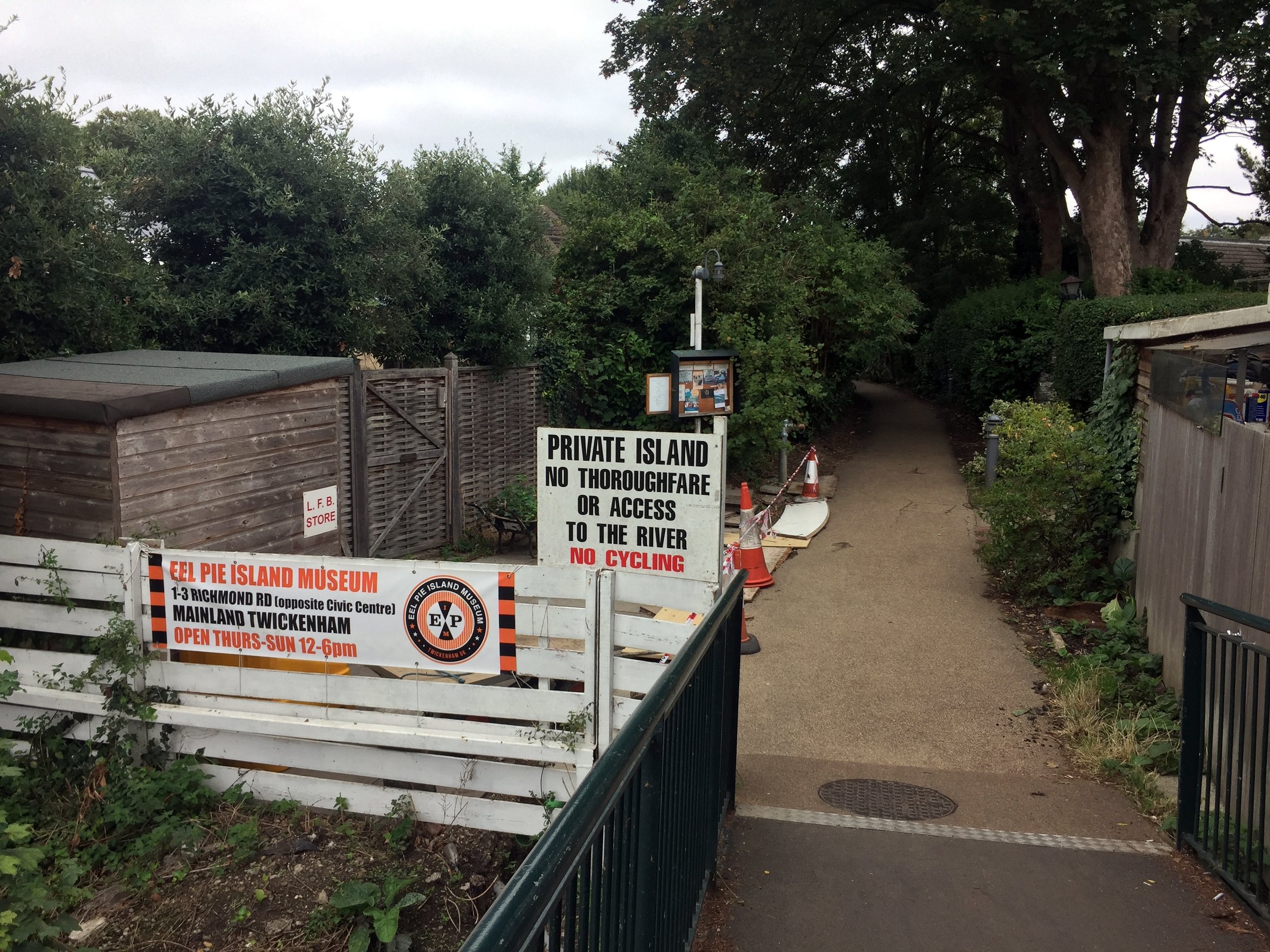
From the end of the Crane, there are two options to get you over to the Hounslow Baseline: a direct but busy road route, or a marginally longer but far more scenic trip along the Thames Path. Taking the Thames Path (as I did) briefly links you up with the Capital Ring. A stop at the famous Barmy Arms pub and a quick view of Eel Pie Island—the legendary 1960s hangout for bands like The Rolling Stones and The Who—makes for a perfect halfway rest stop.

After navigating the local roads away from the Thames up to the A312 (Uxbridge Road), keep an eye out for a small footpath near a zebra crossing. This path leads into a quiet cul-de-sac called Roy Grove, which is home to the south-eastern end of the Hounslow Baseline.


The Hounslow Baseline

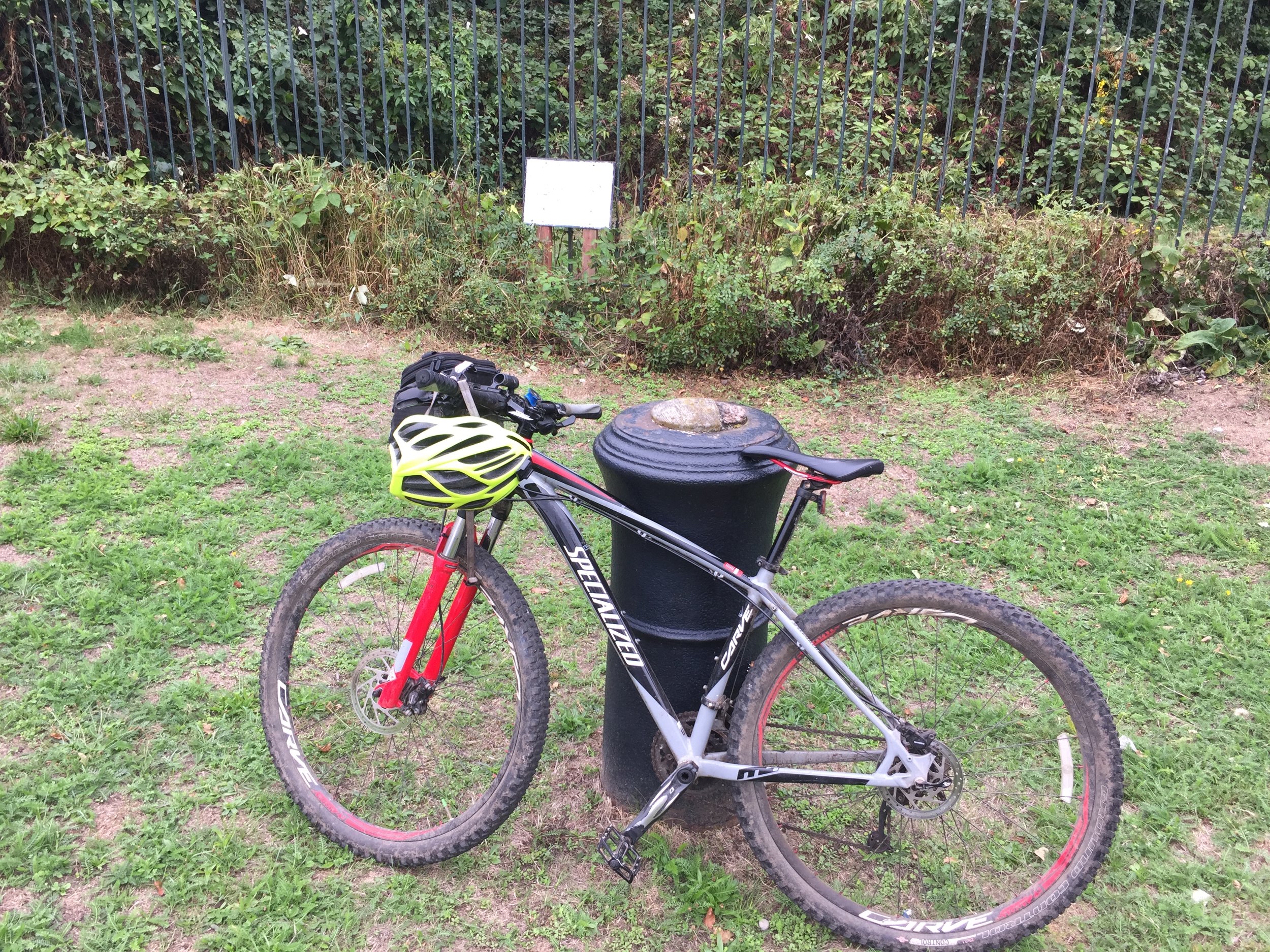
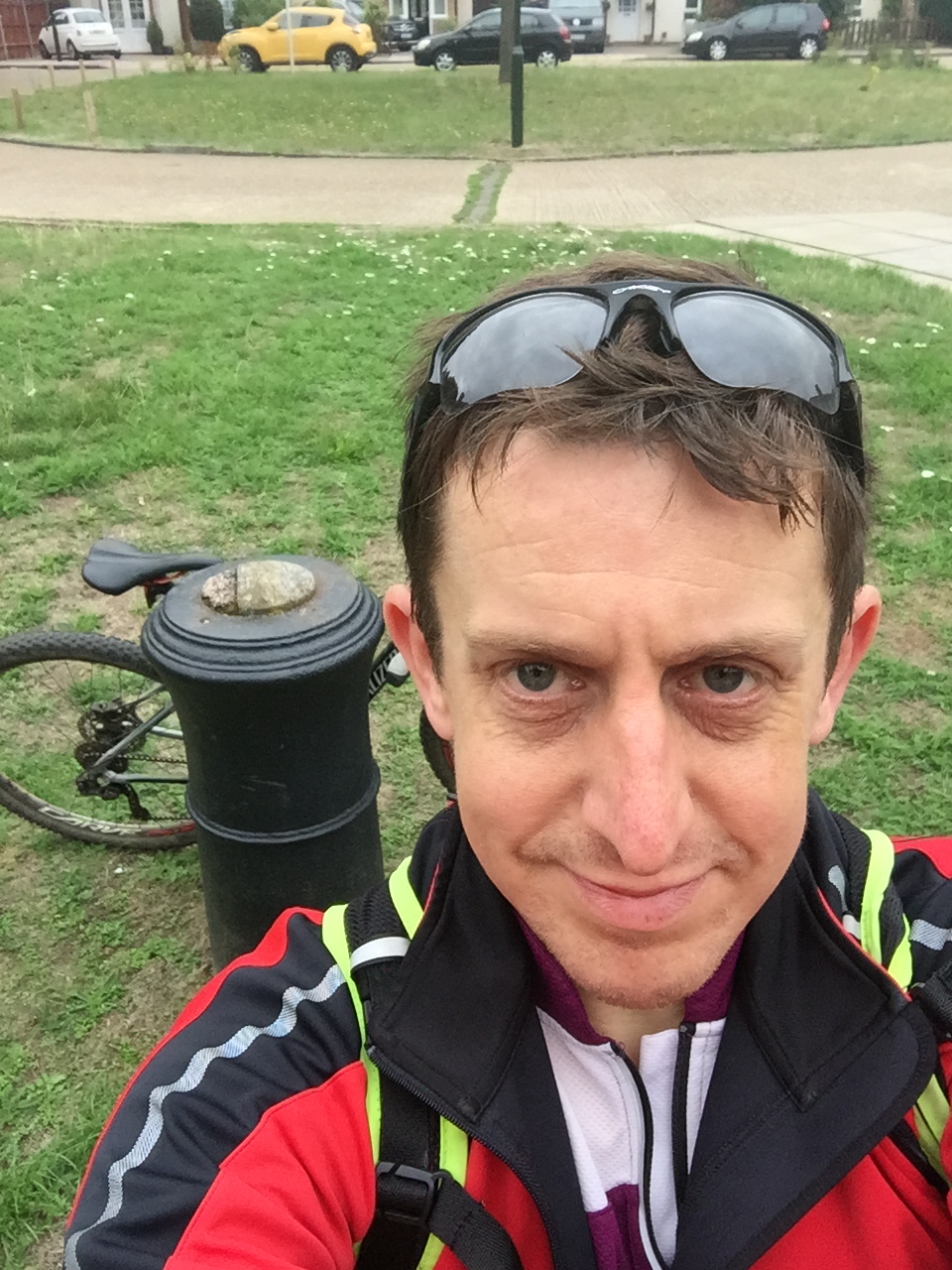
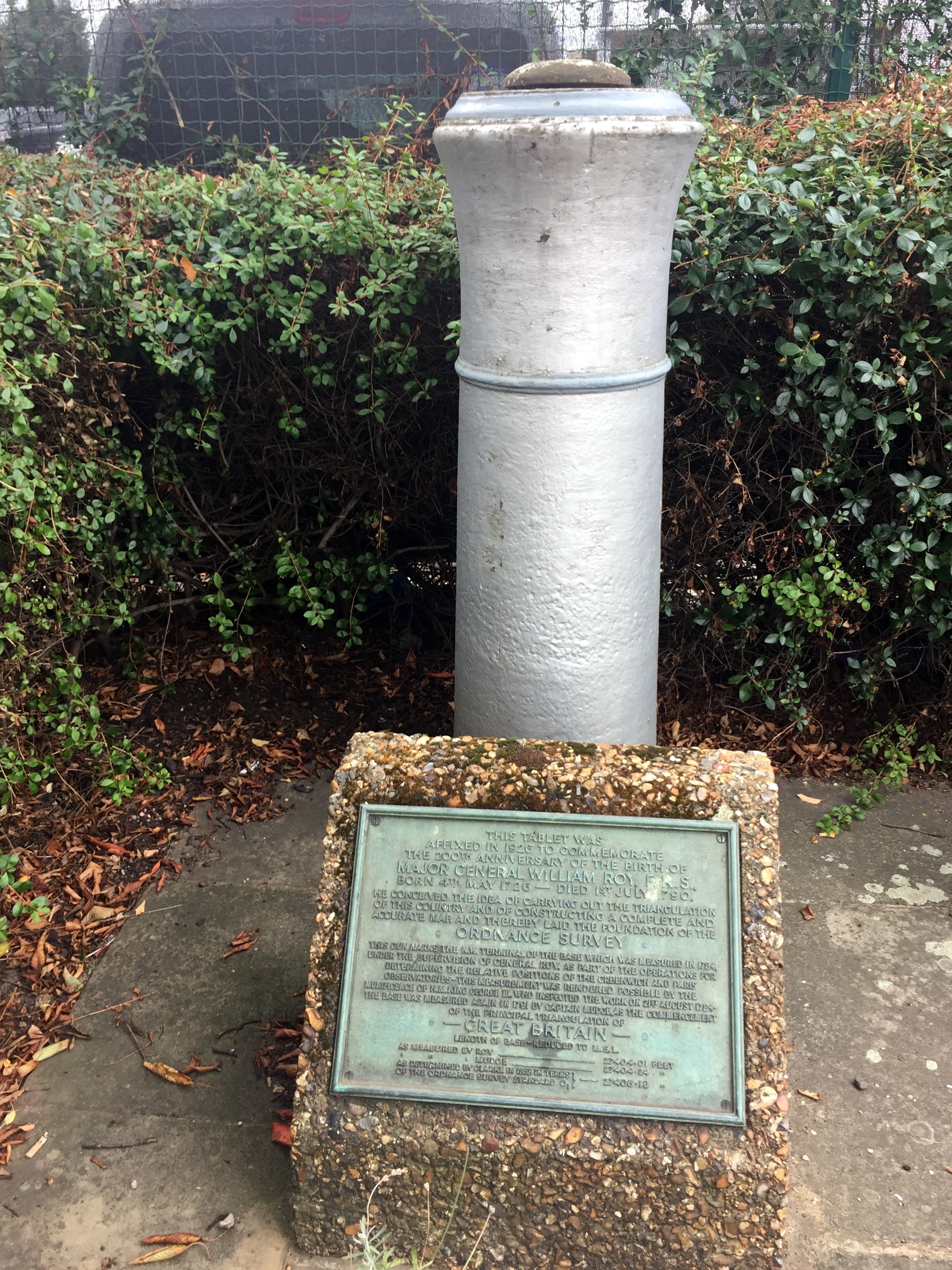
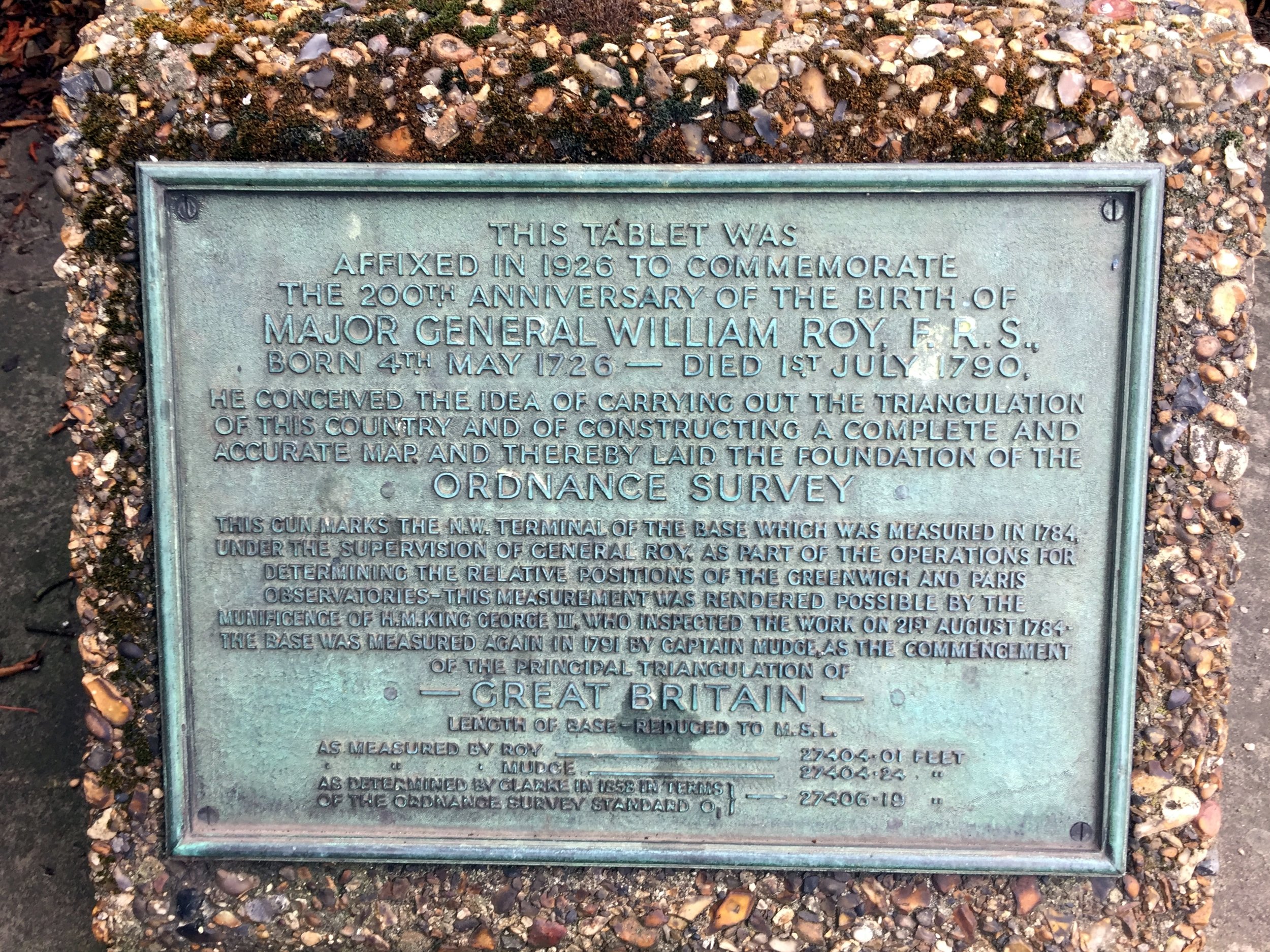
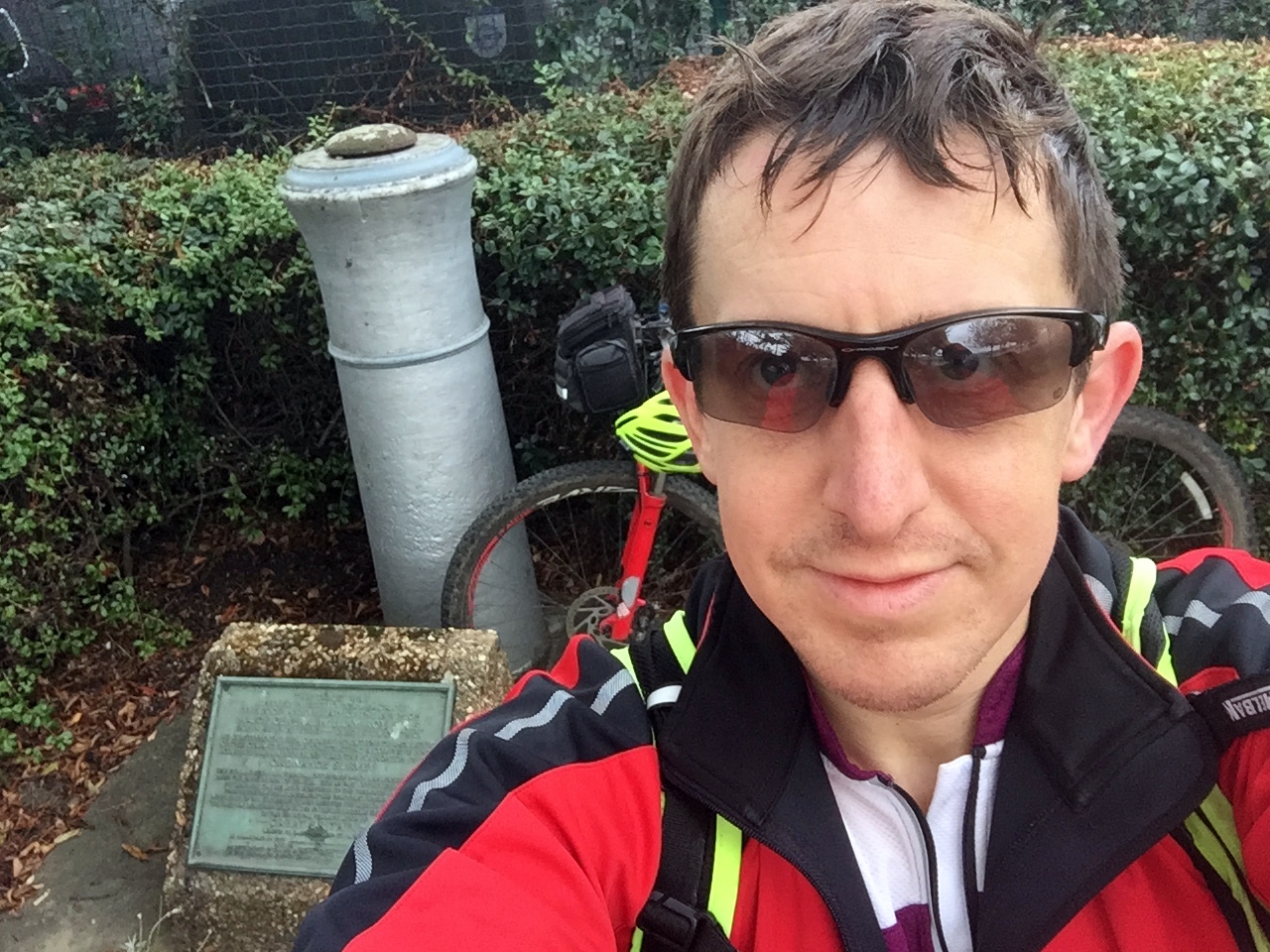
The street name, Roy Grove, is your first clue. The actual monument sits on an unloved patch of grass between two houses and consists of a historic cannon barrel buried muzzle-first into the ground, next to a plaque honouring Major General William Roy.

To cycle the actual Baseline, you essentially follow the A312 north-west for about 7km. The road name changes several times, but it is a remarkably straight route that closely traces Roy's original measurement line. Eventually, you reach the Hatton Cross Roundabout right on the edge of Heathrow Airport. You have to take a slight diversion around the Eastern Perimeter Road here, as the airport is unsurprisingly not keen on people cycling across the active runways!

The northern end of the Baseline is hidden on a grassy triangle at the junction of the Northern Perimeter Road and Nene Road. The monument, a twin of the cannon at Roy Grove, is tucked in the far corner. It sits right next to a massive Heathrow business car park. It is rather lovely that, in an area where every inch of concrete is monetised for parking, this little-visited monument has been quietly preserved. While some argue the Ordnance Survey should do more to promote these monuments, I quite like that they are hard to find. It feels entirely fitting that you need a map and some solid navigation skills to track them down!

From the monument, it is an easy 7km ride back to Minet Park, taking you through Sipson, one of the historic "doomed villages" that will eventually be lost if Heathrow's proposed third runway ever goes ahead, before linking back up to the Grand Union Canal.


Red = course of the River Crane, Yellow = cycle route, Blue = Hounslow Baseline. Green = (approx) future site of proposed Heathrow 3rd runway

Elevation plan of the cycle route (marked as yellow in the map)

Elevation plan of the cycle route (marked as yellow in the map)


More London Posts

If you enjoyed reading this post, there is plenty more to explore across the capital. I have put together a dedicated London Outdoors page where I keep track of all my other adventures around the city. It is a handy index where I group my posts by the different types of places I have visited: including historic boundary lines, canal towpaths, and some surprising urban high points.

The collection covers a bit of everything: from long-distance cycling routes to tracing the underground network on foot, and ticking off another Saturday morning parkrun. If you are looking for some inspiration for your own weekend outings, head back over to the London Outdoors page to see what else I have been up to.

Middlesex parkrun & The Eel Pie Pilgrimage
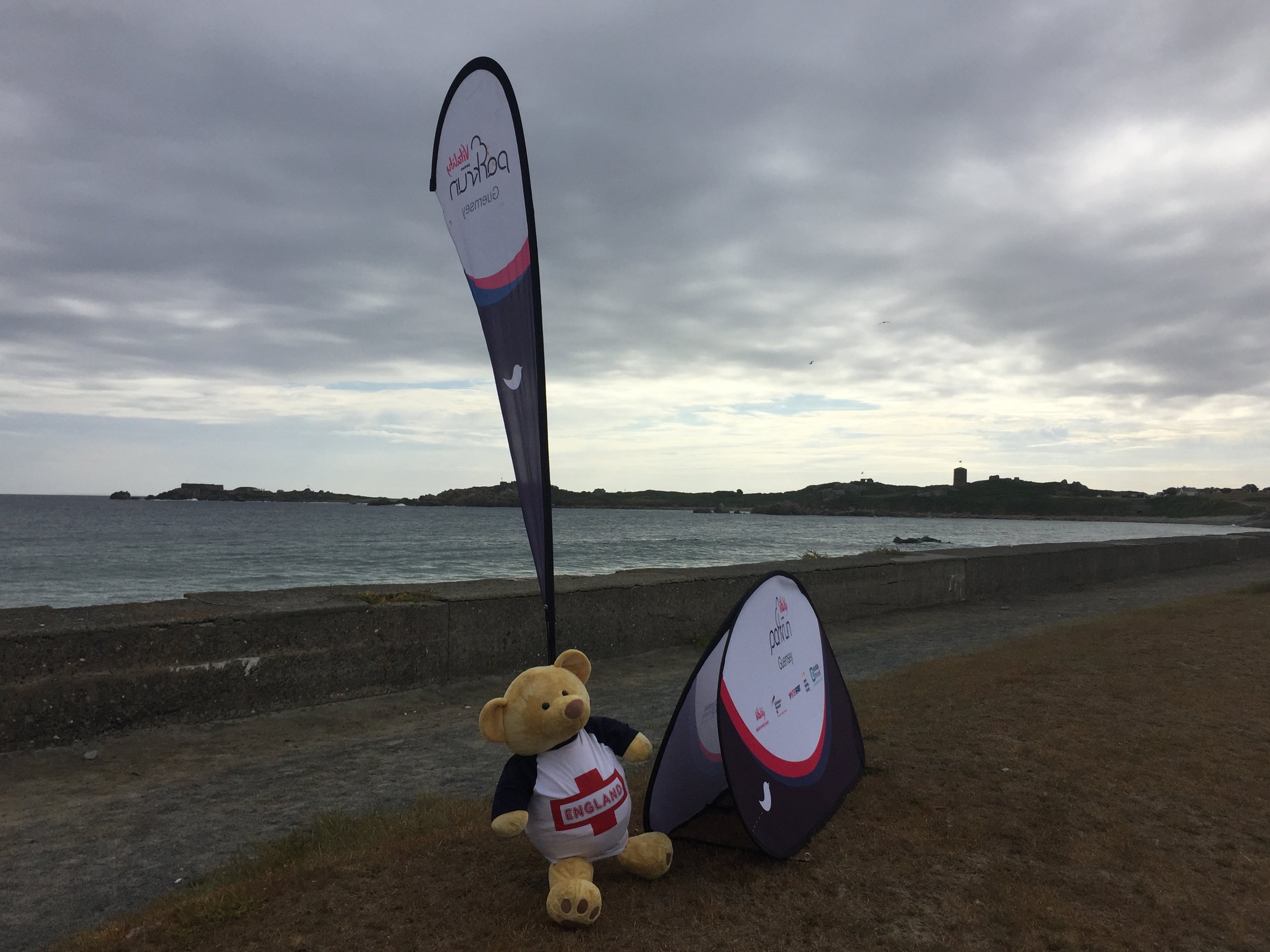
Middlesex parkrun banner.JPG

Back in April I completed my 100th different parkrun event at Hazelwood. What I didn't know at the time was that it was also my last of the 20* parkruns in the historic county of Middlesex. This only became important in the last few weeks when looking for new parkrun challenges to tick off. I'd completed LonDone and the Channel Islands Region in July. Next up would be the South East England region but, at the time the was 84 of them and I'd only ran 26 so it would take ages. I needed some smaller, more frequent hits, and the mini-regionnaires of the Historic Counties would do the job. It would also be a nice match with my other current obsession, the UK County Tops

The Historic County of Middlesex has been chopped and changed over the years and now doesn't really exist except as a legacy in some postal addresses. Most relevant to the parkrun geek, it's also in the address of parkrun Headquarters that can be found at the bottom of every page on parkrun.org.uk. A pilgrimage to the parkrun HQ would be a fitting end to the Middlesex mini-regionnaire.

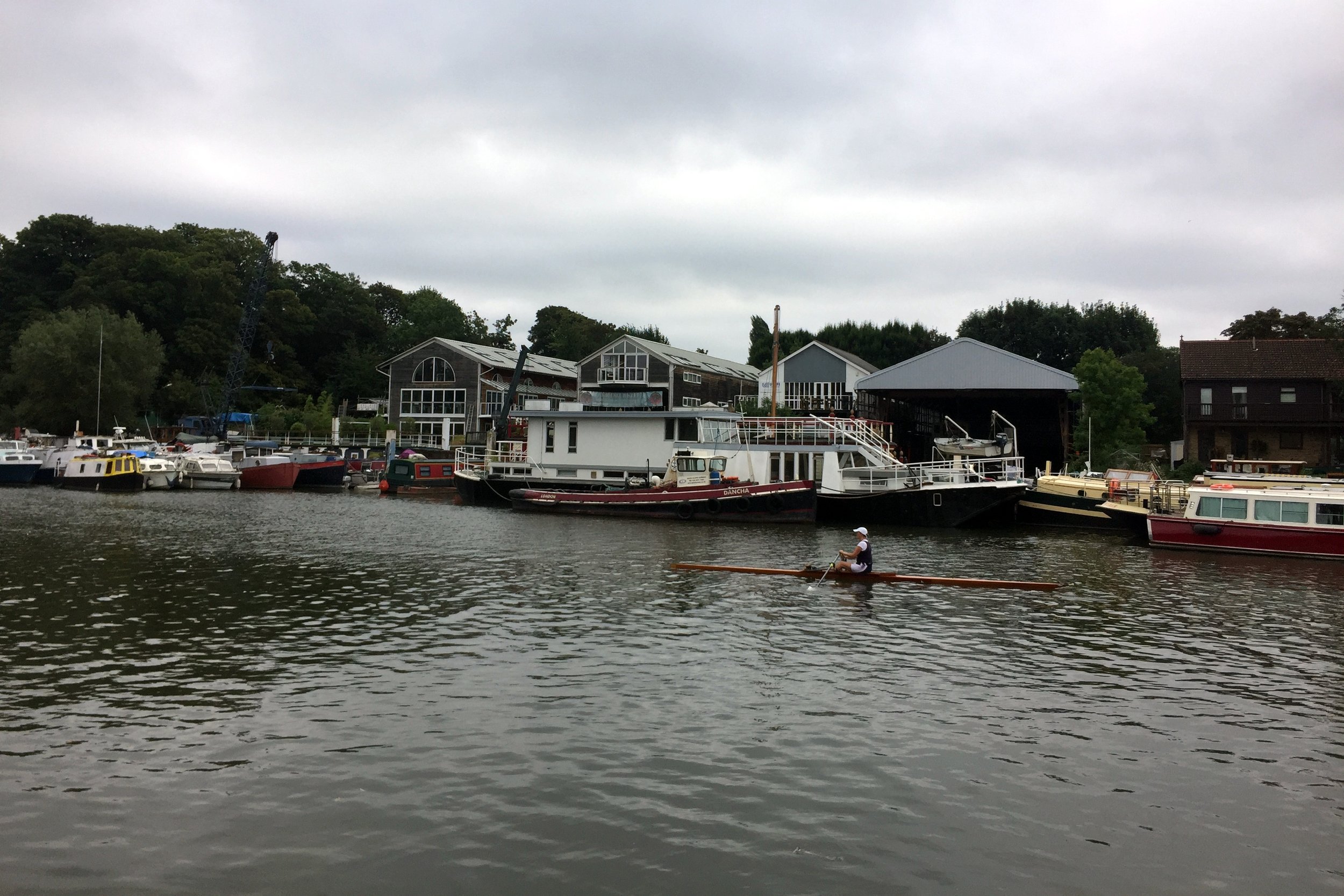
So, as a part of a different micro-adventure, I headed towards Eel Pie Island. This is a quaint, quirky place in the Thames just South of Twickenham. I'd read about it and its interesting musical history a few years ago and had wanted to check it out. Discovering that it's now the Global HQ for parkrun meant that I had to go immediately. I wasn't really sure what to expect though. I had visions of a sprawling HQ complex, maybe under a volcano, with Paul Sinton-Hewitt at the centre of it, stroking his cat and surveying a huge map of the world, planning his next country to conquer. 

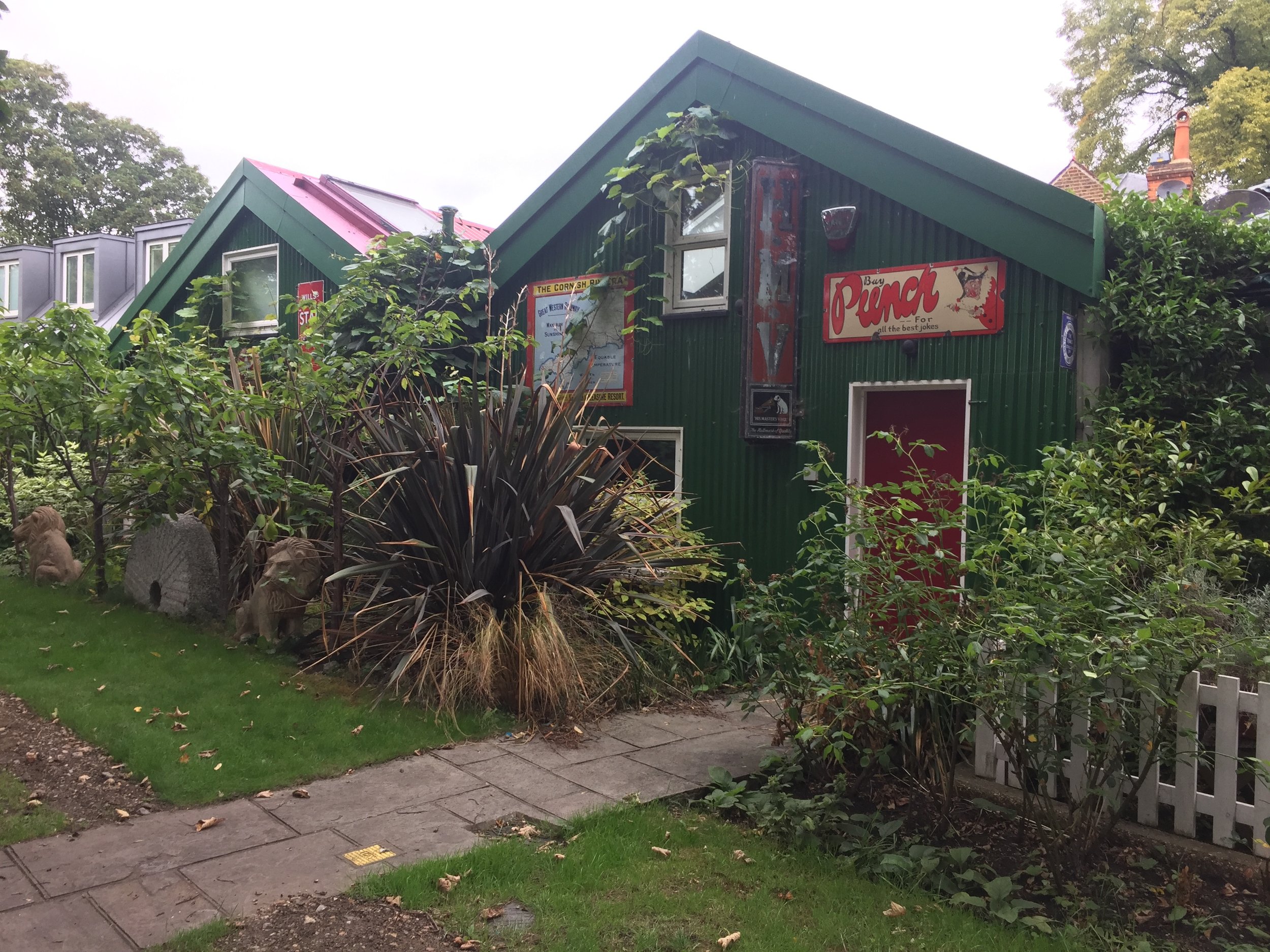
As it turned out there were no volcanoes and if there was a sprawling complex it was well hidden. Although you can walk onto the island over a footbridge, there's no access to Phoenix Wharf where the offices are. There's some cute cottages along a quiet footpath but no obvious signs of a global HQ. I assumed that the secrecy was for a reason. They're probably in league with the Illuminati and the Bilderberg Group is probably also behind the fence. Assuming I was being watched by parkrun's crack security militia I decided to retreat before being captured, never to be seen again. 

*at the time


Completing Middlesex parkun

If you've done LonDone , you've pretty much also done Middlesex as its only Hazelwood that sits outside of the Greater London region. The other odd exception is Oak Hill. It's the only North-West London event that's not within the Middlesex boundary, due to an oddly shaped scoop of old Hertfordshire that plucks it out from its neighbours. I'm now hoping for a new parkrun to be set up in Wrotham Park as it would have the honor of being the only event that's inside old Middlesex but outside of both Greater London and the M25.


Here's the full list of all parkruns, at the time of writing, that are in the Historic County of Middlesex.

Actual course routes and positions for events that I have completed


More parkrun posts

parkruns are free, weekly, community 5k events all around the world. I started in December 2012 and have been obsessive about it ever since. See my parkrun Collection page for details.

Featured and popular parkrun posts:


Completing all Berkshire parkruns
Berkshire banner.JPG

There are currently 11 parkrun events in present-day Berkshire. The first was Reading which started on September 12th 2009 and the newest is Victoria Park, Newbury which started on September 27th 2025. The name for having completed all parkrun events in the county is a “Complete Berk” or a “Total Berk”.

The Historic County of Berkshire has 13 parkrun events. These include Didcot, Harcourt Hill and Grove Fields which were in Historic Berkshire but are now in present-day Oxfordshire. Abingdon gets an honourable mention as, although it was in Historic Oxfordshire, there’s a small section by Abingdon Lock that was in Historic Berkshire.

Upton Court is part of present-day Berkshire but was part of Historic Buckinghamshire.

I first completed the county on August 18th 2018 at Newbury (now called Greenham Common) which was the 8th Berkshire event at the time.

Numbers exclude any events that are not open to the general public such as prisons or armed forces facilities.


A map of the parkrun events in the county of Berkshire

The interactive maps below take you to the approximate location for the course, typically the centre of the park. See the course instructions in the parkrun page for each event for specific directions to the start. Course maps show the route at the time that I ran it and may have changed since then.


Bracknell

  • I completed this event on: November 28th 2015 with a finish time of: 26:13

  • Other routes touched (walk): N/A, but the western side runs parallel and very close to the Wokingham Way.

  • Inaugural: April 4th 2015

  • Links: Event Home Page, Course Page, blog7t write-up


California Country

  • I completed this event on: June 1st 2019 with a finish time of: 27:11

  • Other routes touched (walk): California Greenway

  • Inaugural: February 23rd 2019

  • Links: Event Home Page, Course Page


Dinton Pastures


Greenham Common, Newbury

  • This event was called Newbury parkrun until October 4th 2025

  • I completed this event on: August 18th 2018 with a finish time of: 27:21

  • Other routes touched (walk): Greenham Common Yellow Route

  • Inaugural: February 11th 2012

  • Links: Event Home Page, Course Page, blog7t write-up


Maidenhead


Prospect

  • I completed this event on: July 28th 2018 with a finish time of: 26:42

  • Other routes touched (cycle): N/A, but the southern sections nearly touch NCN 422

  • Inaugural: May 5th 2018

  • Links: Event Home Page, Course Page, blog7t write-up


Reading

  • I completed this event on: October 12th 2013 with a finish time of: 23:39

  • Other routes touched (walk): Thames Path

  • Other routes touched (walk): NCN 4

  • Inaugural: September 12th 2009

  • Links: Event Home Page, Course Page


Sandhurst Memorial

 
elevation_profile - Sandhurst Memorial.jpg

Upton Court


Victoria Park, Newbury


Woodley


Actual course outlines for the parkrun events that I have completed in present-day Berkshire.


More parkrun posts

parkruns are free, weekly, community 5k events all around the world. I started in December 2012 and have been obsessive about it ever since. See my parkrun Collection page for details.

Featured and popular parkrun posts:


East Burnham Park: Slough High Point
The summit of East Burnham Park, the highest point in the Unitary Authority of Slough

View of the summit. There's no cairns so take care with navigation

Significance: Highest peak in the Slough Unitary Authority (Present Day CT)
Member of: None 
Parent Peak: Haddington Hill.
Nearest Higher Neighbour = Windsor Castle Historic Hill
Historic County: Buckinghamshire (of which Haddington Hill is the County Top)
Elevation: 51 m
Date “climbed”: July 25th 2018
Coordinates: 51.5379° N, 0.6249° W


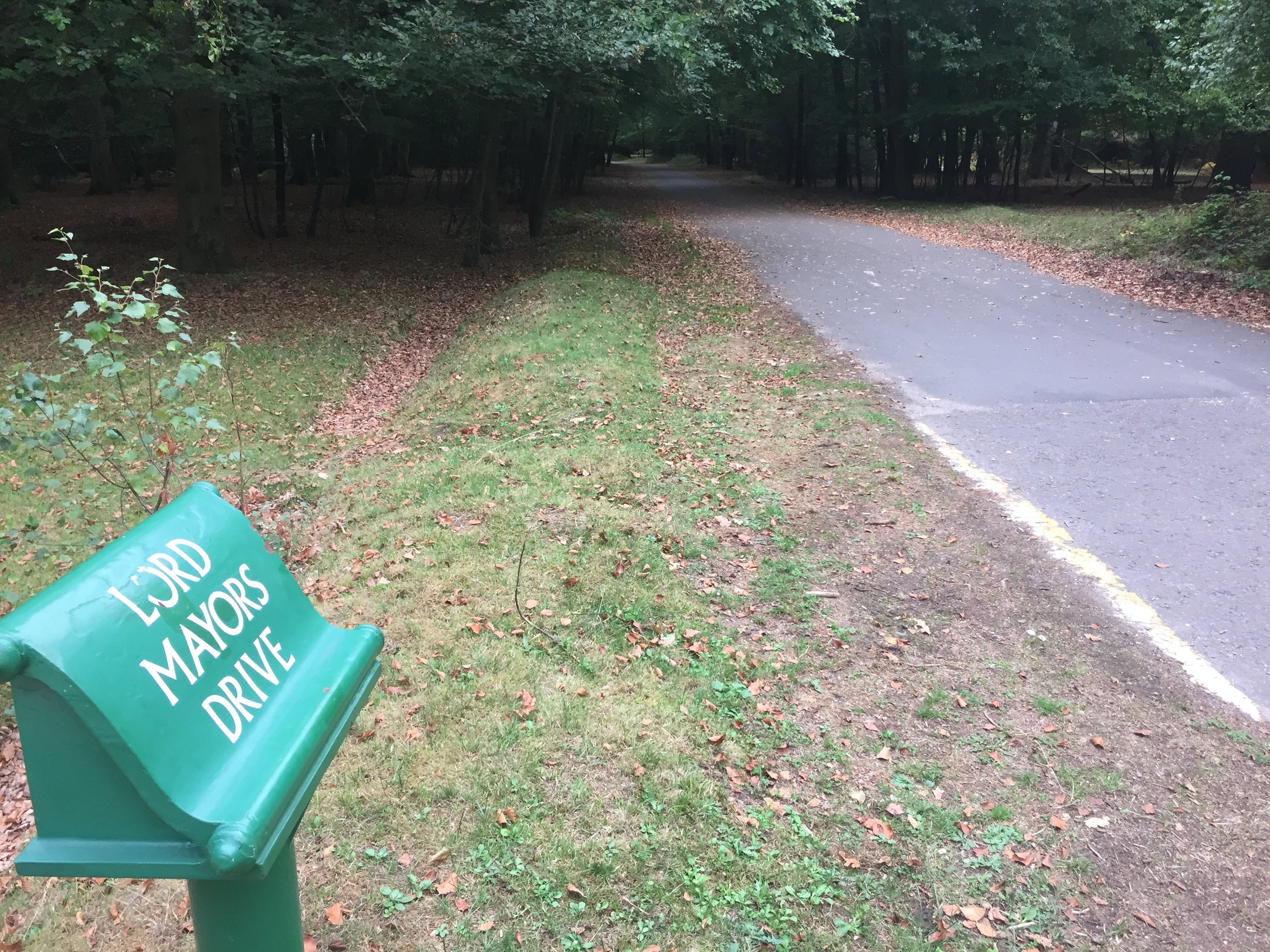
Route Start / End: Circular route from Burnham Beeches car-park off Lord Mayors Drive, Farnham Common.
GPX File: get via Buy Me a Coffee
Map: Explorer 172. Chiltern Hills East
Links: Wikipedia (Slough), Peakbagger, Hillbagging

East Burnham Park gets a nomination for my award for the most underwhelming County Top in the UK. "East Burnham Park" is actually Estate Agent speak for "the arse-end of Slough". Others may argue that Slough is also the arse-end of Berkshire, but you've not heard me say that.

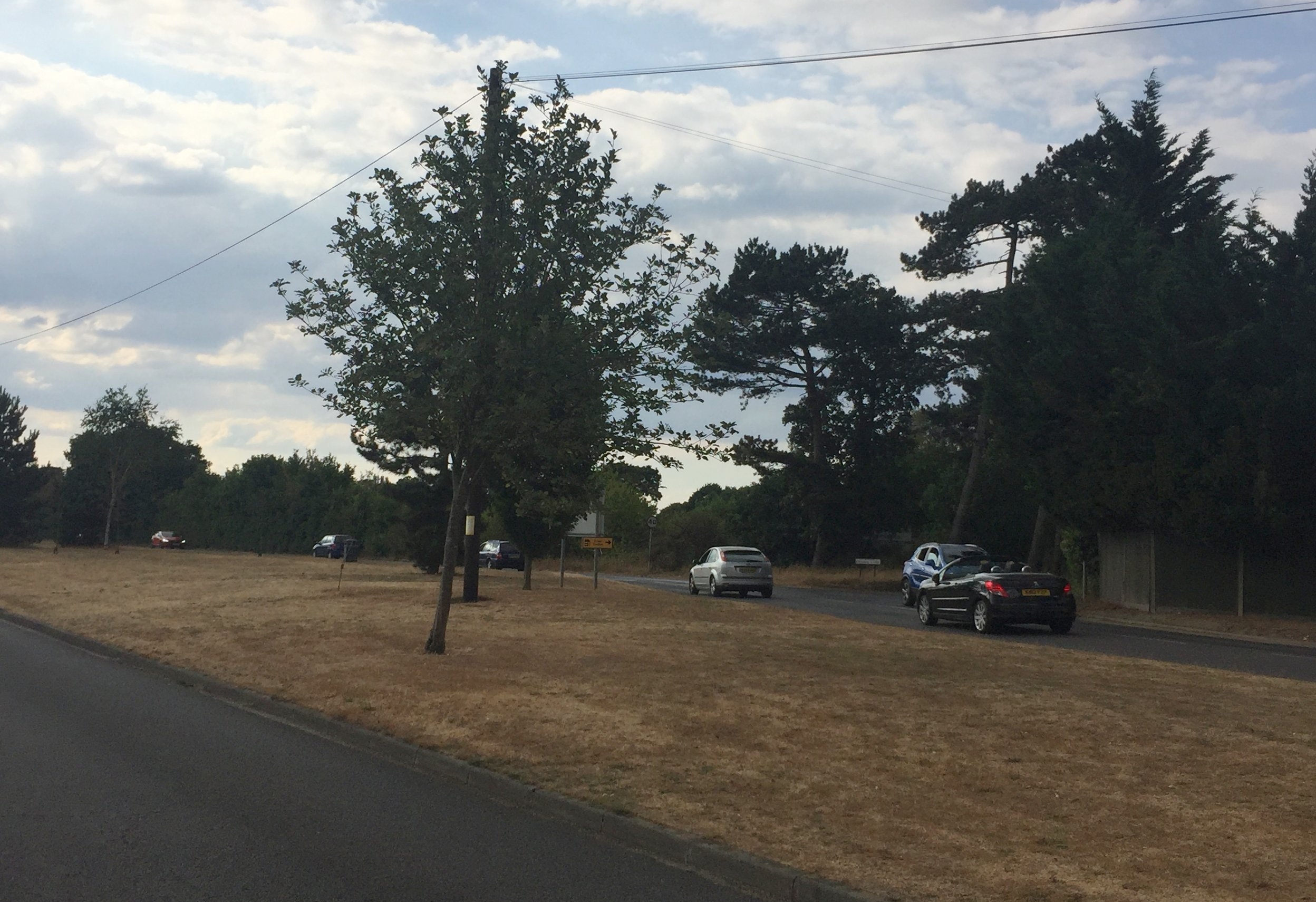
The summit was in the Historic County of Buckinghamshire and is now in the Ceremonial County of Berkshire. The high point of the present-day Slough Unitary Authority is on a small mound of grass opposite the junction of Farnham Lane and Crown Lane. There's nothing really to see here and the dog-poo bin that used to mark the summit has long since disappeared. 

If you're planning an attempt on the summit a good option is to combine it with a cycle ride from Burnham Beeches. You'll get a reasonably pleasant trip out of it and will spend as little time as possible in Slough as most of the route is in South Bucks. Don't forget your crampons and make sure you have spent several weeks in the area before the trip to get acclimatised. Slough has very little provision for Mountain Rescue so if you get into trouble, you're on your own.


Bonus peak: The Montem Mound

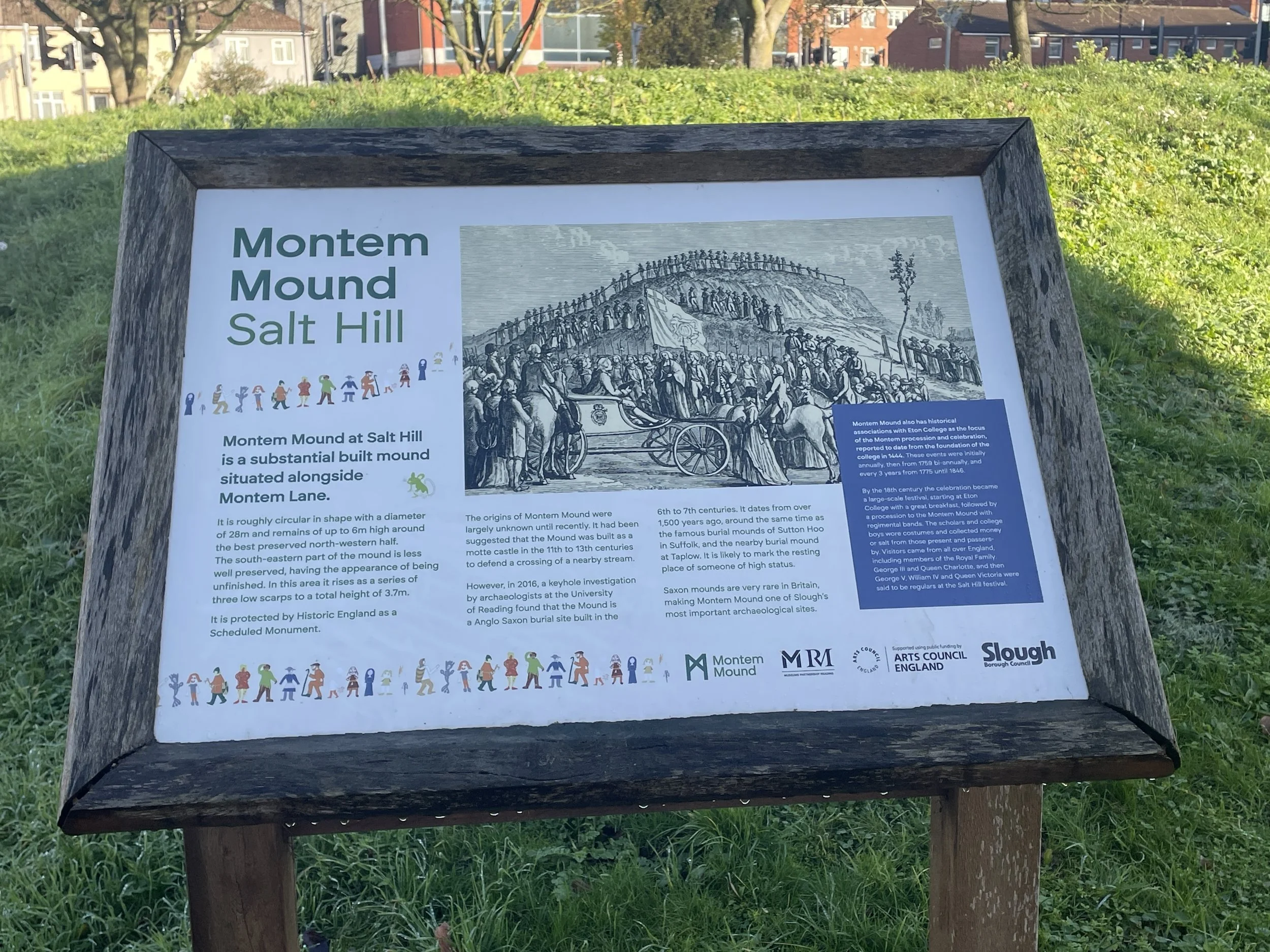
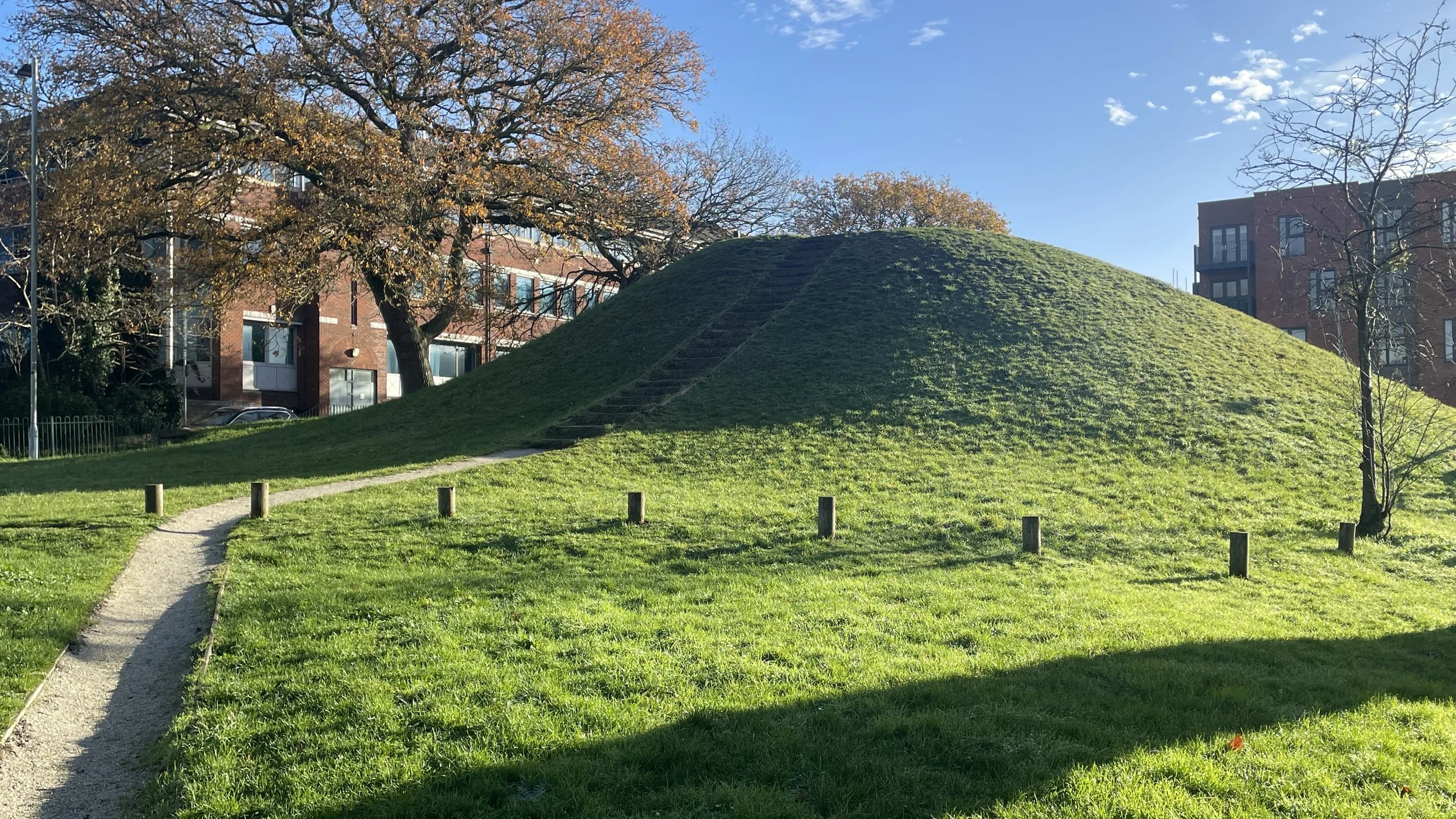
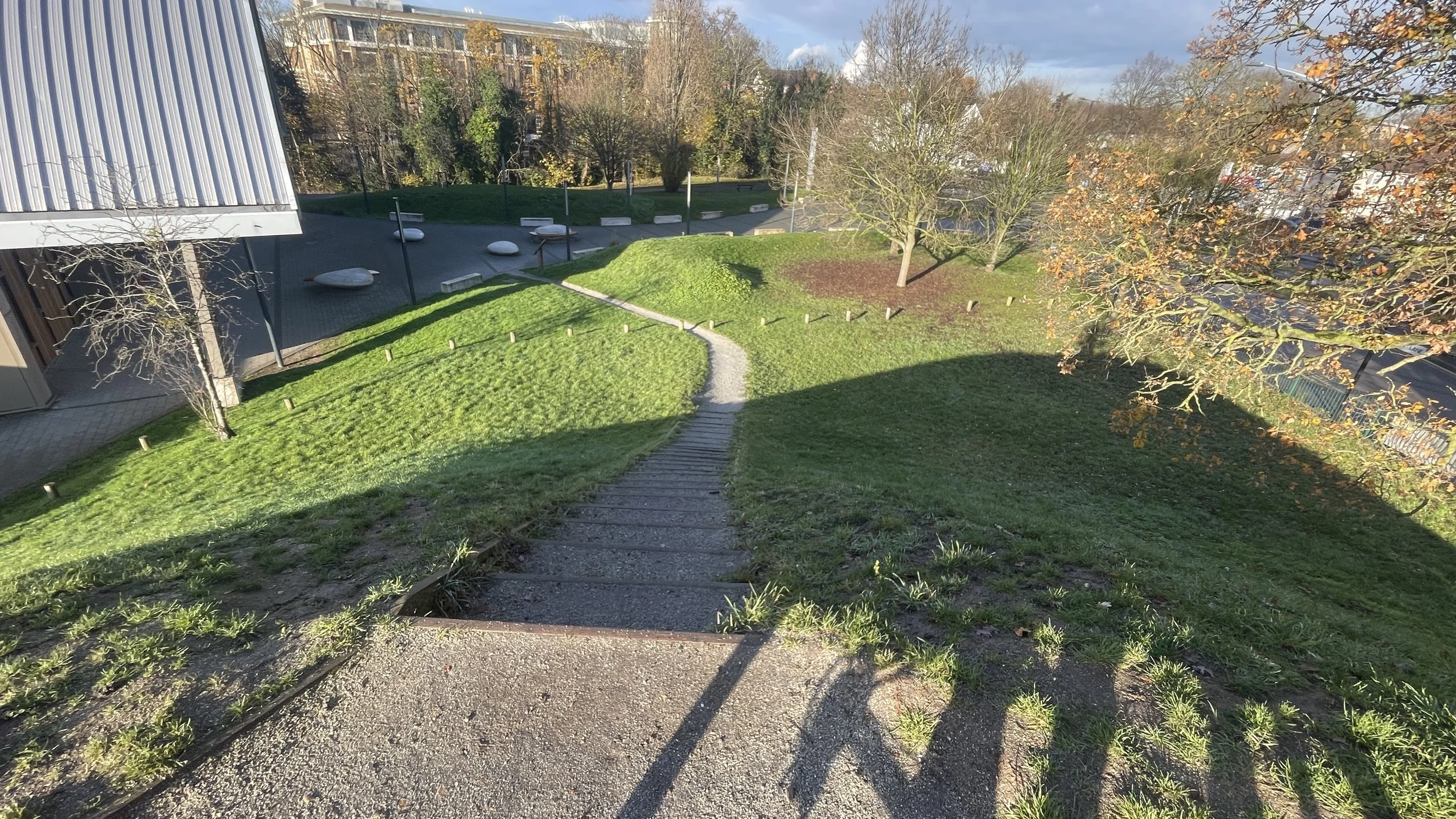
If you’ve got some energy left after scaling East Burnham Park there’s another summit to bag approximately 4km to the south. According to the Information board at its base: “Montem Mound at Salt Hill is a substantial built mound situated alongside Montem Lane. It is roughly circular in shape with a diameter of 28m and remains of up to 6m high around the best preserved north-western half. The south-eastern part of the mound it less well preserved, having the appearance of being unfinished. In this area it rises as a series of three low scarps to a total height of 3.7m).”

More on The Montem Mound: Wikipedia, Slough Museum, Exploring GB

Thank you to Zayd Depaor who told me about The Montem Mound in the Comments below. I’ve lived and worked near Slough for many years and didn’t know about the Mound’s significance despite having driven past it many times. I reached the summit on a brief diversion following NCN route 461 from Windsor to Burnham Beeches.


Cycling The River Pang
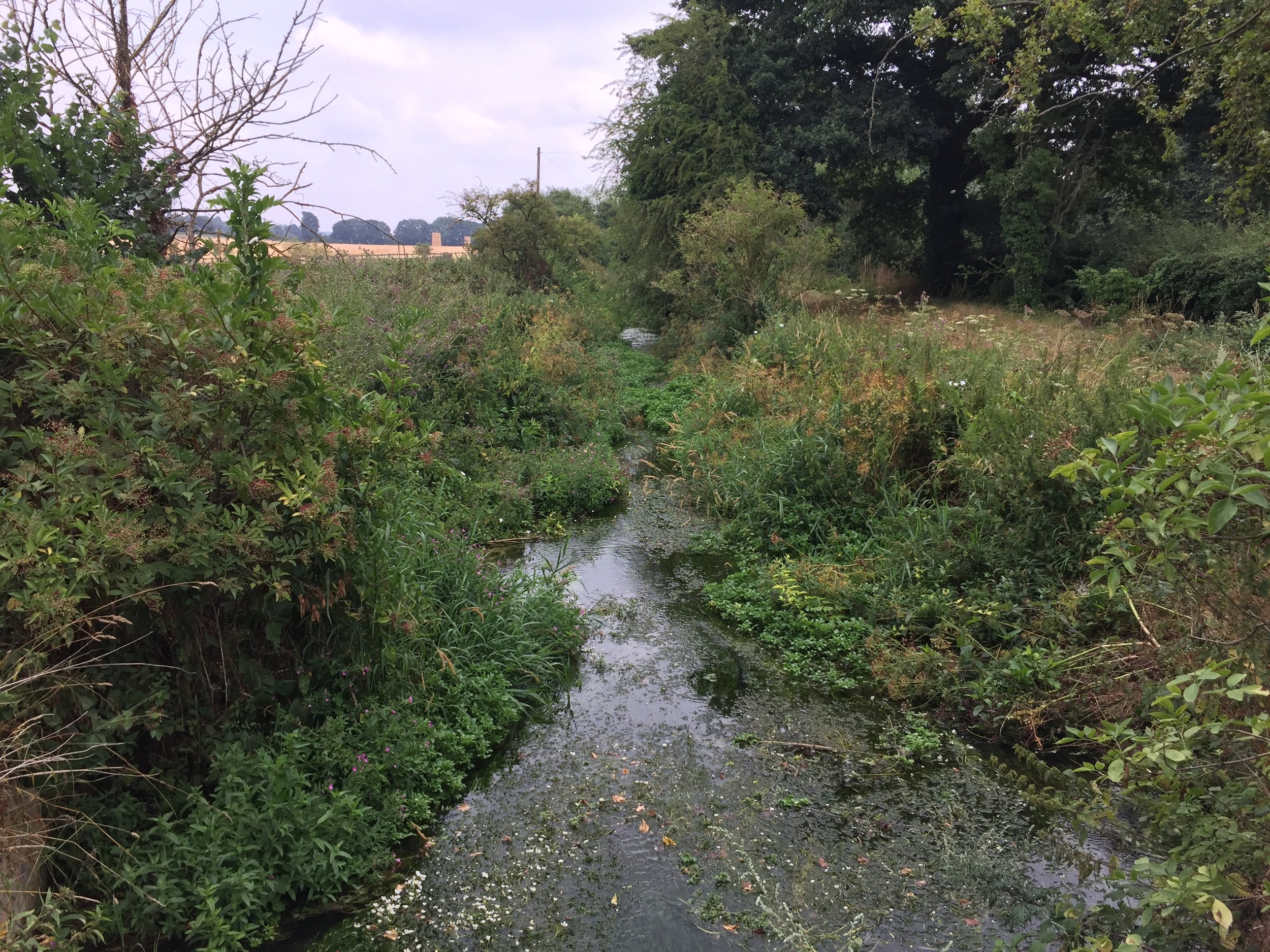
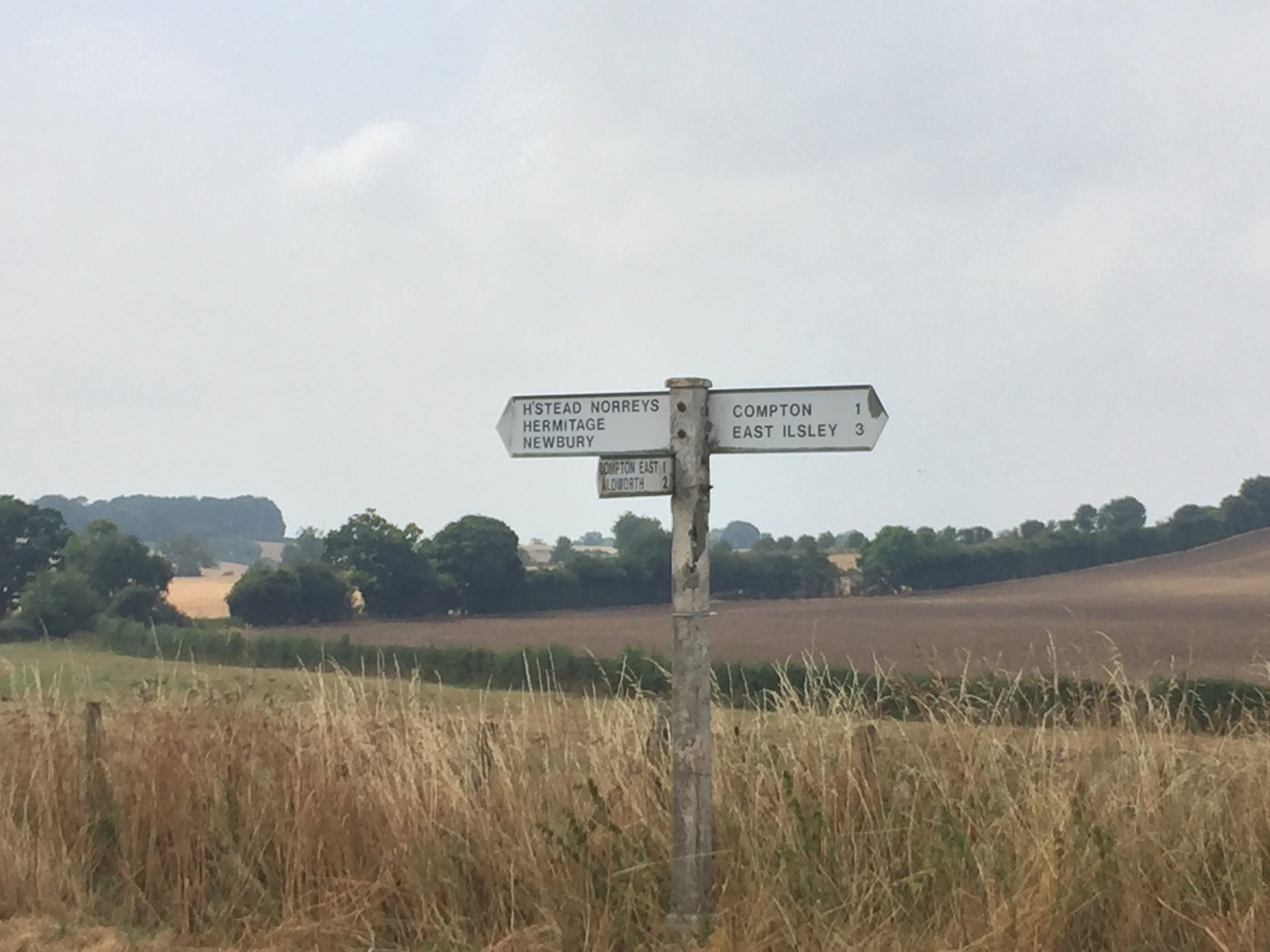
Near the source of the Pang

Near the source of the Pang


River start: Between Compton and Hampstead Norreys
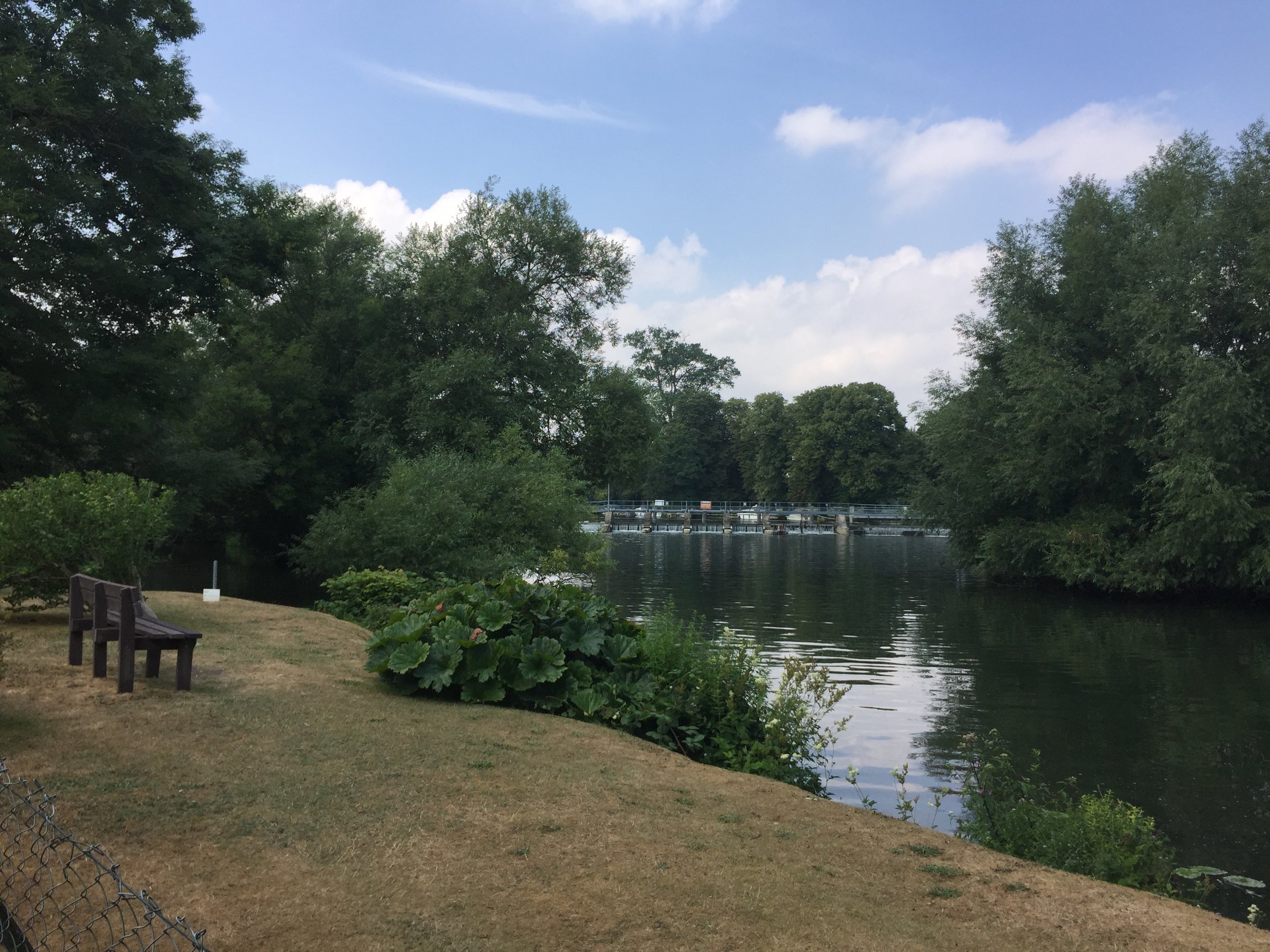
River end: Confluence with the Thames at Pangbourne
River length: 23 km (14 miles)
Cycle Route Start & Finish:
Cycle Route Distance: 37 km (23 miles)
Cycle Route Elevation change: + / - 273m
GPX File: get via Buy Me a Coffee
Other routes touched (walk): Thames Path
Other routes touched (cycle): Round Berkshire Cycle Route
Map:
OS Explorer Map (159) Reading, Wokingham and Pangbourne
Links: River Pang, Compton, Pangbourne


The River Pang is a small tributary of the Thames in West Berkshire. The source is between Compton and Hampstead Norreys and from there it runs 23k / 14 miles to meet the Thames at Pangbourne. I cycled the length as a part of a 38k / 24 circular, also taking in villages to the north or the river including Ashampstead and Upper Basildon. For the first 8 miles, the river stays close to country roads, but from Bucklebery its tough to stay close to its course. There's some good walking options that take non-cycleable footpaths for the rest of the route to Pangbourne. Its a pleasant ride along mostly quiet country lanes. 

Circular route, anticlockwise, starting and ending in Pangbourne. How To:

  1. A good place to park is the Short-stay shoppers car-park off Ferry lane. From here...

  2. Take Whitchurch Road (B471) south, taking a right at the roundabout onto the High Street. Follow this to the next roundabout and take a left onto Tidmarsh Road,

  3. Follow Tidmarsh Road for nearly 4 miles, crossing over the M4, then take the first right onto Common Hill

  4. Follow Common Hill to Bradfield, taking a left onto Ashamptstead Road. You'll shortly cross over the Pang at some old mill buildings.

  5. Take a left onto Back Lane. Follow this all the way to the junction of Cock Lane. Take a right then immediately left onto Bucklebury Road.

  6. Follow Bucklebury Road for approx. 2 miles, taking a left into Bucklebury.

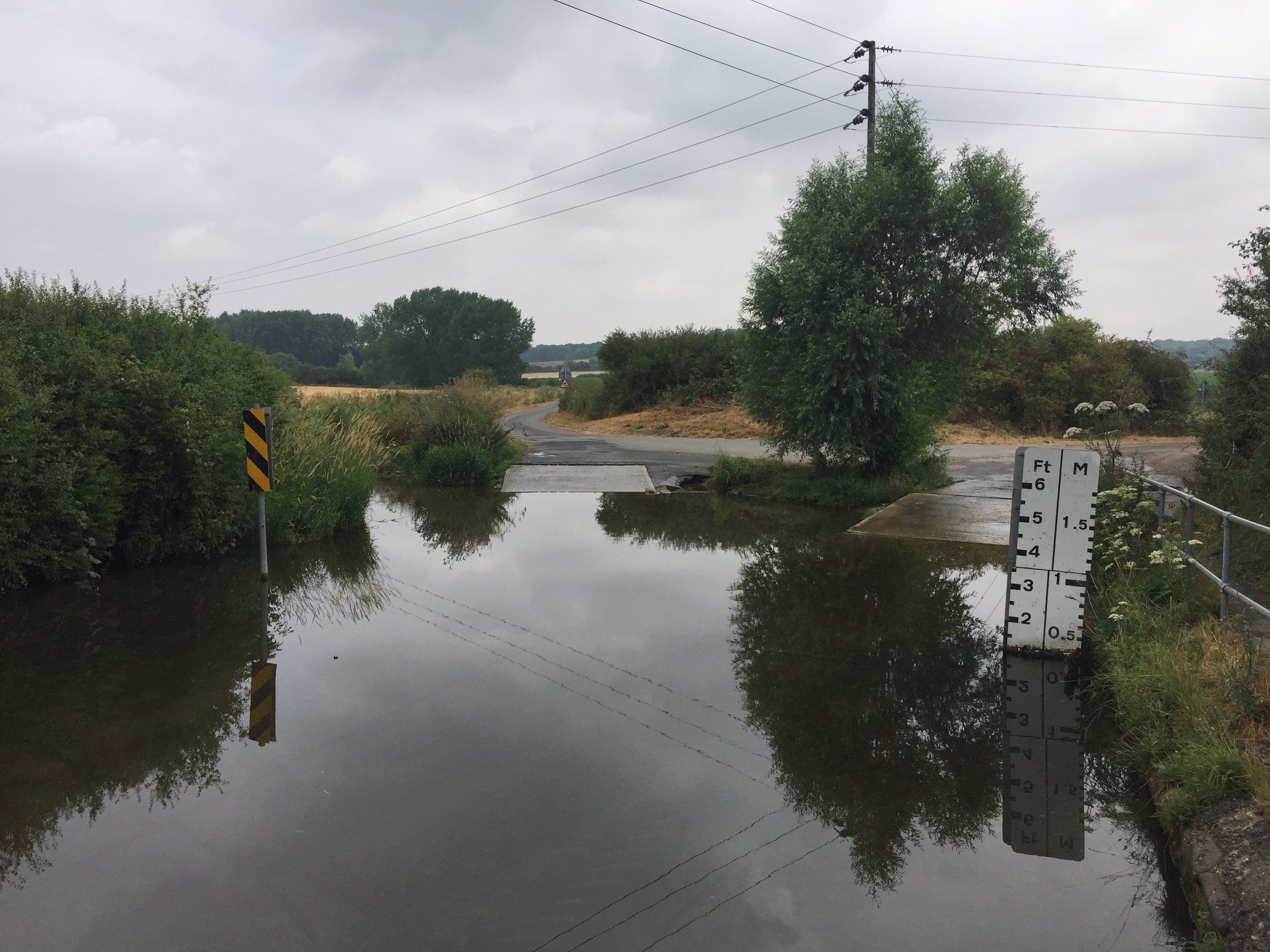
  7. After the village, take a right on the main road, then first right again and cross the ford.

  8. After the ford, take the first left onto Brocks Lane. The Pang will stay to the left of you from here on.

  9. Continue along Brocks Lane until it the junction of Everington Lane just after the M4 underpass.

  10. Take a right onto Everington Lane, then immediately left onto Yattendon Road.

  11. Join the B4009 through Hampstead Norreys. The (mainly dry) source of the Pang is in the fields on the left hand side of the road about 1.5 miles from the village.

  12. To return to Pangbourne .... take the first right onto Coombe Road.

  13. After about half a mile take a right onto a Bridleway that runs along the right hand side of a field. This is steep and narrow: good for mountain bikes or walking.

  14. The Bridleway will meet Thorn Hill, follow this to Aldworth road, continuing on this as it passes The Four Points pub.

  15. After 4 miles, turn right onto Whitemoor Lane. This is a steep hill up to Ashampstead Road.

  16. Turn right onto Ashampstead Road and follow it, merging onto Aldworth Road. Continue onto Pangbourne Road.

  17. Follow Pangbourne Road down the hill to the Town Centre.

  18. Turn left onto Tidmarsh Road, then cross over the roundabout onto Station Road / Shooters Hill.

  19. Immediately after the railway bridge, turn right onto a footpath. This will take you to the confluence of the Pang and the Thames.

  20. Continue along the footpath to the back of the car park where you started.

Alternatives for walkers are:

  • At point #, continue over the roundabout and take The Moors, a small road to the left of WHSmith. This becomes a footpath that stays close to the Pang, returning to Tidmarsh Road.

  • At point #4, turn left at the mill buildings in Bradfield and follow the Berkshire Circular Walks footpath to Bucklebury.

Red = route of the River Pang, Blue = circular cycle route.

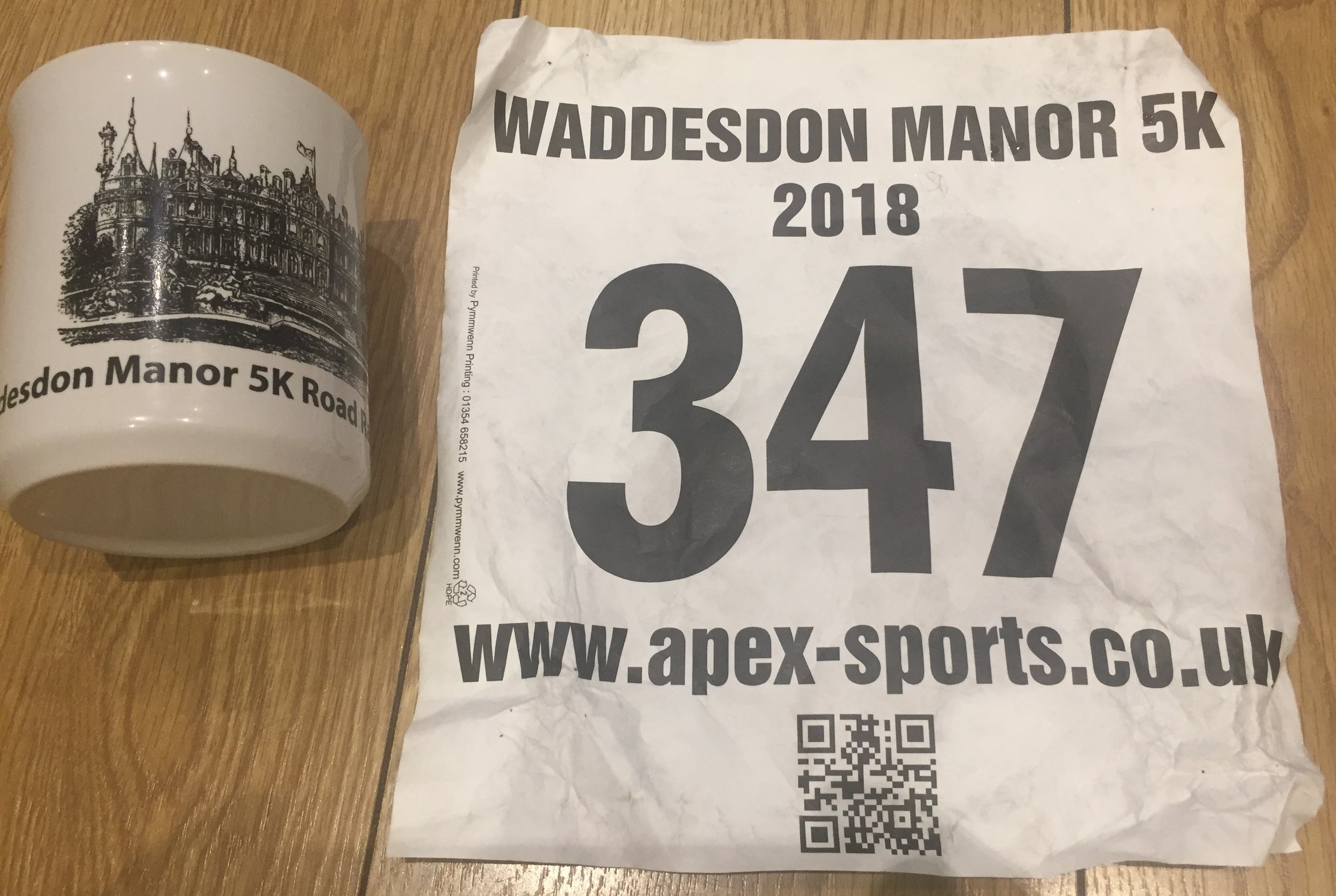
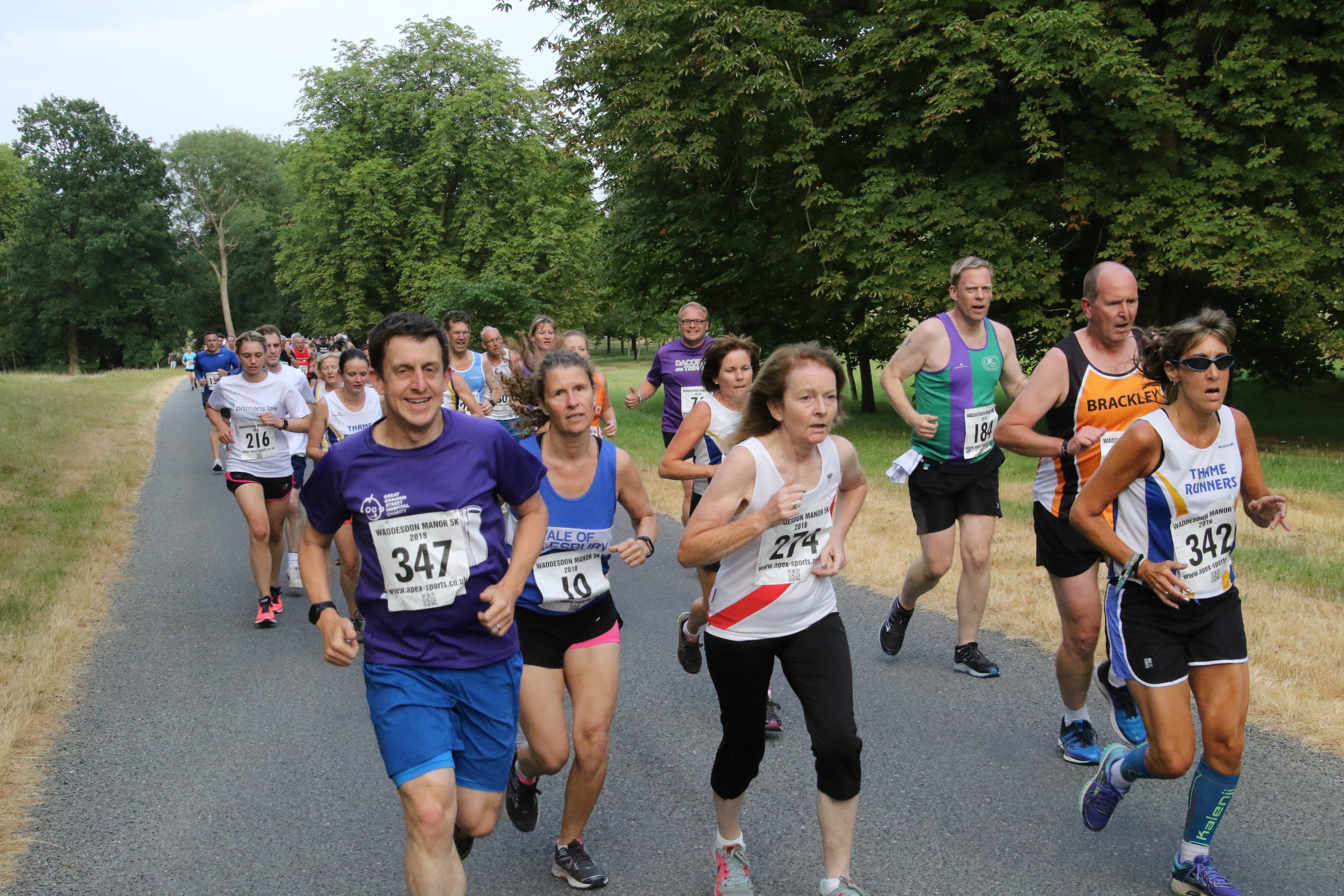
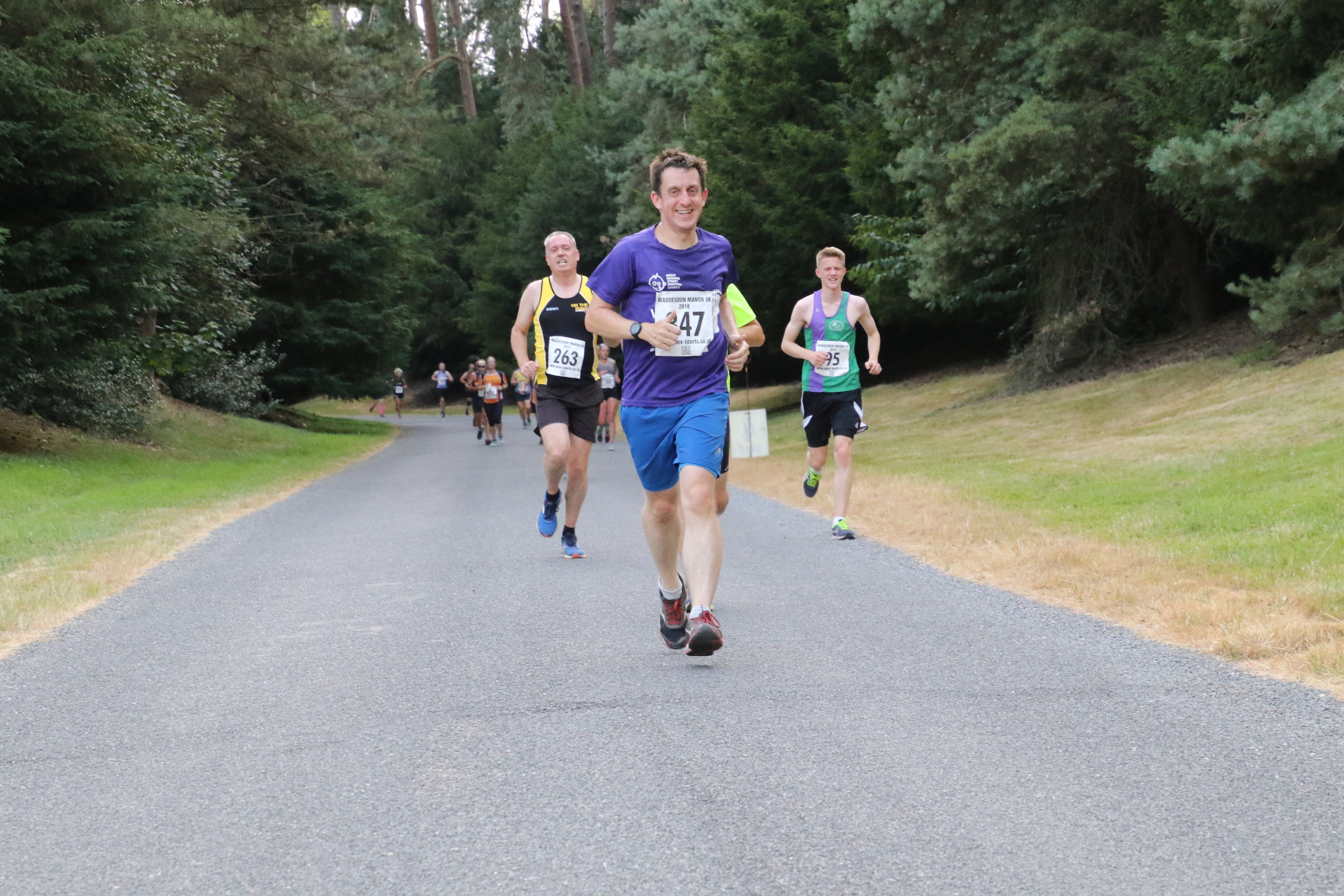
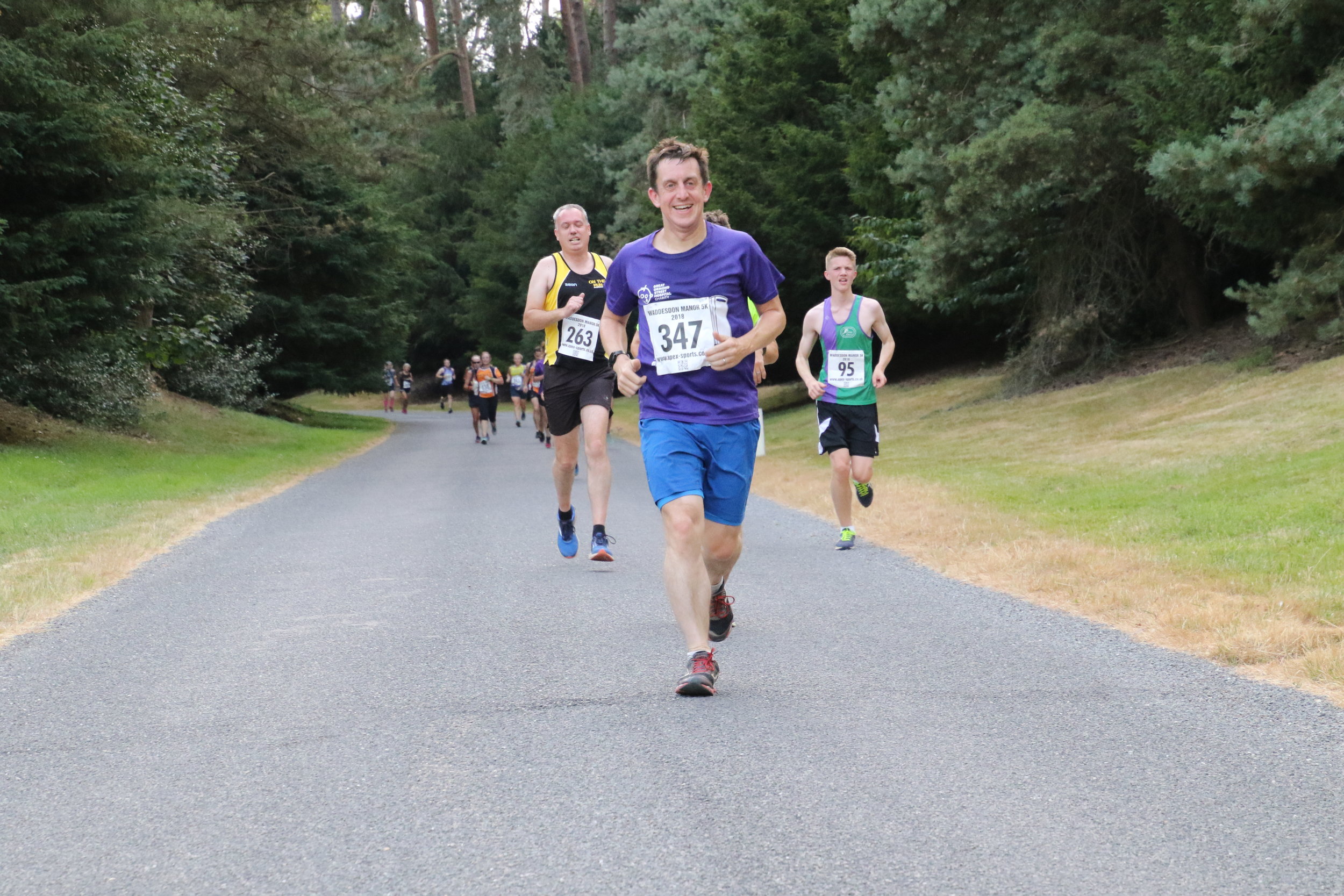
Waddesdon Manor 5k Road Race

When: July 18th 2018
Where: Waddesdon Manor, Buckinghamshire UK
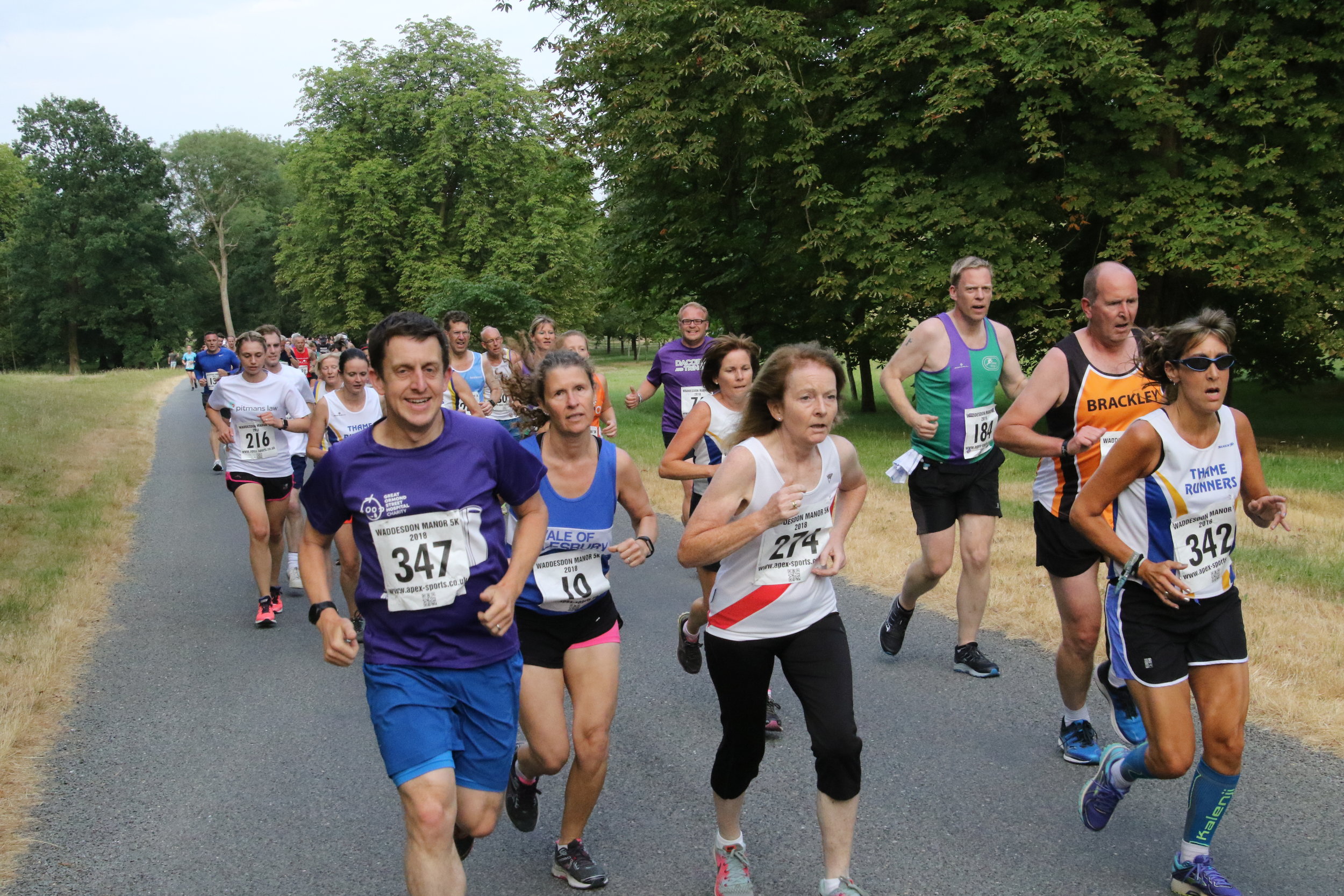
Course: Out and back from National Trust car park to the manor with a small loop of the front gardens. Hilly for a hot summer night.
Other routes touched: None
Finish time: 0:27:15

In-race photos by  Barry Cornelius

 
Richard gowerComment
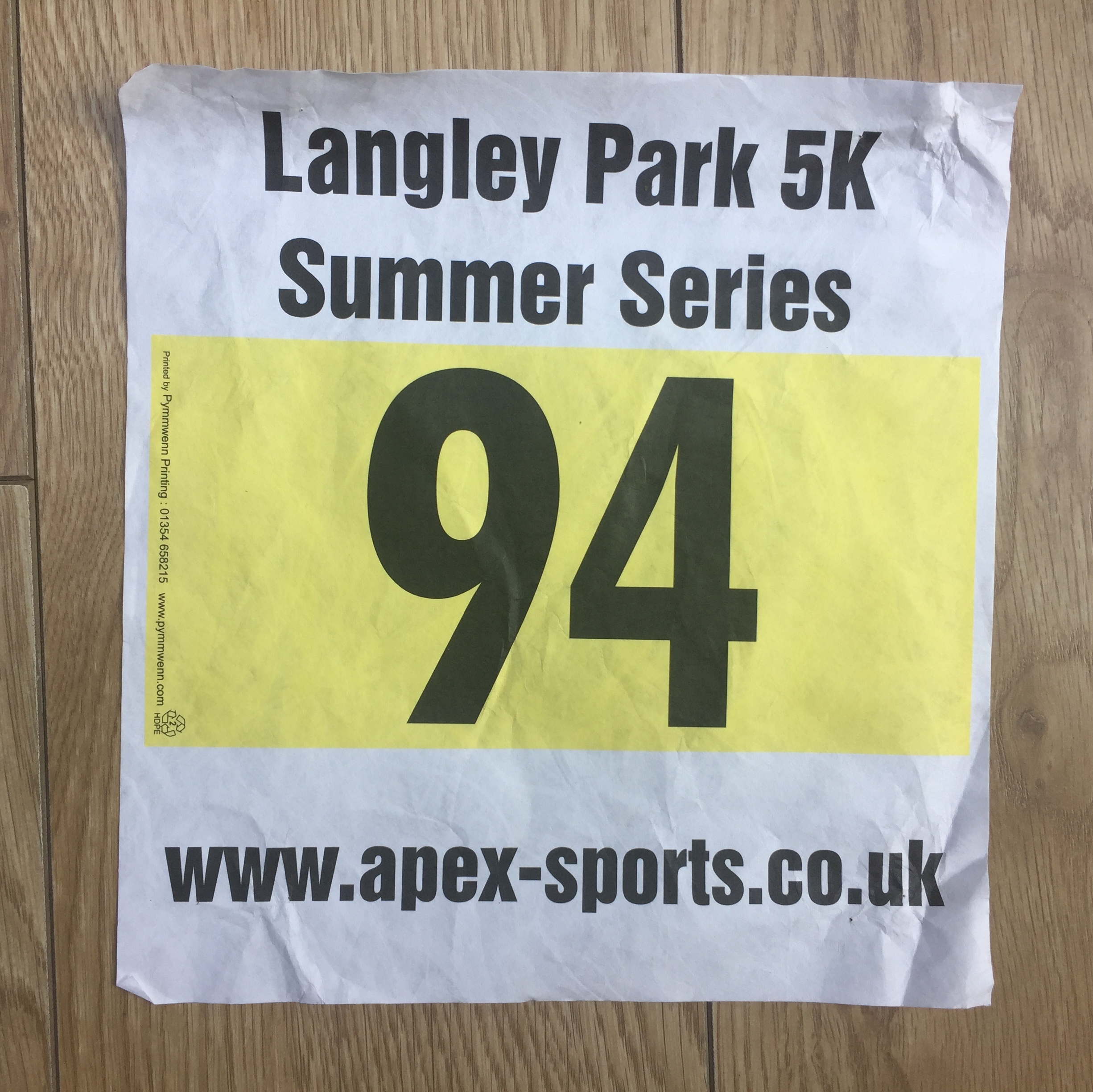
Langley Park Summer Series 5k

When: Multiple: 3 events per summer in May, June, July. Wednesday evenings at 19:00. My first ran: May 2015
Where: Langley Country Park, Buckinghamshire UK
Course: complicated but well managed off-road loops of the park
Other routes touched (walk): Beeches Way, Shakespeare’s Way, Colne Valley Trail Extension
Other routes touched (cycle): NCN 246
Fastest Finish time: 0:25:43

 
High Peaks of the Balkans

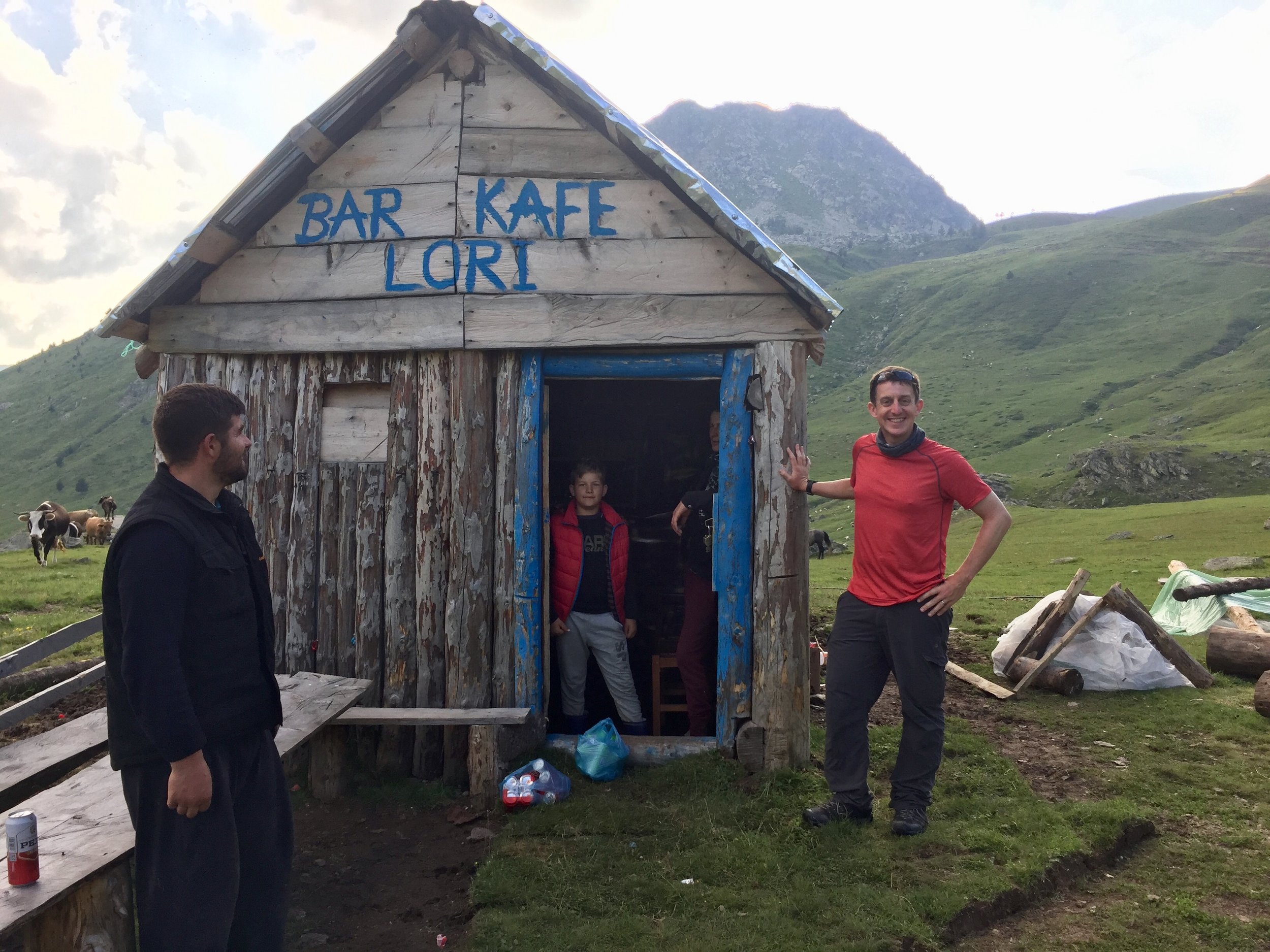
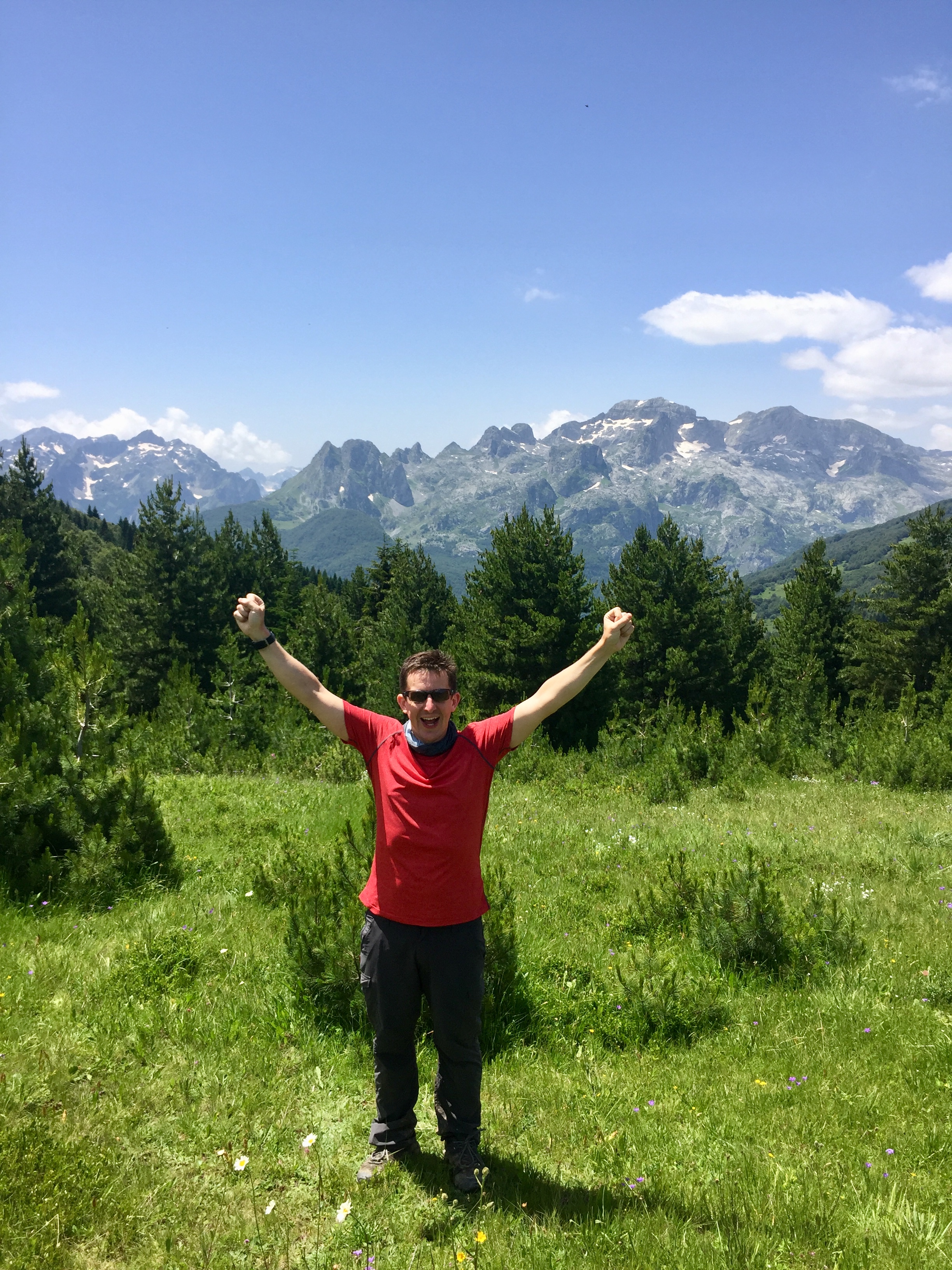
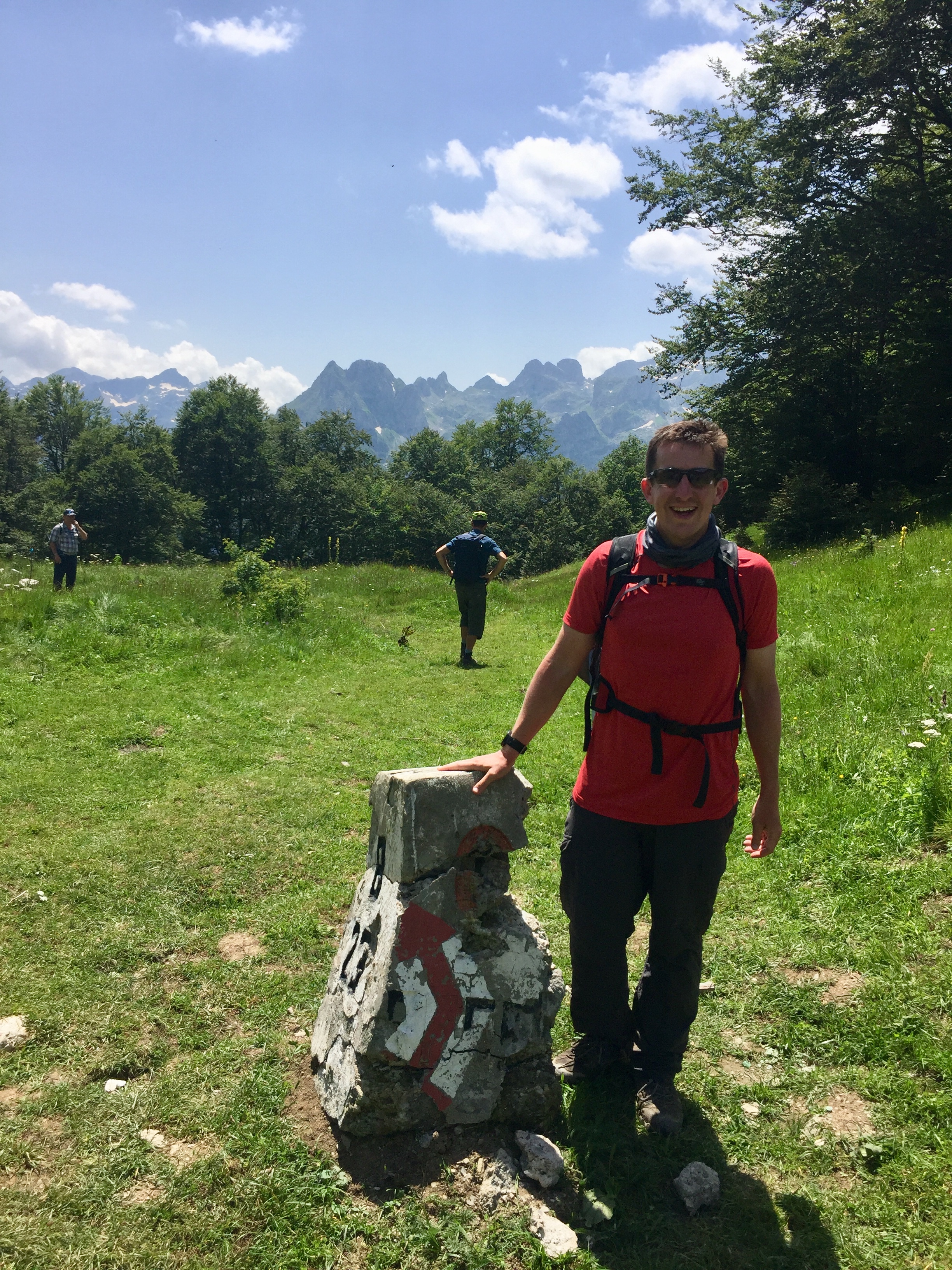
I’d seen the ad for this trip on Facebook about a year ago. It ticked all the right boxes to get me over-excited. 4 new countries, the highest peak in each, and a new airport. What's not to like? I signed up straight away expecting to rope in a few friends along the way. No chance ... 1 or 2 showed interest but came up with excuses like no money, lack of approval from the wife or “just had a baby”. Meh.

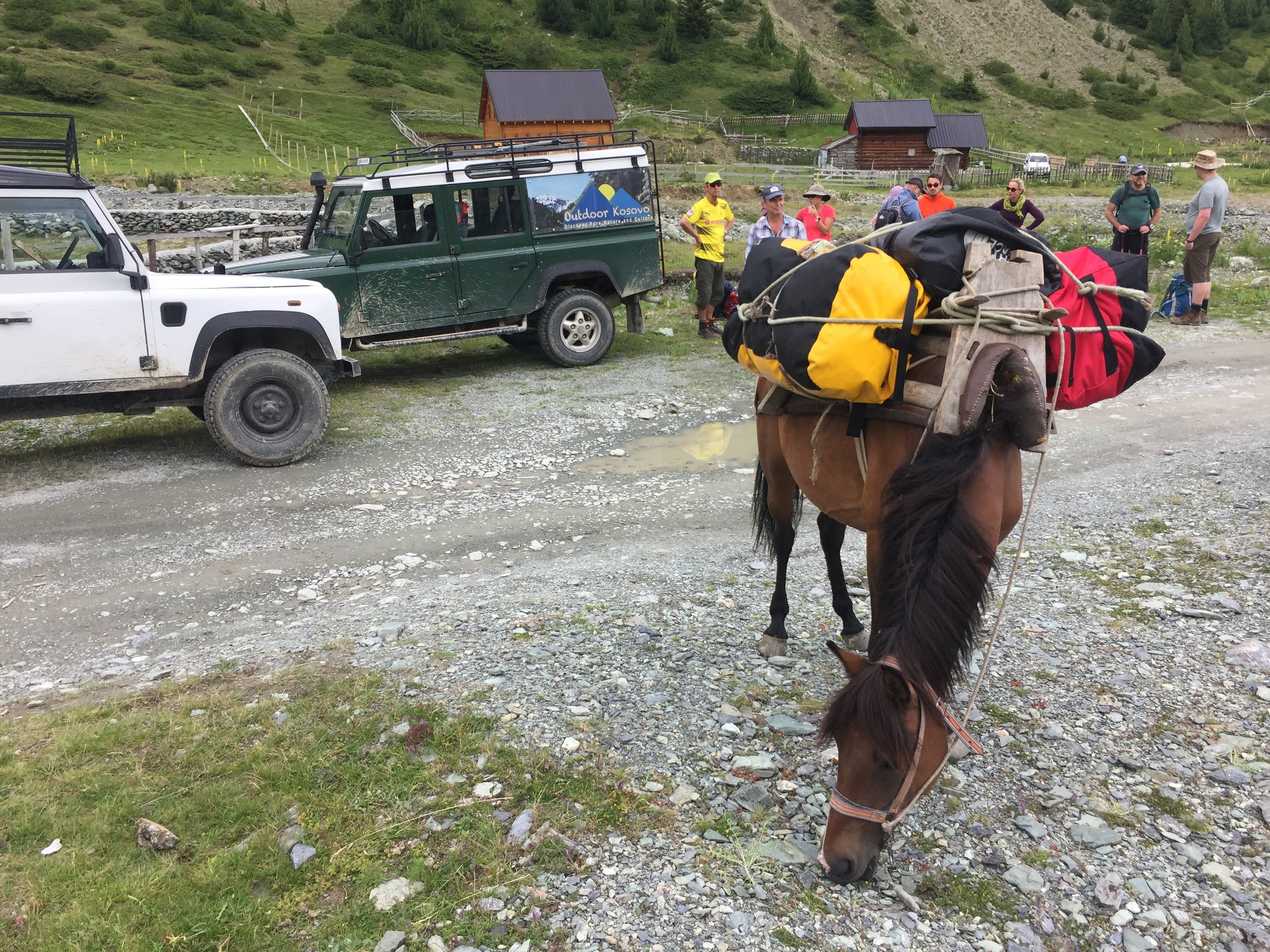
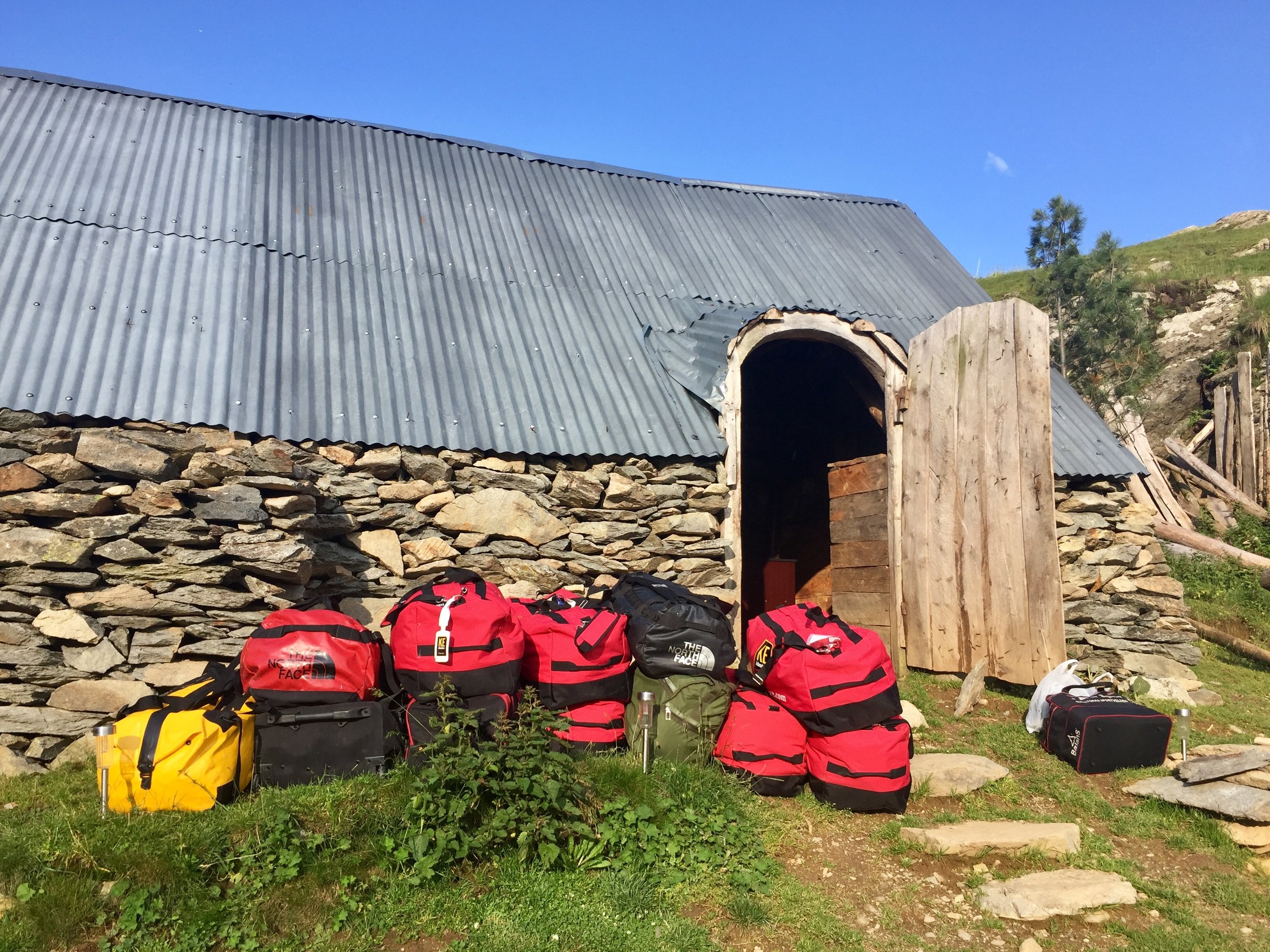
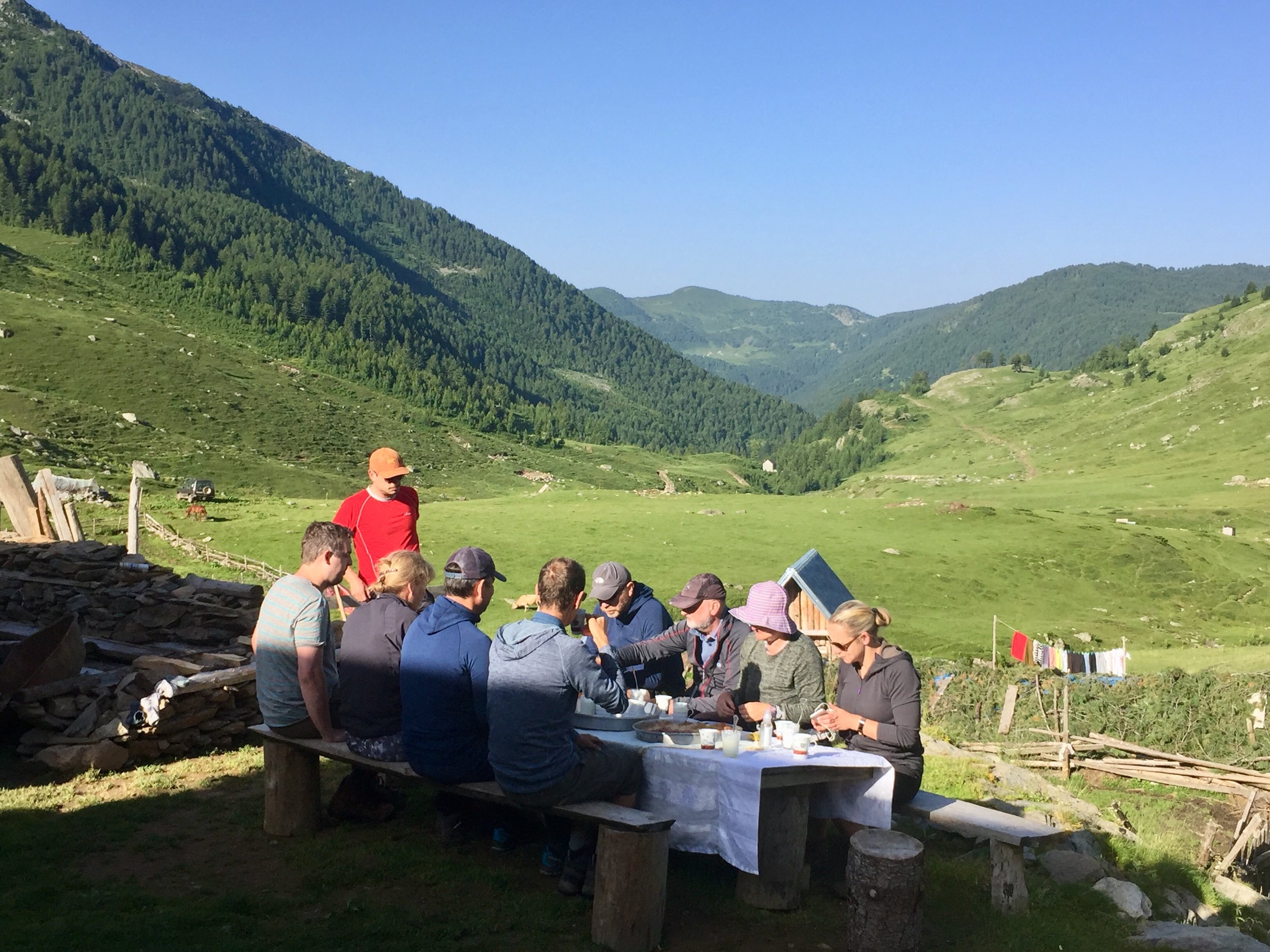
So, 1 year later I turned up at Tirana airport on my own looking for others with KE Adventures bags. I had the cunning plan of wearing my KE shirt so I could be spotted by others. All that did was make them think that I was their official guide for the week and I ended up carrying bags around. Once gathered together with our actual guide we started the 4 hour transfer to the first night's accommodation.

As it turned out, the other 11 in the group were lovely and all interesting people. KE seems to attract the more serious walker and adventure-seeker. All had incredible stories of previous trips and with none of the one-upmanship that comes with some groups. By the end of the trip I’d compiled a long list of future trips and kit advice.


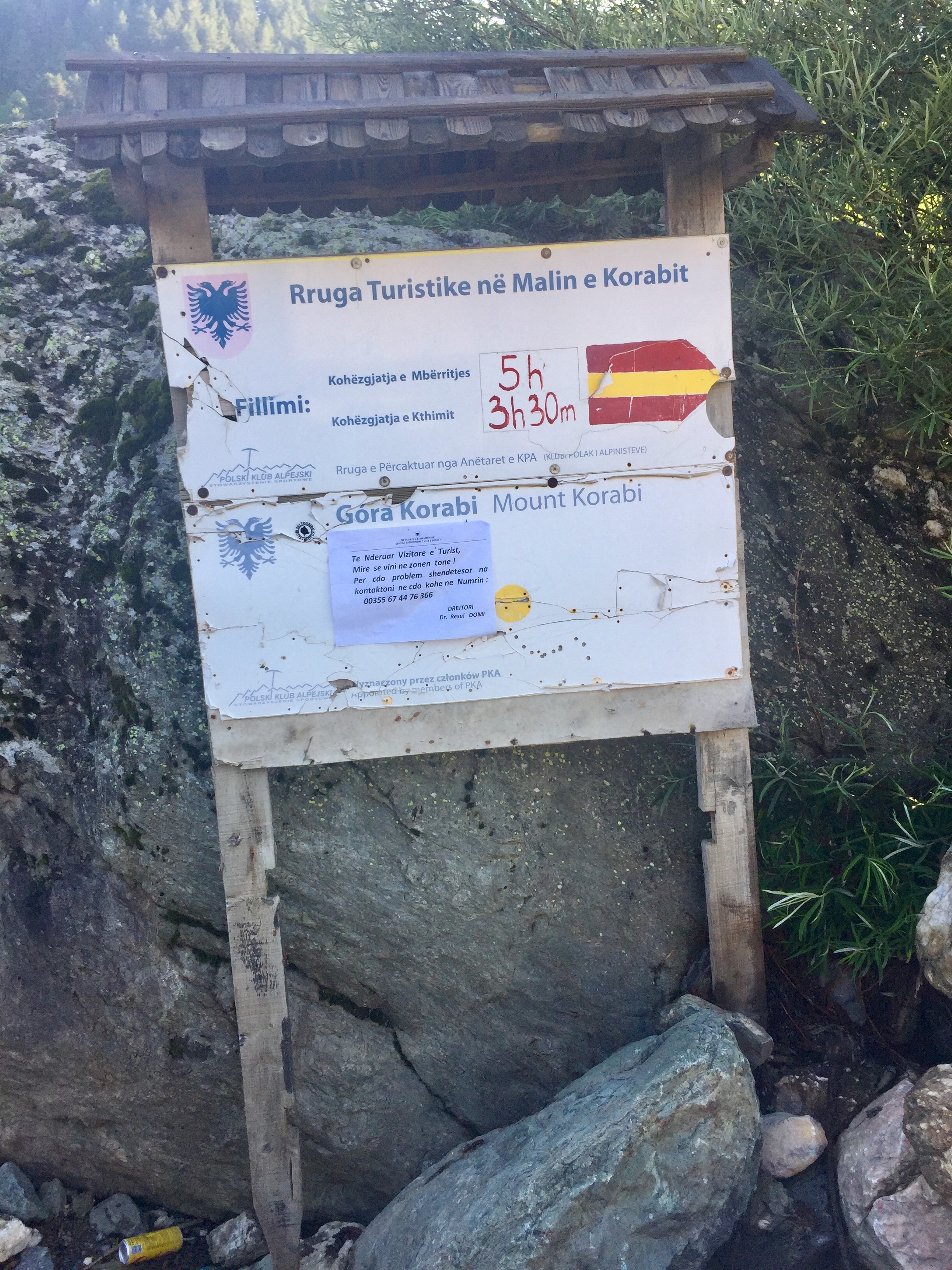
Day 1: Mt Korab

Significance: Highest peak in both Albania and North Macedonia
Elevation: 2,764 m
Date climbed: July 1st 2018
Coordinates: 41.7901° N, 20.5471° E
Route Start / End: Circular route from Hotel Korabi, Radomirë, Albania
Route Distance: 17.2 km (10.7 miles)
Route Elevation Change: +/- 1,527m
GPX File: get via Buy Me a Coffee
Webhttps://en.wikipedia.org/wiki/Korab_(mountain)

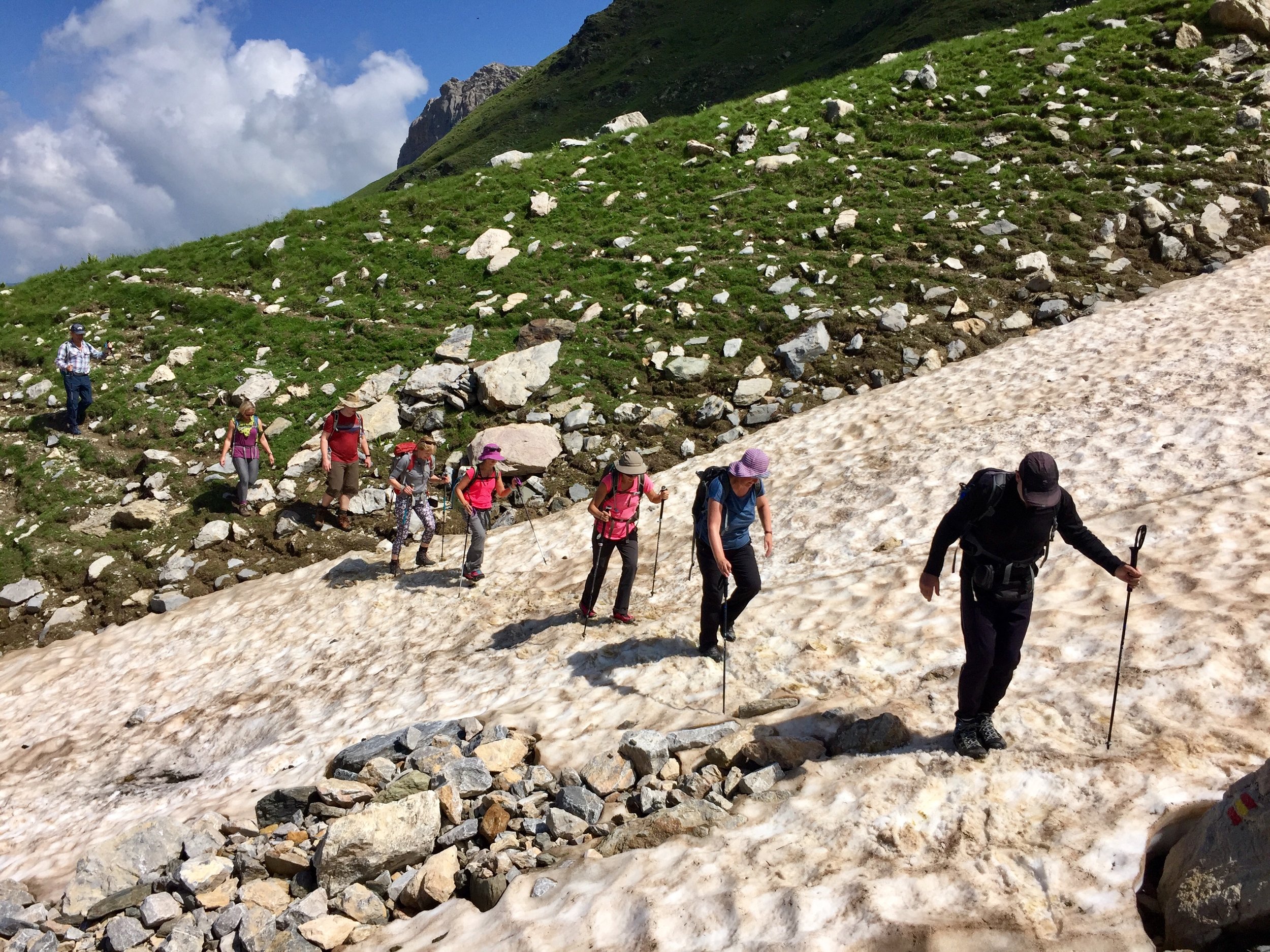
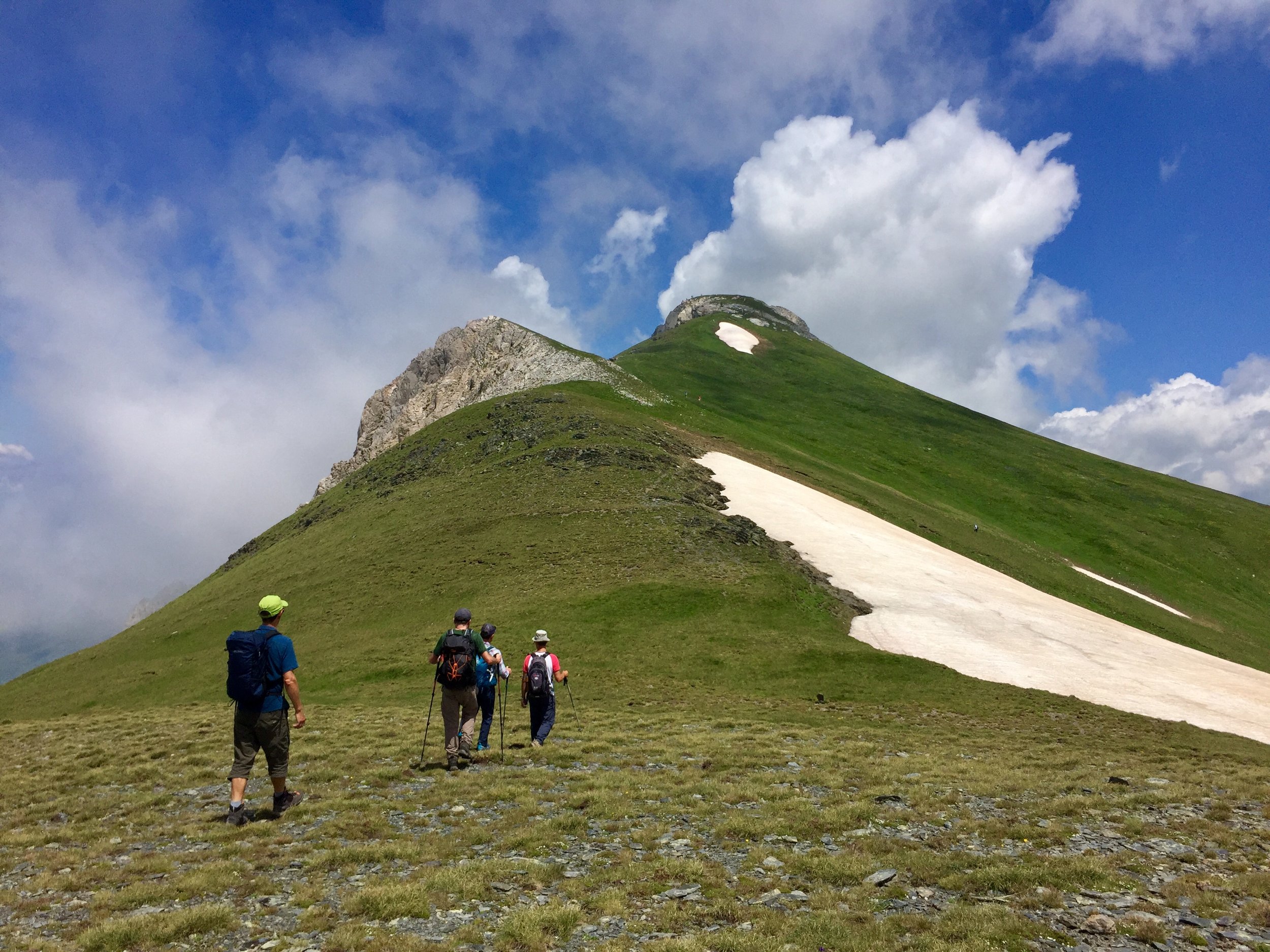
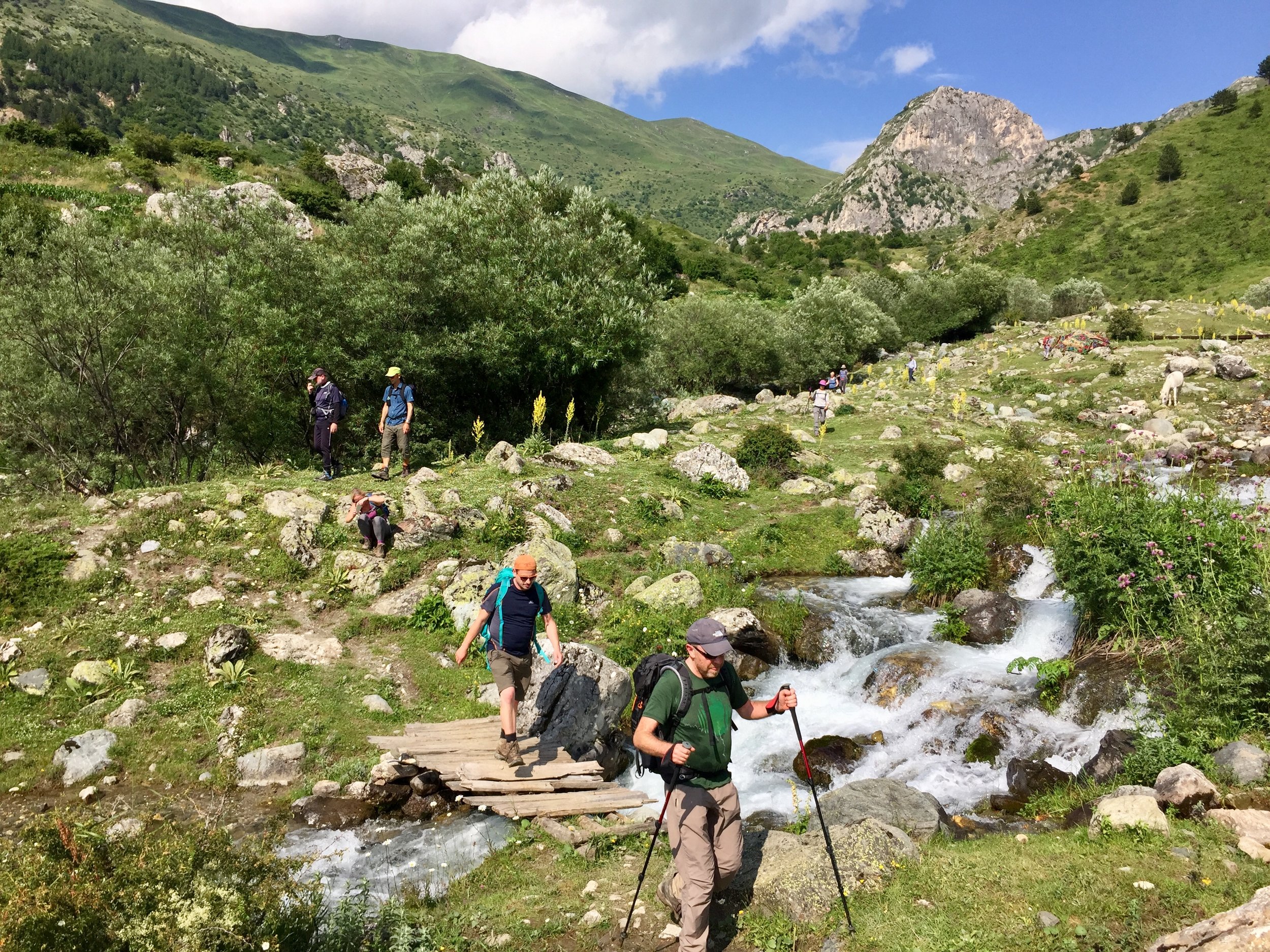
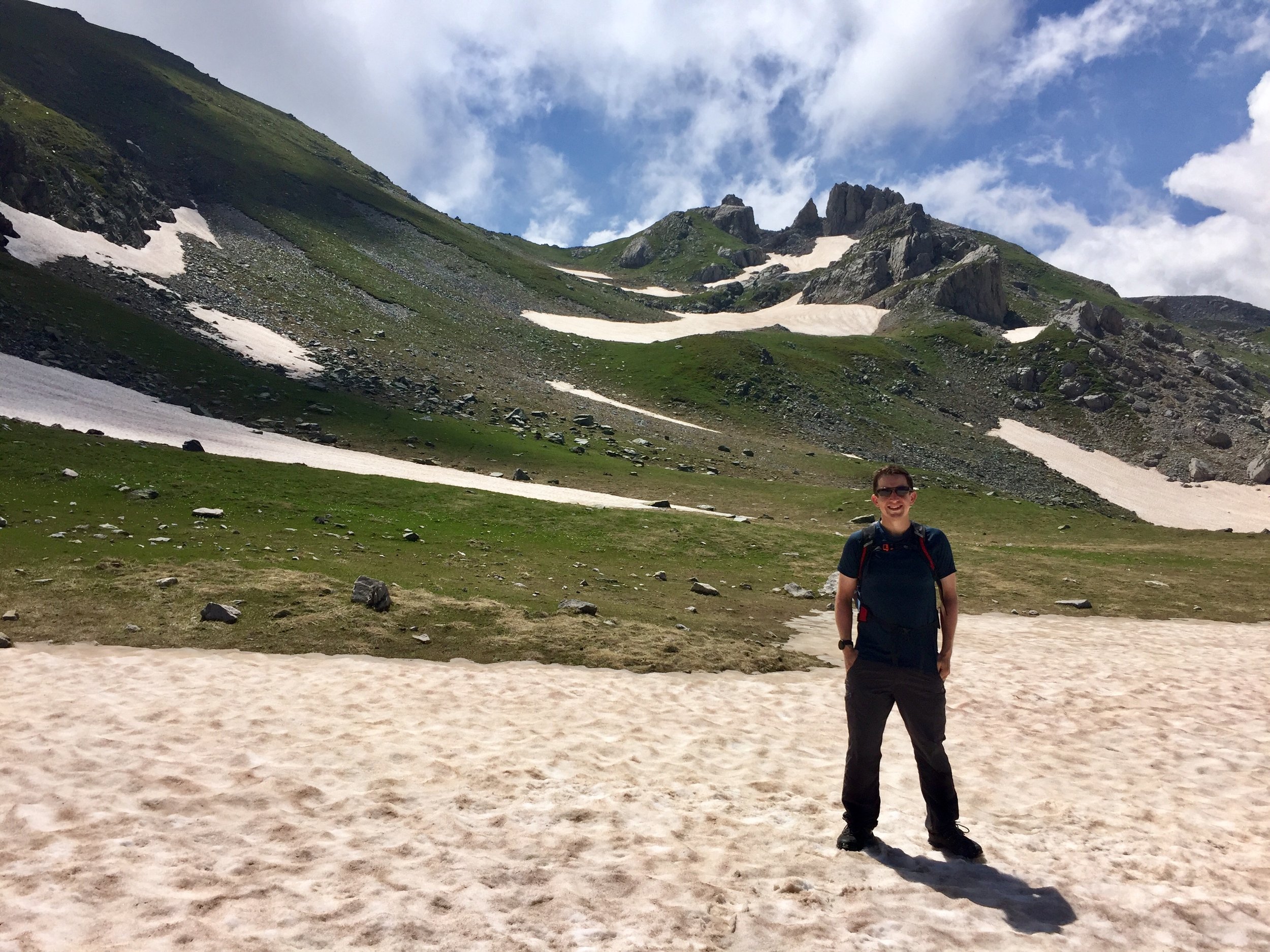
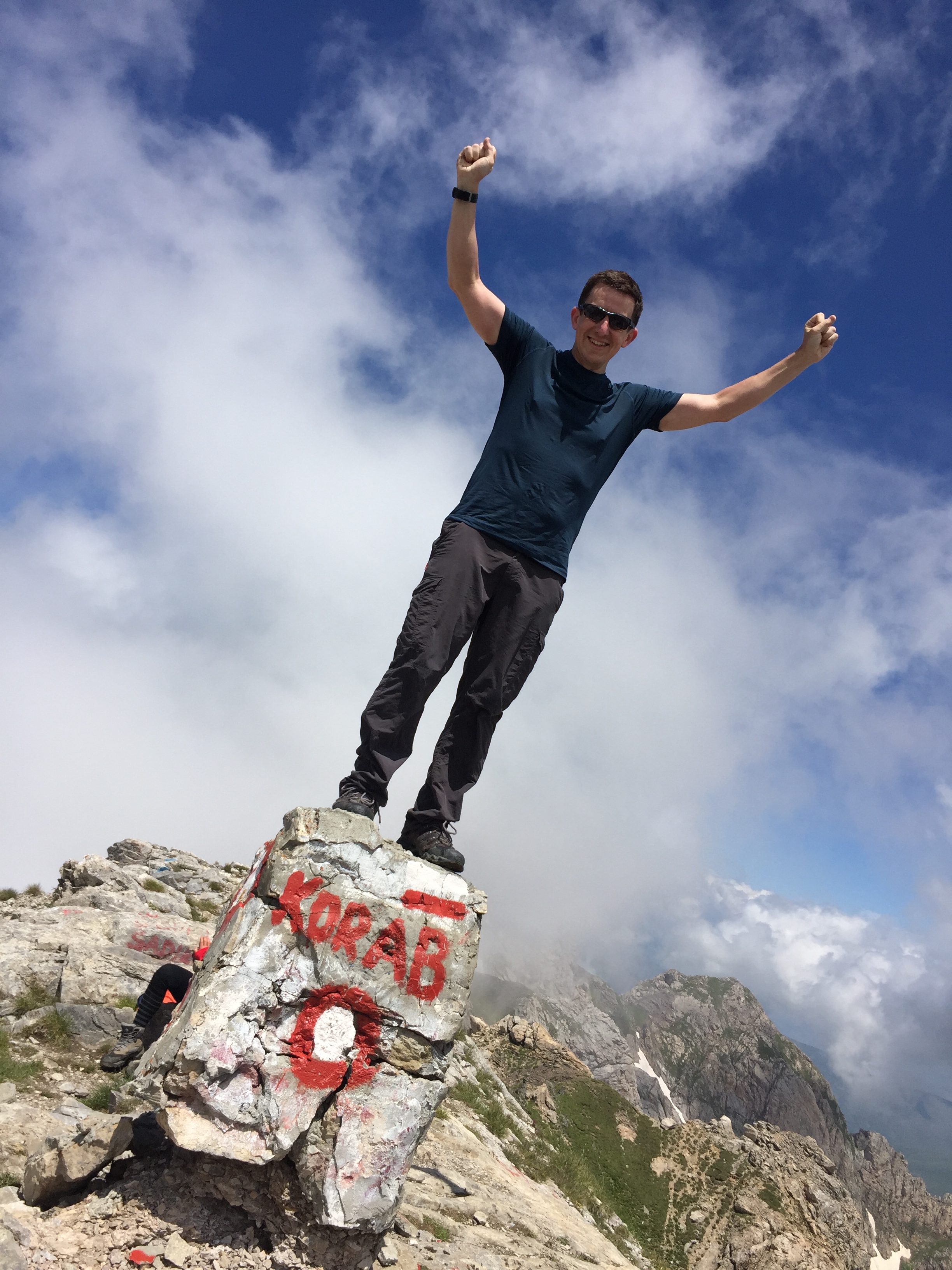
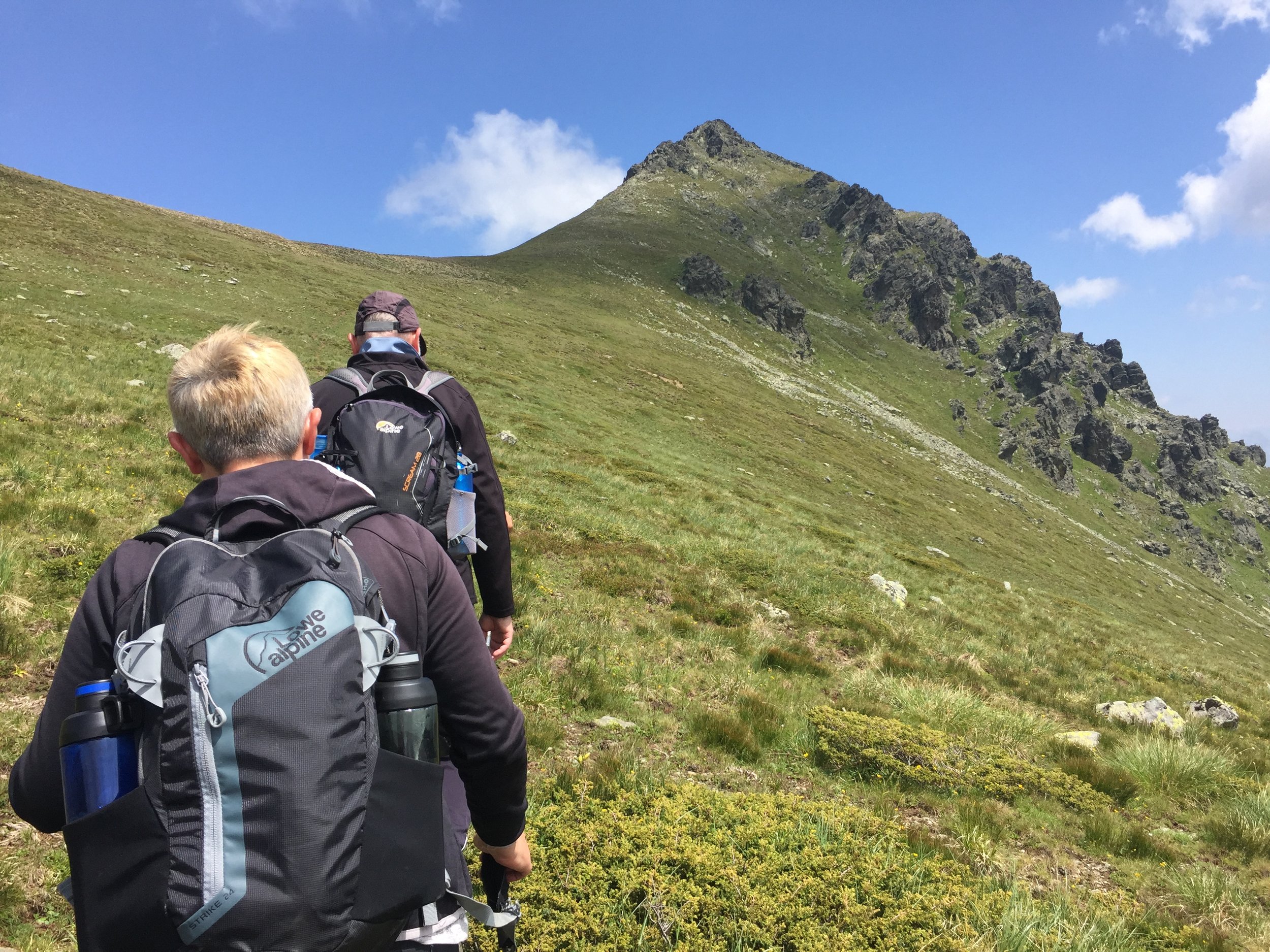
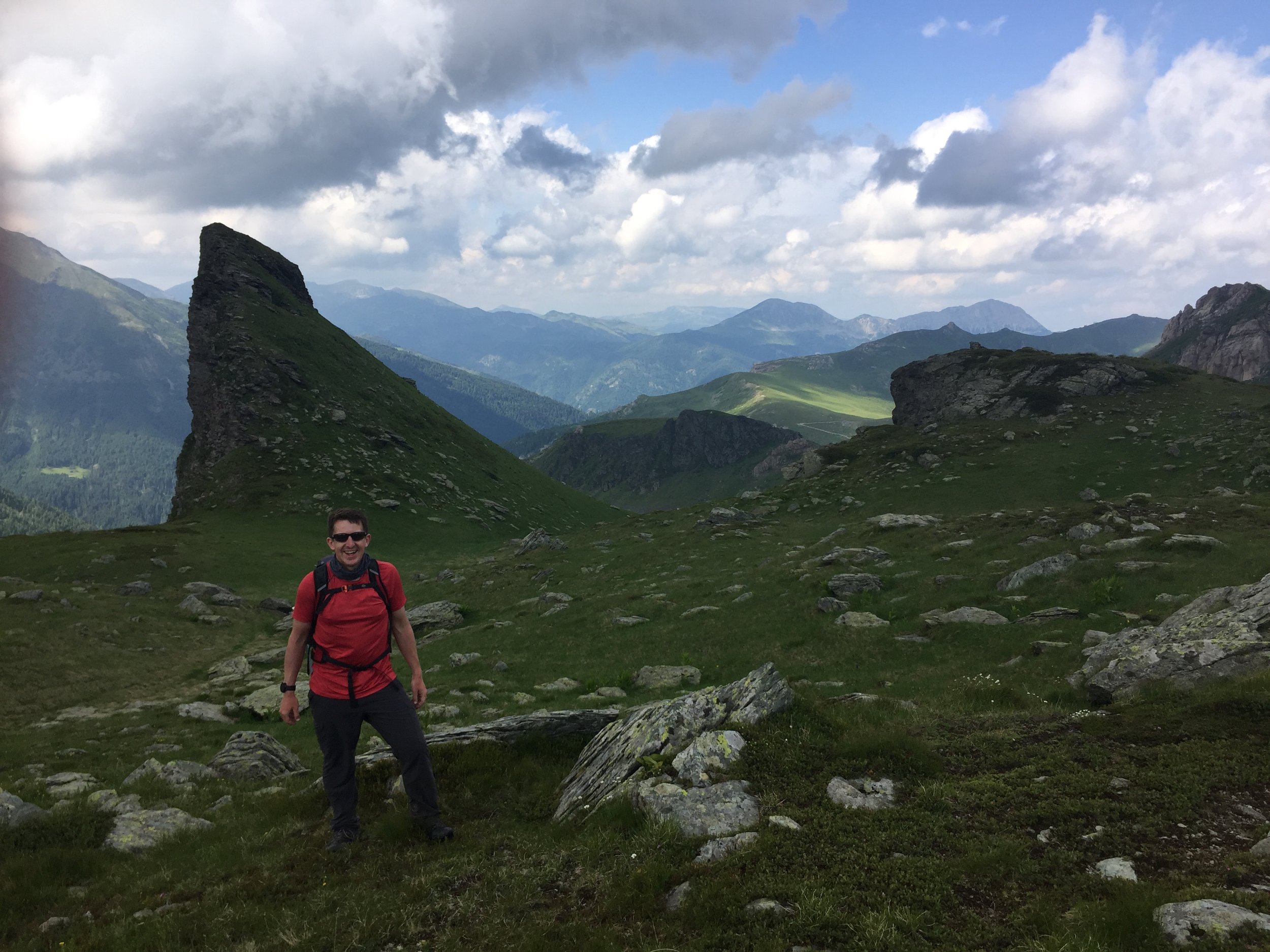
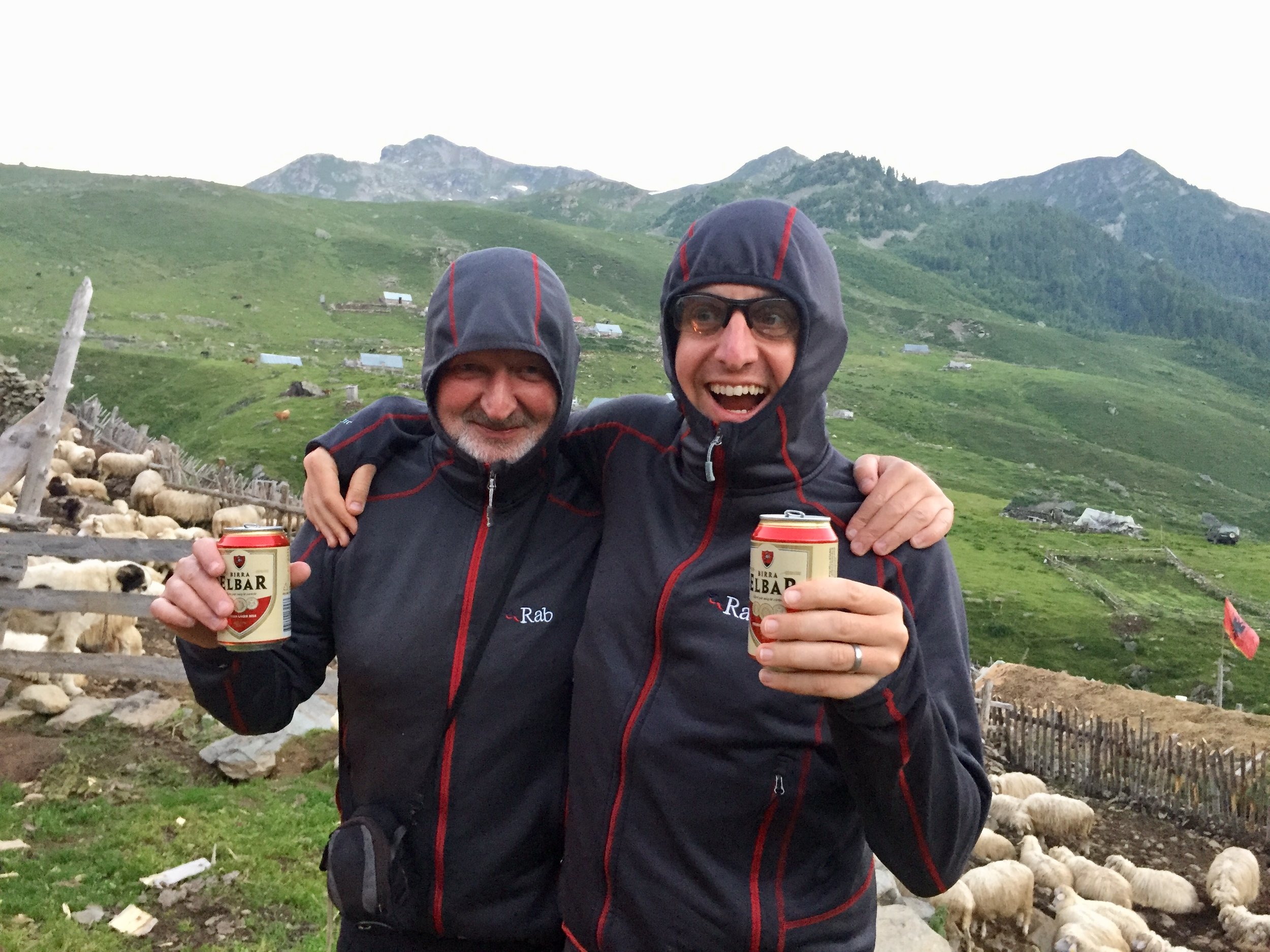
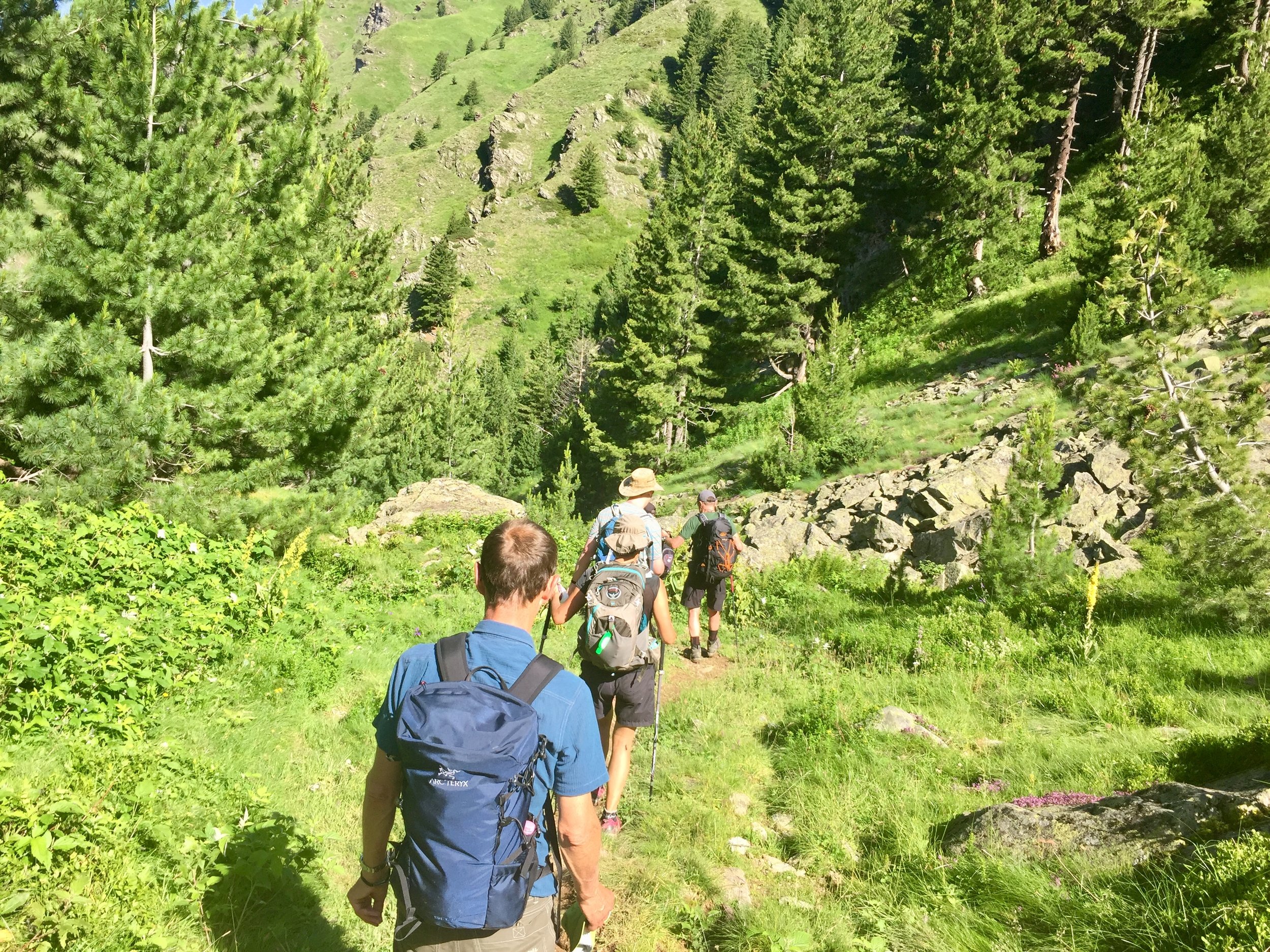
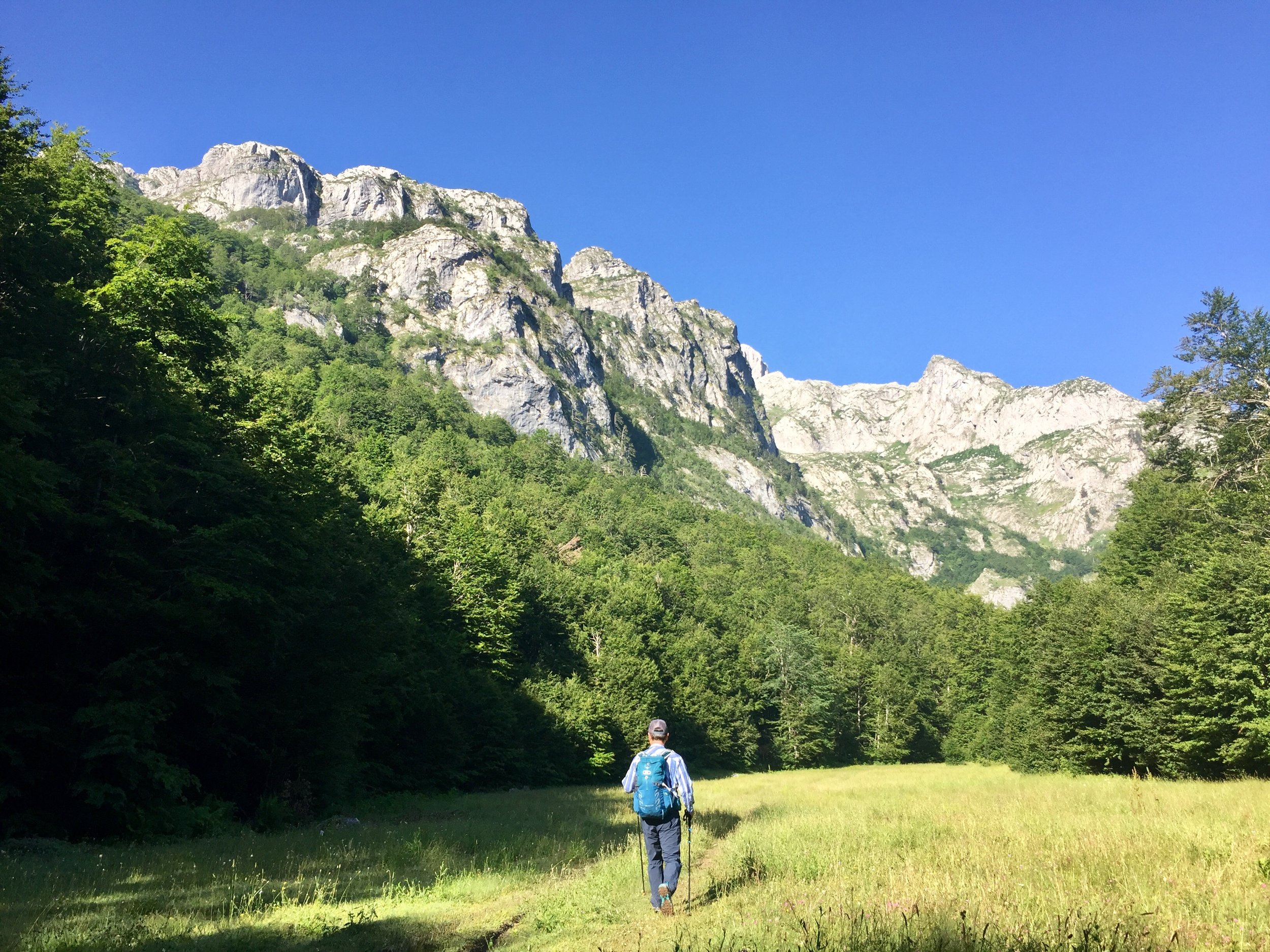
One of the things I loved about the trip was how much was packed into each day. Day 1 was no exception with a 06:00 wake up call for the trek to Mt Korab, the high point of both Albania and North Macedonia. This was the highest of the 3 summits on the trip and a long day at 9 hours. It was a nice warm-up and a chance to get to know the rest of the group and our guide Geri a bit better. We climbed up from the Albanian side then had lunch in North Macedonia over-looking Mavrovo National Park. The return was more or less the same as the ascent, with a nice diversion through a forest and meadows. After a quick celebratory Albanian beer we set off on 3 hour bus transfer to the Kosovan city of Junik.


Day 2: Đeravica

Significance: Highest peak in Kosovo
Elevation: 2,656 m
Date climbed: July 2nd 2018
Coordinates: 42.5318° N, 20.1399° E
Route Start / End: Point to point route from Gropa e Ereniku to Dobërdol
Route Distance: 15.9 km (9.9 miles)
Route Elevation Change: +1,053m / -947m. Net 106m
GPX File: get via Buy Me a Coffee
Webhttps://en.wikipedia.org/wiki/Deravica

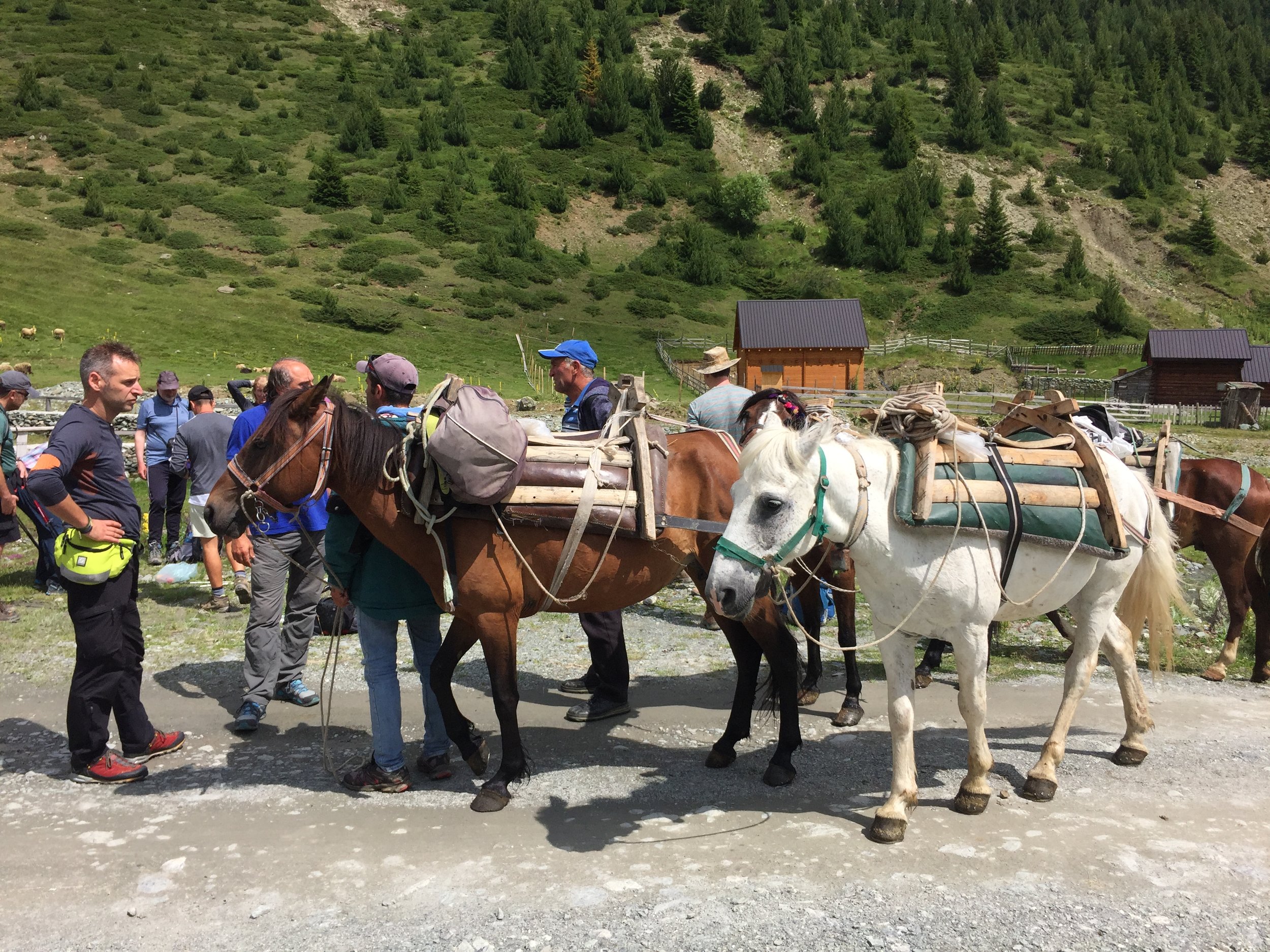
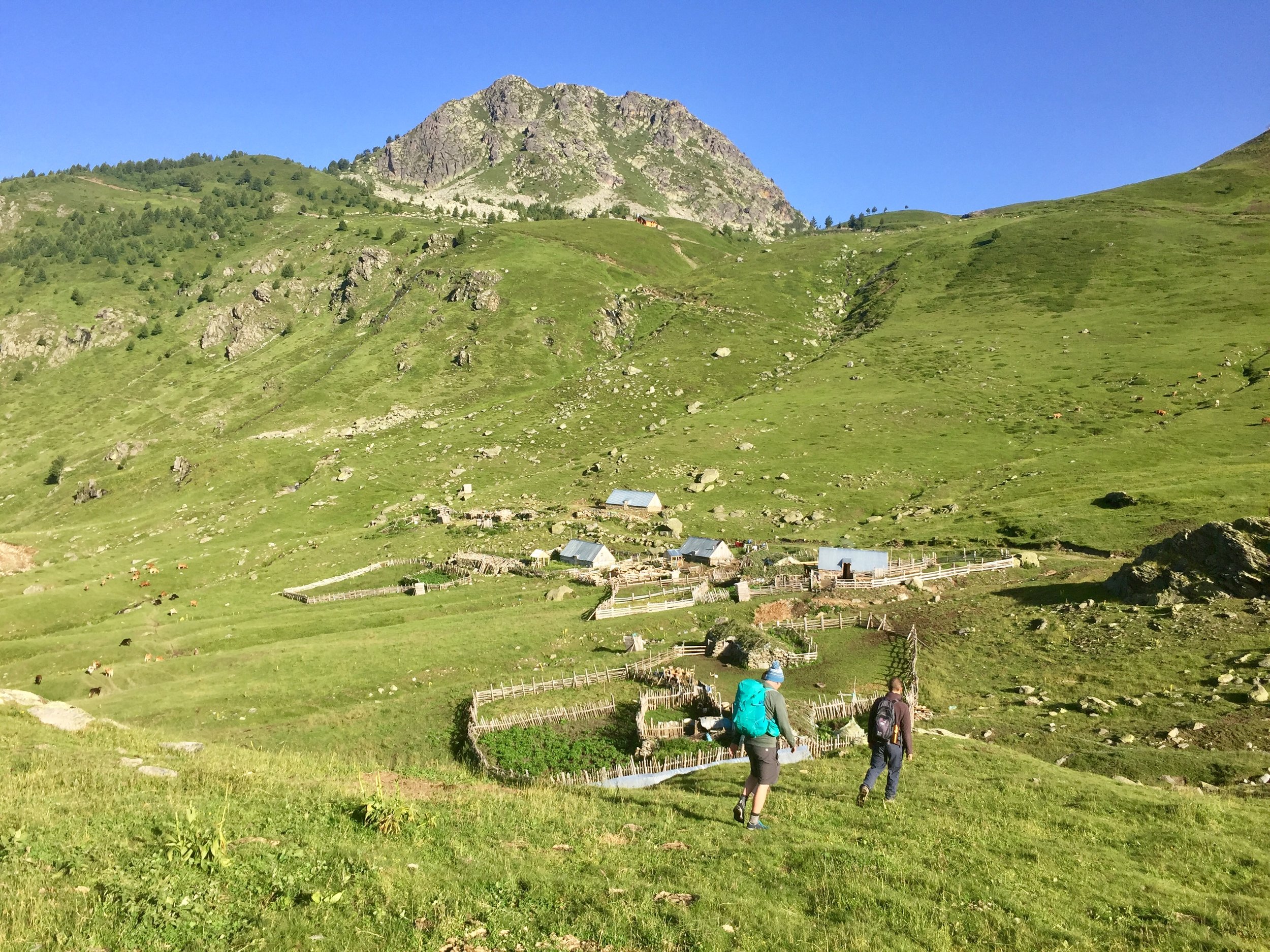
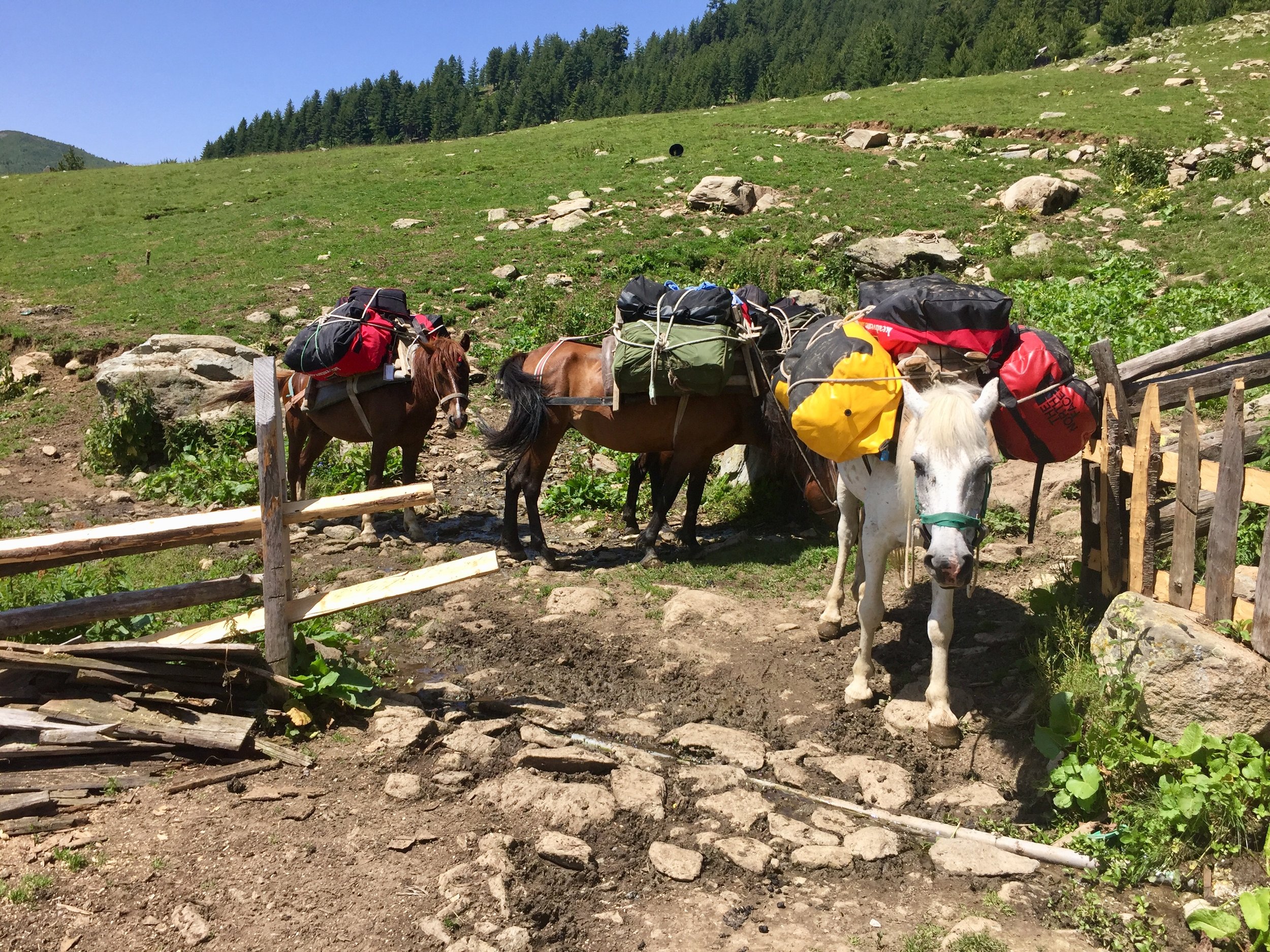
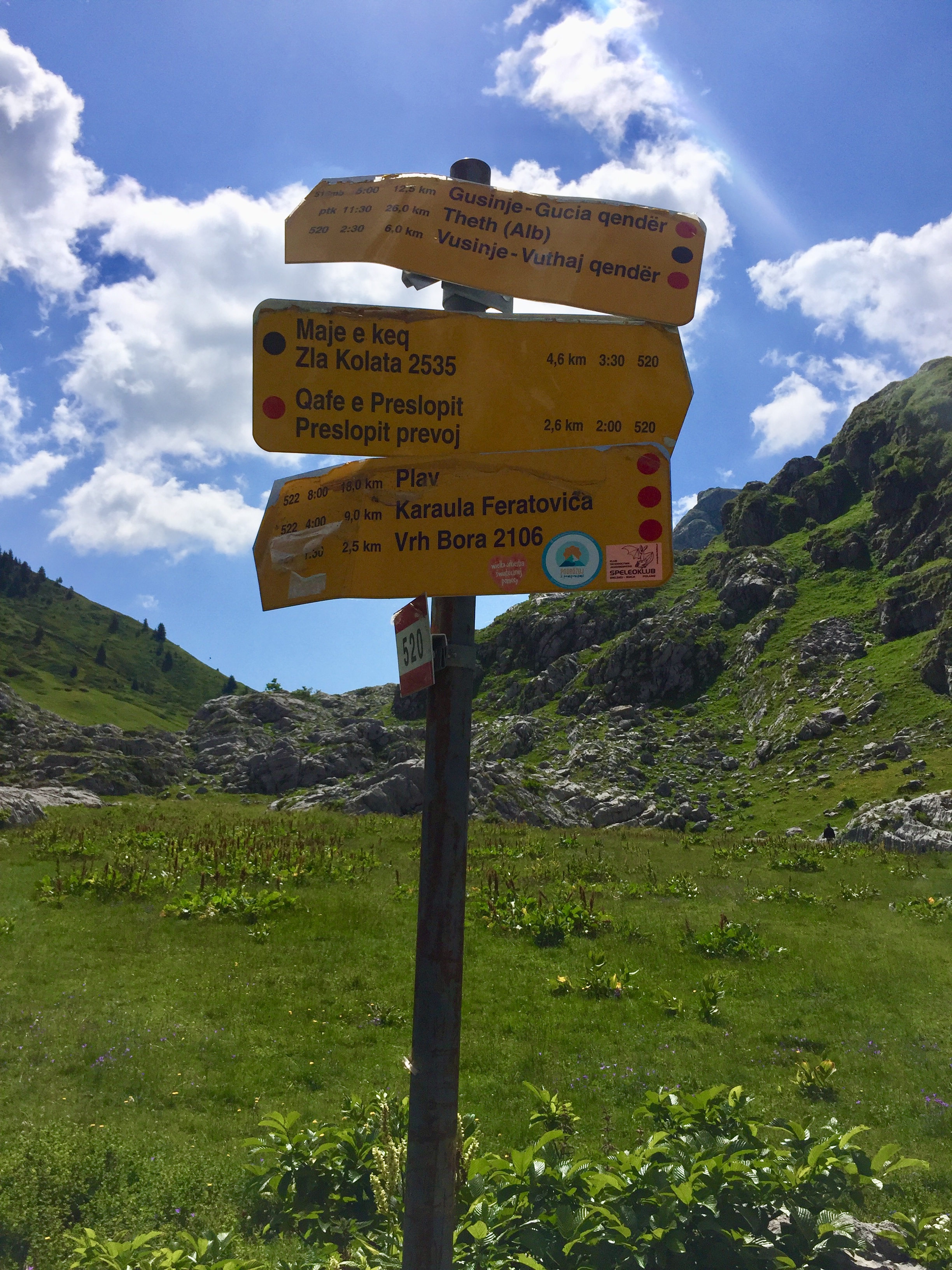
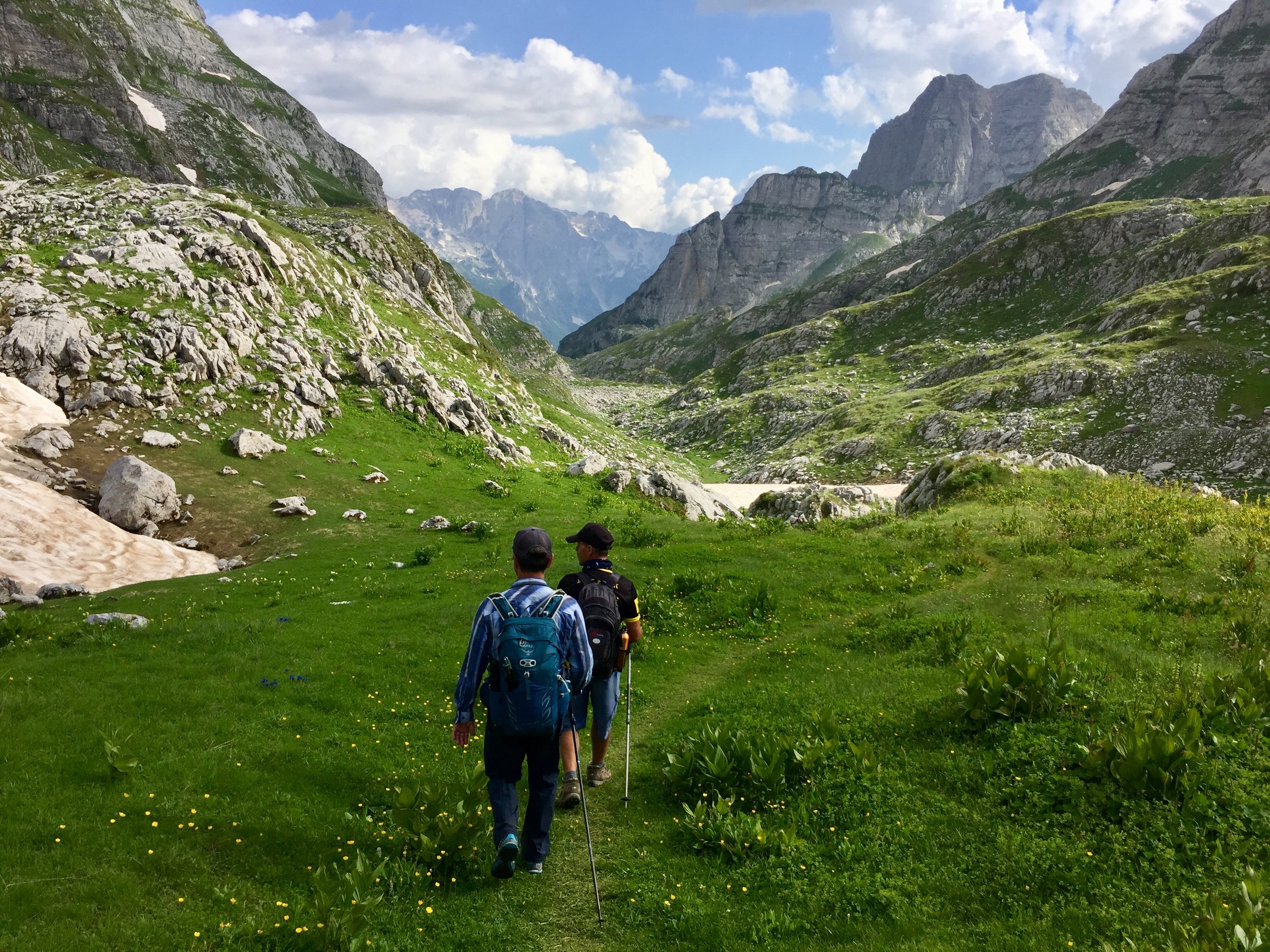
Kosovo was a pleasant surprise. My only awareness of it was from grim news reports from the 90s. I’d tried not to have any expectations, just an excitement from being able to tick off a new country, and an obscure one at that. Following our last comfortable night for a few days we took a bumpy 4x4 trip to a remote valley to start of our 4 day trek.

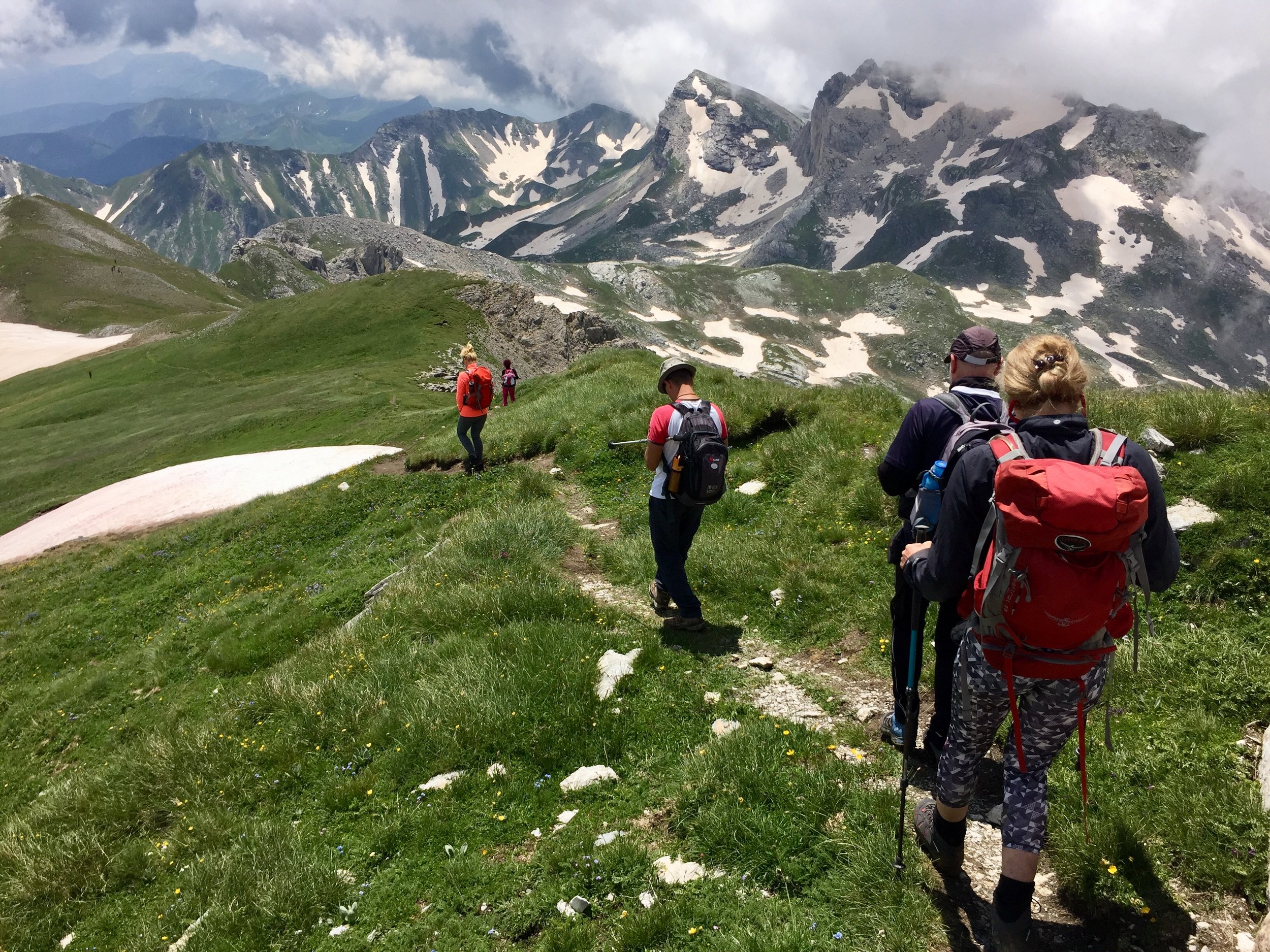
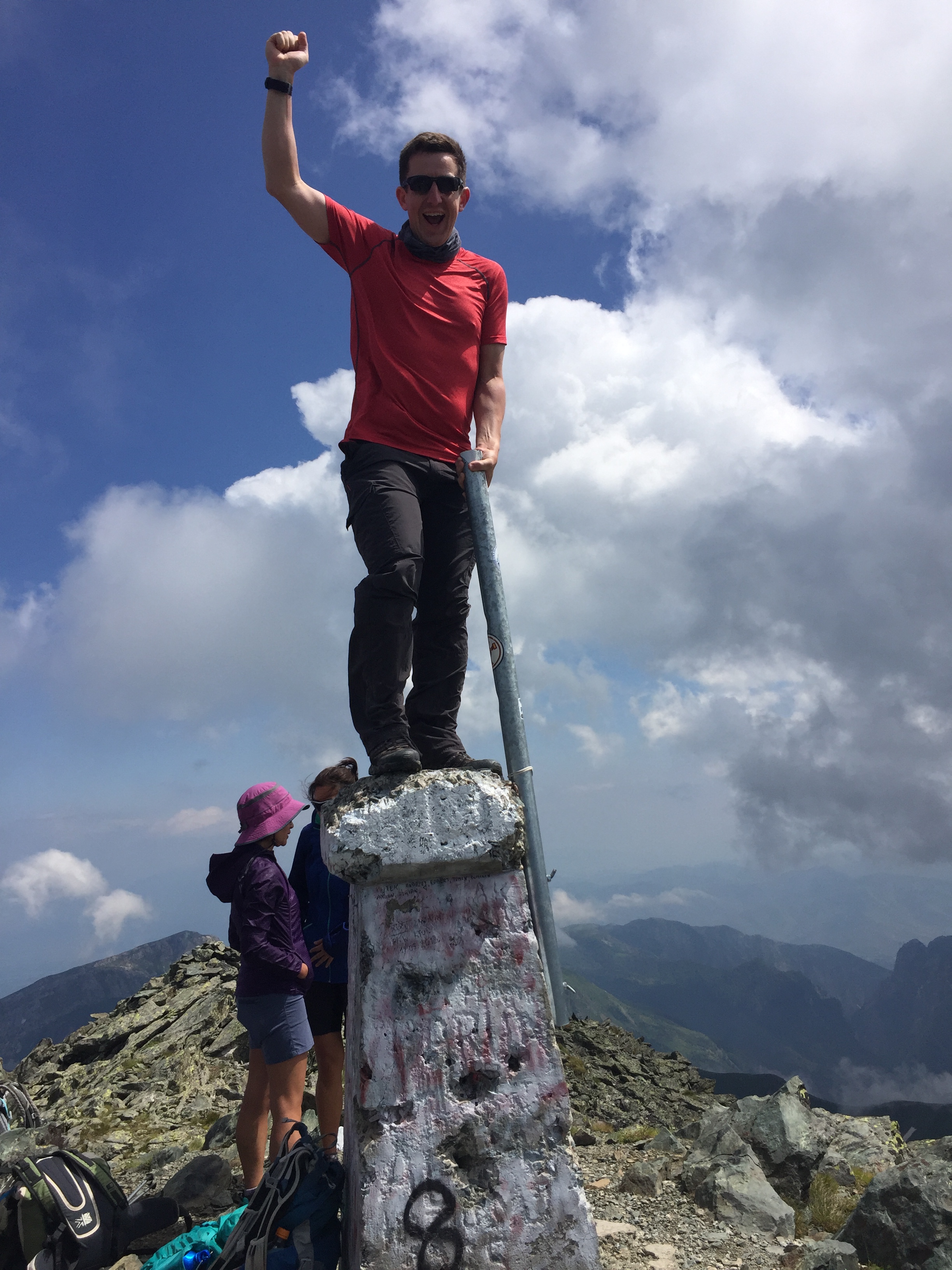
After the gentle initial ascent of Korab, today’s climb got steep quickly. The post-lunch scramble reminded me a bit of the Barranco Wall on Kilimanjaro. Once at the summit I was more hesitant to climb on top of the trig-like pillar than on Korab due to the high winds and steeper sides. Fortunately there was a flag pole to grip onto and attempt to look vaguely heroic.

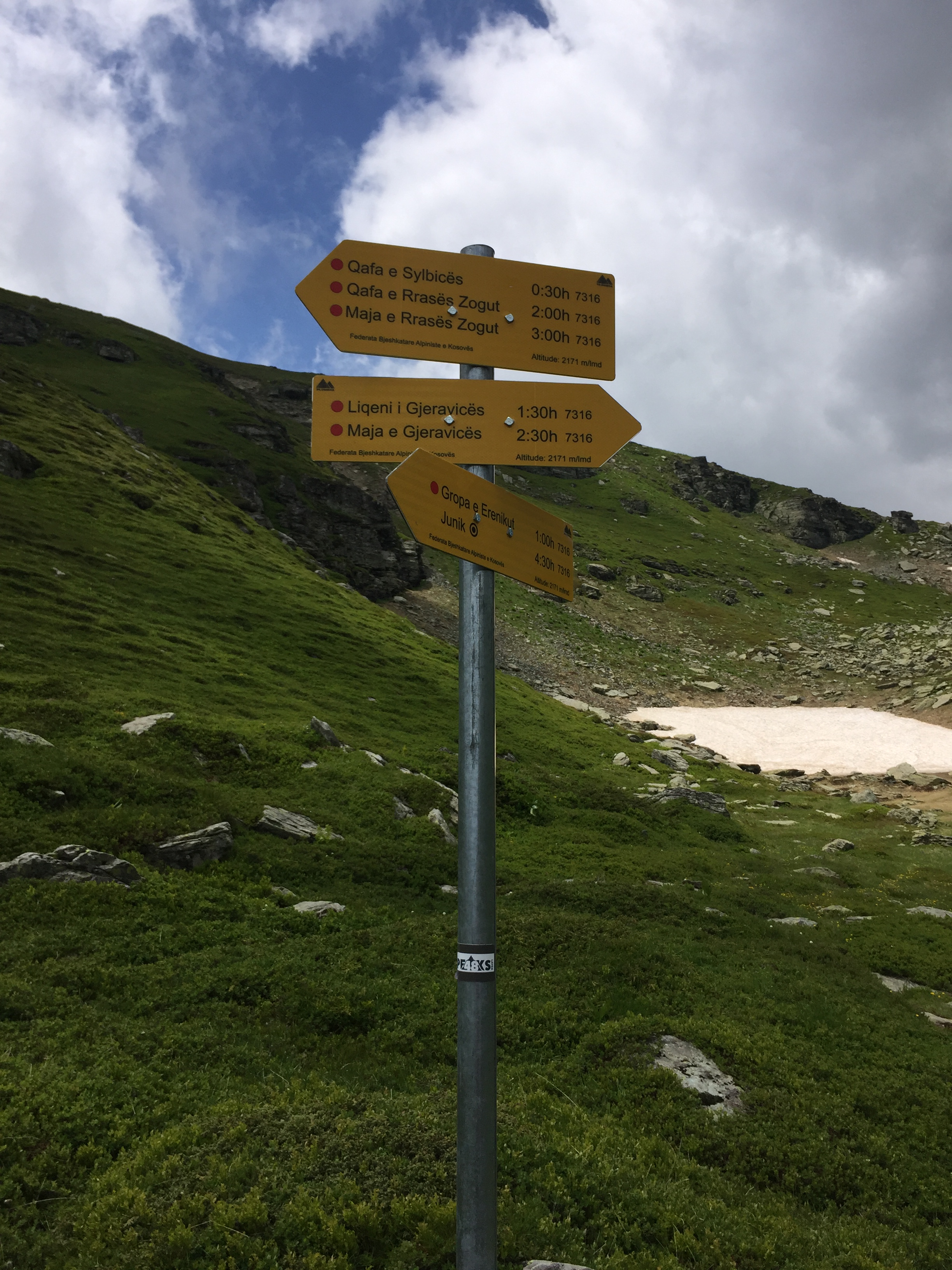
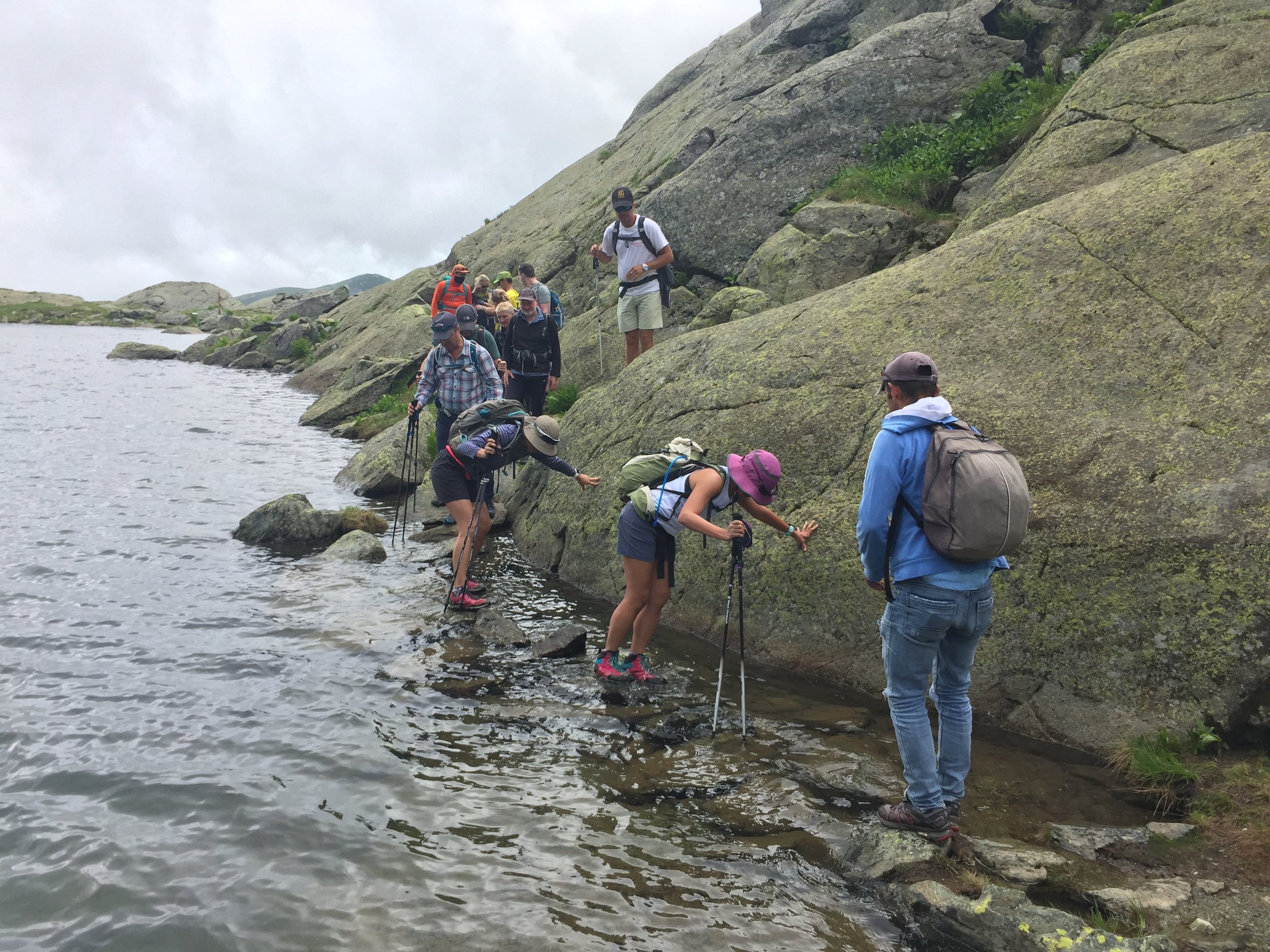
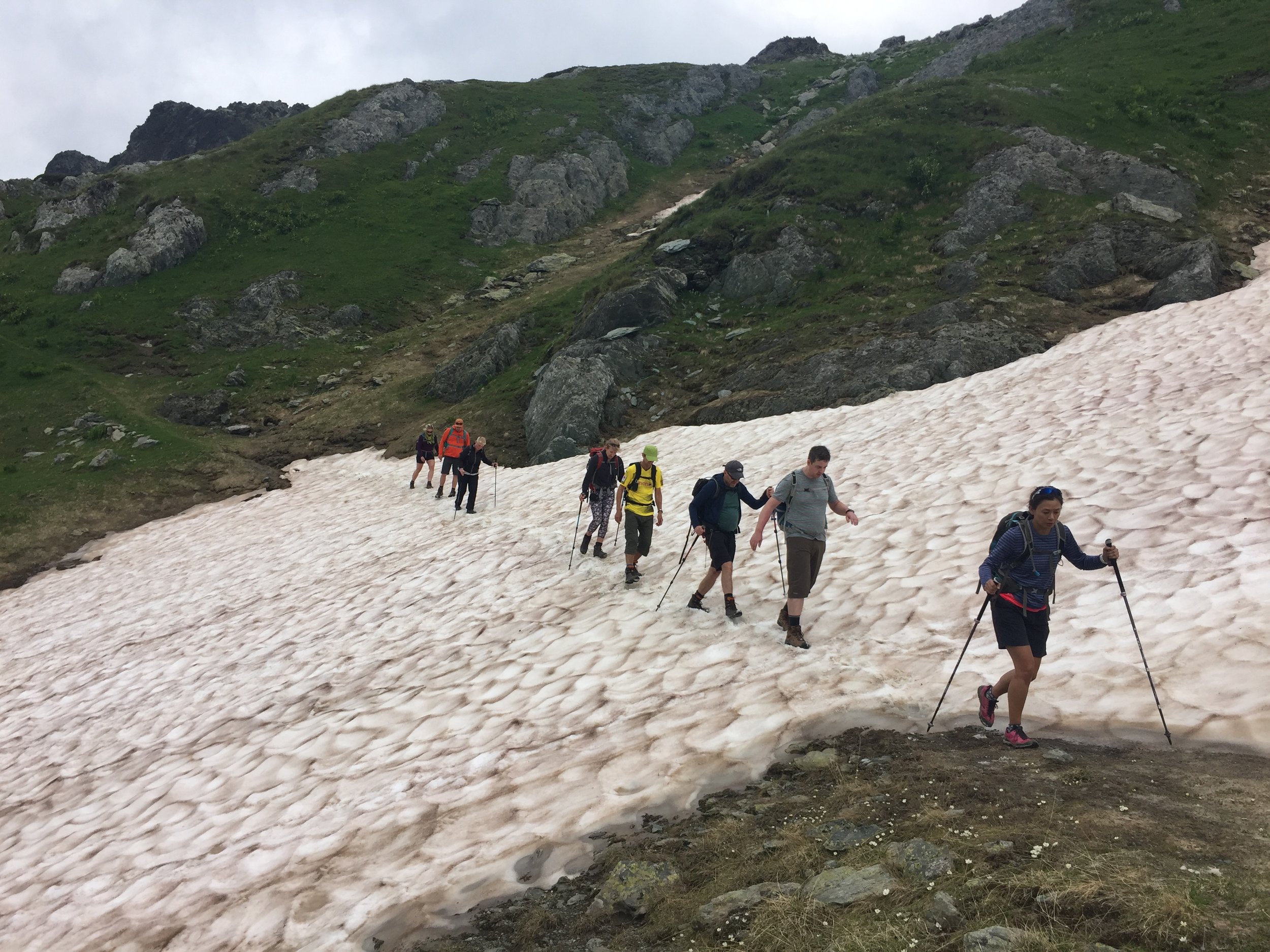
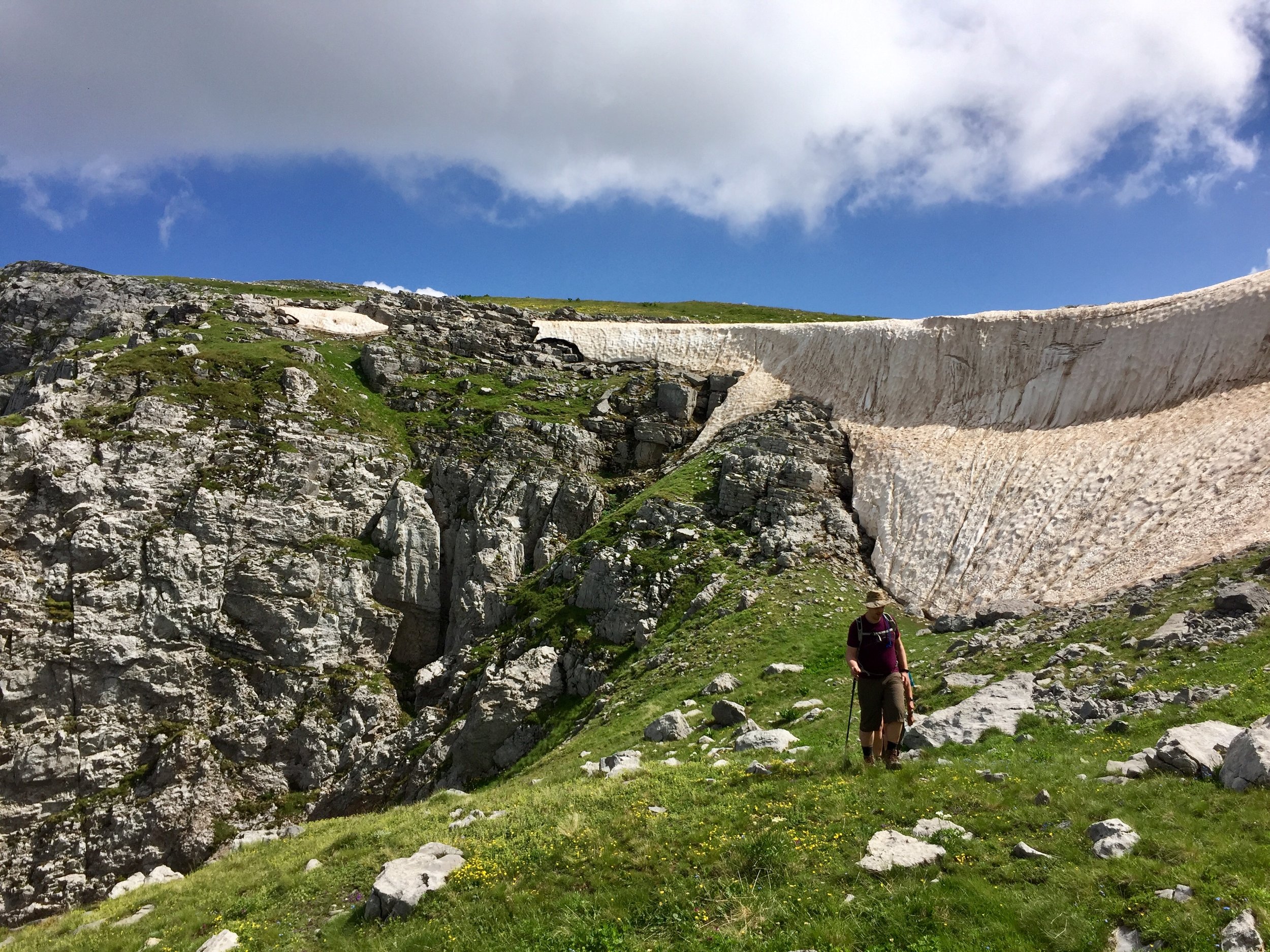
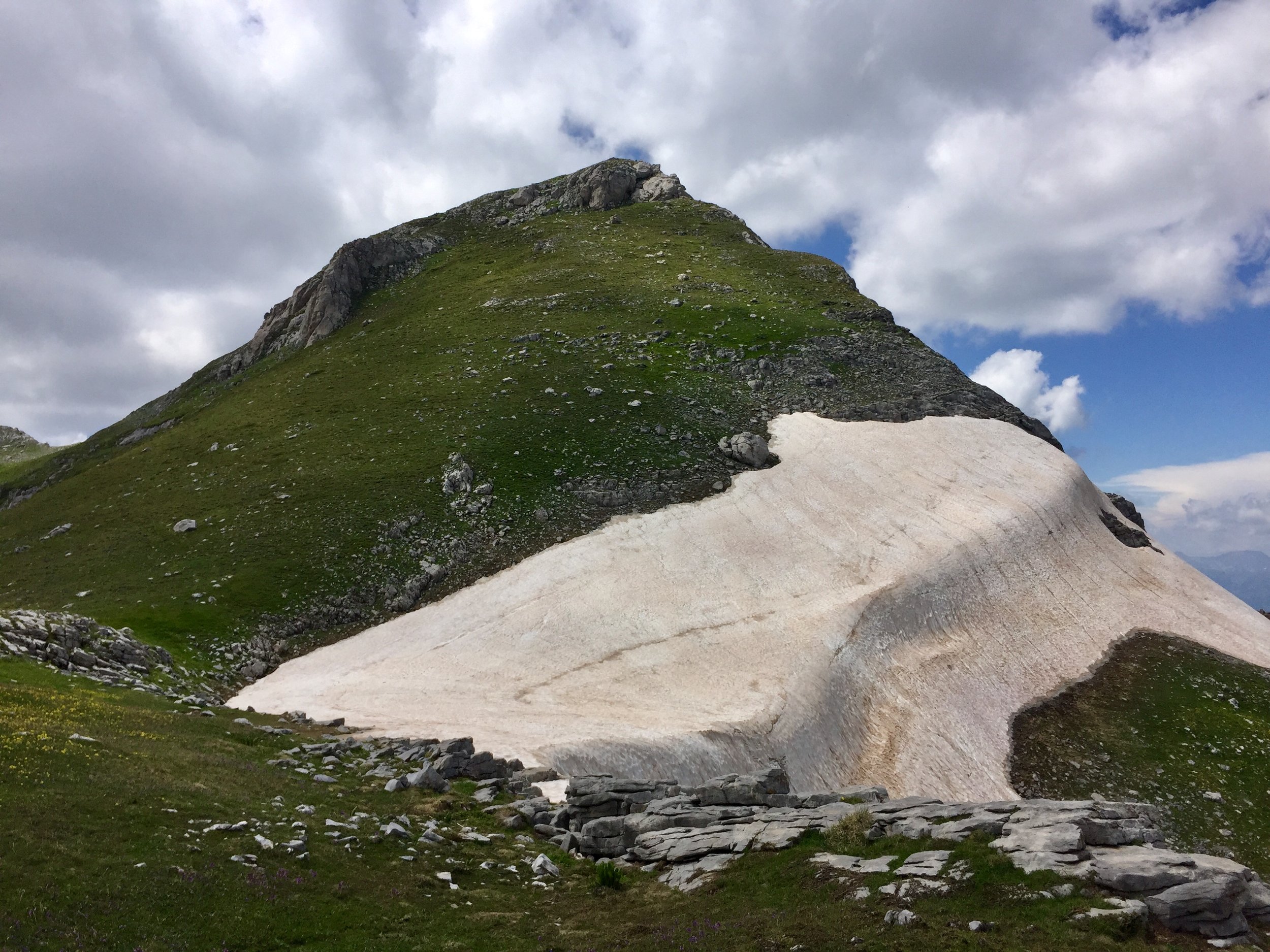
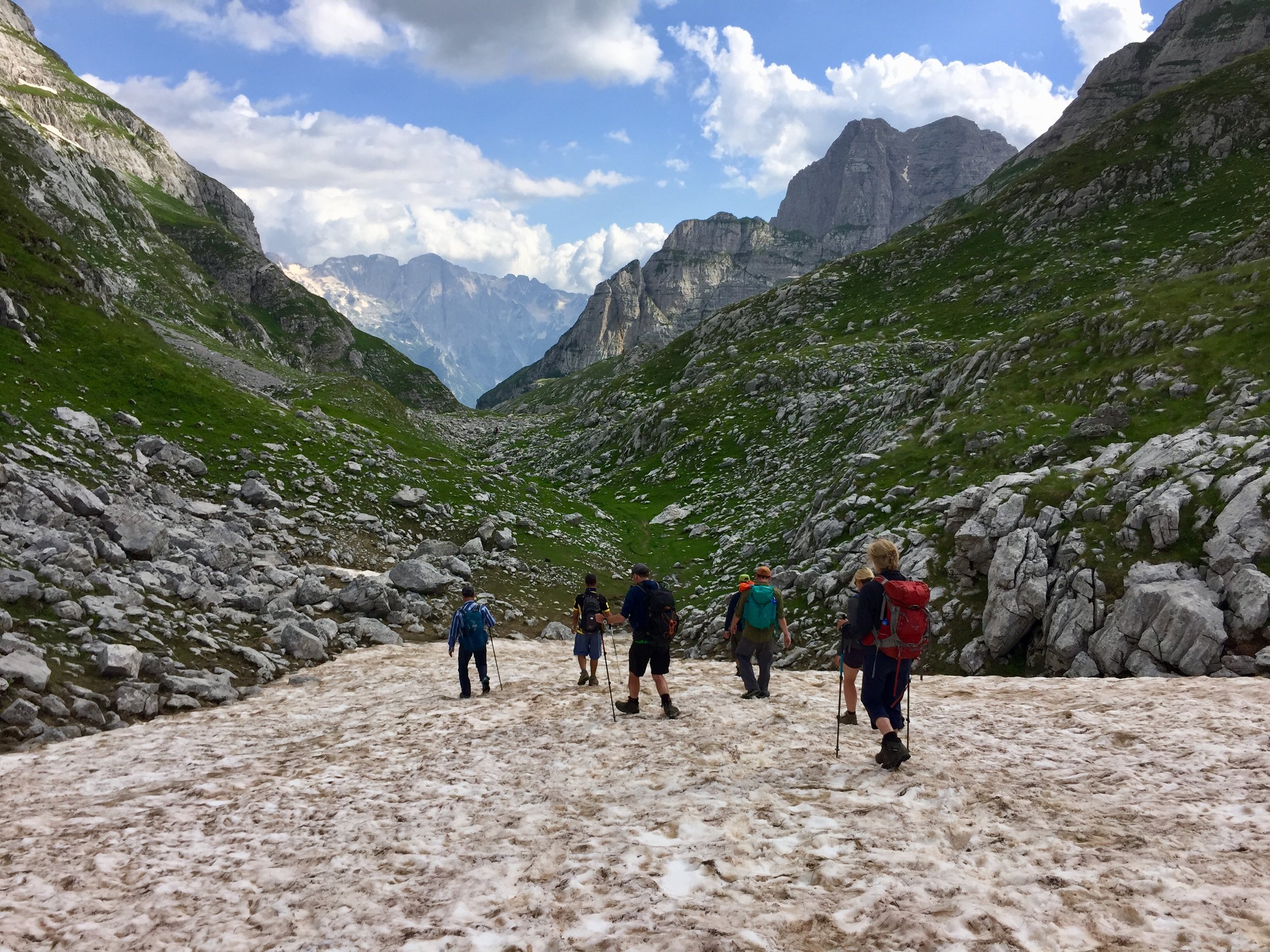
After the initial descent from the summit, the rest of the trek continued north-west, re-entering Albania after traversing a steep sided valley. A large ice field tested my long held nervousness of slipping. The more experienced of the group trudged straight across it while I followed Geri on a longer steadier route.

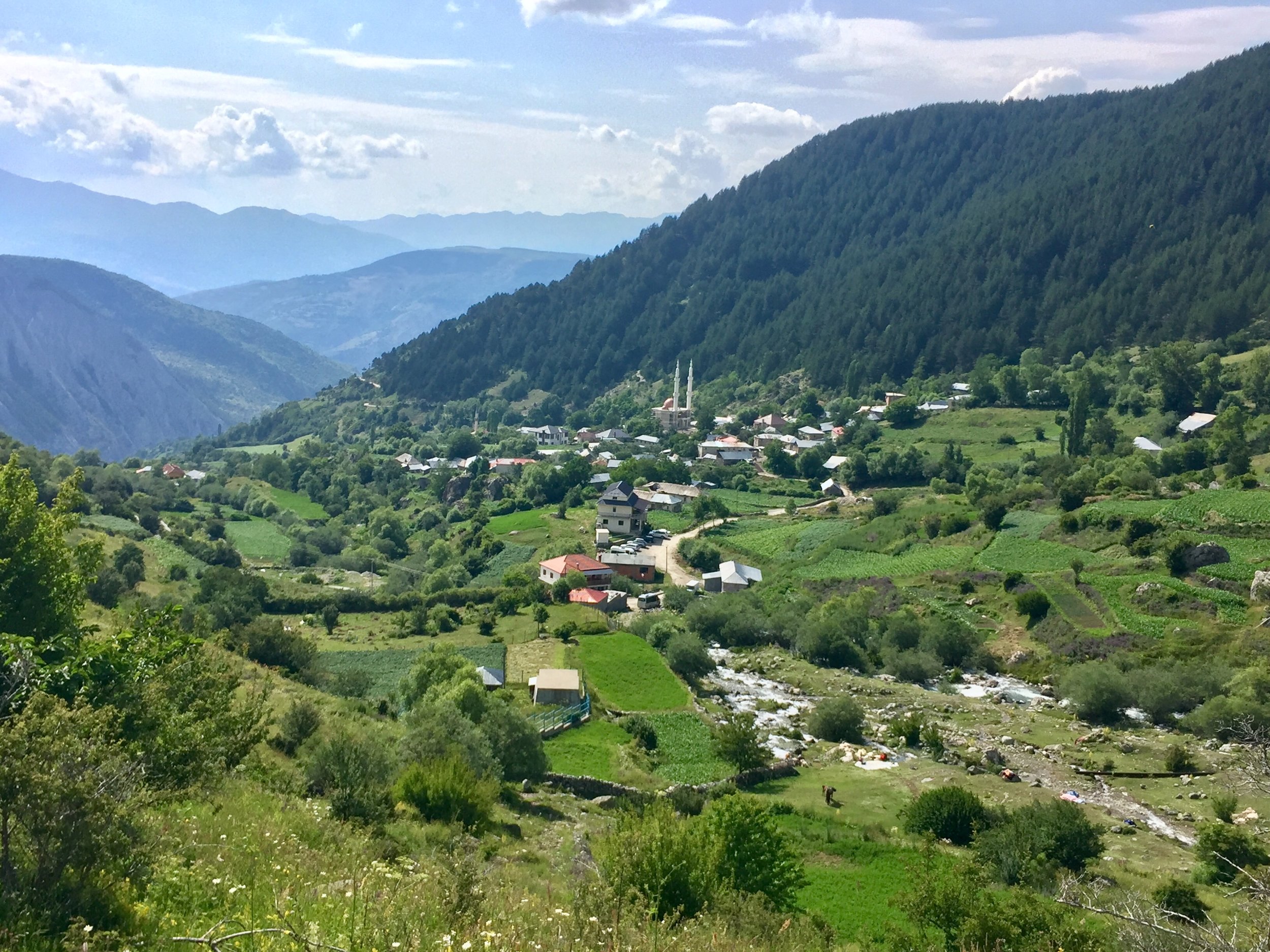
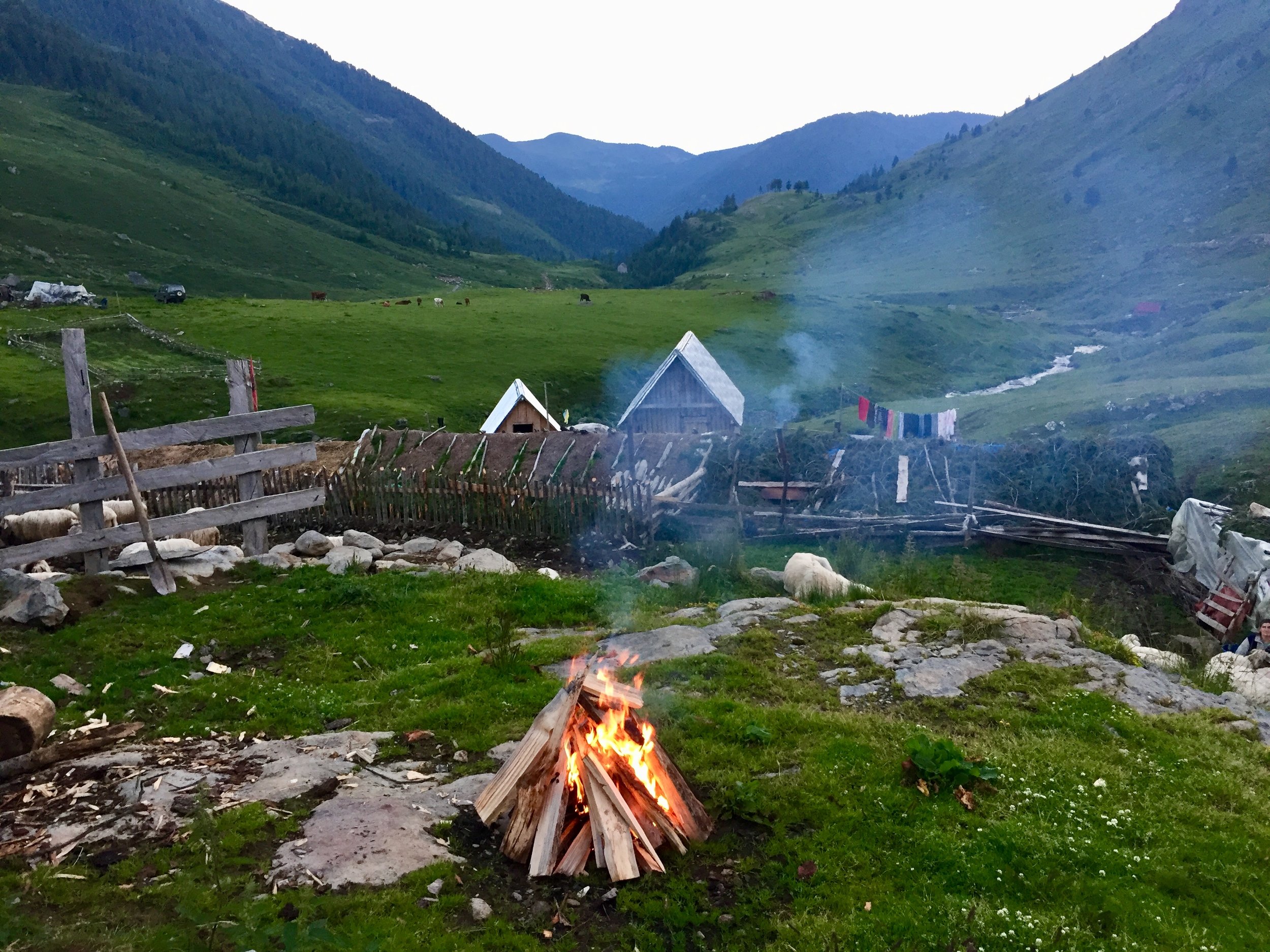
From the Kosovo/Albania border on the final pass, the end of the day’s walk was a pleasant wander down the Alpine Valley to the farm where we stayed for the night. This was to be the most basic of the guest houses: a single barn floor with a row of mattresses. The 3 snorers in the group, of which I was one, took the option of a separate barn 5 mins up the valley. Although intended as a gift for the others, we ended up with the better deal with a cosier barn and better toilet.


Day 3: Dobërdoll to Çerem

Elevation: from 1,800m to 1,220m
Date walked: July 3rd 2018
Route Start / End: Point to point route from Dobërdol to Çerem, Albania
Route Distance: 17 km (10.5 miles)
Route Elevation Change: +418m / -994m. Net -576m
GPX File: get via Buy Me a Coffee


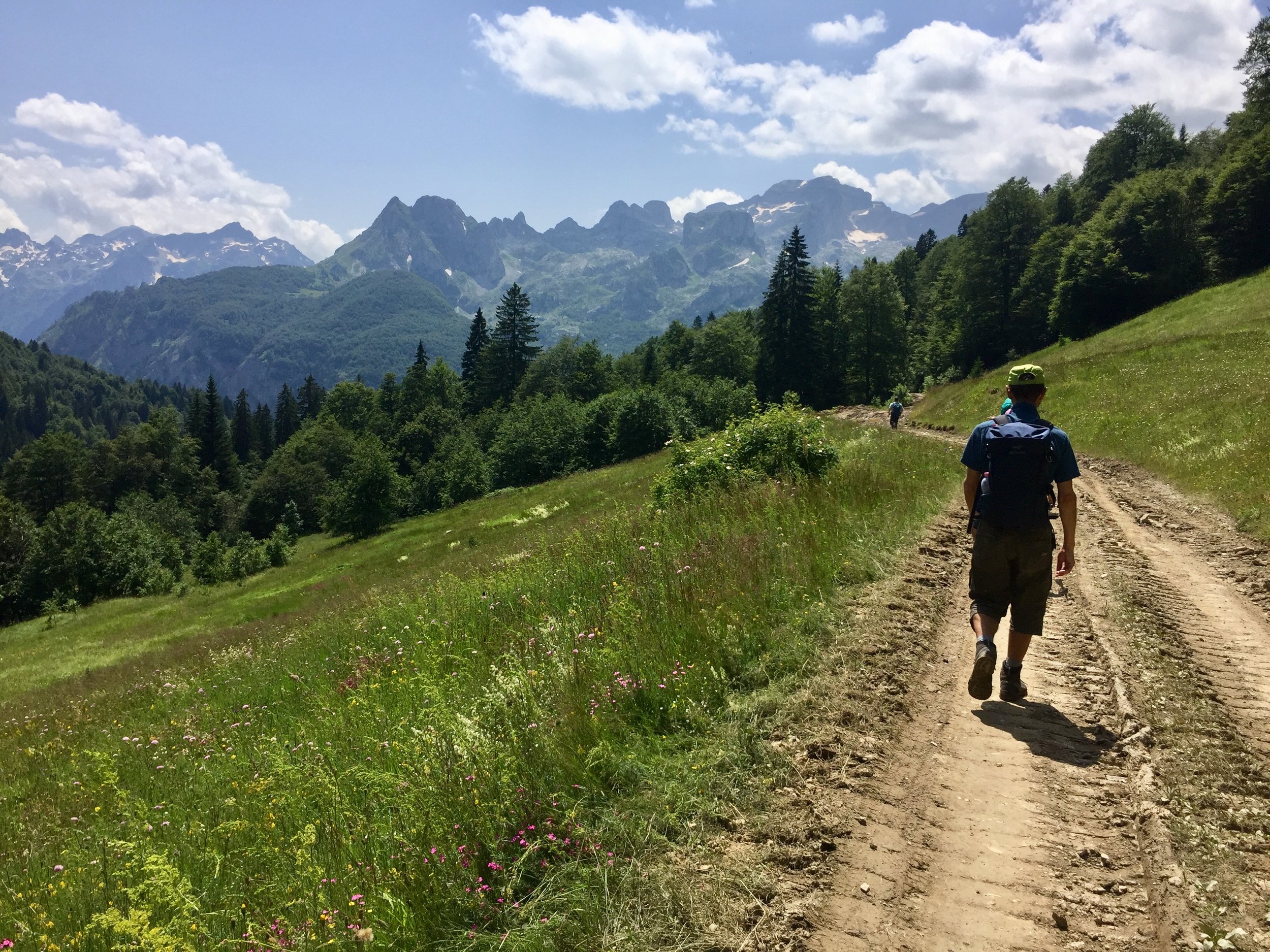
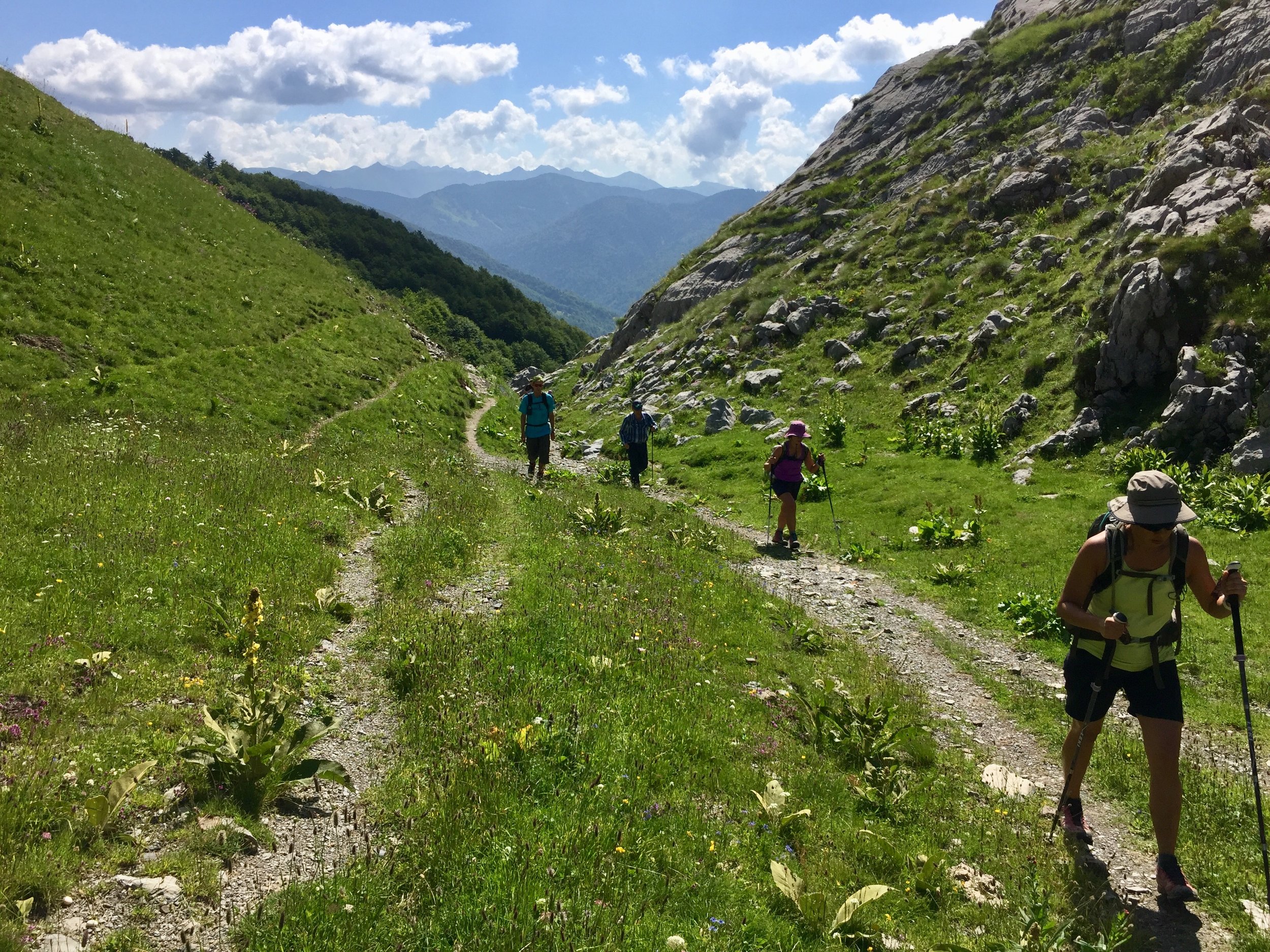
Day 3 was a break from the summits with a gentler plateau walk, mostly descending, from 1,791m to ~1,200m. The route crossed the Albania/Montenegro border several times a highlight being our lunch stop on a hill with views across to Zla Kolata.

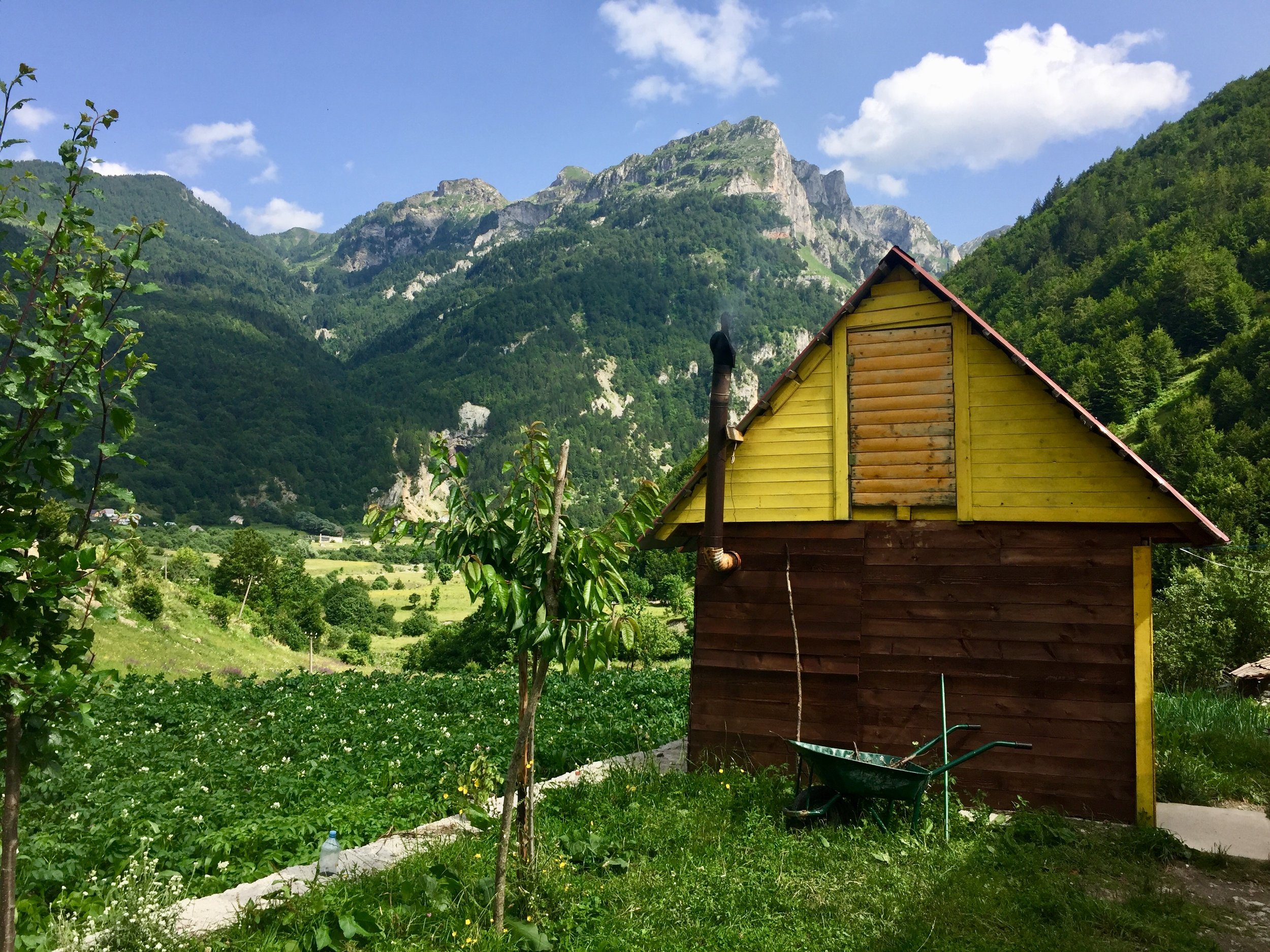
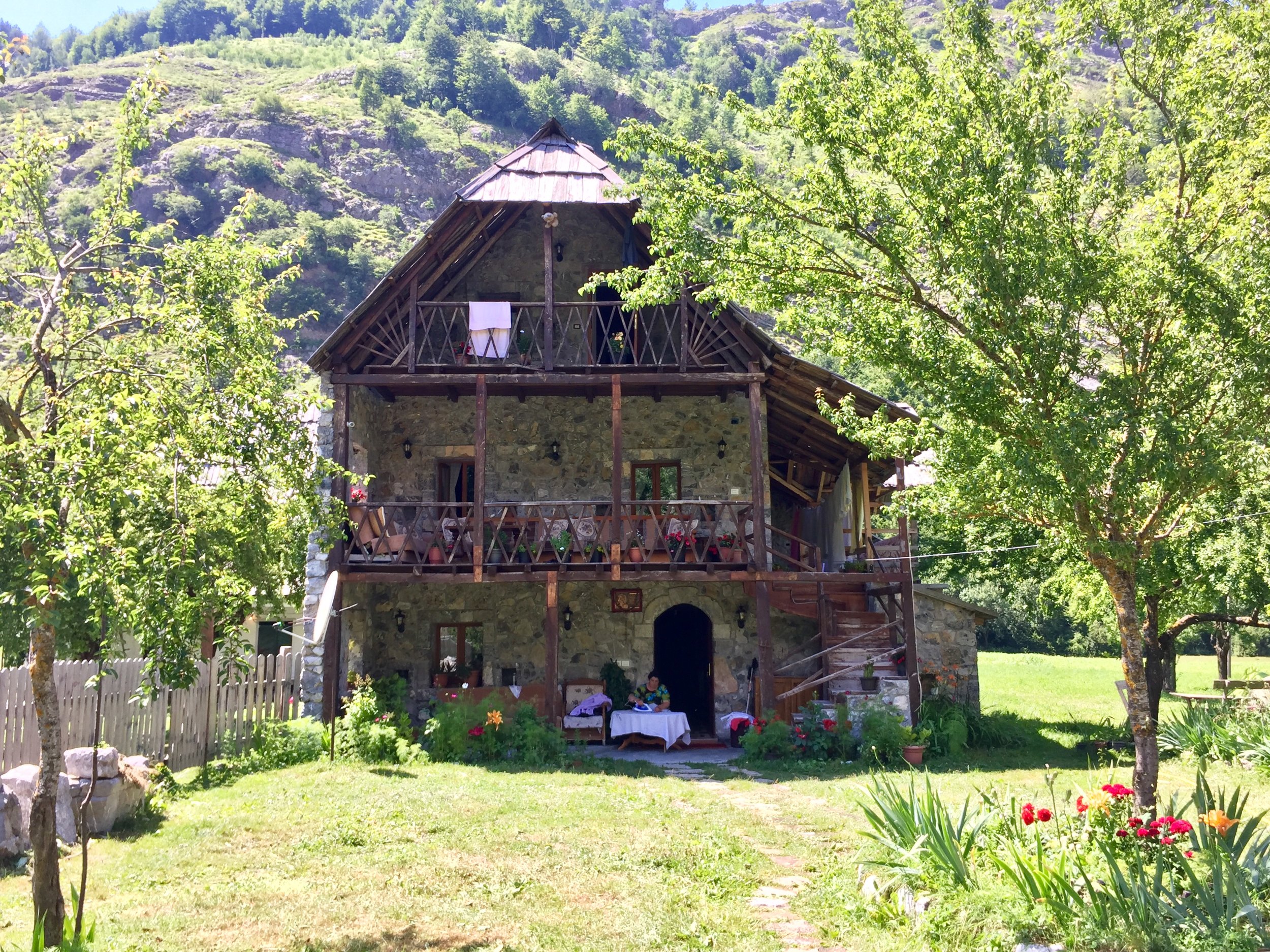
Accommodation that evening was a pleasant but basic guesthouse in Çerem. We were amongst around 50 guests squeezed into the main house plus a few outbuildings. The good news was that it had a shower, but with just 1 for 50 sweaty walkers, there was a bit of a queue. Dinner arrangements were impressive as one lady in a small shed managed to serve up a hearty meal for everyone in 1 sitting.


Day 4: Zla Kolata

Significance: Highest peak in Montenegro
Elevation: 2,564 m
Date climbed: July 4th 2018
Coordinates: 42.4850° N, 19.8972° E
Route Start / End: Point to point route from Çerem, Albania to wild campsite on south side of Zla Kolata
Route Distance: 17.1 km (10.6 miles)
Route Elevation Change: +1,457m / -1,148m. Net -309m
GPX File: get via Buy Me a Coffee
Webhttps://en.wikipedia.org/wiki/Zla_Kolata

By avoiding the screening of the World Cup quarter final nonsense I managed to get an early night. It was just as well as the next day was epic. This was Zla Kolata, the High Point of Montenegro. It was a monster.

The morning was a nice ascent through forests and meadows up to pass on the Albania/Montenegro border. We stopped for an hour for lunch while Geri met up with 2 local guides who would help us on the summit climb. I spent much of that hour looking up at the ascent in fear. From there it all looked like sheer cliff faces and steep ice.

Most of the actual ascent was fine. Taking it step-by-step tends to be much less daunting than from a distance anyway. The tricky bit was not far from the top where the only passing point on an icy ridge was a thin, rocky ledge with a long drop below it. My slipping fear was kicking in but I pressed on, helped enormously by the local guides.

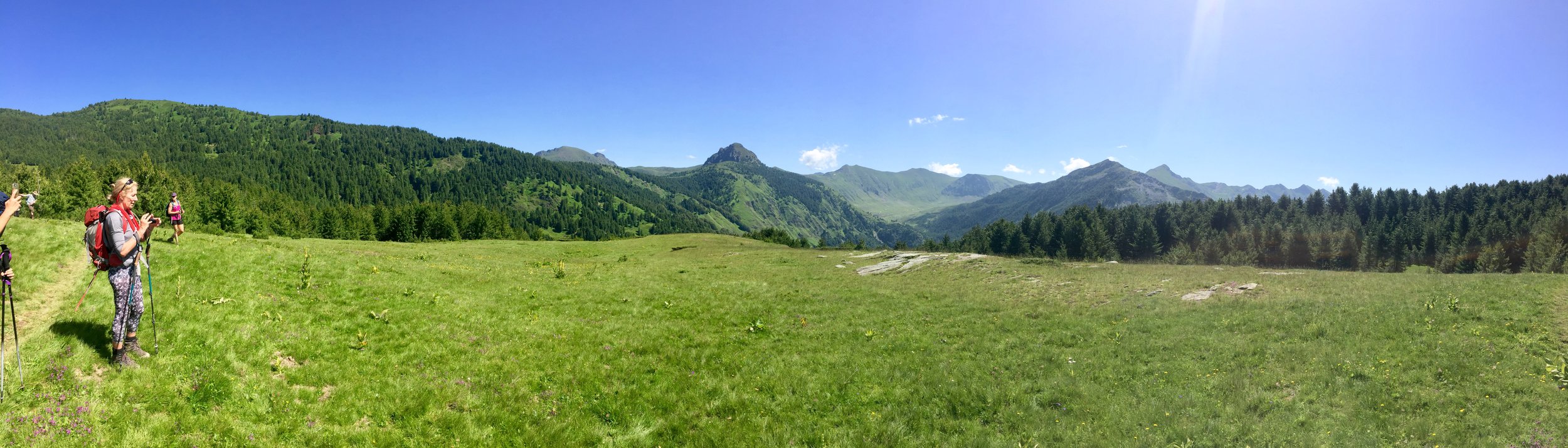
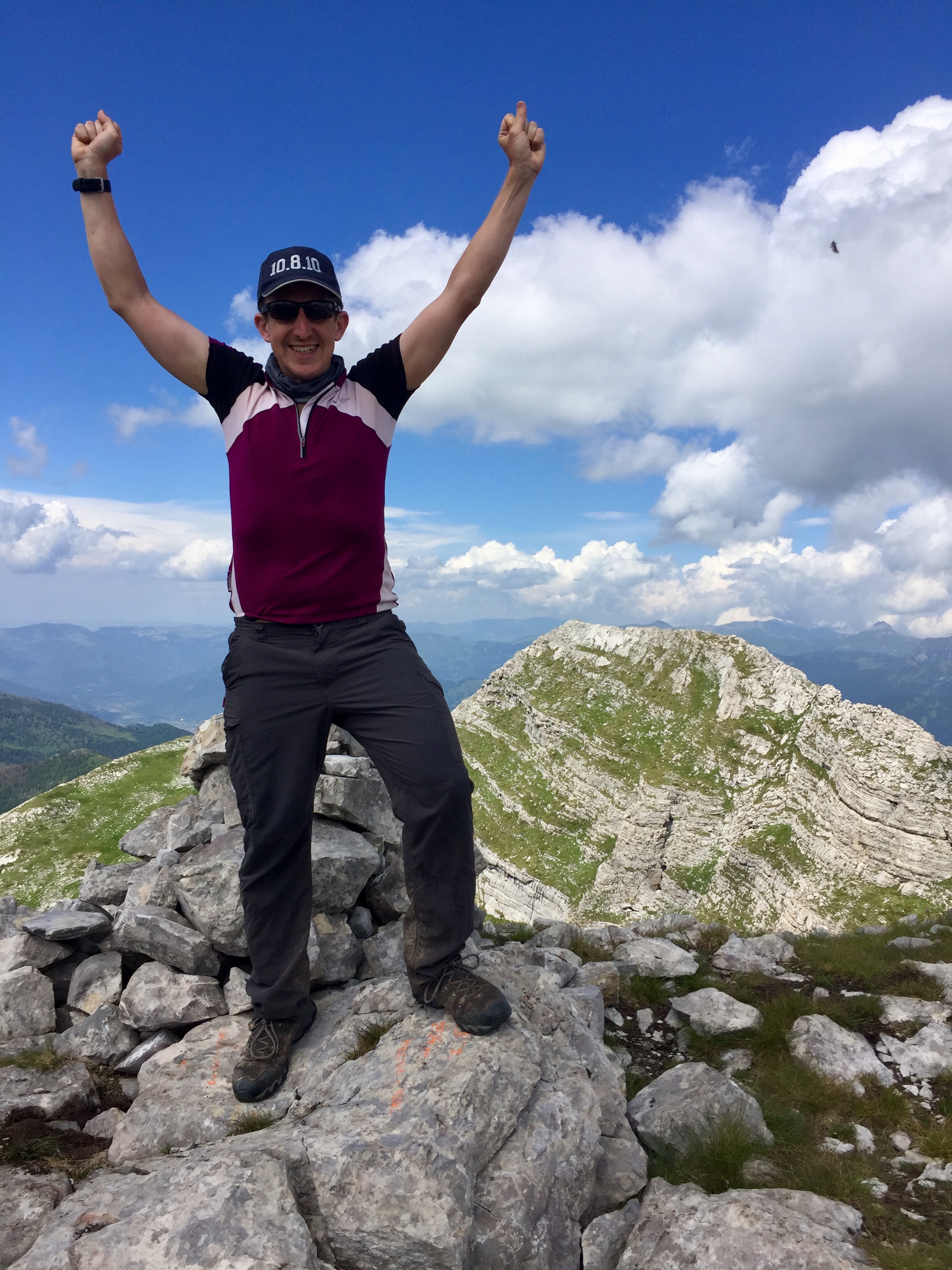
For the final push to the top we were down to 8, with 5 of the group having decided they had met their limits. The final 20 mins was a steep, but relatively easy and mostly grassy scramble to the summit. It was well worth the effort as we were rewarded by clear 360 degree views of both countries. It was a good competitor to Toubkhal for the best summit view I’ve had so far.

The descent to the pass was the same route, although several bits were tougher than I remembered on the way up. I held back to keep fellow trekker Stephen company. He had been struggling with his feet since the first day and was slowed down due to the pain of red raw toes. To be honest, I was also glad of the slower pace to take my time on the steep parts.

With no villages close to the mountain, we wild camped that night. I enjoyed the best night‘s sleep in a tent for many years. In the morning we left the camp site for the final descent to the Valbona Valley. It was a short day ending at a very nice guest house for some beer, rest, reading and a celebration on completing a challenging 3-country trek.
 

Day 5: Zla Kolata to Valbonë

Elevation: from 1,486m to 960m
Date walked: July 5th 2018
Route Start / End: Point to point route from wild camp site south of Zla Kolata to Valbonë, Albania
Route Distance: 11.2 km (7 miles)
Route Elevation Change: +424m / -962m. Net -538m
GPX File: get via Buy Me a Coffee


The final couple of days of the trip were more restful with a boat & bus transfer back to Tirana and some free time in the city. This trip was epic: a perfect combination of an awe-inspiring adventure, expert organisation and fantastic company. My first action after returning was to check the KE brochure for the next adventure....

LEFT: All 5 days: Mt Korab to the South East and Djerevica/Kolata trek to the centre North

ABOVE: Djerevica/Kolata from right to left. Green = Day 2: Djerevica, Blue = Day 3: plateau walk, Red = Day 4: Zla Kolata, Yellow = Day 5: Valbone descent

Race To The King Ultra Marathon

When: June 24th 2018
From: Slindon Estate, Arundel, West Sussex
To:
Winchester Cathedral, Winchester SO23 9LS
Distance: 86.1km (53.5 miles)
Elevation: +1,344m / - 1,380m. Net -36m
GPX File: get via Buy Me a Coffee
Other routes touched (walk): Monarch’s Way, South Downs Way, West Sussex Literary Trail, New Lipchis Way, Staunton Way, The Shipwrights Way, Long Woodland Trail, Wayfarers Walk, Allan King Way, Pilgrims’ Trail, Itchen Way, Clarendon Way
Other routes touched (cycle): NCN 22, 222, 224, 23
Maps:
- Ordnance Survey Explorer OL10 Arundel & Pulborough Map
- Ordnance Survey Explorer OL8 Chichester, South Harting & Selsey Map
- Ordnance Survey Explorer OL3 Meon Valley, Portsmouth, Gosport and Fareham Map
- Ordnance Survey Explorer OL32 Winchester, New Alresford & East Meon Map
Trig Pillars: TP1105 - Beacon Hill, TP5226 - Old Winchester Hill, TP3089 - Exton
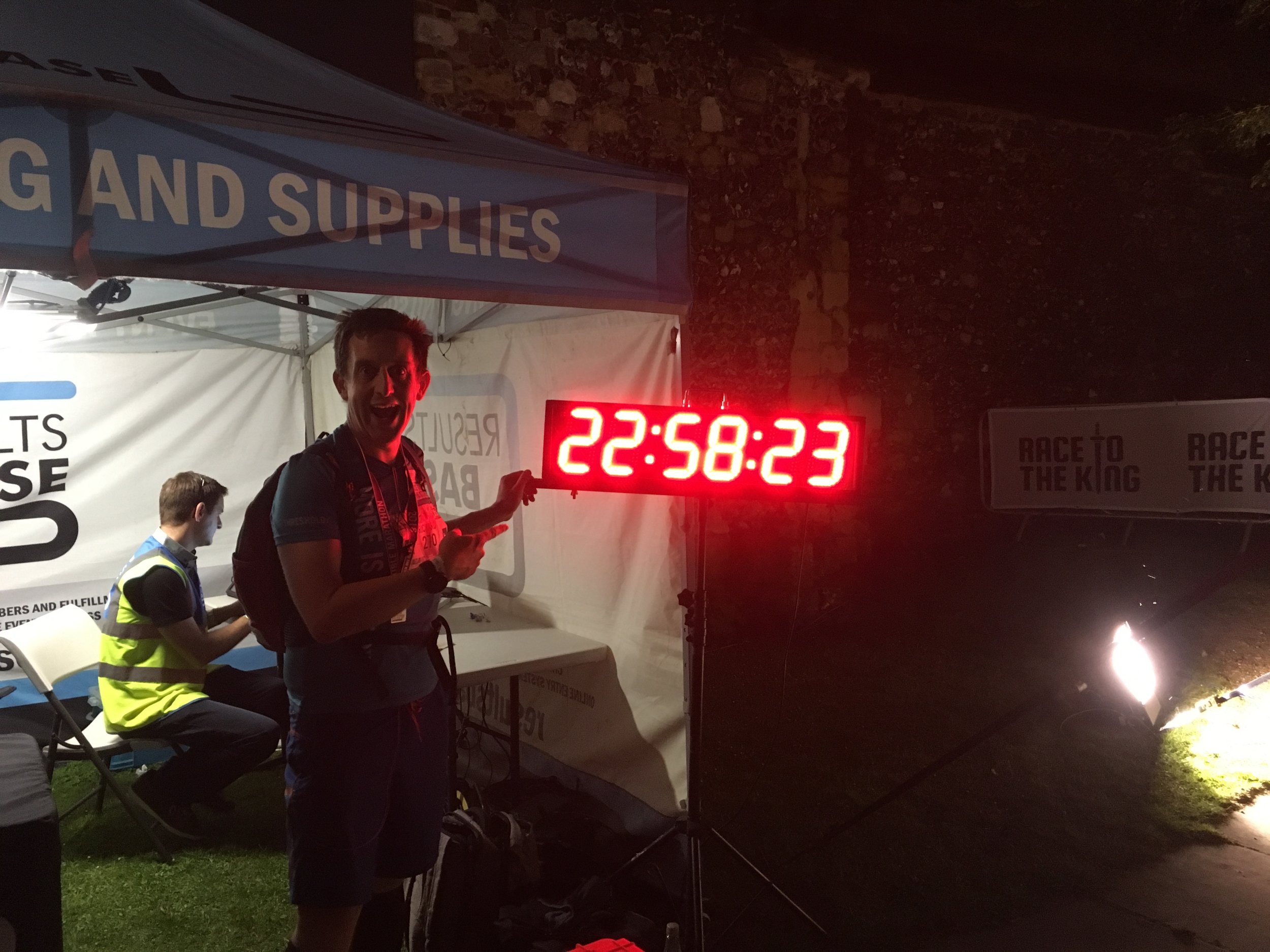
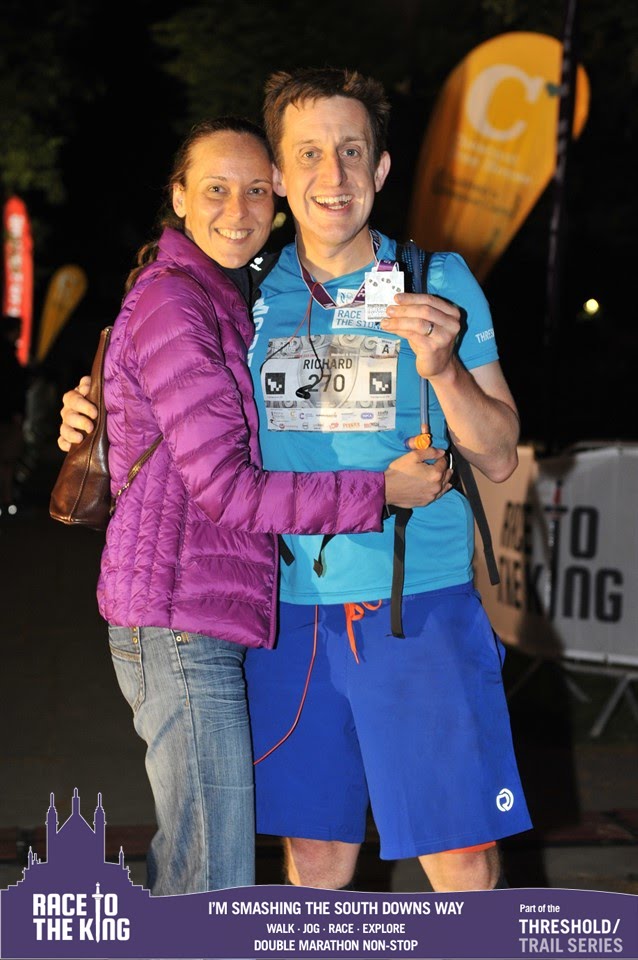
Finish time: 14 hours 49 minutes
Links: South Downs Way, Harting Down National Trust, Queen Elizabeth Country Park, Beacon Hill Nature Reserve, Winchester


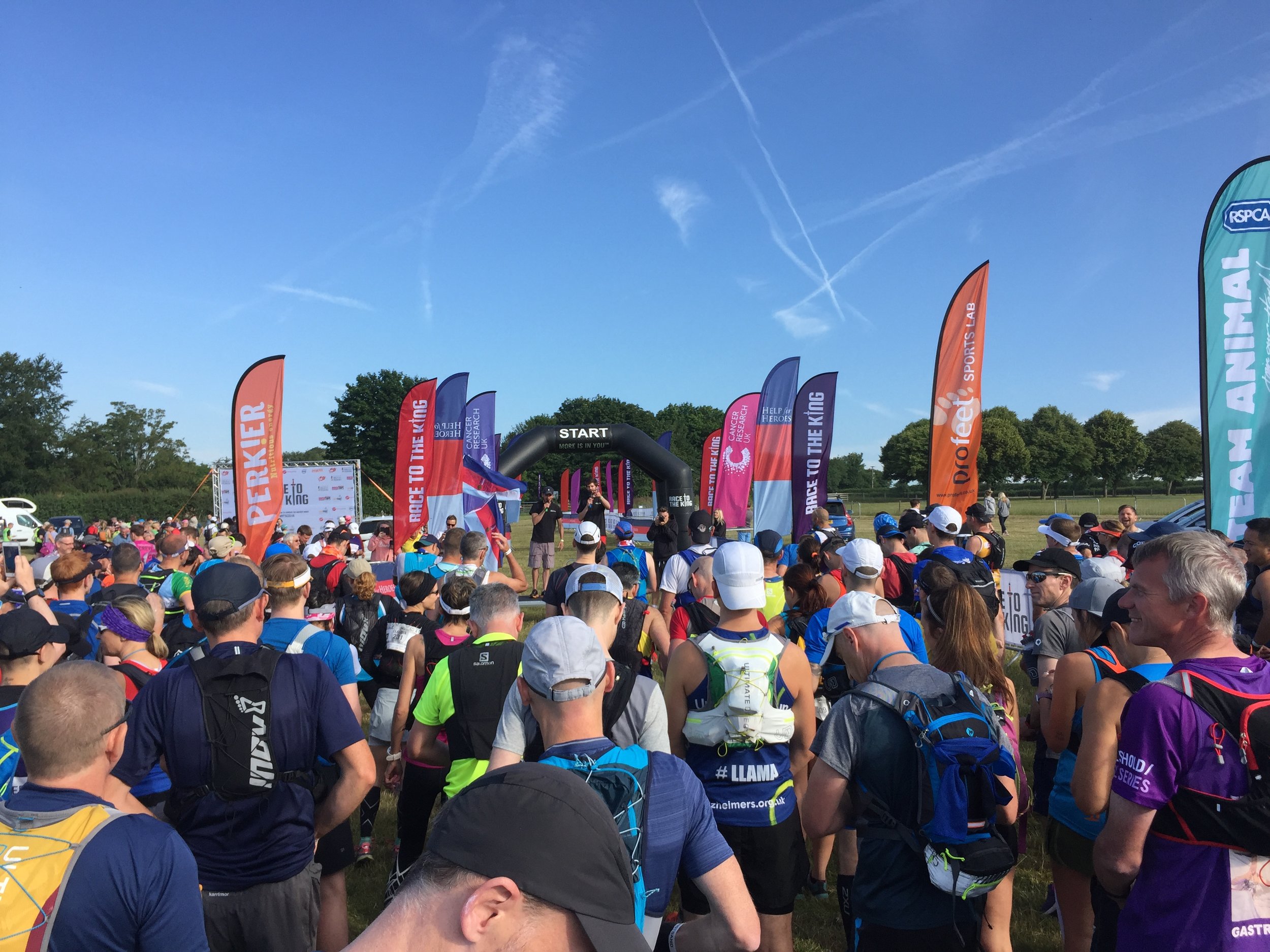
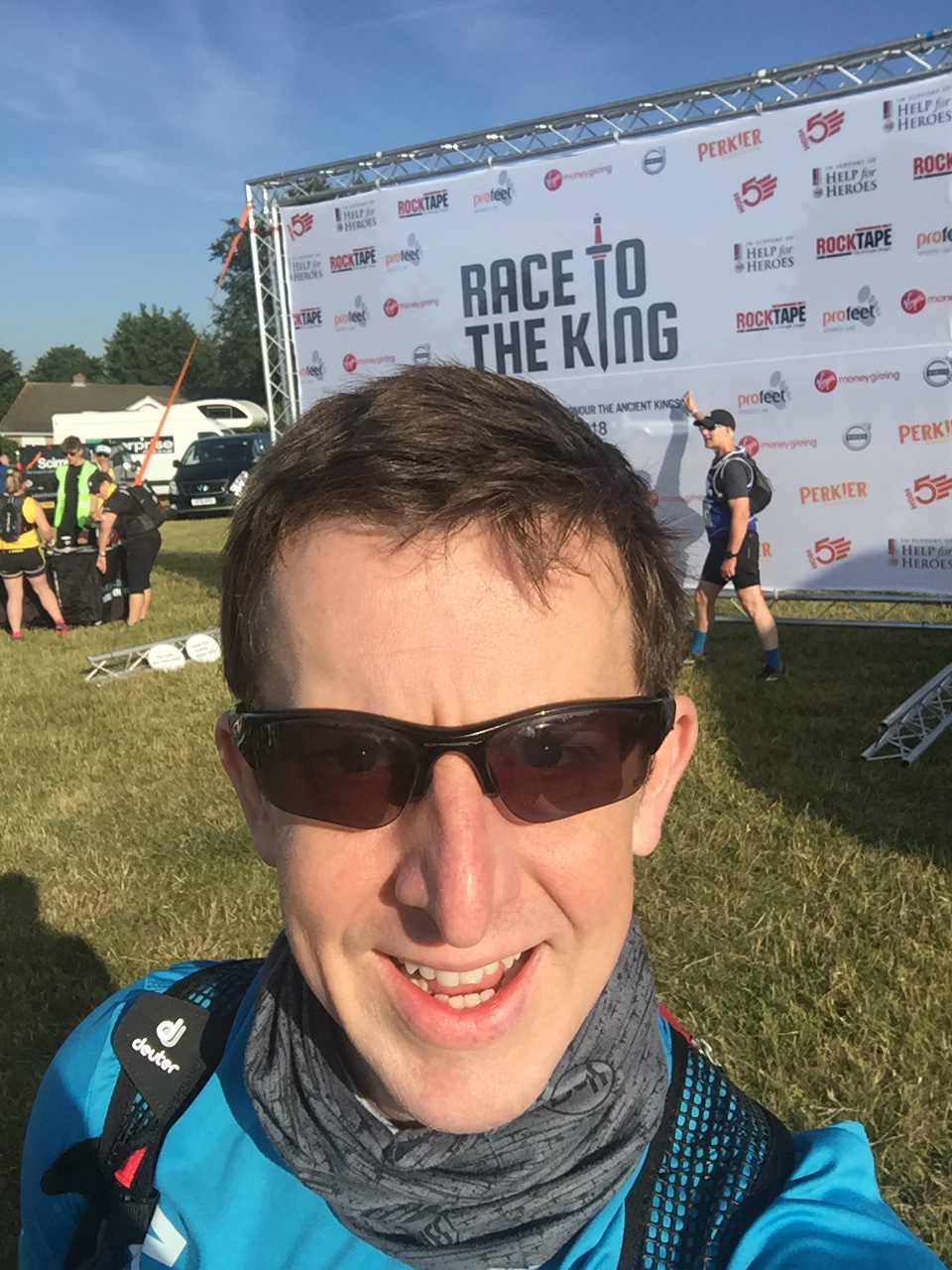
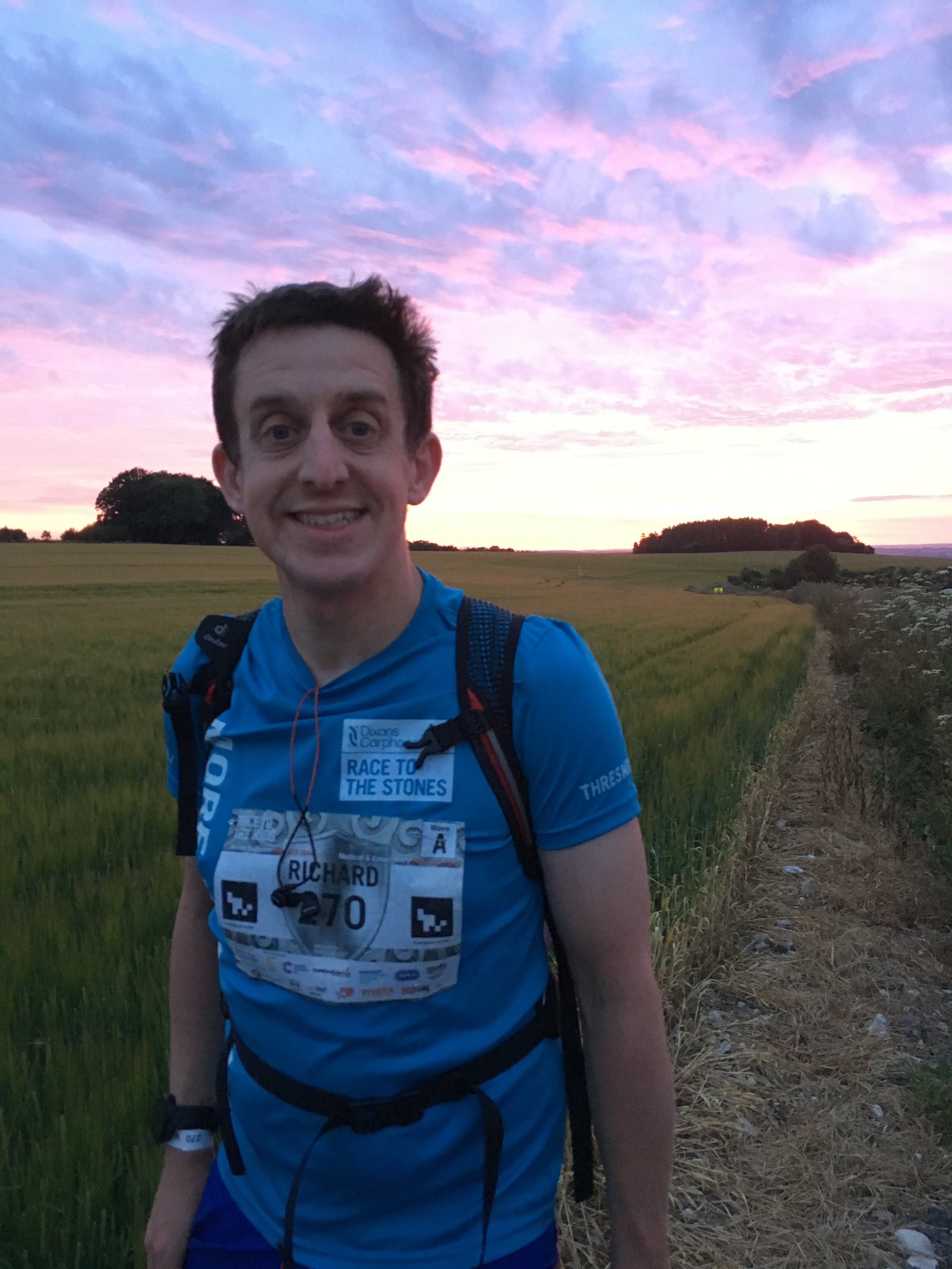
This was my 4th ultra and the 2nd in the Threshold Trail series. My first couple were a test, then reconfirmation, that I could do an Ultra. After the Gower I was happy to call myself an Ultra Marathon runner. From here on I’ll do them for the pure awesomeness of the events.

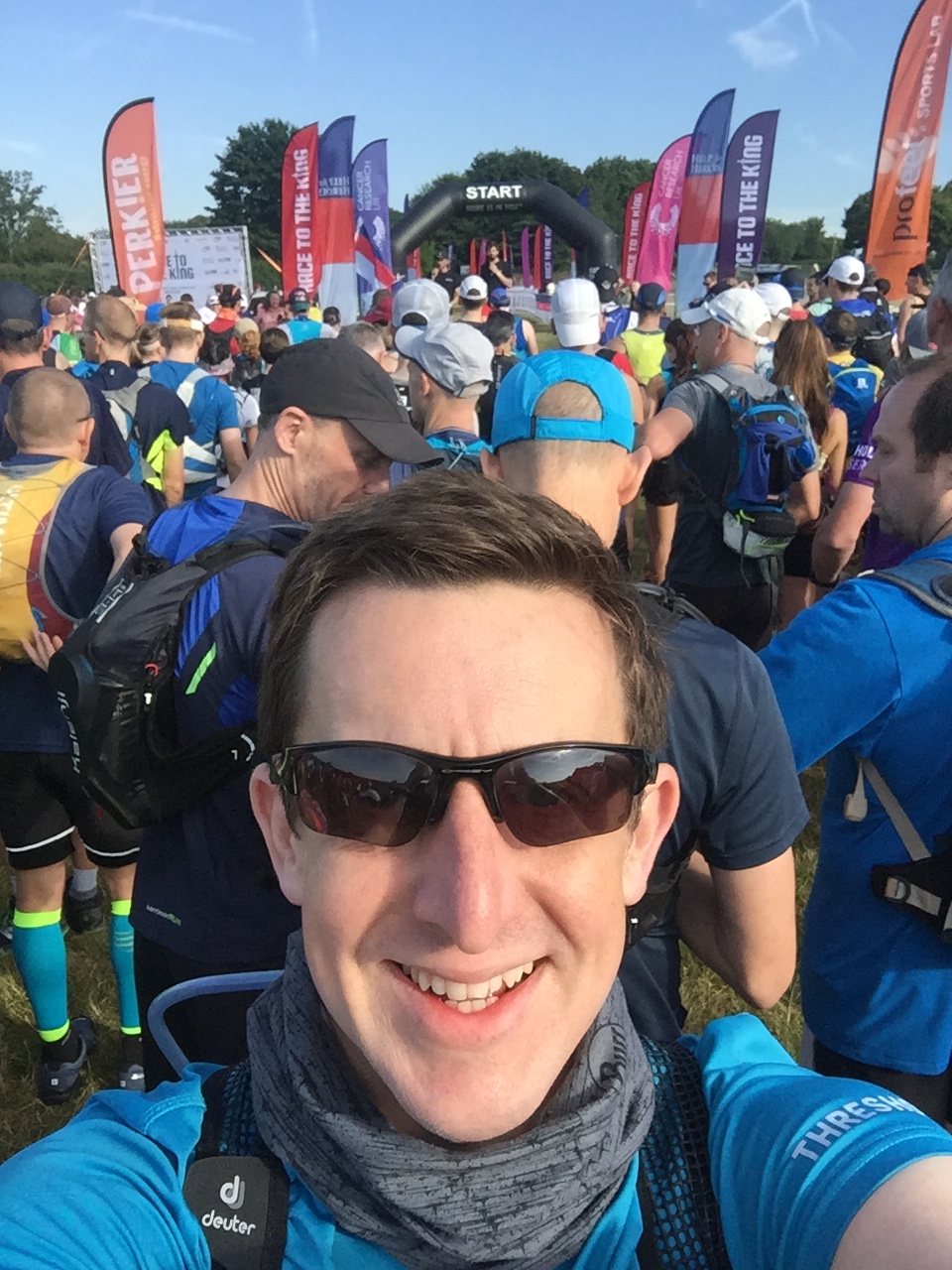
As a true introvert I’m not chatty on the events, defaulting to an inner game of getting through the run. Despite this I love the social aspect of the events. It’s the buzz of so many people taking on a major challenge, the support that everyone gives each other and the spectators cheering and helping anyone on the route.

Race To The King was a classic example of why I love these events. The South Downs Way is an iconic trail, the weather was amazing (albeit a little warm) and the organisation couldn’t be faulted.

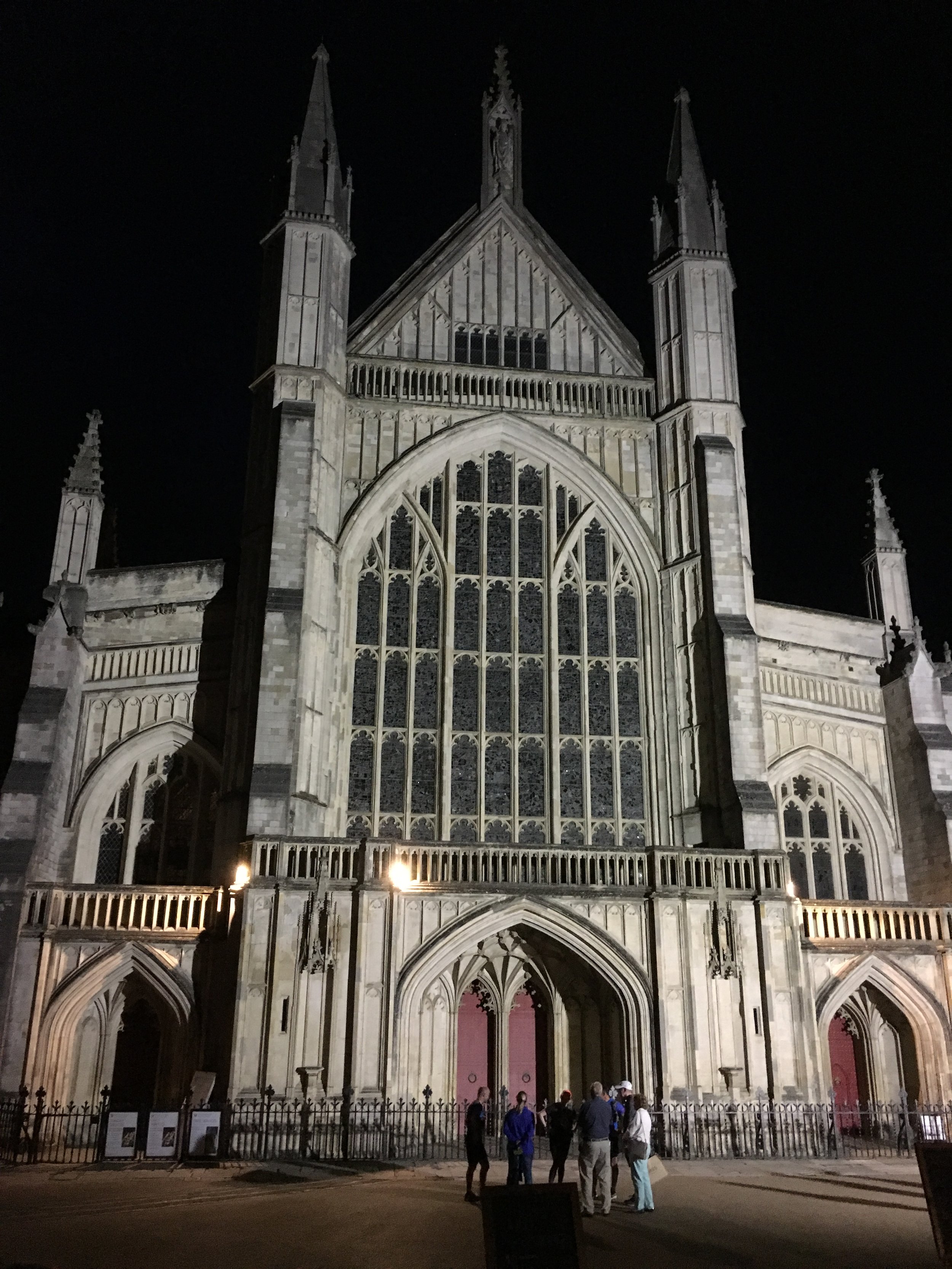
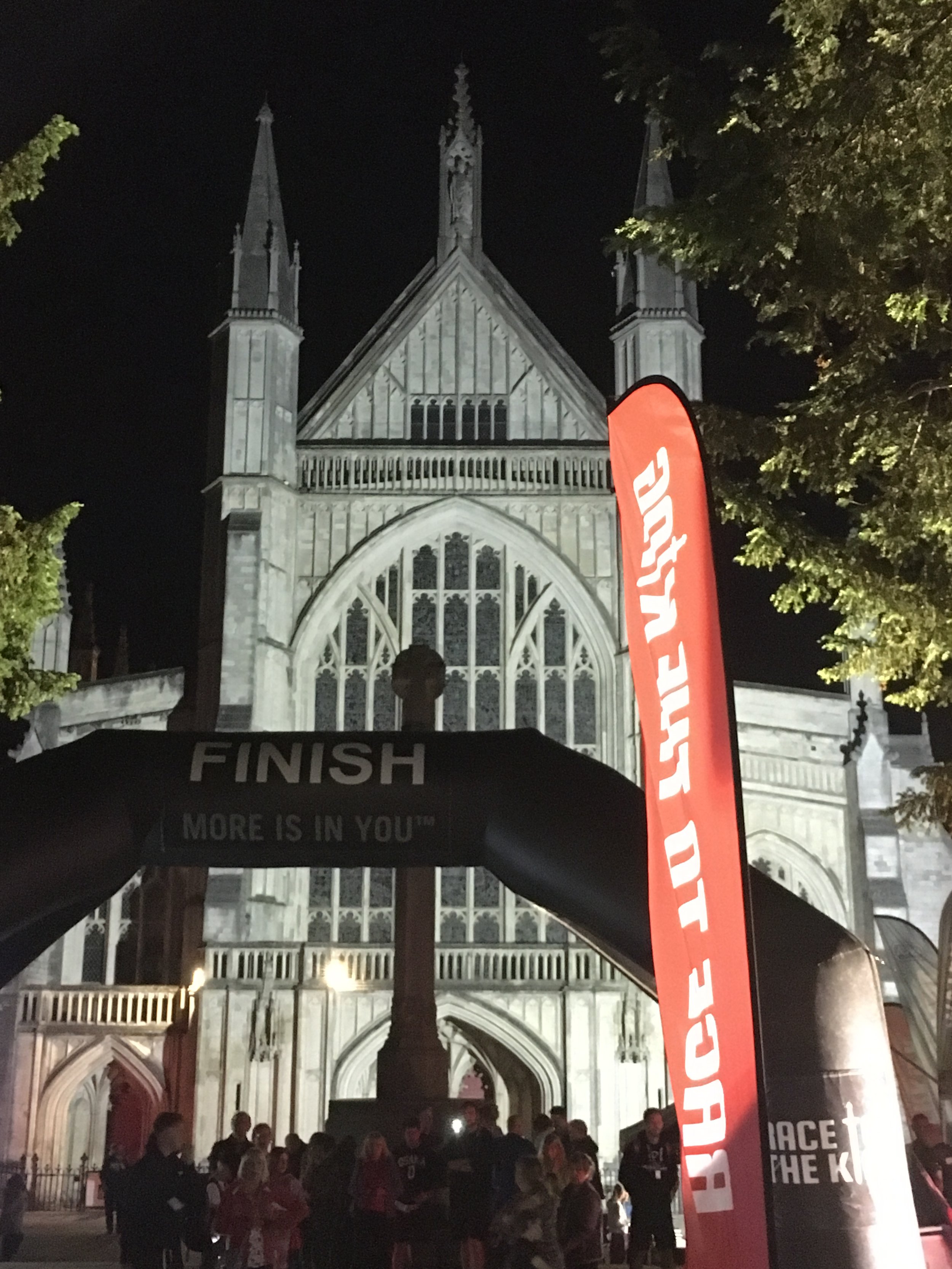
The conditions couldn’t have been more different to October’s Gower Ultra. That was was damp and crippled my feet while this was bone dry. Despite being 3 miles long I’d completed this one nearly a hour quicker at 14 hours 49 mins. By the time I’d reached Winchester Cathedral I was in good shape and on a bit of a high.

Next Ultra: Race To The Tower 2019.


Start: Slindon Estate, Arundel


End: Winchester Cathedral


Hautnez - Guernsey Island High Point
IMG_3405.jpg

Significance: High point of the island of Guernsey, Channel Islands
Elevation: 107 m
Date “climbed”: June 17th 2018
Coordinates: 49° 25' 55'' N, 2° 35' 44'' W
Route Start / End: car park in front of  Guernsey Airport Terminal building
Route Stats: Approx 2 metres walk up the grassy bank between the car-park and the main road, 1 m elevation!
Subsidiary tops on route: none
Links: Wikipedia (Bailiwick of Guernsey, Guerney Island), Peakbagger


The high point of the island of Guernsey was an easy bag as it’s right outside the main airport terminal building. Hautnez isn’t the highest point on the Bailiwick of Guernsey, though. The Baliwick is a is a self-governing British Crown Dependency comprising several of the Channel Islands. It includes the island of Sark where there’s a higher point, Le Moulin which, at 114m, is 7m higher than Hautnez.


IMG_3406.jpg
Completing all Channel Islands parkruns

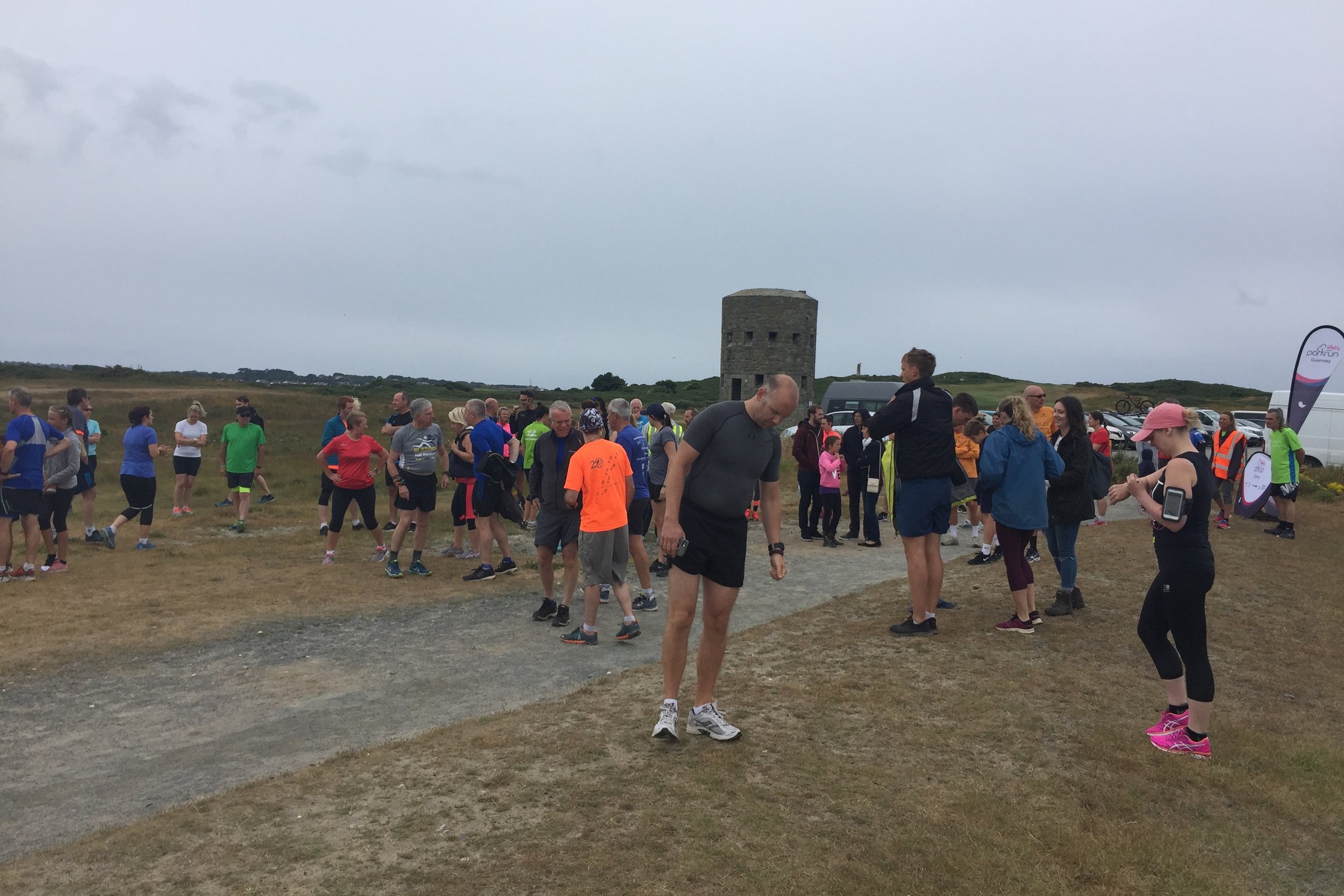
Less than a month after completing LonDone, I've also bagged the Channel Islands Regionnaire status. Its arguably easier as it's 2 events rather than 50+, but does involve flights and a bit of co-ordination. I did both a year apart to coincide with the half marathons for each island. Both were interesting courses with a friendly crowd and special in their own way. I don't expect any new Channel Island events in the near future, so it looks like this Regionnaire is safe for a while.


Jersey

  • I completed this event on: June 10th 2017 with a finish time of: 27:53

  • Other routes touched (walk): Corbiere Railway Walk

  • Other routes touched (cycle): Jersey Cycle Route 1

  • Inaugural: September 26th 2015

  • Links: Event Home Page, Course Page


Guernsey

  • I completed this event on: June 16th 2018 with a finish time of: 25:58

  • Other routes touched: N/A

  • Inaugural: April 9th 2016

  • Links: Event Home Page, Course Page


More parkrun posts

parkruns are free, weekly, community 5k events all around the world. I started in December 2012 and have been obsessive about it ever since. See my parkrun Collection page for details.

Featured and popular parkrun posts:


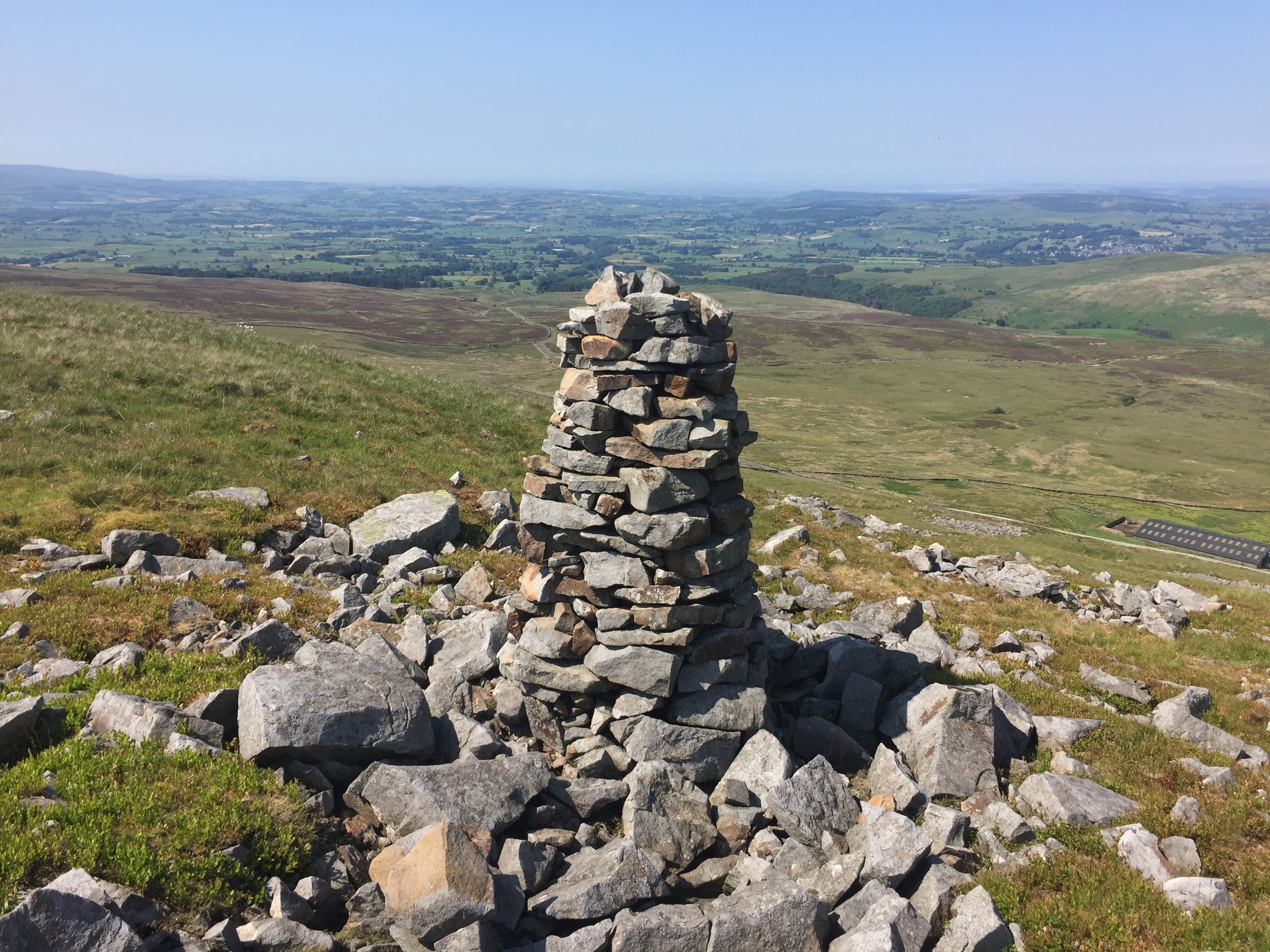
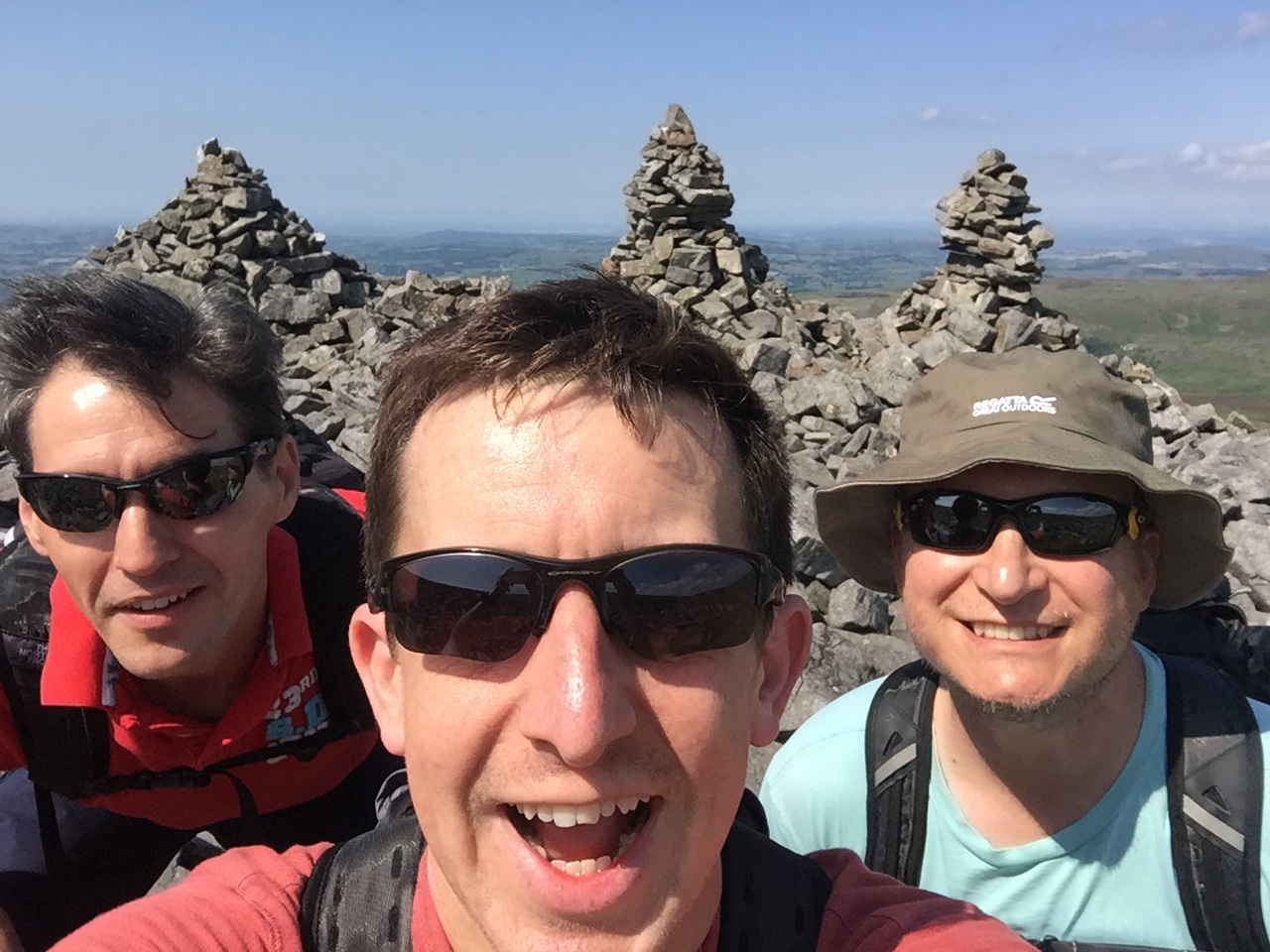
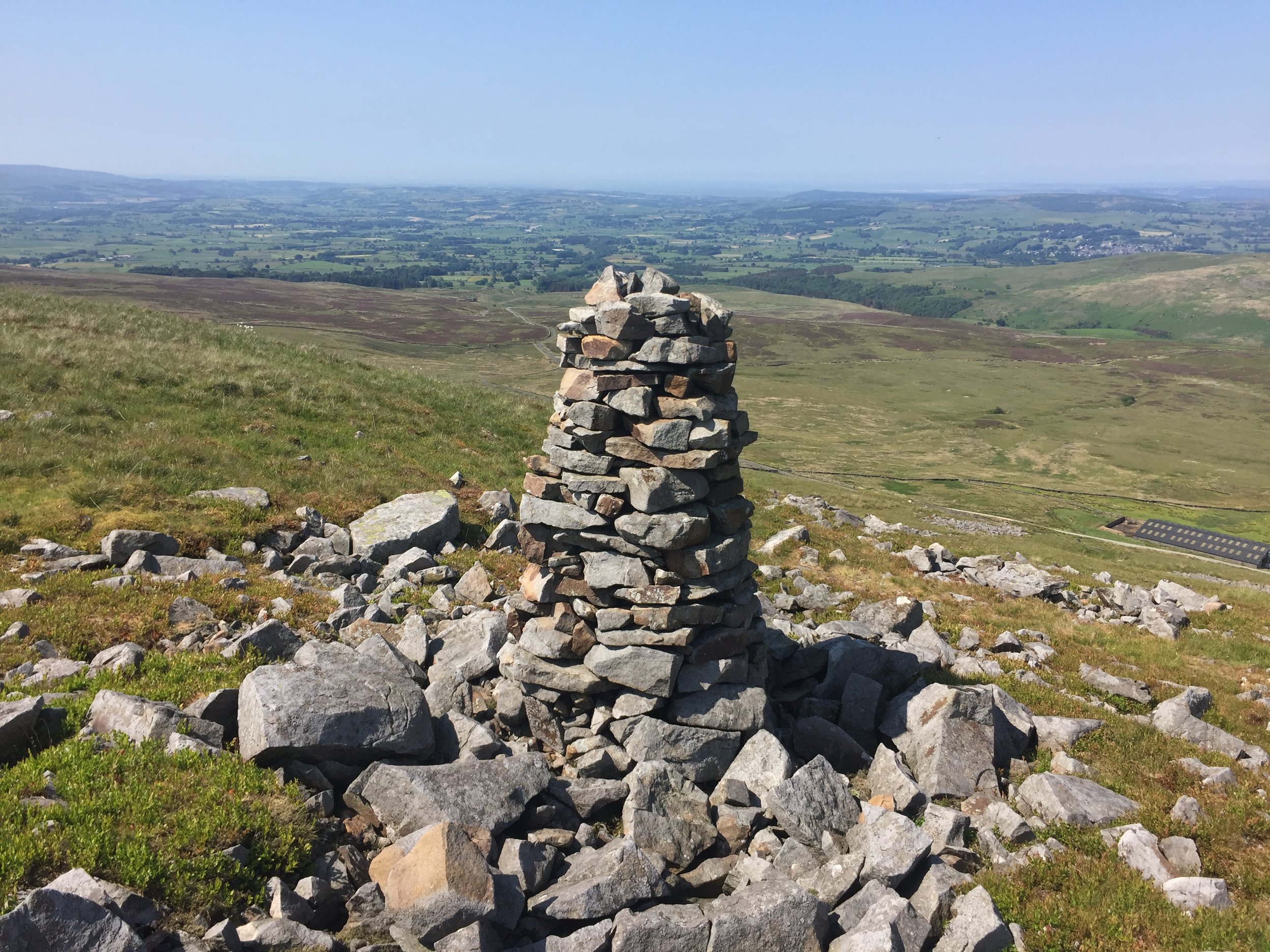
Gragareth: Lancashire Present-Day County Top
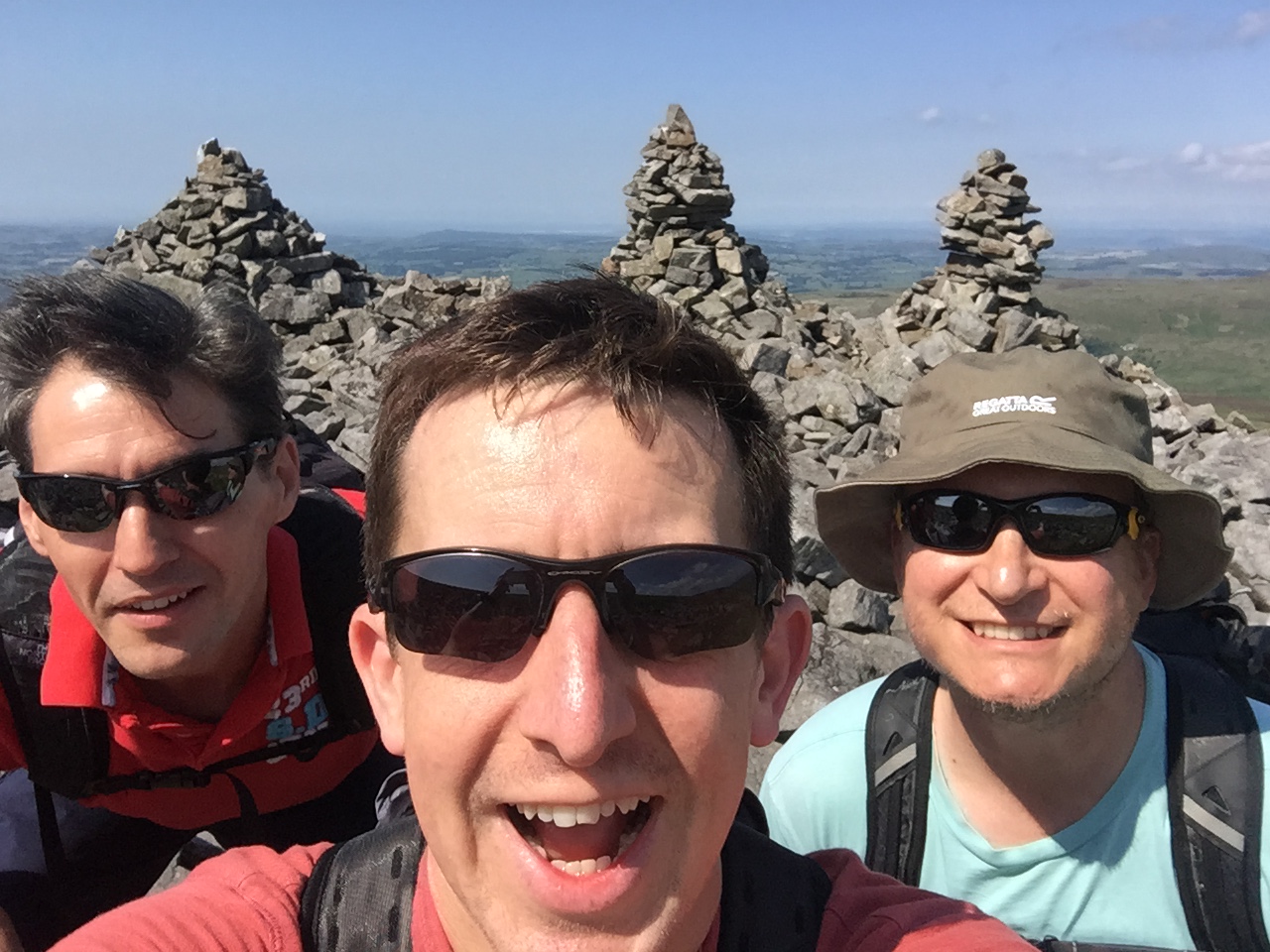
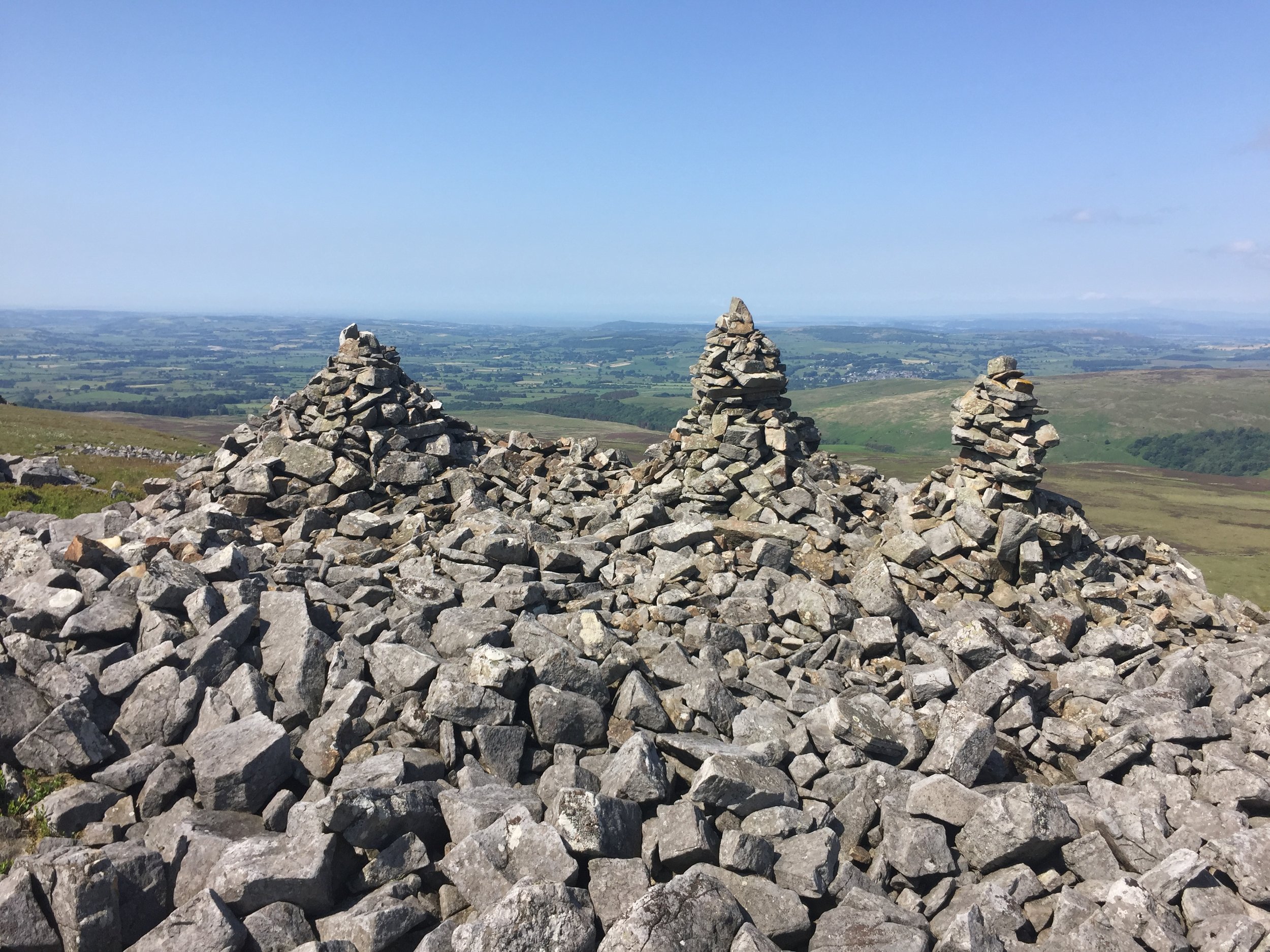
Three Men of Gragareth

Three Men of Gragareth


Significance: Present Day County Top of Lancashire
Member of: Hewitt
Parent Peak: Great Coum. NHN = Crag Hill
Historic County: Lancashire (of which Old Man of Coniston is the County Top)
Elevation: 628m
Date climbed: 11th June 2018
Coordinates: 54.2085° N, 2.4814° W

Route Start / End: Circular from Leck Fell House
Route Distance: 5 km (3.1 miles)
Route Elevation Change: +/- 207m
Subsidiary tops on route: none
GPX File: get via Buy Me a Coffee
Other routes touched: None
OS Trig Pillar: TP3427 - Gragareth Fell
OS Map: Yorkshire Dales Map | Southern & Western | Ordnance Survey | OS Explorer Map OL2
Guidebook: Guidebook: Walking the County High Points of England (David Bathurst)
LinksWikipedia (Lancashire), Wikipedia (Gragareth), Peakbagger, Hillbagging


This was a sneaky bonus tick. After a weekend in the Lake District tackling the Old Man and Helvellyn we were heading home. The trip is nearly 5 hours at best so I was looking for a convenient mountain en route to break up the trip. Gragareth fitted the bill as it was a decent mountain and only 15 minutes off the M6. It was also pretty obscure and, on a Monday morning, we had the walk to ourselves.
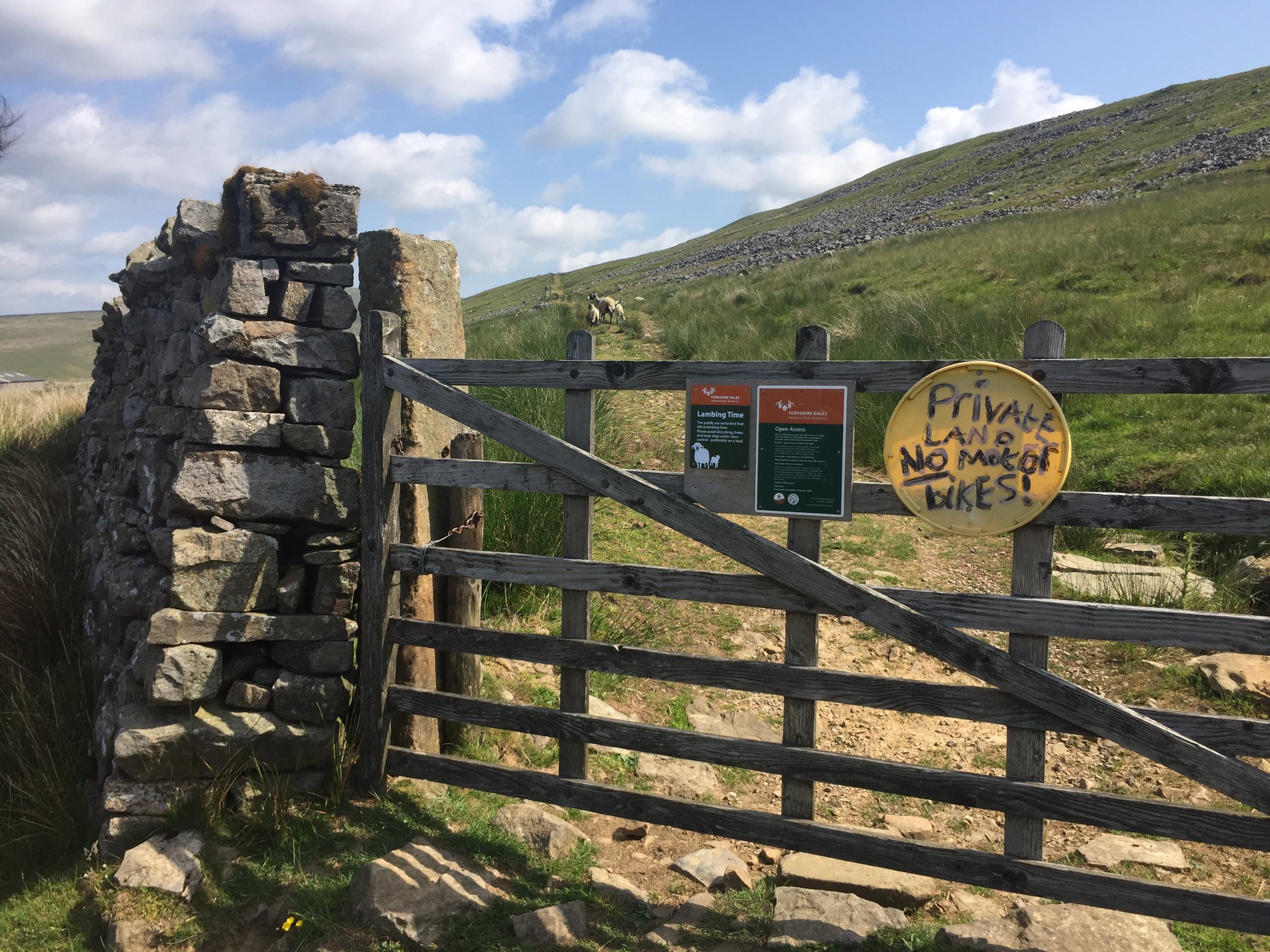
The best place to start the walk is from a small parking bay just before the gate to Leck Fell House. Go through this gate and the second gate on the junction before the driveway for the farm. After this you’re on Yorkshire Dales Open Access land. 

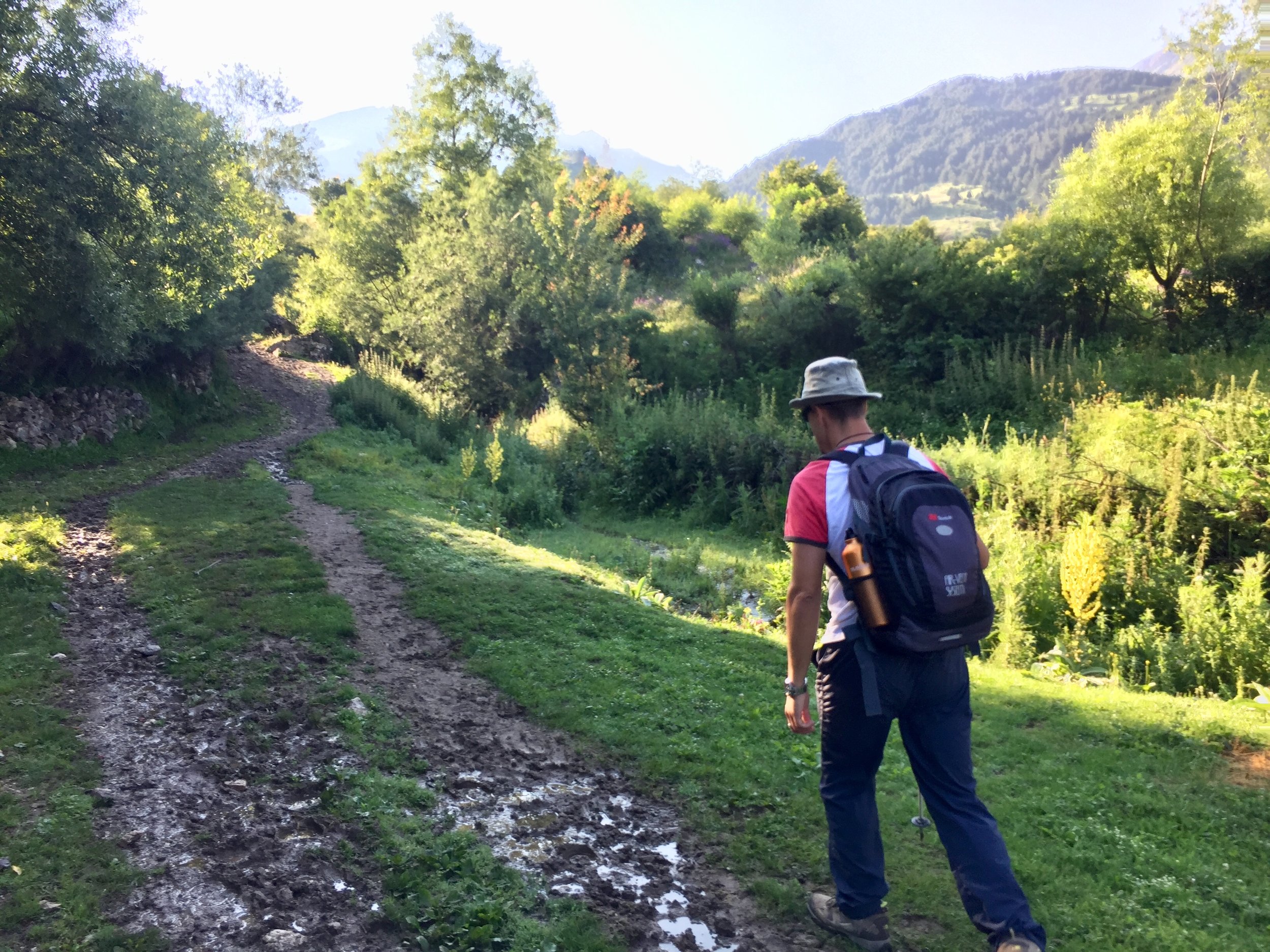
The first part is fairly straightforward. Continue along the path beyond the gate, keeping to the right side of the wall. After ~1 km, there’s a path (according to the map I was using) that doubles back roughly southwards up across the hill. We couldn’t see any path so just followed the GPS direction across some very rocky lava flow-like patches. At the top of the hill you’ll get to the Three Men Of Gragareth. From here, head east and follow an actual path all the way to the summit.

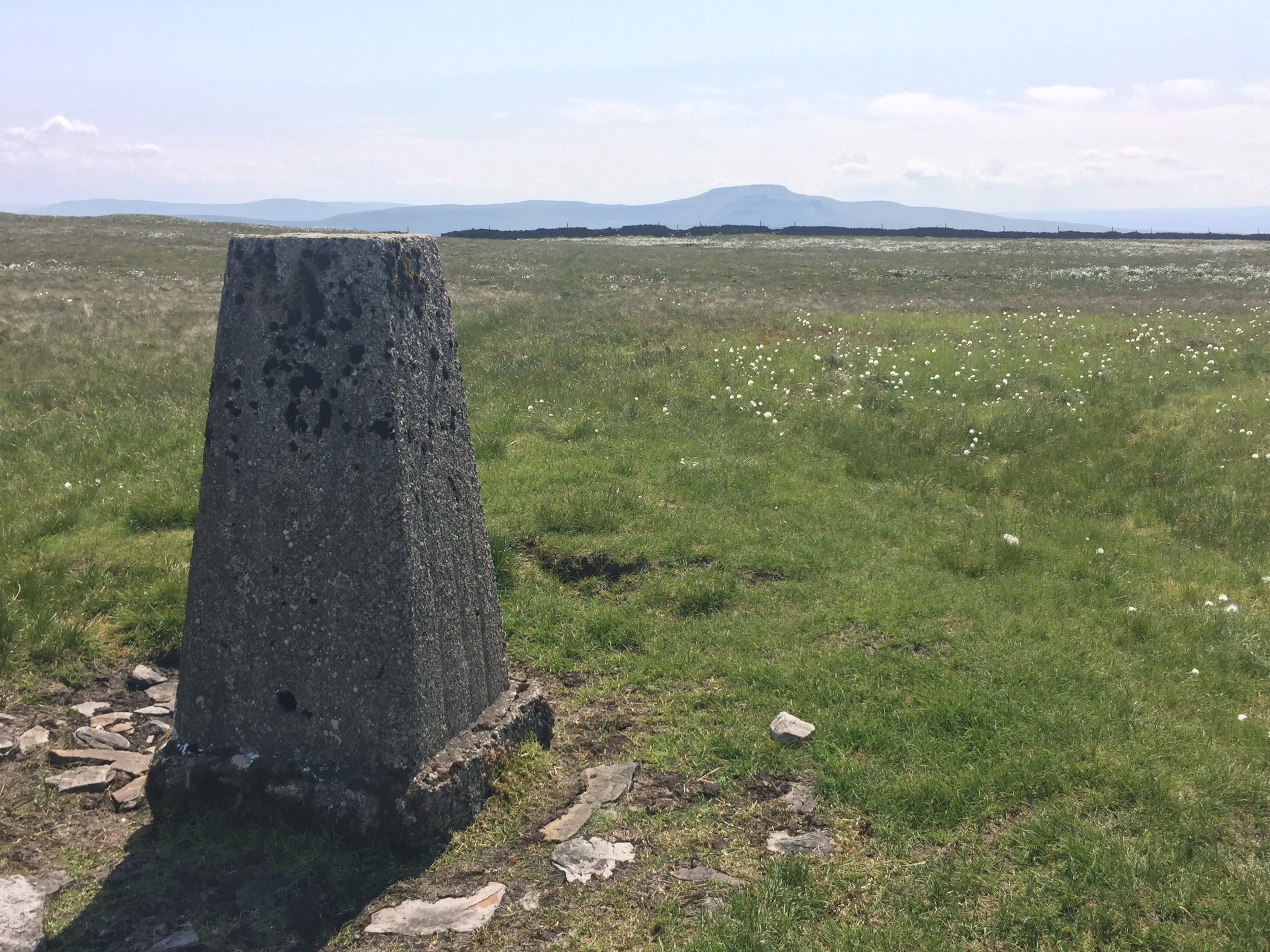
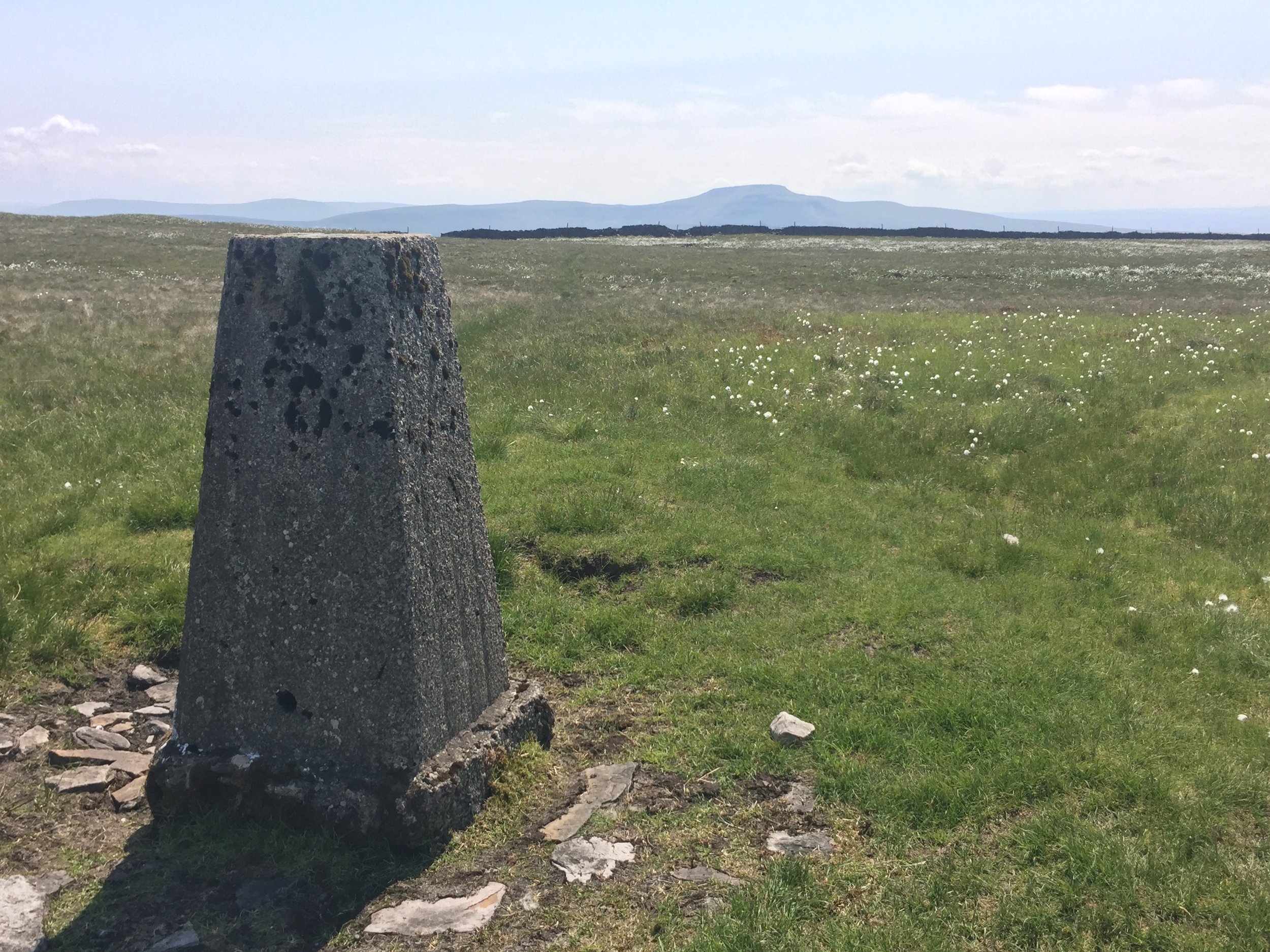
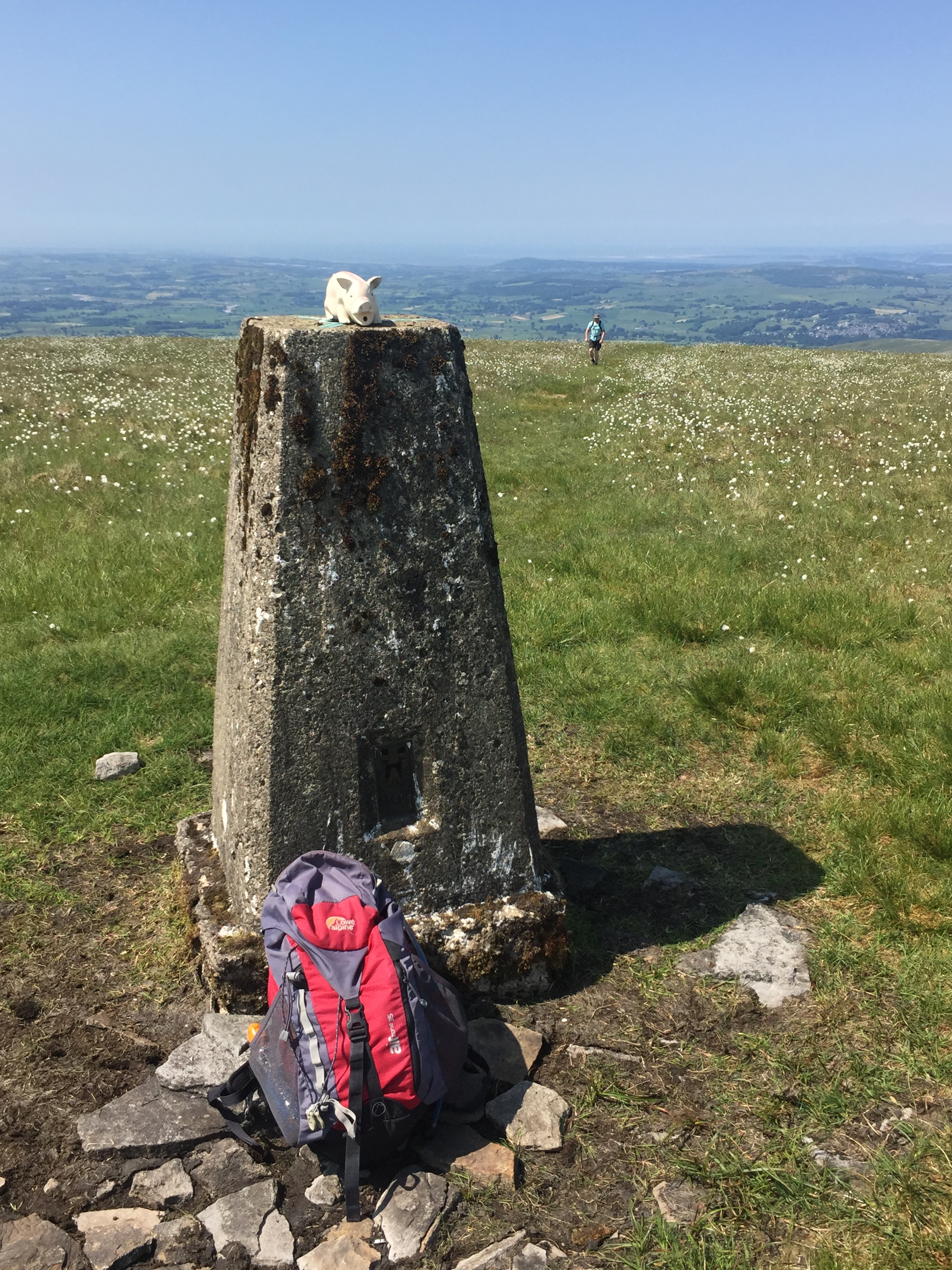
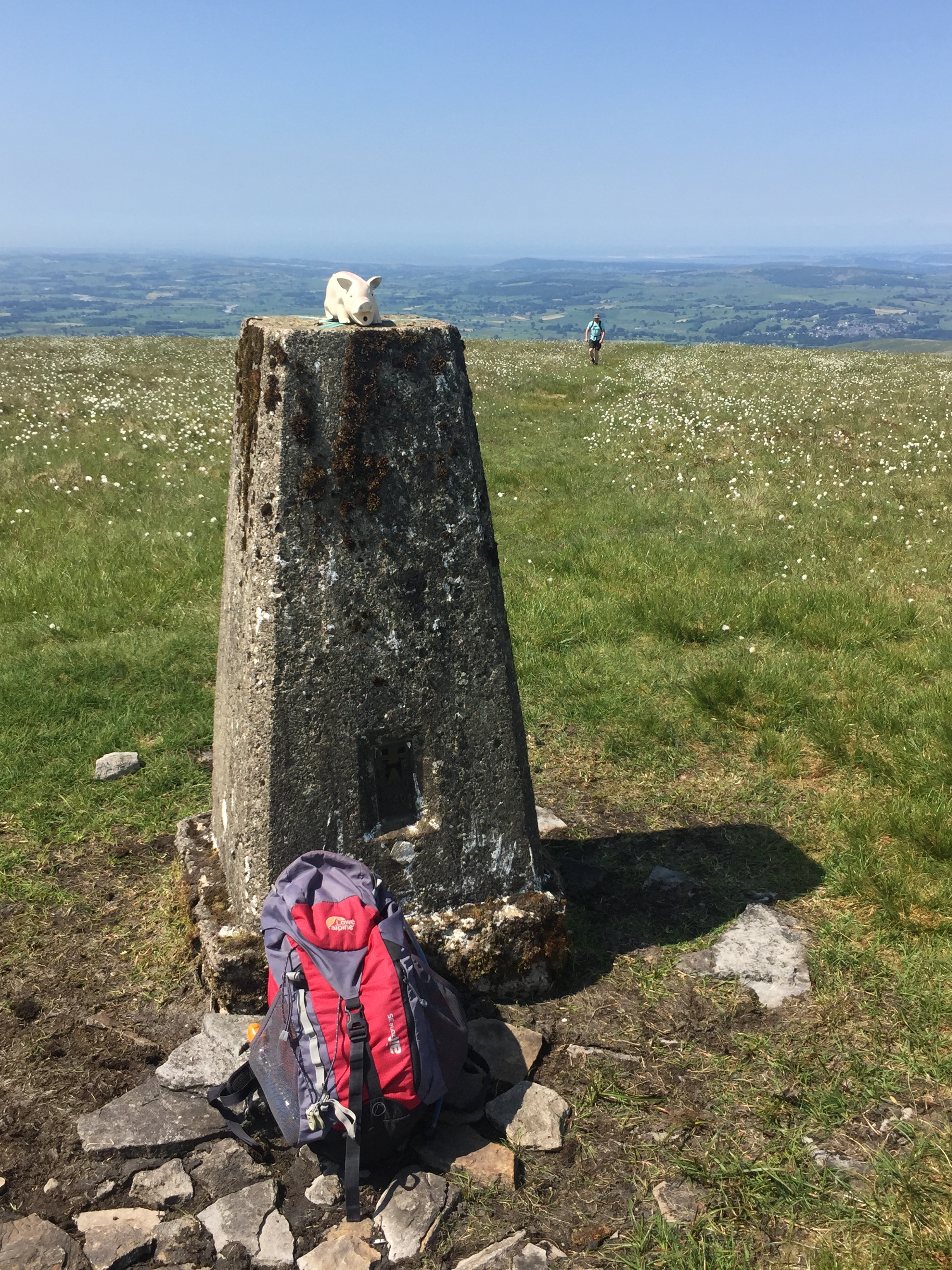
The summit is a black Trig point on a large plateau with views to Whernside. From here, take the path heading south(ish) towards a stone wall. Don’t climb over the ladder, but continue following the wall all the way to the 2nd gate by Leck Fell House.

Despite not being the most exciting walk in the world, it’s a pleasant diversion from a long drive home from the Lakes.


There’s some dispute about the high point in Present-Day Lancashire. Peakbagger lists Gragareth as the high point at 628 meters (2060 feet) and Green Hill at 627 meters (2057 feet). Hillbagging has Gragareth at the same height but shows Green Hill at 628.2 metres (2061 feet). Even so, Hillbagging has the comment “Lancashire county top transferred to hill 2793 Gragareth in 2014. All higher ground on Green Hill is in Cumbria. Bridge summit 560m S at SD701815. Nuttall summit at SD701820”. In David Bathurst’s book, Walking The High Points of England, he shows Gragareth at 627 metres (2056 feet) and Green Hill at 628 metres (2059 feet). Wikipedia has similar elevations to David’s book with Gragareth at 627 m (2,057 ft) and Green Hill at 628 m (2,060 ft).

Elevations in the list are based on Peakbagger.

OTHER HIGH POINTS IN LANCASHIRE