Earl's Seat: East Dunbartonshire County Top
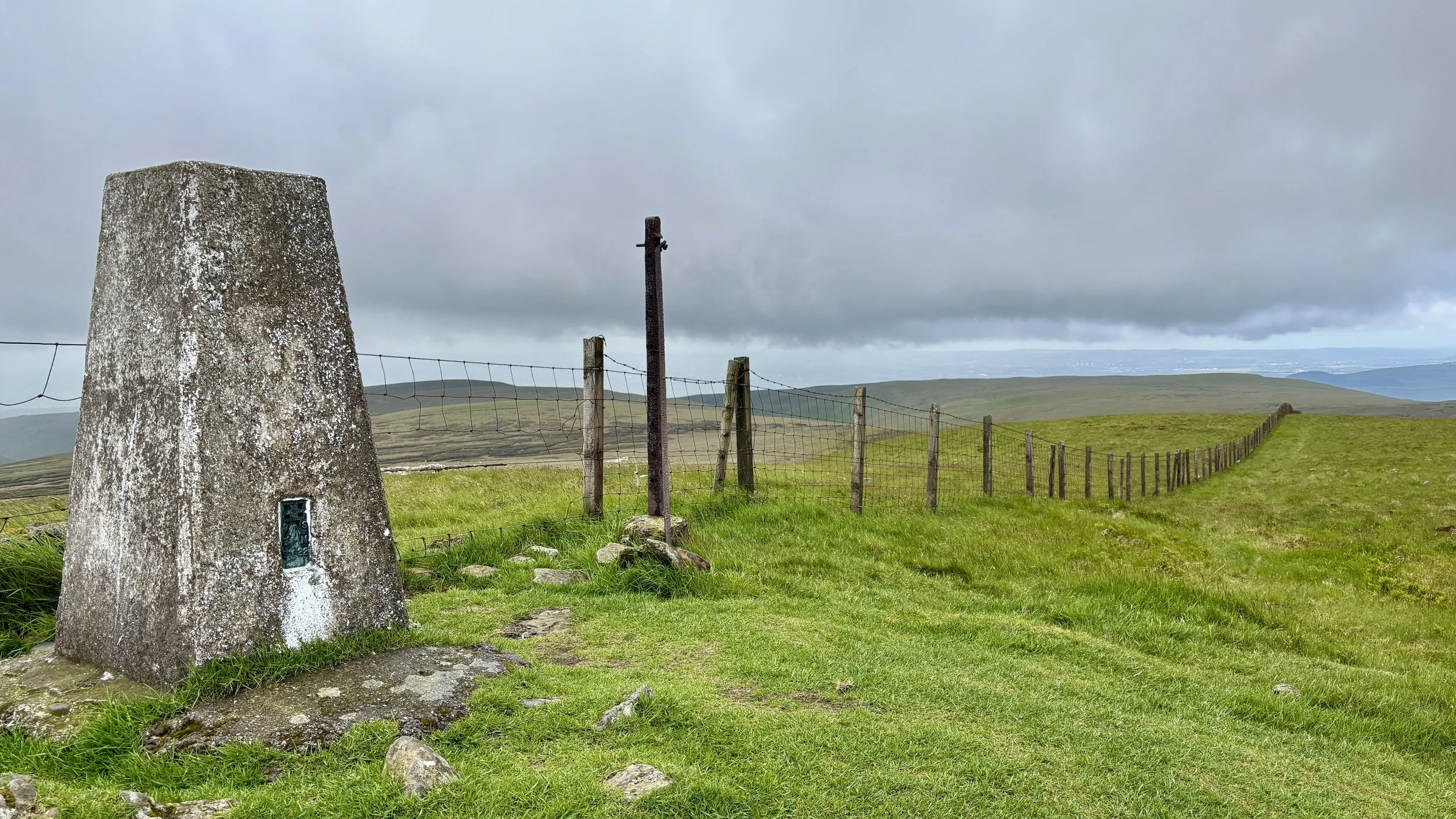
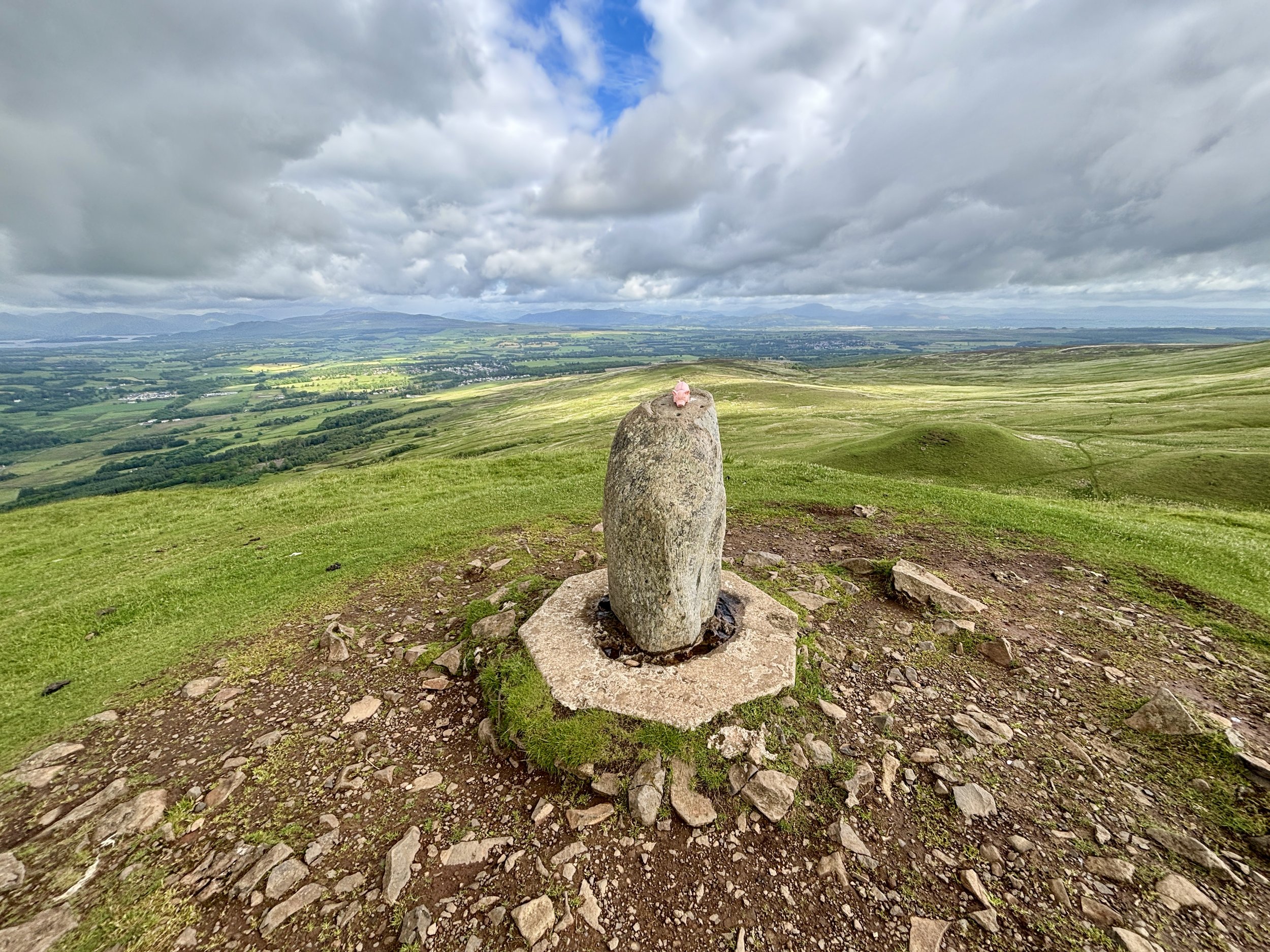
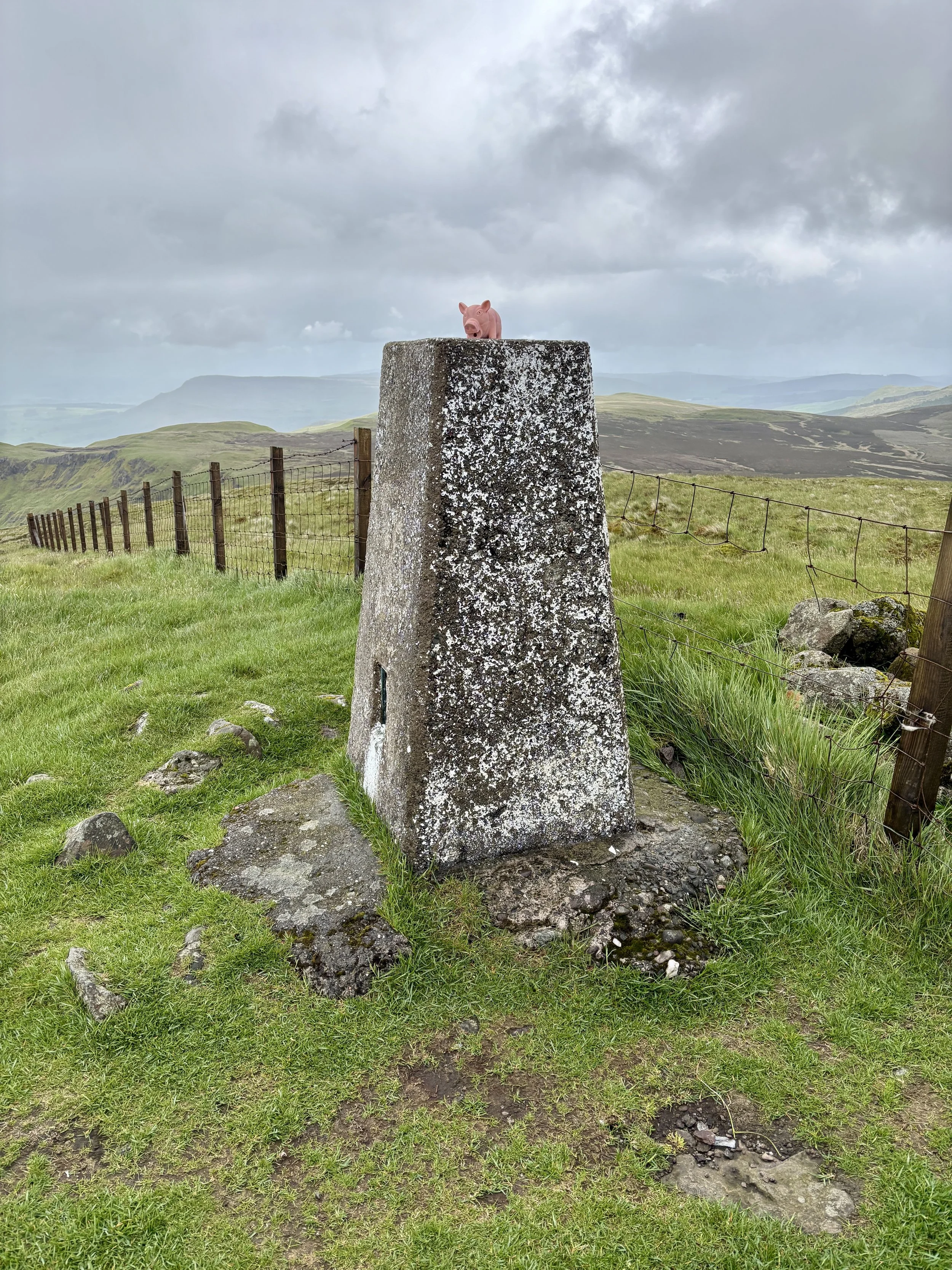
OS Trig Pillar at the top of Earl’s Seat at the border of East Dunbartonshire and Stirling
Significance: Present-day County Top for East Dunbartonshire
Historic County: Stirlingshire, of which Ben Lomond is the Historic County Top
Member of: Marilyns
Parent Range: Campsie Fells
Nearest Higher Neighbour: Binnean nan Gobhar
Elevation: 578m
Date climbed: June 5th 2026
Coordinates: 56°01′33″N 4°17′47″W
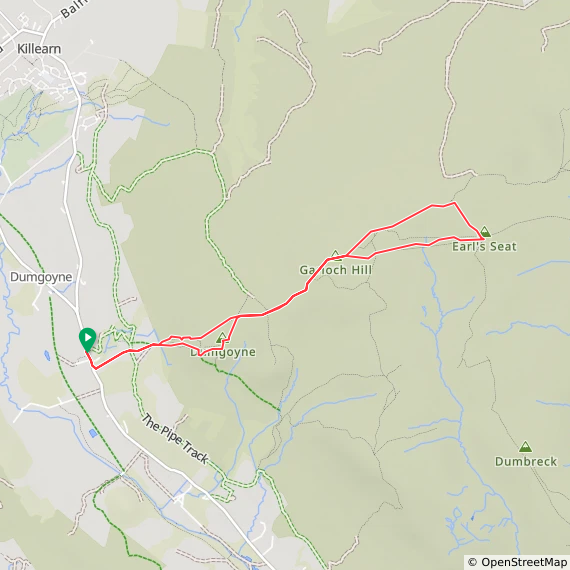
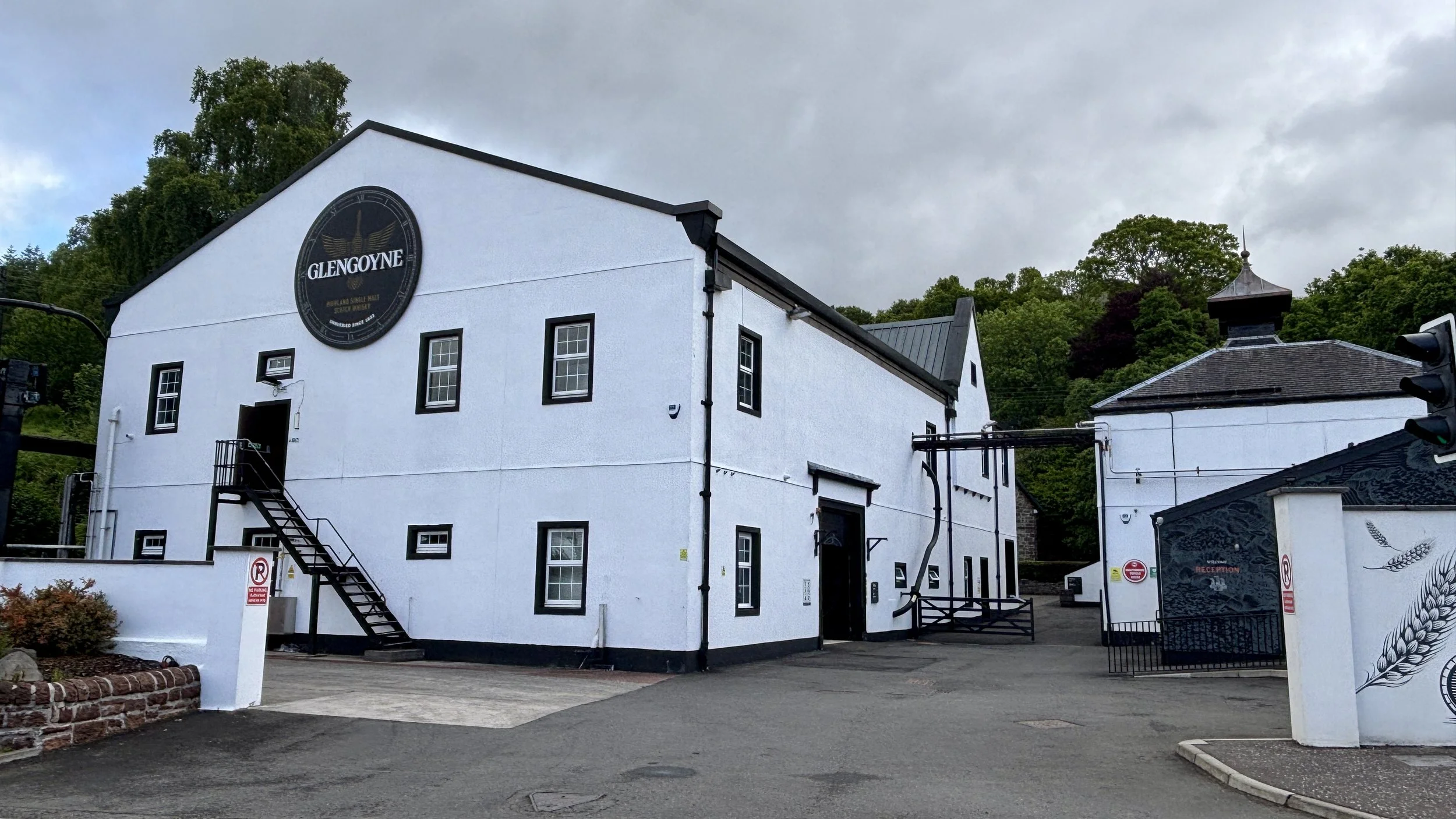
Route Start & Finish: Glengoyne Distillery, Dumgoyne, Killearn, Glasgow, G63 9LB
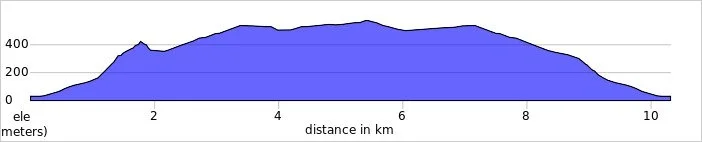
Route Distance: 10.3 km (6.4 miles)
Route Elevation change: +/- 628m
Subsidiary tops on route: Dumgoyne Hill (427m), Garloch Hill (524m)
GPX File: get via Buy Me a Coffee
Other routes touched (walk): None
OS Trig Pillar: TP2957 - Earls Seat
Pubs / Cafes on route: None
Map: Campsie Fells Map | Kilsyth, Strathblane & Fintry | Ordnance Survey | OS Explorer Map 348
Links: Wikipedia: (East Dunbartonshire / Campsie Fells / Earl’s Seat), Peakbagger, Hillbagging
Earl’s Seat is Present-day County Top for East Dunbartonshire. I bagged it in 2026 on our annual County Top weekend trip, along with the present-day County Tops of West Dunbartonshire, Glasgow City and the Historic County Tops of Argyll and Ross and Cromarty.
This year marked a significant milestone: the tenth anniversary of our annual boys' County Top trip. The adventure kicked off on a Friday, but this time around, we opted for parallel adventures. While Mark, Matt, and Joel headed over to the Isle of Arran to tackle Goat Fell to claim the highest point of that county, I decided on a different path. Having already summited Goat Fell a few years prior, I set my sights on bagging the high points of present-day East and West Dunbartonshire. Because they are fairly close together, they make for two great summits to link up in a single day. First up on the agenda: Earl's Seat.
Walking Directions
The guidance below will help you navigate but don’t use it as a fully accurate turn-by-turn guide. Always take a map and/or a GPX route and prepare well for the weather and terrain.
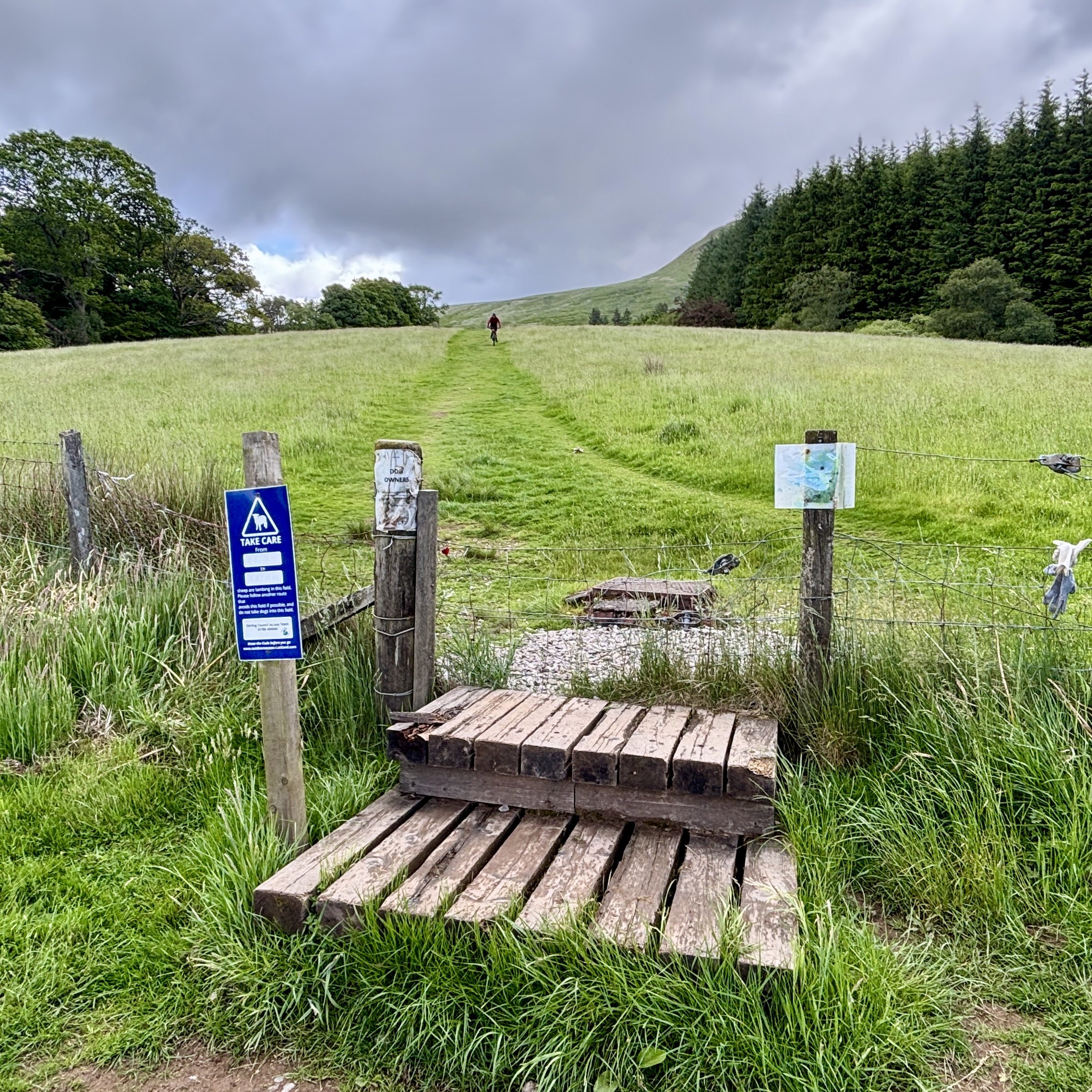
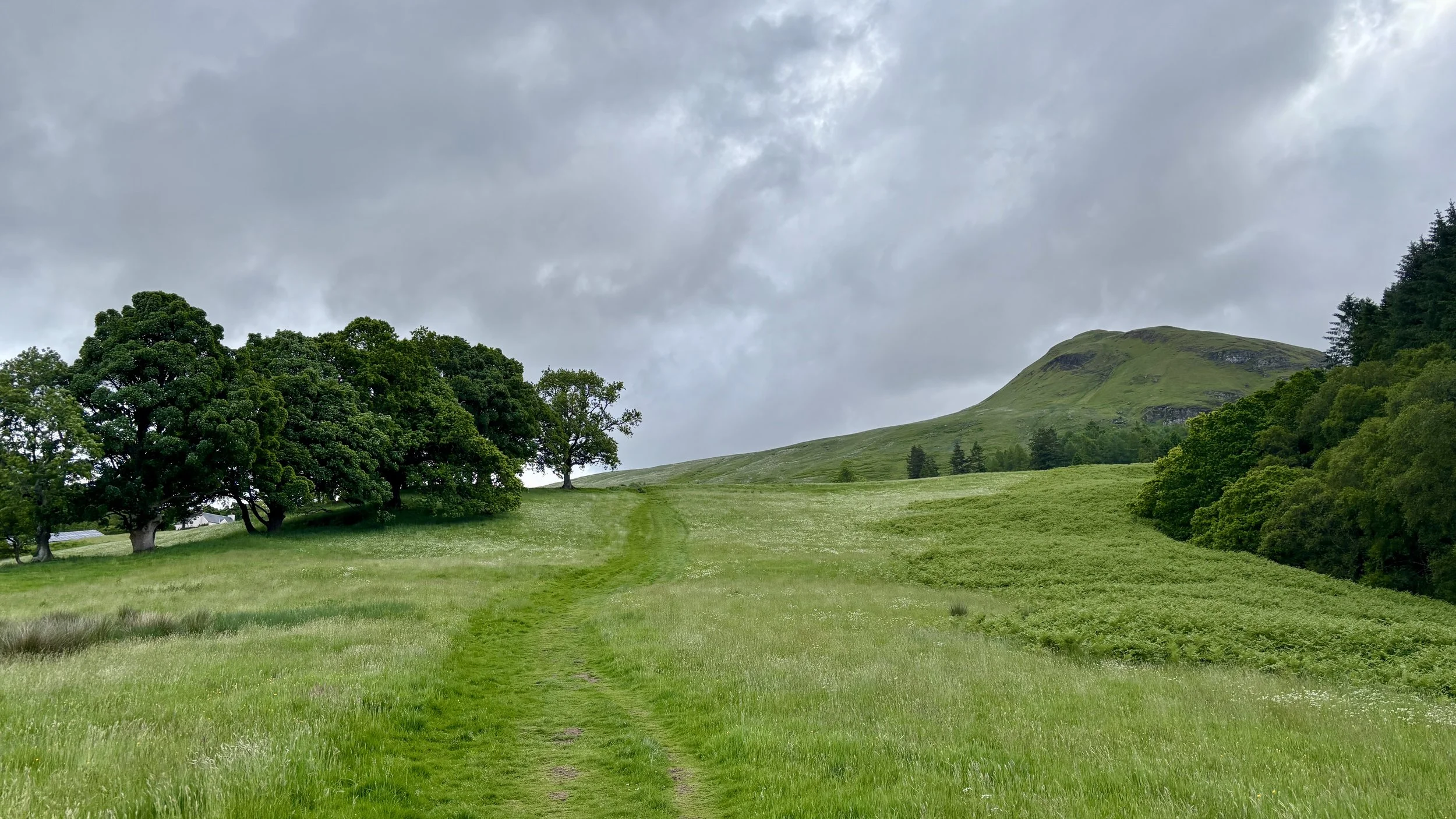
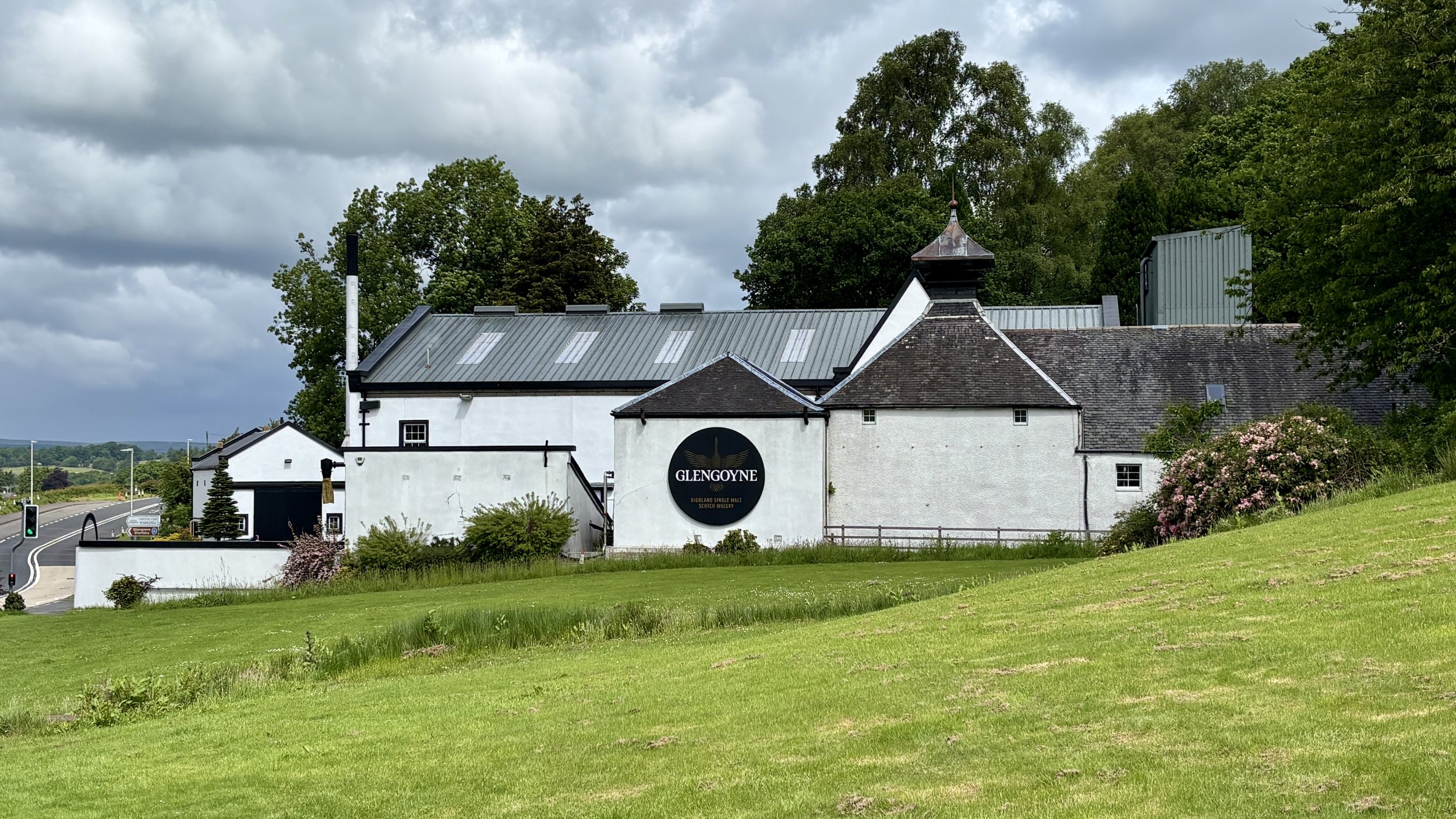
The starting point was an easy forty-minute drive from Glasgow Airport. I headed for the Glengoyne Distillery, which offers great parking. A quick note for anyone planning this route: the distillery car park is officially for customers only. Given it was a quiet day, I chanced it, but there is alternative parking nearby if you prefer to play it safe. From the distillery, the route begins by heading south down the main road for about 100m. After crossing over, you will find a gate leading into a field, and the path begins its slow, steady climb up the hill.
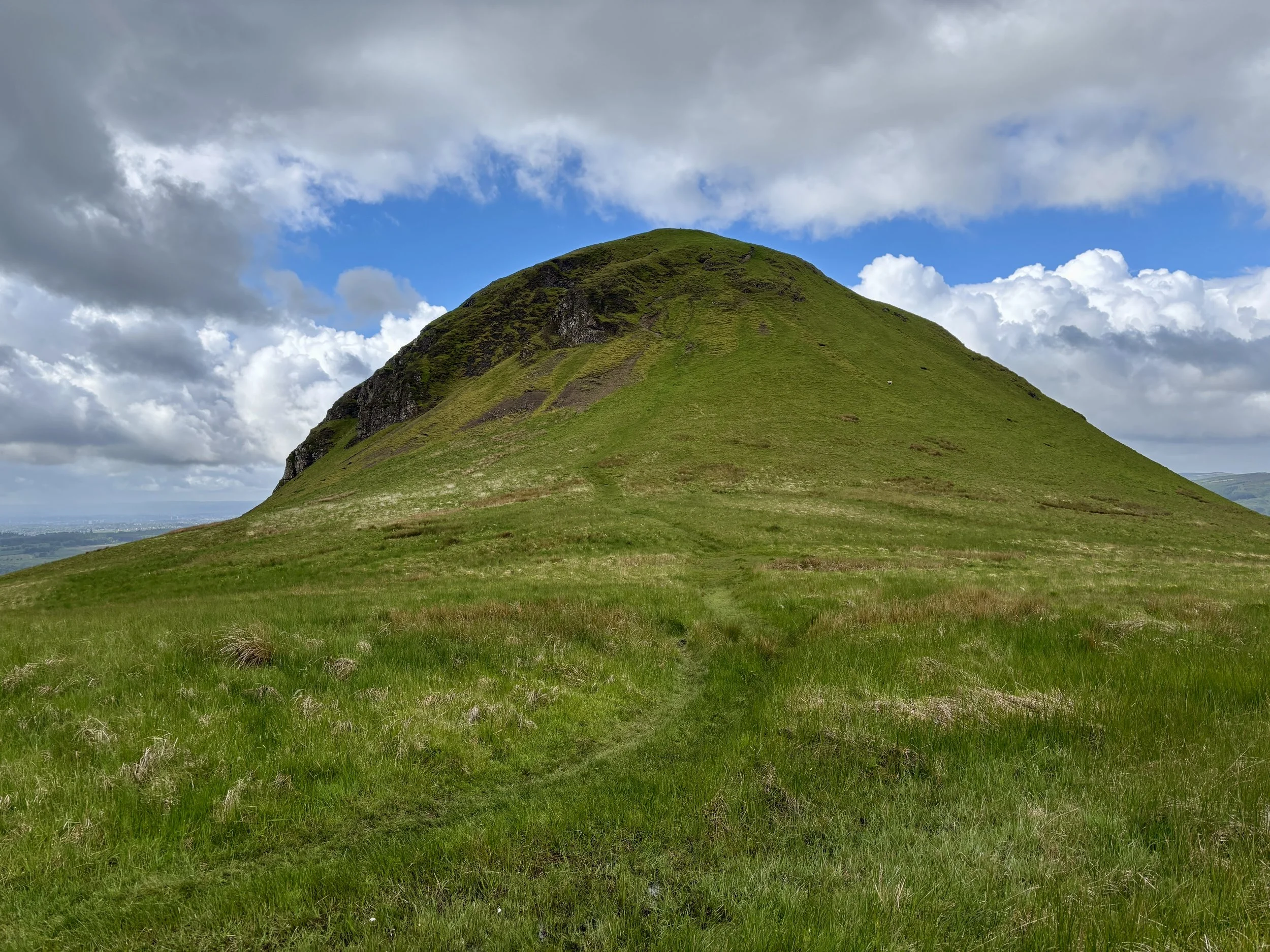
It isn't long before you are greeted by the imposing, steep figure of Dumgoyne Hill. At this stage, the path presents two choices: fork right to take the path straight over the top of Dumgoyne Hill, or keep left to skirt around the side and avoid the climb entirely.
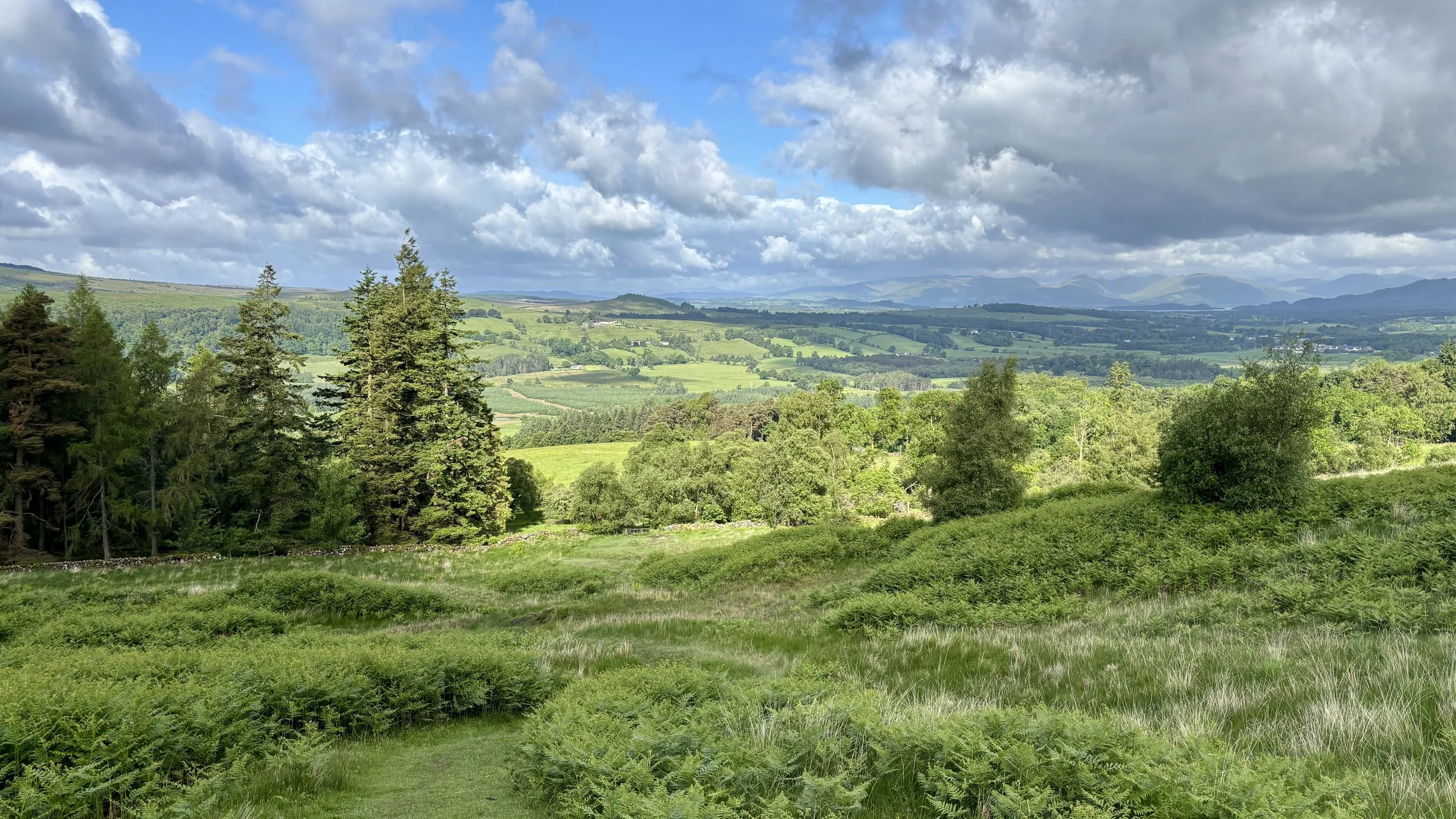
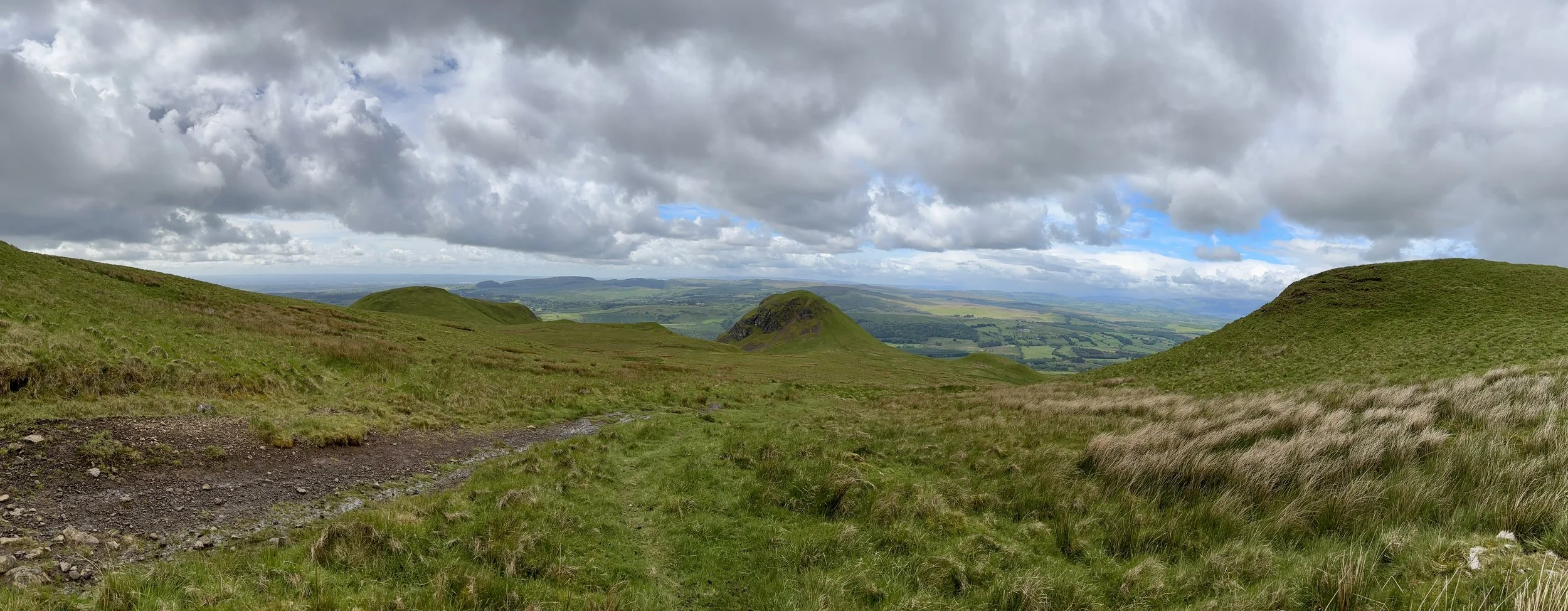
Determined to bag Dumgoyne Hill as well, I took the right-hand path. It is a steep ascent up the southern side, but the effort is richly rewarded. While there isn't a traditional trig pillar at the summit, there is a large, pillar-sized stone and, more importantly, fantastic views stretching right across the valley.
Leaving Dumgoyne Hill, the path heads in a north-north-easterly direction down the opposite side of the hill. I will admit this section was a little daunting: the ground was damp, and the gradient was extremely steep. I don't typically tackle tricky hills on my own, but it wasn't particularly dangerous. With a bit of care, and an undignified slide down one short section, I made it to the bottom safely.
Continuing northeast, the route seamlessly joins back up with the main bypass path you would have taken had you skipped Dumgoyne Hill. From here, it becomes a steady, albeit slightly boggy, ascent towards a subsidiary top called Garloch Hill, marked by a few cairns. Pushing on towards Earl's Seat, the landscape opens up, and you can spot the Trig Pillar from quite a distance: a perfect visual target to aim for.
After taking in the summit of Earl's Seat, I decided against simply retracing my steps. Instead, I opted to turn the walk into a circular route. Heading north-west, the path leads towards Ballagan Tops before taking a westerly turn to rejoin the original ascent path just east of Garloch Hill.
From there, it was a straightforward walk retracing my steps back to the distillery. This time, however, I took the northerly path to comfortably bypass Dumgoyne Hill.
All in all, the route took about three hours: a highly enjoyable morning on the hills and a fantastic start to the weekend's county top bagging.
Points of Interest along or near to the Route
Glengoyne Distillery: Established in 1833, this distillery is unique for being located on the Highland Line, the geographical divide between the Highlands and Lowlands. Uniquely, the distillery sits in the Lowlands, while its maturation warehouses sit across the road in the Highlands.
The Campsie Fells: These are a range of volcanic hills formed during the Carboniferous period. They are composed largely of basalt, creating the dramatic crags and scree slopes visible from the surrounding valleys, including the steep face of Dumgoyne.
The Highland Boundary Fault: The route passes over a significant geological divide. This fault line runs across Scotland from Arran in the west to Stonehaven in the east, separating the flatter, sedimentary Lowlands from the rugged, metamorphic Highlands.
Dumgoyne: A striking volcanic plug that rises sharply from the edge of the Campsie Fells. It formed when magma solidified within an ancient volcanic vent, leaving behind the resistant core that now stands as a prominent landmark. Its steep, symmetrical profile has been further shaped by glacial erosion, but it is not a crag‑and‑tail formation; instead, it is simply the exposed remnant of a Carboniferous volcano.
Walking The Forth and Clyde Canal from The Falkirk Wheel to The Kelpies
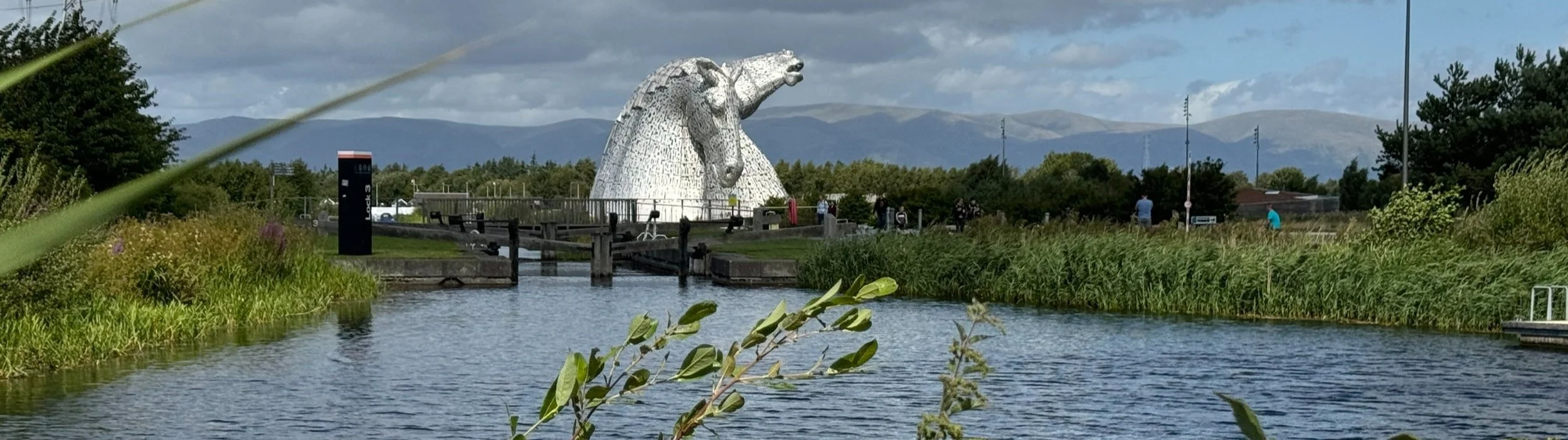
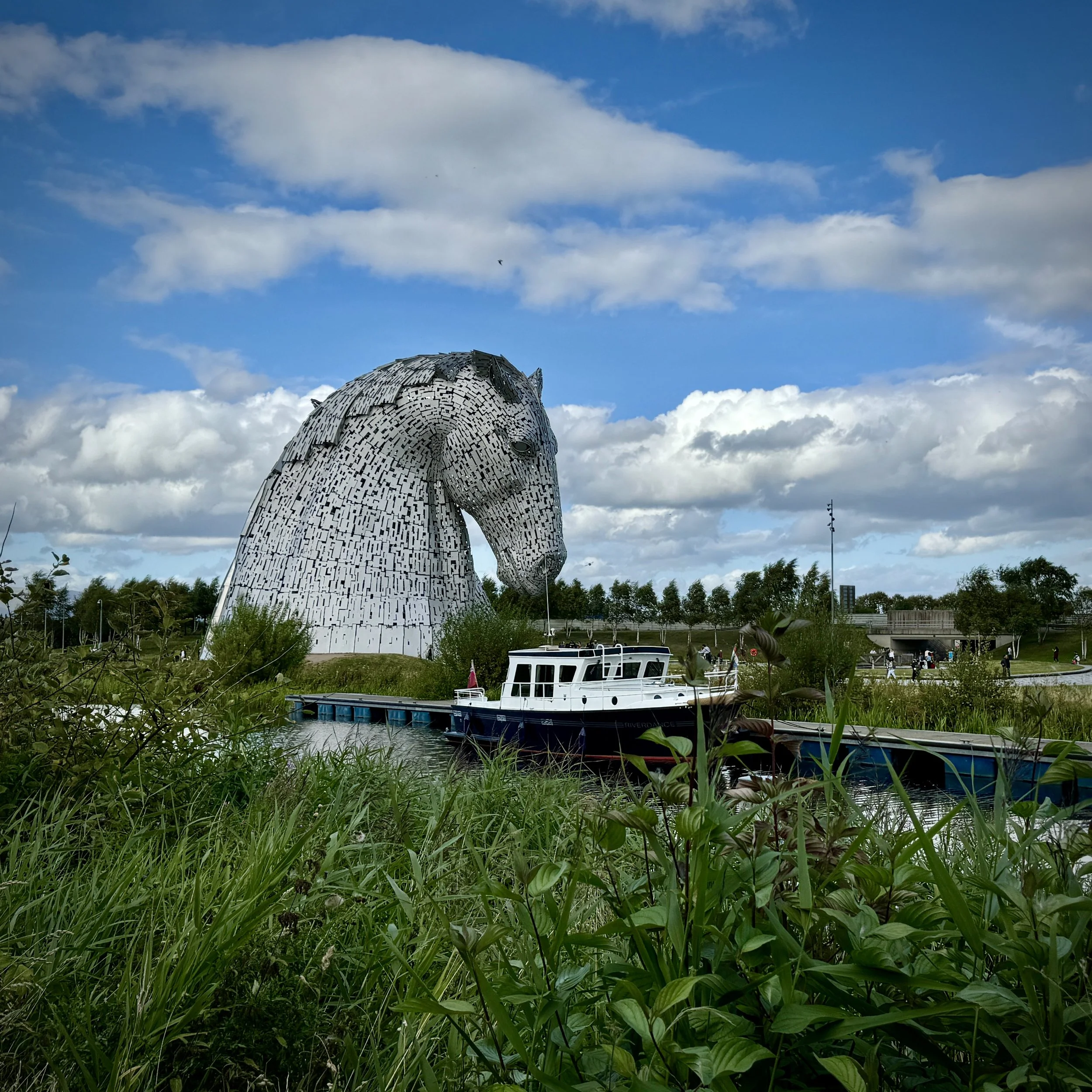
Approaching The Kelpies on the Forth and Clyde Canal
Start: The Falkirk Wheel Visitors’ Centre, Lime Road, Falkirk, FK1 4RS
Finish: Kelpies Parking, Grangemouth, FK3 8YE
Distance: 8.7 km (5.4 miles)
Elevation change: +42m / - 85m. Net 43m
GPX File: get via Buy Me a Coffee
Other routes touched (walk): John Muir Way
Other routes touched (cycle): NCN 754
Pubs / Cafes on route: Cafes at the start and end. The Canal Inn (3.2km in)
Map: Falkirk, Cumbernauld & Livingston Map | Linlithgow, Bathgate & Kilsyth | Ordnance Survey | OS Explorer Map 349
Links: Falkirk, Forth and Clyde Canal, Falkirk Wheel, The Kelpies
This is a short canal walk linking 2 major attractions in the Falkirk area: the Falkirk Wheel and The Kelpies. It’s a point-to-point walk along a section of the Forth and Clyde canal. We parked at the Kelpies and got a taxi to the Falkirk Wheel where we started the walk. We used Bruce Taxis, a local company that was recommended by the Kelpies Visitor Centre.
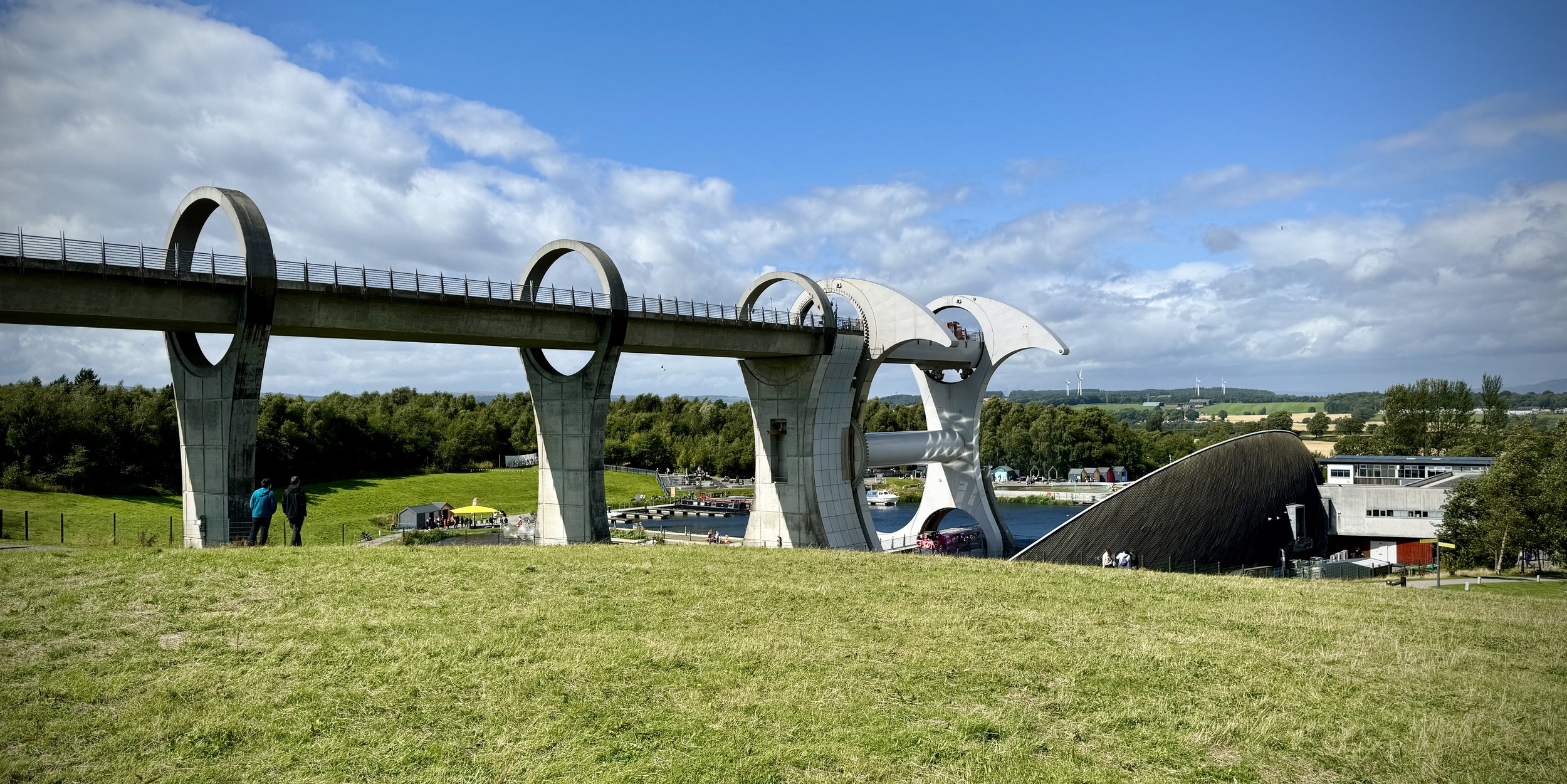
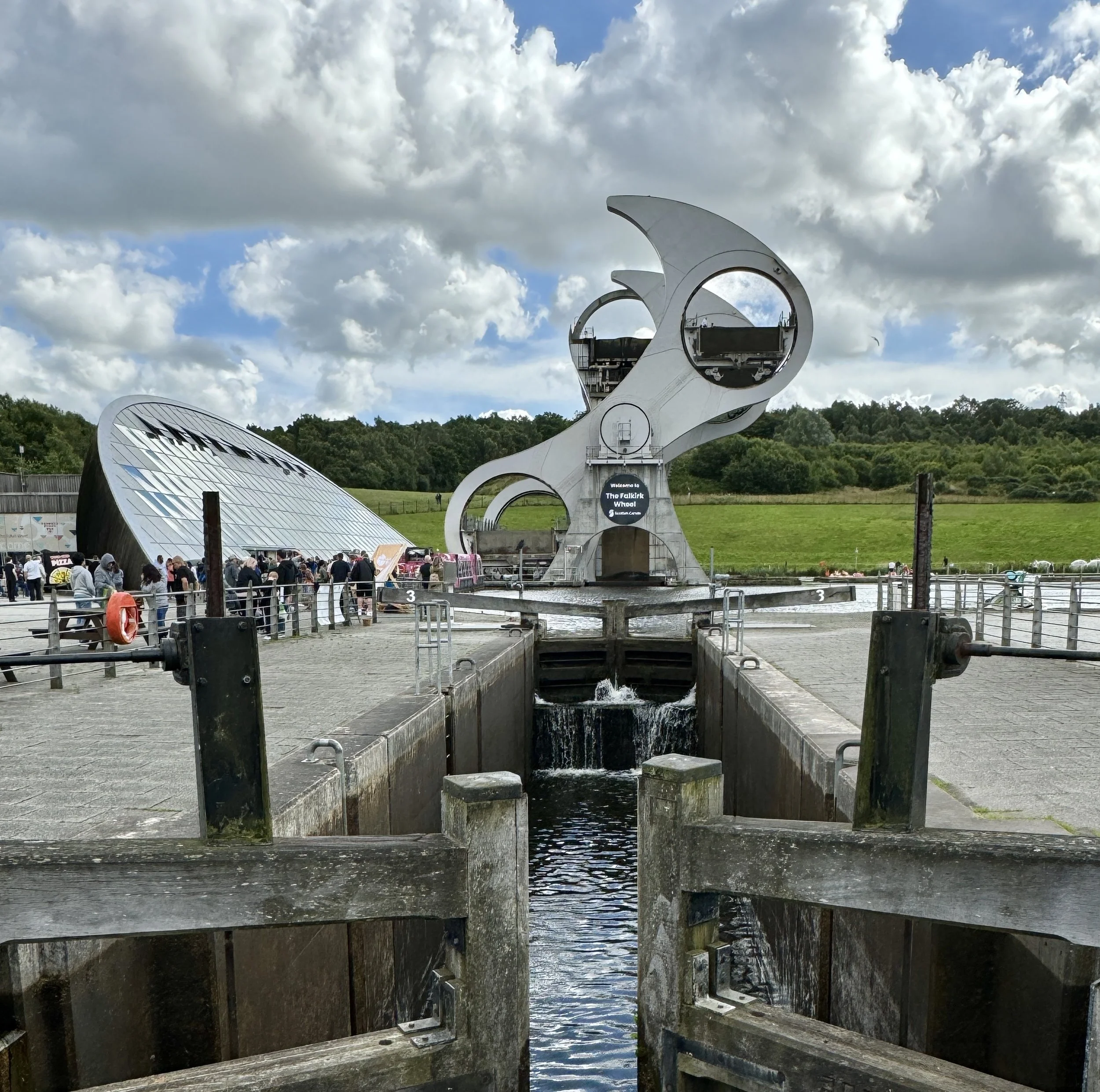
The Falkirk Wheel is a remarkable feat of engineering that connects the Forth and Clyde Canal with the Union Canal. This iconic structure, resembling a giant Ferris wheel, is the world's first and only rotating boat lift. It allows boats to travel between the two canals, overcoming the significant height difference between them. We stayed there for about an hour to see a couple of rotations of the wheel and walk around the whole site.
From the Falkirk Wheel Visitor Centre we walked south along the John Muir Way ascending to the higher level of the canal. We continued south through the tunnel to meet the main section of the Union Canal. A longer walk would have taken us along the Union to the south of Falkirk and Calendar Park, but for this trip, we turned around and headed back to the Visitor Centre. From here we did a full circuit of the Falkirk Wheel Basin to pick up the Forth and Clyde Canal on the northern side.
Take a right onto the Forth and Clyde, heading in and easterly direction. Navigation from here is easy as there’s no diversions along the towpath until you get to The Kelpies. Along the way you’ll pass the recently re-opened Rosebank Distillery with several metal sculptures on the towpath.
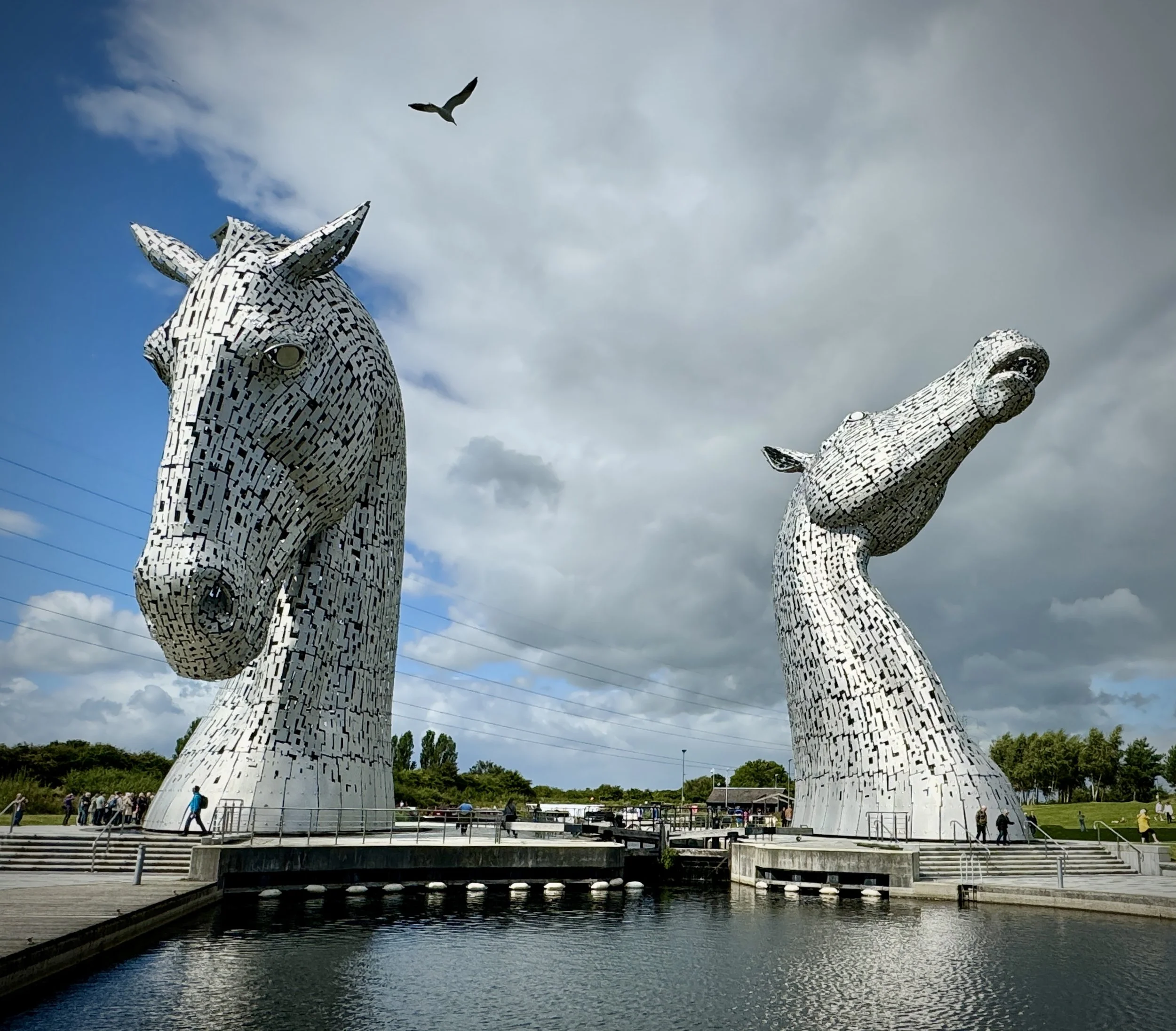
Approaching the final few km, you’ll get a good view of the Kelpies from a distance. The Kelpies are iconic steel horse sculptures standing at 30 meters tall. They are the largest horse sculptures in the world. Inspired by the mythological water horses of Scottish folklore, the Kelpies symbolize the industrial heritage of the region, once a centre of coal mining and canal transport.


The Falkirk Wheel




The Kelpies






Ben Lomond: Stirlingshire County Top

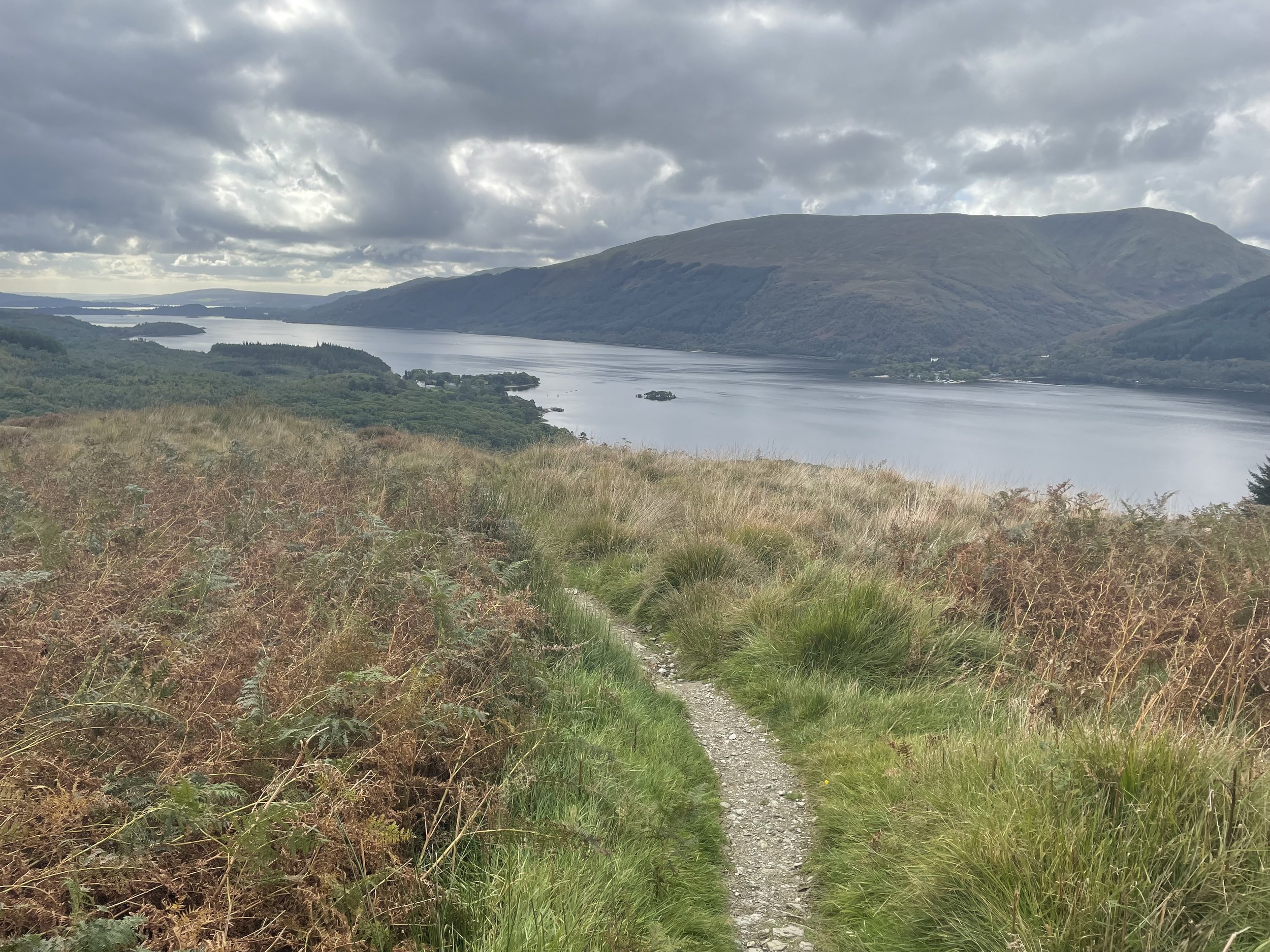
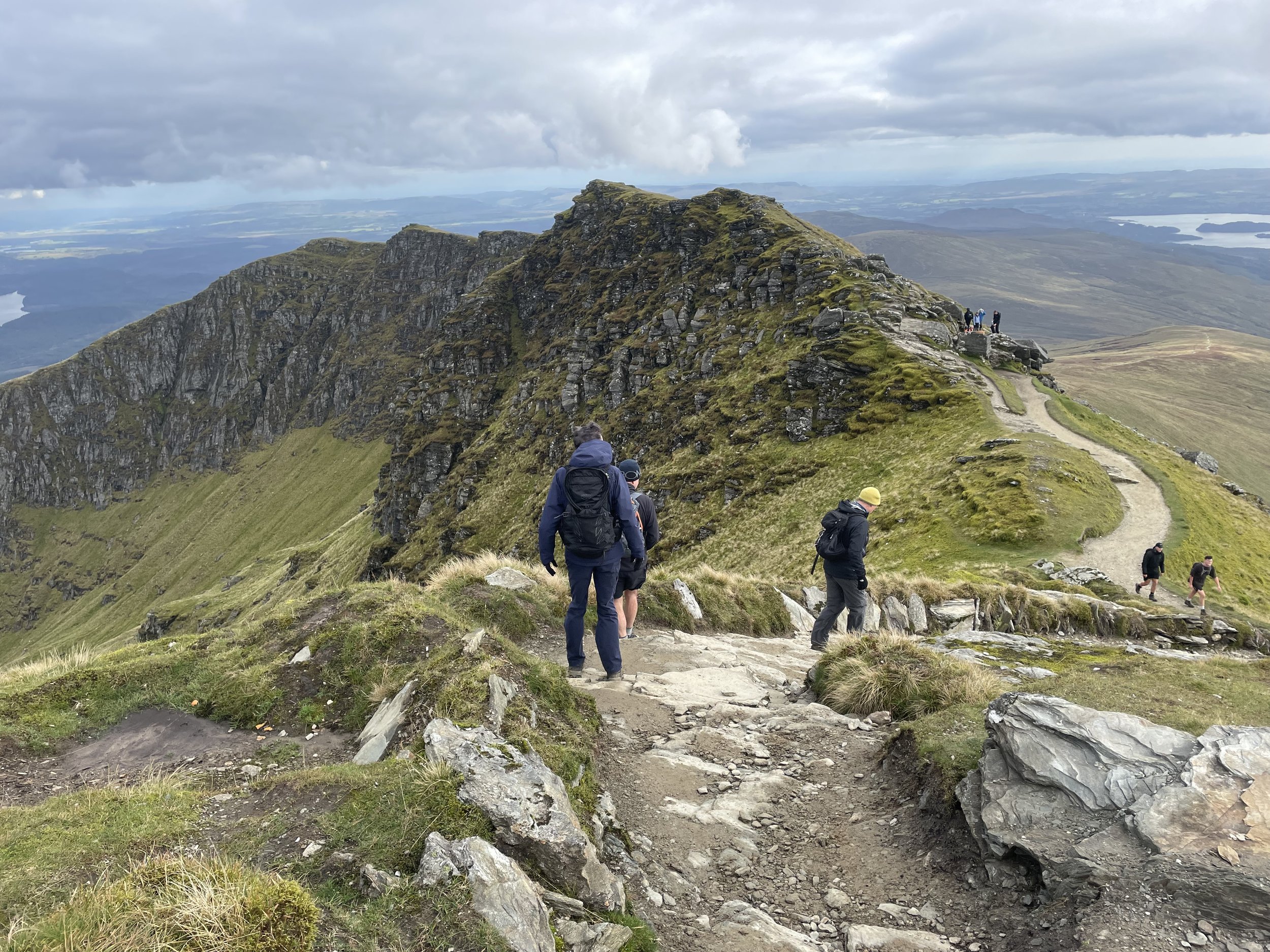
View over Loch Lomond on the descent from Ben Lomond
Also known as: Beinn Laomainn (“beacon mountain")
Significance: High Point for the Historic County of Stirlingshire, Loch Lomond NSA High Point
Member of: Munros, Marilyns
Parent Peak: Beinn Ime.
Nearest Higher Neighbour: Beinn Ime
Elevation: 974m
Date climbed: September 23rd 2023
Coordinates: 56° 11' 25'' N, 4° 37' 59'' W
Route Start & Finish: Ben Lomond (Rowardennan) Car Park, Stirling, G63 0AR
Route Distance: 12 km (7.5 mile)
Route Elevation change: +/- 913m
Subsidiary tops on route: Ptarmigan (778m)
GPX File: get via Buy Me a Coffee
Other routes touched (walk): Ben Lomond Trail, Ptarmigan Ridge Path, West Highland Way
OS Trig Pillar: TP1283 - Ben Lomond
Pubs / Cafes on route: None on route but the Clansman Bar at the Rowardennan Hotel is near the car park
Map: Loch Lomond North Map | Tyndrum, Crianlarich & Arrochar | Ordnance Survey | OS Explorer Map OL39
Guidebook: The UK's County Tops (Jonny Muir)
Links: Wikipedia: (Stirlingshire / Ben Lomond), Peakbagger
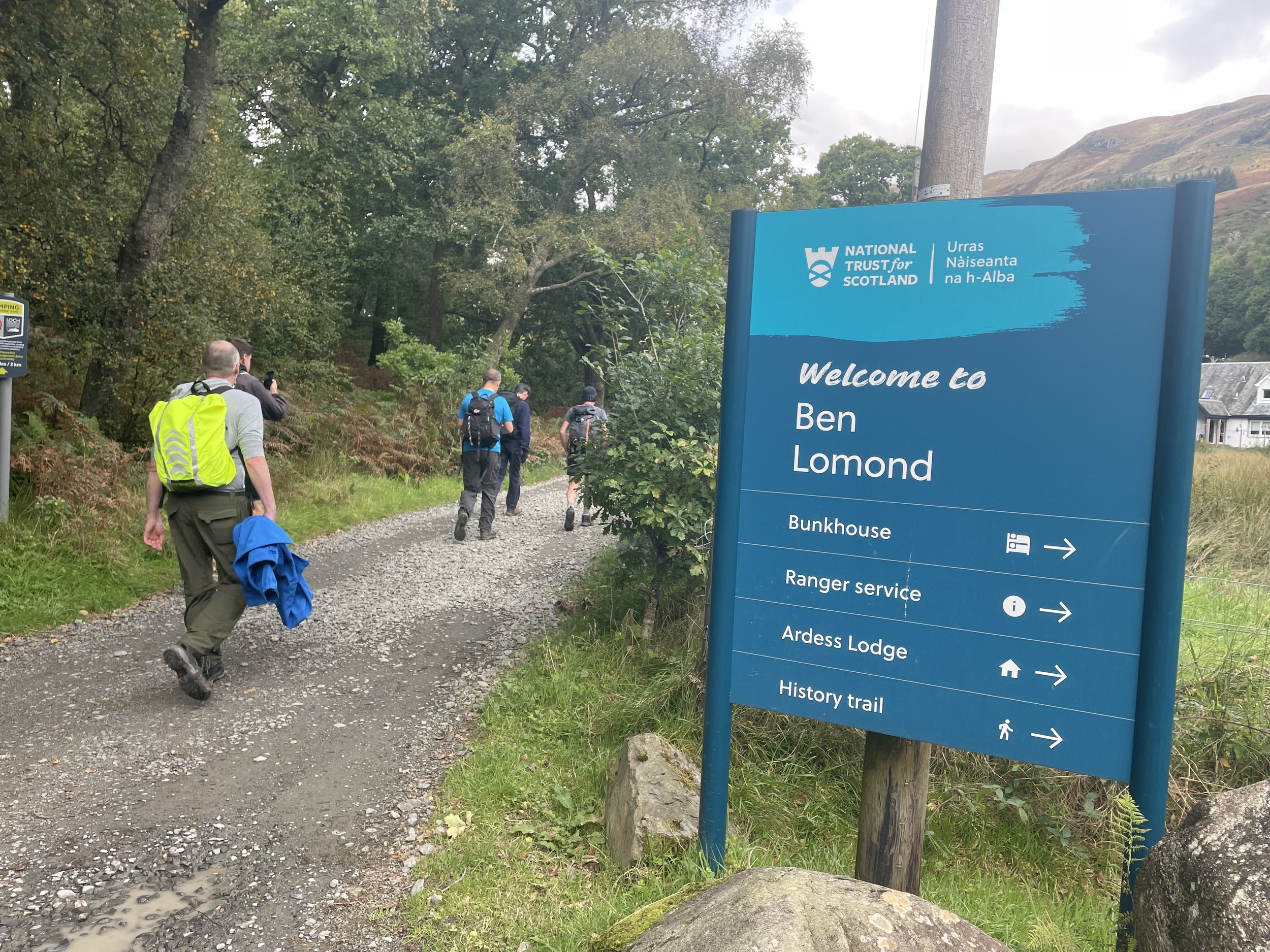
This was a day hike as a part of a 4-day Scottish County Top trip to bag Ben Lawers, Ben Vorlich, Ben Lomond and the Hill of Stake. We were on our 3rd day of the trip and had already ticked off Ben Lawers and Ben Vorlich. Now for Ben Lomond, not the highest of the trip, but definitely the most iconic. Ben Lomond is the most southerly Munro, sits on the edge of Loch Lomond and is very close to Glasgow. As such it’s very popular and it can be hard to find parking spots.
We read that in the summer the police close off the road to the main car-park. We were there in late September after the summer peak but we also had to get in a parkrun as it was a Saturday. By the time we arrived it was 11:00 and the main car-park was full so we parked in the overflow instead. This has its advantage though as it’s free and has a direct connection to the Ben Lomond Trail.
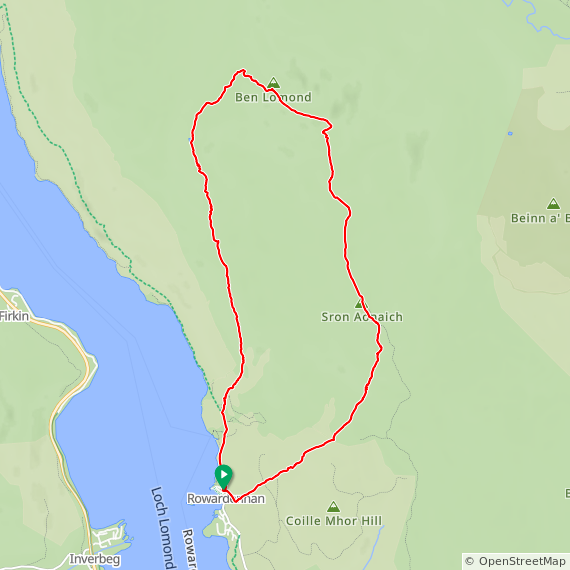
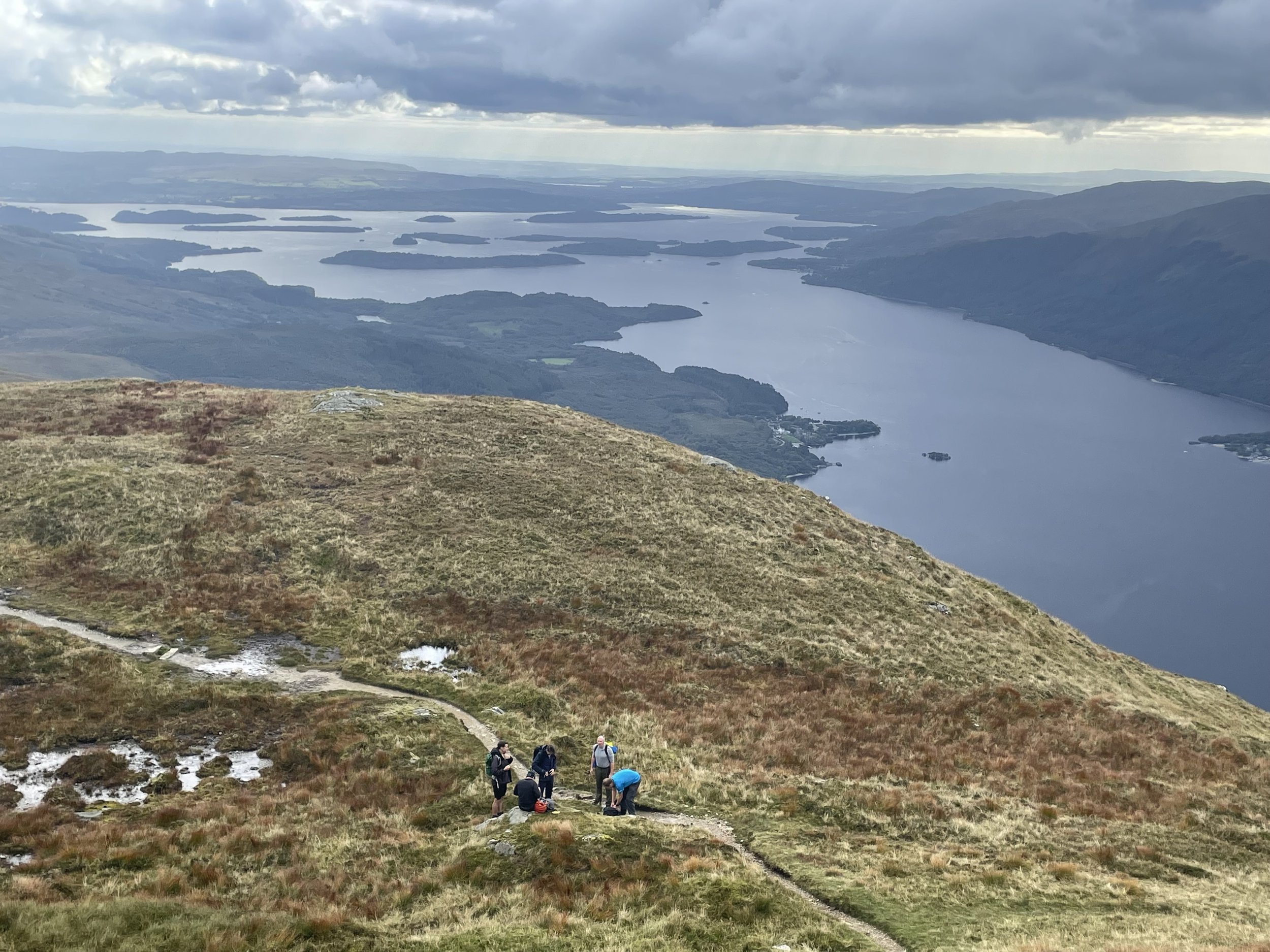
We opted for the clockwise circular route, initially following the West Highland Way from the overflow to the main car-park then picking up the Ptarmigan Ridge Path that ascends on the western side of the mountain closest to the Loch. The weather was a bit grey but we still had great views down to the Loch as we climbed.
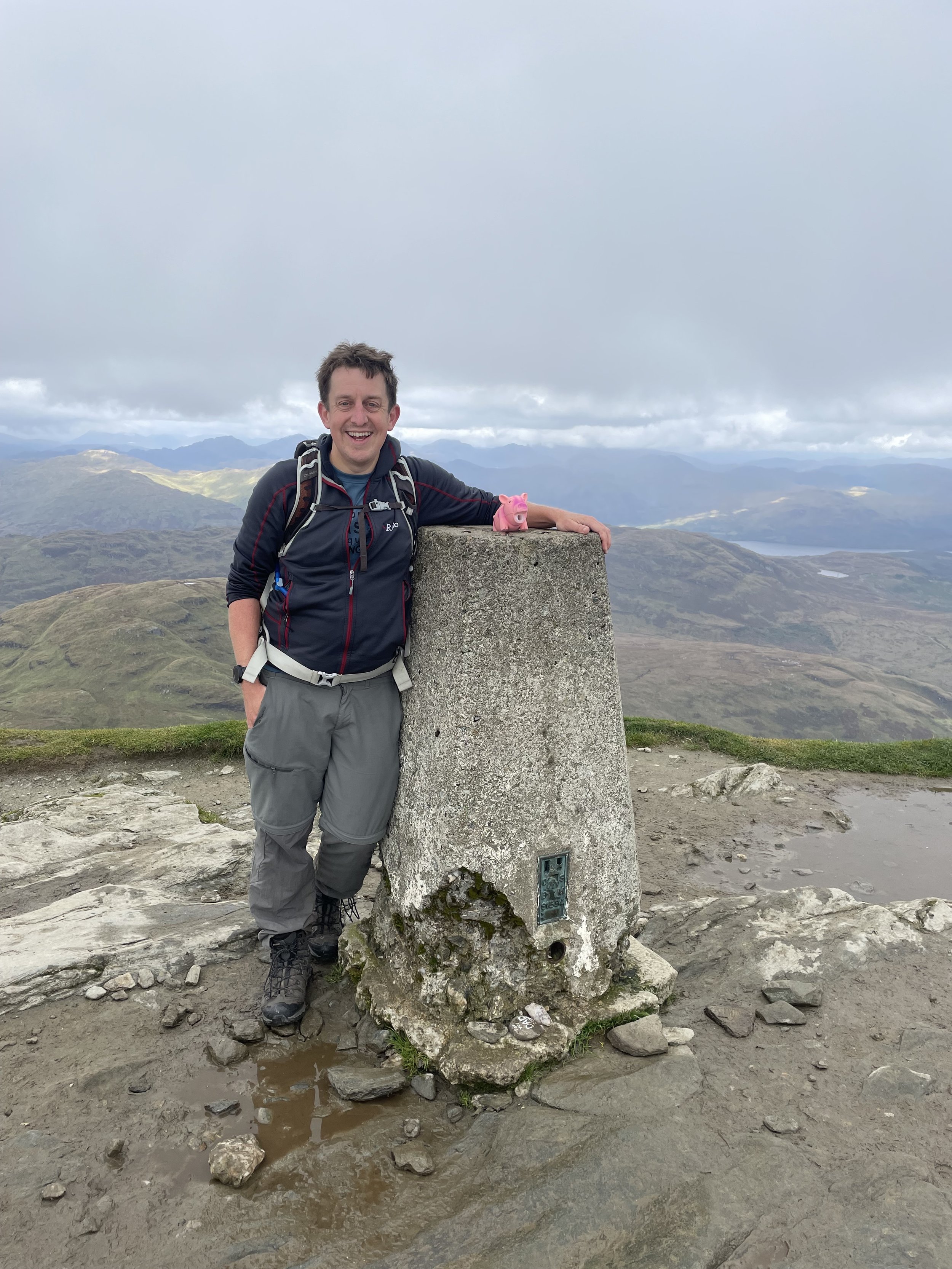
The different map apps that we had in the group gave different positions for the summit of Ptarmigan so we visited both just to be sure. After Ptarmigan there’s a steep final ascent to the Ben Lomond summit and the Trig Pillar. The summit is flat and, when we were there, fairly crowded with walkers stopping for lunch. After a quick break we continued the circuit, descending down via the Ben Lomond Way.
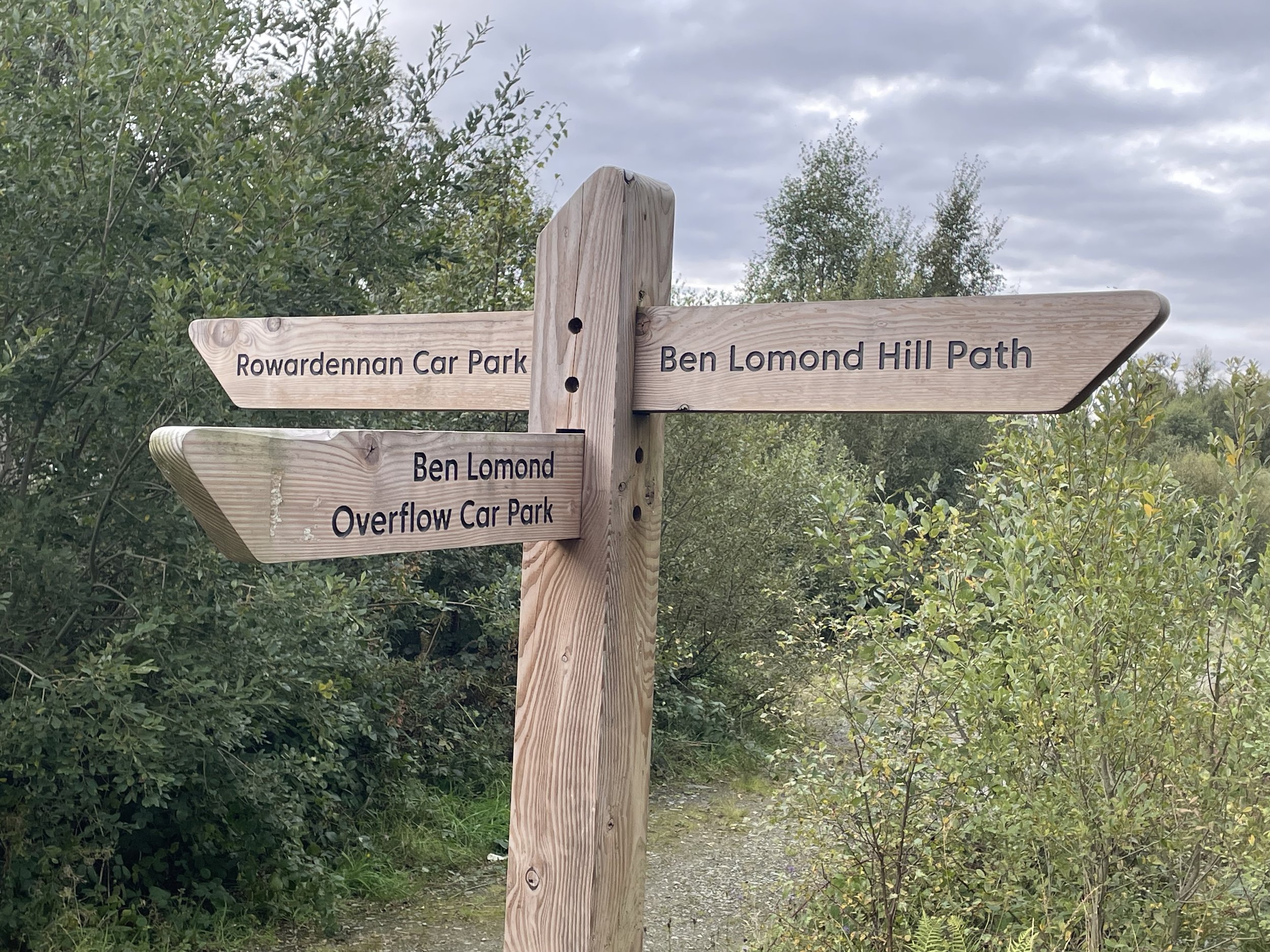
Near the Loch there’s a path junction with one route to the main car-park and another to the overflow. We took the route to the main car-park to have a celebratory drink at the Clansman Bar at the Rowardennan Hotel.






The Rob Roy Challenge

Glen Ogle Viaduct (official event photo)
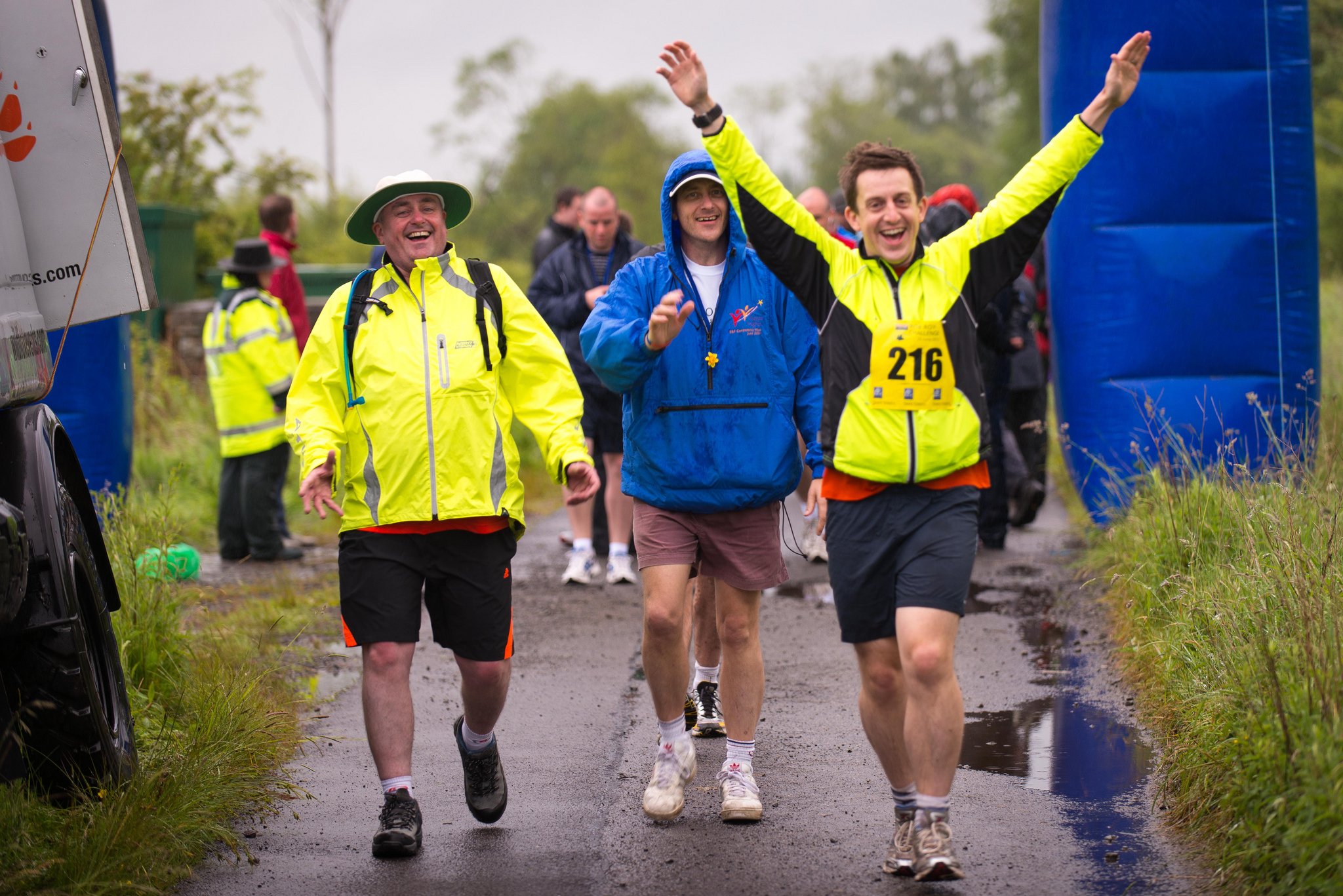
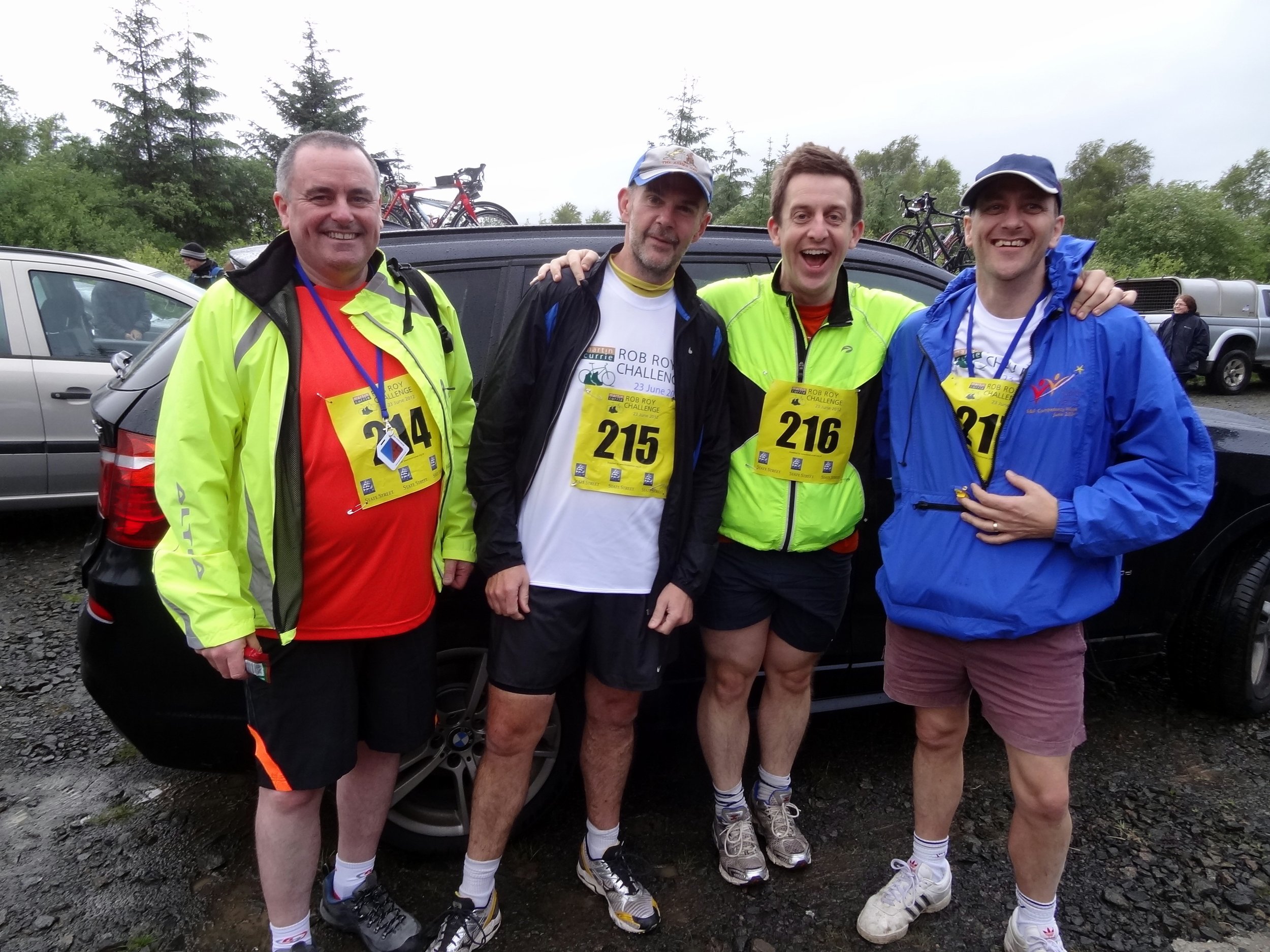
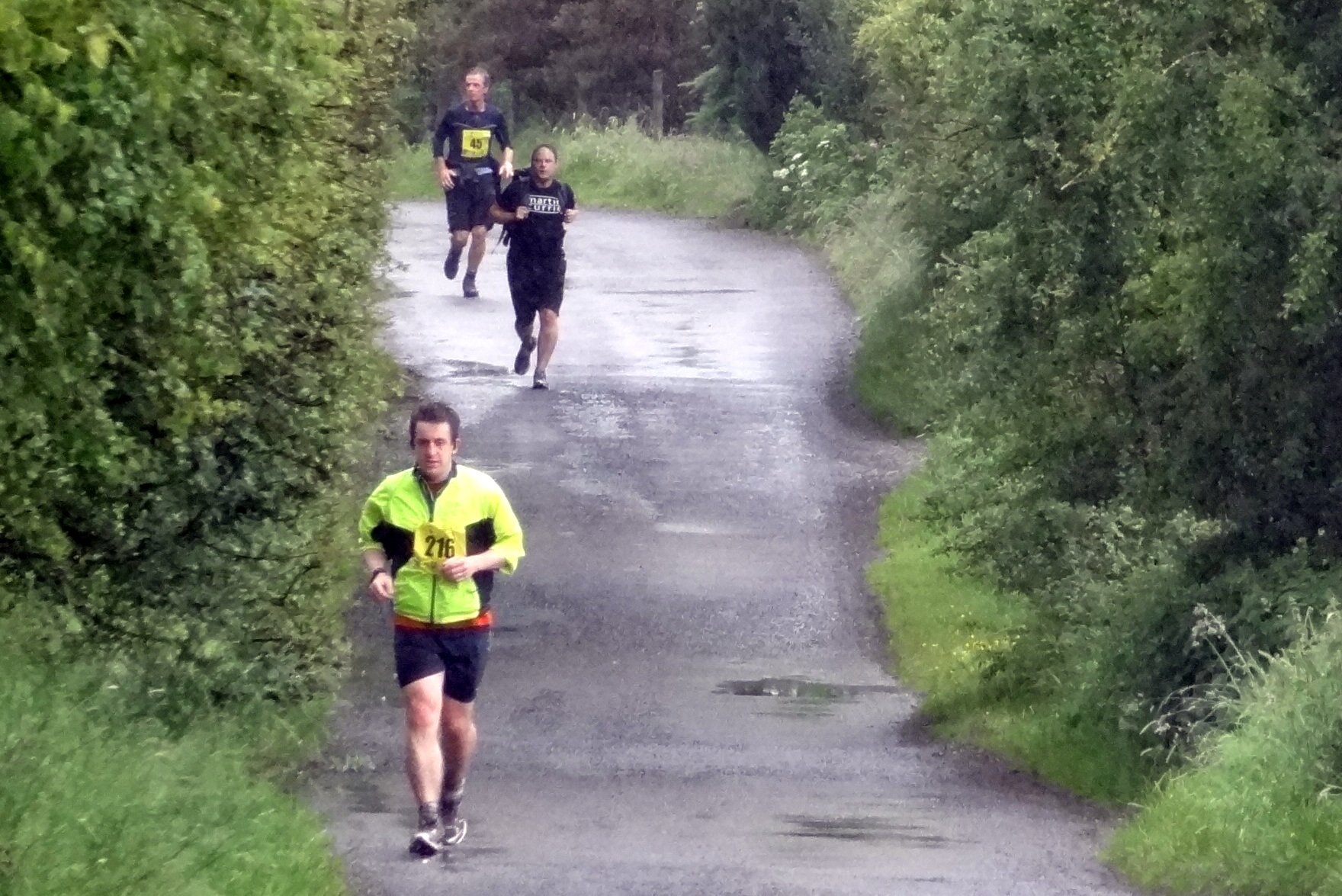
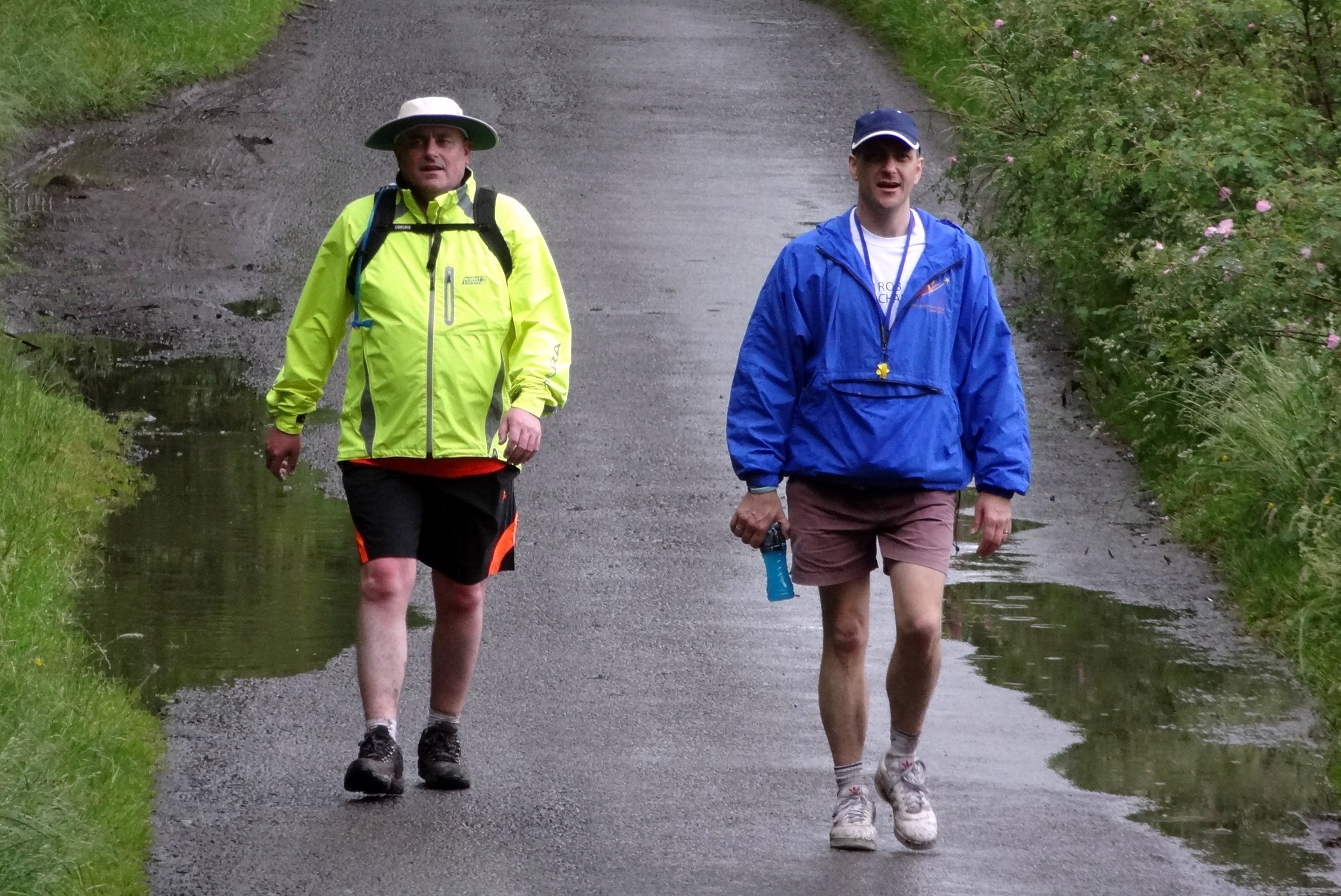
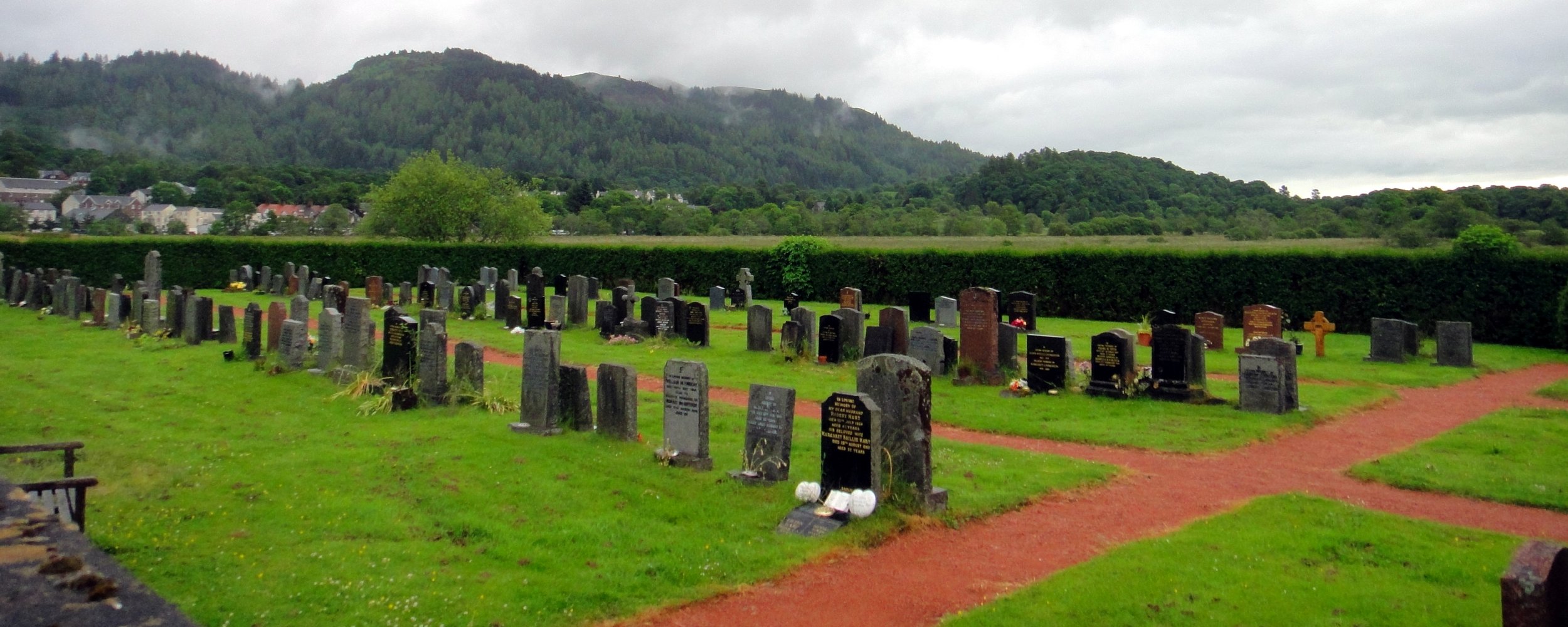
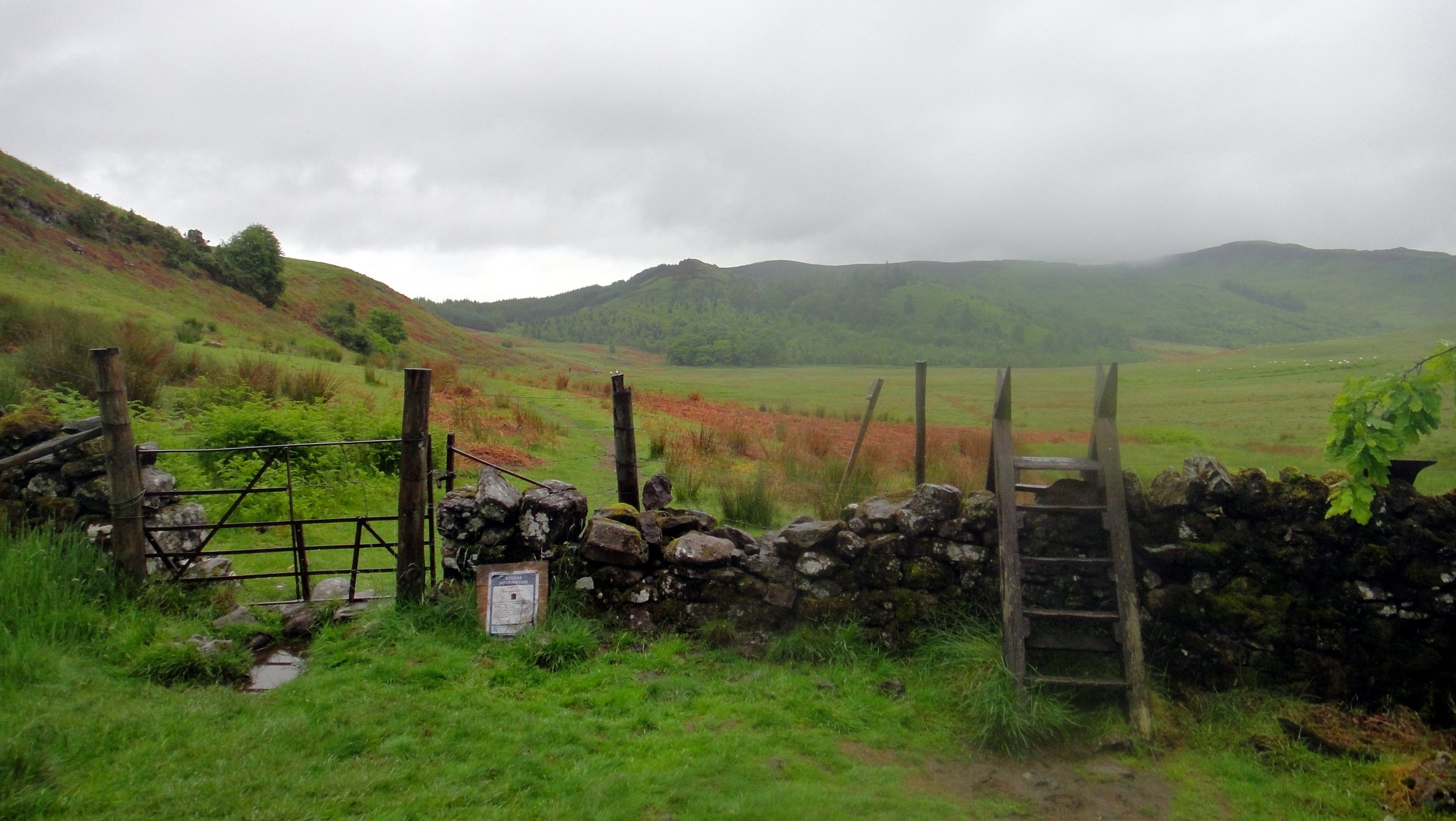
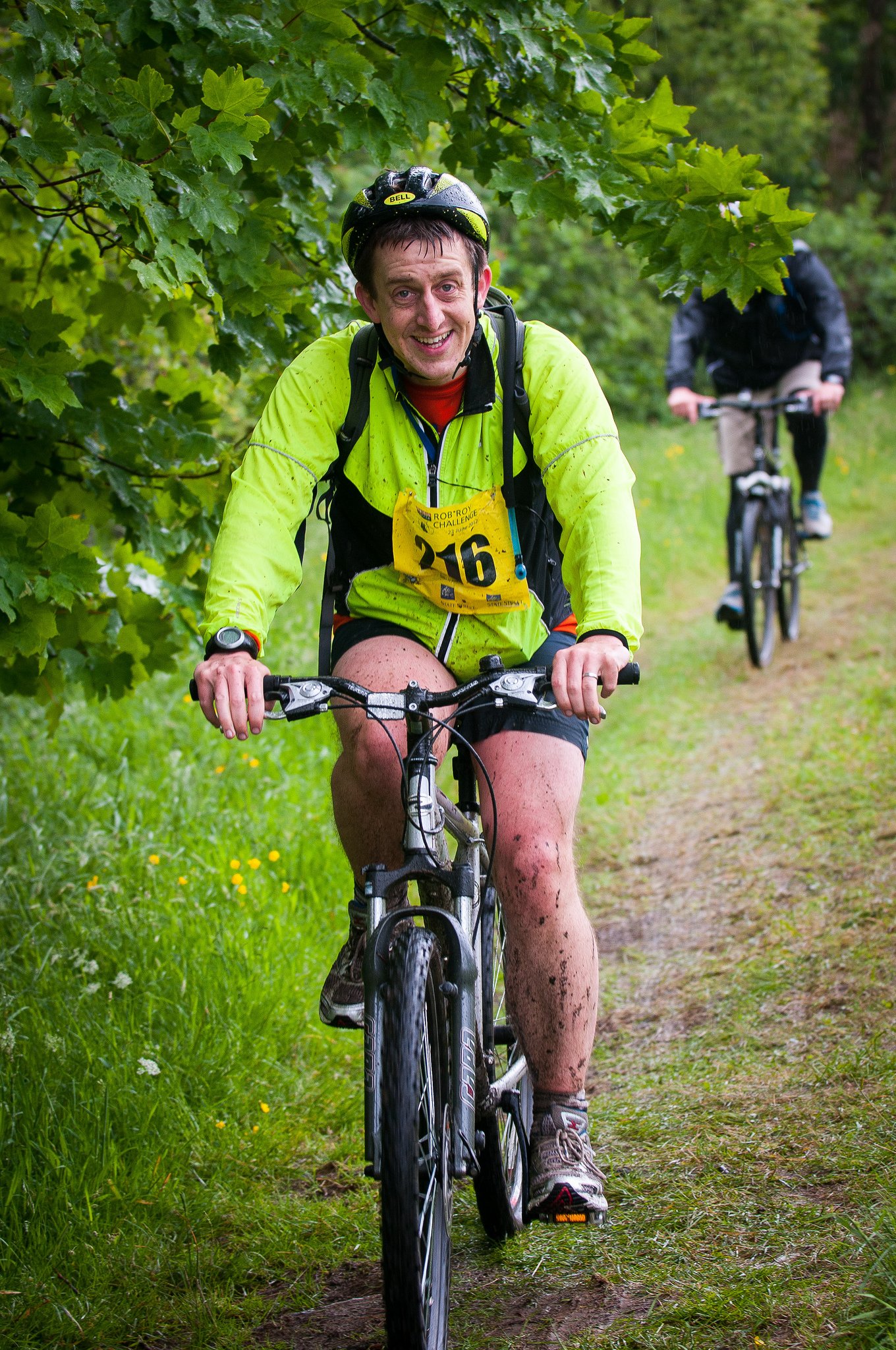
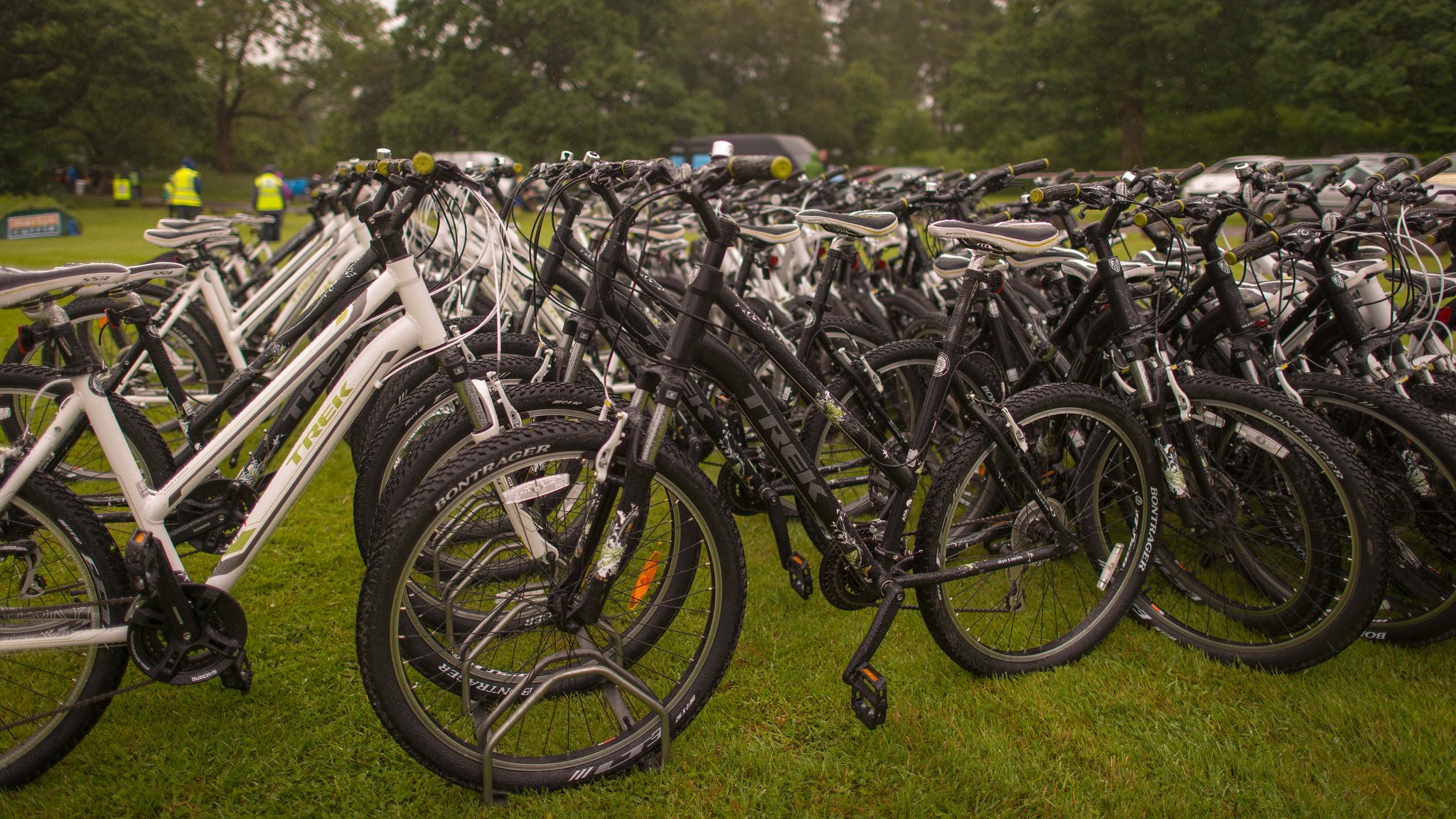
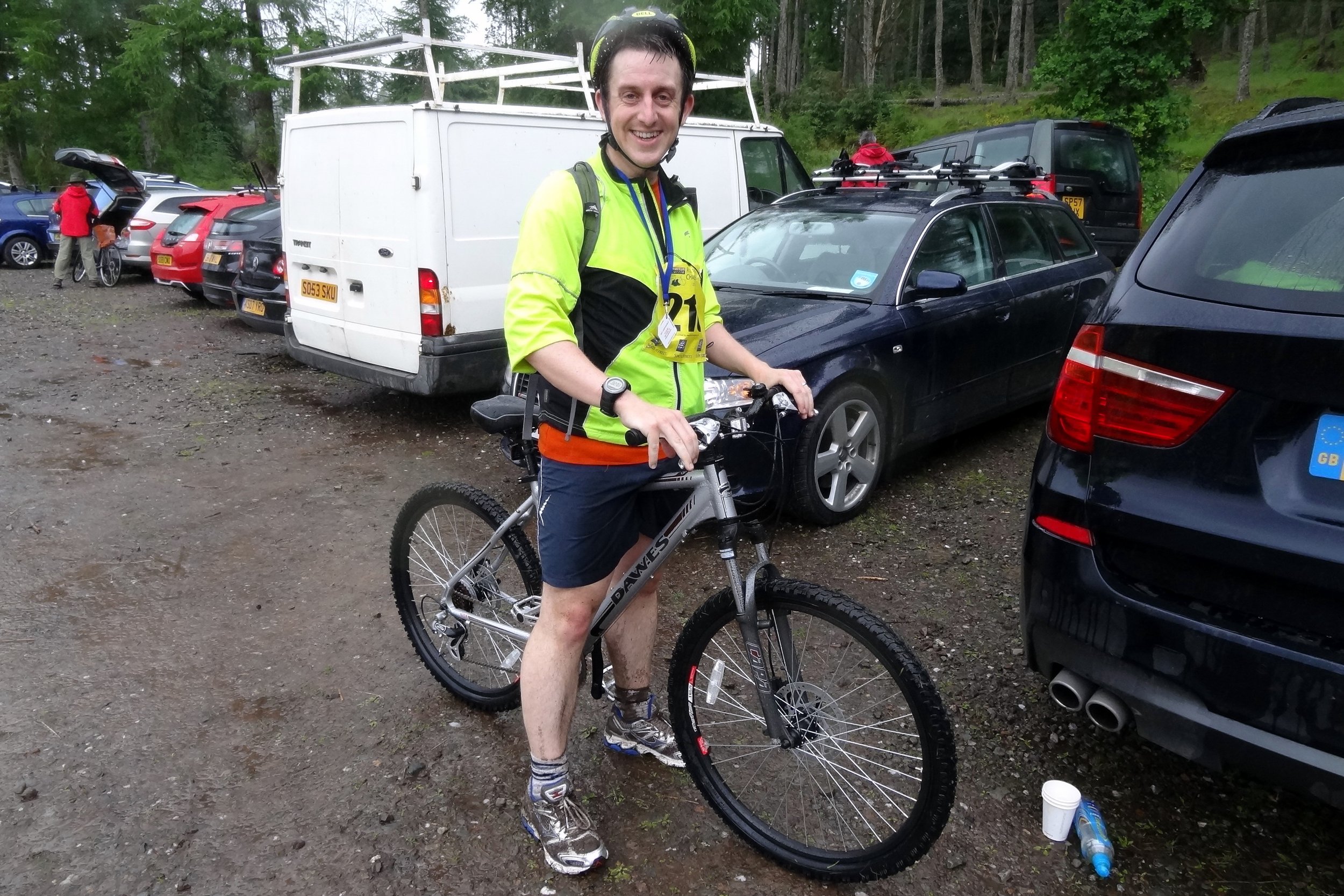
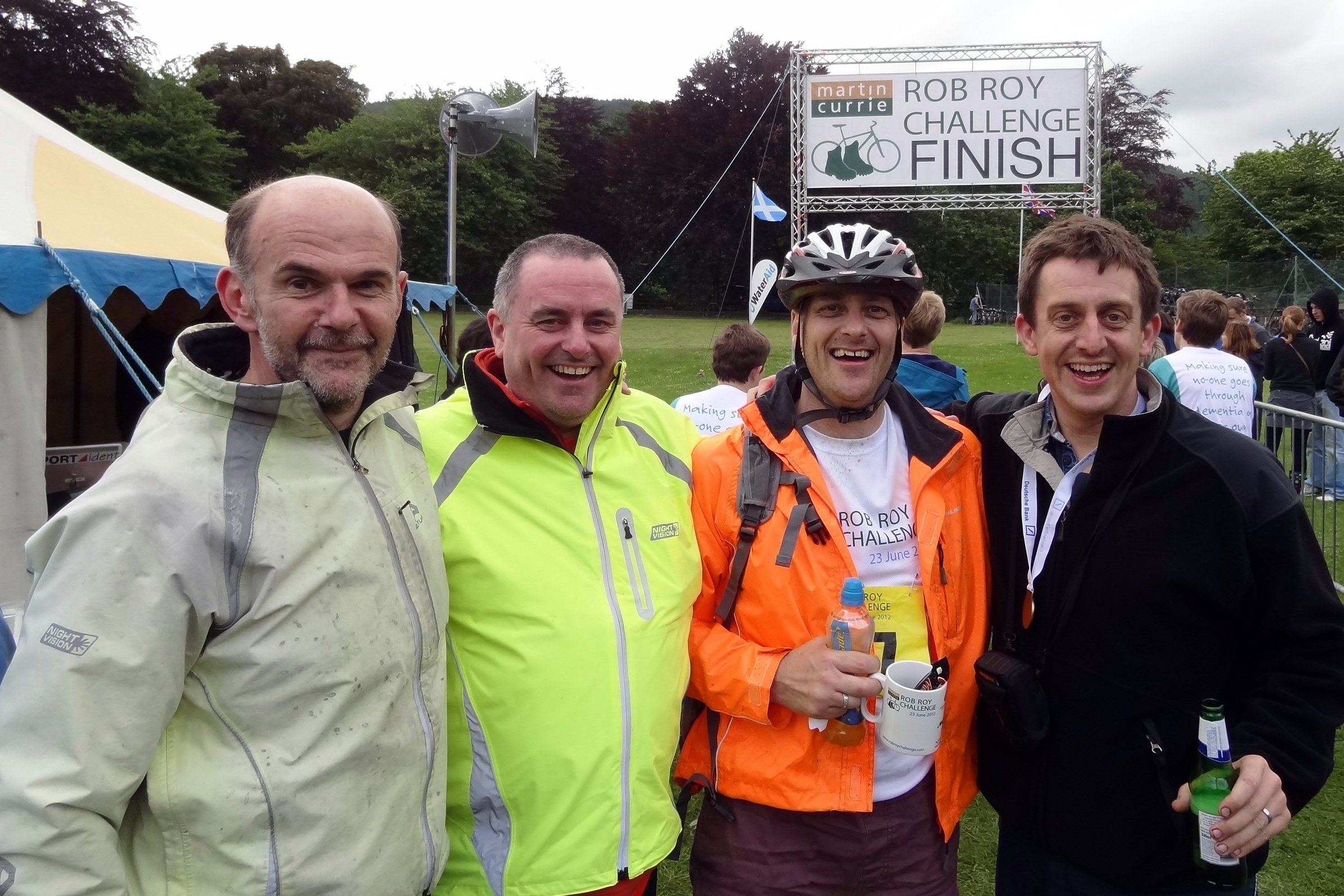
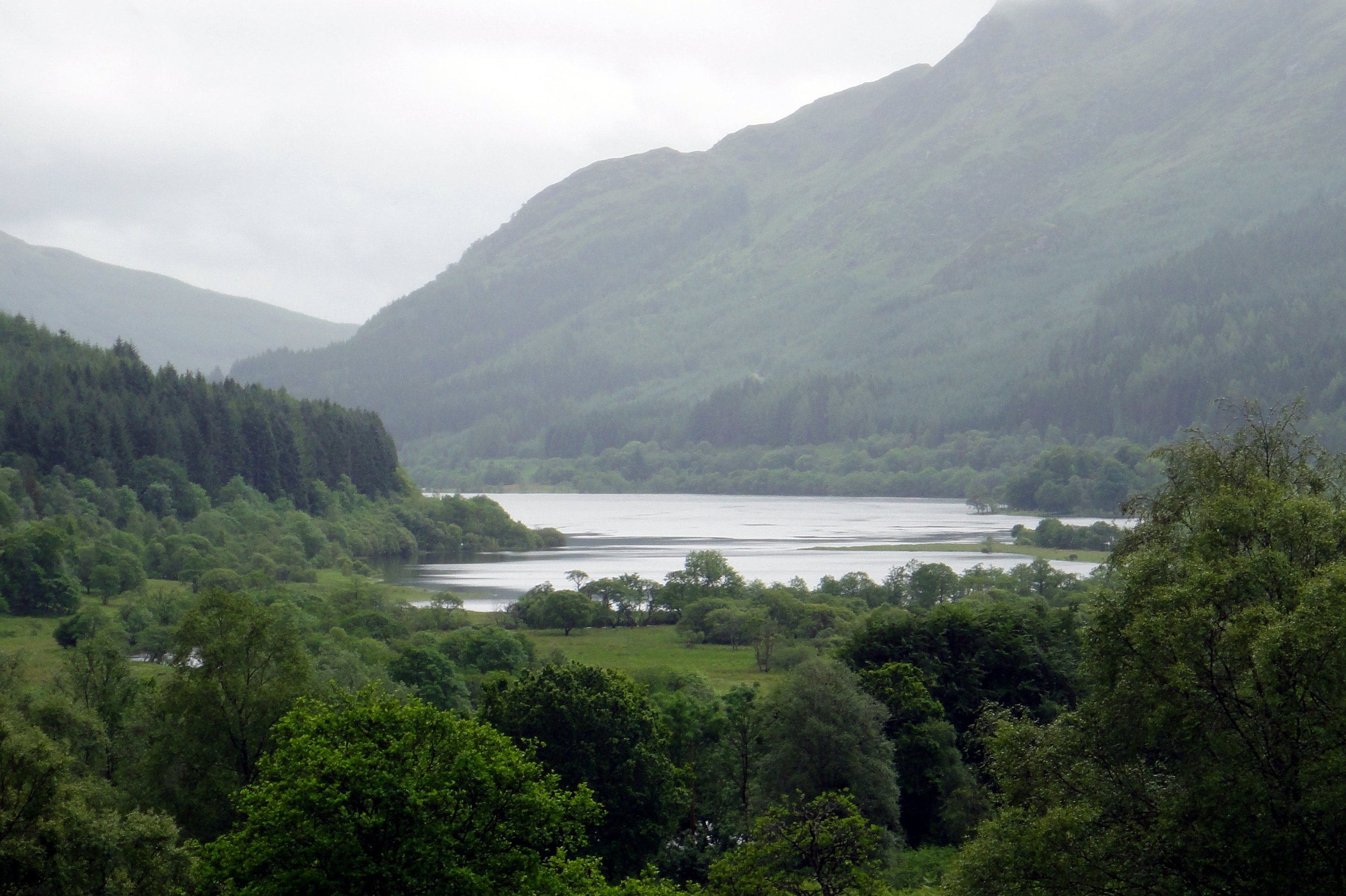
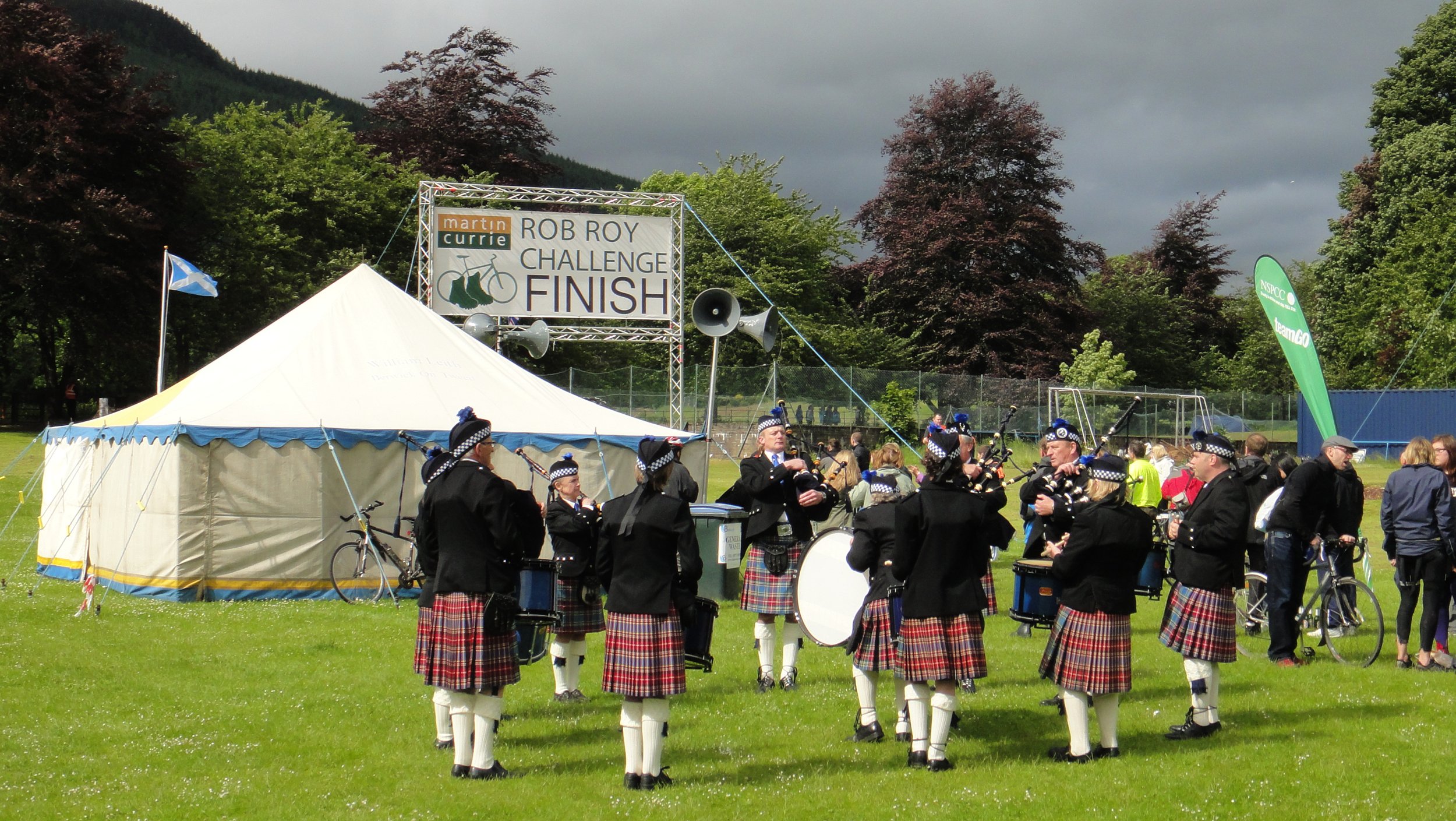
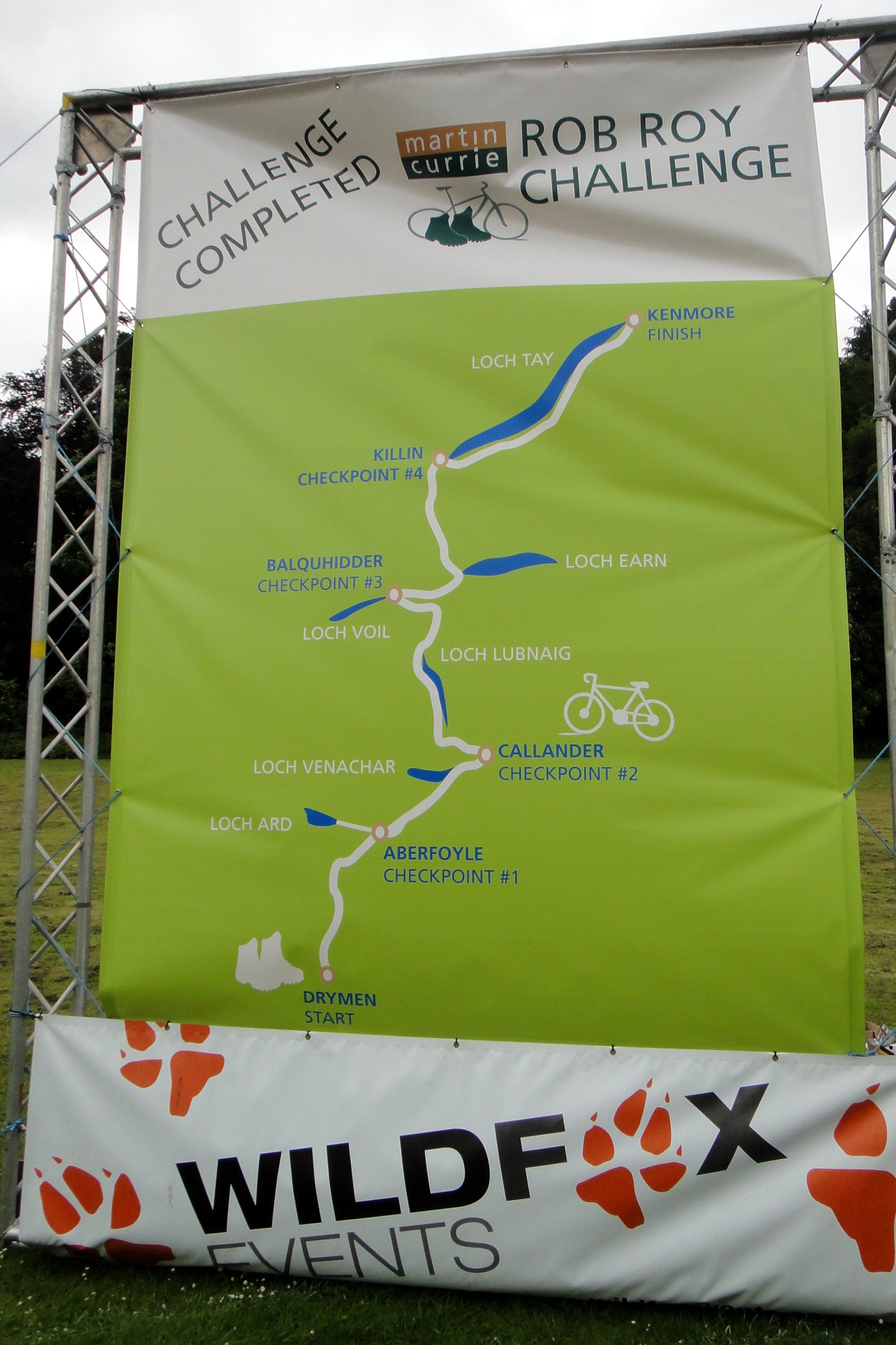
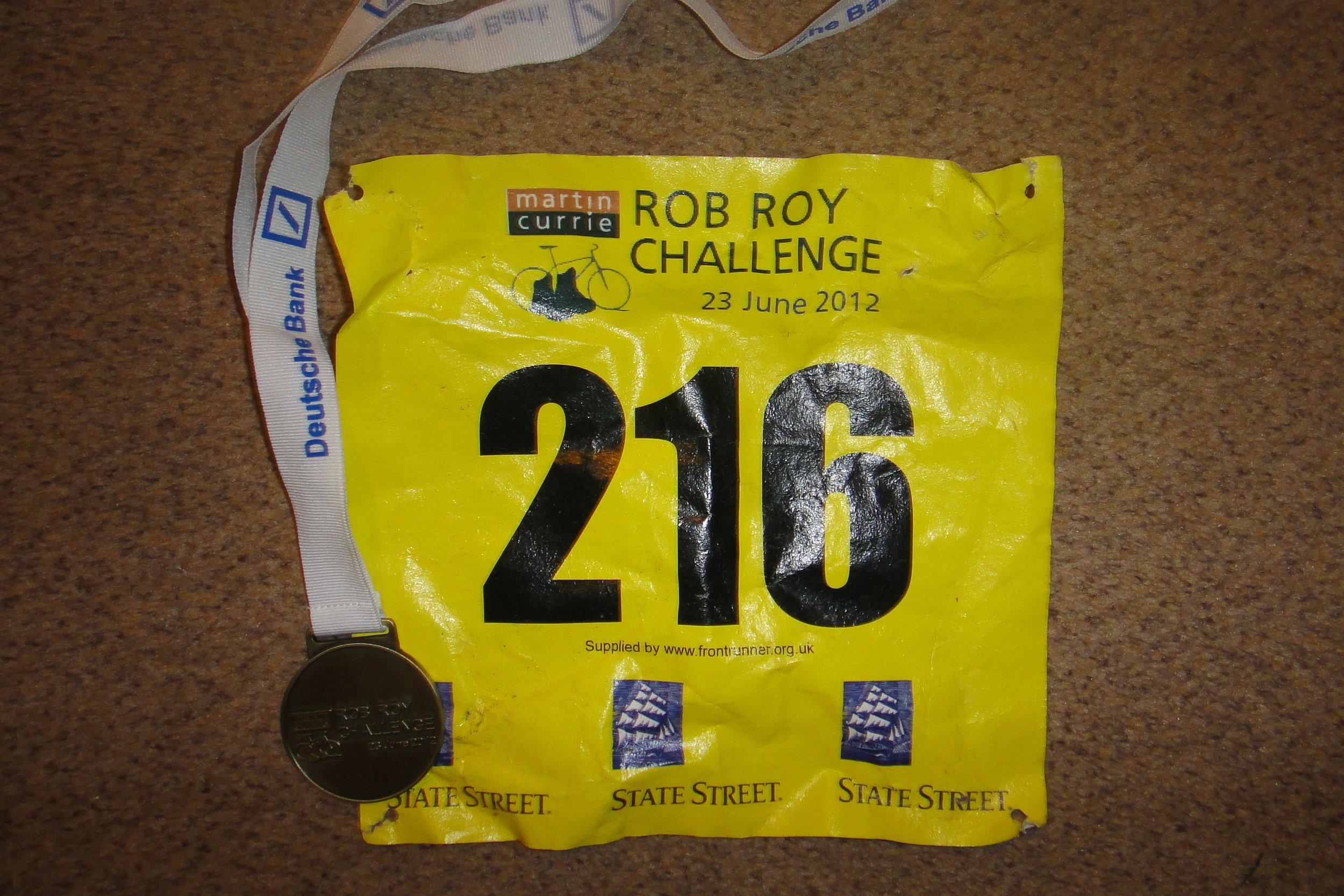
The Rob Roy Challenge was a run/bike event along the Rob Roy Way between Drymen and Kenmore in Scotland. I completed it with a group of friends in 2012 as a new challenge, having done several London to Paris cycle rides together. I’m writing this 10 years later so my memory of the details is a little hazy. However, from the many photos that we took it seemed like we had a lot of fun on a very cloudy and drizzly day. So far it’s the only mixed run/cycle event that I’ve done although I’m keen to do more.
Note that my Garmin didn’t save the GPX track so I had to recreate the route on RideWithGPS. The actual distances and elevations may have been slightly different to what I have below.
Section 1: The Run
Start: Drymen Road Cottage Car Park, 4 miles north of Drymen on the Rob Roy Way
Finish: Wheels Cycling Centre, Invertrossachs Road, Callander, FK17 8HW
Distance: 23.6 km (14.6 miles)
Elevation change: +338m / -363m (Net -25m)
Section finish time: 2 hours 55 minutes
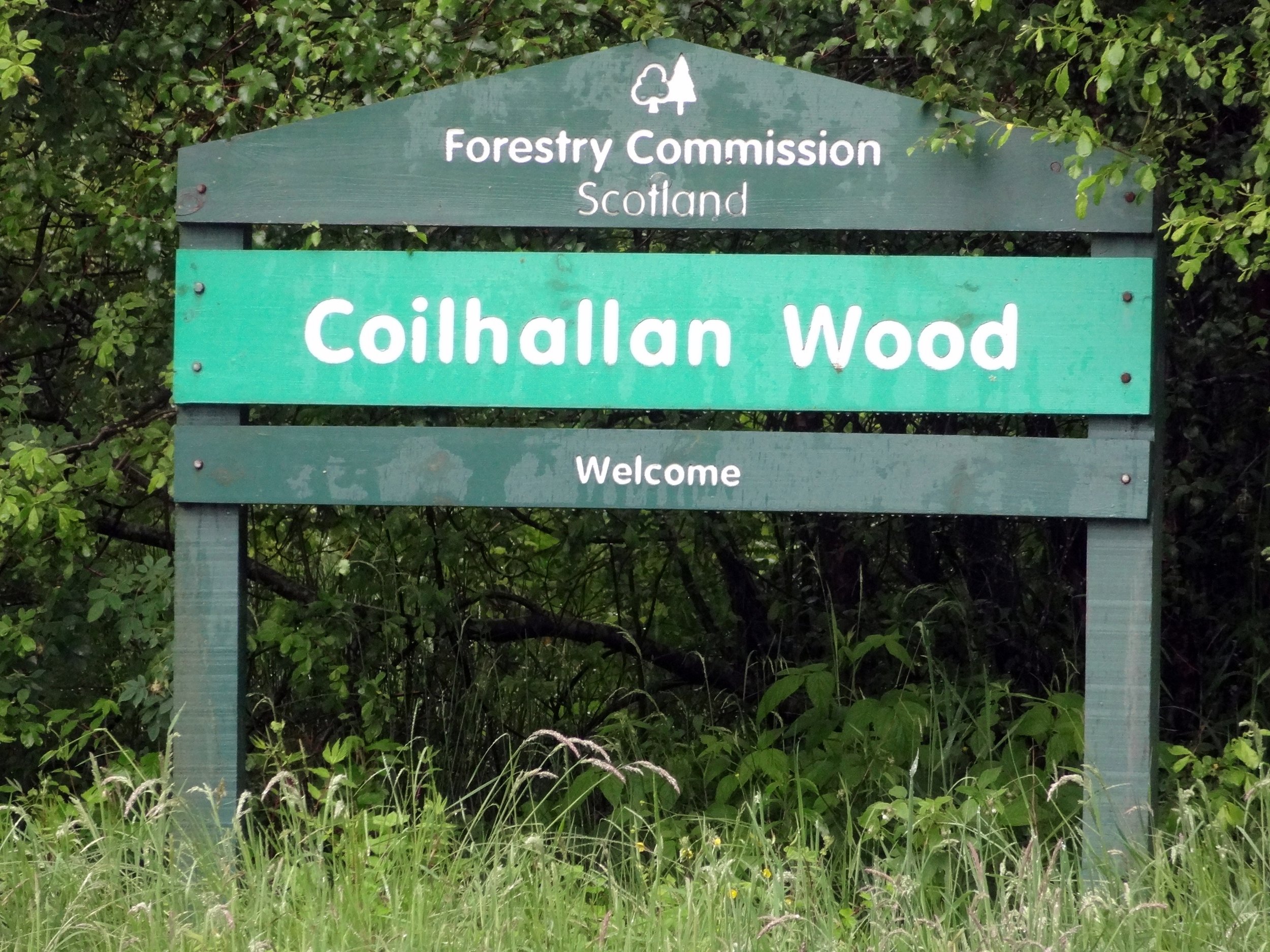
Other routes touched (walk): Rob Roy Way, Mary Queen of Scots Way, Coilhallan Wood Trail
Other routes touched (cycle): NCN 7, EV1


Section 2: The Cycle
Start: Wheels Cycling Centre, Invertrossachs Road, Callander, FK17 8HW
Finish: Field on the south side of Loch Tay, west of Kenmore
Distance: 64.4 km (40 miles)
Elevation change: +827m / -756m (Net -71m)
Section finish time: 5 hours 23 minutes
Other routes touched (walk): Rob Roy Way, Coilhallan Wood Trail, Great Trossachs Path, Three Saints Way
Other routes touched (cycle): NCN 7, EV1


Total Route
Date completed: 23rd June 2012
Distance: 88.5 km (55 miles)
Elevation change: + 1,201m / -1,156m (Net +45m)
Finish time: 8 hours 18 minutes
GPX File: get via Buy Me a Coffee
Links: Rob Roy Way, Drymen, Aberfoyle, Callander, Balquhidder, Killin, Kenmore