Trig Pillar Walks: Stowe Landscape Gardens
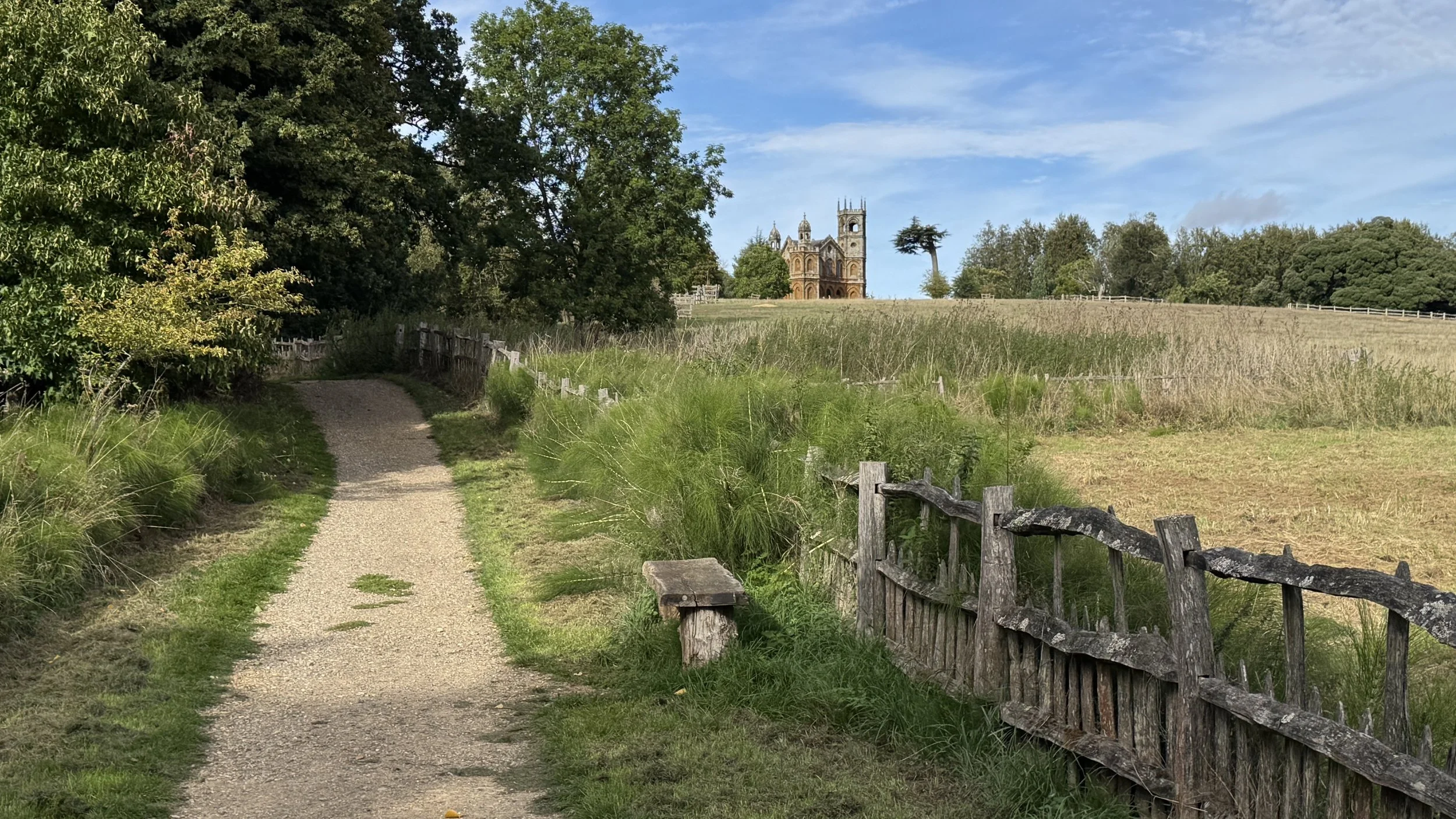
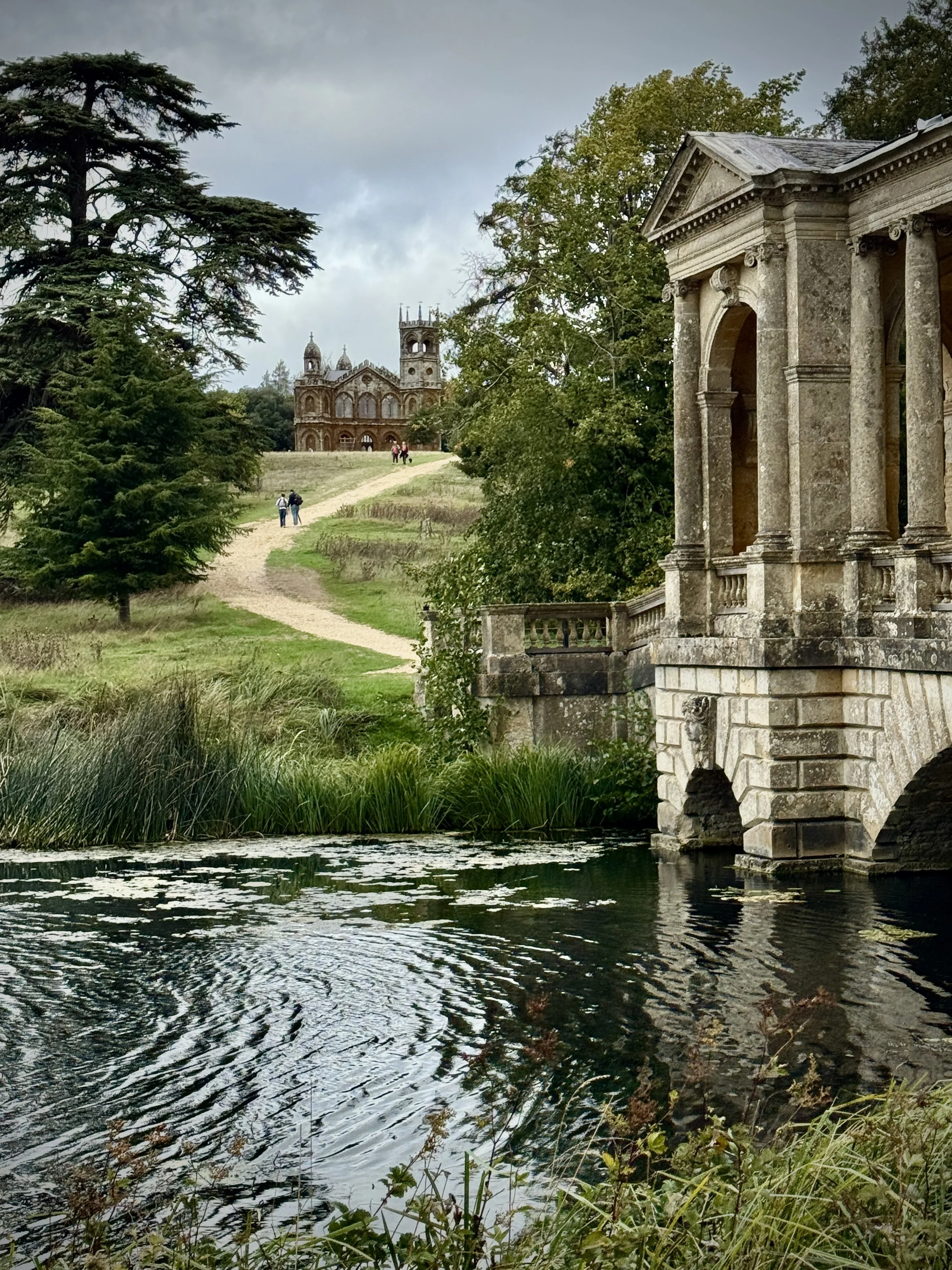
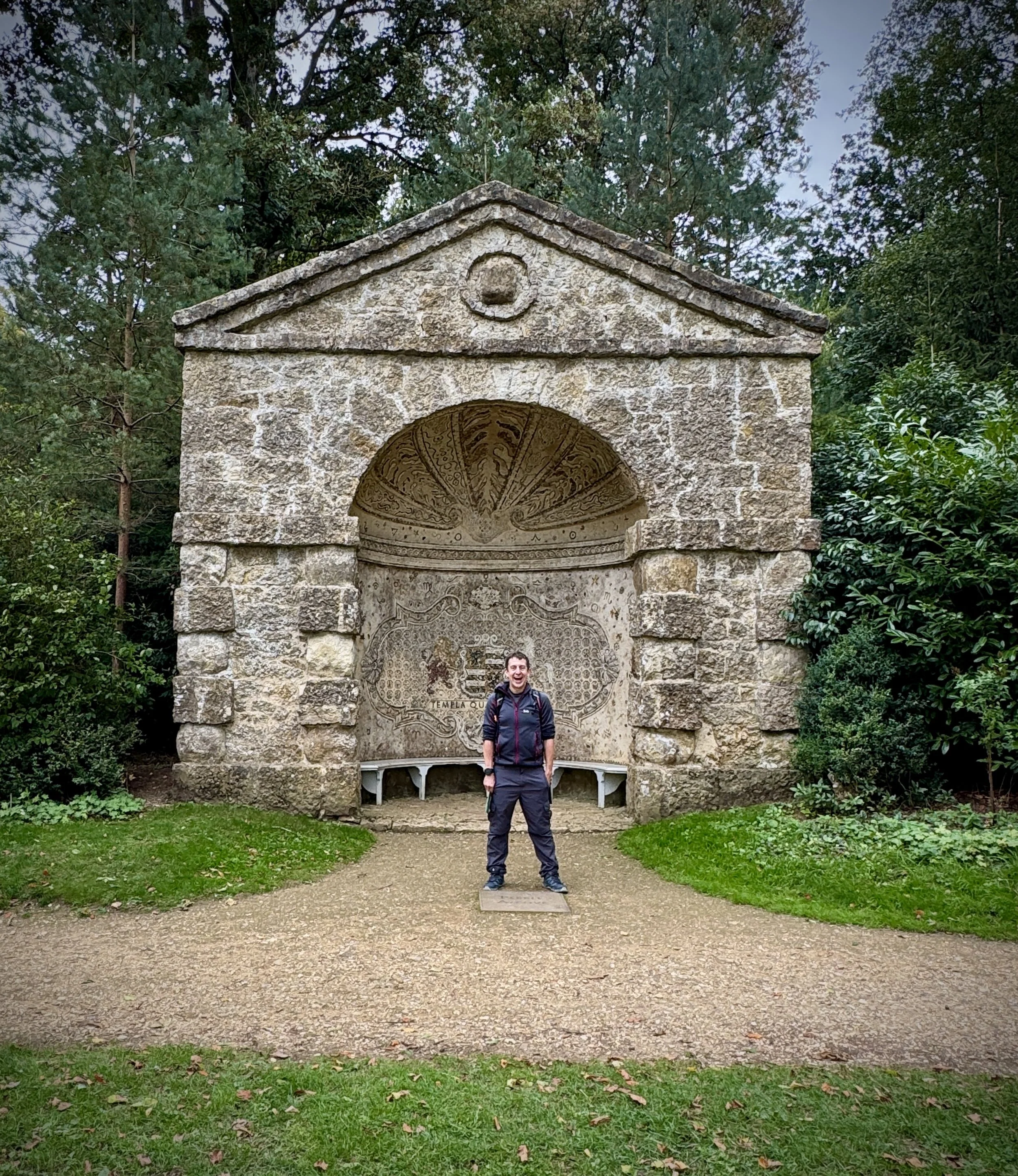
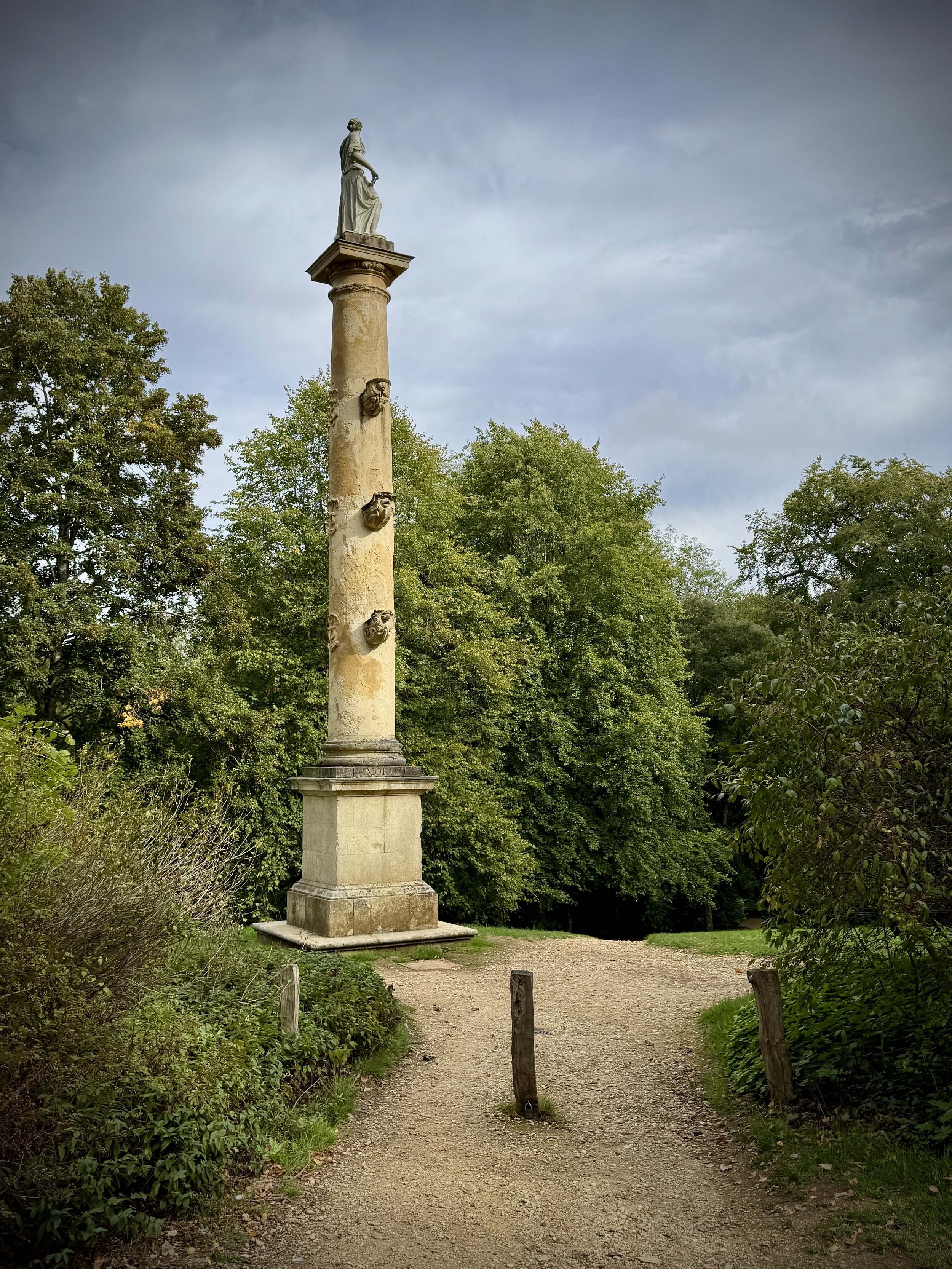
Path leading to the Gothic Temple
Start & Finish: National Trust - Stowe Gardens, New Inn Farm, Buckingham MK18 5EQ
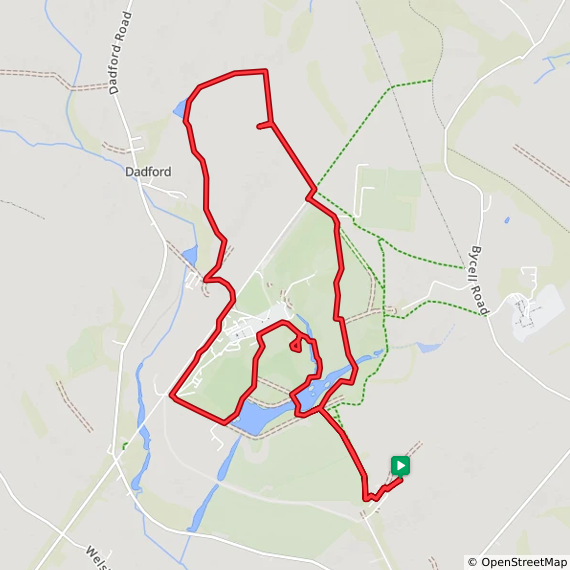
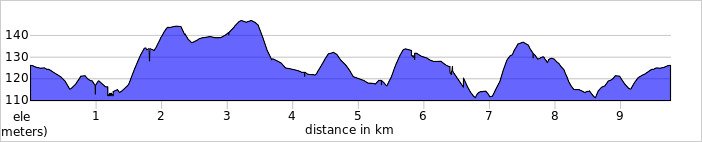
Distance: 9.8 km (6.1 miles)
Elevation change: +/- 111m
Terrain: Mostly well-made estate paths, open parkland grass, and sheltered woodland trails.
GPX File: get via Buy Me a Coffee
Other routes touched (walk): Home Front Route Stowe, Blue Trail Stowe, Military Route Stowe, Stowe Parkland Walk, Ouse Valley Way,
Other routes touched (cycle): None
Pubs / Cafes on route: Cafe at the National Trust Visitors Centre
OS Trig Pillar: TP6219 - Stowe Park
Map: Buckingham & Milton Keynes Map | Leighton Buzzard & Woburn | Ordnance Survey | OS Explorer Map 192
Links: Stowe Landscape Gardens, Stowe House, Buckingham
This is part of a series of walks that combine beautiful countryside trails with finding (or “bagging”) an OS Trig Pillar. If you’ve searched for or stumbled across this page then you probably already know what an OS Trig Pillar is. If you don’t then this article from the Ordnance Survey is a good place to start.
Walking Directions
This circular walking route takes you through the stunning historic parkland of Stowe, a landscape sculpted by some of Britain's most famous garden designers. Starting near the New Inn Visitor Centre, the trail heads northward through the sprawling estate, gently descending before steadily climbing towards the northern boundary where you will find the main objective: Trig Pillar TP6219.
After visiting the trig pillar, the route loops westward before tracking south along the quieter, wooded edges of the estate boundary. The return leg provides a contrasting perspective of the landscape, swapping manicured lawns for rustic bridleways and field margins before finally turning eastwards to guide you back to the start. It offers a perfectly balanced morning or afternoon out in the Buckinghamshire countryside.
The guidance below will help you navigate but don’t use it as a fully accurate turn-by-turn guide. Always take a map and/or a GPX route and prepare well for the weather and terrain.
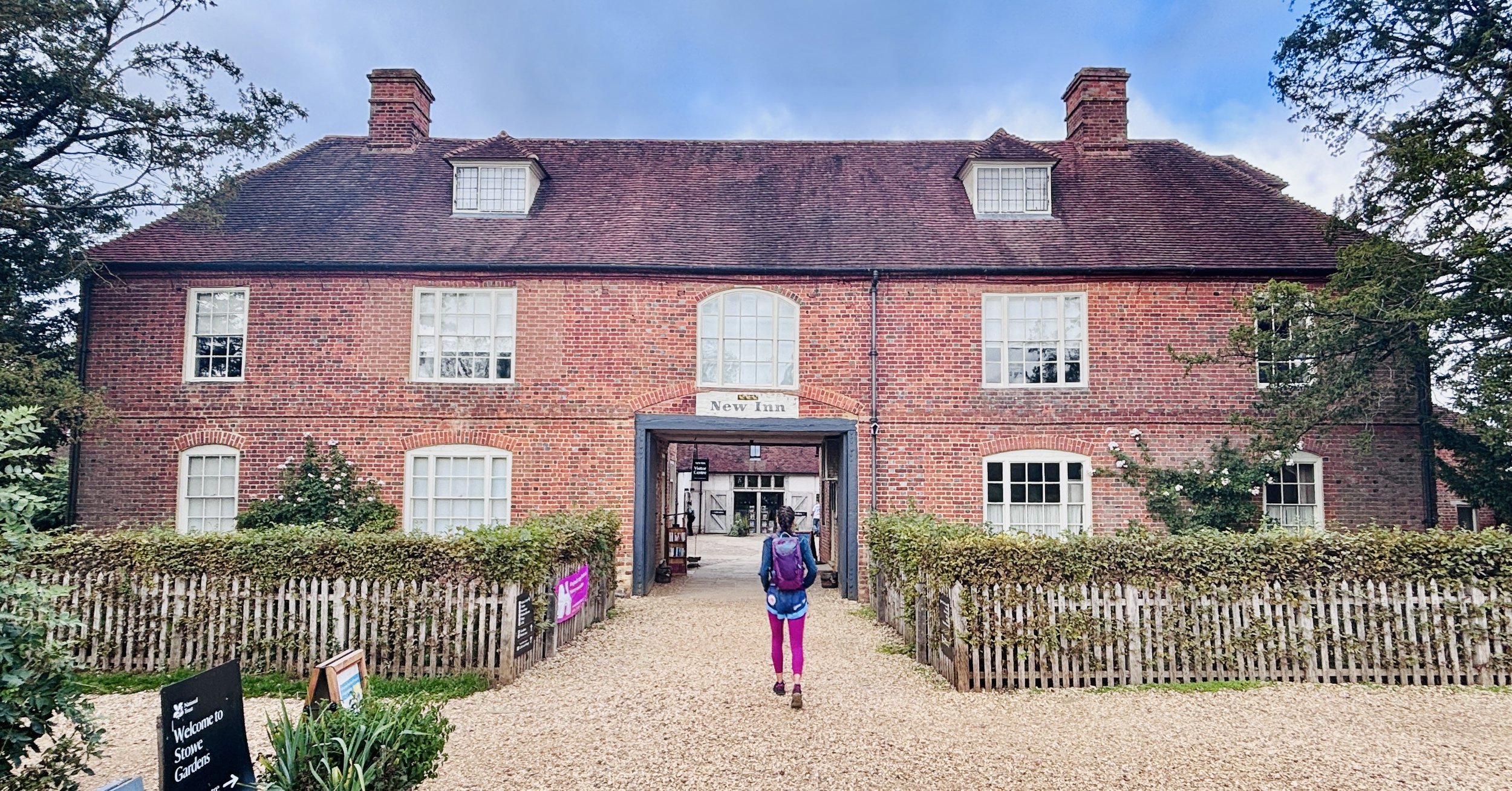
We begin at the New Inn, now serving as the National Trust visitor centre, neatly situated by the main car park. Pass through the inn's buildings to emerge onto the main track, a wide avenue known as the Home Front route, which acts as the grand artery leading up to the landscape garden proper. Follow this deep into the estate.
After a mile or so (roughly 1 km), the path is interrupted by a second ticket booth. It feels slightly incongruous here, but the land is criss-crossed by ancient public rights of way; they must check again to ensure you have bought passage into the inner, managed sanctuary of the gardens.
Once officially within the gardens, take a right turn, followed swiftly by a left. You are now on the 'military route', a path that deliberately traces the southern bank of the Octagon Lake, drawing you north-eastwards along the water’s edge.
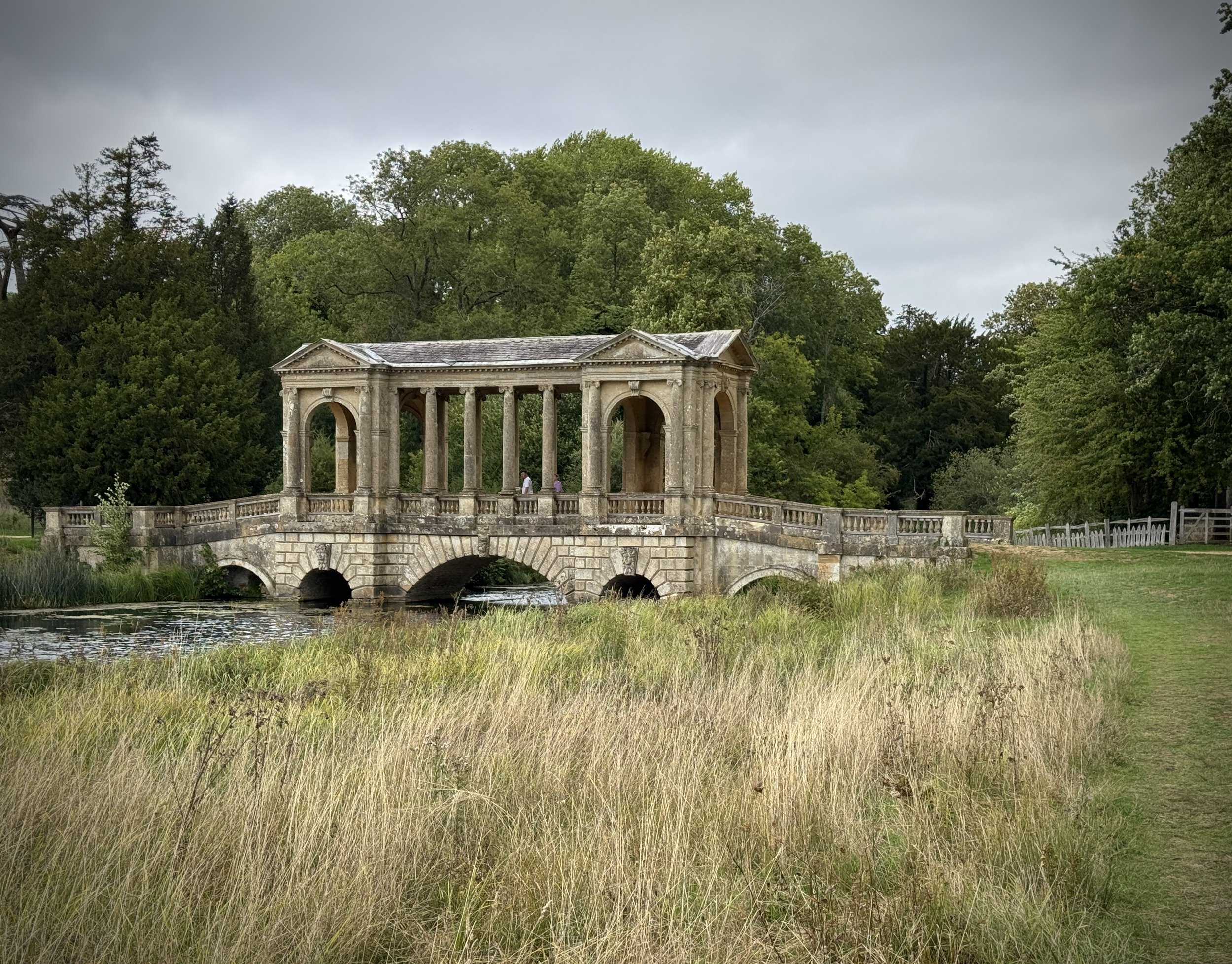
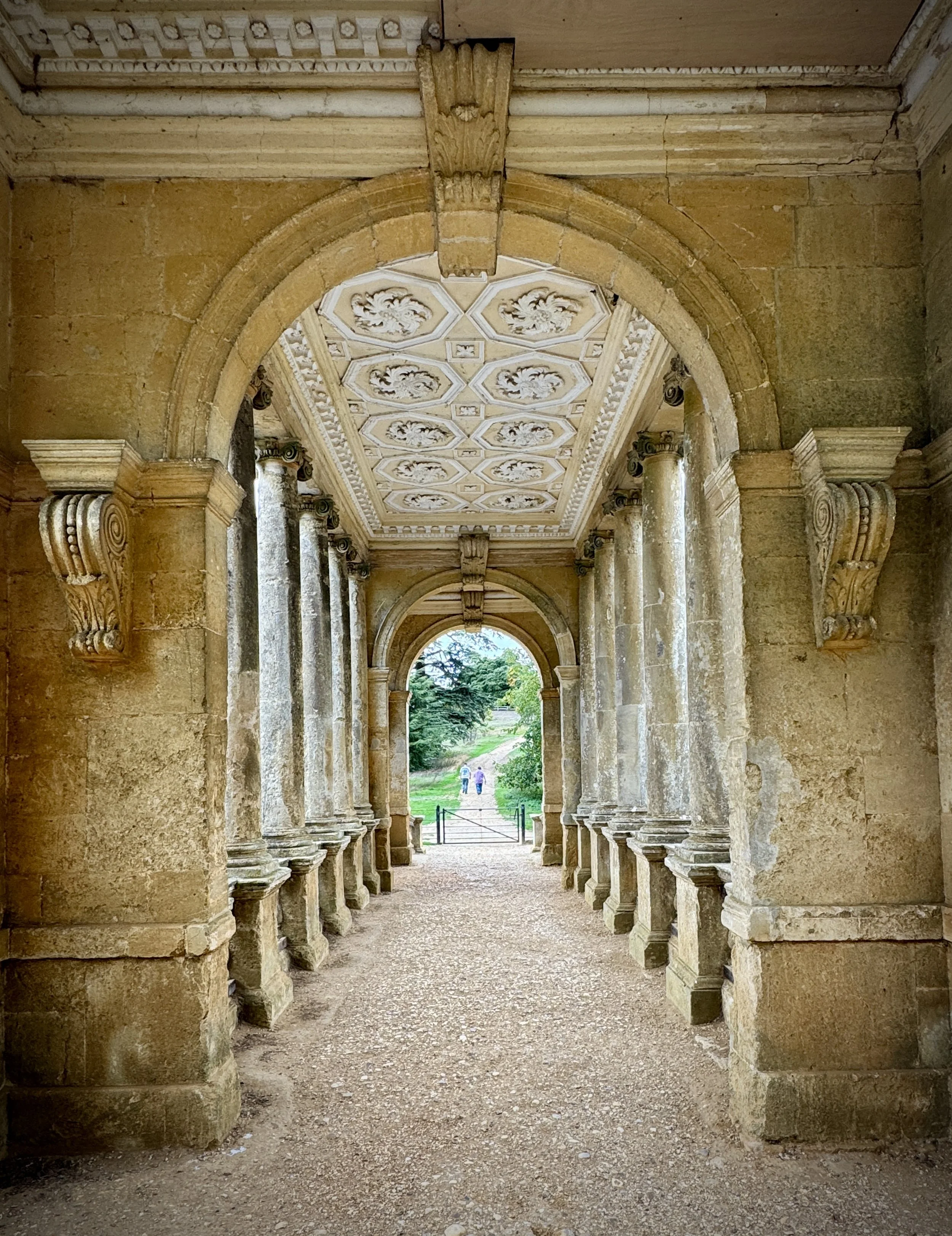
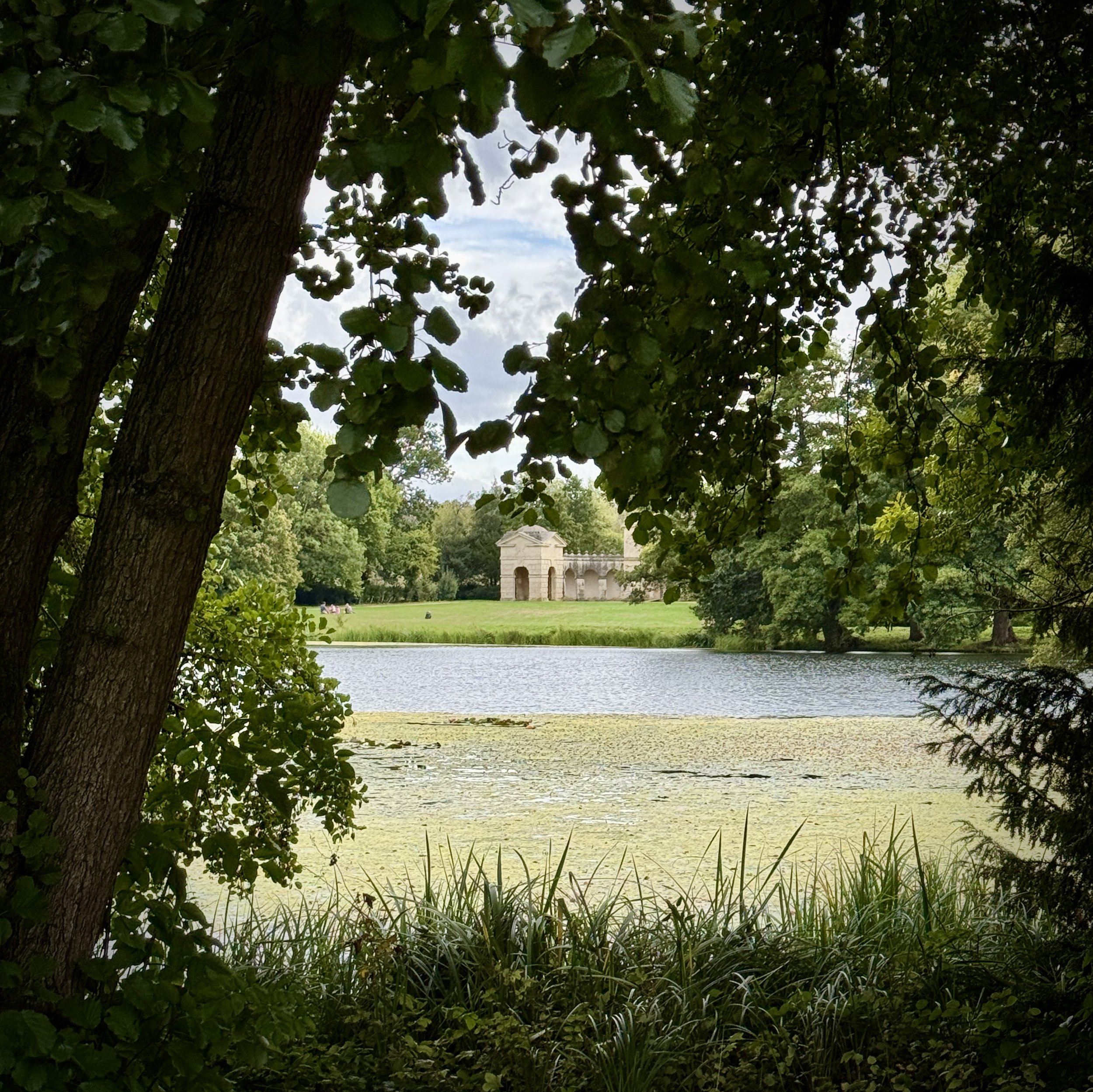
Ahead lies the Palladian Bridge, stretching elegantly across the water. It’s worth pausing here; the views, both of the bridge’s flanks as you approach and from the span itself, offer perfectly framed classical vistas. Cross over it to the far bank.
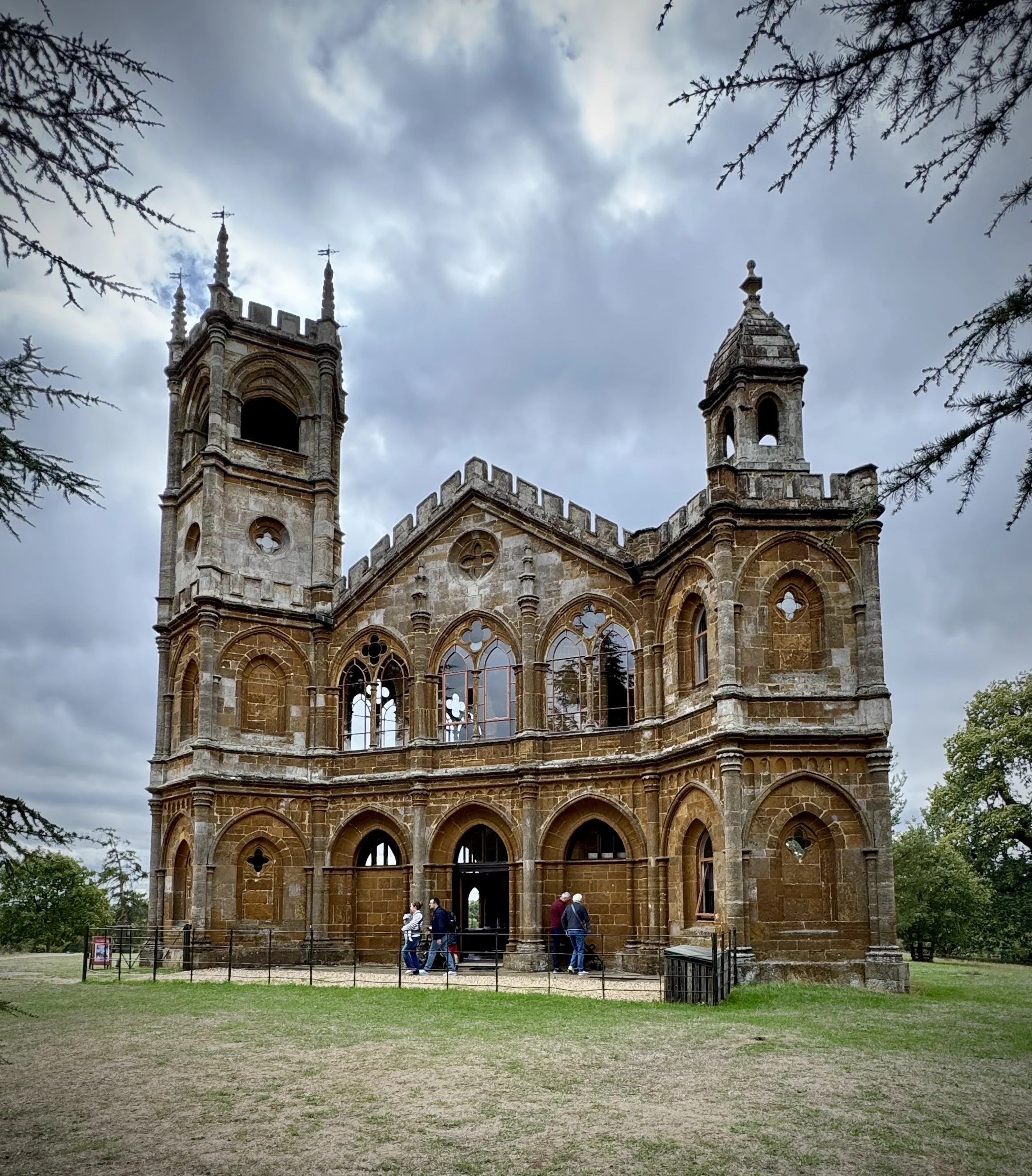
Continue tracing a northerly line. Here, the track is burdened with a double identity, known as both the military route and the Path of Liberty. Follow its course until it meets the Gothic Tower.
The tower, a property now in the care of the Landmark Trust, usually keeps its doors firmly shut to the casual walker. However, on fortunate days, it stands open, revealing its interior. Whether you manage to slip inside or merely admire its heavy stone silhouette, press on northwards afterwards, keeping to the military route.
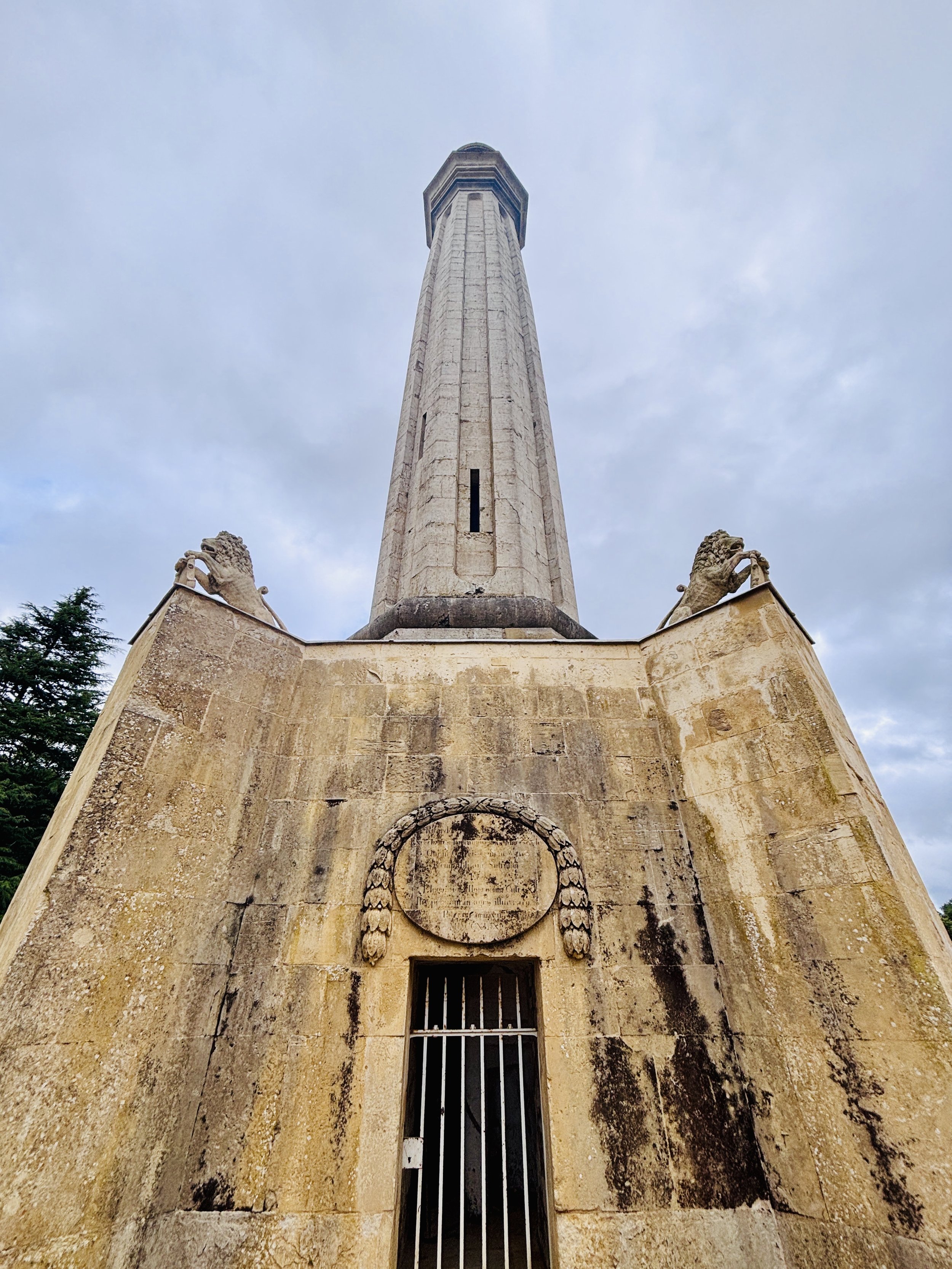
You will soon encounter a towering monument, which one might instinctively call an obelisk, but the estate insists is Lord Cobham's Pillar. Note the distinction and continue your march northwards along the military route.
As you reach the north-eastern extremity of the estate, the formal boundaries fall away, and you slip back out onto public land. You are now joining the Stowe Parkland Walk, a sweeping, longer trail that curves around the hidden back of Stowe House.
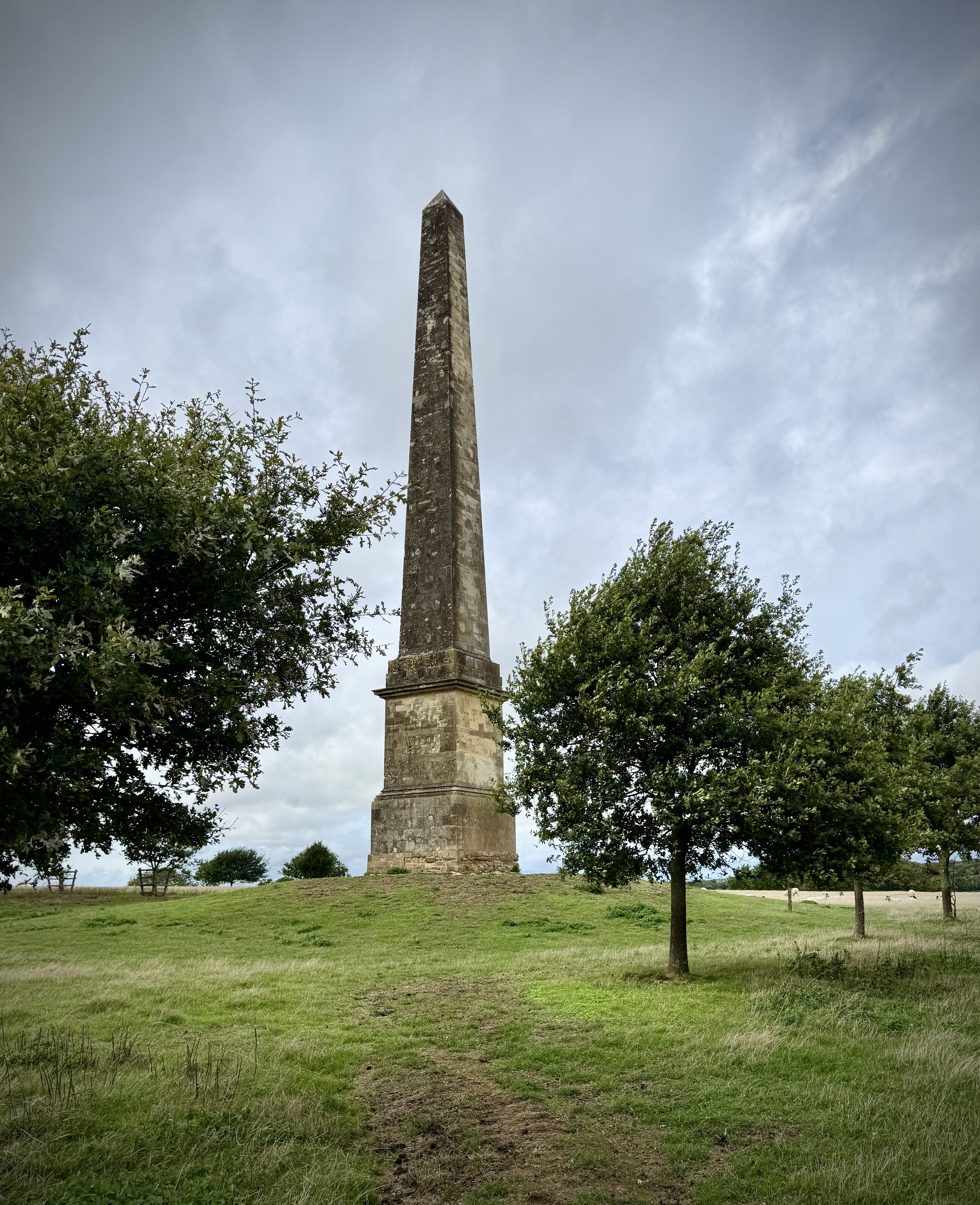
Upon meeting the wide stretch of Buckingham Avenue, take a right, then the first left. This footpath strikes out across the open, grazed parkland, an expanse that feels distinctly different from the manicured gardens, leading you towards the Wolfe Obelisk.
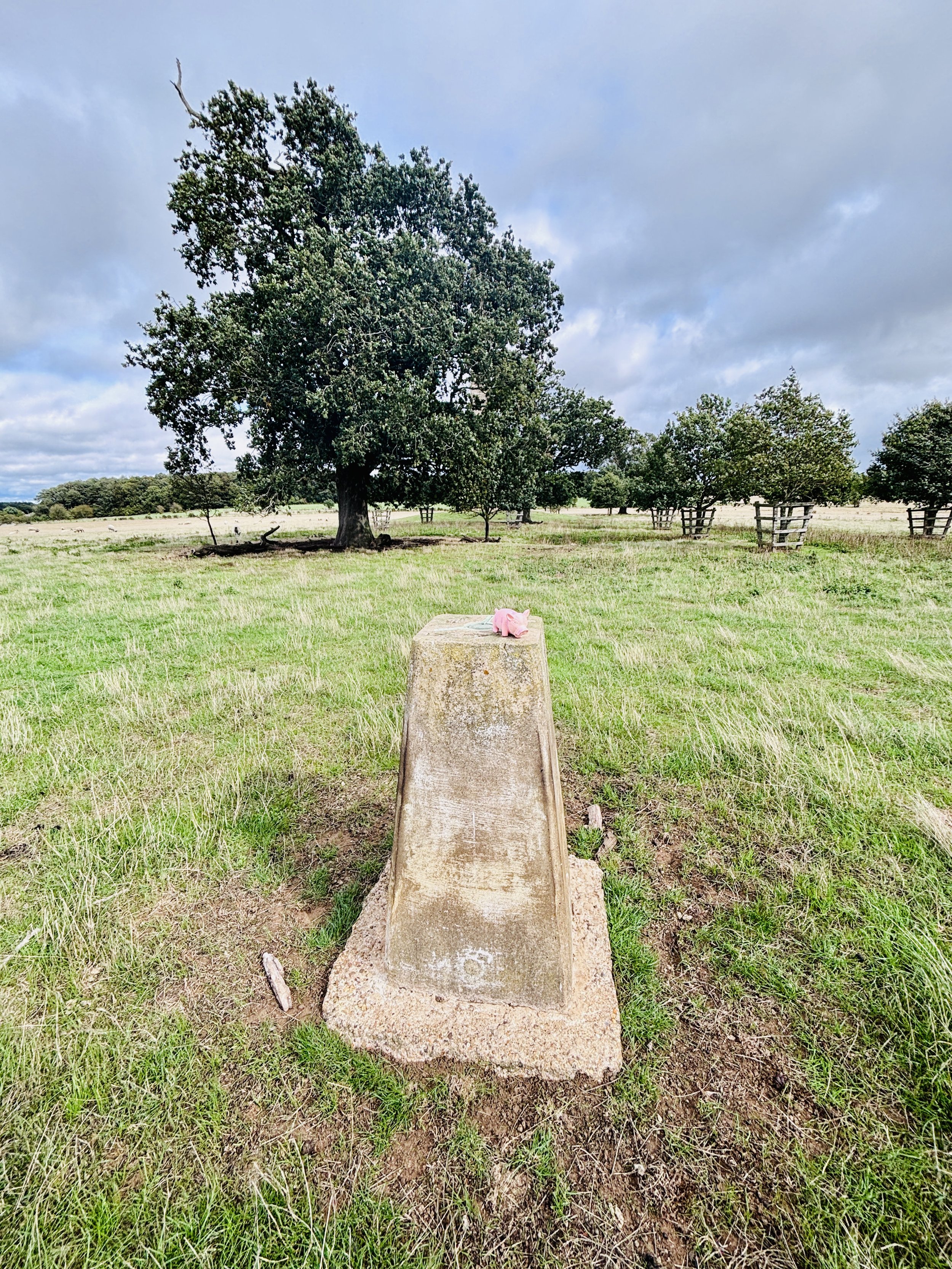
At the obelisk, step off the worn path, turning left into the grass to locate the rather more utilitarian concrete form of a trig pillar sitting quietly in the landscape. Having paid your respects to the surveyors, retrace your steps to the obelisk.
Pressing north again on the Stowe Parkland Walk, the land drops away, descending across an open field. Look for a distinctive, solitary bush—a waymarker in the green—and here take a left. The path now leads west, eventually curving southward to shadow a lake.
The route brings you to the unassuming back entrance of Stowe School. Here, turn right, rejoining the main artery of the Stowe Parkland Walk.
Shortly after passing the bulk of the school buildings, take a footpath that draws you closer in against the outer, enclosing wall of the landscape gardens.
At the corner of the gardens stands a gatehouse entrance. It has an imposing, almost prohibitive air, looking as though the public shouldn't trespass, but with no one to bar the way, we slipped through. Do the same, and follow the main drive to reconnect with the intricate inner paths of the gardens.
You are now walking the Path of Bravery. Follow this until it meets the Path of Vice, where you must turn left. Continue on, passing the quiet, stony recess of Dido's Cave.
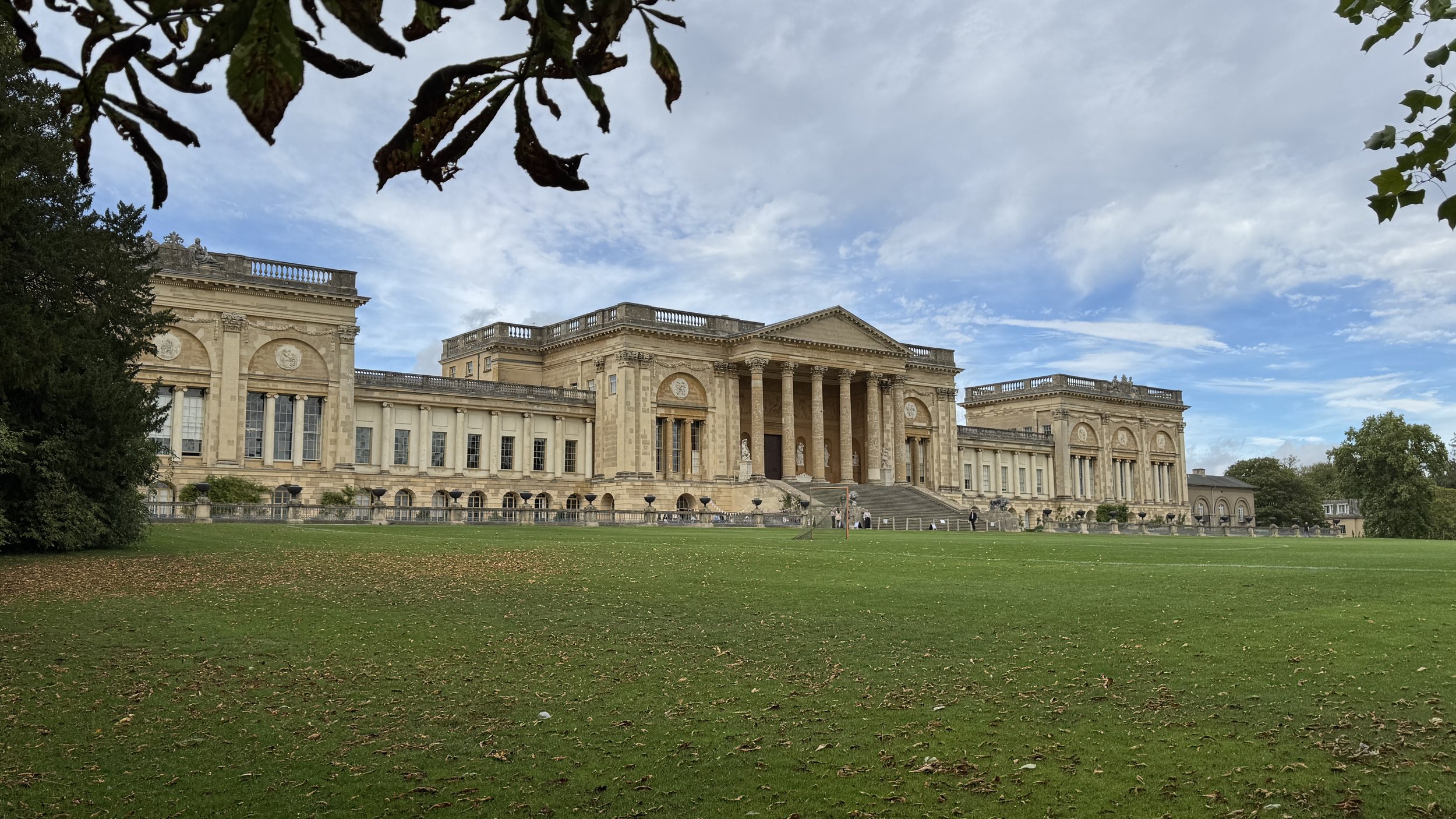
The path eventually delivers you to the grand southern front of Stowe House. While not a National Trust property, it often opens its doors for heritage walks and harbours a small cafe—a welcome modern intrusion for the weary walker.
Continue past the great facade of the house, picking up the blue trail which leads south-eastwards. Pause briefly to take in the Temple of Ancient Virtues, before crossing the bridge that spans the lake.
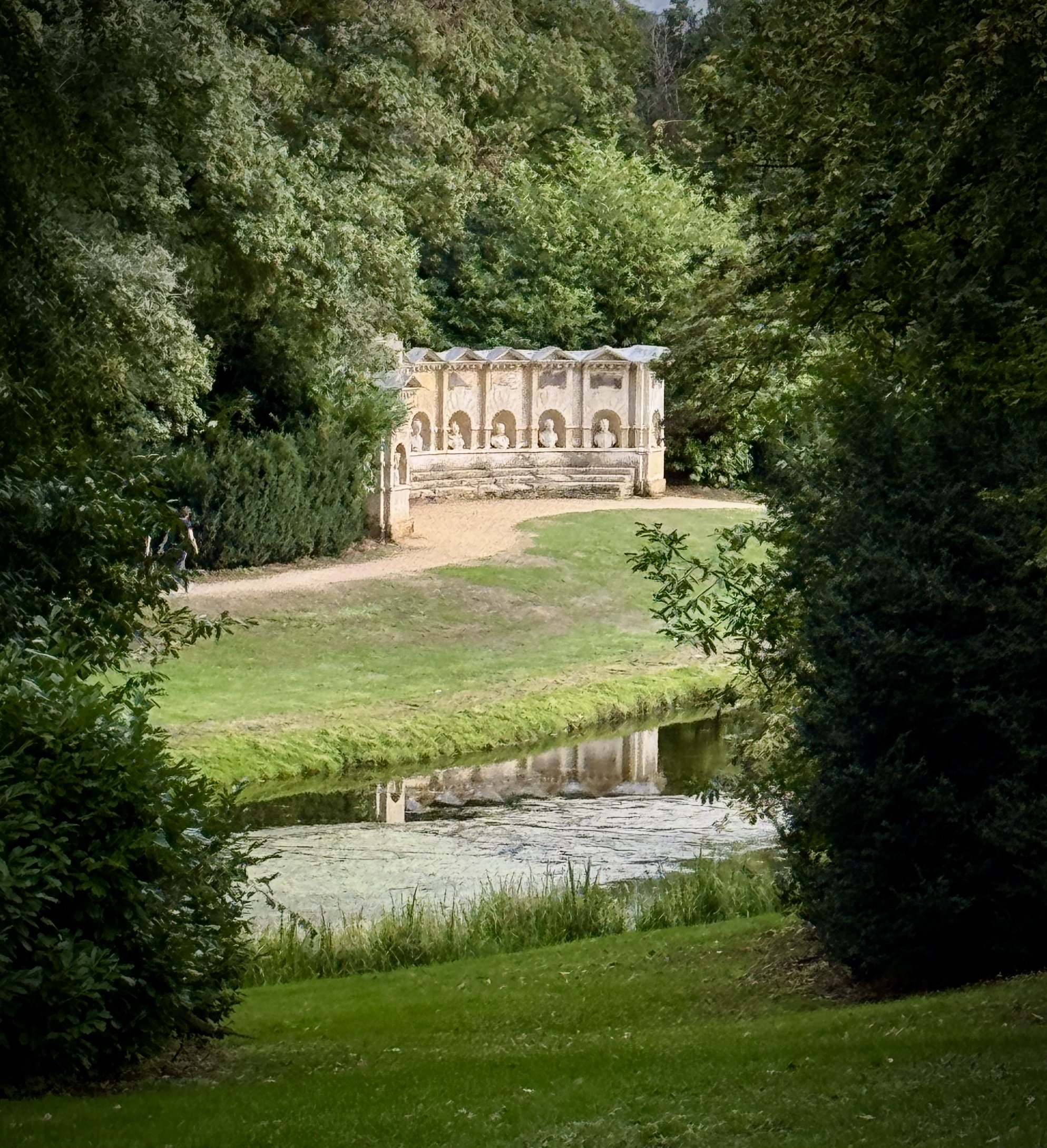
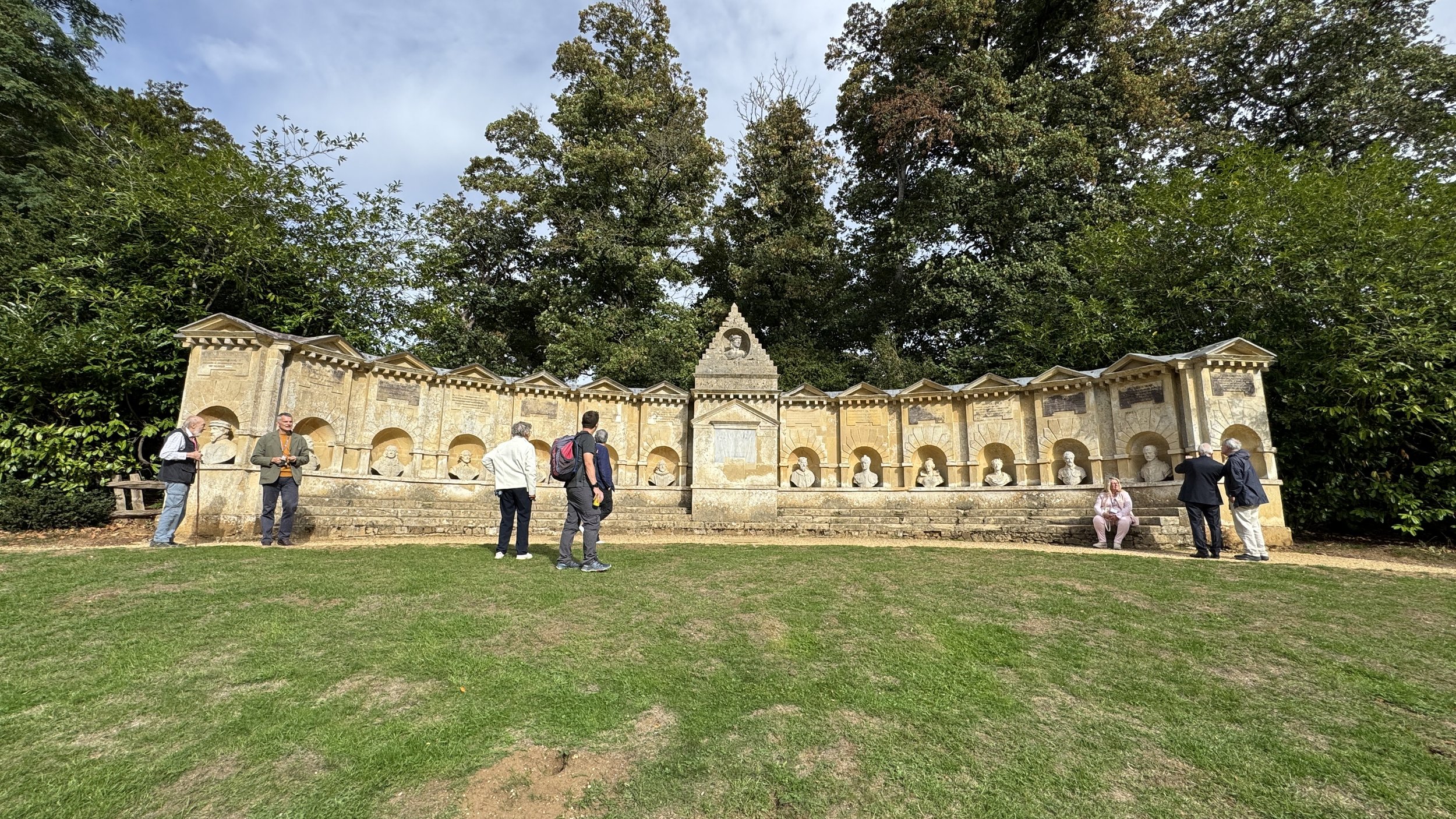
On the far side, you are greeted by the Temple of British Worthies. From this pantheon, turn south, keeping to the eastern margin of the lake, until the blue trail dictates you cross back over the water via another bridge.
You find yourself deposited on the northern shore of the Octagon Lake. Walk westward, following the water's edge, until a left turn onto the green trail pulls you back to the lake's southern side.
From here, it is a straightforward retreat back to where the journey began, following the paths out to the visitor centre and the New Inn to conclude the walk.
Points of Interest along or near to the Route
There are many interesting features in Stowe Landscape Gardens and if you get the free map at the National Trust Visitor Centre it will detail all of them. The ones below are the points of interest that are directly on the route that we covered.
Stowe Landscape Gardens: A masterpiece of 18th-century garden design, this vast estate features works by Charles Bridgeman, William Kent, and Lancelot 'Capability' Brown. While historians sometimes debate the exact attribution of specific early monuments between Kent and Brown, the sheer scale and beauty of their combined vision is unquestionable.
New Inn and Parlour Rooms: Originally built in the 18th century by the Temple family, this early 18th-century inn provided lodgings for the first visitors keen to see the new gardens. It has recently been meticulously restored by the National Trust. Visitors can now explore the beautifully recreated parlour rooms that reflect their authentic Georgian appearance.
Palladian Bridge: Constructed in 1738, this iconic crossing is only the second of its kind ever built in the world, closely modelled on the original at Wilton House. The Stowe version was specially designed without steps to allow horse-drawn carriages to pass directly through its colonnades. It remains one of the most photographed monuments in the entire estate.
The Gothic Temple: Designed by James Gibbs and built in 1741, this striking triangular building was dedicated by Lord Cobham to the liberty of his ancestors. It stands out uniquely among the classical monuments due to its ecclesiastical, gothic style. Today, the property is maintained by the Landmark Trust and can even be rented as a holiday cottage.
Lord Cobham's Pillar: Standing prominently at 104 feet tall, this is the highest of all the monuments and temples across the Stowe estate. Built between 1742 and 1749, it features a spiral staircase inside that leads up to a belvedere viewing platform. The statue of Lord Cobham himself sits proudly at the very top, surveying his landscaped masterpiece.
The Wolfe Obelisk: Rebuilt in 1754 using stone from a former water feature, this towering obelisk sits proudly in the Deer Park. It was dedicated in 1759 to General James Wolfe following his victory and death at the Battle of Quebec. The trees surrounding it were famously planted to represent the layout of Wolfe's regiments during the battle.
Trig Pillar TP6219 (Stowe Park): Situated near the northern boundary of the estate at 147 metres above sea level, this classic Ordnance Survey trig pillar remains in good condition. It marks the highest point of the trail and offers excellent views over the surrounding Buckinghamshire countryside.
Dido's Cave: Originally built as a simple garden alcove, historians debate whether it was initially designed by Sir John Vanbrugh or James Gibbs. It was later remodelled with a textured tufa rockwork facade around 1800 to create a picturesque grotto. The interior was once painted with scenes depicting the tragic love story of Dido and Aeneas.
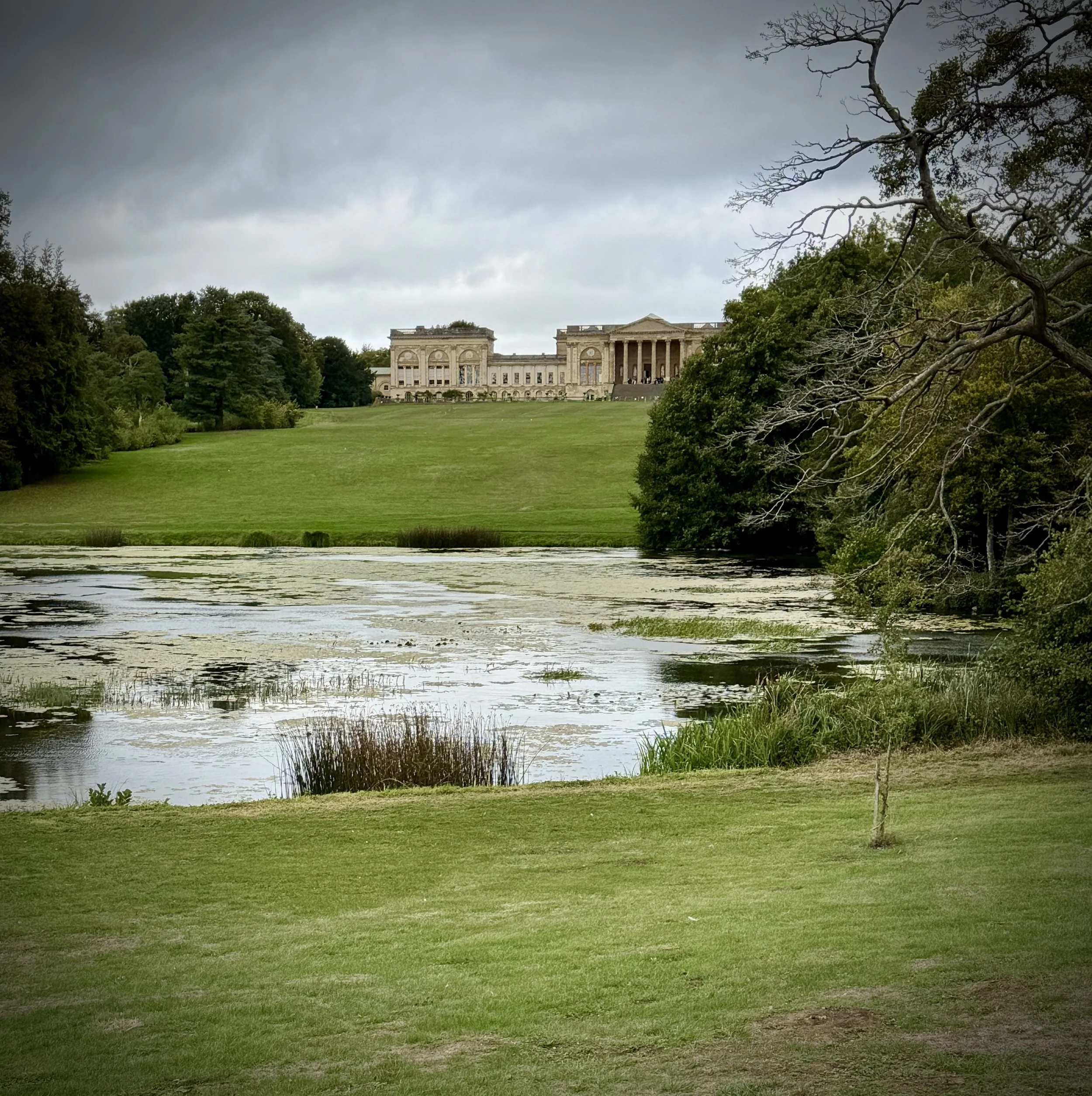
Stowe House: An extraordinary Grade I listed country house that sits at the heart of the estate and currently serves as an independent school. Its grand neoclassical facade provides a stunning focal point that can be admired from multiple vantage points along the walk.
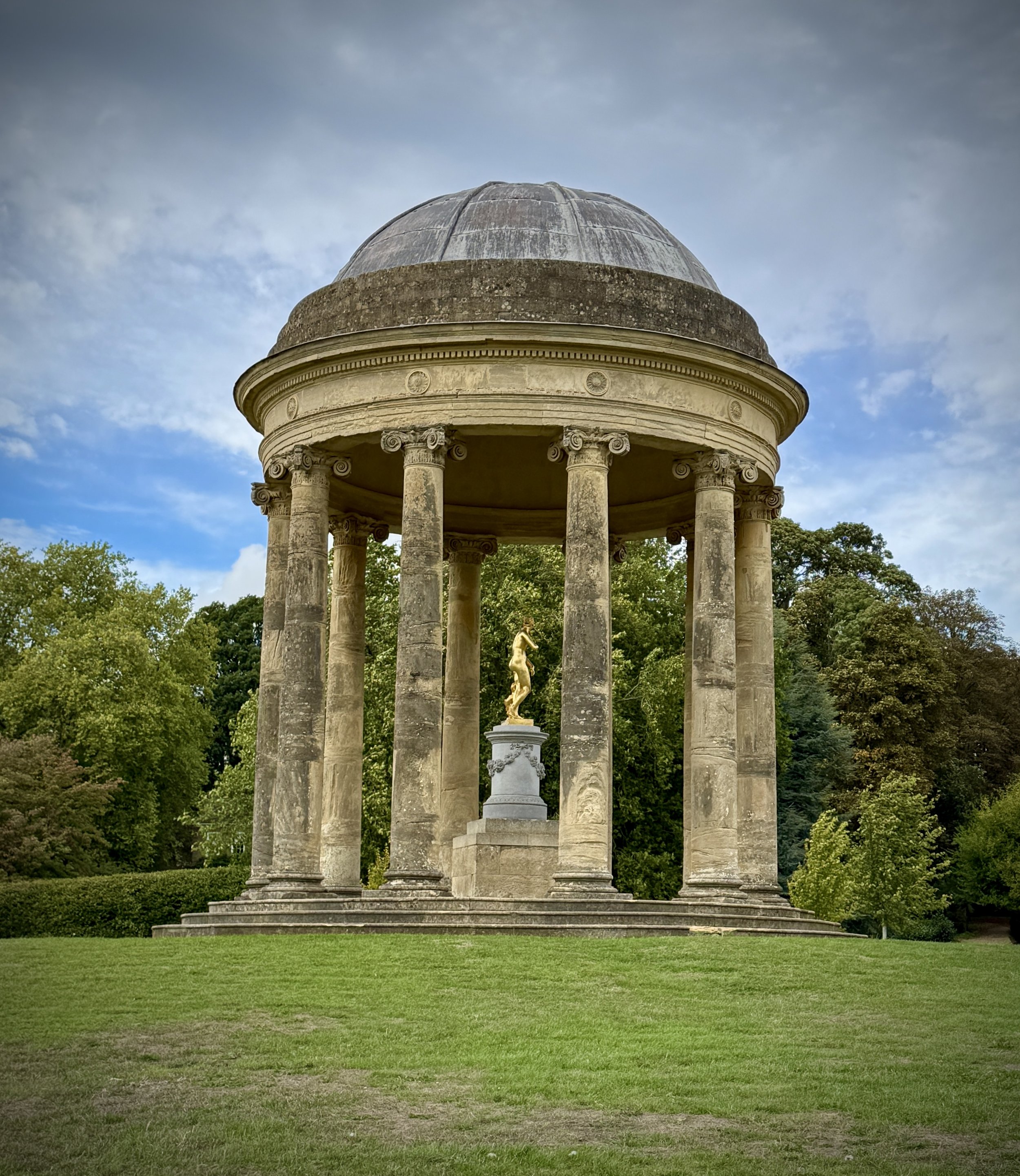
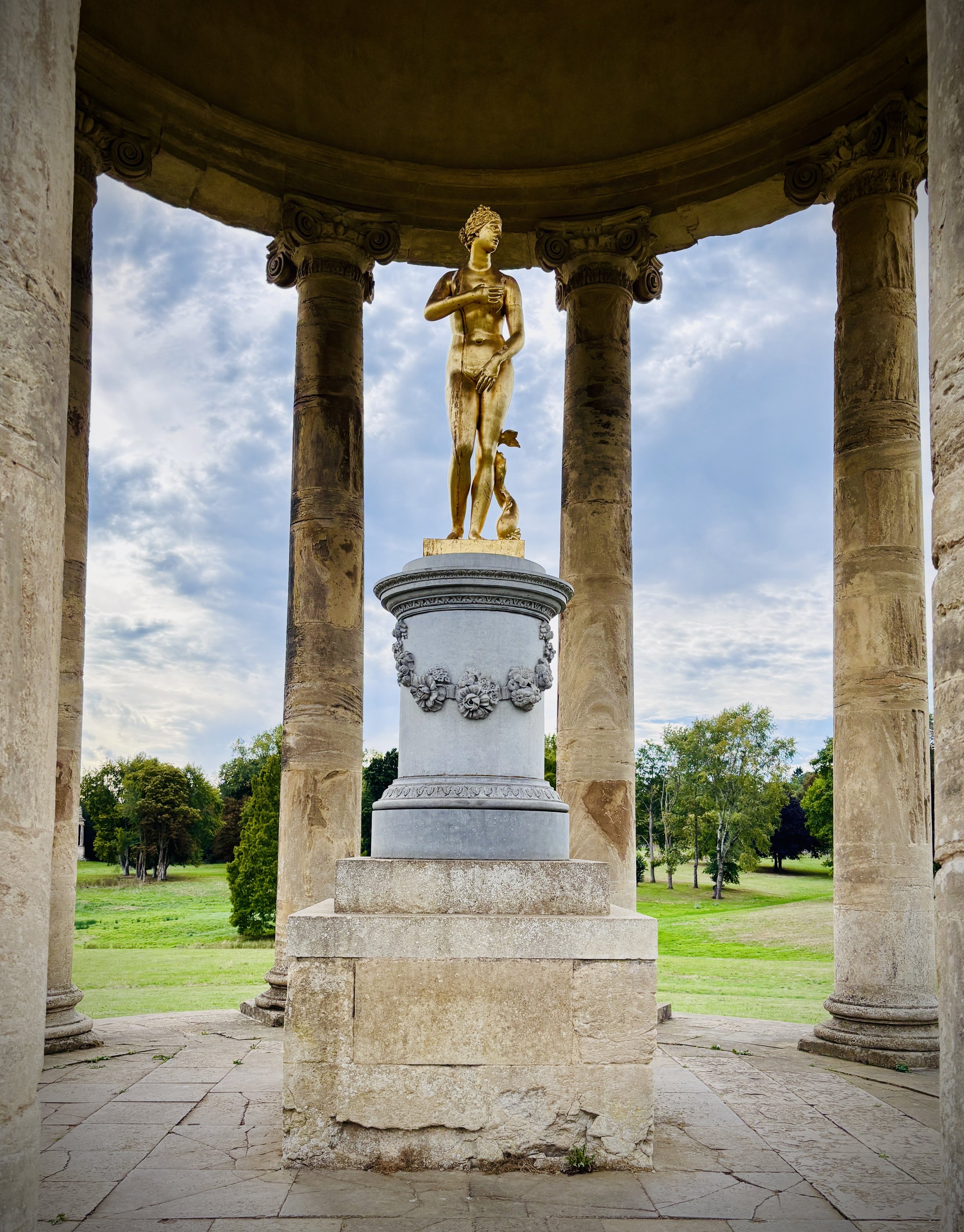
Temple of Ancient Virtue: Designed by William Kent in the 1730s, this circular, domed building was heavily inspired by the Temple of Vesta at Tivoli. Lord Cobham built it as a shrine to four exemplary ancient Greeks: Socrates, Homer, Lycurgus, and Epaminondas. The monument served as a bold political statement, championing the noble virtues that Cobham felt were lacking in contemporary British politicians.
Temple of British Worthies: Also designed by William Kent around 1735, this curved stone wall sits opposite the Temple of Ancient Virtue across the Elysian Fields. It features sixteen niches containing busts of renowned British thinkers and historical figures, notably featuring Queen Elizabeth I as the only woman. The monument was an overt political statement by Lord Cobham, using these individuals to represent his Whig ideals in opposition to the ruling government.